
Reviewed · TOKYO TEA CEREMONIES
Matcha Making Class in Tokyo with Authentic Japanese Sweets Set
In Asakusa, you can learn to whisk matcha yourself, then drink what you have made with a Japanese sweet. This is a hands-on introduction to tea, not a formal ceremony, so you get practical instruction and a taste of the culture without needing to know the rules beforehand.
I like two things here: you make your own matcha with traditional tools, and the host explains how to prepare it at home, including how to spot better-quality powder. The seasonal sweets add a welcome contrast to the tea’s savory, grassy taste.
One consideration: the class is short, and groups can reach 30 people. You’ll get guidance, but it may not feel like a private lesson. At $21.89, it is a reasonably priced cultural activity if you want a focused hour rather than a full tea ceremony.
The useful details at a glance
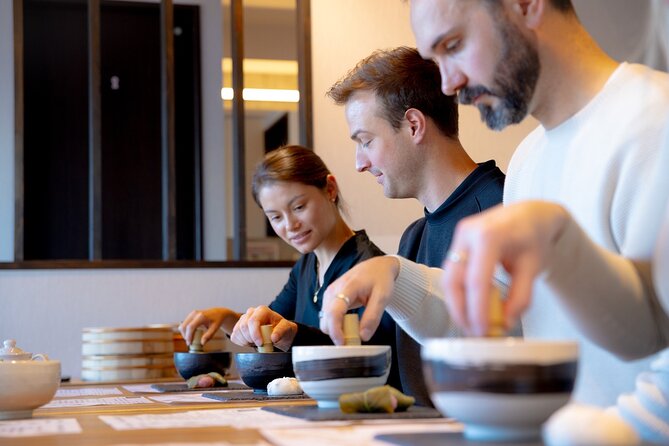
- You whisk the matcha yourself: The instructor demonstrates the process, then helps you prepare a cup using traditional tools.
- The setting is Asakusa: Meet at 2-chōme-17-9 Kaminarimon, near public transportation and the Sumida River.
- It lasts about an hour: A neat fit between sightseeing stops, or an easy first activity for getting oriented to Japanese food culture.
- You get matcha and sweets: The included Japanese confectionery is served with the tea, offering a classic pairing.
- Beginners and families are welcome: No prior experience is required, and children have enjoyed the interactive format.
- The group may be as large as 30: Instructors offer hands-on help, but the amount of individual attention can vary with the group.
A matcha lesson, not a formal tea ceremony
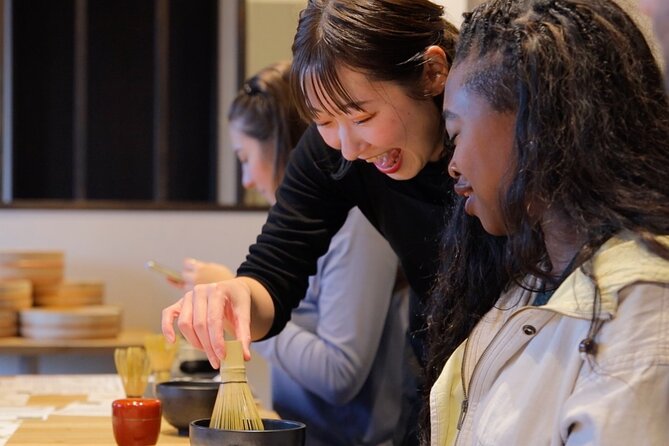
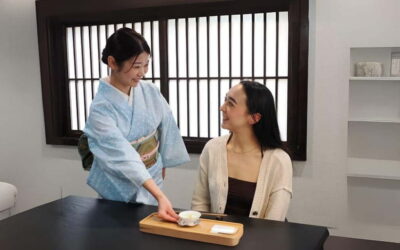
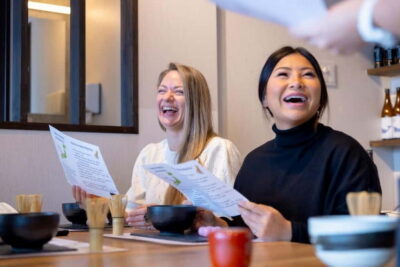
The experience is built around doing, tasting, and asking questions. Your English-speaking instructor introduces matcha, explains its place in Japanese food culture, and walks you through the basic steps of making a cup. You then whisk your own tea and drink it with Japanese sweets.
That distinction matters. A traditional tea ceremony can involve formal manners, carefully ordered gestures, and a quieter ritual. This class takes a more relaxed, accessible approach. It teaches you about the practice without asking you to master ceremony etiquette in an hour.
The instructors use traditional tea-making tools and explain the process step by step. Some have used images on an iPad to show how matcha is grown, making the background easier to follow even if you have never looked closely at tea production before.
The experience has received a TripAdvisor Best of the Best award twice. That recognition is a useful sign of its popularity, though the practical appeal is simpler: you leave having made a cup yourself, not just watched someone else do it.
More tea ceremonies in Tokyo:
- Tokyo: Traditional Tea Ceremony with a Tea Master
★ 5.0 · 528 reviews - Tokyo: Matcha Making Experience with Mochi Sweets in Asakusa
★ 4.9 · 388 reviews - Tokyo: Matcha and Kimono Experience
★ 4.7 · 219 reviews
Finding the class in Asakusa
The meeting point is Matcha Making Tokyo at 2-chōme-17-9 Kaminarimon, Taito City. It is in Asakusa, one of Tokyo’s older neighborhoods, and the location is near public transportation. The class returns to the same place, so you do not need to arrange a separate pickup or work out a second meeting point.
The address is useful to save before setting out, especially if you are navigating a busy sightseeing day. One participant described the location as easy to find and noted a pleasant view along the river. The class itself takes place at the listed address, though the exact room or seating arrangement may depend on the session.
If you arrive early, you may find a café area where you can wait. One host kindly let early arrivals sit there, but treat that as a courtesy rather than a guaranteed part of the activity. Give yourself enough time to reach the address without needing that extra buffer.
There is no hotel pickup or drop-off. That keeps the price down, but it means you are responsible for getting to the meeting point and planning your onward route.
What happens during the hour
The class begins with an introduction to matcha and its cultural context. You learn how matcha differs from other green tea and get a basic explanation of how the powder is produced. The hosts keep the material approachable, using conversation and visual aids rather than assuming you already know the vocabulary.
Next comes the practical part. Your instructor shows you how to prepare matcha with traditional tools, then guides you as you make your own. The hands-on format is the heart of the experience: you can see how the powder behaves, try the whisking motion, and get help as you go.
You may also learn how to recognize higher-quality matcha powder. That is a useful detail if you expect to buy tea during your trip or want to recreate the drink at home. The class is not a shopping tour, and no particular tea purchase is included, but knowing what to look for gives the lesson a life beyond the hour.
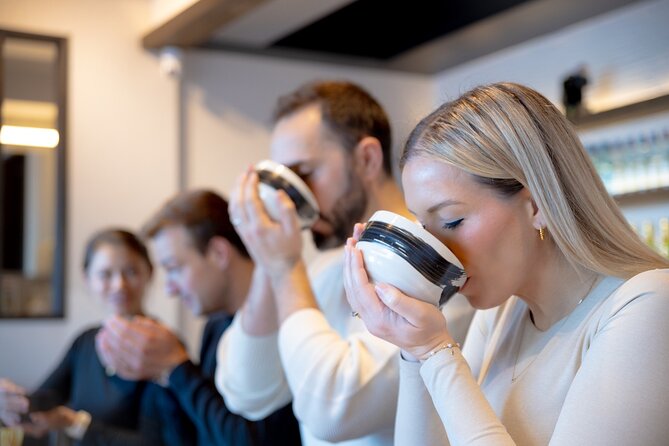
After making the tea, you drink it with Japanese sweets. The confectionery is included, and the pairing helps balance matcha’s concentrated, slightly savory flavor. The sweets may be seasonal, so the exact selection can change rather than stay fixed throughout the year.
The activity ends back at the meeting point. With an approximate duration of one hour, it is compact enough to pair with a visit to other parts of Asakusa. Still, leave some breathing room in your schedule if you want to linger or take photos.
What you can learn from making your own cup
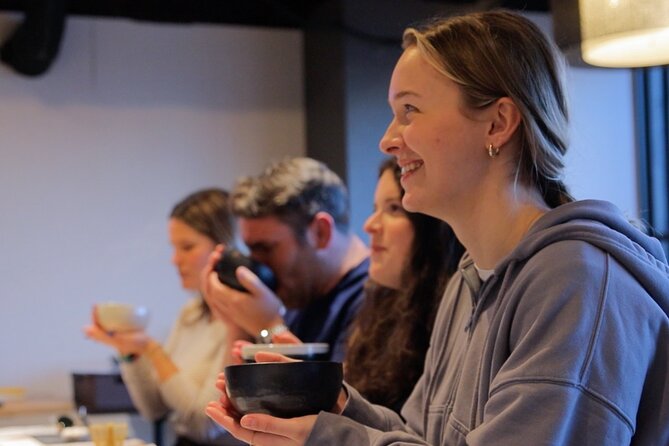
Matcha is easy to order and easy to photograph. Making it yourself gives you a better sense of why preparation matters. The powder, water, and whisking all shape the result, and the class gives you a chance to try the technique rather than simply hear about it.
The instruction is beginner-friendly. You do not need previous tea experience, and the hosts break the process into manageable steps. The goal is not to turn you into a tea master in an hour. It is to give you enough confidence to understand what goes into a cup and try making one at home.
That practical emphasis is especially valuable if you enjoy food experiences that teach a small skill. The class gives you something specific to remember and repeat, unlike a quick tasting where the main activity is simply sampling a product.
It also offers a useful point of comparison for the rest of your time in Japan. Once you have prepared matcha yourself, you may notice more about how it is served, what accompanies it, and how different it tastes from ordinary green tea. The class provides a starting point, not a complete education in Japanese tea.
More cooking classes in Tokyo:
- Sushi Making Tokyo Roll and Authentic Japanese Sushi Class
★ 5.0 · 3,971 reviews - Tokyo: Roll and Authentic Sushi Making Class in Asakusa
★ 4.9 · 1,957 reviews - Tokyo Shinjuku Chopsticks Making Class
★ 5.0 · 1,763 reviews - Tokyo: Sushi Making Class in a Happi Coat near a Famous Spot
★ 4.9 · 1,377 reviews
A friendly format for families and first-timers
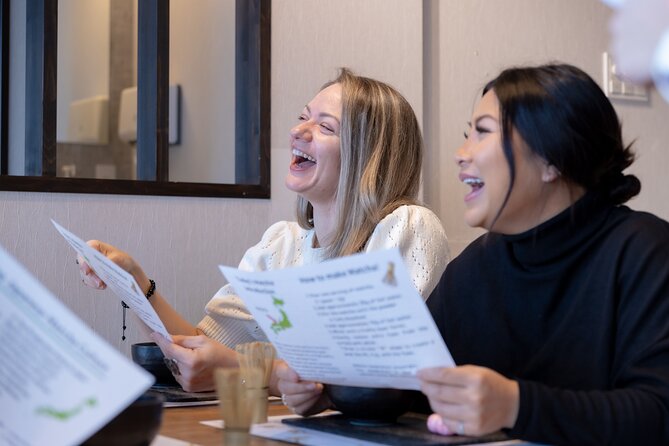
The atmosphere is described as relaxed and interactive, with hosts who make an effort to involve the group. Instructors named by past participants include Rino, Shuri, Hiya, and Nama. Your assigned host can vary, but English-speaking instruction is included.
Families may find the activity a welcome change from walking and looking. Children aged six and nine have enjoyed taking part, according to one account, but that does not establish an official age limit or guarantee how every child will respond. The hands-on whisking and sweet tasting give younger participants something concrete to do.
The class can also suit solo visitors or couples who want a social activity without committing half a day. The shared format creates a chance to talk with other participants, but the size can vary. The stated maximum is 30 people, so do not book expecting a quiet, one-to-one session.
There may be other cooking classes at the same location. One participant found the matcha session quieter when it ran separately from a sushi class, while noting that the space could feel louder when multiple classes were underway. If a calm setting is a priority, keep in mind that the venue may host more than one activity at a time.
Is $21.89 good value?
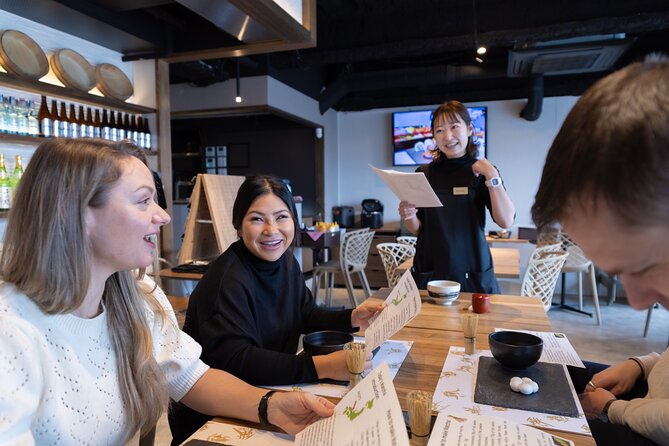
For $21.89 per person, you get an English-speaking instructor, a guided matcha-making lesson, the tea you prepare, and Japanese sweets. The price is fair for an hour-long activity that combines instruction and tasting, particularly if you value learning a skill rather than simply ordering a drink at a café.
The strongest value comes from the practical lesson and the local context. You are not paying for a long sightseeing route or transport; you are paying for an instructor to explain the process and help you try it yourself. If you are curious about matcha but would not seek out a full tea ceremony, this is a modest way to explore the subject.
The trade-off is the short duration. You will get an introduction, not an exhaustive lesson in tea history or ceremony. And with a maximum group size of 30, the experience may be less personal when the class is full. The advertised attention is hands-on, but a small class is not guaranteed.
Fitting the class into a Tokyo day
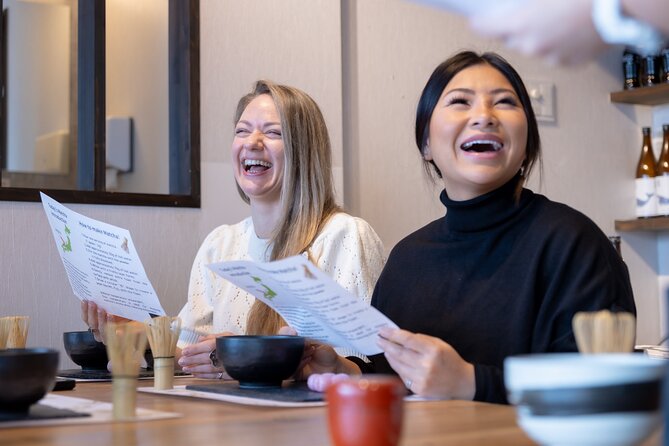
A one-hour activity is easy to work into an Asakusa visit. You can schedule it as a break from sightseeing or use it as a gentle introduction to Japanese food traditions early in your trip. Since the class starts and finishes at the same address, it is also straightforward to plan around other nearby stops.
The mobile ticket makes it convenient to keep your booking on your phone. Confirmation is provided at booking. Free cancellation is available up to 24 hours before the start time for a full refund; changes or cancellations inside that window are not accepted for a refund.
The experience is recommended by 100 percent of 744 ratings, a notably strong record. Ratings cannot tell you exactly how large your group will be or which instructor you will meet, but they do suggest that the format works well for a broad range of people.
Who should book this matcha class?
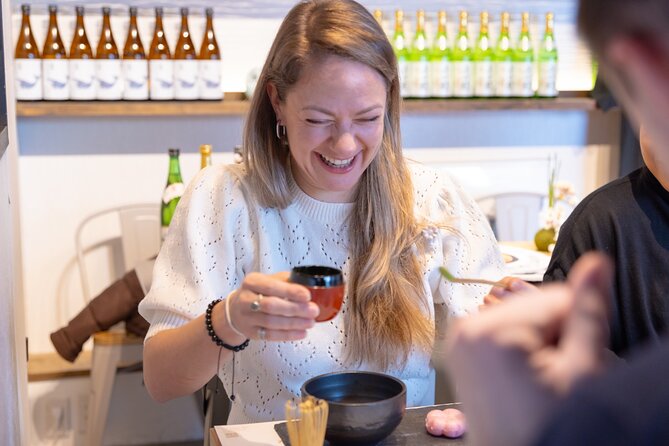
I would consider it if you are interested in Japanese food, want a short activity in Asakusa, or would like a cultural experience that does not require prior knowledge. It is particularly suited to beginners, families, and anyone who wants to learn a simple preparation technique they can try again at home.
It is also a good choice if you prefer an informal lesson to a highly structured ceremony. The class explains the cultural background, but its center of gravity is participation: you learn, whisk, taste, and ask questions.
You may want to choose something else if you are looking for a long, quiet ceremony or expect a private instructor. The class lasts about an hour and can include up to 30 people. Those limits are not hidden flaws, but they shape what the experience can offer.
Should you book it?
Book this class if you want a friendly, affordable introduction to matcha with a real hands-on element. The combination of guided preparation, cultural explanation, and Japanese sweets makes good use of an hour, and Asakusa is a convenient setting for fitting it into a Tokyo itinerary.
Skip it if you already know how to prepare matcha and want a more formal or in-depth tea ceremony. For most curious beginners, though, this is a sensible small-scale experience: short, practical, and easy to enjoy without turning the day into a production.
FAQ
How long does the matcha class last?
The activity lasts about one hour.
Where does the class meet?
It meets at Matcha Making Tokyo, 2-chōme-17-9 Kaminarimon, Taito City, Tokyo 111-0034.
Does the class include matcha and Japanese sweets?
Yes. Matcha and Japanese sweets are included.
Is the class taught in English?
Yes. An English-speaking instructor is included.
Do I need experience making matcha?
No. The class is beginner-friendly, and no prior tea ceremony experience is required.
How many people can join the activity?
The maximum group size is 30 travelers.
Does the activity include hotel pickup?
No. Hotel pickup and drop-off are not included.
Where does the activity end?
It ends back at the meeting point.
Can I cancel for a refund?
You can cancel at least 24 hours before the start time for a full refund. Cancellations made less than 24 hours before the start time are not refunded.
More hands-on workshops in Tokyo
- Chopstick Making Workshop in Ginza
★ 4.8 · 1,366 reviews - Tokyo Sushi Making Class in Tsukiji with Professional Chef
★ 5.0 · 1,177 reviews - Ramen & Gyoza Cooking Class in Tokyo with Local Supermarket Visit
★ 5.0 · 823 reviews - Tokyo: Samurai Sword & Archery Class from Samurai Descendant
★ 5.0 · 603 reviews
More dessert tours in Tokyo
- Make Traditional Nerikiri Sweets & Matcha experience in Shibuya
★ 5.0 · 130 reviews - Private Mochi Sweets Making class near Shibuya area
★ 5.0 · 93 reviews - Japanese Traditional Sweets making and Tea Ceremony
★ 4.7 · 50 reviews - Tokyo: Two Types of Japanese Sweets Making and Tea Ceremony
★ 4.6 · 26 reviews
Freshly reviewed in Tokyo
- Tokyo: Toshimaya Sake Brewery Tour with Sake Tasting★ 5.0 · 6 reviews
- :Tokyo,Shibuya /Meiji Shrine tour in KIMONO/English-friendly★ 5.0 · 4 reviews
- Tokyo: Tour Privado por Tokio en español★ 4.3 · 4 reviews
- Tokyo:Tea ceremony experience at Komaba Warakuan★ 4.8 · 9 reviews
- :Tokyo,Shibuya/ Pro Photography in Kimono / English-Friendly★ 5.0 · 26 reviews
- Tokyo:Samurai Training : Swords, Bushido & Mental Discipline★ 5.0 · 6 reviews
- Tokyo:Mt Fuji & Hakone Day Tour with English Speaking Driver★ 5.0 · 26 reviews
- Tokyo:Nikko UNESCO World Heritage Sites Private 1-Day Tour★ 3.8 · 6 reviews
Tokyo Tea Ceremonies, compared.
Matcha Making Experience with Mochi Sweets in Asakusa
Read our review →
Tea Ceremony Workshop in Tokyo by the Experienced Instrucor
Read our review →
Make Traditional Nerikiri Sweets & Matcha experience in Shibuya
Read our review →
Tea Ceremony Experience in a Private Tea Room in Shibuya
Read our review →Browse the lists this tour appears in