
Reviewed · TOKYO SUMO EXPERIENCES
Tokyo: Sumo Morning Practice Viewing Tour
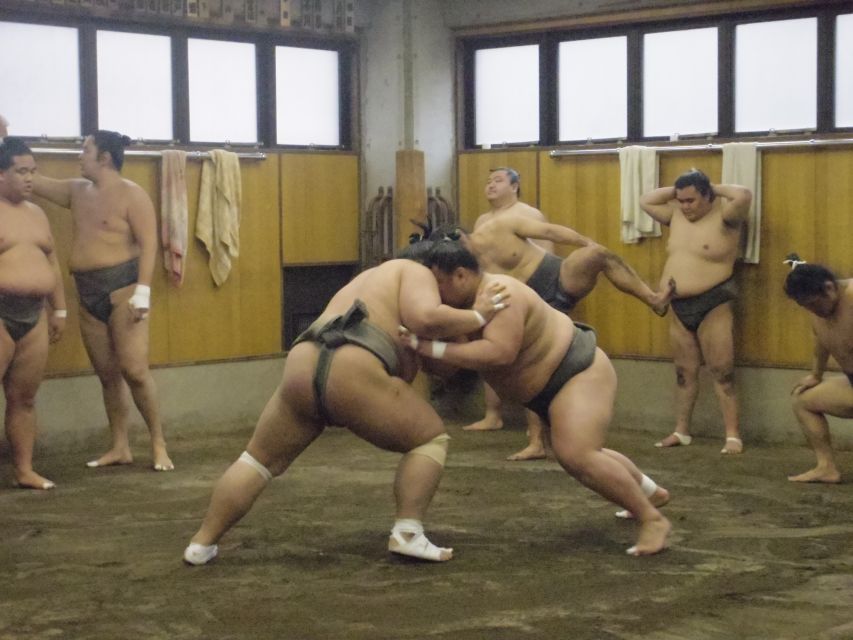
A sumo stable is not a stage set. It is where wrestlers live and train, and public access is unusual. For about an hour, you watch practice from close range as athletes prepare for tournaments, with the scrape of feet and the thud of bodies making the sport feel quite different from a match on television.
I like two things in particular: you see the daily work behind sumo’s rituals, and an English-speaking guide helps you read what is happening without turning the session into a running lecture. Guides such as Yuko, Noriko, Kaz, and Oku have been praised for explaining customs clearly and keeping groups organized.
The trade-off is that this is a quiet, sit-still experience, not a show built around you. You must stay through the end of practice, and the stable’s rules mean no video, flash photography, or moving around during training.
- A real training room: Watch wrestlers practice inside a working stable, not at a staged dinner show.
- Close-up action: The training space can put you only a few feet from the bouts and drills.
- Guided context: Your English-speaking guide explains sumo’s history, rules, and customs, sometimes through quiet notes during practice.
- A morning commitment: Training typically lasts 60 to 90 minutes, and you must remain until it ends, usually around 9:00 to 10:00 AM.
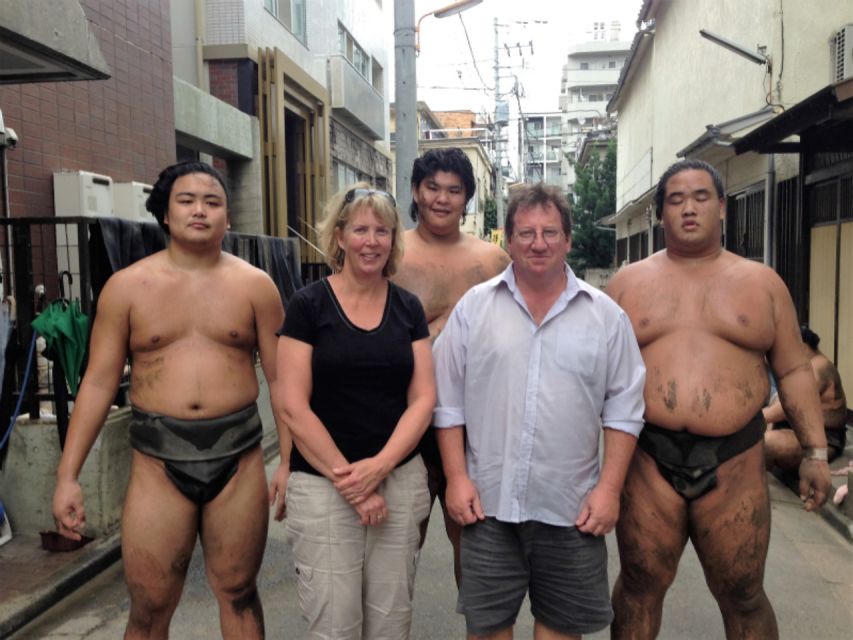
- A photo may be possible: Photos with wrestlers depend on the day and stable schedule.
- A particular kind of visitor: The tour is not suitable for children under 11 or people with mobility impairments.
Inside a working sumo stable
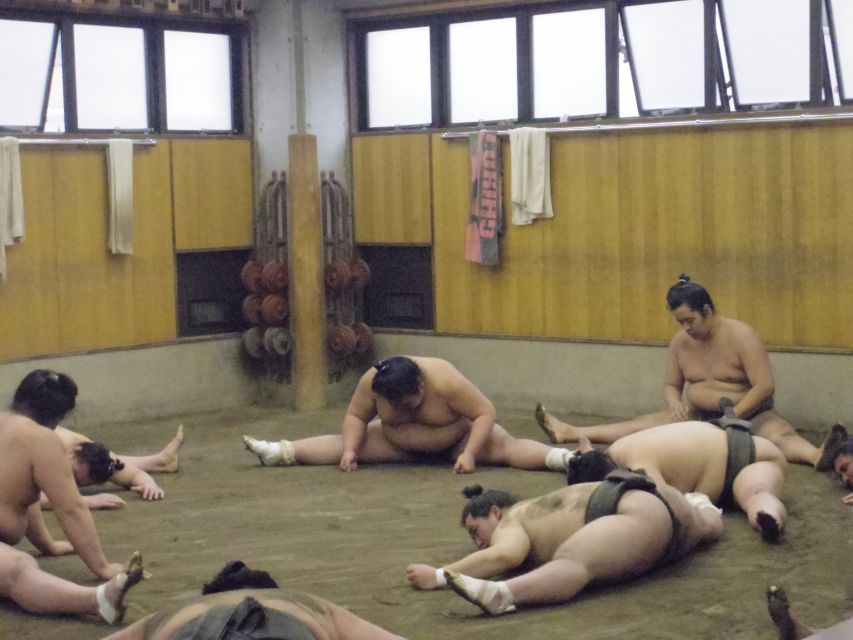
This tour gives you access to a place that is normally private. Sumo stables are where wrestlers live and train, and the sport’s practice sessions are not generally open to the public. That makes the experience more personal than watching a tournament from an arena seat, but it also means you are entering someone else’s workplace. The stable’s routines come first.
You meet an English-speaking guide, hear an introduction to sumo, then head to a stable in Tokyo’s Ryogoku area. Depending on the booked option, the meeting point can vary. The group may travel by train after meeting, so arrive ready to follow your guide rather than assuming the stable is right beside the meeting spot.
The stable itself is not guaranteed to be the same every day. One group might see practice at Arashio Stable; another visitor has described an unexpected chance to see Isegahama Stable and famous wrestlers there. That variability is part of the appeal, but it means you should not book expecting a particular stable, wrestler, or photo.
The short walk and the guide’s briefing
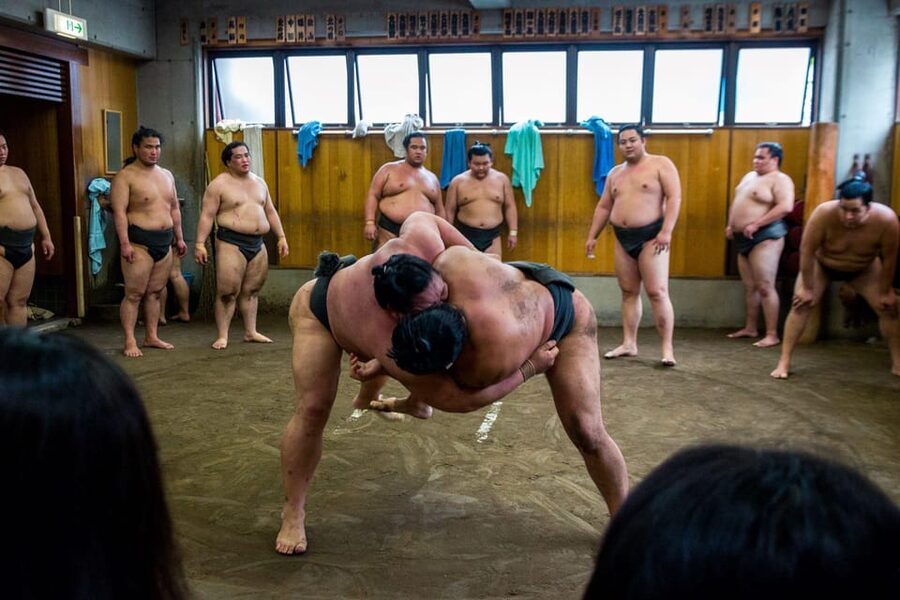
Before entering, your guide sets out the customs and practical rules. This briefing matters. You are not arriving at a performance venue where you can chat, stand for a better view, or wander off for a closer look. You will need to stay quiet and still while the wrestlers work.
Guides including Yuko, Noriko, Kaz, Mako, Taku, and Oku have been singled out for clear explanations, friendly organization, and care with the group. The guide may explain the sport before practice and then share brief notes or written information during it. Because the room must stay quiet, you may not hear spoken explanations during a bout. One visitor found it hard to catch an audio explanation when the action was loud, while others appreciated notes that let them follow the session without interrupting it.
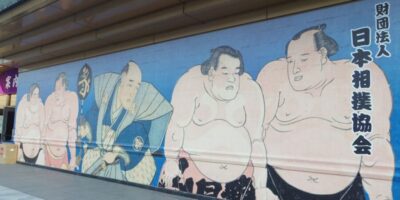
The area around Ryogoku adds useful context. It is known for sumo, and the National Sumo Arena is nearby. Some visitors have enjoyed seeing the neighborhood and passing other stables on the way. Still, the walk and any train ride are part of getting to practice, not a separate sightseeing tour.
More sumo experiences in Tokyo:
- Tokyo: Sumo Show Experience with Chicken Hot Pot and a Photo
★ 4.8 · 6,678 reviews - Tokyo: Sumo Show and Dining Experience
★ 4.8 · 2,742 reviews - the SUMO show
★ 5.0 · 1,960 reviews
Watching 60 to 90 minutes of practice
Once inside, you settle in and watch the session until it finishes. The training can include wrestlers testing techniques against one another, repeating drills, and working under the eye of coaches and stable masters. The rhythms and rituals are part of what you came to see. The practice is not a string of exhibition bouts, and some parts may feel repetitive if you only want big collisions.
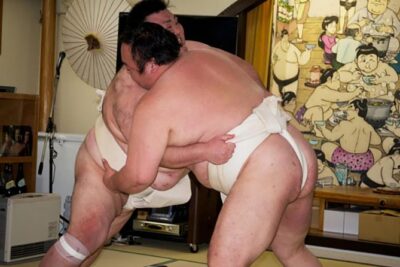
Then a bout begins, and the room changes. Visitors describe the force and noise of the wrestlers meeting at close quarters as startling at first. Sumo bouts can be brief, but practice gives you more than the result: you can watch preparation, technique, and the effort that goes into repeating a move. You see athletes working, not characters performing for an audience.
Sumo is a traditional Japanese sport with roots in Shinto beliefs. The basic aim is to force an opponent out of the ring or make any part of his body other than the soles of his feet touch the ground. Your guide can help make those rules and customs easier to follow, especially if you have only seen sumo on television.
Training begins early, and wrestlers work toward tournaments held six times a year. Seeing a practice session can be a useful complement to a tournament, where the action is easier to follow once you understand the routines and techniques. One visitor who attended a tournament later the same day found the morning session helped make the competition more meaningful.
There is no promise that you will see a particular star. Some groups have had the luck to see well-known wrestlers or a former yokozuna overseeing practice; that is an extra, not a dependable feature. The stable, the day’s schedule, and who is training all matter.
Silence, seating, and photos
Treat the stable as a place of work. Keep your phone on silent, do not stand or move around during practice, and follow your guide’s instructions. Hats, sunglasses, food, and drinks are not allowed. Flash photography and video recording are prohibited, so plan on watching rather than filming.
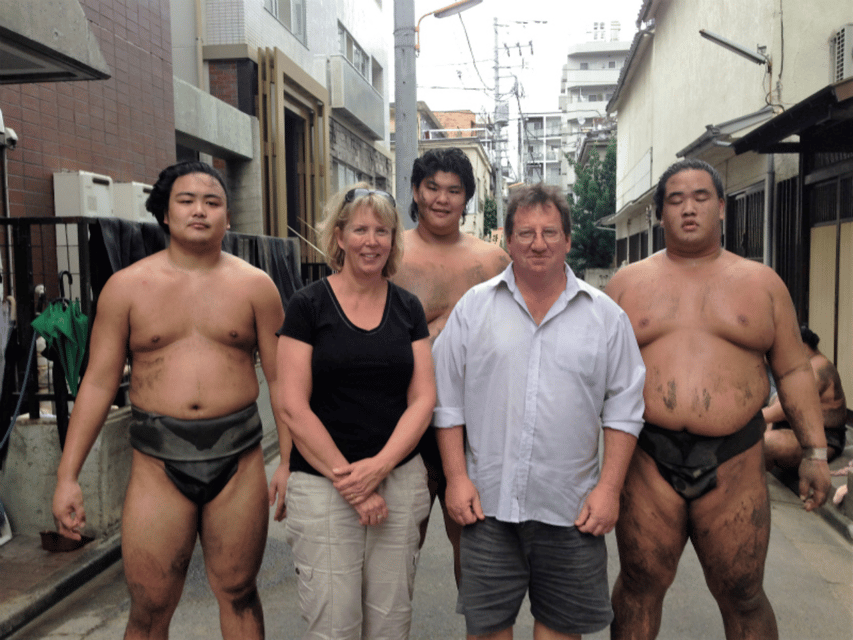
Still photography may be possible, but it is not guaranteed. Some visitors have been able to take a photo with wrestlers after practice; availability depends on the day. If the chance comes, follow the stable’s directions and do not assume every wrestler will be available.
Seating can affect your view. Groups may be seated according to arrival, and front-row places are not assured. One visitor found another group had already taken the front row, making photos harder from farther back. If you care about a close view, arrive at the meeting point on time and follow any arrival instructions, but understand that the operator cannot promise a particular seat.
You must stay until practice ends, usually around 9:00 to 10:00 AM. Once you leave the stable, there is no re-entry. Practice can run shorter or longer than expected, so avoid booking a tight appointment immediately afterward. The overall experience lasts about 90 minutes to two hours, including the introduction and travel to the stable.
What the $81 price buys
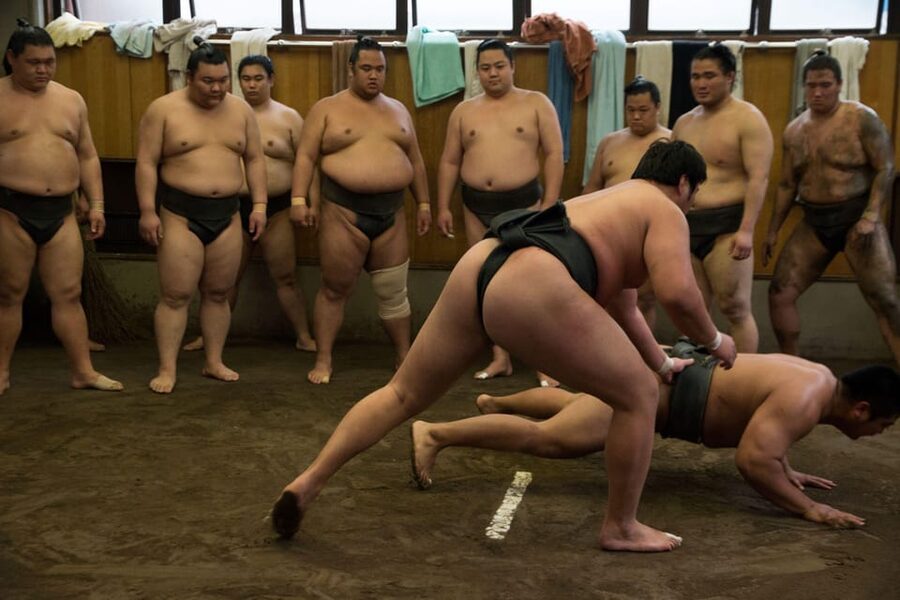
At $81 per person, this is a specialized experience, not a low-cost way to fill a morning. You are paying for entry to a private training space, an English-speaking licensed guide, and the chance to see ordinary practice from unusually close range. A staged sumo show can be easier to understand and more relaxed, but it cannot offer the same view of wrestlers doing their daily work.
The value depends on your curiosity. If you want to understand how sumo athletes train, see techniques up close, or learn about the customs from someone who can explain them, the price is easier to justify. If you mainly want a lively spectacle, or a guaranteed photo with a famous wrestler, the cost may feel high.
The guide is central to the experience. The room’s quiet rules limit how much explanation can happen in real time, so a good briefing and useful written notes make a real difference. English-speaking guides have included Yuko, Noriko, Kaz, Oku, Mako, and Taku, though your guide will depend on the date.
The stable may also allow a short question-and-answer exchange, sometimes with the stable master. This is not guaranteed as a formal part of every visit, but when it happens, it gives you a chance to ask about training and life in the stable. The most valuable moments are often the simple ones: watching the room settle, seeing a drill repeated, and realizing that the wrestlers are preparing for serious competition rather than putting on a show.
More early-start experiences in Tokyo:
- Tokyo: Sumo Morning Training Visit
★ 4.4 · 370 reviews - Tokyo: Sumo Morning Practice Tour at Sumida City
★ 4.8 · 308 reviews - Tokyo Sumo Morning Practice Tour at Stable
★ 5.0 · 298 reviews - Tokyo Ryogoku Sumo Morning Practice + Photo Shoot with Wrestlers
★ 4.5 · 277 reviews
Who will get the most from it
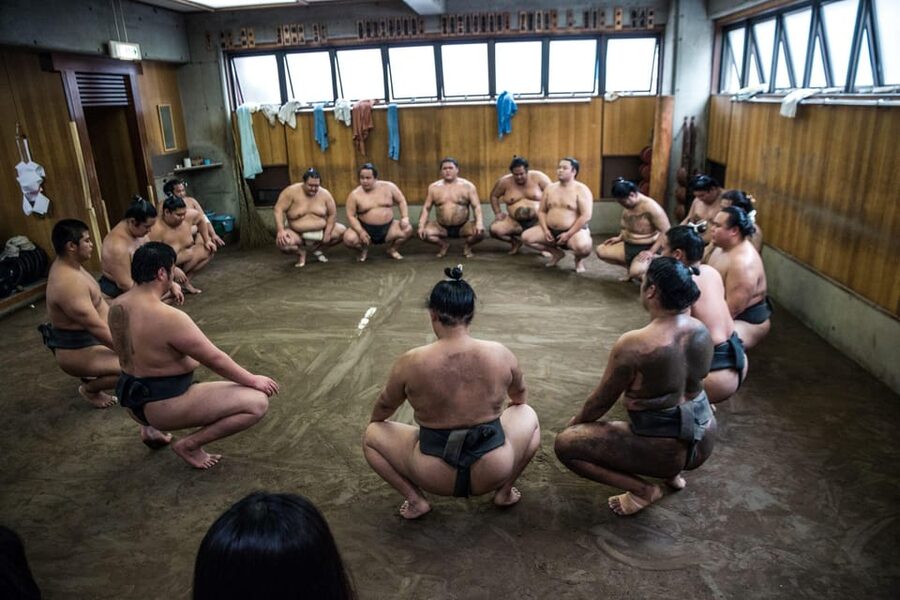
I would book this if you have even a passing interest in Japanese sport or culture and can enjoy observing without constant commentary. Sumo fans will appreciate the chance to watch training and may be especially lucky if a familiar wrestler is present. Martial arts enthusiasts can look for technique and repetition. If you know little about sumo, the guide’s introduction can give you enough context to follow what you see.
This is also a good choice if you have already seen a tournament, or plan to attend one. Practice gives you a different view: less crowd spectacle, more attention to how wrestlers prepare. It can also reveal a part of Tokyo you might not otherwise visit, particularly around Ryogoku.
It is a poor fit if you need to move around often, cannot remain quiet, or expect every minute to be action. The training session may feel long if repetition holds no interest for you. The tour is not suitable for children under 11 or people with mobility impairments. If sitting still for an extended period is difficult, choose another activity.
Practical details before you book
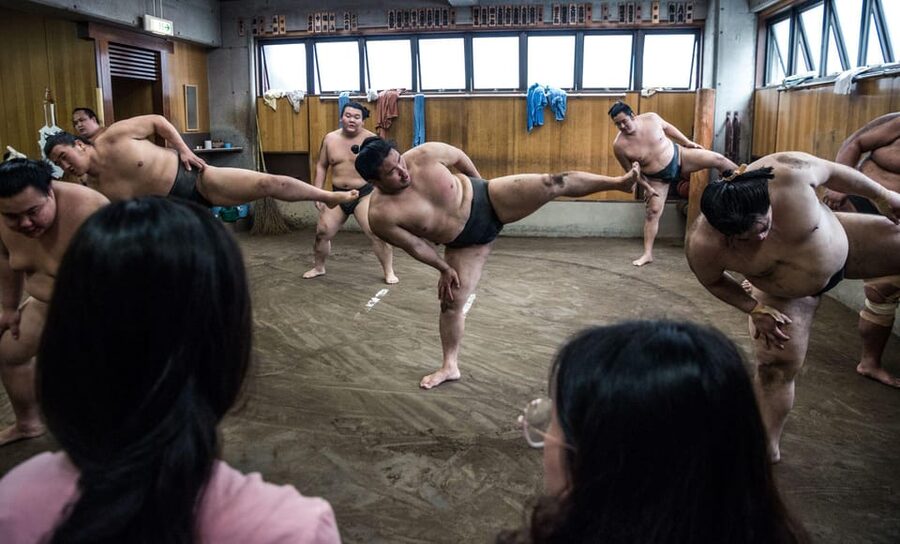
The tour lasts about 90 minutes to two hours, with 60 to 90 minutes spent watching practice. Starting times depend on availability. The meeting point varies by booked option, and the group may take a train to the stable after meeting.
The stable’s schedule can change the length of the visit and its ending location. If you have a commitment afterward, tell the operator in advance and leave a generous buffer. The tour includes a licensed English-speaking guide and stable viewing; photos with wrestlers are available only when the day allows.
You can cancel up to 24 hours in advance for a full refund, and a reserve-now, pay-later option is available. Those terms help if your plans are still taking shape, but they do not change the key commitment: once practice begins, you are expected to stay until it ends.
Should you book this sumo morning?
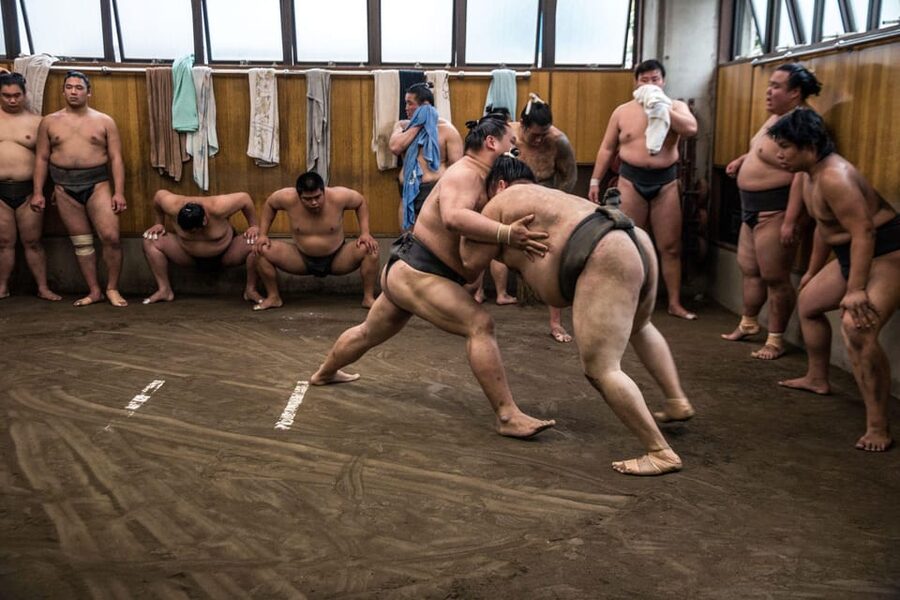
Book it for the access, the close view, and the chance to understand sumo as daily work rather than a brief arena contest. The strongest reason to go is that you enter a real stable, where training happens on the wrestlers’ terms. Guides such as Yuko and Noriko have helped visitors understand the sport while respecting the room’s quiet.
Skip it if you need a flexible morning, want to take video, or would rather see a polished performance with guaranteed entertainment. For a curious, patient visitor, though, this is a rare and worthwhile way to meet sumo on its own ground. Go with modest expectations about who will be there, follow the rules, and let the practice unfold.
FAQ
How long does the tour last?
Plan for about 90 minutes to two hours. The sumo training itself usually lasts 60 to 90 minutes.
What time does practice end?
You must remain until practice finishes, usually around 9:00 to 10:00 AM. The schedule can make the tour shorter or longer than expected.
Is the stable open to the public?
Sumo stables are not generally open to the public. This tour arranges access to a real stable where wrestlers live and train.
Is the tour conducted in English?
Yes. The tour includes a live English-speaking guide.
Can I take photos or record video?
Flash photography and video recording are not allowed. Photos with wrestlers may be possible after practice, depending on the day.
Can I leave the stable and come back?
No. Once you leave the stable, there is no re-entry, and you must stay until practice ends.
Can children join the tour?
The tour is not suitable for children under 11 years old.
Is the tour suitable for people with mobility impairments?
No. The tour is listed as unsuitable for people with mobility impairments.
Where does the tour meet?
The meeting point depends on the option booked. After meeting the guide, the group may take a train to the stable, and the ending location may differ from the meeting point.
Freshly reviewed in Tokyo
- Tokyo: Toshimaya Sake Brewery Tour with Sake Tasting★ 5.0 · 6 reviews
- :Tokyo,Shibuya /Meiji Shrine tour in KIMONO/English-friendly★ 5.0 · 4 reviews
- Tokyo: Tour Privado por Tokio en español★ 4.3 · 4 reviews
- Tokyo:Tea ceremony experience at Komaba Warakuan★ 4.8 · 9 reviews
- :Tokyo,Shibuya/ Pro Photography in Kimono / English-Friendly★ 5.0 · 26 reviews
- Tokyo:Samurai Training : Swords, Bushido & Mental Discipline★ 5.0 · 6 reviews
- Tokyo:Nikko UNESCO World Heritage Sites Private 1-Day Tour★ 3.8 · 6 reviews
- Tokyo:Mt Fuji & Hakone Day Tour with English Speaking Driver★ 5.0 · 26 reviews
Tokyo Sumo Experiences, compared.
Tokyo Shinjuku Sumo Show & Experience with Photo
Read our review →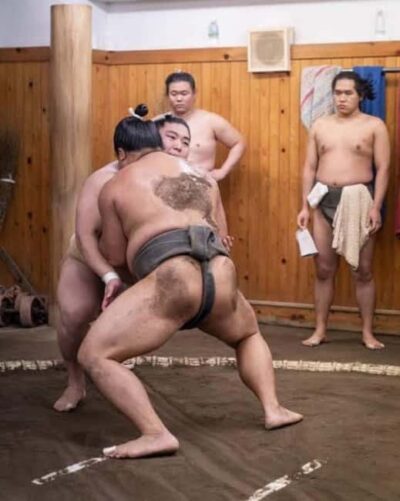

Authentic Sumo Experience in Tokyo: Enter the Sanctuary
Read our review →
Tokyo Sumo Experience: Chanko & Mochi with a Former Pro
Read our review →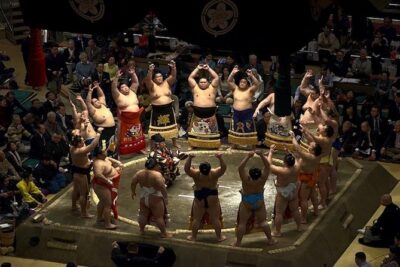
Ultimate Sumo Tournament: Tokyo, Osaka, Nagoya, Fukuoka
Read our review →Browse the lists this tour appears in