
Reviewed · TOKYO SUMO EXPERIENCES
Ultimate Sumo Tournament: Tokyo, Osaka, Nagoya, Fukuoka
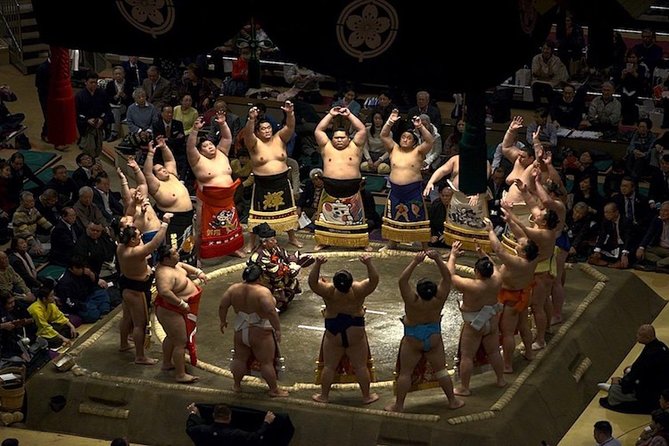
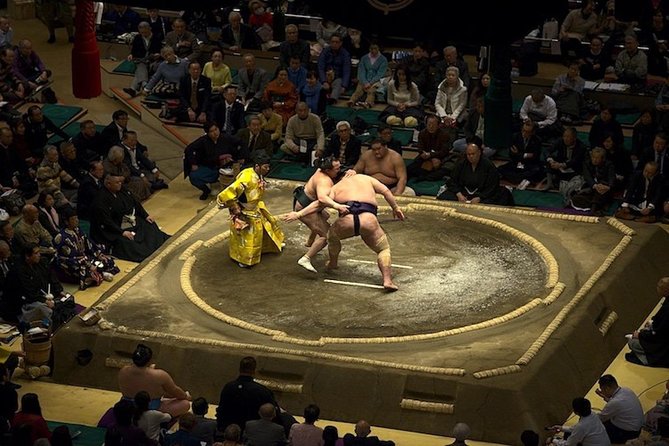
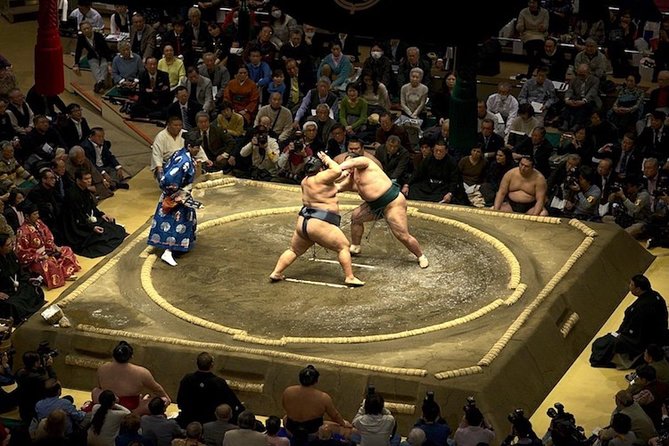
Sumo makes more sense when someone explains what you’re seeing. At an official tournament, each bout lasts only moments, but the customs around it, from the wrestlers’ ring rituals to the rankings, give the day its shape. This tour pairs reserved seats with an English-speaking sumo guide who provides commentary through an audio headset.
I like two things especially: you get help with seats and tournament access, which can be difficult to arrange on your own, and you get context while the action unfolds, rather than trying to decode the rules from the stands. The optional chanko hot pot dinner adds a taste of the food associated with sumo stables.
The main consideration is timing. Official tournaments happen in just six months of the year, and standard seats are on the second floor. The tour is also non-refundable, so check your dates and seating choice carefully before you book.
- Six tournaments, four cities: Attend in Tokyo in January, May, or September; Osaka in March; Nagoya in July; or Fukuoka in November.
- A guide explains the action live: Audio headsets make it easier to hear about sumo customs, rankings, and wrestlers inside a noisy arena.
- Standard seats are upstairs: Join-in groups use B-class seats in rows 7 to 11 or C-class seats on the second floor. Private tours include S-class or A-class seats closer to the ring.
- Dinner is an optional extra: Add chanko nabe, a hot pot linked with sumo culture. Drinks are not included, and vegetarian requests should be made at checkout.
- The off-season option is different: A morning visit near Warabi Station includes sumo practice and chanko lunch, but no tournament ticket.
- Plan ahead: Book well in advance, ideally three months ahead. Group tickets are released only four to seven weeks before the event.
The ring rituals are part of the show
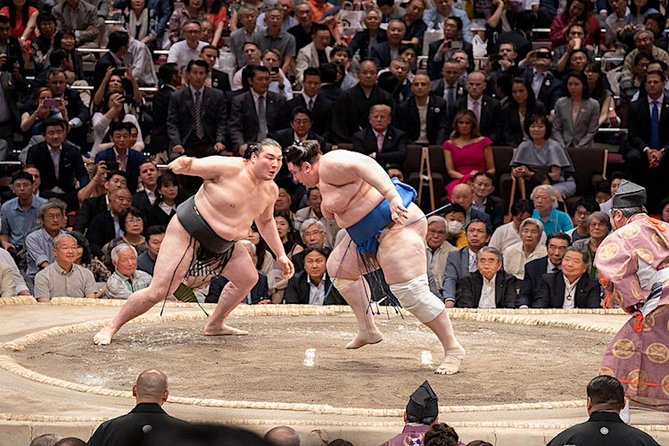
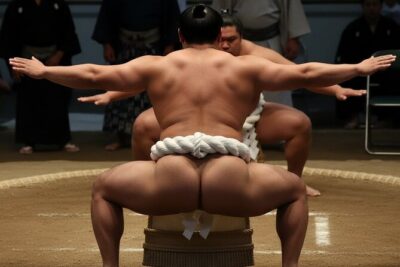
A sumo bout is easy to follow at its simplest: two wrestlers try to force the other out of the ring or make him touch the ground with anything but his feet. But the contest is surrounded by formal gestures and traditions that can seem puzzling if you have never watched before. The wrestlers’ preparation, the ring itself, and the tournament rankings all matter.
That is where this tour earns its place. Your guide introduces the history, customs, and rules, then adds commentary during the matches. You receive an information pamphlet and a banzuke-hyo, the ranking table, so you have a reference for the wrestlers and their standing. An audio headset lets you follow the explanation without needing to sit right beside the guide.
Sumo is also a sport of startling contrasts. The wrestlers are powerful, but the action can be over in seconds. The longer stretches of ritual and preparation give you time to notice the ceremony, then the bout suddenly becomes fast and physical. With a guide’s help, those quieter moments become part of the experience rather than dead time.
Choose the tournament city that fits your trip
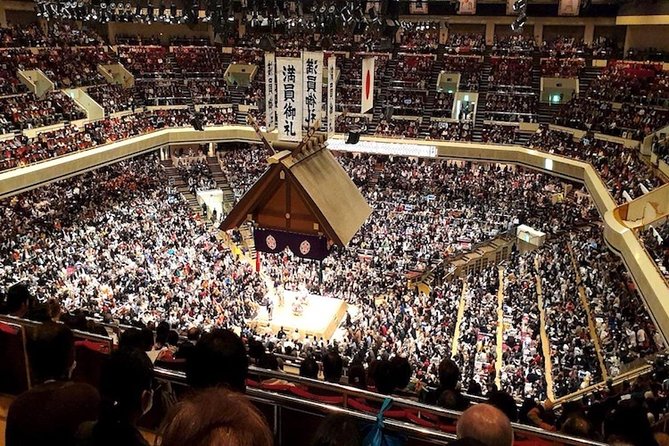
Japan holds six official 15-day tournaments each year. The schedule follows the same months annually, though exact dates vary: Tokyo in January, May, and September; Osaka in March; Nagoya in July; and Fukuoka in November. The opening and closing days both fall on Sundays.
Tokyo’s tournament takes place at Ryogoku Kokugikan, in the Ryogoku district associated with sumo. Osaka’s March event is at EDION Arena Osaka, Nagoya’s July tournament is at IG Arena, and Fukuoka’s November event is held at Fukuoka Kokusai Center. The tour is offered in whichever city has a tournament during your visit, so you are choosing by travel dates as much as by preference.
If you are building a Japan itinerary around the tournament, check the dates before settling on hotels and intercity travel. Each tournament runs for 15 days, which gives you some flexibility, but not every day has the same match schedule or atmosphere. The tour itself is about four hours, not a full-day excursion, though you will want to allow extra time for getting to and from the arena.
More sumo experiences in Tokyo:
- Tokyo: Sumo Show Experience with Chicken Hot Pot and a Photo
★ 4.8 · 6,678 reviews - Tokyo: Sumo Show and Dining Experience
★ 4.8 · 2,742 reviews - the SUMO show
★ 5.0 · 1,960 reviews
What happens during the four-hour arena visit
The meeting time is listed as 2:00 pm. The meeting point details arrive by email at least one week before the tour, so do not assume the entrance or meeting location without checking that message. The guide leads the group into the arena and gives an introduction to sumo and the venue. One visitor described a short arena tour before settling into the seats.
There may be a wait before you are seated, because the group has to wait for matches to end before entering. The Sumo Museum can also be crowded. If the space is too congested for the whole group to move around together, the guide may ask you to visit on your own. That is worth knowing if you expect a tightly timed, continuous guided walk.
Once seated, you can watch the bouts with the guide’s explanations coming through your headset. The commentary may cover techniques, wrestler backgrounds, rankings, and the traditions around a match. Since bouts can move quickly, having someone explain the names and styles can make the action easier to follow. The guide does not replace the live atmosphere, but helps you understand what is happening inside it.
The standard group tour is limited to a maximum of 20 people sitting in the same area with the English-speaking guide. That is small enough for a shared experience, though it is still a group rather than a private lesson. The guide’s style may vary. Many past visitors have valued the clear explanations and the chance to ask questions, while one person found the commentary too limited. If you want a running explanation of nearly every detail, bear in mind that the amount of commentary can depend on the guide and the pace of the event.
Know what your seat choice buys
The standard join-in option uses B-class or C-class seats on the second floor. B-class seats are listed as rows 7 to 11; the exact seat allocation depends on availability. These seats give you a view of the ring and the full arena, but they are not the closest option. Choose standard if access to the tournament and live explanation matter more to you than sitting near the action.
The private tour includes S-class or A-class seats closer to the ring. That upgrade is a better fit if proximity is a priority or if you want a more personal experience. The available information does not specify the private group size or the exact location of each seat, so confirm those details when choosing.
The listed price is $184.38 per person. Its value rests on more than the seat: the fee includes ticket arrangement and seating allocation, an English-speaking guide, a pamphlet, a ranking table, and an audio headset. For a tournament that can be hard to book independently, the organized access may be a major part of the appeal. The optional dinner costs extra, and the price shown here does not include transportation, other meals, or drinks.
Add chanko hot pot for a meal with a sumo connection
If you select the dinner option, the meal is chanko nabe, a Japanese hot pot associated with sumo wrestlers. It is typically made with chicken stock and a mix of vegetables. The dish has practical roots: a large pot can feed many people at once, a useful arrangement for a stable full of hungry wrestlers.
Dinner is served without drinks. A vegetarian option may be available, but traditional broth usually contains pork or chicken. Request a vegetarian meal or other dietary needs in the special requirements field at checkout. Once the request has been accepted, changes cannot be made within one week of the tour date.
This add-on is most appealing if you want the day to include a meal connected to sumo culture, rather than just a seat at the tournament. It is not included automatically, and you should not assume that all dietary needs can be met without asking ahead.
More tours and experiences in Tokyo:
- Mt Fuji and Hakone 1-Day Bus Tour Return by Bullet Train
★ 5.0 · 26,383 reviews - 1-Day Tokyo Bus Tour
★ 5.0 · 14,250 reviews - Tokyo: teamLab Planets TOKYO Digital Art Museum Entry Ticket
★ 4.6 · 9,779 reviews - Mt Fuji & Hakone Cruise, Drum Show Bullet Train 1 Day from Tokyo
★ 4.0 · 7,413 reviews
The off-season stable visit is not a tournament
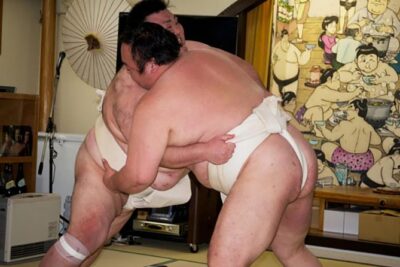
There is also a separate morning option for dates when no tournament is taking place. It meets near Warabi Station, about 30 minutes from Tokyo Station, and runs from 8:00 am to noon. In a join-in group of eight to 16 people, you watch wrestlers train at a sumo stable while a guide explains the session through a headset. Chanko lunch is included.
This can be a compelling alternative if your dates miss the official tournament season. Training offers a close look at discipline and practice, without the pageantry of a stadium event. But the distinction matters: the stable visit does not include a tournament seat ticket. It is a different experience, not a substitute ticket for a match.
The meeting directions for the stable visit are sent one week before the date. Check carefully that you are booking the tournament or the stable option you actually want. The description covers both, but they take place in different settings and at different times.
Practical details that can save you a headache
Book early if the tournament is a priority. The recommended lead time is three months, or at least one month. Group tickets are released by the Sumo Association only about four to seven weeks before the tour date. If the operator cannot obtain tickets, it will offer another date or a full refund, with notice within four weeks of the tour.
The tour does not include hotel pickup or transportation. Arenas are near public transportation, but you are responsible for reaching the meeting point. Check the email with the precise directions and leave enough time to find the group.
Food and drinks are not included unless you add dinner. Outside food and drinks are not allowed inside the arena, though vendors sell food there. One useful comfort tip from an arena visit: Tokyo’s Ryogoku Kokugikan can feel warm, so dressing lightly may help. Headset volume has also been described as loud even at its lowest setting. If you are sensitive to sound, consider bringing earplugs, while still keeping the headset usable.
The booking is non-refundable and cannot be changed. The operator also states that poor weather or not meeting the minimum group size may lead to a different date or experience, or a full refund. Read the terms before paying, especially if your Japan schedule is tight.
Who will get the most from this sumo tour
This is a strong choice if you are curious about sumo but do not know the rules, rituals, or wrestlers yet. The guide helps turn a succession of short bouts into a story about technique, rankings, and tradition. Families and first-time spectators may especially appreciate having explanations without needing to read up on the sport beforehand.
It also suits anyone who wants help securing a tournament seat. Tickets can sell quickly, and the tour handles ticket arrangements and seating allocation. If you already know sumo well, the commentary may still add something, but the main value for you may be the reserved seat and the chance to watch a live basho.
You may want another option if you prefer to explore entirely at your own pace or want the closest possible seats without paying for the private tour. Standard seats are on the second floor, and the group format includes a guide and other participants. For a more intimate look at training, choose the off-season stable visit, but do not expect a tournament.
Should you book it?
Book this tour if a live sumo tournament lines up with your Japan dates and you want more than a view of the ring. The best reasons are the reserved seat, the guide’s live explanations, and the chance to follow the rituals and rankings as they unfold. Consider the private option if getting closer to the ring matters, and add dinner if a sumo-linked meal appeals.
Skip the tournament version if you are visiting outside the six tournament months, or if a non-refundable booking feels too risky for your plans. In that case, the morning stable visit is a separate option worth considering, as long as you understand that it includes training, not a tournament. For a first sumo experience, the guided tournament tour offers a practical way into a sport that is much easier to enjoy once someone explains what you are watching.
FAQ
How long is the tournament tour?
The guided tournament experience lasts about four hours. The meeting time is listed as 2:00 pm, and the meeting point is sent by email at least one week before the date.
Which cities host the tournament tour?
The tour is available in Tokyo, Osaka, Nagoya, or Fukuoka, depending on the tournament season.
When are the official sumo tournaments held?
The six annual tournaments take place in January, March, May, July, September, and November. Tokyo hosts the January, May, and September events; Osaka hosts March; Nagoya hosts July; and Fukuoka hosts November.
What seats are included in the standard tour?
Standard join-in tours use B-class or C-class seats on the second floor. B-class seats are listed as rows 7 to 11.
What does the private tour include for seating?
The private tour includes S-class or A-class seats closer to the ring.
Is dinner included in the price?
No. Chanko hot pot dinner is optional and must be selected at checkout. Drinks are not included with the dinner.
Can I request a vegetarian dinner?
Yes. Make the request in the special requirements field at checkout. Traditional chanko broth usually contains pork or chicken, though the restaurant may substitute a vegetarian broth. Changes cannot be made within one week of the tour date once the request is accepted.
Does the off-season stable visit include a tournament ticket?
No. The off-season option visits a sumo stable near Warabi Station to watch morning practice. It includes a guide, headset, and chanko lunch, but no tournament ticket.
How far ahead should I book?
Booking three months ahead is recommended, or at least one month before your date. Group tickets are released by the Sumo Association about four to seven weeks before the tour.
Freshly reviewed in Tokyo
- Tokyo: Toshimaya Sake Brewery Tour with Sake Tasting★ 5.0 · 6 reviews
- :Tokyo,Shibuya /Meiji Shrine tour in KIMONO/English-friendly★ 5.0 · 4 reviews
- Tokyo: Tour Privado por Tokio en español★ 4.3 · 4 reviews
- Tokyo:Tea ceremony experience at Komaba Warakuan★ 4.8 · 9 reviews
- :Tokyo,Shibuya/ Pro Photography in Kimono / English-Friendly★ 5.0 · 26 reviews
- Tokyo:Samurai Training : Swords, Bushido & Mental Discipline★ 5.0 · 6 reviews
- Tokyo:Mt Fuji & Hakone Day Tour with English Speaking Driver★ 5.0 · 26 reviews
- Tokyo:Nikko UNESCO World Heritage Sites Private 1-Day Tour★ 3.8 · 6 reviews
Tokyo Sumo Experiences, compared.
Tokyo Shinjuku Sumo Show & Experience with Photo
Read our review →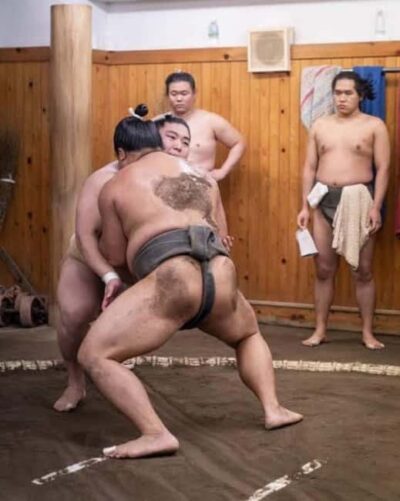

Authentic Sumo Experience in Tokyo: Enter the Sanctuary
Read our review →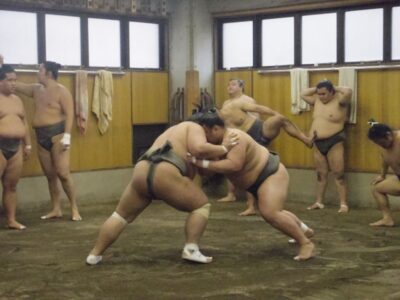
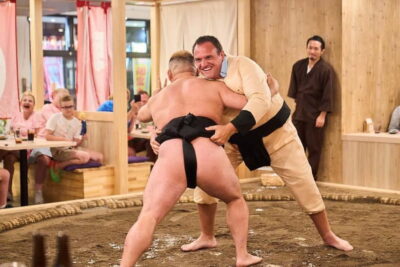
Tokyo Sumo Experience: Chanko & Mochi with a Former Pro
Read our review →Browse the lists this tour appears in