
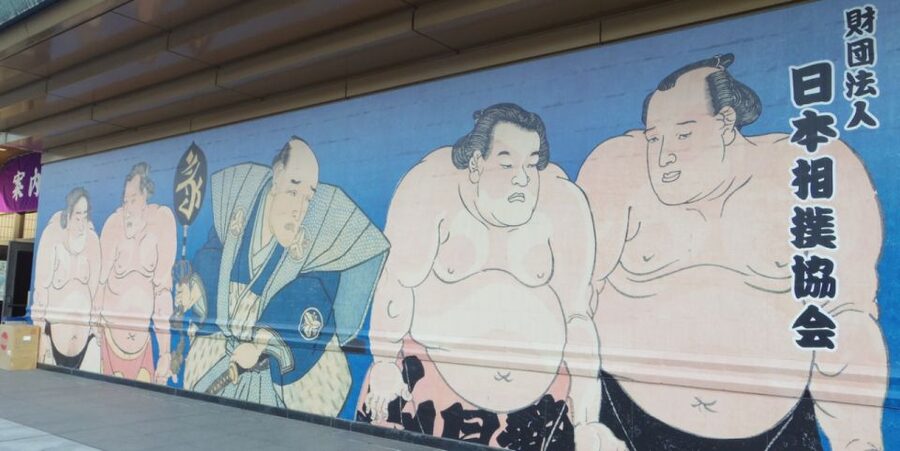
Reviewed · TOKYO SUMO EXPERIENCES
Tokyo: Sumo Tournament Tour with Chair Seat Tickets
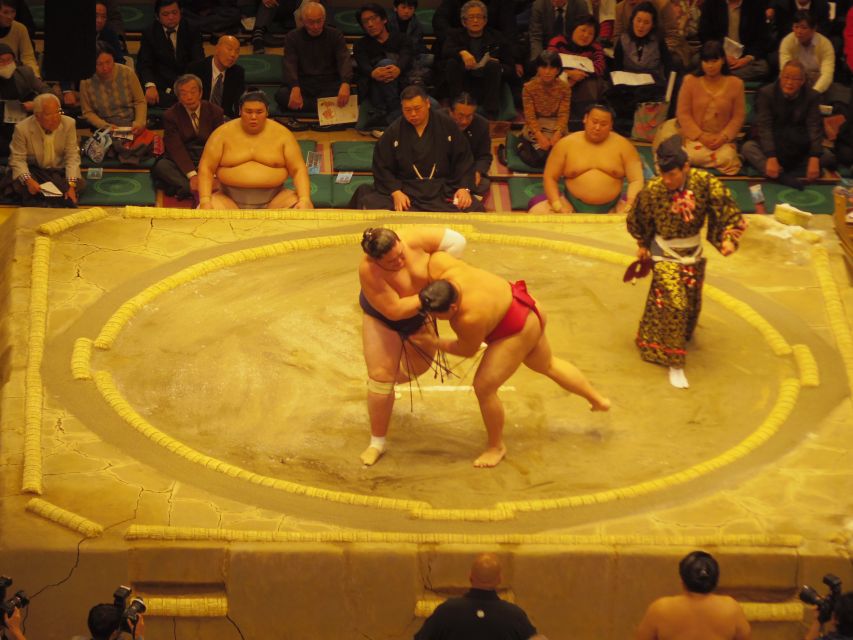
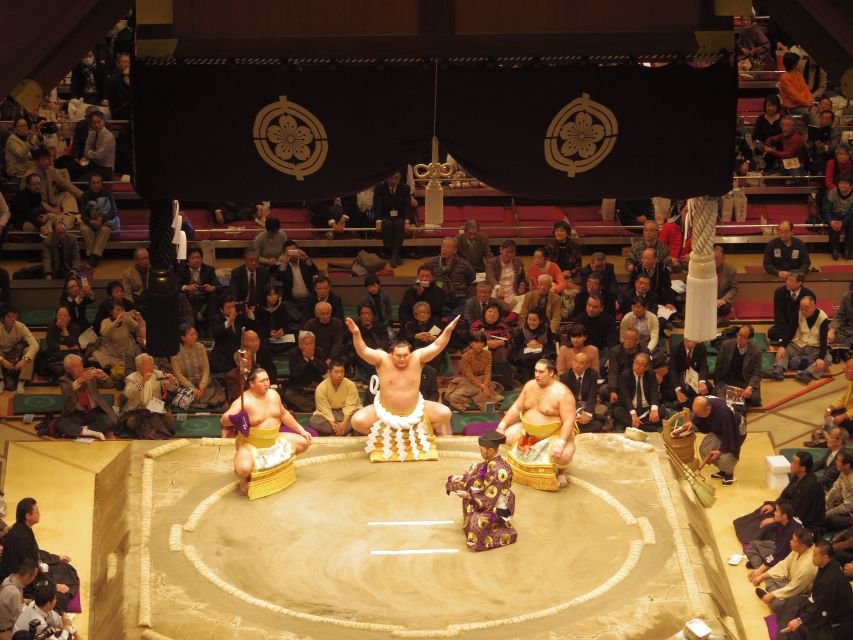
A sumo tournament is not a show put on for visitors. It is a real competition, with wrestlers facing off in brief, forceful bouts while a Japanese crowd follows every ritual and result. I like that this tour pairs tournament tickets with an English-speaking guide, so you can follow more than the action in the ring. I also like the chance to watch the top-division wrestlers make their formal ring entrances before the matches begin.
One consideration: the usual 2F chair seats can feel high or far from the ring, and you cannot choose your specific seat. The arena is compact, though, and the view is generally clear; if having more room matters, check whether the 1F box-seat option is available for your date.
- The top-division ceremonies are part of the show: The Makuuchi and Yokozuna ring entrances are scheduled for 3:40 and 3:55 PM.
- A guide helps make sense of each bout: Learn the rules, rituals, rankings, and who is worth cheering for.
- The afternoon runs about 2:15 to 6:00 PM: The meeting point can vary by option, so follow your booking instructions.
- Seat type depends on the option you choose: 2F chair seats are assigned, while 1F seats are box seats with your own seating space.
- The sumo supporter kit is optional: Check that your selected option includes it before booking.
- The value is more than the ticket: This can be a practical way to get into a popular tournament and understand what you are watching.
A real tournament, not a tourist performance
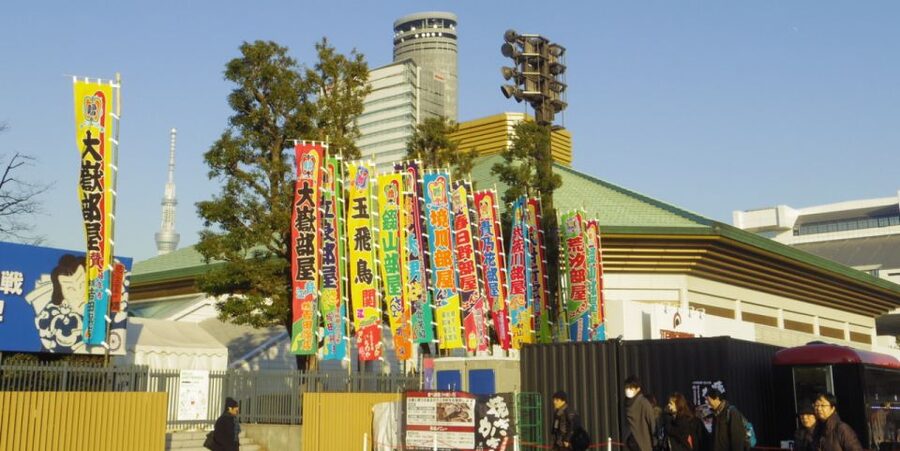
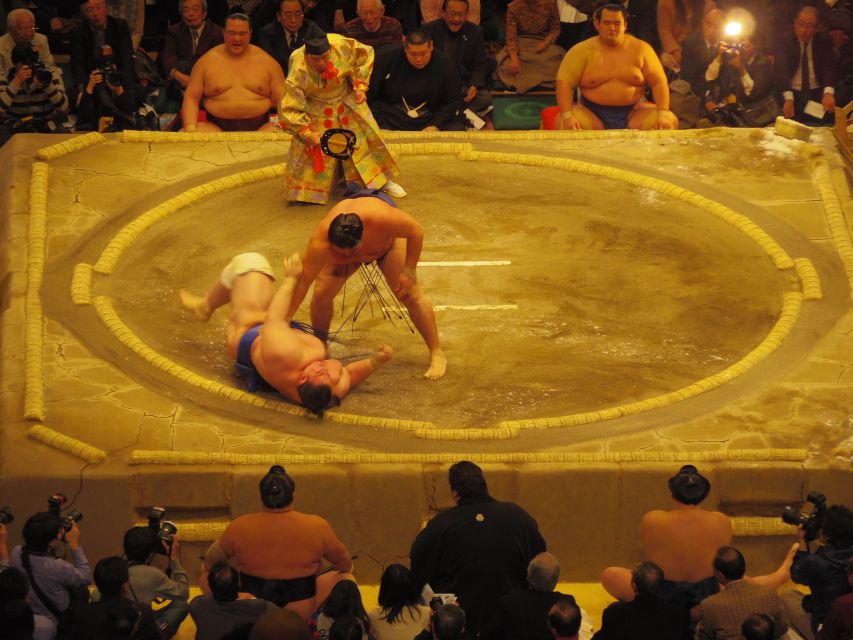
The main draw is simple: you get to see sumo in its own arena, during an actual tournament. The wrestlers are competing for real, and the crowd’s attention rises and falls with the bouts. Even if you have never watched sumo, the physical contest is easy to grasp: a wrestler wins by forcing his opponent out of the ring or making any part of the opponent’s body, other than the soles of his feet, touch the ground.
The rules are simple. The culture around them takes longer to understand. Rituals, rankings, formal entrances, and the wrestlers’ different levels of status all shape what happens in the arena. A guide helps connect those details to the action, so a short match can feel like more than two powerful men colliding.
This is a particularly good choice if you want an authentic sporting event rather than a sumo-themed meal or demonstration. The tournament setting also gives you the pleasure of joining a local audience, not just watching from the edges of a staged attraction.
Meeting at Ryogoku Station
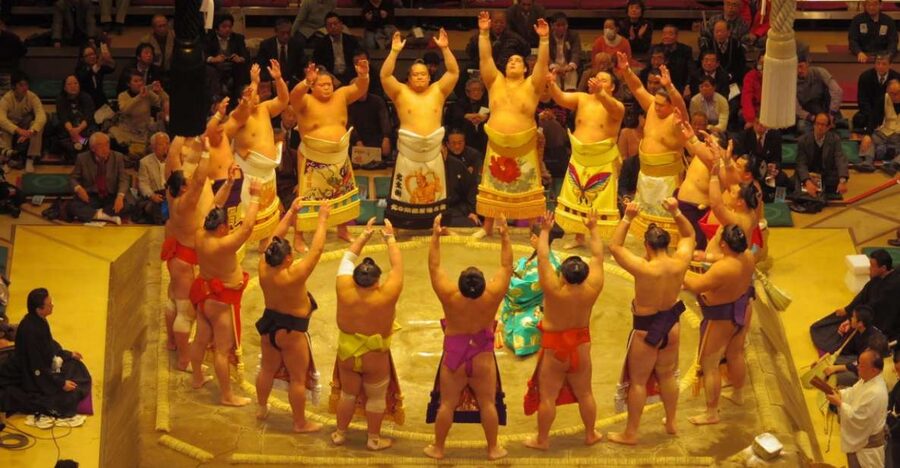
The advertised afternoon schedule begins with a 2:15 PM meeting at the West Gate of JR Ryogoku Station, followed by a walk to Ryogoku Kokugikan, Tokyo’s sumo arena. Meeting points can vary by booking option, so use the instructions for your specific reservation rather than relying on the standard location.
Allow time to find your group. More than one tour may meet in the same area, and the check-in can feel busy. Check your confirmation for any group number or color instructions, and have it ready when you arrive. If you have no mobile data, download or save the details in advance.
The walk to the arena is part of the handoff from ordinary Tokyo to tournament day, but do not expect a long guided neighborhood tour. The core experience is the arena and the match. Depending on the option, staff may escort you to the stadium entrance without going inside, while a guided tour option includes an English-speaking guide at the event.
More sumo experiences in Tokyo:
- Tokyo: Sumo Show Experience with Chicken Hot Pot and a Photo
★ 4.8 · 6,678 reviews - Tokyo: Sumo Show and Dining Experience
★ 4.8 · 2,742 reviews - the SUMO show
★ 5.0 · 1,960 reviews
Why the guide matters once the bouts begin
A guide can make a big difference, especially if this is your first sumo tournament. You may understand the basic goal of each bout right away, but it is harder to read a wrestler’s rank, a crowd’s reaction, or the meaning of a ceremony without some context. Guides such as Mieko, Taka, Mia, Sho, Hiro, and Yuko have been praised for explaining the sport clearly and bringing real enthusiasm to the day.
The best guides do more than deliver a short introduction. They answer questions as the tournament unfolds, point out details you might miss, and help you follow particular wrestlers. Some have prepared bout lists or notes on the wrestlers’ current positions, which can make the day easier to follow. A guide may even get you cheering for a favorite.
Expect the amount of commentary to vary. Some visitors find the guide’s presence throughout the event especially useful; others mainly value the initial explanation and the help getting to their seats. If you already know sumo well, the guide may add less. If you are new to the sport, the extra context is likely worth paying for.
Ring entrances, then the top-division bouts
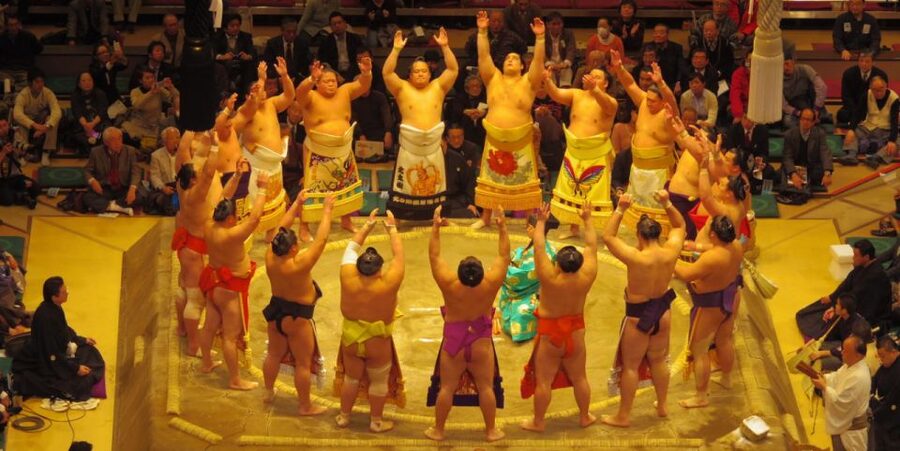
The Makuuchi division’s ring-entering ceremony is scheduled for 3:40 PM, followed by the Yokozuna ceremony at 3:55 PM. These formal entrances give you a chance to see the wrestlers assembled and presented before the main bouts. They are a memorable part of the afternoon, and the guide can help explain who is entering and why rank matters.
The Makuuchi matches are scheduled to begin at 4:10 PM, with the tournament ending around 6:00 PM. The bouts themselves can be very short. That quick burst of effort, after the ceremony and build-up, is part of the appeal: you watch the wrestlers size each other up, then the contest can be decided in seconds.
The action is not nonstop wrestling. Ritual and anticipation are woven through the event, and that rhythm is part of sumo. A guide can point out what is happening between bouts and help you notice tactics, wrestler rankings, and audience reactions. Without that help, you can still enjoy the spectacle, but some of the finer points may pass you by.
Choosing between 2F chairs and 1F box seats
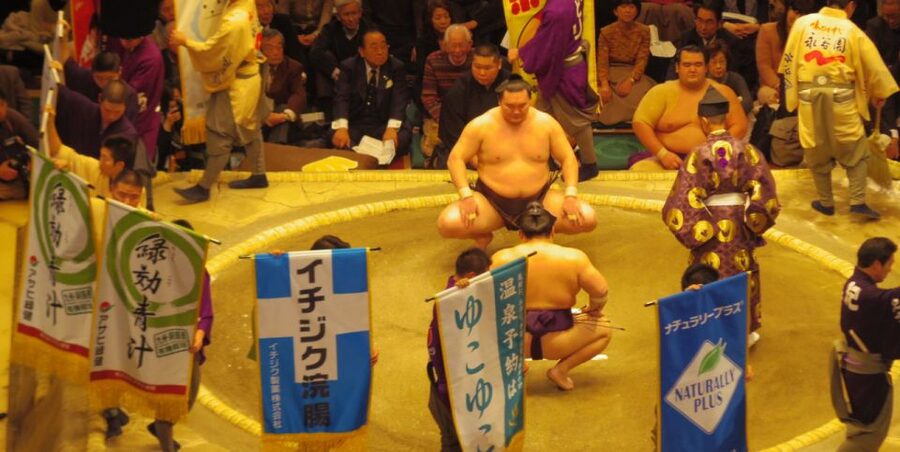
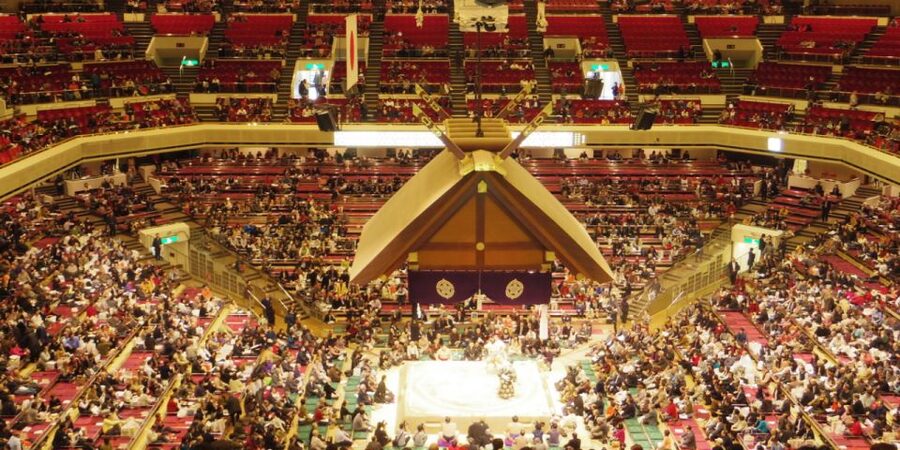
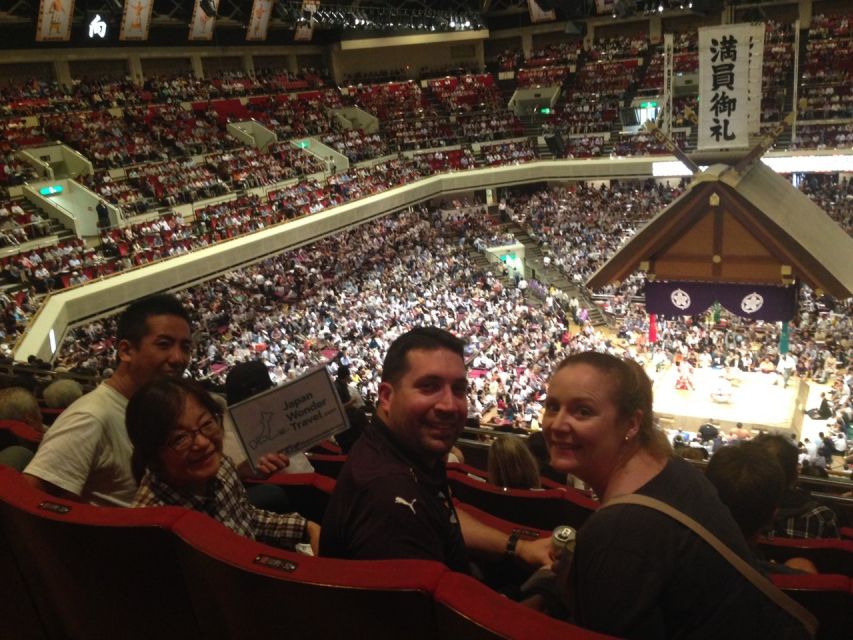
The standard option offers 2F chair seats. You cannot select the exact seats yourself, and the guide hands over the ticket on the day. Some seats may look high or distant on a seating map, but the arena is relatively compact and the view can still be good. The trade-off is straightforward: you get a seat with a broad view, not a place right beside the ring.
The 1F option is different. First-floor seating is made up of box seats, and this option gives your group its own seating space without sharing it with others. If you want a more distinct seating area, or are booking with family or friends, that can be appealing. Check the exact option and price before booking, since the seat type depends on what you select.
Do not count on choosing a particular section or seat. If proximity to the ring is your top priority, read the available seating description carefully and decide whether the extra cost of a box seat is worthwhile for you. If you mainly want to see the matches and feel the crowd’s response, the 2F chairs are a sensible choice.
More tickets in Tokyo:
- Tokyo: teamLab Planets TOKYO Digital Art Museum Entry Ticket
★ 4.6 · 9,779 reviews - Tokyo: Hop-On Hop-Off Sightseeing Bus Ticket
★ 3.9 · 4,207 reviews - Tokyo: Japanese Dance Cabaret Theater Asakusa-Kaguwa Ticket
★ 4.8 · 2,270 reviews - Tokyo: Samurai Restaurant Show Ticket with 2 Drinks
★ 4.5 · 1,307 reviews
The supporter kit and food options
Some booking options include a sumo fan cheer kit. It is a playful extra that helps you join in, especially if your guide points out wrestlers to cheer for. It is not included with every option, so confirm it at checkout rather than assuming it comes with the ticket.
Food and drinks are not included in the standard experience. Some options may include lunch, but the details matter: the type of meal and what is served should be clear in your booking information. If a lunch option is offered and you have allergies or dietary restrictions, share them when booking or after you reserve.
Food inside the stadium is available, and some people find the prices reasonable. Chanko nabe, the stew associated with sumo wrestlers, has been part of some tour experiences, but do not assume it is included in your package. The safest approach is to treat lunch as an optional extra unless your booking explicitly lists it.
Is $141 a fair price?
At $141 per person, this tour costs more than a ticket alone might. You are paying for the convenience of securing a place at a tournament, the English-speaking guide, and, depending on your option, a supporter kit or a different seat type. If tickets are hard to obtain for your dates, the booking help can be a meaningful part of the value.
The guided context is the other important part. Sumo is more rewarding when you understand the rankings, customs, and reasons behind the crowd’s response. If you would happily watch the matches without explanation, you may prefer to seek a ticket on your own. But official tickets can sell quickly, and booking through a tour can be a useful alternative if you cannot secure one directly.
Before you pay, compare the exact package details: seat type, kit, and any lunch inclusion. The food has caused confusion when expectations did not match what was actually provided. A clear understanding of what is included helps you judge the price fairly.
Practical details before you book
The activity is in English and is not suitable for wheelchair users. Baby strollers are not allowed, and large luggage cannot be taken into the seating area. Children aged 3 and under can enter for free but do not receive their own seat, so they must sit on an adult’s lap. Children aged 4 and older need their own ticket.
The experience ends back at the meeting point. Hotel pickup and drop-off are not included, so plan your route to and from Ryogoku Station or the meeting point named in your booking. If you want to keep plans flexible, the booking offers a reserve-now, pay-later option, and cancellations made up to 24 hours in advance qualify for a full refund.
Who should book this sumo tour?
I would book this if you will be in Tokyo during one of its tournament periods and want to see sumo as a live sport, not just learn about it in a museum or watch a staged performance. It is especially well suited to first-timers, families with older children, and anyone who likes the idea of having a guide explain the action while it happens.
If you already understand sumo and can find a ticket yourself, the guided portion may be less essential. If you are sensitive to seat distance, check the 1F box-seat option before choosing the standard 2F chairs. For most first-time visitors, though, the mix of a real tournament, an English-speaking guide, and an easier route to tickets makes this a strong use of an afternoon.
FAQ
How long does the tournament experience last?
The listed schedule starts with a 2:15 PM meeting and ends around 6:00 PM. The Makuuchi matches are scheduled to begin at 4:10 PM.
Where is the meeting point?
The standard meeting point is the West Gate of JR Ryogoku Station. The meeting point may vary depending on the option booked, so check your booking instructions.
Are the seats on the first or second floor?
Depending on your option, you receive 2F chair seats or 1F box seats. You cannot choose specific 2F seats. First-floor seating is in box seats.
Is a sumo supporter kit included?
It is included only if you select an option that offers it. Check the package details when booking.
Is lunch included?
Food and drinks are not included in the standard experience. Some options may offer lunch, so check your selected package for details. Share any allergies or dietary restrictions when booking or after making your reservation.
Can children attend?
Children aged 3 and under can enter for free but do not have their own seat and must sit on an adult’s lap. Children aged 4 and older need their own tickets.
Is the tour suitable for wheelchair users, and can I bring a stroller?
The activity is not suitable for wheelchair users, and baby strollers are not allowed. Large luggage cannot be brought into the seating area.
Freshly reviewed in Tokyo
- Tokyo: Toshimaya Sake Brewery Tour with Sake Tasting★ 5.0 · 6 reviews
- :Tokyo,Shibuya /Meiji Shrine tour in KIMONO/English-friendly★ 5.0 · 4 reviews
- Tokyo: Tour Privado por Tokio en español★ 4.3 · 4 reviews
- Tokyo:Tea ceremony experience at Komaba Warakuan★ 4.8 · 9 reviews
- :Tokyo,Shibuya/ Pro Photography in Kimono / English-Friendly★ 5.0 · 26 reviews
- Tokyo:Samurai Training : Swords, Bushido & Mental Discipline★ 5.0 · 6 reviews
- Tokyo:Mt Fuji & Hakone Day Tour with English Speaking Driver★ 5.0 · 26 reviews
- Tokyo:Nikko UNESCO World Heritage Sites Private 1-Day Tour★ 3.8 · 6 reviews
Tokyo Sumo Experiences, compared.
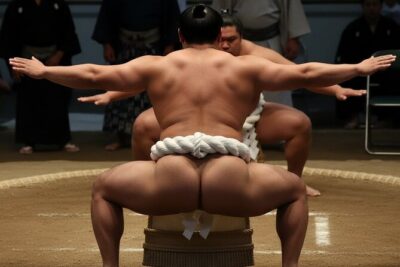
Tokyo Shinjuku Sumo Show & Experience with Photo
Read our review →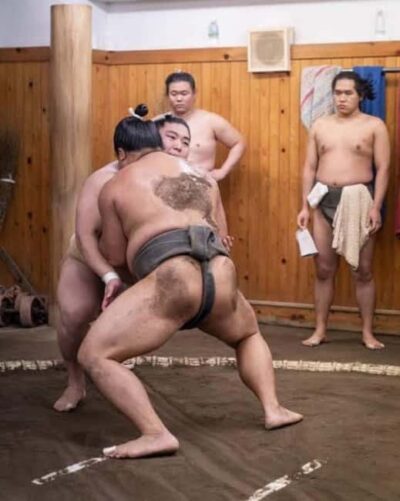

Authentic Sumo Experience in Tokyo: Enter the Sanctuary
Read our review →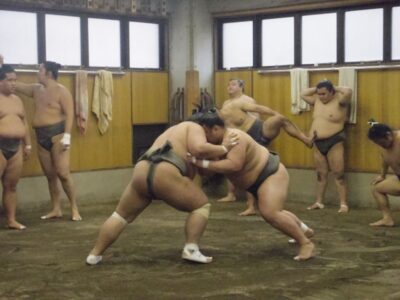
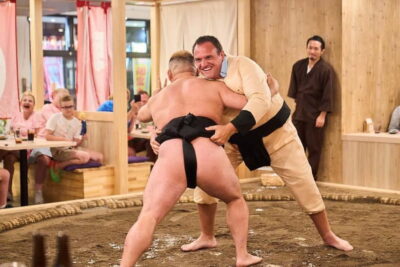
Tokyo Sumo Experience: Chanko & Mochi with a Former Pro
Read our review →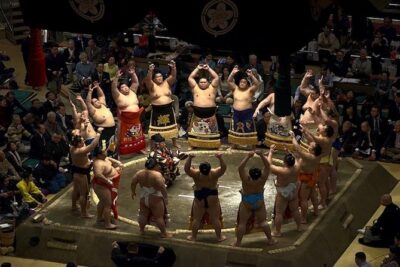
Ultimate Sumo Tournament: Tokyo, Osaka, Nagoya, Fukuoka
Read our review →Browse the lists this tour appears in