
Reviewed · TOKYO CITY TOURS
Tokyo: Hop-On Hop-Off Sightseeing Bus Ticket
Tokyo is a city of distinct districts, and this open-top bus gives you a quick way to see how they fit together. One ticket covers three routes, linking sights such as Asakusa, Tokyo Skytree, Tokyo Tower, Ginza, Shinjuku, and Shibuya.
I like the wide views from the open second deck and the freedom to use one ticket across all three routes. I also like that the phone-based audio guide comes in 10 languages, including Thai, Vietnamese, and Indonesian.
The main trade-off is the timetable: buses do not necessarily come often, and a full bus means waiting for the next one. The open deck has no air-conditioning, so weather matters as much as your sightseeing plan.
At a glance
- Three distinct routes: Choose between Tokyo Skytree and Asakusa, Tokyo Tower and Ginza, or Shinjuku and Shibuya.
- A useful first-day overview: Ride a full circuit to get your bearings, then use the stops to pick out places to visit in more depth.
- Audio on your own device: Commentary is offered in 10 languages. Bring a charged phone and earphones, and expect data charges to be your responsibility.
- Open-air seating only: All passenger seats are on the second floor. There is no air-conditioning, and umbrellas are not allowed on board.
- Allow time between buses: Service gaps can be long, so note the timetable at each stop before you hop off.
- About $30 per person: The ticket can be used for one or two days. It is most useful if you plan to ride several routes or value the overview, rather than simply needing the cheapest way across town.
A first look at Tokyo from the upper deck

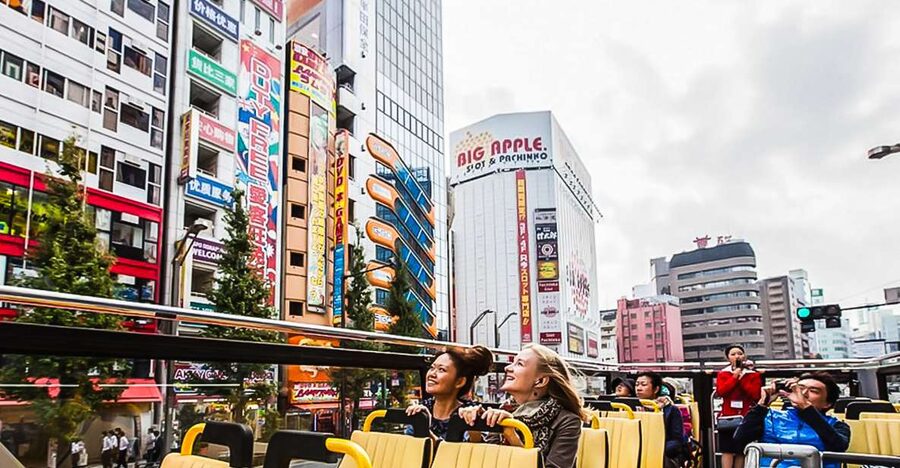
Tokyo can feel hard to read at street level. Neighborhoods are spread across a huge area, and the train system is excellent but can make it easy to move between stations without seeing much of the city in between. From the bus’s open second deck, you get a different kind of orientation: streets, towers, temples, and districts pass in sequence.
The ticket includes unlimited access to all three routes for the period you select, either one or two days. You can ride from start to finish for a broad survey, or get off to explore and rejoin the service later. The second option sounds simple, but it depends on bus frequency and seat availability, so it pays to plan around the timetable rather than assuming another bus will arrive soon.
The bus begins at the Mitsubishi Building in Marunouchi, but you can also board at other stops using the QR code on your voucher. English and Japanese are listed as driver languages. A free shuttle service is included, though details about its route are not provided.
More city highlights tours in Tokyo:
- From Tokyo: Mount Fuji Full-Day Sightseeing Trip
★ 4.5 · 4,970 reviews - Tokyo: Private City Highlights Tour with Local Guide
★ 4.8 · 1,433 reviews - Tokyo Private Sightseeing Tour by Car- English speaking chauffeur
★ 5.0 · 1,004 reviews
Route 1: Skytree, Asakusa, and old Tokyo
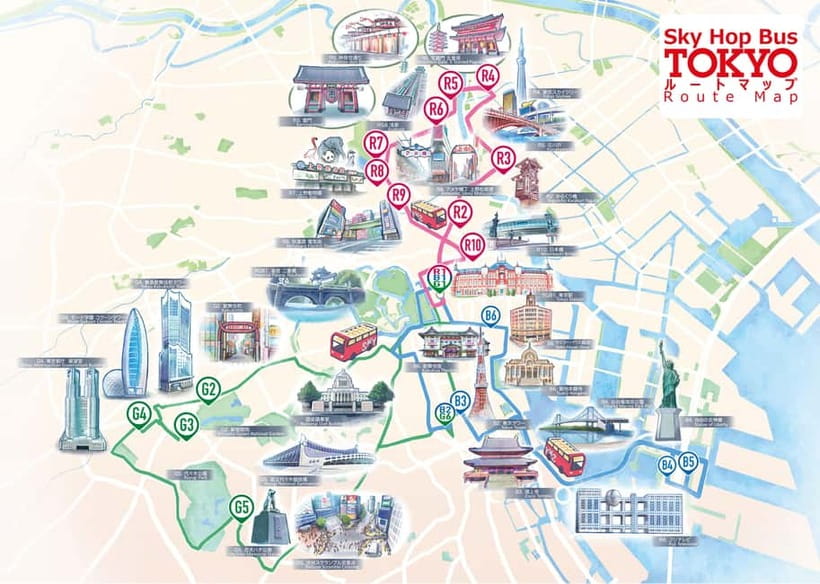
The Tokyo Skytree course links Marunouchi with several neighborhoods in eastern Tokyo. From the Mitsubishi Building, the route passes Kodemmacho Station and the Edo-Tokyo Museum area in Ryogoku before reaching Tokyo Skytree. It then continues through Asakusa, Ueno, Akihabara, and Shin-Nihombashi on its way back to Marunouchi.
Skytree is the major visual landmark here. Even if you do not go up the tower, seeing it from the bus gives you a sense of its scale and its place in the city. If you do want to visit the tower or nearby sights, get off with enough time to explore and check the next departure before leaving the bus.
Asakusa is a natural stop for anyone interested in Tokyo’s older temple district. The route includes stops at Asakusa Hanakawado and Asakusa Tawaramachi, giving you a chance to explore the area on foot. Ueno offers another possible break, while Akihabara brings the route back toward Tokyo’s electronics and pop-culture district.
This course is a good choice if you want to combine landmark views with neighborhoods that feel different from central Marunouchi. It is also easy to overfill your day. Skytree, Asakusa, Ueno, and Akihabara each reward time on foot, so you will not see all of them properly if you treat every stop as a quick hop off.
Route 2: Tokyo Tower, Zojo-ji, and the bay
The Tokyo Tower, Tsukiji, and Ginza course heads south from Marunouchi. It serves Tokyo Tower, Tokyo Prince Hotel and Zojo-ji Temple, Tokyo Teleport Station, and Tsukiji Ginza before returning to the Mitsubishi Building.
Tokyo Tower gives you one of the city’s best-known skyline views from the street, with the tower rising above its surroundings. Nearby Zojo-ji Temple offers a useful contrast: a historic temple setting close to modern buildings and transport links. If you plan to visit both, check the bus timetable first. Getting off is easy; finding that your next bus is a long wait can change the shape of your day.
The route also passes through the Tsukiji and Ginza area. Tsukiji is a draw for food-minded visitors, while Ginza is known for its shops and central-city feel. The stop names are useful starting points, but they do not mean that the bus will carry you to every specific attraction you have in mind. Check a map and be ready to walk from the stop.
Tokyo Teleport Station takes the course toward the bay area, adding a different side of the city to a route that begins among central landmarks. If you only have one day, this line works well as part of a full circuit. If you want to spend time at Tokyo Tower, Tsukiji, or Ginza, a two-day ticket gives you more breathing room.
Route 3: Shinjuku, Harajuku, and Shibuya
The Shinjuku Shibuya course runs west from Marunouchi, serving Shinjuku-gyoemmae Station, Shinjuku Station South Exit and Hotel Century Southern Tower, and the Shinjuku Mitsui Building in Nishi-Shinjuku. It then heads toward Shibuya City Hall, Harajuku, and Meiji Jingu Shrine before returning to the start.
This route helps you see the changing character of west Tokyo. Shinjuku has several stops, so note which one best matches your plans. The station area, the South Exit, and Nishi-Shinjuku are not interchangeable drop-off points, especially if you are trying to reach a particular destination on foot.
Harajuku and Meiji Jingu Shrine offer a different pairing: a lively urban district alongside a large shrine setting. Shibuya adds another major center to the route. For a first visit, this circuit can help you decide which area deserves a longer return trip.
The three courses together cover a broad selection of central Tokyo sights, but they are not a replacement for local trains. If your main goal is to reach a particular neighborhood quickly, the metro or JR lines are often more practical. Use the bus for the views and orientation, then switch to rail when you want direct transport.
More tickets in Tokyo:
- Tokyo: teamLab Planets TOKYO Digital Art Museum Entry Ticket
★ 4.6 · 9,779 reviews - Tokyo: Japanese Dance Cabaret Theater Asakusa-Kaguwa Ticket
★ 4.8 · 2,270 reviews - Tokyo: Samurai Restaurant Show Ticket with 2 Drinks
★ 4.5 · 1,307 reviews - Tokyo Skytree Admission Ticket with Tembo Deck and Galleria
★ 4.0 · 589 reviews
The audio guide works best when you prepare
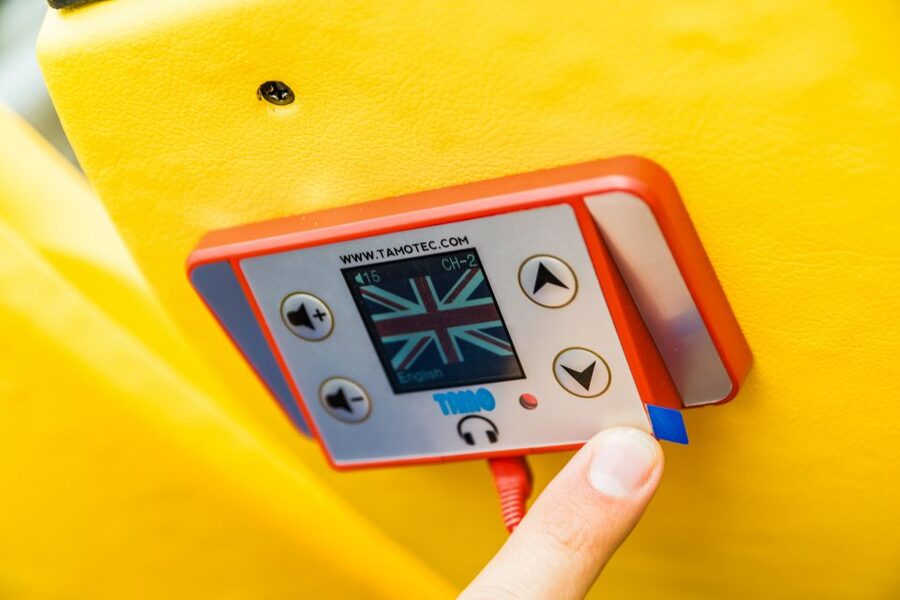
The newer audio system lets you listen on your own smartphone or tablet. It offers Japanese, English, Korean, Chinese, French, German, Spanish, Thai, Vietnamese, and Indonesian. Bring your own earphones, and make sure your device has enough battery for a long ride. Data charges may apply.
Some buses may also have vehicle-mounted audio in Japanese, English, Korean, Chinese, French, German, and Spanish. But it is not available on every bus, so do not count on it as your only option. The personal-device system is the safer plan if you want commentary.
The commentary adds context to the view, but the practical value is also in the ability to listen in a language you understand. The bus route can pass quickly through areas you might later want to explore on foot. Note names or take a quick look at your map as the bus moves, especially if you plan to return to a particular stop.
Plan around the timetable, not just the map
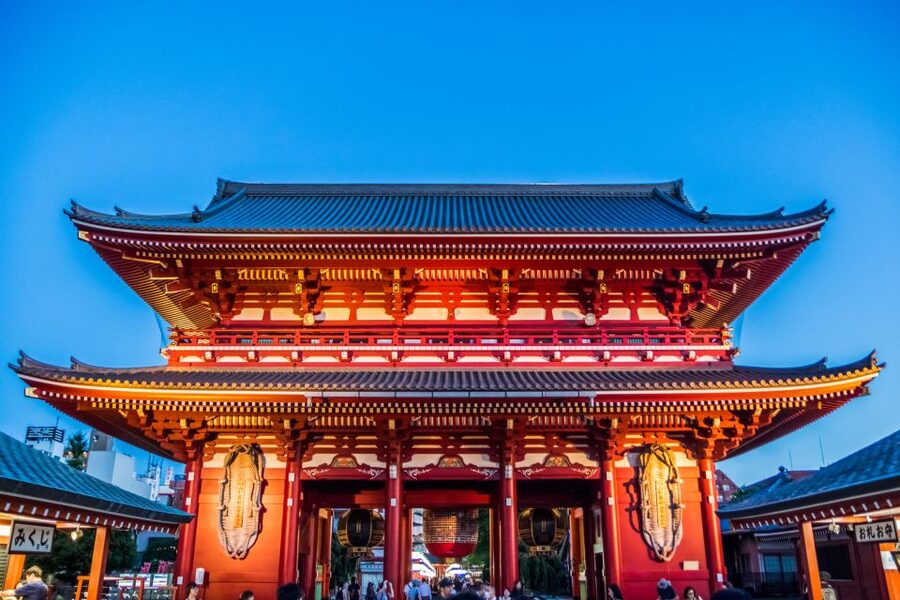
This is a hop-on hop-off service, but it is not a bus that appears every few minutes. Service gaps can be around 30 to 45 minutes, and longer waits are possible. One account describes waiting more than an hour and a half for the next bus after missing a departure. That makes a timetable photo and a saved map pin useful little tools.
A full loop can take about two hours, with traffic adding delays. If you want to ride all three routes in one day, start early and keep stopovers selective. One rider found that a two-day ticket made it easier to use the first day for orientation and the second to revisit chosen places. That is a sensible approach if you prefer not to race the clock.
There is no reserved seat. If a bus is full, you must wait for the next one, so allow extra time at popular stops. Traffic can also disrupt the schedule. If you have a timed entry or a train to catch, do not build a tight connection around the bus.
The ticket costs about $30 per person. That is a fair deal if you ride several circuits, make meaningful use of the commentary, or want an easy first overview without planning each train connection. It is less compelling if you intend to use the bus only once or twice as transport. Tokyo’s rail network is a better fit for quick point-to-point journeys.
Open-air comfort depends on the day
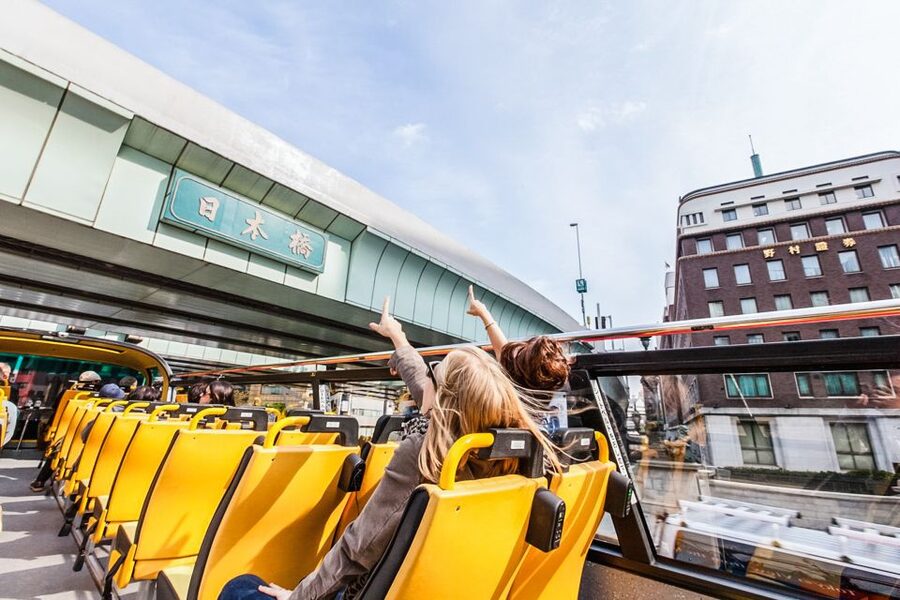
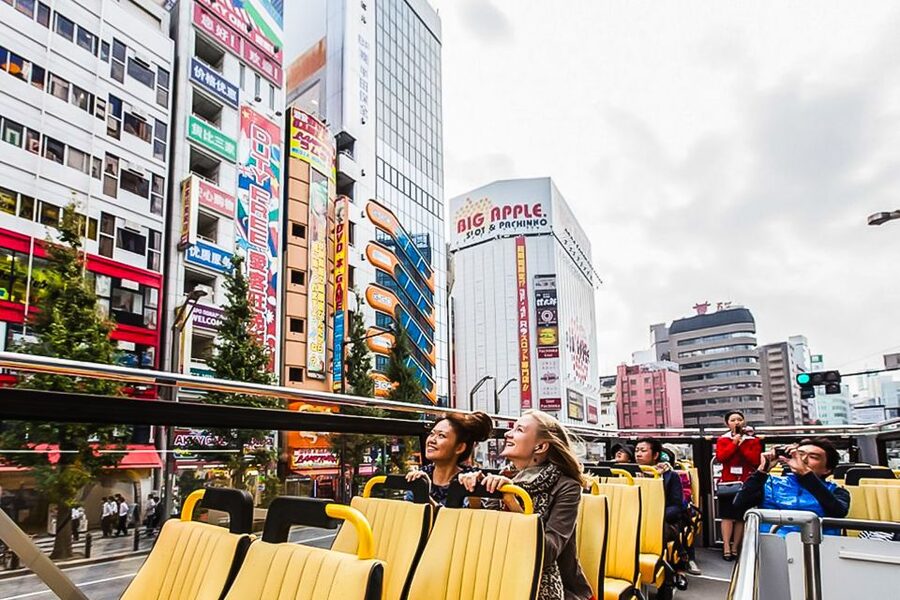
The open top is the main attraction and the main comfort question. You get clear views and a good chance to take photos, but all passenger seats are on the second floor, and there is no air-conditioning. On a hot day, the sun and heat can make a long ride tiring. Bring water and sun protection, and consider breaking the day into shorter stretches.
Rain does not automatically stop the tour. Raincoats are distributed when needed, and umbrellas are prohibited on board. In severe weather, including typhoons or thunderstorms, the service may not operate. Wind can be strong on exposed sections of the route, so secure hats and loose items.
The open deck can also make an evening ride especially appealing. City lights come on around the towers and central districts, and the elevated view gives you a different sense of Tokyo than you get from the pavement. Check the operating timetable for the day you plan to ride, since the available information does not specify departure times or guarantee a particular evening run.
Who will get the most from this ticket
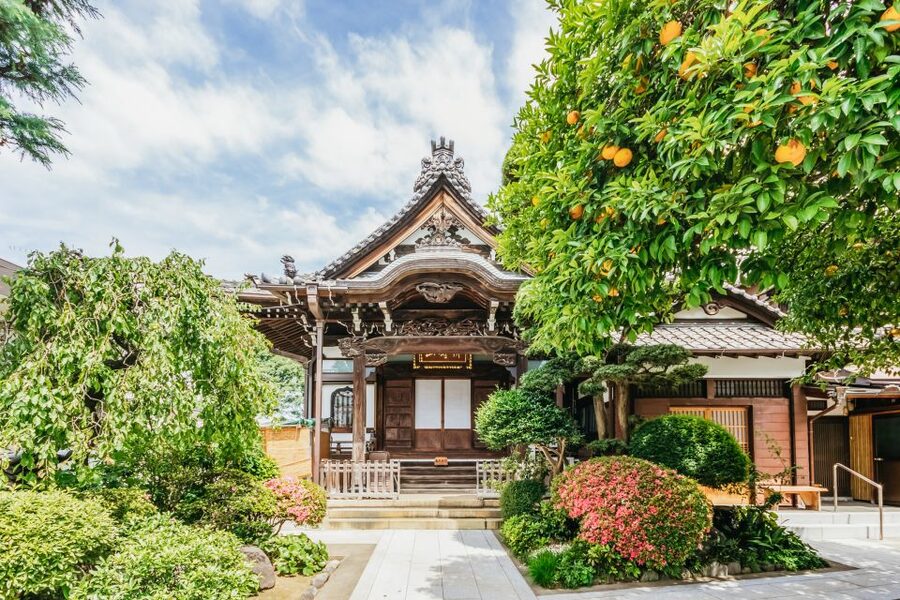
I would use this bus early in a Tokyo stay, especially if the city feels overwhelming at first. A complete circuit gives you a broad mental map and helps you choose where to spend your time. It suits first-time visitors, people with limited time, and anyone who enjoys seeing a city from above the street without navigating every transfer.
It is also a good choice if you want to compare several neighborhoods before committing to visits. Ride a route, make notes, and return later by train to the places that interest you most. The bus makes the city legible; it does not make every stop the fastest way to get around.
If you already know Tokyo well, or your budget is tight, you may get better value from local trains and a carefully chosen itinerary. And if heat, rain, or long waits would spoil the day, think carefully before booking an open-air bus. Free cancellation is available up to 24 hours in advance, and reserve-now, pay-later is offered.
Should you book the Tokyo hop-on hop-off bus?
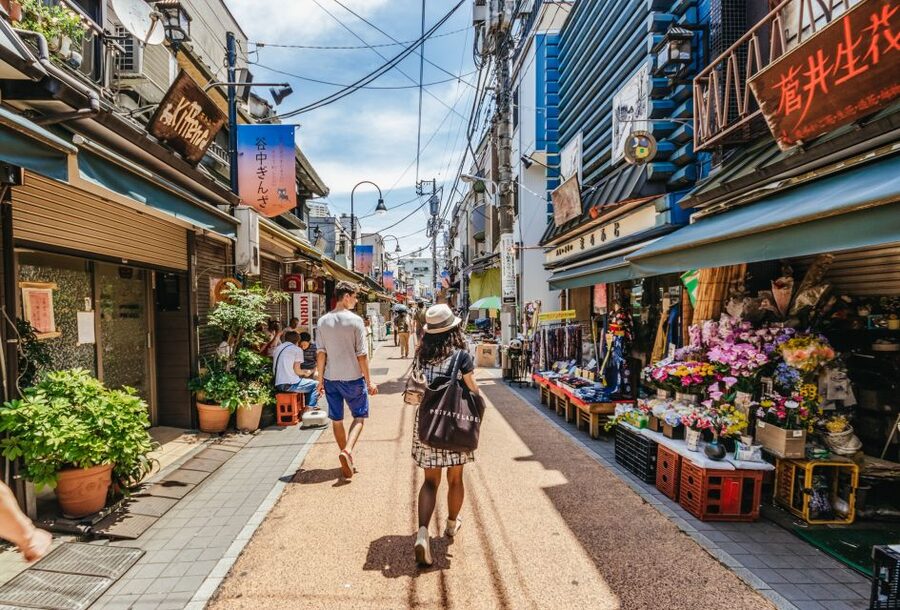
Book it if you want a relaxed overview, panoramic views, and a way to compare Tokyo’s major districts before exploring them more closely. The two-day option is the calmer choice if you want to get off often or ride all three routes without rushing.
Skip it if you mainly need fast transport or want to spend most of your day inside attractions. At about $30, the ticket earns its keep through the view and orientation, not through speed. Check the timetable, bring your phone and earphones, and treat the bus as a sightseeing experience with transport built in.
FAQ
How long is the ticket valid?
You can choose a ticket for one or two days. Check availability for the starting times offered for your date.
Which areas do the three routes cover?
The routes cover Tokyo Skytree, Ryogoku, Asakusa, Ueno, and Akihabara; Tokyo Tower, Zojo-ji, Tokyo Teleport Station, Tsukiji, and Ginza; and Shinjuku, Harajuku, Meiji Jingu Shrine, and Shibuya.
Where can I board the bus?
The main meeting point is in front of the Mitsubishi Building. You can also board at other Tokyo bus stops using the QR code sent with your voucher.
Is the audio guide available in English?
Yes. The personal-device audio guide is available in English and nine other languages: Japanese, Korean, Chinese, French, German, Spanish, Thai, Vietnamese, and Indonesian.
Do I need to bring my own phone and earphones?
Yes. Bring a smartphone or tablet and earphones to use the personal-device audio guide. Data charges may apply and are your responsibility.
Is there air-conditioning on the bus?
No. The bus is open-air, and there is no air-conditioning. Passenger seats are on the second floor; the first floor is for storage.
What happens if it rains?
Raincoats are distributed if needed, and umbrellas are not allowed on board. Severe weather, such as a typhoon or thunderstorm, may cause the tour not to operate.
Are seats guaranteed when I hop on?
No. If there are no free seats, you must wait for the next bus. Check the timetable before getting off, since waits can be long.
Can I cancel the ticket?
Yes. You can cancel up to 24 hours in advance for a full refund. The booking also offers a reserve-now, pay-later option.
Freshly reviewed in Tokyo
- Tokyo: Toshimaya Sake Brewery Tour with Sake Tasting★ 5.0 · 6 reviews
- :Tokyo,Shibuya /Meiji Shrine tour in KIMONO/English-friendly★ 5.0 · 4 reviews
- Tokyo: Tour Privado por Tokio en español★ 4.3 · 4 reviews
- Tokyo:Tea ceremony experience at Komaba Warakuan★ 4.8 · 9 reviews
- :Tokyo,Shibuya/ Pro Photography in Kimono / English-Friendly★ 5.0 · 26 reviews
- Tokyo:Samurai Training : Swords, Bushido & Mental Discipline★ 5.0 · 6 reviews
- Tokyo:Mt Fuji & Hakone Day Tour with English Speaking Driver★ 5.0 · 26 reviews
- Tokyo:Nikko UNESCO World Heritage Sites Private 1-Day Tour★ 3.8 · 6 reviews
Tokyo City Tours, compared.

Private City Highlights Tour with Local Guide
Read our review →
Tokyo Private Sightseeing Tour by Car- English speaking chauffeur
Read our review →

3h Tokyo E-Bike Tour: Hidden Gems, and Local Life with guide
Read our review →
Discover Mt. Fuji 5th Station & Kawaguchiko Sightseeing Day Tour
Read our review →
Browse the lists this tour appears in