
Reviewed · TOKYO SUMO EXPERIENCES
Tokyo Sumo Experience: Chanko & Mochi with a Former Pro
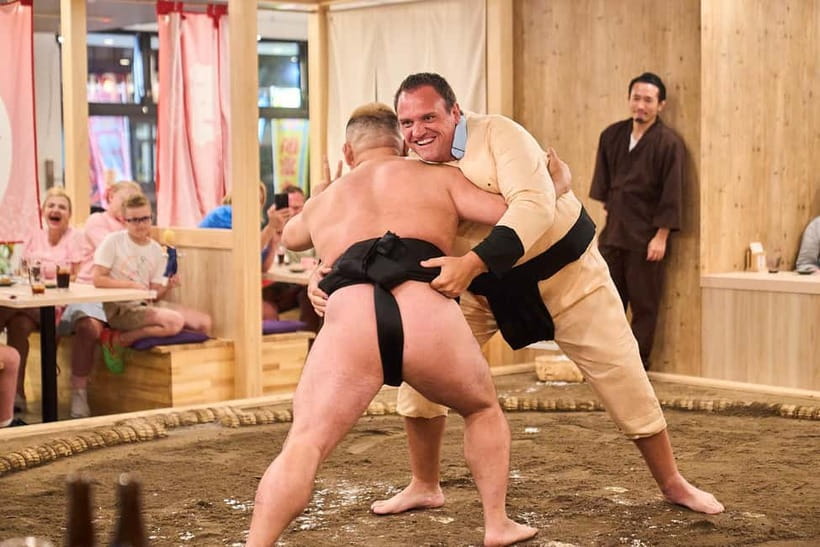
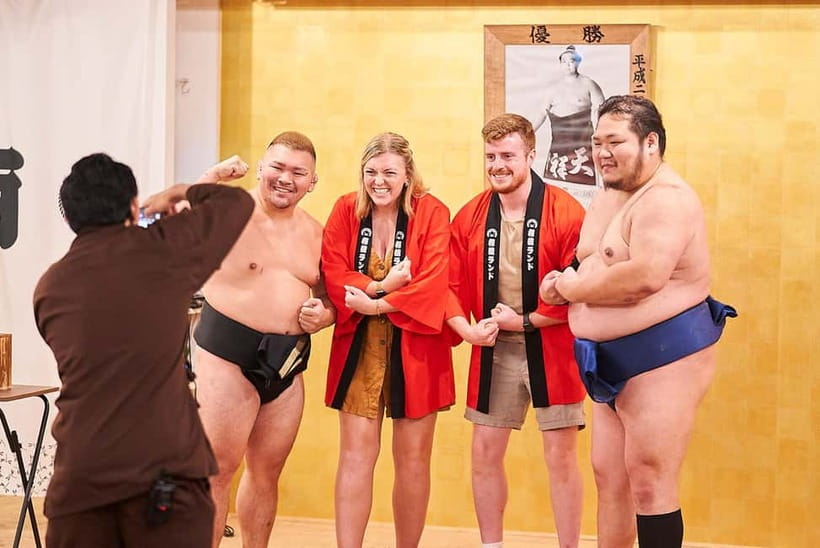
In Ryogoku, sumo’s spiritual home, this two-hour event brings you close to the wrestlers without asking you to sit quietly through a formal lecture. You watch demonstrations from beside the dohyo, eat chanko nabe, then have the option to try sumo moves and step into the ring yourself.
I like the mix of real sumo knowledge and hands-on fun, especially the chance to hear from former professionals. I also like that the meal and mochi-making are part of the event, so you get more than a short wrestling show.
One thing to know: this is an entertaining, family-friendly introduction, not a visit to serious morning training. Seats are assigned, and the standard seats are not suitable for holding a child on your lap.
- Watch sumo from beside the dohyo: See close-up demonstrations and sample matches in Ryogoku.
- Try the sport yourself: Learn techniques and, if you want, test them against a wrestler.
- Eat chanko nabe: This hot pot is associated with sumo wrestlers and is supervised by wrestlers from an actual stable.
- Make mochi by hand: Help pound the rice, then enjoy the sweet mochi for dessert.
- Plan for assigned seating: The venue chooses your seat, so you cannot request a particular spot.
Sumo Up Close in Ryogoku
This is a good way to encounter sumo if you are visiting Tokyo outside a tournament or want more context than a few minutes of action can provide. The setting is in Ryogoku, the neighborhood most closely associated with the sport, and the format combines demonstrations, food and audience participation.
The wrestlers are former professionals, so the event offers more than a costumed performance. You can learn about sumo training, techniques and wrestlers’ lives while seeing the physical force of the sport at close range. English and Japanese instruction is available, which helps make the explanations accessible to international visitors.
The tone is deliberately relaxed. The aim is to make sumo entertaining for adults and children, not to recreate the strict atmosphere of a stable’s morning practice. That distinction matters: book this for an engaging cultural activity, not for an unfiltered look at professional training.
The event lasts two hours, a manageable length for a family outing or an evening activity. It is also highly participatory, but you can enjoy it as a spectator if you would rather keep your balance firmly outside the ring.
From the Dohyo to the Demonstrations
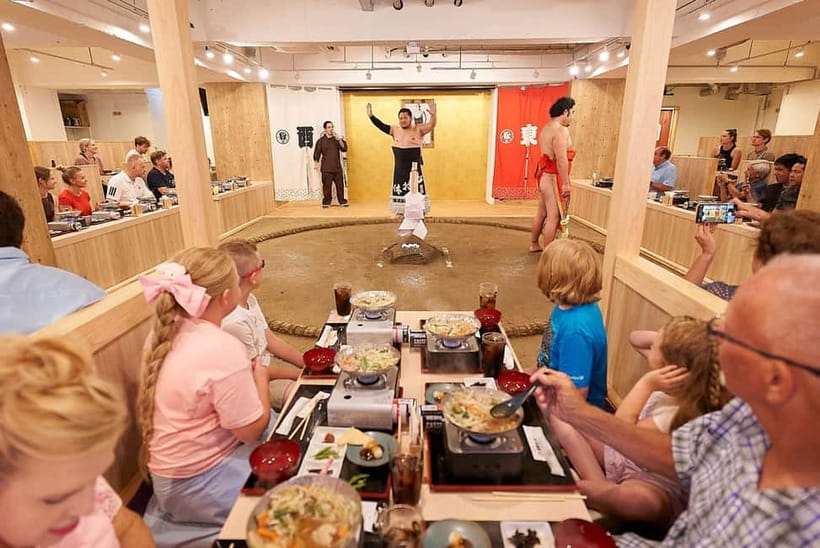
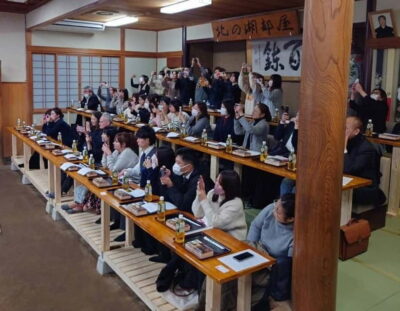
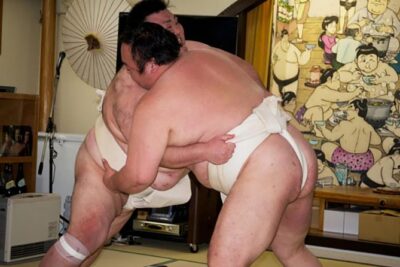
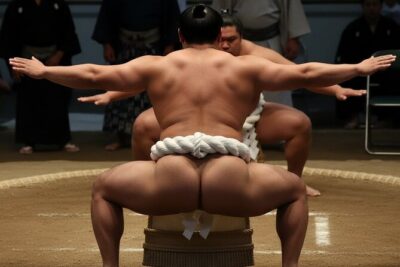
The dohyo is the center of attention. You settle into a seat around the ring and watch the wrestlers demonstrate sumo in front of you. Seeing the sport at close range gives you a better sense of its force and physicality than watching from a distant arena seat.
The program includes sumo techniques and demonstrations, followed by sample wrestling rounds. The demonstrations make the sport easier to understand: you can see the movements, hear the explanations and then watch the wrestlers put them into practice. For many people, that combination is more useful than a match alone.
You are encouraged to participate. If you choose, you can get onto the dohyo, try techniques and take part in a sumo bout with a wrestler. The event is designed to be fun for adults and children, and participation is not compulsory. I’d wear comfortable clothes and think of it as an amusing test of balance and nerve, not a contest you need to win.
That hands-on element is one of the event’s biggest strengths. You can watch the wrestlers’ skill and power, then feel how unfamiliar the ring and movements are for yourself. The experience is controlled and presented as entertainment, but it still gives you a memorable sense of the sport’s physical demands.
More sumo experiences in Tokyo:
- Tokyo: Sumo Show Experience with Chicken Hot Pot and a Photo
★ 4.8 · 6,678 reviews - Tokyo: Sumo Show and Dining Experience
★ 4.8 · 2,742 reviews - the SUMO show
★ 5.0 · 1,960 reviews
Chanko Nabe, the Sumo Hot Pot
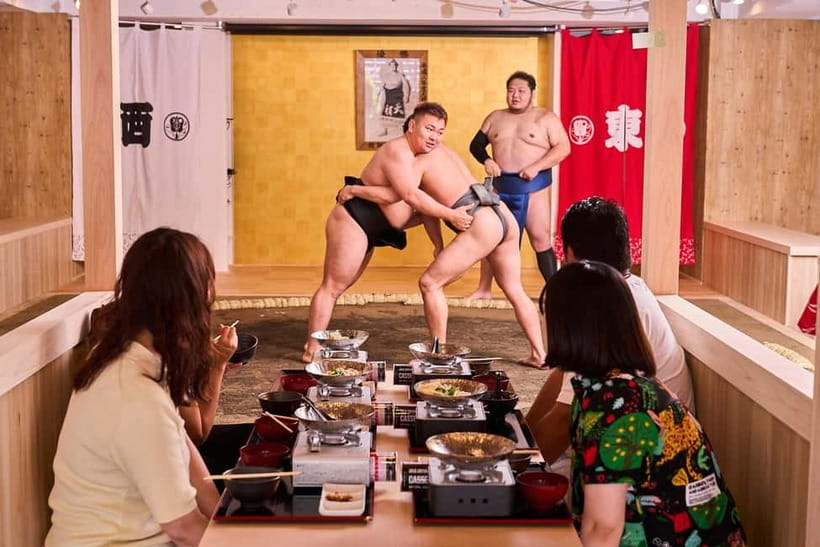
The meal is chanko nabe, a hot pot dish closely associated with sumo. It is served during the event, with its flavor supervised by wrestlers from an actual stable. That link gives dinner a cultural purpose: you are tasting a dish connected with sumo life rather than simply being handed a generic meal between activities.
The food is frequently praised, and many people find it filling. That makes the $103 price easier to assess. You are paying for a two-hour program with instruction, live demonstrations, the meal, mochi-making and the chance to participate, rather than for a brief show alone.
If you have dietary requirements, plan ahead. Vegetarian, vegan and gluten-free meals can be provided when requested at least two days before your reservation. Halal meals are not available, though you may bring your own food. If food is central to your booking decision, confirm that your needs can be accommodated before you reserve.
There is no need to treat the meal as a side note. Eating chanko nabe while watching sumo helps connect the food to the sport, and it gives the event a social, unhurried feel. Still, if you have strict dietary needs, the advance notice requirement is important.
Mochi Pounding and a Sweet Finish
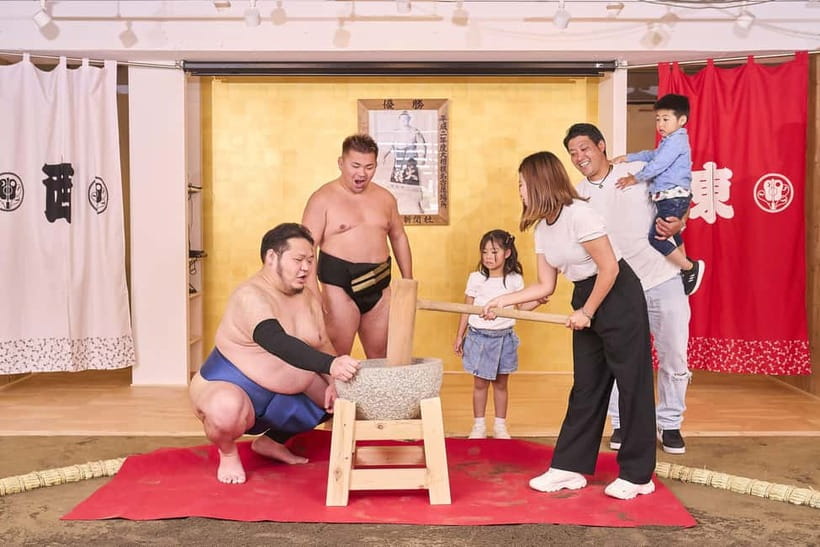
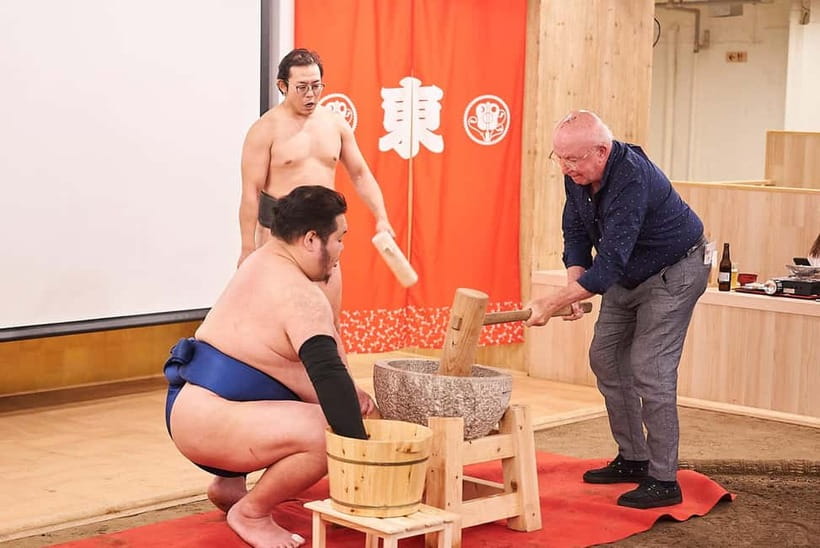
The mochi activity adds a second kind of Japanese tradition to the program. You can join the wrestlers in pounding the rice, watch a demonstration of the process and then eat sweet mochi for dessert. It is a lively, physical contrast to sitting around the hot pot and watching the wrestling.
Mochi pounding is worth trying if you are curious about how the familiar chewy sweet is made. The activity is hands-on, and the demonstration gives you a look at the traditional process rather than only the finished snack. The wrestlers and hosts encourage participation, so you do not need prior experience.
As with the sumo bout, you can take part or watch. That flexibility makes the program work for mixed-age groups and for people with different comfort levels. Families with children, in particular, may appreciate having several kinds of activity rather than one long performance.
What the $103 Price Covers
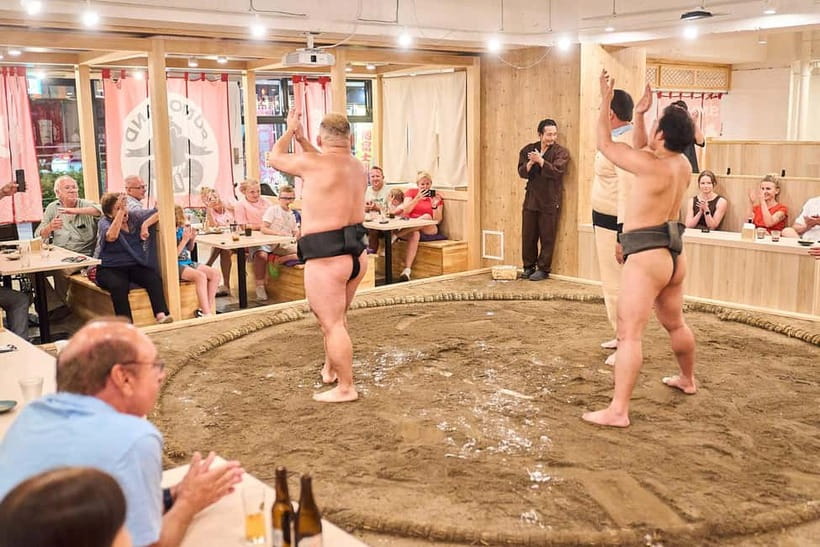
At $103 per person, this is not a bargain-basement attraction. But the price includes a two-hour sumo program, chanko nabe, mochi-making and a chance to try sumo on the dohyo. You also get explanations from former professionals and the opportunity to see demonstrations at close range.
I’d judge the value by how much you want to participate. If you take part in the mochi pounding and sumo activities, and pay attention to the instruction and demonstrations, there is a lot packed into the time. If you only want to watch a tournament-style match, this is not the right substitute.
The food is a meaningful part of the value, not an incidental extra. It is described as fresh, tasty and substantial, and the sumo connection gives it added interest. The event also offers a cheerful way to learn about the sport without needing to understand its rules before you arrive.
The overall format suits groups. Families, friends and work teams can watch together, volunteer for activities and share a meal. It is also a practical option if your Tokyo schedule does not line up with a sumo tournament.
More tours and experiences in Tokyo:
- Mt Fuji and Hakone 1-Day Bus Tour Return by Bullet Train
★ 5.0 · 26,383 reviews - 1-Day Tokyo Bus Tour
★ 5.0 · 14,250 reviews - Tokyo: teamLab Planets TOKYO Digital Art Museum Entry Ticket
★ 4.6 · 9,779 reviews - Mt Fuji & Hakone Cruise, Drum Show Bullet Train 1 Day from Tokyo
★ 4.0 · 7,413 reviews
Getting There and Choosing Your Seat
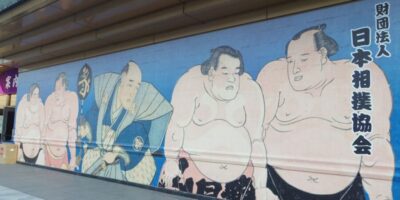
The venue is on the first floor, a short walk from Ryogoku Station. Look for the large sumo wrestler sign and flags. The location is convenient for combining with other parts of Tokyo: Asakusa, Akihabara, Nihonbashi and Tokyo Skytree are among the nearby sightseeing areas named for the station’s surroundings.
One useful tip is to allow time to find the entrance. The landmark sign helps, but the venue can be a little hard to spot, so arriving early is sensible. Starting times vary; check availability for the session that suits your plans.
The venue assigns seats, and you cannot request a particular location. If sitting close to the dohyo or choosing a specific view matters to you, keep that limitation in mind before booking.
Families should check the seating arrangement carefully. In standard seats, holding a child on your lap is considered dangerous, so you should reserve a place for each person. Box seats can hold up to six people and allow an adult to sit with a child on their lap. The activity is not suitable for wheelchair users.
Who Will Enjoy This Sumo Experience
This is a strong choice if you want to learn about sumo in an accessible way and are happy to join in. The mix of sport, food and mochi gives you several points of interest, and the enthusiastic hosts help keep the room lively. You do not have to be a sumo fan to follow the basic demonstrations or enjoy the meal.
Families with school-age children and teenagers may find the variety especially useful. One person can enjoy watching, another can try the dohyo, and everyone can share the meal and mochi. The event is designed for adults and children, though parents should pay attention to the seating rules for younger children.
It can also suit a small group looking for an activity everyone can talk about afterward. The wrestling and mochi pounding give you shared moments that are more memorable than simply sitting through a presentation. If you prefer quiet, formal cultural visits, however, the lively, participatory approach may feel more like a show than a close study of sumo.
Should You Book It?
Book this if you want a friendly, hands-on introduction to sumo, with a substantial meal and a few chances to join the action. The former professionals, close-up demonstrations, chanko nabe and mochi-making make the two hours feel varied, and the $103 price is reasonable if you plan to take part.
Skip it if your main goal is to observe serious stable training or watch a tournament match. This is a polished, entertaining experience designed for a broad audience. For a first look at sumo in Ryogoku, that approachable mix is exactly the point.
FAQ
How long does the Tokyo Sumo Experience last?
The activity lasts two hours. Check availability to see the starting times.
Where is the meeting point?
The venue is on the first floor, a short walk from Ryogoku Station. Look for a large sumo wrestler sign and flags.
What languages are available?
Instruction is available in English and Japanese.
Is the sumo experience a serious training session?
No. It is designed as an entertaining experience for adults and children, rather than a serious morning training tour.
Can I try sumo wrestling?
Yes. You can try sumo techniques and take part in wrestling with the wrestlers on the dohyo. Participation is optional.
Can the venue accommodate dietary requirements?
Vegetarian, vegan and gluten-free meals can be provided if requested at least two days before your reservation. Halal meals cannot be provided, but you may bring your own food.
Is the experience wheelchair accessible?
No. It is not suitable for wheelchair users.
Freshly reviewed in Tokyo
- Tokyo: Toshimaya Sake Brewery Tour with Sake Tasting★ 5.0 · 6 reviews
- :Tokyo,Shibuya /Meiji Shrine tour in KIMONO/English-friendly★ 5.0 · 4 reviews
- Tokyo: Tour Privado por Tokio en español★ 4.3 · 4 reviews
- Tokyo:Tea ceremony experience at Komaba Warakuan★ 4.8 · 9 reviews
- :Tokyo,Shibuya/ Pro Photography in Kimono / English-Friendly★ 5.0 · 26 reviews
- Tokyo:Samurai Training : Swords, Bushido & Mental Discipline★ 5.0 · 6 reviews
- Tokyo:Mt Fuji & Hakone Day Tour with English Speaking Driver★ 5.0 · 26 reviews
- Tokyo:Nikko UNESCO World Heritage Sites Private 1-Day Tour★ 3.8 · 6 reviews
Tokyo Sumo Experiences, compared.
Tokyo Shinjuku Sumo Show & Experience with Photo
Read our review →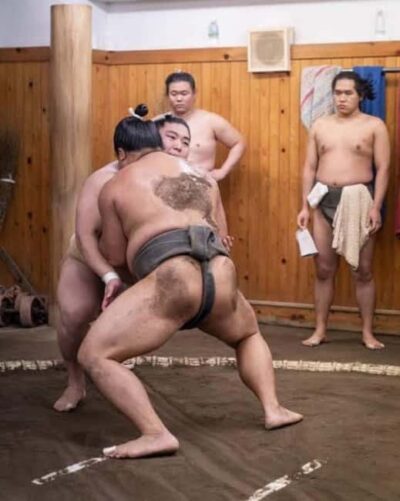
Authentic Sumo Experience in Tokyo: Enter the Sanctuary
Read our review →
Ultimate Sumo Tournament: Tokyo, Osaka, Nagoya, Fukuoka
Read our review →Browse the lists this tour appears in