
Reviewed · TOKYO SUMO EXPERIENCES
Authentic Sumo Experience in Tokyo: Enter the Sanctuary
A sumo stable is not a stadium. It is a place where wrestlers train, eat, and live by demanding routines. This tour takes you inside one near Kawasaki, where you can see the practice ring and the rooms that support stable life. I like that the visit goes beyond a demonstration, and that you get to sit close to the morning practice.
I also like the mix of learning and doing: a guide explains sumo traditions, a wrestler shows you training movements, and lunch gives you a chance to share chanko-nabe. One thing to weigh is the location and strict start time. You meet near Shin-Kawasaki Station, outside central Tokyo, and arriving more than five minutes late without contacting the operator can mean missing the tour without a refund.
What Makes This Sumo Tour Worth Considering
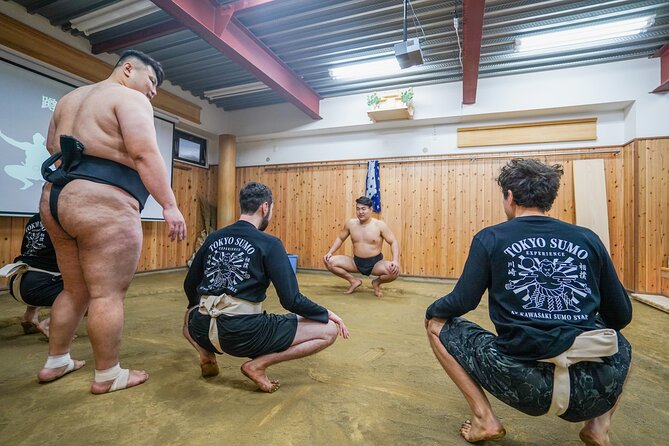
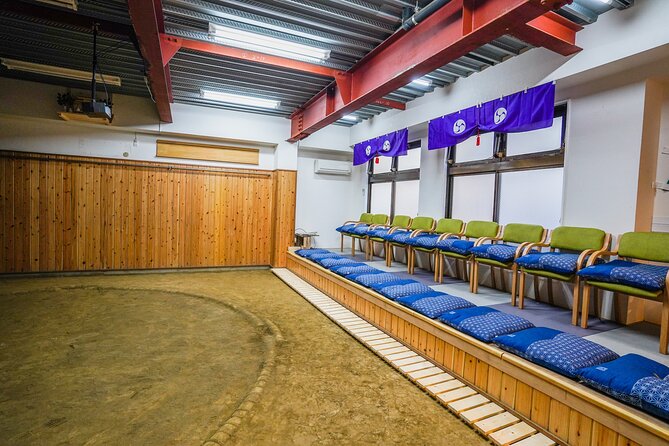
- A real former stable: See the dining room, bath, and practice area in a stable officially used until 2022.
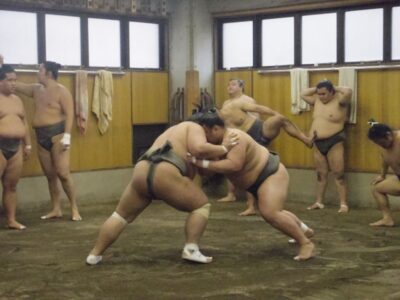
- Practice from ringside: Watch wrestlers train from close to the sumo ring, with a guide explaining what is happening.
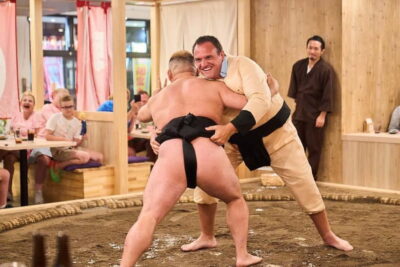
- A chance to try the moves: Take part in sumo exercises with a wrestler if you wish. The emphasis is on participating, not just watching.
- Chanko-nabe made together: Help prepare chicken dumplings, then eat the hot pot at a table once used in the sumo room.
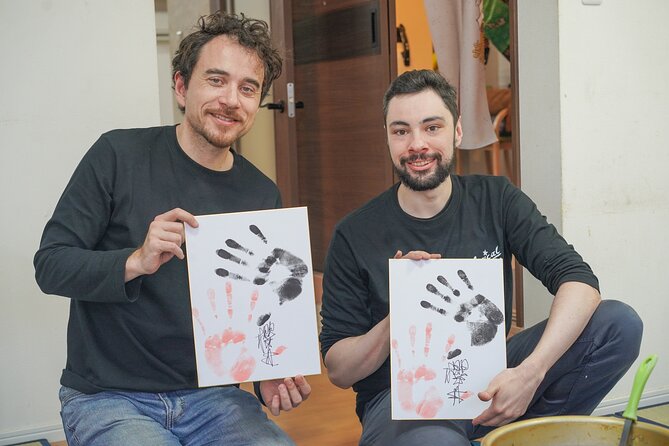
- A small group format: The maximum group size is 15, and the tour includes a guide, lunch, photos, and an original T-shirt.
Inside a Sumo Stable Near Kawasaki
The tour begins at Shin-Kawasaki Station, in Kawasaki, not in Tokyo’s central sumo district. From there, your guide takes you to the stable, a setting that gives the visit its appeal: this is a working space with traces of its former use, rather than a theater built to stage a sumo show.
The stable was officially used until 2022. That date matters. You are not watching a regular professional tournament or entering an active stable during its daily routine, but you are seeing the rooms where that routine took place. The dining room, bath, and practice area help explain how sumo life is organized beyond the ring.
Your guide introduces the traditions and customs of the sumo world along the way. Guides named in past tours include Charlie, Jim, Lily, and Fugi, though you should not expect a particular person to lead your departure. The guide’s role is useful here: without context, a bath or dining room might seem like ordinary rooms; with explanations, they become part of a close-knit training environment.
The experience is often described as warm and lively, with guides and wrestlers answering questions and using humor to put participants at ease. The first part can feel more like a lesson than a show. That is a plus if you want the background, though children or anyone eager to jump straight into the action may need a little patience.
More sumo experiences in Tokyo:
- Tokyo: Sumo Show Experience with Chicken Hot Pot and a Photo
★ 4.8 · 6,678 reviews - Tokyo: Sumo Show and Dining Experience
★ 4.8 · 2,742 reviews - the SUMO show
★ 5.0 · 1,960 reviews
Watching Practice From Close to the Ring
After the room tour, you sit in front of the ring to watch a morning practice session. Sumo training is known for its repeated exercises and physical demands, and the close seating makes the difference between seeing a general demonstration and watching the work unfold at near range.
The usual practice schedule begins around 7:00 a.m. and lasts three to four hours. Since this tour starts at 9:30 a.m., the session may already be underway when you arrive. The exact practice you see can vary, so think of this as a chance to observe part of a training morning, not a guarantee of watching a session from its first warm-up to its last bout.
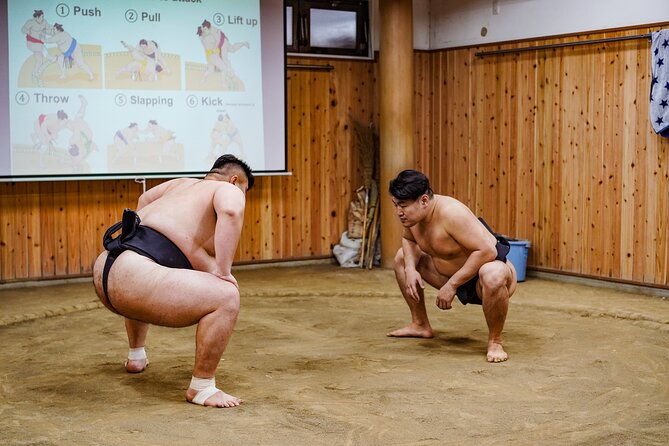
Your guide provides commentary, helping you follow the action and connect it to the customs introduced earlier. That explanation is especially helpful if you are new to sumo. Longtime fans may already know the basic moves, but watching training in a stable setting can still offer a different perspective from seeing a match in an arena.
This is not a tournament ticket, and there is no promise of a formal competition. The focus is practice, instruction, and access to the setting. If your main goal is to watch elite bouts, a sumo tournament is a different experience. If you want to understand the sport’s daily discipline and see its training space, this visit is better suited to you.
Trying Sumo Exercises With a Wrestler
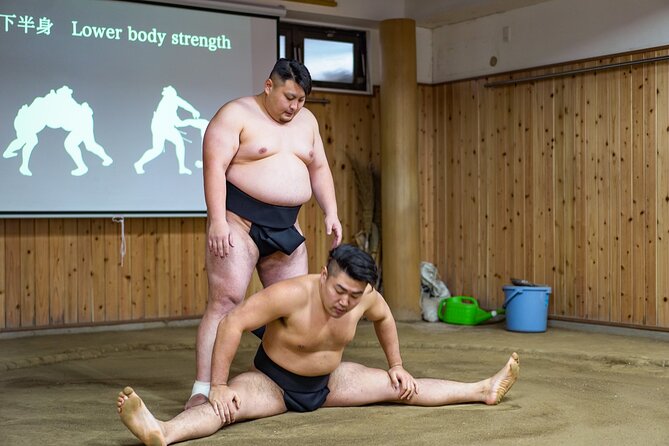
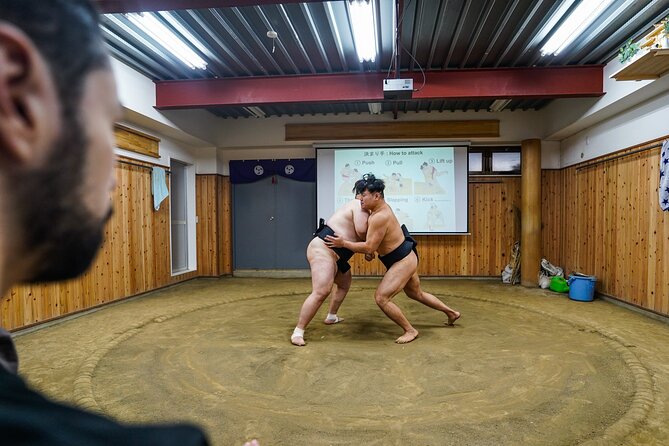
After watching, you can try some of the movements shown by the wrestler. The opportunity to step into the ring and test the exercises is a high point for many people, especially families and fans who have wondered what sumo training feels like in practice.
You do not need to be a sumo expert to take part. The wrestlers demonstrate the movements, and the session is designed to be fun as well as informative. Some participants may be eager to challenge a wrestler, while others may prefer to watch. You can approach it at your own comfort level.
There is a serious side to the demonstration, too. Sumo is not simply a matter of size or pushing hard. The exercises show the balance, strength, and repetition involved in the sport. Trying them yourself can make that effort easier to appreciate, even if a short activity cannot reproduce the demands of a wrestler’s full training day.
The group size is capped at 15, which helps keep the experience more personal than a large coach tour. Still, participation time is shared, so you should not expect an extended one-on-one lesson. The value is in getting a taste of the movements, asking questions, and seeing the wrestlers teach in person.
Making Chanko-Nabe Together
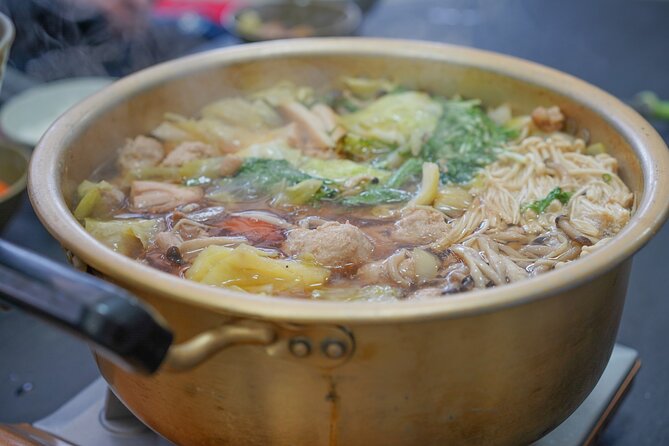
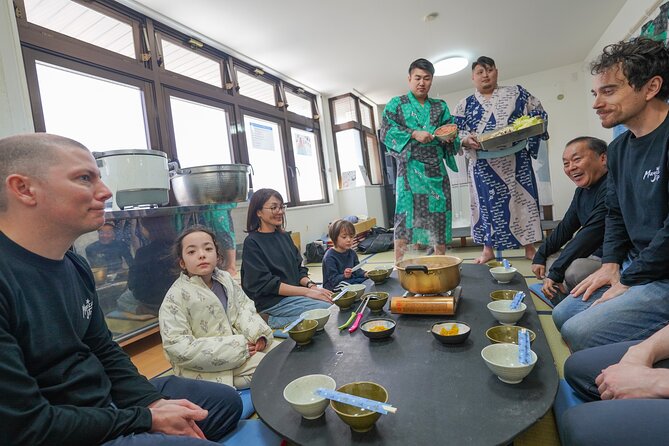
Lunch is part of the experience, not an afterthought. You help make chicken dumplings, one of the main ingredients in chanko-nabe, then eat the hot pot together around a table that was actually used in the sumo room.
Chanko-nabe is closely linked with sumo culture as a hearty meal. Here, the shared cooking makes the meal more than a bowl of soup brought to your seat. You take part in preparing it, then have time to eat and talk with the wrestlers. That conversation can be a welcome chance to ask about training and daily life after the demonstrations are over.
The meal is included in the $171.12 price, along with the sumo experience, certified guide, tour photos, and an original designed T-shirt. Additional food and drinks are not included. The lunch has been a particular favorite, but you should tell the operator about allergies or dietary requests at least one day ahead. Requests made on the day cannot be accommodated, and an allergy-free meal or specific substitution cannot be guaranteed.
If food restrictions are central to your booking decision, ask before you reserve rather than assuming the kitchen can adjust the menu. The operator says it will try to make up for restrictions at other stops, but it cannot promise that every request can be met.
More tours and experiences in Tokyo:
- Mt Fuji and Hakone 1-Day Bus Tour Return by Bullet Train
★ 5.0 · 26,383 reviews - 1-Day Tokyo Bus Tour
★ 5.0 · 14,250 reviews - Tokyo: teamLab Planets TOKYO Digital Art Museum Entry Ticket
★ 4.6 · 9,779 reviews - Mt Fuji & Hakone Cruise, Drum Show Bullet Train 1 Day from Tokyo
★ 4.0 · 7,413 reviews
Is the $171.12 Price Good Value?
At $171.12 per person, this is a relatively costly half-day activity, especially if you compare it with a museum ticket or a short sightseeing walk. The price makes more sense when you consider the parts bundled together: access to a former stable, a guided cultural explanation, ringside practice viewing, the chance to try exercises, a shared meal, photos, and a T-shirt.
I see the best value for someone who wants an active cultural experience rather than a quick photo stop. The tour combines a lesson, a behind-the-scenes visit, and lunch in about four hours and ten minutes. If you are a longtime sumo fan, the chance to meet wrestlers and try their movements may justify the cost on its own. For a family, the participatory format can make the sport easier to connect with than a long explanation alone.
The value is less obvious if you only want to watch a match, have a tight schedule, or are not interested in the meal and training elements. The tour does not replace a tournament, and the practice session is only one part of the morning. You are paying for access and interaction, not a guaranteed bout or an all-day program.
Getting There, Timing, and What to Bring
The stated meeting point is near Shin-Kawasaki Station, with the address listed as kiyoken, 1-chōme-2-1 Kashimada, Saiwai Ward, Kawasaki. Check the meeting instructions in your confirmation carefully, since the tour meets at the station area and starts promptly at 9:30 a.m. Past outings have included a vehicle transfer to the stable, but follow the operator’s directions for your specific date.
The tour lasts about four hours and ten minutes and ends back at the meeting point. It is near public transportation, but remember that Kawasaki is a separate stop from central Tokyo. Allow enough time to reach the meeting area and find your guide, rather than planning to arrive at the last minute.
Punctuality is not a minor detail here. The group leaves on time, and if you are more than five minutes late without contacting the operator, you may be treated as a no-show. The stated policy does not allow a refund or rescheduling if you miss the group, so build in a buffer for train delays and station navigation.
Large suitcases are not permitted. In summer, Kawasaki can be hot and humid, so bring water and wear a hat to reduce the risk of heat stress. The activity is listed as suitable for most participants, and the maximum group size is 15.
Stable cancellations are possible a few days to a couple of days before the tour. Keep some flexibility in your plans if this experience is a central part of your schedule. If the operator cancels because the minimum number of participants is not met, you will be offered another date or experience, or a full refund.
Who Should Book This Sumo Experience?
This tour is a strong fit for families with curious children, couples looking for a hands-on cultural activity, and sumo fans who want more than a seat in the stands. It also works well for first-time visitors who want a guide to explain what they are seeing and connect the sport to the wrestlers’ daily routine.
The interactive element is a real advantage for children and teenagers. They can watch the practice, try exercises, and share lunch in the stable setting. Adults can take part too, or stay on the sidelines and enjoy the demonstrations. You do not need to be athletic to get something from the visit.
If you are traveling with someone who prefers quiet, passive sightseeing, consider how they feel about an activity built around demonstrations and group participation. The early start, commute to Kawasaki, and shared meal also make this a more involved half-day than a quick stop. The tour is best when you can give it your full morning rather than squeezing it between distant appointments.
You can cancel for a full refund up to 24 hours before the start time. Cancellations or changes made within 24 hours are not accepted for a refund or date change, and no-shows are not refundable. That policy is worth keeping in mind alongside the separate risk of a stable cancellation.
Should You Book It?
I would book this if you want to understand sumo through its training spaces, people, and food, not just see a bout. The strongest combination is the former stable tour, close-up practice, hands-on exercises, and chanko-nabe made with the wrestlers. It is a memorable way to spend a morning, with enough variety to hold the interest of a family or a committed sumo fan.
Think twice if you have little time, strict dietary needs, or would rather watch a formal tournament. Also plan the Kawasaki trip carefully and arrive early. If those points work for you, the tour offers a rare chance to learn the sport by seeing its working parts up close, then trying a few for yourself.
FAQ
Where does the tour meet?
The meeting is at Shin-Kawasaki Station. The listed address is kiyoken, 1-chōme-2-1 Kashimada, Saiwai Ward, Kawasaki, Kanagawa 212-0058. Check your booking confirmation for the exact meeting instructions.
What time does the tour start, and how long does it last?
The tour starts at 9:30 a.m. and lasts about four hours and ten minutes. It ends back at the meeting point.
What is included in the price?
The price includes the sumo experience, a certified MagicalTrip guide, a sumo wrestler’s lunch, tour photos, and an original designed T-shirt. Additional food and drinks are not included.
Can I take part in the sumo training?
Yes. You can try sumo movements with a wrestler during the experience. Participation is an opportunity, not a requirement.
Is the lunch suitable for people with allergies or dietary restrictions?
Tell the operator about allergies or dietary requests at least one day before the tour. Allergy-free food and specific substitutions cannot be guaranteed, and requests made on the day cannot be accommodated.
Can I bring a suitcase?
No. Large luggage, such as suitcases, is not permitted on the tour.
What happens if I need to cancel?
You can cancel for a full refund at least 24 hours before the experience starts. Cancellations or changes made less than 24 hours before the start time are not eligible for a refund or date change.
Freshly reviewed in Tokyo
- Tokyo: Toshimaya Sake Brewery Tour with Sake Tasting★ 5.0 · 6 reviews
- :Tokyo,Shibuya /Meiji Shrine tour in KIMONO/English-friendly★ 5.0 · 4 reviews
- Tokyo: Tour Privado por Tokio en español★ 4.3 · 4 reviews
- Tokyo:Tea ceremony experience at Komaba Warakuan★ 4.8 · 9 reviews
- :Tokyo,Shibuya/ Pro Photography in Kimono / English-Friendly★ 5.0 · 26 reviews
- Tokyo:Samurai Training : Swords, Bushido & Mental Discipline★ 5.0 · 6 reviews
- Tokyo:Mt Fuji & Hakone Day Tour with English Speaking Driver★ 5.0 · 26 reviews
- Tokyo:Nikko UNESCO World Heritage Sites Private 1-Day Tour★ 3.8 · 6 reviews
Tokyo Sumo Experiences, compared.
Tokyo Shinjuku Sumo Show & Experience with Photo
Read our review →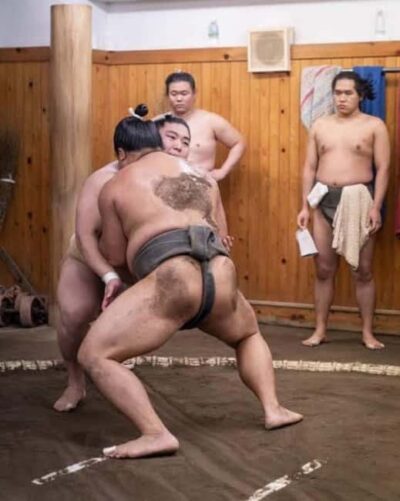
Tokyo Sumo Experience: Chanko & Mochi with a Former Pro
Read our review →
Ultimate Sumo Tournament: Tokyo, Osaka, Nagoya, Fukuoka
Read our review →Browse the lists this tour appears in