
Reviewed · TOKYO SUMO EXPERIENCES
Tokyo Sumo Morning Practice Tour at Stable
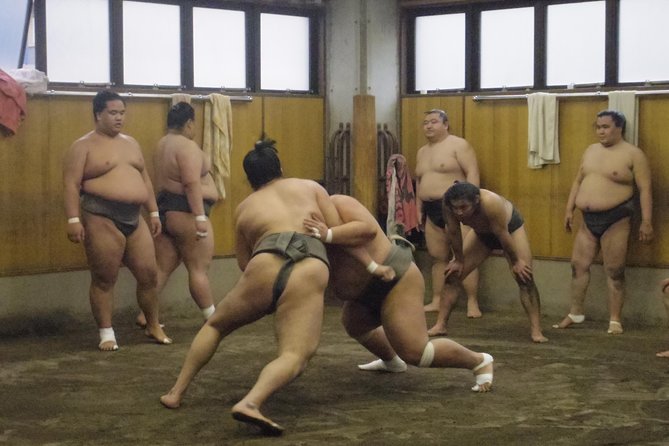
A sumo stable is not a stage set. It is where wrestlers train, repeat drills and test each other in bouts, while you sit close enough to feel the force behind this old Japanese sport. The morning begins early, but it offers a rare look at the work that happens before a tournament crowd ever sees the wrestlers.
I like two things about this experience: you see real training, not a staged demonstration, and a guide helps explain the rules, rituals and tournament calendar as events unfold. That context turns a room full of powerful athletes into a sport you can follow and appreciate.
The main trade-off is that practice is not built around your comfort or schedule. You must watch quietly, seating and views can vary, and the guide’s commentary may be hard to hear or compete with the action. In summer, the stable can also be hot, with no air conditioning.
What to know before you book
- You watch practice inside a working stable, where wrestlers train for competition rather than perform a show.
- Meet near Ryogoku Station at 7:45am. Depending on the plan, you may travel by train to the stable.
- The group is capped at 20 people, and the stable visit is listed at about 90 minutes, within an experience of roughly two hours.
- A guide explains sumo’s traditions and tournament structure, with commentary during the practice.
- You need to follow strict etiquette: stay quiet, keep phones silent, and do not step onto the ring or sandy practice area.
- The price is $83.57 per person. It is best value if you want close access and context, not just a quick photo or a guaranteed match.
Inside the stable, training comes first
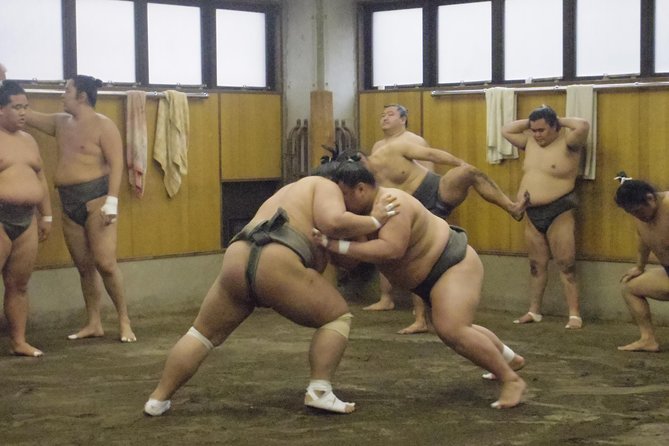
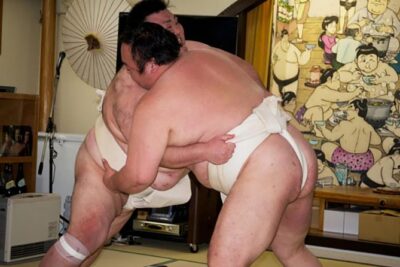
The appeal here is not a polished show with a tidy beginning and end. You are watching athletes work through a real practice session, with its own pace and length. That can mean repeated bouts and demanding drills, but the exact mix depends on the stable’s training that morning.
The wrestlers are imposing up close, yet the most compelling part is often the repetition: one bout ends, another begins, and the athletes keep at it. You get a sense of the strength involved, but also the discipline and concentration required to train day after day.
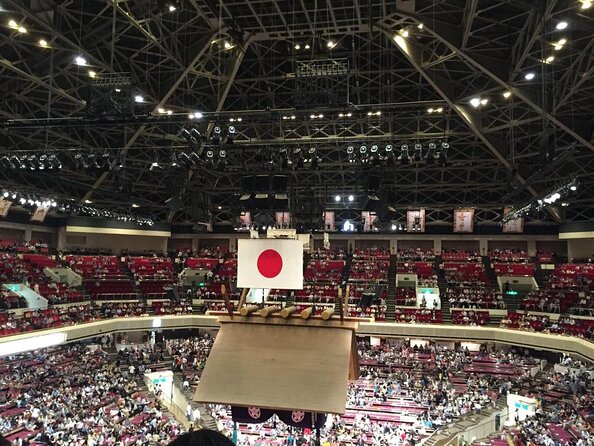
This is different from attending a Grand Tournament. A tournament is a formal competition, with ceremony and a schedule; morning practice gives you a view of preparation, and you may see many exchanges in a single session. You do not know in advance how long each part of practice will last, or which wrestlers will be training.
The stable is an active workplace, not a venue set up around visitors. That is exactly what makes the experience interesting, and also why the rules matter. Keep your movements small, avoid distracting the wrestlers, and do not expect them to stop mid-practice for photographs.
More sumo experiences in Tokyo:
- Tokyo: Sumo Show Experience with Chicken Hot Pot and a Photo
★ 4.8 · 6,678 reviews - Tokyo: Sumo Show and Dining Experience
★ 4.8 · 2,742 reviews - the SUMO show
★ 5.0 · 1,960 reviews
Meeting at Ryogoku Station before sunrise
The meeting point is Ryogoku Station Gallery, with a scheduled arrival at 7:45am. Your guide gathers the group, offers background on sumo, and leads you to the stable. The route may include a train ride, so allow for the tour to involve a short journey rather than assuming the stable is next door.
Be precise about the meeting point. One person had difficulty finding the guide and went directly to the stable, while another found Google Maps slightly off by a block. Check your confirmation for the exact location, since meeting points can vary by booking option, and leave yourself enough time to look around the station area.
Use the restroom before meeting. The instructions specifically ask you to do so, and once inside the stable, leaving partway through is discouraged. You cannot re-enter after leaving, so this is one of those small bits of preparation that can save a lot of discomfort.
The 7:45am start is a real commitment, especially if you have been adjusting to Tokyo time. Still, the early hour is part of the access: you are seeing the wrestlers at their daily work, not arriving for an afternoon attraction. Bring only what you need and be ready to settle in quietly.
A short introduction to sumo’s rituals and schedule
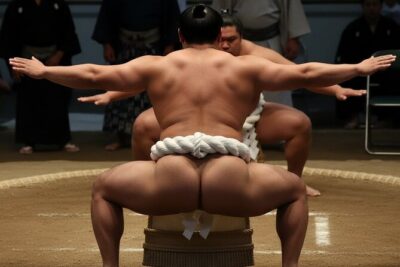
Before entering the stable, the guide explains the traditions tied to sumo and its connections to Shinto. The sport preserves religious rituals alongside its role as a major spectator competition. The practice is a useful place to learn this because those traditions are not just background decoration; they help explain why the ring is treated as a sacred space.
You will also hear about the six annual Grand Tournaments, each lasting 15 days. Three take place in Tokyo, with one each in Osaka, Nagoya and Fukuoka. If you are planning to attend a tournament later in your trip, this overview can help you understand what the competitors are working toward.
The stable visit can also make rankings and the wrestlers’ lifestyle easier to grasp. The details matter because sumo is more than two athletes pushing each other out of a ring. A guide can connect what you see in practice to the rules and structure of the sport, though the depth of explanation may depend on the guide and how much time is available.
Some people would prefer to read this background before entering, then listen only for notes about the action. That is a fair point. Commentary helps if you are new to sumo, but trying to watch and listen at once can split your attention, particularly if the headset has static or the sound is difficult to hear.
Watching practice quietly and close up
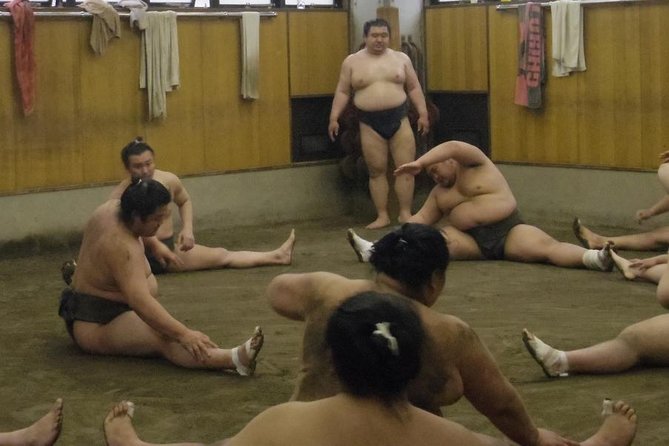
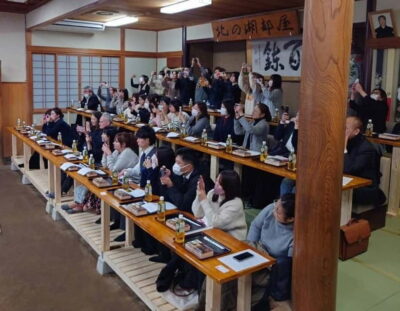
Once inside, you take a seat and watch the wrestlers train. Seating arrangements can differ: some people describe stools, while others describe sitting on the ground. The front area may be reserved for sponsors, and your view can depend on where you are placed, so do not assume every seat offers the same angle.
Even from farther back, the room is small enough that the wrestlers feel close. That proximity is a major part of the experience. You can watch the movements and exchanges at a range that makes their force and speed easier to appreciate than on a screen.
The practice itself is not guaranteed to be a series of matches. The length and content can vary, and the tour may run a little shorter or longer than expected. A sponsor’s presence has sometimes coincided with a longer session and more intense sparring, but that is luck, not something to plan around.
Stay through the end if you can. The instructions ask you not to leave midway, both out of respect and because departures can distract the wrestlers. Keep your legs from pointing toward the ring, do not step onto the sandy area, and avoid talking while practice is underway.
More early-start experiences in Tokyo:
- Tokyo: Sumo Morning Practice Viewing Tour
★ 4.8 · 570 reviews - Tokyo: Sumo Morning Training Visit
★ 4.4 · 370 reviews - Tokyo: Sumo Morning Practice Tour at Sumida City
★ 4.8 · 308 reviews - Tokyo Ryogoku Sumo Morning Practice + Photo Shoot with Wrestlers
★ 4.5 · 277 reviews
The guide makes the action easier to read
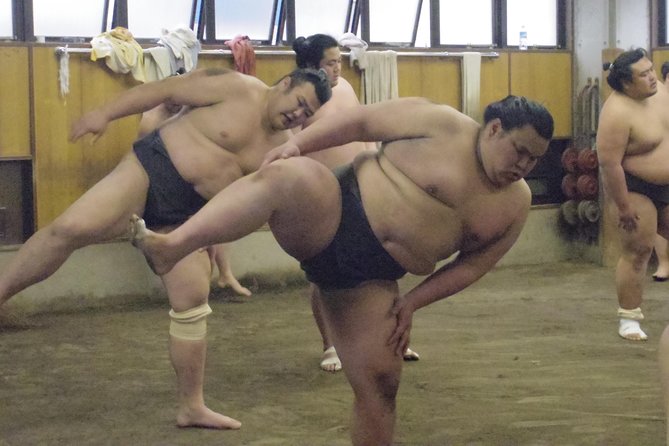
Guides are a central part of the experience, especially if sumo is new to you. Past guides named Seiji, Yumi, Noriko, Nobu and Cameo have been praised for clear explanations and enthusiasm. The guide’s job is to introduce the customs, help you follow what is happening, and make the stable visit understandable without turning it into a lecture.
Commentary may be delivered through headsets. That can be useful when the room is quiet and you want to hear explanations without talking aloud, but audio quality has not always been ideal. Some people have found the sound hard to hear or distracting while they are trying to watch the wrestlers.
If you prefer to focus on the practice, consider listening selectively rather than trying to catch every word. There may be time for questions after practice, but a question-and-answer session is not guaranteed by the tour details. Come with a few questions in mind, and ask when the guide indicates it is appropriate.
The best guide commentary does more than name a move. It gives you a way to see the sport: why a ritual matters, what a wrestler is trying to do, or how training connects to tournament competition. If the headset is difficult to hear, you can still get plenty from watching closely, but the educational side may feel less complete.
Etiquette, photos and summer heat
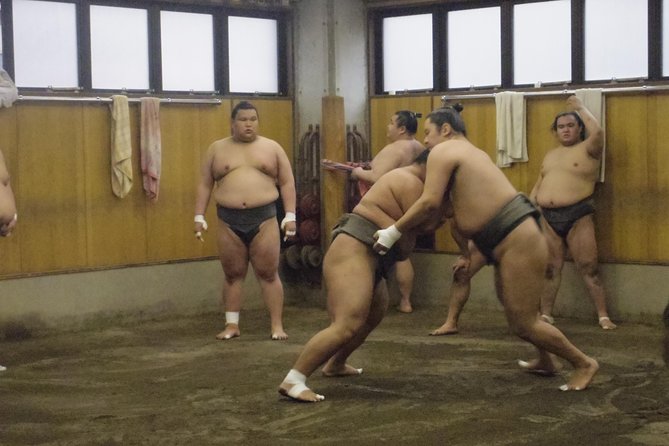
This is a place to observe, not to behave as if you are at a sporting event with a cheering crowd. Keep your phone on silent. Photos are allowed without flash or shutter sounds, but videos are not allowed, and any use of photographs must respect image and privacy rights.
Do not ask wrestlers for a photo while practice is still going on. Some people have had a brief chance to take photos with wrestlers after practice, but this is not something to count on as a promised feature. The session ends when the stable’s routine allows, and the priority remains the wrestlers’ training.
No food or drink is allowed inside as a general rule. During the summer months, however, water and sports drinks are permitted because Tokyo heat can be intense and the stable has no air conditioning. Bring a cold towel or ice pack if you are sensitive to heat, and leave hats and sunglasses outside, since they are not allowed in the stable.
Children must be at least 12 years old to enter. If you are feeling unwell, stay home; the tour asks people who are sick not to attend. These rules are practical, but they also underline the basic bargain: you are being allowed into someone else’s training space, so restraint is part of the visit.
Is $83.57 good value for two hours?
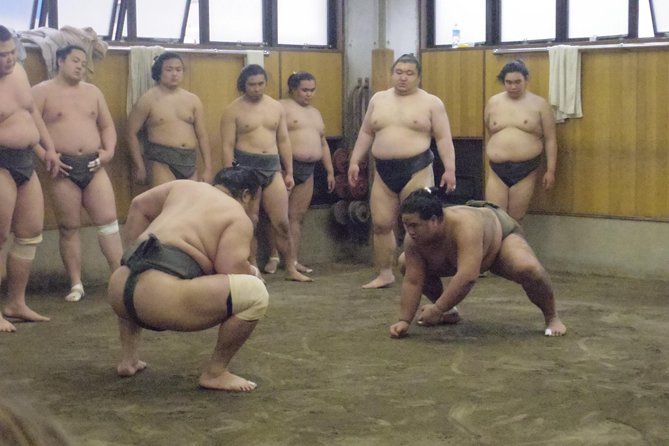
At $83.57 per person, this is not a low-cost stop. You are paying for access to a working stable, a guide, and an experience that would be difficult to arrange on your own. For someone curious about sumo, the value lies in the combination of close observation and explanation, not in a long list of extras.
The tour can feel less worthwhile if you mainly want a photo, expect a staged performance, or need a fixed-length event with guaranteed action. The practice can vary, the commentary may be uneven, and sightlines are not identical from every seat. This is a real-world experience, with the rough edges that come with watching a working morning routine.
If you are comparing it with a tournament, think about what you want to see. At practice, the pace can be continuous and you may watch many bouts, while a tournament offers formal competition and ceremony. Neither replaces the other, but this session is particularly good at showing the training behind the sport.
The group limit of 20 helps keep the visit relatively small, though it does not guarantee a front-row view. Arriving promptly is sensible, and some people suggest getting there early to improve your chance of a better seat. Follow the meeting instructions rather than going straight to the stable, unless your confirmation tells you to meet there.
Who should choose this morning visit?
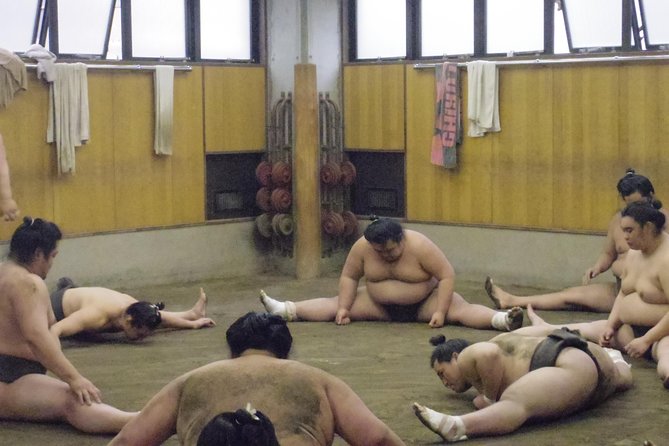
I would put this high on the list if you are curious about Japanese sport and ritual, want to see athletes at work, or prefer an experience with a clear local connection over a staged dinner show. You do not need to know sumo beforehand. The guide’s explanations are meant to help newcomers make sense of the sport.
It is a weaker fit if you are uncomfortable sitting quietly, cannot manage an early start, or need air conditioning in summer. It may also disappoint if you expect a guaranteed photo with a wrestler, a long conversation with athletes, or complete control over the length and content of practice.
The age rule is firm: children 11 and under cannot enter, and the minimum age is 12. For older children interested in sports, the physical action may hold their attention, though they will need to follow the same quiet-observation rules as everyone else.
Should you book the Tokyo sumo practice tour?
Book it if you want a close look at real sumo training and are happy to let the stable’s schedule set the pace. The most valuable parts are the access, the repeated practice exchanges and the guide’s help in explaining what you see. Go in with flexible expectations, arrive early, and treat the stable as a place of work, not a show built just for you.
Skip it if a guaranteed photo, flawless audio or a fixed-length performance is essential. For curious visitors who can manage the early morning and the etiquette, this is a memorable way to understand why sumo commands such respect in Japan.
FAQ
How long does the sumo morning practice tour last?
The experience lasts about two hours. The stable practice itself is listed as roughly 90 minutes, but the visit can be a little shorter or longer depending on that day’s training.
Where do I meet the guide?
The listed meeting point is Ryogoku Station Gallery at 7:45am. Meeting locations can differ by booking option, so check your confirmation email for the exact spot.
Is the tour suitable for children?
Children must be at least 12 years old to enter the stable. Children 11 and under are not allowed in.
Can I take photos or videos?
Photos are allowed without flash or shutter sounds. Videos are not allowed, and you must respect image and privacy rights when using photographs.
Can I drink water inside the stable?
Eating and drinking are generally not allowed. During summer, water and sports drinks are permitted because the stable has no air conditioning.
Do I need to sit on the floor?
Seating can vary. Some people have sat on stools, while others describe sitting on the ground, so you should not assume a particular seat type.
Can I cancel for a refund?
You can cancel at least 24 hours before the experience’s start time for a full refund. Cancellations or changes made less than 24 hours before the start time are not accepted for a refund or change.
Freshly reviewed in Tokyo
- Tokyo: Toshimaya Sake Brewery Tour with Sake Tasting★ 5.0 · 6 reviews
- :Tokyo,Shibuya /Meiji Shrine tour in KIMONO/English-friendly★ 5.0 · 4 reviews
- Tokyo: Tour Privado por Tokio en español★ 4.3 · 4 reviews
- Tokyo:Tea ceremony experience at Komaba Warakuan★ 4.8 · 9 reviews
- :Tokyo,Shibuya/ Pro Photography in Kimono / English-Friendly★ 5.0 · 26 reviews
- Tokyo:Samurai Training : Swords, Bushido & Mental Discipline★ 5.0 · 6 reviews
- Tokyo:Nikko UNESCO World Heritage Sites Private 1-Day Tour★ 3.8 · 6 reviews
- Tokyo:Mt Fuji & Hakone Day Tour with English Speaking Driver★ 5.0 · 26 reviews
Tokyo Sumo Experiences, compared.
Tokyo Shinjuku Sumo Show & Experience with Photo
Read our review →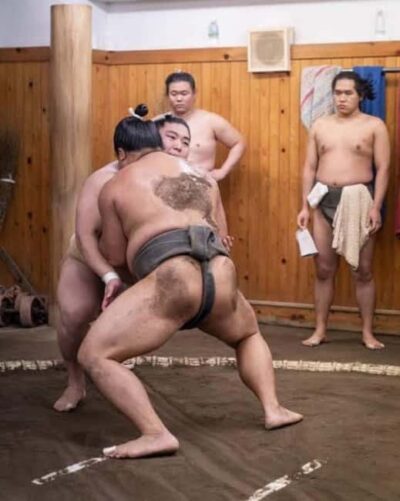

Authentic Sumo Experience in Tokyo: Enter the Sanctuary
Read our review →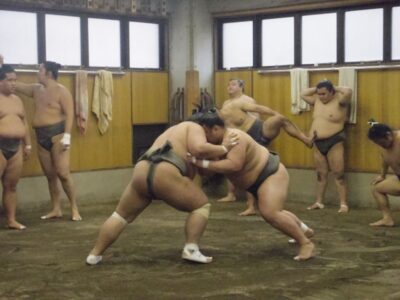
Tokyo Sumo Experience: Chanko & Mochi with a Former Pro
Read our review →Browse the lists this tour appears in