
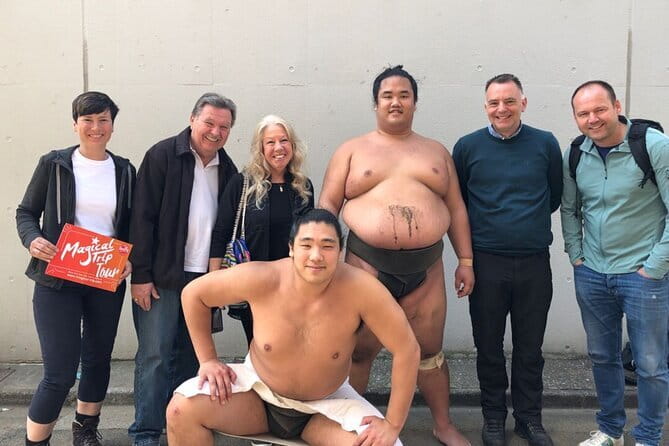
Reviewed · TOKYO SUMO EXPERIENCES
Tokyo Sumo Morning Practice Tour w/ Ring-Side Seat + Photo Shoot
At a Tokyo sumo stable, you watch wrestlers train at close range, not stage a show for an audience. I like two things here: the chance to see real practice, with its repeated drills and bouts, and a guide who can explain the customs and answer questions. A photo session with wrestlers is included when the stable permits it.
The main caveat is that a stable’s rules and schedule take priority. Practice can change or be canceled, photography may be restricted, and the tour starts promptly at 8:30 am. Arrive late and you cannot join.
What to know before you book
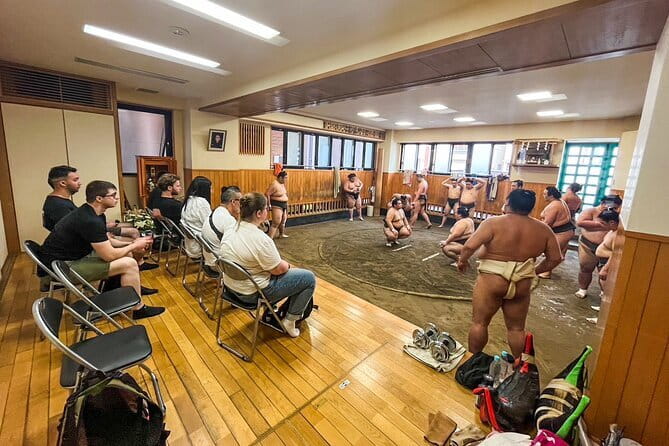
- You watch training, not a staged demonstration. Expect focused wrestlers working with one another and their stable’s trainers.
- The stable visit lasts about 90 minutes. The full outing is roughly two hours, including a final stop at Kiyosumi Gardens.
- A guide helps make the practice legible. Guides such as Marie have been praised for explaining the sport and answering questions.
- The group limit is 10, but stable assignments can vary. If numbers require it, the tour may split into groups at different stables.
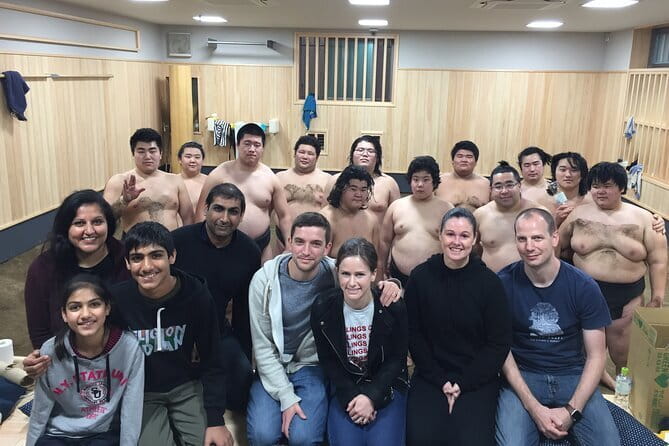
- Photos depend on the stable. A photo with wrestlers is included when allowed, but photography during practice may also be limited.
- Plan for strict timing and etiquette. The tour is for ages 12 and up, and once you leave the stable, you cannot re-enter.
Why morning practice is a different kind of sumo
If you are in Tokyo outside a tournament, or simply want to see sumo away from the arena, a stable visit offers a useful alternative. The wrestlers are there to train, not to entertain an audience. That distinction shapes the whole outing: you observe the discipline and repetition behind the sport rather than watching a formal match with an announcer and a crowd.
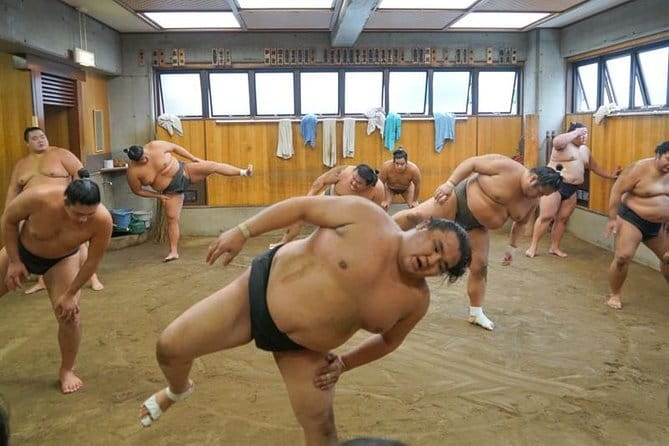
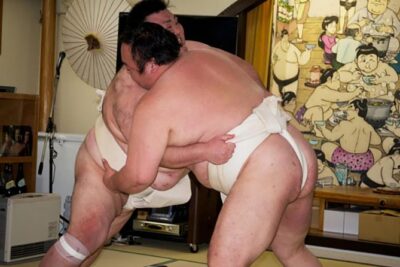
Practice can include stretching, repeated exercises and bouts. You may also see wrestlers interact with their stable master or head trainer. The athleticism is plain to see, but so is the concentration. A room full of people may be watching, yet the wrestlers’ attention stays on their work.
That makes this a good pick for sports fans, but you do not need to know the rules before you go. A guide can help explain what is happening and take questions. If you are new to sumo, ask for a short introduction to its history and basic rules. The visual force of the training is easy to grasp; the context makes the movements more meaningful.
More sumo experiences in Tokyo:
- Tokyo: Sumo Show Experience with Chicken Hot Pot and a Photo
★ 4.8 · 6,678 reviews - Tokyo: Sumo Show and Dining Experience
★ 4.8 · 2,742 reviews - the SUMO show
★ 5.0 · 1,960 reviews
Meeting at Kiyosumi Shirakawa
The tour begins at 8:30 am at 3-chōme-11-1 Kiyosumi, in Tokyo’s Koto City. The meeting point is near Kiyosumi Shirakawa Station, and the guide leads the group on to the stable. The walk is described as short, but you should still check your route and leave time to find the correct exit and meeting spot.
Punctuality matters more than it might on a casual city walk. The stable’s schedule and rules set the pace, so the group starts promptly. If you arrive late, you cannot join, and the tour does not offer a refund or rescheduling for a missed start. I would aim to be in the area early rather than rely on a last-minute train connection.
The tour is listed for a maximum of 10 participants. That small cap should make it easier to hear the guide and follow instructions, though the overall arrangement can change if the group is divided among different stables. Seating inside each stable is first come, first served. Arriving on time is therefore useful not just for joining the tour, but also for your chance of sitting closer to the practice.
Inside the stable: watch the work, not a show
The main stop is a sumo stable at 3-chōme-6-2 Kiyosumi. You spend about 90 minutes there, watching a practice session from the areas open to the group. The stable is a place of training, and the rules are not casual suggestions: only tatami areas are accessible to the group, while other parts remain off-limits.
The training itself is the reason to book. You may see a mix of stretching, repetitive drills and practice bouts, with wrestlers working under the attention of their trainers. The sessions can show the sport’s less familiar side: technique, physical conditioning and the resolve needed to repeat demanding movements. You are observing real athletes at work, not being invited into the ring for a novelty stunt.
A guide is especially valuable here. Without context, it can be hard to tell what a particular exercise is meant to develop or how a practice bout fits into training. Guides such as Marie have been praised for sharing insights and helping people understand sumo as a sport. You can ask questions, though the best moment may be after practice, when the session has ended and the guide can give you more attention.
Keep your expectations flexible. The exact length of practice varies, so the tour may finish earlier or later than planned. A stable can also alter or cancel its session at short notice because of a wrestler’s condition or tournament commitments. If the stable cancels, you receive a full refund.
Seating, photos and stable etiquette
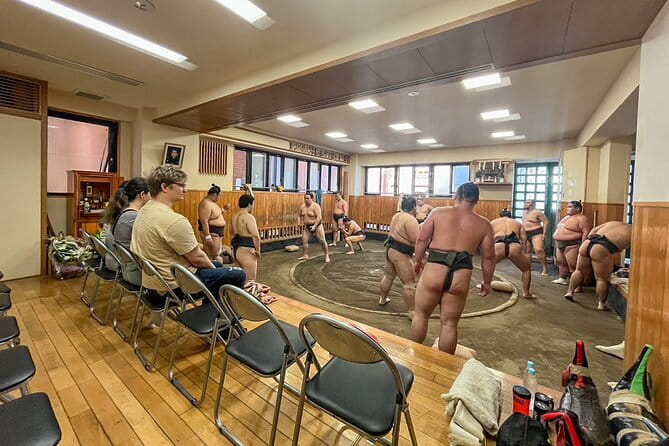
Seating is on a first-come basis, so an early arrival can matter. If you are seated farther back, your view may be less direct. Groups may also be split and sent to different stables, depending on participant numbers. The maximum of 10 applies to the tour group, but it does not guarantee that no other group will be present at a stable.
Treat the room as a working training space. Follow the guide’s instructions and the stable’s rules, keep to the permitted tatami areas, and avoid disrupting practice. The stable can refuse entry or participation if someone behaves disruptively or ignores its regulations, without a refund. The atmosphere depends on visitors understanding that they are being allowed into a place where athletes train.
The tour includes a photo session with sumo wrestlers, but do not treat that as an absolute promise for every date. Photography during practice is governed by the stable, and on some days photos of wrestlers or photos with them may not be allowed. If the photo matters to you, understand that the stable’s policy comes first.
You can leave the stable before practice ends if needed, but you cannot re-enter once you have exited. Restroom access may not be available during the session, so use one before the tour begins. These are small practical points, but they help you settle in and watch without wondering whether you can step out and return.
More photo shoots in Tokyo:
- Tokyo Ryogoku Sumo Morning Practice + Photo Shoot with Wrestlers
★ 4.5 · 277 reviews - Tokyo Cyberpunk Street Photo Tour
★ 5.0 · 165 reviews - Tokyo by Night Photography Tour (Private Option Available)
★ 5.0 · 151 reviews - Tokyo Shinjuku Night Photo Tour with Pro Gota
★ 5.0 · 142 reviews
Kiyosumi Gardens: a gentler finish
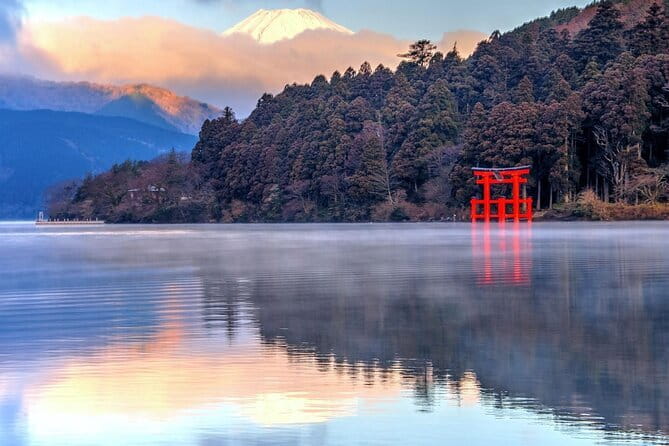
After the stable, the tour ends with about 30 minutes at Kiyosumi Gardens. It provides a quieter close after the concentrated physical energy of practice. The itinerary places the garden at the end of the outing, and the activity returns to the meeting point.
Do not count on this being a long garden visit. Half an hour is enough for a brief pause and a change of pace, not a leisurely exploration of every path. If the practice runs long or short, the overall finish can shift, so leave a little room in your schedule rather than booking a tight connection or appointment afterward.
The contrast is part of the appeal. You begin the morning watching a demanding sport in a working stable and end in a garden setting. If you want to spend more time at Kiyosumi Gardens, check the timing with your guide on the day rather than assuming the tour’s short stop will cover everything you want to see.
What $99.10 buys you
At $99.10 per person, this is not the cheapest way to fill a Tokyo morning. Its value rests on access to a sumo stable, a guide who can interpret the practice, a small-group format and the chance of a photo with wrestlers. There is no separate entrance fee for attending the morning practice, so the price is for the organized visit and its guiding, not a stable admission charge.
I think the price makes the most sense if you care about sumo or want an experience you cannot get from watching a tournament broadcast. The tour puts you close to the training process and gives you a chance to ask questions. The added garden stop makes it a more rounded two-hour outing, though it is brief.
If your main goal is simply to see a sumo bout, this is not a substitute for a tournament. Practice is less polished as a spectator event, and the stable may limit photos or change the schedule. You are paying for access to a real training environment, with the understanding that the stable sets the terms.
Who will get the most from it
This tour suits sumo fans who are missing a tournament during their Tokyo stay. It is also a strong fit if you follow sports and want to see the training, focus and physical skill behind competition. You do not need prior knowledge, but asking questions will help you get more from the guide’s commentary.
Families can consider it for children aged 12 and older. The age rule is firm: children under 12 are not allowed inside the stable, and participation can be denied without a refund if someone under 12 arrives. For a child who is old enough and interested in sport or Japanese culture, the close view of practice may hold more attention than a general explanation of sumo.
This is less suitable if you need a guaranteed photo, a fixed practice length or a relaxed arrival window. The stable’s rules and schedule can override the plan, and the group must remain within permitted areas. If those conditions sound fair, the visit offers a rare look at a side of sumo most people do not see.
Timing, weather and cancellation
The experience starts at 8:30 am and lasts about two hours, but practice can affect the finish time. Dress for the season and forecast: Tokyo’s weather can be extreme, with summer temperatures reaching 40°C (110°F) and winter lows around -5°C (20°F). There is no need to dress for a long outdoor hike, but you should be prepared for the conditions on the day.
You can cancel for a full refund up to 24 hours before the start time. Cancellations or changes made less than 24 hours before the start are not accepted, and the same-day tour cannot accommodate reservation changes or requests. If the stable cancels its practice, the tour provider says it will issue a full refund.
Should you book the sumo morning practice tour?
Book it if you want to see the sport in its working form and are comfortable following a stable’s rules. The strongest reasons to go are the close view of serious training, the guide’s explanations and the opportunity to ask questions. The photo session is a welcome extra, but it should remain a bonus because the stable controls photography.
Skip it if you need a guaranteed schedule, a tournament-style match or flexibility to arrive late. For a curious first-timer or a sumo fan with a free morning, this is a thoughtful way to get beyond the public image of the sport and see the effort that goes into it.
FAQ
What time does the tour start?
It starts at 8:30 am. The group begins promptly, and late arrivals cannot join.
Where is the meeting point?
Meet at 3-chōme-11-1 Kiyosumi, Koto City, Tokyo, near Kiyosumi Shirakawa Station. The guide takes the group from there to the sumo stable.
How long does the tour last?
The tour is about two hours. Roughly 90 minutes are set aside for watching practice and 30 minutes for Kiyosumi Gardens, though the practice length can change the finish time.
Is the practice a staged sumo show?
No. You watch wrestlers training at a sumo stable. The session can include stretching, repeated exercises and practice bouts.
Can I take photos of the wrestlers?
Photography depends on the stable’s policy. Photos during practice or with wrestlers may not be allowed on a particular day, even though a photo session is included when permitted.
Can children join the tour?
Only people aged 12 and older may enter the sumo stable. Children under 12 are not permitted inside.
Is a separate entrance fee charged for the practice?
No separate entrance fee is required to attend the morning practice.
What is the cancellation policy?
You can cancel at least 24 hours before the start for a full refund. Cancellations or changes made less than 24 hours before the start are not accepted.
More early-start experiences in Tokyo
- Tokyo: Sumo Morning Practice Viewing Tour
★ 4.8 · 570 reviews - Tokyo: Sumo Morning Training Visit
★ 4.4 · 370 reviews - Tokyo: Sumo Morning Practice Tour at Sumida City
★ 4.8 · 308 reviews - Tokyo Sumo Morning Practice Tour at Stable
★ 5.0 · 298 reviews
Freshly reviewed in Tokyo
- Tokyo: Toshimaya Sake Brewery Tour with Sake Tasting★ 5.0 · 6 reviews
- :Tokyo,Shibuya /Meiji Shrine tour in KIMONO/English-friendly★ 5.0 · 4 reviews
- Tokyo: Tour Privado por Tokio en español★ 4.3 · 4 reviews
- Tokyo:Tea ceremony experience at Komaba Warakuan★ 4.8 · 9 reviews
- :Tokyo,Shibuya/ Pro Photography in Kimono / English-Friendly★ 5.0 · 26 reviews
- Tokyo:Samurai Training : Swords, Bushido & Mental Discipline★ 5.0 · 6 reviews
- Tokyo:Mt Fuji & Hakone Day Tour with English Speaking Driver★ 5.0 · 26 reviews
- Tokyo:Nikko UNESCO World Heritage Sites Private 1-Day Tour★ 3.8 · 6 reviews
Tokyo Sumo Experiences, compared.
Tokyo Shinjuku Sumo Show & Experience with Photo
Read our review →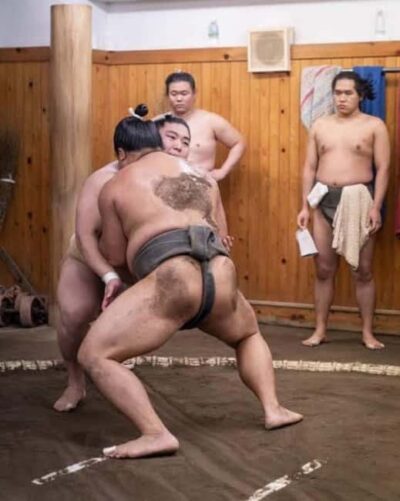

Authentic Sumo Experience in Tokyo: Enter the Sanctuary
Read our review →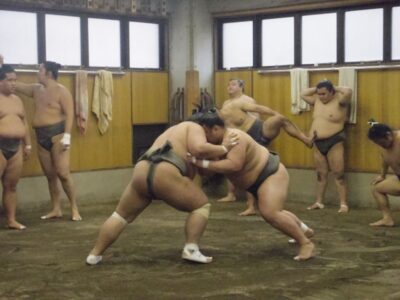
Tokyo Sumo Experience: Chanko & Mochi with a Former Pro
Read our review →Browse the lists this tour appears in