
Reviewed · TOKYO SUMO EXPERIENCES
Tokyo: Sumo Morning Training Visit
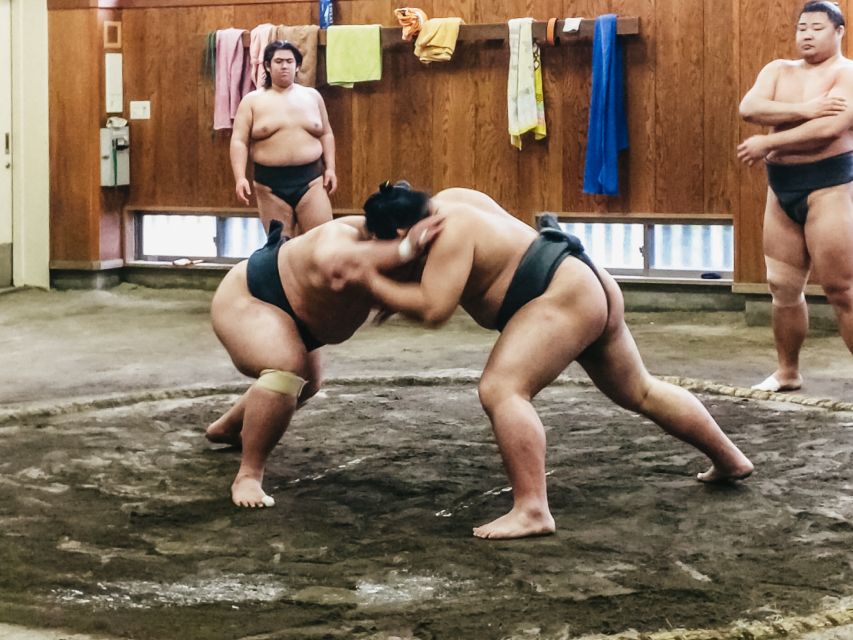
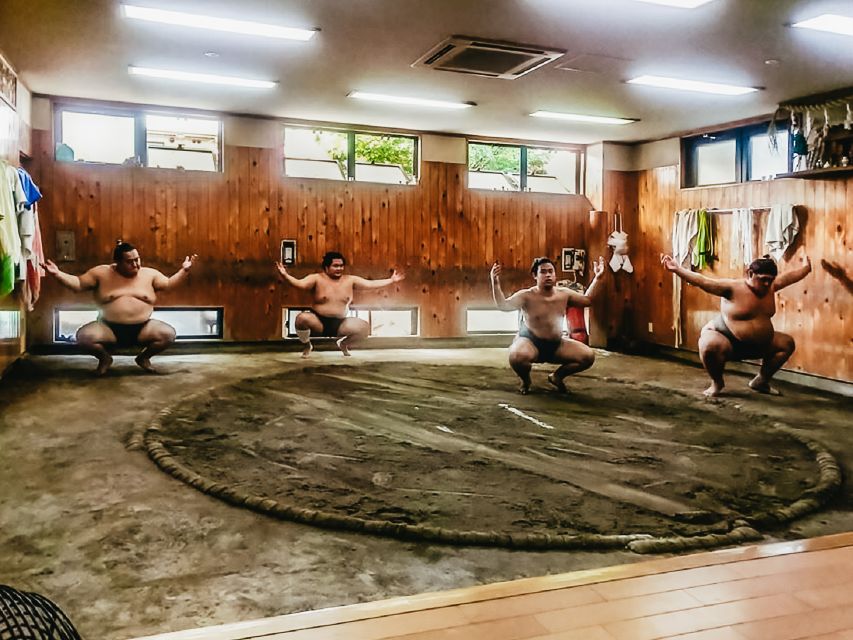
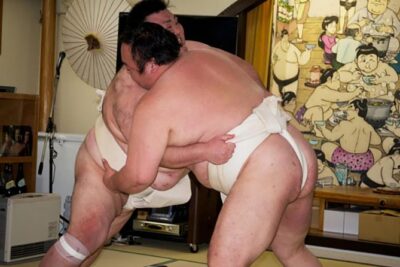
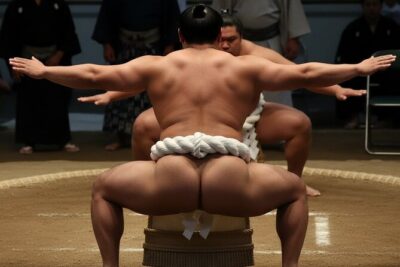
At a working sumo stable, the main event is not a polished show. It is the wrestlers’ training: warm-ups, repeated drills, and, when the session includes them, bouts of sparring close enough for you to hear the impact. You get a rare look at the discipline and physical power behind a sport usually watched from a seat in a tournament hall.
I like two things here: you see real professional training up close, not a staged demonstration, and the group photo at the end gives you a brief chance to meet the wrestlers. The stable setting makes the experience feel rooted in daily practice, even if you know little about sumo when you arrive.
The main consideration is the format. You may need to sit quietly on the floor for the full session, and explanations of the rituals and techniques can be limited. The meeting place is also confirmed only a few days beforehand, so plan to check your email rather than rely on the map pin.
- Training, not a sumo show: Watch active wrestlers practice in a real stable.
- A close view of technique: See warm-ups, drills, and possibly sparring from inside the training space.
- A photo opportunity: A group picture with the wrestlers is included, but you must stay until the end.
- A variable schedule: Sessions are normally about an hour, but can be shorter during Tokyo tournament months.
- A late-confirmed meeting point: Your stable and directions arrive by email about three days before the visit.
Inside a working sumo stable
Sumo is often presented to visitors through tournament bouts, where the ceremony and contest are the focus. This visit gives you a different view: wrestlers at practice, working through the physical routines that prepare them to compete. You are not buying a performance with a set sequence. The stable’s training is the reason for the visit, and the wrestlers’ condition and schedule can affect what you see.
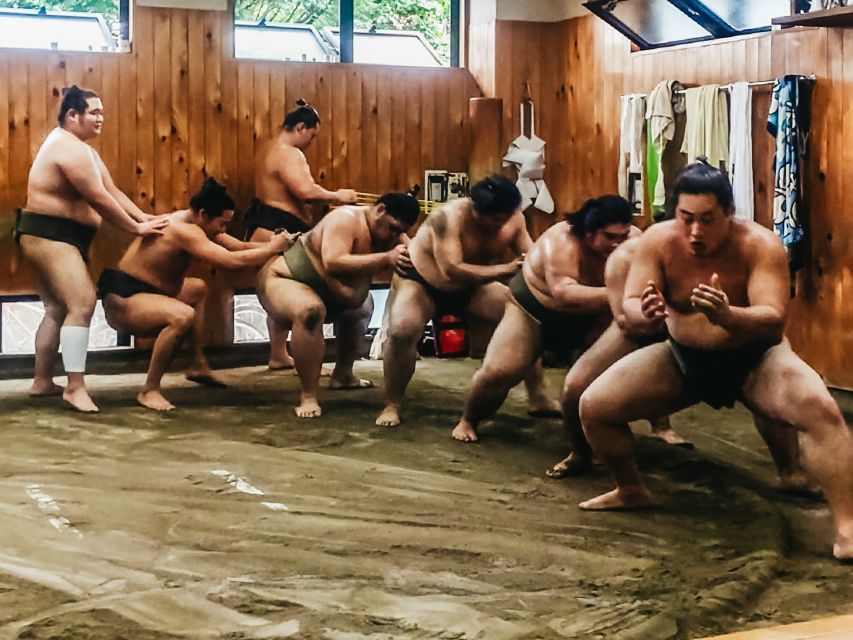
That distinction matters. A live session can feel less tidy than a show, but it is also more revealing. You can watch the repetition, concentration, and effort that sit behind a match. In sparring, the sound of bodies meeting and the sudden shifts in balance make the sport’s force and technique easier to grasp than they are from a distance.
The session takes place inside a sumo stable in Tokyo, but you do not choose the stable or enter independently. The operator confirms the exact meeting place and time by email about three days before your visit. The voucher and account page may show sample information, so use the stable named on your voucher and follow the later email for directions.
What the hour may contain
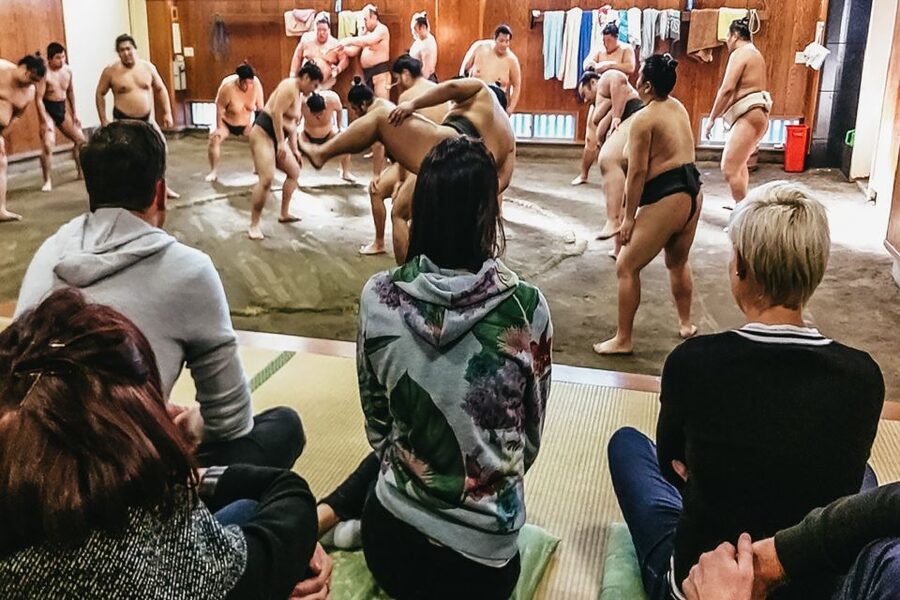
The advertised duration is one hour, and a typical morning visit follows the training rather than a tourist itinerary with several stops. You meet the host, enter the stable together, and take a place where you can watch. From there, the activity is largely about observing: warm-ups, practice drills, and, depending on that day’s session, sparring.
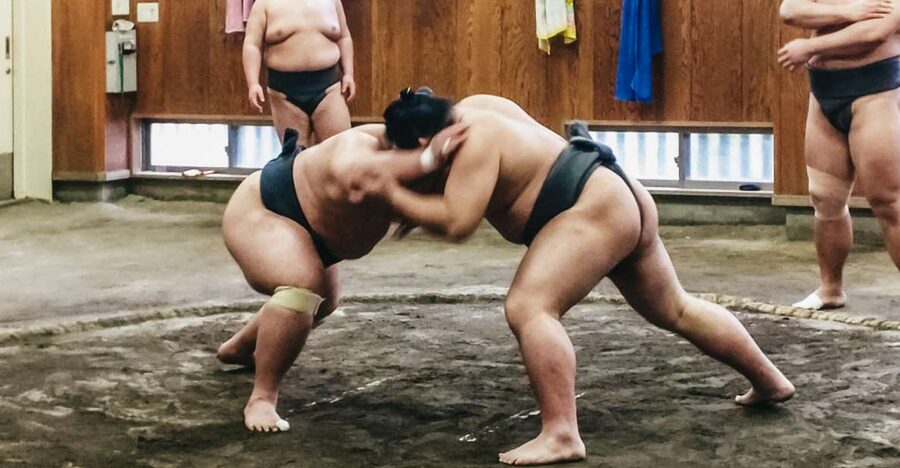
The training is not guaranteed to include a full set of bouts. Some sessions may feel more like conditioning and technique work; others may include wrestlers pushing and sparring. The schedule can change with the wrestlers’ condition, so come prepared to watch what is happening rather than wait for a particular move or matchup.
There is an important calendar exception. During Tokyo’s Grand Sumo Tournaments in January, May, and September, the morning practice visit is expected to last about 30 minutes. The shorter session does not come with a refund, so check whether your date falls in one of those months before booking. Even outside tournament periods, the length of a real practice can vary. Some participants have found themselves watching longer than the listed hour, so avoid scheduling a tight commitment immediately afterward.
More sumo experiences in Tokyo:
- Tokyo: Sumo Show Experience with Chicken Hot Pot and a Photo
★ 4.8 · 6,678 reviews - Tokyo: Sumo Show and Dining Experience
★ 4.8 · 2,742 reviews - the SUMO show
★ 5.0 · 1,960 reviews
The best view requires patience
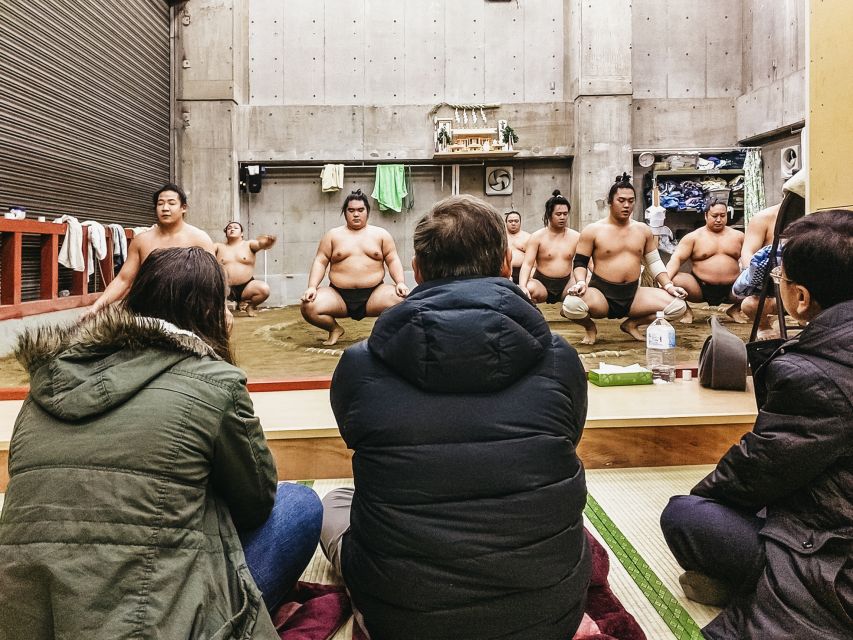
This is a quiet, seated activity. You are expected to keep your voice down, switch your phone to silent, and avoid distracting the wrestlers. Flash photography is prohibited, and video is allowed only with permission. These rules are not fussy extras: the stable is a place where athletes are training, not a viewing hall built around visitors.
Seating may be on the floor, and you may remain in one place for much of the session. That can be tough on knees, hips, or backs, especially if the practice runs long. If you need a chair or other seating arrangement, ask about it in advance. Do not assume one will be available on the day. A cushion is not listed as supplied, so if you have a suitable small cushion, ask the operator whether you may bring it. The activity’s rules prohibit luggage and large bags.
Arriving on time matters for both the meeting and your view. The stable allows entry only with the guide, and the group enters at the arranged time. Within the viewing area, seats may be limited or arranged informally. A late arrival can mean a place farther back, where people in front may block part of the practice. Do not arrive early and ring the doorbell or enter on your own. Check-in starts at the meeting time.
You may leave early, but there is a trade-off: you will not receive the group photo. If you can manage the seated format, staying through the end is the better plan.
How much explanation to expect
An English-speaking host or greeter is included, but do not count on a detailed sports lesson. The host may handle the meeting, check names, guide the group into the stable, and explain the rules for watching. The amount of background on sumo, its rituals, or the specific movements can vary. Some people have found the guidance useful for practical matters, while others would have liked more context.
That is the clearest weakness for a first-time sumo viewer. Without an introduction, it may take a little time to understand what a drill is meant to develop or why a particular ritual matters. You can still learn by watching the wrestlers’ posture, balance, and repeated movements, but a short explanation would make the experience more accessible.
A simple fix is to read a little about sumo before you go, especially if you want to recognize the training routines. Keep your expectations modest: this is an observation visit, not a lecture or a guided tour through sumo history. English is the stated language, but the quality and detail of explanations may not be consistent.
The photo and the brief encounter afterward
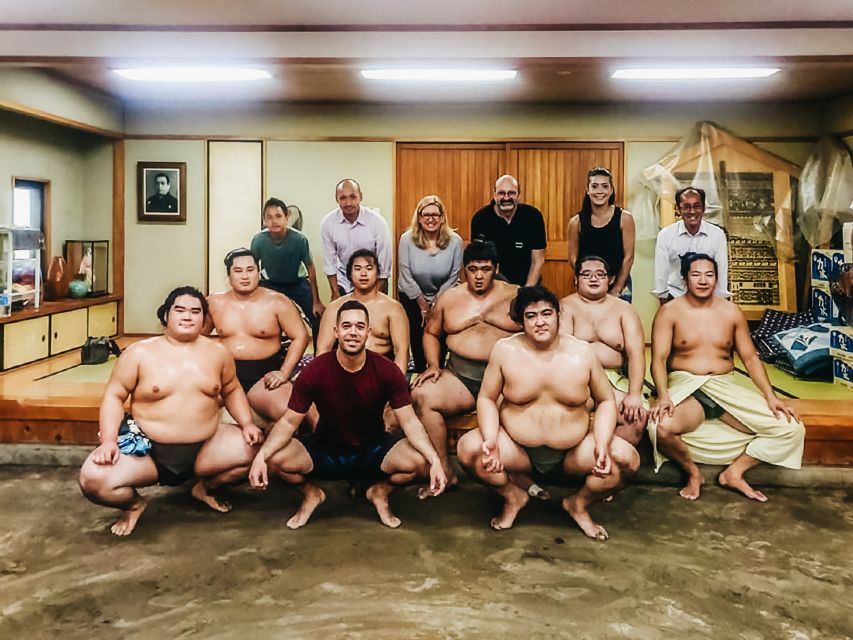
A group photo with the wrestlers is included, usually after training. It is a welcome finish to an activity that otherwise asks you to sit still and watch. You get a chance to be near the athletes rather than seeing them only from across the practice space or an arena.
The photo is not a private meet-and-greet, and the timing depends on the session. Stay until the end if it matters to you. If you leave early, you give up the photo opportunity. Keep your camera ready without using flash, and do not take video unless you have permission.
The close view is the real souvenir, though. You can appreciate the wrestlers’ size, but also their speed, balance, and control. Sumo can look simple from far away: two competitors, one ring, one decisive contest. Training makes clear how much repetition and physical preparation sit behind that apparent simplicity.
More early-start experiences in Tokyo:
- Tokyo: Sumo Morning Practice Viewing Tour
★ 4.8 · 570 reviews - Tokyo: Sumo Morning Practice Tour at Sumida City
★ 4.8 · 308 reviews - Tokyo Sumo Morning Practice Tour at Stable
★ 5.0 · 298 reviews - Tokyo Ryogoku Sumo Morning Practice + Photo Shoot with Wrestlers
★ 4.5 · 277 reviews
Is $77 a fair price?
At $77 per person, this is not the cheapest way to spend a morning in Tokyo. Its value depends on what you want. If your aim is to watch a tournament bout, compare the cost with an actual tournament ticket when one is available. This stable visit is not a substitute for a tournament: it offers training, not a formal contest, and can be especially brief during tournament months.
If you want to see professional wrestlers at close range in their working environment, the price buys access that is hard to recreate through ordinary sightseeing. The included group photo adds a small but tangible extra. You are paying for an unusual setting and the chance to observe real practice, not for a long list of services or a guaranteed amount of instruction.
The value is strongest for people who are curious about sumo and willing to watch closely. It is weaker if you expect a full performance, extensive English commentary, comfortable seating, or a precise one-hour schedule. The session may be shorter in tournament months, while other practices can run longer than expected.
Getting to the stable and preparing well
The meeting place is not fixed on the public map. The operator decides the stable and meeting point about two to three days before the visit, then sends the location and directions by email. Check that message as well as your voucher, since automatic voucher details and account-page information may be samples. If anything is unclear, use the contact number in your confirmation email.
An optional one-way hotel transfer may be available for hotels within Tokyo’s 23 wards. The maximum is four passengers, and the driver speaks Japanese, not English. The hotel must have a front desk. To arrange pickup, provide the hotel name, check-in date, booking name, and a Japanese mobile number that can be reached the day before. The pickup time is sent by email at least one day ahead. If you are more than 10 minutes late, the transfer is treated as a waiver. Hotel pickup and drop-off are not included in the activity price.
Bring a face mask or protective covering. Hats, sunglasses, food, drinks, large bags, and indoor smoking are not allowed. These limits are worth taking seriously: the space is a training stable, and the quiet rules are part of being a respectful observer.
Cancellation is free up to 11 days before the activity for a full refund. Because the meeting point arrives late, leave enough time after that email to work out your route and confirm the instructions.
Who should book this visit
I would choose this for someone who values access over comfort. If you are interested in sports, Japanese traditions, or the discipline of professional training, the experience offers a memorable view of sumo beyond the tournament ring. It can also work for older children who are comfortable sitting quietly. One family found that even young children could stay captivated, but that is no guarantee for every child.
Think carefully if floor seating is likely to cause pain, if you need a detailed English explanation, or if you have a strict schedule after the visit. Ask about seating needs before booking, and do not plan on a long session during January, May, or September tournament periods. If your main goal is to see competitive bouts, put your money toward a tournament ticket instead.
Book the stable visit if you want a close look at real practice and can accept the quiet, seated format and late-confirmed location. Skip it if you are expecting a staged show or a full lesson in sumo. Its best quality is also its limit: you are there to watch the wrestlers train, on their terms.
FAQ
How long does the sumo training visit last?
The activity is listed as one hour, and training normally lasts about 60 minutes. During Tokyo Grand Sumo Tournament months in January, May, and September, sessions last about 30 minutes. The schedule can also change depending on the wrestlers’ condition.
Where is the meeting point?
The exact meeting place is decided about three days before the visit. You will receive the stable location and directions by email. Follow that email and the stable named on your voucher, not an unconfirmed map pin.
Can I choose a particular sumo stable?
No. Specific stable requests cannot be accommodated. All stables used for this activity are within Tokyo.
Is the activity a sumo match or show?
No. You watch active professional wrestlers train at a real stable. The practice may include warm-ups, drills, and sparring, but the content depends on that day’s session.
Is a group photo included?
Yes. A group photo with the wrestlers is included at the end. If you leave before the activity finishes, you will not receive the photo.
Can I take photos or videos?
Flash photography is forbidden. Video may be taken only with prior permission. Keep your phone on silent and avoid making noise during training.
What should I bring?
Bring a face mask or protective covering. Hats, sunglasses, food, drinks, luggage, and large bags are not allowed inside.
Is hotel pickup available?
An optional one-way transfer may be arranged for a hotel within Tokyo’s 23 wards. Pickup is limited to four passengers, the hotel must have a front desk, and the driver speaks Japanese rather than English.
What is the cancellation policy?
You can cancel up to 11 days in advance for a full refund. During tournament months, the shorter practice session does not qualify for a refund.
Freshly reviewed in Tokyo
- Tokyo: Toshimaya Sake Brewery Tour with Sake Tasting★ 5.0 · 6 reviews
- :Tokyo,Shibuya /Meiji Shrine tour in KIMONO/English-friendly★ 5.0 · 4 reviews
- Tokyo: Tour Privado por Tokio en español★ 4.3 · 4 reviews
- Tokyo:Tea ceremony experience at Komaba Warakuan★ 4.8 · 9 reviews
- :Tokyo,Shibuya/ Pro Photography in Kimono / English-Friendly★ 5.0 · 26 reviews
- Tokyo:Samurai Training : Swords, Bushido & Mental Discipline★ 5.0 · 6 reviews
- Tokyo:Mt Fuji & Hakone Day Tour with English Speaking Driver★ 5.0 · 26 reviews
- Tokyo:Nikko UNESCO World Heritage Sites Private 1-Day Tour★ 3.8 · 6 reviews
Tokyo Sumo Experiences, compared.
Tokyo Shinjuku Sumo Show & Experience with Photo
Read our review →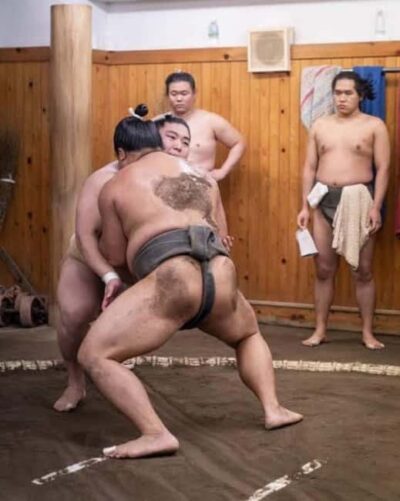

Authentic Sumo Experience in Tokyo: Enter the Sanctuary
Read our review →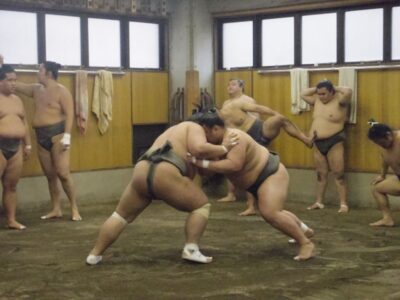
Tokyo Sumo Experience: Chanko & Mochi with a Former Pro
Read our review →Browse the lists this tour appears in