
Reviewed · TOKYO RAMEN TOURS
Asakusa Classic Ramen & Crispy Gyoza Cooking Class
Ramen broth takes time and know-how, and this class makes that process part of the lesson rather than a mystery behind the counter. You’ll work on gyoza by hand, learn about ramen and its ingredients from Masa and Junko, and finish with the meal you helped prepare. I especially like the small group of up to eight and the recipes to take home, since both make the class feel useful beyond one lunch in Tokyo.
One thing to know: the gyoza work is hands-on, but you may not personally make every stage of the ramen broth. The chef handles much of the complex stock preparation while explaining the method, then you assemble your bowl. If your main goal is to cook a full pot of ramen completely on your own, that distinction matters.
- Two Japanese staples in one class: Learn about ramen broth and toppings, then make and fold gyoza.
- A close-knit group: The class is capped at eight people, so there is room to ask questions and follow the demonstrations.
- A meal at the finish: Sit down to enjoy your ramen and dumplings after the cooking.
- A practical takeaway: Recipes are provided, with natural ingredients and no MSG or artificial additives used in the class.
- Asakusa location: Meet at Chagohan Tokyo in Nishiasakusa, near public transportation.
- Plan around the schedule: Classes are listed for 10 a.m. to 1 p.m. and 3 p.m. to 6 p.m.; timing may vary slightly.
A ramen lesson with a meal at the end
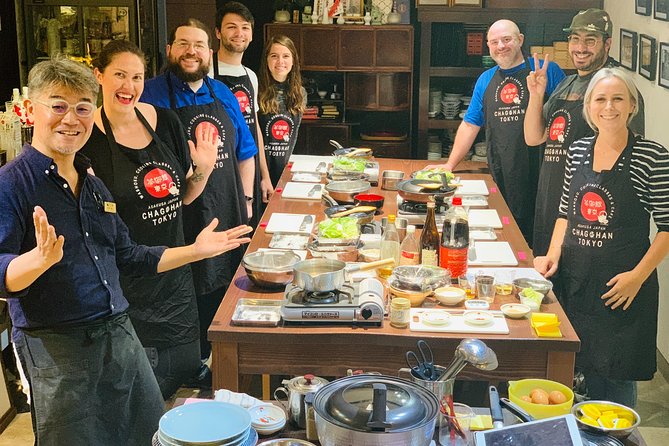
This is more than a dumpling-folding session with a bowl of noodles on the side. The class introduces you to two dishes that look familiar on a menu but involve very different kinds of work: ramen depends on its broth and base, while gyoza asks you to prepare a filling, shape the dumplings, and get their bottoms crisp.
Masa leads the cooking and explains the dishes, while Junko helps host the class. Their teaching includes background on ramen and Japanese cooking as well as practical instruction. That mix is worthwhile if you want to understand not just what to do, but why the ingredients and methods matter.
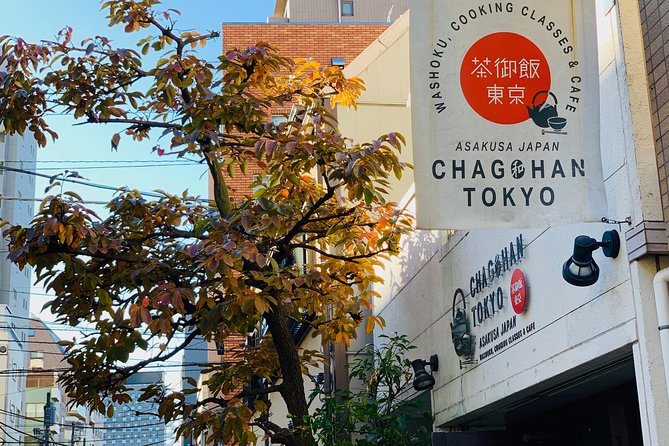
The class takes place at Chagohan Tokyo, a cooking studio in Nishiasakusa. One participant described it as a real kitchen rather than a lesson in someone’s home, a useful detail if you prefer a dedicated cooking space. The experience is arranged for a small group, with no more than eight participants.
At about three hours, the session fits neatly into a Tokyo day without taking over it. The advertised morning class runs from 10 a.m. to 1 p.m., and the afternoon class from 3 p.m. to 6 p.m. These are estimates, so leave a little breathing room before your next fixed plan.
Getting started at Chagohan Tokyo
The meeting point is Chagohan Tokyo, at 2-chōme-17-13, 1F, Nishiasakusa, Taito City, Tokyo 111-0035. The activity ends at the same place, and the area is near public transportation. Give yourself enough time to find the address and arrive ready to start, especially if you are unfamiliar with the neighborhood.
You do not need to bring cooking gear. Aprons and utensils are provided, along with the ingredients used for the class. That makes this an easy activity to fit into a sightseeing day: you can arrive as you are and focus on the cooking instead of packing supplies.
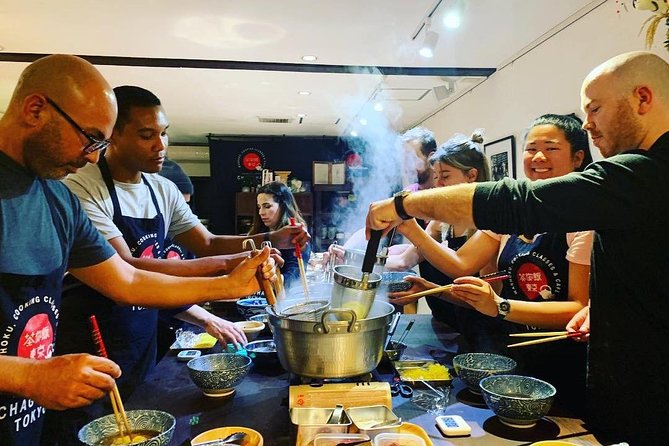
The group limit is a practical plus. With eight people at most, the instructor can demonstrate each stage without turning the class into a lecture at the back of a crowded room. For a family, couple, or pair of friends, the small format should also make it easier to work through the steps at your own pace.
More Asakusa tours in Tokyo:
- Tokyo: Japanese Dance Cabaret Theater Asakusa-Kaguwa Ticket
★ 4.8 · 2,270 reviews - Tokyo: Meiji Shrine, Asakusa, Skytree Bus Tour and Cruise
★ 4.7 · 1,986 reviews - Tokyo: Roll and Authentic Sushi Making Class in Asakusa
★ 4.9 · 1,957 reviews
Making ramen: learn the method, not just the bowl
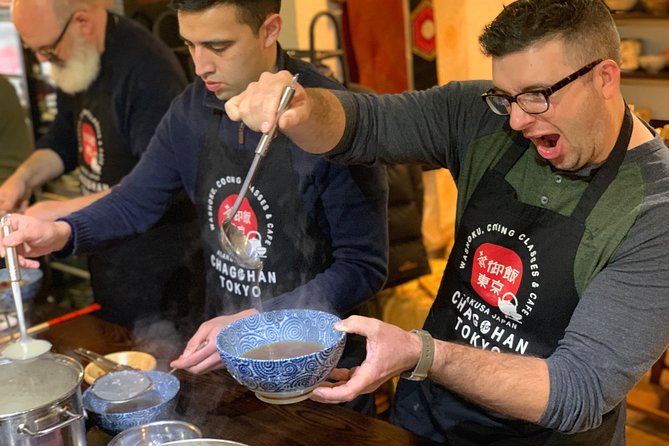
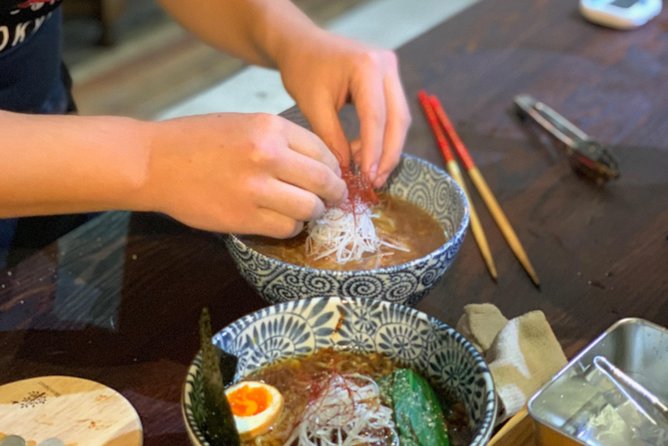
The ramen portion is about building flavor. You learn how the ramen base and broth are prepared, and the class covers toppings and the components that go into a finished bowl. Masa explains the process and offers tips, giving you a clearer picture of why a bowl of ramen involves more than noodles and a packet of seasoning.
Be clear about the level of participation you want. The class covers making ramen broth and base from scratch, but the hands-on share is not necessarily equal at every stage. One past participant noted that the chef prepared and explained much of the shoyu stock, while the class assembled the bowls. That makes sense: ramen stock has multiple steps, and a three-hour class has to balance instruction with cooking time.
You should still come away with useful information. The lesson includes the history and variety of ramen, the ingredients that help build flavor, and tips for making the dish at home. You also receive a recipe, so the explanation can serve as a guide when you try it again.
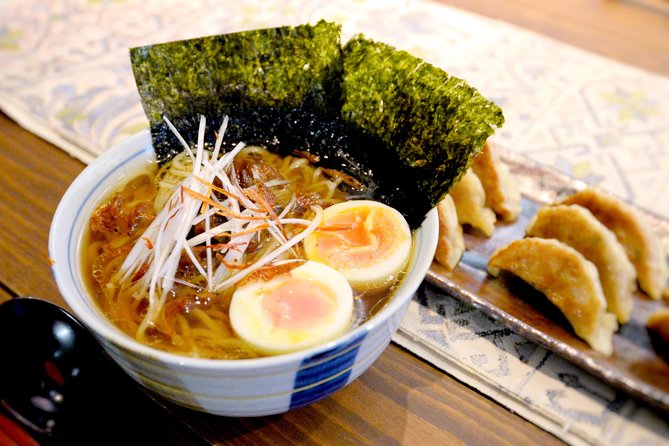
Several participants describe the finished ramen as shoyu, and one mentions chicken ramen. The class information itself describes ramen more broadly, so the exact version may be worth confirming when booking if you have a strong preference or dietary restriction. What is clear is that you will learn about the broth and toppings, then assemble a finished, photogenic bowl to enjoy.
Folding gyoza, one dumpling at a time
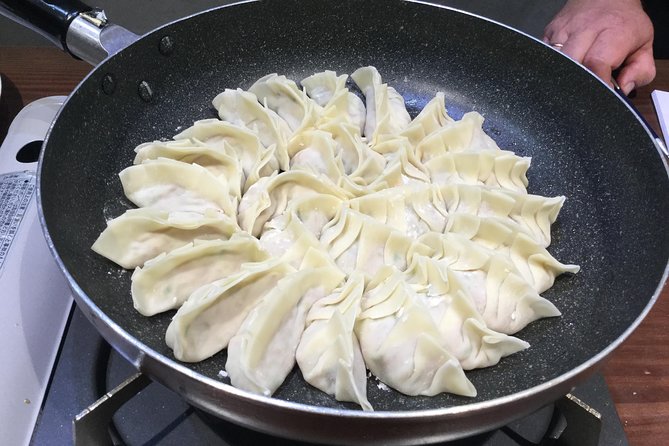
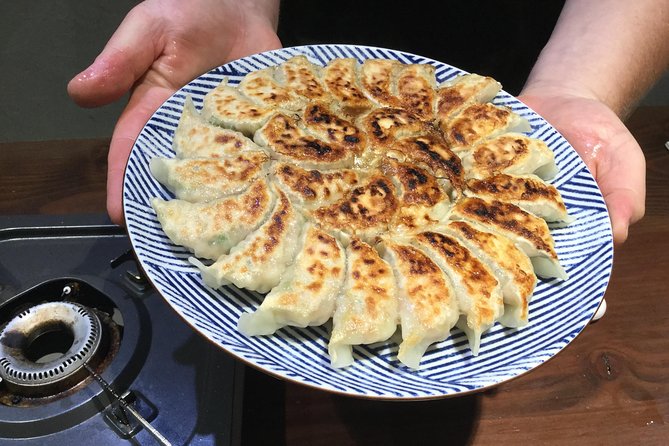
Gyoza is where you can expect the most direct, tactile work. You prepare the filling, use hand-cutting techniques for vegetables, and fold the dumplings yourself. Masa and Junko guide the steps, which makes the task approachable even if you are new to dumpling-making.
The aim is a juicy center and crisp exterior. That contrast is the useful lesson: the class is not only about forming a neat parcel, but about understanding how the dumpling should cook. The final meal includes the gyoza you have made, so you get to see how your work turns out at the table.
This part may be especially satisfying if you want a recipe you can repeat at home. One participant felt confident about making the gyoza again, even while finding the ramen stock more complicated. That is a realistic distinction. Dumplings take practice, but their steps are easier to break down and repeat in a home kitchen than a stock with many stages.
There is knife work involved in preparing vegetables. Families with children should keep that in mind, particularly with younger children. The class has been enjoyed by families with teenagers, but the cooking tasks call for attention and care around knives.
What the meal and recipe add to the price
At $167.81 per person, this is not a bargain lunch. You are paying for a three-hour cooking lesson, ingredients, the use of aprons and utensils, a small-group format, a meal, and recipes you can use later. The value is strongest if you want instruction and cultural context as well as food.
The meal matters. You do not finish by packing away a few sample bites; you sit down to eat the ramen and gyoza you prepared. Participants have described portions of about eight gyoza and a full bowl of ramen, though portions may vary. Plan this as a substantial meal rather than a quick snack between sightseeing stops.
The recipe is another part of the value. A cooking class can be fun in the moment but hard to recreate if you leave with only a few vague tips. Here, written instructions give you a starting point at home. The gyoza may feel more immediately repeatable, while ramen broth can take more patience and practice.
The ingredients are described as natural, with no MSG or artificial additives. That is useful for people who prefer to know what goes into their food, but it does not by itself confirm that every ingredient suits a particular allergy or dietary need. Contact the provider in advance with specific concerns.
More cooking classes in Tokyo:
- Sushi Making Tokyo Roll and Authentic Japanese Sushi Class
★ 5.0 · 3,971 reviews - Tokyo Shinjuku Chopsticks Making Class
★ 5.0 · 1,763 reviews - Tokyo: Sushi Making Class in a Happi Coat near a Famous Spot
★ 4.9 · 1,377 reviews - Tokyo Sushi Making Class in Tsukiji with Professional Chef
★ 5.0 · 1,177 reviews
A friendly class with room for questions
The hosts are a major part of the experience. Masa and Junko are described as warm and funny, with Masa leading the instruction and Junko helping with the class. Several participants also appreciated the clear English explanations, which help make the history and cooking steps accessible.
The teaching seems suited to beginners without shutting out people who already cook. You can follow along step by step, ask questions, and still learn details about Japanese food and ramen. That balance is useful for mixed groups, such as a family with varied cooking experience or friends who are not equally confident in the kitchen.
There is also a personal touch in the way the class is run. Junko has been known to take photos and videos during the session, which can help you remember the process without trying to photograph every step yourself. Do not treat this as a guaranteed photo service, though, unless the provider confirms it for your date.
Who should book, and who may want another plan
I would put this class high on the list if ramen or gyoza is already on your Tokyo food wish list. It suits couples, friends, families with older children, and anyone who likes learning a dish by doing some of the work. It can also work well as a shared activity for a small team.
It is particularly appealing if you want a cooking experience that has a clear result. You prepare dumplings, learn how the ramen comes together, and eat a complete meal at the end. The recipes make the class more useful than a demonstration alone.
You may want to choose something else if you only want a quick meal, if the price feels high for a single dining experience, or if you expect to cook every stage of ramen broth yourself. The stock preparation is complex, and the class uses demonstration and explanation for parts of that process. This is a lesson in ramen and gyoza, not a full professional training course.
Vegetarian and vegan options are available with advance notice. Make that request before your class rather than assuming a suitable menu can be arranged on arrival. If you have allergies or other food restrictions, ask the provider directly, since the available information does not specify how each one can be accommodated.
Booking is worth doing early if the schedule matters to you. The class is often booked about 27 days ahead, and confirmation is sent within 48 hours, subject to availability. The experience is non-refundable and cannot be changed after booking; if poor weather or a minimum-group requirement causes cancellation, you are offered another date or a refund.
Should you book the Asakusa ramen and gyoza class?
Book it if you want to spend a half-day learning about two Japanese favorites, enjoy hands-on dumpling work, and sit down to the food you have made. The small group, clear instruction from Masa and Junko, provided equipment, and take-home recipes give the $167.81 price a practical purpose.
Think twice if you are mainly looking for a cheap lunch or expect to manage every step of the ramen broth yourself. For curious eaters who want a friendly lesson and a satisfying meal, this is a strong choice in Asakusa. For a ramen devotee seeking a detailed stock-making workshop, check exactly how much broth preparation you will handle before paying.
FAQ
How long is the cooking class?
The class lasts about three hours. The morning session is listed from 10 a.m. to 1 p.m., and the afternoon session from 3 p.m. to 6 p.m. The duration may vary slightly.
What will I cook?
You will learn about ramen broth and base, prepare ramen toppings, make gyoza filling, and fold the dumplings by hand. At the end, you assemble a bowl of ramen and eat the food you prepared.
Are aprons and cooking tools provided?
Yes. Aprons and utensils are provided, as are the ingredients. You do not need to bring cooking equipment.
Can I request a vegetarian or vegan option?
Yes. Vegetarian and vegan options are available with advance notice. Contact the provider before the class to request one.
Where does the class start and end?
The class meets at Chagohan Tokyo in Nishiasakusa, Taito City, Tokyo, and ends at the same location. It is near public transportation.
How many people can join the class?
The maximum group size is eight people. Groups of eight or more are asked to contact the provider through its contact form.
More hands-on workshops in Tokyo
- Chopstick Making Workshop in Ginza
★ 4.8 · 1,366 reviews - Matcha Making Class in Tokyo with Authentic Japanese Sweets Set
★ 5.0 · 744 reviews - Tokyo: Samurai Sword & Archery Class from Samurai Descendant
★ 5.0 · 603 reviews - Tokyo: Tsukiji Fish Market Sushi Making Class with Pro Chef
★ 4.9 · 506 reviews
More ramen tours in Tokyo
- Eat and Drink Like a Local: Tokyo Ueno Food Tour-Taverns&Ramen
★ 5.0 · 957 reviews - Ramen & Gyoza Cooking Class in Tokyo with Local Supermarket Visit
★ 5.0 · 823 reviews - Tokyo: Ramen Tasting Tour with 6 Mini Bowls of Ramen
★ 4.9 · 432 reviews - Tokyo: Easy Ramen Cooking Experience in Kabukicho, Shinjuku
★ 4.6 · 321 reviews
Freshly reviewed in Tokyo
- Tokyo: Toshimaya Sake Brewery Tour with Sake Tasting★ 5.0 · 6 reviews
- :Tokyo,Shibuya /Meiji Shrine tour in KIMONO/English-friendly★ 5.0 · 4 reviews
- Tokyo: Tour Privado por Tokio en español★ 4.3 · 4 reviews
- Tokyo:Tea ceremony experience at Komaba Warakuan★ 4.8 · 9 reviews
- :Tokyo,Shibuya/ Pro Photography in Kimono / English-Friendly★ 5.0 · 26 reviews
- Tokyo:Samurai Training : Swords, Bushido & Mental Discipline★ 5.0 · 6 reviews
- Tokyo:Nikko UNESCO World Heritage Sites Private 1-Day Tour★ 3.8 · 6 reviews
- Tokyo:Mt Fuji & Hakone Day Tour with English Speaking Driver★ 5.0 · 26 reviews
Tokyo Ramen Tours, compared.

Eat and Drink Like a Local: Tokyo Ueno Food Tour-Taverns&Ramen
Read our review →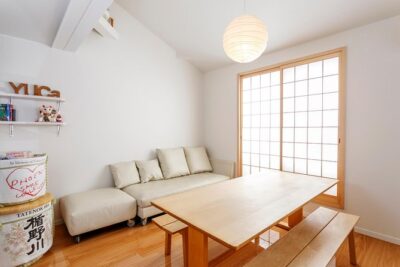
Ramen & Gyoza Cooking Class in Tokyo with Local Supermarket Visit
Read our review →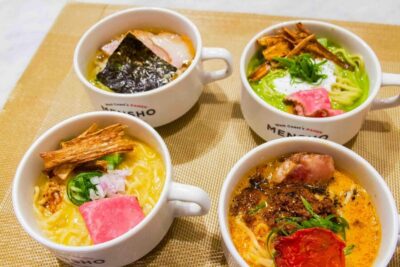
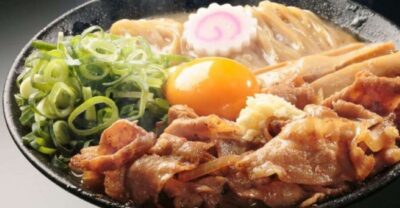
Easy Ramen Cooking Experience in Kabukicho, Shinjuku
Read our review →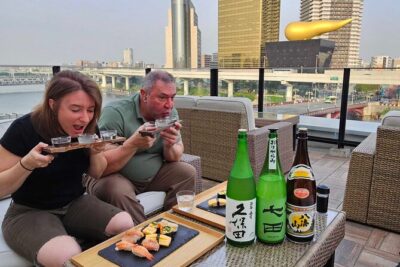
Ramen and Sushi Cooking Class with Sake Pairing Set in Tokyo
Read our review →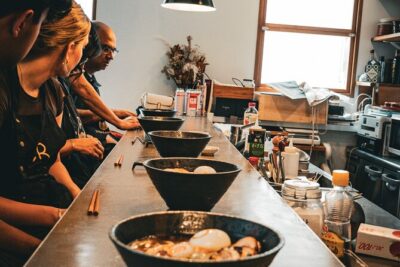
Professional Ramen & Gyoza with Ramen Chef in a restaurant!
Read our review →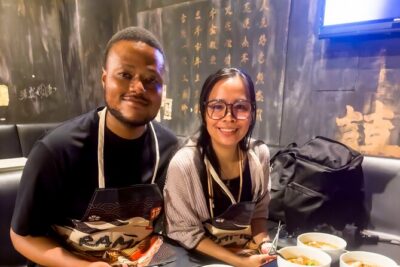
Ramen Dojo Tokyo | Make All 3 (Tonkotsu/Shoyu/Miso)
Read our review →
Browse the lists this tour appears in