
Reviewed · TOKYO SUMO EXPERIENCES
Tokyo: Sumo Morning Practice with Photo Banzuke and Guide
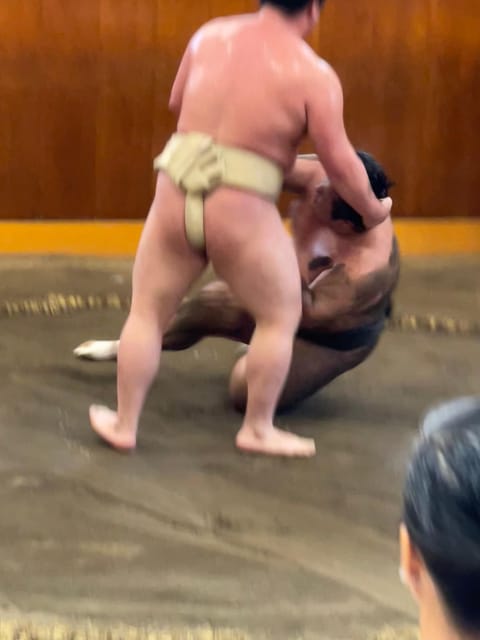
Sumo is at its most revealing before the tournament lights come on. At a Tokyo stable, you watch wrestlers train at close range, practicing in a sport where competitors face one another without weight classes. The setting is a working stable, not a show staged for an audience.
I like two things here: you get a rare look at morning training, since only a select number of Japan’s 44 sumo stables admit observers, and a local guide explains the sport after the practice rather than leaving you with a striking but confusing spectacle. One caution: the advertised duration is seven hours, while the listed activities add up to much less, so confirm the schedule before you commit a full day.
What to know before you book
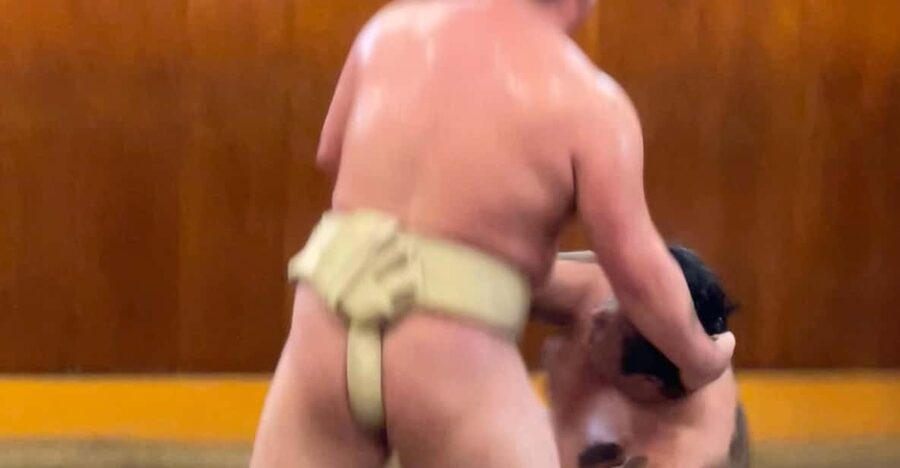
- Practice happens inside a real sumo stable: You observe wrestlers training for their next major match, rather than watching a tournament bout.
- You watch from chairs: Seating is specified, a practical plus during a long viewing session and a useful detail if sitting on the floor would be uncomfortable.
- The group is small: Tours are limited to nine people, so you can follow the guide’s explanation without a large crowd around you.
- The guide adds context after practice: A short presentation covers sumo basics and traditions, helping you make sense of what you have just watched.
- The meeting point is Exit B1 at Kiyosumi-Shirakawa Station: Look for the FamilyMart convenience store nearby, and arrive on time.
- Check the timing carefully: The activity is advertised as seven hours, but the listed segments account for about three hours, not counting possible transfers or other unlisted time.
Why a morning practice is different from a tournament
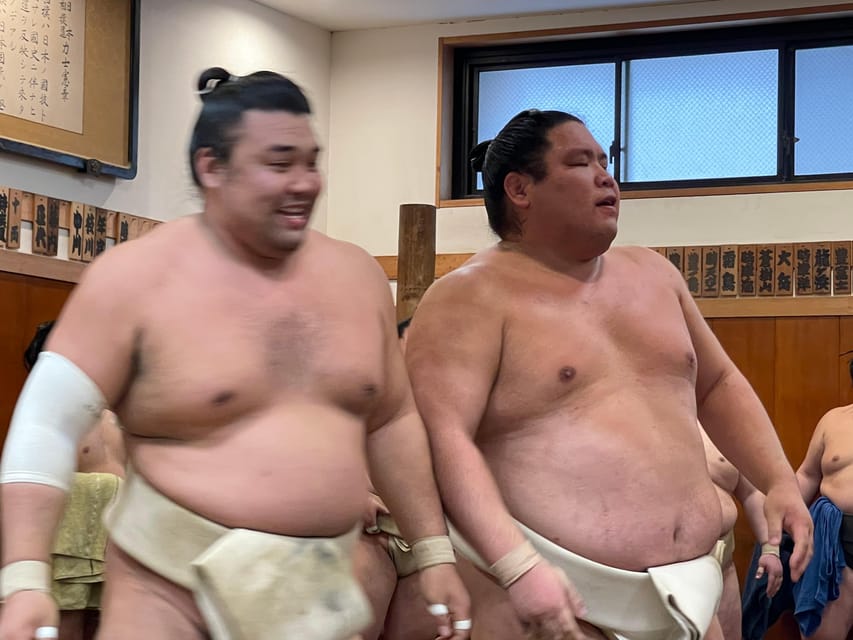
Sumo tournaments are held for only 90 days of the year, so a practice visit offers a way to see the sport outside those limited competition dates. It is not the same as watching a match: you are there to observe training, with the focus on preparation, repetition, and the wrestlers’ work inside their stable.
That distinction matters. A tournament gives you the formal contest and its public atmosphere. A practice session offers a closer view of how wrestlers prepare, and the stable itself is part of the appeal. Only a select few of Japan’s 44 sumo stables allow visitors to observe morning training, so access is unusual, even if you already know sumo from television or a tournament.
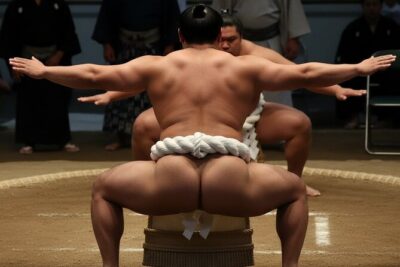
The sport’s lack of weight classes is part of what makes the practice so striking. Wrestlers of enormous size face one another directly, and you can see the physical force behind the movements. The draw is not simply the sight of powerful athletes. It is watching them train within a demanding tradition, then hearing a guide explain what you have seen.
More sumo experiences in Tokyo:
- Tokyo: Sumo Show Experience with Chicken Hot Pot and a Photo
★ 4.8 · 6,678 reviews - Tokyo: Sumo Show and Dining Experience
★ 4.8 · 2,742 reviews - the SUMO show
★ 5.0 · 1,960 reviews
Meeting at Exit B1, then heading to the stable
The tour begins at Kiyosumi-Shirakawa Station, at Exit B1 near a FamilyMart convenience store. The meeting instructions say the guide will wait at the exit, making it possible to arrive by train, taxi, or another form of transport. Still, a past attendee found the exact meeting spot could have been clearer, so I would look for the FamilyMart and confirm the guide’s position if you are unsure.
Be punctual. This is a group tour, and the guide needs to get the full group moving together. If you are running late, contact the operator, but do not assume the group can wait indefinitely. The tour notes say late arrivals may be accommodated when possible, while also making clear that the group takes priority.
The listed itinerary starts and ends at Kiyosumi-Shirakawa Station. The stable is described as 14 minutes from Otemachi or Tokyo Station, but the tour’s meeting point is Kiyosumi-Shirakawa, not either of those stations. Keep that distinction in mind when planning your route.
Watching wrestlers train from chairs
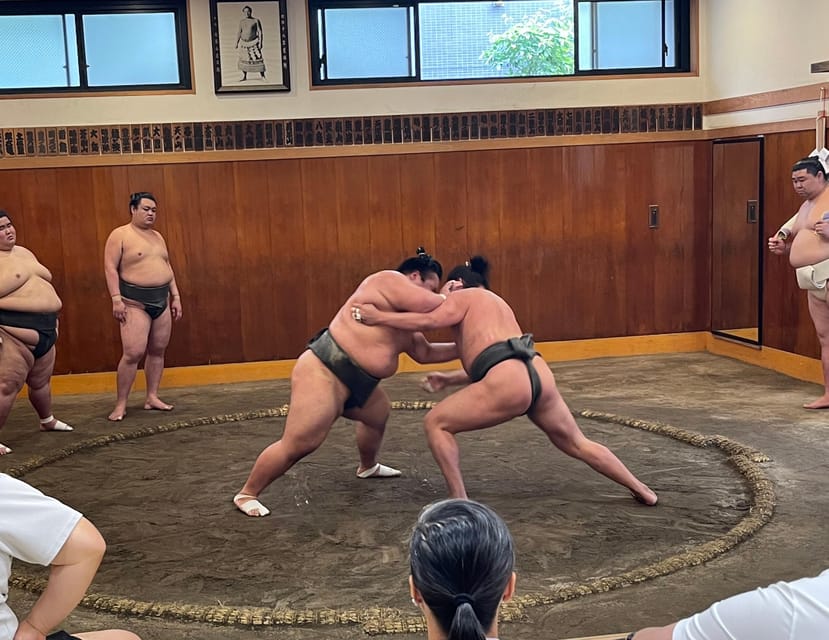
The main event is the morning practice, listed as a 2.5-hour guided segment. You watch wrestlers work on their moves and prepare for their next big match. The tour specifically says you sit in chairs, so you do not need to plan on watching the session from the floor.
The close view is the heart of the visit. You are watching a training session in a sumo stable, not a performance built around tourist entertainment. That can make the experience feel more immediate, but it also calls for respect: you are entering a place where athletes are doing their regular work. Follow the guide’s instructions and treat the practice as an opportunity to observe, not as a chance to interrupt.
Bring a camera, as recommended, but keep the stable’s rules in mind. The available information confirms a photo stop, but does not spell out exactly when or where photography is allowed during practice. Ask your guide rather than assuming you can take pictures at any moment.
A practice session is also a better fit for visitors who are curious about the process than for anyone expecting a tournament’s full pageantry. The wrestlers train and compete in the stable setting, but this is not described as a public tournament match. If your main goal is to see formal bouts, check the tournament calendar instead.
Making sense of sumo after the practice
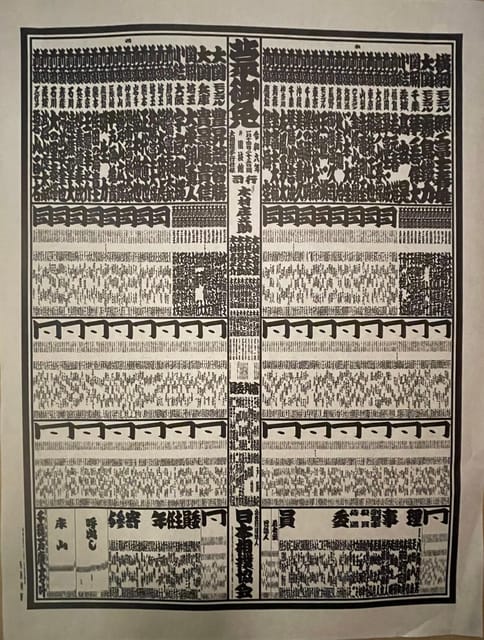
After watching the training, you hear a short presentation from a local guide about the basics of sumo. That order is smart: first you see the wrestlers in action, then the guide gives you a framework for understanding the sport.
The tour information does not promise an in-depth lecture, and it is best to set expectations accordingly. Think of the presentation as an introduction, not a full course in sumo. It is designed to help you take home more than photographs of powerful athletes. If you have a specific question, this is the moment to ask it.
The guide speaks English, and the tour is limited to nine participants. That small size should make explanations easier to hear and questions easier to ask than on a large coach tour. The guide’s name is not provided, so there is no way to request a particular person in advance.
More early-start experiences in Tokyo:
- Tokyo: Sumo Morning Practice Viewing Tour
★ 4.8 · 570 reviews - Tokyo: Sumo Morning Training Visit
★ 4.4 · 370 reviews - Tokyo: Sumo Morning Practice Tour at Sumida City
★ 4.8 · 308 reviews - Tokyo Sumo Morning Practice Tour at Stable
★ 5.0 · 298 reviews
The photo stop and short walks
The schedule includes a 15-minute photo stop, followed by two walks of about 10 minutes each. Those are modest segments, but they give the visit room to breathe after the main practice. The title also refers to a Photo Banzuke, though the available details do not explain exactly what that involves. If that specific feature matters to you, ask the operator what is included before booking.
Comfortable shoes are a sensible choice for the walking portions. The tour is described as wheelchair accessible, but the information does not explain the route or any access arrangements in detail. If you need particular assistance, contact the provider before reserving so you can confirm that the route and stable visit will work for you.
At the end, you return to Kiyosumi-Shirakawa Station. The listed plan does not describe extra stops or an extended neighborhood tour, so think of the walks and photo opportunity as supporting parts of a sumo-focused outing, not a full sightseeing tour of the area.
Seven hours for a short itinerary?
The stated duration is seven hours, but the listed schedule is difficult to reconcile with that figure. It includes a 15-minute guided segment, a 2.5-hour guided segment, a 15-minute photo stop, and two 10-minute walks. That accounts for roughly three hours, before allowing for travel or unlisted time.
I would not assume the tour will end after three hours, nor would I plan a full seven hours around it without asking for clarification. The difference could affect lunch plans, museum bookings, and the rest of your day in Tokyo. Confirm the expected start and finish times with VAS LLC before you reserve.
The listed price is $115 per person. That is a substantial cost for an activity whose main draw is one practice visit, but the value depends on what you want from it. You are paying for access to a stable that accepts observers, a local English-speaking guide, a small group, and context about the sport. If you have been hoping to see sumo up close and understand its customs, those elements may justify the price. If you mainly want a quick photo or a formal match, this may not be the best use of your budget.
Who is likely to enjoy this visit
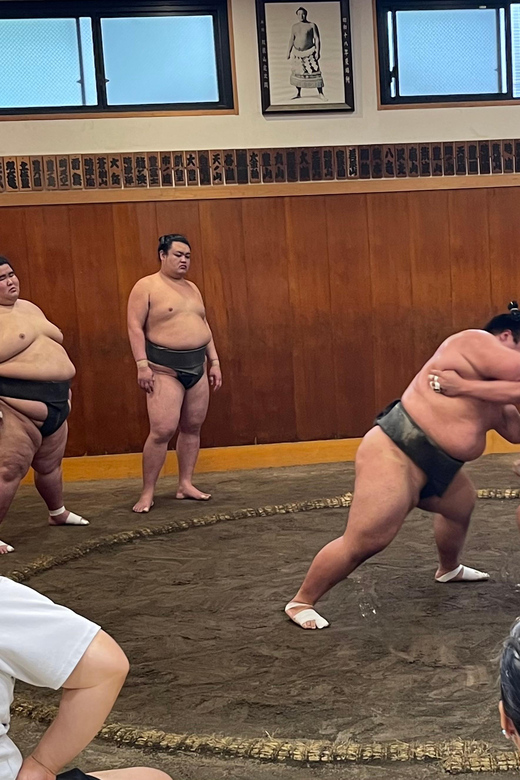
This tour suits you if sumo interests you beyond its size and spectacle. The practice gives you a rare look at training, while the guide’s presentation helps explain the basics and traditions. It is also a strong choice for someone who wants a small-group activity rather than a large bus tour.
It is less suitable if you need a tightly timed half-day outing, because the seven-hour duration is unclear. It is also not suitable for children under nine. The visit is centered on observing a practice session, so younger children or anyone expecting an action-packed show may find the quiet, attentive format less appealing.
The experience is wheelchair accessible according to the tour details, but accessibility needs vary. Confirm the specific arrangements in advance if you rely on step-free access or have other mobility requirements. The tour recommends comfortable shoes and a camera, and those are the only items specifically listed.
Cancellation is free up to 24 hours before the activity, and you can reserve now and pay later. Those terms help if your plans are still taking shape, but they do not resolve the important question of how the seven-hour duration is scheduled.
Should you book the sumo practice tour?
Book it if you want to see sumo wrestlers train in a stable, value the chance to observe a tradition up close, and are happy to let a guide explain what you are seeing. The strongest reasons to go are the rare access, the chair seating, and the small group of no more than nine.
Before paying $115, ask VAS LLC to confirm the actual start and finish times, how the Photo Banzuke fits into the visit, and what photography is permitted inside the stable. If those details suit your day, this can be a memorable way to meet sumo on its own terms. If you want a tournament bout or need a clearly defined three-hour outing, choose another option.
FAQ
Where does the tour meet?
Meet at Exit B1 of Kiyosumi-Shirakawa Station, near a FamilyMart convenience store.
How long does the tour last?
The advertised duration is seven hours. The listed activity segments add up to about three hours, so confirm the expected schedule with the provider.
What is the price?
The listed price is $115 per person.
What language does the guide speak?
The live tour guide speaks English.
How large is the group?
The small group is limited to nine participants.
What is included?
The tour includes observation of a sumo practice session, a short presentation on sumo basics, and a local guide.
Do I sit on the floor during practice?
No. The tour specifies that you watch the wrestlers from chairs.
Is the tour suitable for children?
It is not suitable for children under nine.
Is the activity wheelchair accessible?
Yes, it is described as wheelchair accessible. Contact the provider to confirm any specific access needs.
Can I cancel or pay later?
You can cancel up to 24 hours in advance for a full refund. The tour also offers a reserve-now, pay-later option.
Freshly reviewed in Tokyo
- Tokyo: Toshimaya Sake Brewery Tour with Sake Tasting★ 5.0 · 6 reviews
- :Tokyo,Shibuya /Meiji Shrine tour in KIMONO/English-friendly★ 5.0 · 4 reviews
- Tokyo: Tour Privado por Tokio en español★ 4.3 · 4 reviews
- Tokyo:Tea ceremony experience at Komaba Warakuan★ 4.8 · 9 reviews
- :Tokyo,Shibuya/ Pro Photography in Kimono / English-Friendly★ 5.0 · 26 reviews
- Tokyo:Samurai Training : Swords, Bushido & Mental Discipline★ 5.0 · 6 reviews
- Tokyo:Mt Fuji & Hakone Day Tour with English Speaking Driver★ 5.0 · 26 reviews
- Tokyo:Nikko UNESCO World Heritage Sites Private 1-Day Tour★ 3.8 · 6 reviews
Tokyo Sumo Experiences, compared.
Tokyo Shinjuku Sumo Show & Experience with Photo
Read our review →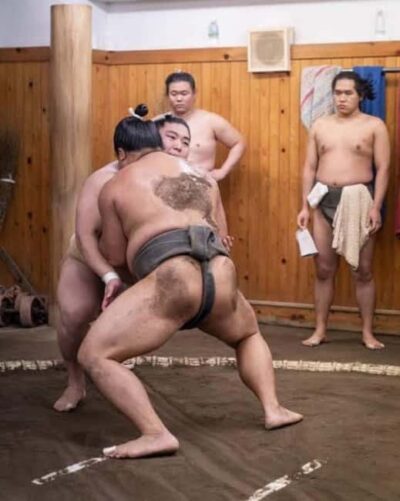
Authentic Sumo Experience in Tokyo: Enter the Sanctuary
Read our review →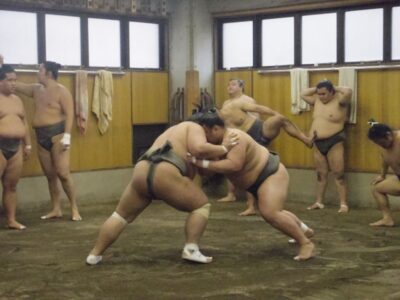
Tokyo Sumo Experience: Chanko & Mochi with a Former Pro
Read our review →Browse the lists this tour appears in