
Reviewed · TOKYO SUMO EXPERIENCES
Tokyo Sumo Morning Training/ Sumo Practice with Wrestlers
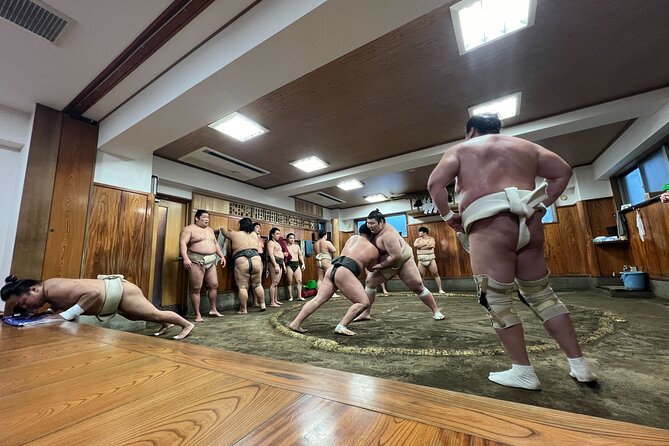
Sumo practice is not a staged bout. It is a close, quiet look at wrestlers working through their routine inside a stable, where strength, repetition, and strict etiquette matter as much as the spectacle. A guide explains what you are seeing, so you can follow the action rather than simply watch bodies collide.
I like two things here: you get access to a place most visitors cannot enter, and you can ask questions while the practice is happening. The chance to take a photo with a wrestler afterward is a welcome keepsake, too. One thing to weigh carefully: practice timing and length can change, and the experience depends on what the stable is doing that day.
Key points before you book
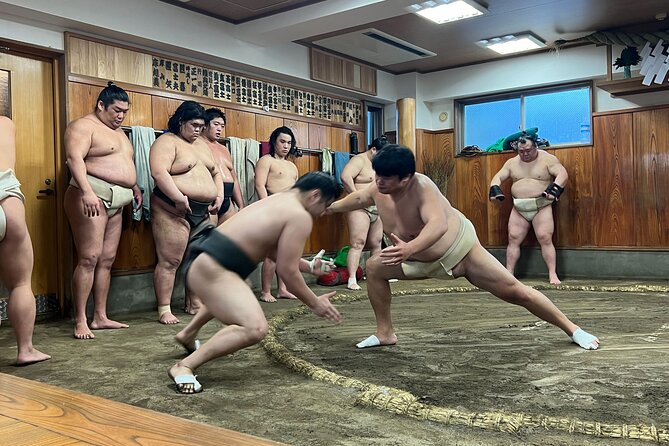
- You watch inside a working sumo stable: The main event is the wrestlers’ regular practice, not a tournament match.
- The guide adds context: Expect an introduction to sumo and explanations during the visit. Some sessions have included English commentary through a headset.
- The schedule can shift: The stable and meeting time vary by date, and practice may finish sooner or run longer than expected.
- Silence and patience are part of the visit: No videos, flash photography, eating, or leaving mid-practice.
- Be ready for floor seating: Some stables have no chairs, and you may need to sit on a mat.
- The price buys access, not a guaranteed star sighting: The stable may be where a Yokozuna trains, but you will not know in advance whether he will be there.
Inside a sumo stable, not a tournament arena
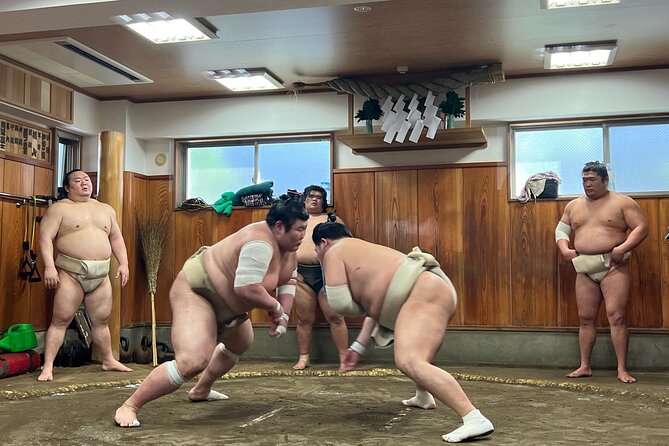
At about $99.10 per person, this experience offers something a tournament ticket does not: a view of the work behind the sport. You see practice at close range in a sumo stable, rather than a formal match with an arena crowd and a set program. That makes the visit especially useful if you want to understand how wrestlers train and what their daily routine looks like.
The trade-off is that practice is practice. There is no promise of a dramatic contest or a famous wrestler on the day you go. Some sessions are described as intense and full of action, while others may involve more explanation and less wrestling than you hoped. The tour’s value depends on your interest in the routine, the training, and the culture around the ring.
The experience is listed as approximately one hour, with about five minutes for the guide’s introduction and roughly 55 minutes inside the stable. In practice, the schedule can vary. Reports describe sessions lasting longer, including a full practice of about two hours, while the provider warns that practice may end early, especially when the schedule changes near a Grand Tournament.
That variability is worth accepting before you reserve. You are visiting around the stable’s schedule, not asking the wrestlers to perform on cue. If you can treat the session as a rare chance to observe a working environment, the unpredictability is easier to manage.
More sumo experiences in Tokyo:
- Tokyo: Sumo Show Experience with Chicken Hot Pot and a Photo
★ 4.8 · 6,678 reviews - Tokyo: Sumo Show and Dining Experience
★ 4.8 · 2,742 reviews - the SUMO show
★ 5.0 · 1,960 reviews
Meeting the guide and getting your bearings
The listed meeting point is 1-chōme-2-8 Chitose in Sumida City, but do not assume it is fixed. The location and start time can change with the date, and the provider says it will send the details after booking. Check your messages before leaving and contact Japan Wonder Travel if the instructions do not arrive. Missing the meeting because you did not check those details can mean losing the experience.
The group meets the guide first for a short explanation about sumo, then heads to the stable. This brief orientation matters. Without it, the practice can be hard to read: you may see repeated movements and intense exchanges without knowing what the wrestlers are working on. A guide can give you the basic context and help you make sense of what is happening.
One practical snag is that the briefing may take place near a busy road or station. If you have trouble hearing, stay close to the guide and ask questions before entering the stable. Some visitors have received commentary through a headset, but the format is not specified as a guarantee for every date.
Watching the practice from close range
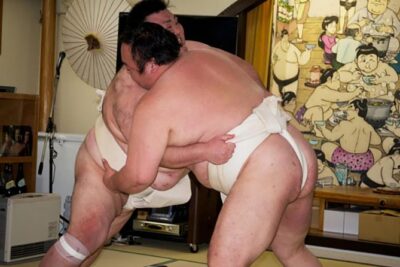
Once inside, the central rule is simple: watch quietly and do not interrupt the wrestlers’ concentration. This is a training session, not a show designed around the group. The wrestlers follow their routine while you observe, and the guide helps explain the process.
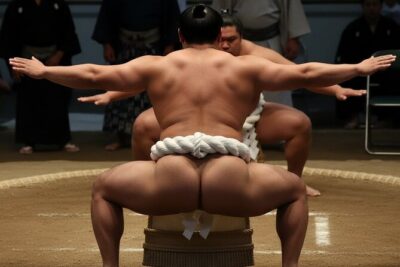
The most memorable part may be the intensity. Sumo training puts strength and precision on display, but the atmosphere is also marked by respect and attention. You are close enough to see the repeated effort and discipline that can disappear when you only watch a tournament bout on television.
Do not expect constant action. Practice can include different stages and periods of waiting, and the pace depends on what the stable is doing that morning. Some people find the session fascinating from start to finish; others feel there is too much explanation or too little wrestling. If your main goal is a fast, polished spectacle, this may not suit you. If you are curious about the work behind sumo, the quieter stretches are part of the point.
The listing says the experience includes a photo with a wrestler, and some sessions have allowed time to talk and take pictures afterward. Treat that as a chance, not a reason to expect a long personal meeting. The wrestlers are working, and their time and focus deserve respect.
There is also a distinction to keep in mind between watching practice and taking part. The information for the Sumo Practice with Wrestlers option says participants may join training activities, with rules for entering the ring. Yet experiences can differ: one account describes only a very brief amateur demonstration and limited professional sumo, while other accounts describe observing a real stable practice. Read the exact option details when booking, and check what that specific date includes if active participation matters to you.
Sumo etiquette is part of the experience
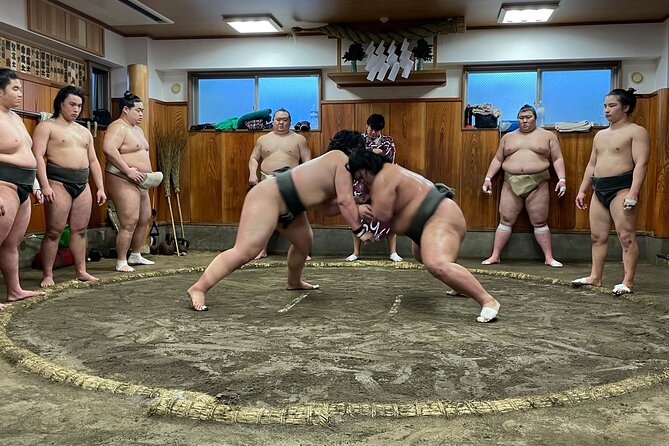
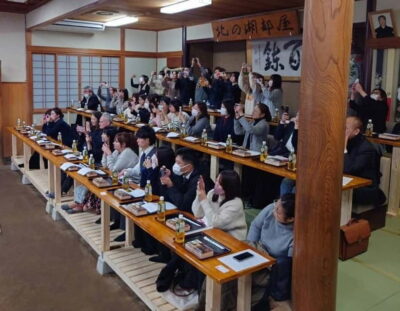
The rules are firm, and they help protect a setting where concentration matters. Put your phone on silent. Photos are allowed only without flash or shutter sounds, while video recording is not allowed. Do not eat inside; water and sports drinks are permitted.
Use the restroom before you arrive. You cannot leave the stable during practice, and once you leave, you cannot re-enter. If you feel unwell, skip the visit rather than risk having to leave midway. These rules can feel strict, but they make sense in a training space where even a small distraction can break the focus of the wrestlers.
Dress comfortably, especially if your booking is for the Sumo Practice with Wrestlers option. Some stables have no chairs, so you may be seated on the floor. Sitting cross-legged for a long time can be uncomfortable, and the practice may last longer than the advertised hour. Wear clothes that let you sit easily, and be prepared to adjust your posture without pointing your feet toward the ring. Showing the soles of your feet is considered impolite.
For the participation option, women may join the experience but cannot enter the dohyo, or sumo ring, because of the traditions followed at the facility. They can watch from designated seating areas. Men must remove their shoes before stepping onto the ring. These are specific rules for entering the dohyo, not a reason women cannot attend the tour.
More early-start experiences in Tokyo:
- Tokyo: Sumo Morning Practice Viewing Tour
★ 4.8 · 570 reviews - Tokyo: Sumo Morning Training Visit
★ 4.4 · 370 reviews - Tokyo: Sumo Morning Practice Tour at Sumida City
★ 4.8 · 308 reviews - Tokyo Sumo Morning Practice Tour at Stable
★ 5.0 · 298 reviews
Timing, weather, and the possibility of change
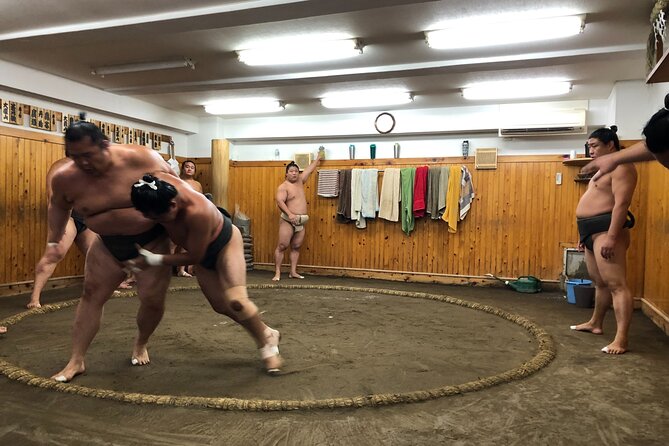
The meeting time and stable can vary by date, so plan your morning around the confirmed instructions rather than the address shown in a general description. The group size can reach 25 people. That is manageable for a guided visit, though where you sit may affect how clearly you see or hear.
Allow some flexibility after the stated duration. The tour may be shorter or longer depending on the session, and morning practice schedules can shift. One particularly frustrating account describes a cancellation notice arriving shortly before the scheduled start, after the person was already on the train. A late cancellation is not a routine outcome, but it is a real risk to consider when building a tight schedule around the visit.
Weather can affect the wait outside. A cold, rainy December morning made the experience uncomfortable for one family, and the stable itself was still chilly. The available details do not promise indoor waiting or seating, so dress for the season and be ready for a short wait outdoors.
Is $99.10 good value?
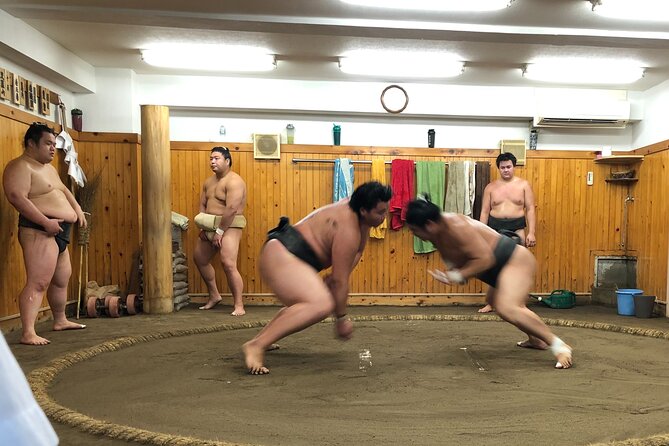
For roughly $99.10, you are paying for guided access and a close look at a setting that is difficult to visit on your own. The price makes the most sense if you value an explanation of sumo training and the chance to watch it from inside a stable. A photo with a wrestler adds to the memory, but it should not be the main reason to book.
Value is less clear if you expect a full performance, guaranteed professional bouts, or a famous wrestler. One stable may be where a Yokozuna trains, but his presence is not known until the morning. Nor is every account of the experience identical: some describe authentic, intense practice, while a small number describe a more limited demonstration or an experience with retired wrestlers. The stable and format can vary, so avoid treating any one session as guaranteed.
The rating is 4.8 from 135 reviews, with 96 percent recommending it. That strong overall approval fits the experience’s best qualities: an unusually close view, helpful explanations, and a sense of witnessing sumo as work rather than entertainment. But the low ratings point to real mismatches in expectations, especially around cancellations, the amount of actual practice, and the value at this price.
If you are new to sumo, the guide can help turn unfamiliar movements into a more rewarding visit. If you already follow the sport, the chance to see a stable routine may be the draw. In either case, go for observation and context, not a guaranteed star appearance or a choreographed show.
Who should book this sumo visit?
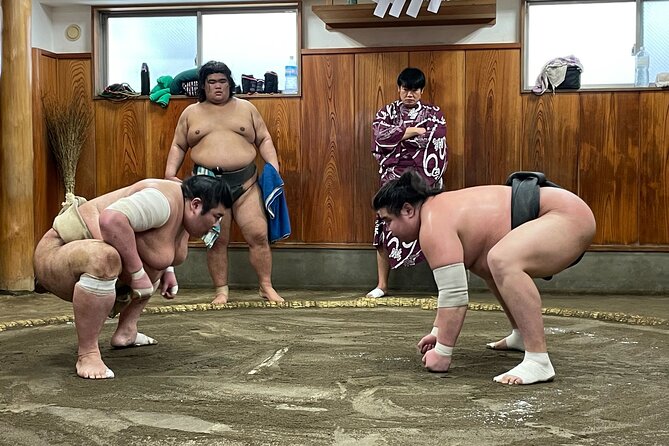
I would put this tour on the shortlist for curious first-time visitors, sumo fans who want a closer view of training, and families with older children who can sit quietly and follow the stable rules. It can be a memorable contrast to Tokyo’s larger attractions: intimate, focused, and shaped by a routine that continues whether or not an audience is watching.
It is a weaker choice if you need a fixed start time, cannot sit on the floor, want to record video, or expect a guaranteed match. It may also be frustrating if you have a tight itinerary, since the stable’s schedule can change and the tour may end early or run long.
Book it if the chance to observe sumo training up close is the point. Before you commit, confirm the meeting details, check which option you selected, and leave room in your schedule for a change in practice length.
FAQ
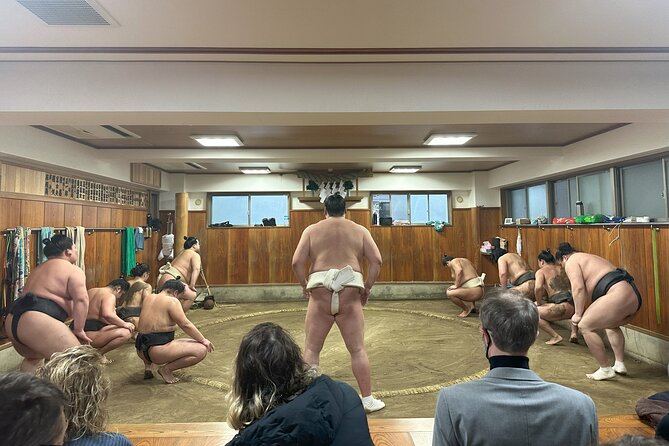
How much does the tour cost?
The listed price is $99.10 per person.
How long does the experience last?
It is listed as approximately one hour. The actual length can change with the practice schedule, and some sessions may run longer or end earlier.
Where is the meeting point?
The listed starting point is 1-chōme-2-8 Chitose, Sumida City, Tokyo. The location and time may vary by date, so use the specific details sent after booking.
Is the stable always the same?
No. The stable location can vary depending on the tour date.
Will I see a Yokozuna?
The stable is one where a Yokozuna trains, but it is not known before the morning of the experience whether he will be present.
Can I take photos or videos?
Photos are allowed without flash or shutter sounds. Video recording is not allowed.
Can I eat or drink inside the stable?
Eating is not allowed. Water and sports drinks are permitted.
Can I leave during practice?
No. You cannot leave the stable in the middle of practice, and you cannot re-enter after leaving.
Are women allowed to join?
Yes. For the Sumo Practice with Wrestlers option, women may join and watch from designated seating areas, but they cannot enter the dohyo.
Do I need to sit on the floor?
Some stables may not have chairs, so you may need to sit on the floor. Comfortable clothing is recommended.
Freshly reviewed in Tokyo
- Tokyo: Toshimaya Sake Brewery Tour with Sake Tasting★ 5.0 · 6 reviews
- :Tokyo,Shibuya /Meiji Shrine tour in KIMONO/English-friendly★ 5.0 · 4 reviews
- Tokyo: Tour Privado por Tokio en español★ 4.3 · 4 reviews
- Tokyo:Tea ceremony experience at Komaba Warakuan★ 4.8 · 9 reviews
- :Tokyo,Shibuya/ Pro Photography in Kimono / English-Friendly★ 5.0 · 26 reviews
- Tokyo:Samurai Training : Swords, Bushido & Mental Discipline★ 5.0 · 6 reviews
- Tokyo:Mt Fuji & Hakone Day Tour with English Speaking Driver★ 5.0 · 26 reviews
- Tokyo:Nikko UNESCO World Heritage Sites Private 1-Day Tour★ 3.8 · 6 reviews
Tokyo Sumo Experiences, compared.
Tokyo Shinjuku Sumo Show & Experience with Photo
Read our review →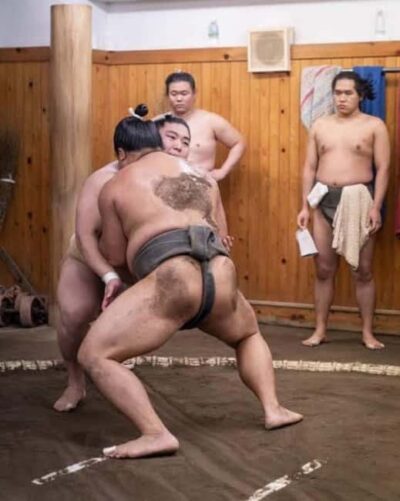

Authentic Sumo Experience in Tokyo: Enter the Sanctuary
Read our review →
Tokyo Sumo Experience: Chanko & Mochi with a Former Pro
Read our review →Browse the lists this tour appears in