
Reviewed · TOKYO SUMO EXPERIENCES
Tokyo: Sumo Show and Experience in Shinjuku
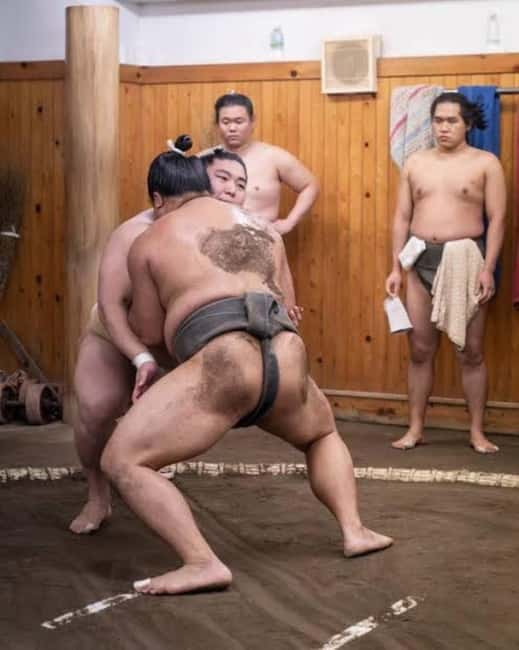
Sumo is best understood at close range: the foot stamps shake the ring, salt flies, and a brief bout can end with one sharp shove. This 90-minute Shinjuku show puts the rituals and techniques in context, then gives you a chance to step into the ring yourself.
I like two things in particular: the English-speaking host makes the rules and rituals easy to follow, and the wrestlers mix serious demonstrations with good-natured crowd interaction. You get more than a photo opportunity: the show explains the discipline behind the sport before letting you see its force up close.
One important caveat: this is an exhibition, not a tournament. The matches are demonstrations, and the chance to challenge a wrestler is an opportunity to volunteer, not a promise that every person will enter the ring. Arrive on time, too: late entry may not be accepted.
At a glance
- A 90-minute introduction: An English-speaking MC explains sumo history, rules, techniques, and rituals.
- Rituals in action: Watch shiko foot stomps, salt throwing, training demonstrations, and live sparring.
- A chance to try the ring: Put on a traditional sumo outfit and volunteer to face a professional wrestler.
- A show with humor: The host and wrestlers draw the audience into the action without losing the sport’s seriousness.
- Shinjuku meeting point: Meet on the second floor of the Sekisaku Building, using the front entrance beside Daiso.
- $69 per person: Bottled water is included; food is not.
Sumo up close in Shinjuku
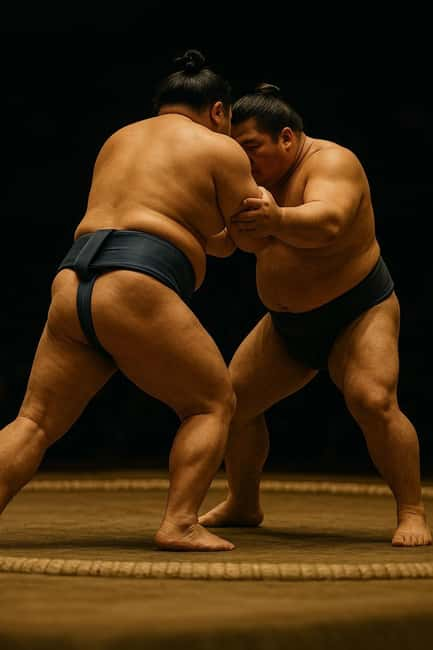
This show works well as a first encounter with sumo. Instead of asking you to decode a match on your own, an English-speaking host introduces the customs and explains what the wrestlers are doing. That context matters. Sumo can look like a simple contest of size from the outside, but the demonstrations help you notice technique, timing, balance, and mental focus.
The event takes place in Shinjuku, a lively Tokyo district, but the show itself is focused on the ring. You meet on the second floor of the Sekisaku Building. Use the front of the building facing the main door next to Daiso. There is a specific entrance instruction for a reason: the show follows a fixed schedule, and late arrivals may not be admitted at the front desk.
The experience lasts 90 minutes, a practical length for fitting into a day of sightseeing. It is long enough to give the rituals and demonstrations room to make sense, but short enough that you can pair it with other plans in Shinjuku. Check the available start times when booking, then leave yourself time to find the correct entrance.
More Shinjuku tours in Tokyo:
- Tokyo: Shinjuku Food Tour (13 Dishes at 4 Local Eateries)
★ 5.0 · 6,603 reviews - Tokyo Bar Hopping Tour in Shinjuku (All-You-Can-Drink + Dinner)
★ 5.0 · 3,587 reviews - Tokyo: Shinjuku Food Tour (15 Dishes and 4 Eateries)
★ 4.9 · 2,033 reviews
The host sets the scene
The English-speaking MC is central to the experience. The host explains the background, rules, and techniques, then keeps the room engaged as the show moves from explanation to action. Audience members have described hosts named Paula, Dai, and Ari, among others. The particular host can vary, but the format gives you a guide through the details rather than leaving you to guess what each ritual means.
That narration helps make sumo accessible to newcomers. You hear about the meaning of gestures such as shiko, the forceful foot stomping, and see salt thrown before the action. The host also explains techniques and fouls, so a bout becomes easier to follow. You can pay attention to how each wrestler sets up, pushes, or tries to unbalance the other, not just who ends up outside the ring.
The tone is not a formal lecture. The host adds humor and encourages questions and audience participation. That mix suits families and first-time viewers especially well. You can learn the basic framework without needing prior knowledge, and the jokes help keep the explanations lively.
From ritual to demonstration
The show moves through several sides of sumo rather than presenting one bout without context. First come explanations of the sport and its customs. Then the wrestlers demonstrate training and techniques, giving you a clearer sense of the movements before you see them applied in sparring.
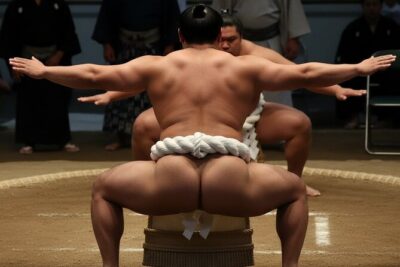
The rituals are part of the appeal. Shiko, the wide-legged foot stomps, looks dramatic, but it also gives the host a natural way to talk about movement and preparation. Salt throwing adds another memorable visual moment. These details make the show feel connected to sumo’s traditions, not simply a wrestling exhibition dressed up for visitors.
The wrestlers may also demonstrate specific moves and discuss the sport with the audience. If you have questions, this is a useful chance to ask them while the techniques are still fresh in your mind. The presentation covers more than the mechanics of a bout: it introduces the discipline and pride associated with sumo.
There is a limit to what a short show can cover. This is an accessible introduction, not an in-depth course in sumo. If you already follow the sport closely, you may know some of the explanations. The value for an experienced fan lies more in seeing professional wrestlers demonstrate their craft at close range and in the personal, interactive setting.
The sparring is the payoff
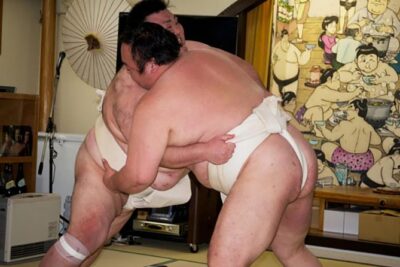
Once the basics are clear, the wrestlers face off in live sparring. Expect power, quick movement, and plenty of showmanship. A short sumo bout can change in an instant, which is part of what makes it fun to watch. The host’s explanations help you understand what is happening, while the wrestlers’ performance supplies the noise and drama.
Keep the distinction clear: this is not a tournament. The matches are demonstrations, not official competition, and the event is designed to teach and entertain. If you are hoping to watch a full competitive tournament, this is not a substitute. If you want a guided look at how sumo works, it is a much easier starting point than trying to make sense of a match without explanation.
That format is especially helpful if you plan to watch sumo elsewhere during your trip. You will have a basic vocabulary for the rituals and a better sense of what to watch for in a bout. Even if you never attend a tournament, the show can leave you with a sharper appreciation of the sport.
The wrestlers are part of the show’s appeal as people, too. Their interactions with the audience help keep the atmosphere warm and playful. Names associated with sessions include wrestlers George, Guchi, and Ide, though who appears may vary. The point is not to treat them as props: the demonstrations show their skill, and the humor comes from their willing participation in a friendly event.
More sumo experiences in Tokyo:
- Tokyo: Sumo Show Experience with Chicken Hot Pot and a Photo
★ 4.8 · 6,678 reviews - Tokyo: Sumo Show and Dining Experience
★ 4.8 · 2,742 reviews - the SUMO show
★ 5.0 · 1,960 reviews - Tokyo Shinjuku Sumo Show & Experience with Photo
★ 5.0 · 1,750 reviews
Your turn in the ring
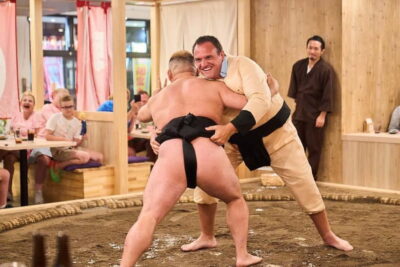
After the demonstrations, audience members can volunteer to enter the ring and challenge a wrestler. You can wear a traditional sumo outfit for the encounter. This is likely to be the most memorable part for anyone who takes part, and also the moment when the size and strength of a professional wrestler become very clear.
Go in expecting a playful challenge, not a fair contest. You are not being trained to wrestle, and the experience is meant to be fun. The wrestler and host guide the interaction, and the audience gets to enjoy the spectacle. As one might expect, most volunteers are not likely to overpower a professional sumo wrestler, but that is part of the joke and the appeal.
Participation is described as a chance, so do not book on the assumption that every person in your group will get a turn. If you would rather watch, the demonstrations and sparring still make the event worthwhile. For families, the ring challenge can be a highlight for children and adults alike, but nobody needs to volunteer to enjoy the show.
A photo with the wrestlers may be possible as part of the interaction, but do not treat it as a guaranteed inclusion. The clearly stated inclusions are the matches, English-speaking MC, bottled water, the opportunity to wear a sumo outfit, and the chance to challenge a wrestler.
Is $69 good value?
At $69 per person, this is not the cheapest way to spend 90 minutes in Tokyo. You are paying for a hosted cultural show, live demonstrations by professional wrestlers, and a chance to take part, not for a full tournament or a meal. Bottled water is included, but food is not.
I think the price makes the most sense if you value explanation and interaction. The host connects the ritual to the sport, the wrestlers demonstrate techniques in front of you, and the audience can volunteer for the ring. That combination is more personal than watching sumo on a screen, and more useful to a newcomer than seeing a match with no guidance.
If you are already an avid sumo fan, weigh the exhibition format carefully. The show is entertaining and offers a close look at techniques, but it is not a replacement for a formal competition. Some people may find it a one-time experience rather than something they would repeat. For a first visit, though, the clear explanations and opportunity to try the ring give the ticket a strong case.
You will need to arrange your own food. Since the event lasts 90 minutes and does not include a meal, plan to eat before or after rather than expecting refreshments beyond the included bottled water.
Who will enjoy this most?
This is a strong pick for first-time sumo viewers, families, and anyone curious about Japanese culture who wants more than a quick look. The host explains the sport in English, the show keeps a lively pace, and the crowd interaction gives children and adults ways to stay involved. You do not need to know the rules before arriving.
It also suits people with limited time in Tokyo. Ninety minutes is a manageable commitment, and the show gives you a focused introduction to a sport you may otherwise find hard to understand. If you are planning to watch sumo on TV or attend a tournament later, the explanations can help you follow the action.
You may want to skip it if your main goal is to see official tournament competition, or if you prefer a quiet, strictly formal cultural presentation. This event blends education, performance, and comedy. That is a strength for many people, but it is not the same as observing a tournament from the stands.
A few useful details before you go
The meeting point is the second floor of the Sekisaku Building in Shinjuku. Enter from the front of the building, facing the main door beside Daiso. Do not rely on finding another entrance if you are running late, since the schedule is fixed and late entry may not be accepted.
The show is conducted in English and lasts 90 minutes. Starting times vary, so check availability for your date. Bottled water is included; food is not. The activity also offers reserve-now, pay-later booking, and cancellation up to 24 hours in advance for a full refund.
Should you book it?
Book this show if you want an entertaining, well-explained introduction to sumo, especially if you are traveling with family or are curious about the rituals and techniques. The chance to enter the ring adds a personal twist, while the host and demonstrations make the sport easier to appreciate.
Pass if you expect a real tournament or want a meal included. At $69, the best value comes from treating it as a lively cultural experience: part explanation, part sparring show, and part chance to discover just how difficult it is to move a professional sumo wrestler.
FAQ
How long is the sumo show?
The experience lasts 90 minutes.
Where is the meeting point?
Meet on the second floor of the Sekisaku Building in Shinjuku. Entry is through the front of the building facing the main door next to Daiso.
Is this a sumo tournament?
No. It is a show with demonstrations and sparring, not a tournament.
Is the show in English?
Yes. An English-speaking MC guides the experience.
What is included in the ticket?
The ticket includes professional sumo wrestling matches, an English-speaking MC, bottled water, the opportunity to wear a traditional sumo outfit, and a chance to challenge a sumo wrestler. Food is not included.
Can I cancel or pay later?
You can cancel up to 24 hours in advance for a full refund. The activity also offers a reserve-now, pay-later option.
More shows in Tokyo
- Mt Fuji & Hakone Cruise, Drum Show Bullet Train 1 Day from Tokyo
★ 4.0 · 7,413 reviews - Tokyo: Samurai Restaurant Show Ticket with 2 Drinks
★ 4.5 · 1,307 reviews - Mt Fuji & Hakone Cruise, Drum Show Bus 1 Day from Tokyo
★ 4.0 · 1,287 reviews - Tokyo:Luxury Sumo Show Experience & Japanese cuisine & Drink
★ 4.7 · 577 reviews
Freshly reviewed in Tokyo
- Tokyo: Toshimaya Sake Brewery Tour with Sake Tasting★ 5.0 · 6 reviews
- :Tokyo,Shibuya /Meiji Shrine tour in KIMONO/English-friendly★ 5.0 · 4 reviews
- Tokyo: Tour Privado por Tokio en español★ 4.3 · 4 reviews
- Tokyo:Tea ceremony experience at Komaba Warakuan★ 4.8 · 9 reviews
- :Tokyo,Shibuya/ Pro Photography in Kimono / English-Friendly★ 5.0 · 26 reviews
- Tokyo:Samurai Training : Swords, Bushido & Mental Discipline★ 5.0 · 6 reviews
- Tokyo:Mt Fuji & Hakone Day Tour with English Speaking Driver★ 5.0 · 26 reviews
- Tokyo:Nikko UNESCO World Heritage Sites Private 1-Day Tour★ 3.8 · 6 reviews
Tokyo Sumo Experiences, compared.
Tokyo Shinjuku Sumo Show & Experience with Photo
Read our review →
Authentic Sumo Experience in Tokyo: Enter the Sanctuary
Read our review →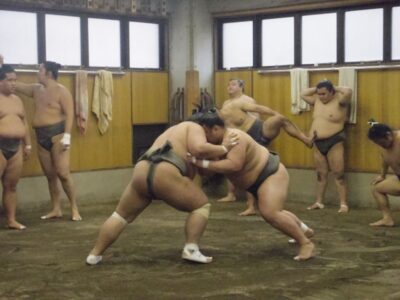
Tokyo Sumo Experience: Chanko & Mochi with a Former Pro
Read our review →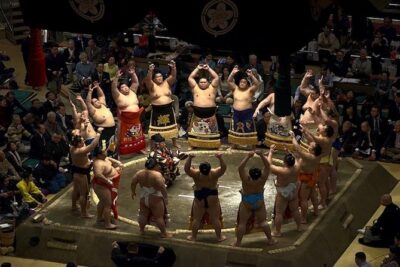
Ultimate Sumo Tournament: Tokyo, Osaka, Nagoya, Fukuoka
Read our review →Browse the lists this tour appears in