
Reviewed · TOKYO COOKING CLASSES
Unique Private Cooking Class with a Tokyo Local Emi
Tokyo’s food culture is not only found at restaurant counters. With Emi, you cook in a private home or studio, learning to make three dishes that belong to everyday Japanese meals. Then you sit down together and eat what you have made, with recipes to take home.
I like two things especially: the hands-on teaching means you do more than watch someone cook, and the conversation gives you room to ask about ingredients, customs, and daily life in Japan. The food and drinks are included, too, so arrive hungry.
One thing to plan carefully: Emi needs your menu choice and any dietary details at least four days ahead. The group prepares the same main dish, and larger parties need to reserve well in advance.
- Choose three dishes: Options have included gyoza, tempura, ginger pork, karaage, onigiri, and miso soup.
- Cook with Emi: The lesson lasts about 1.5 to 2 hours, within an experience of roughly three hours.
- Share the meal: Green tea, barley tea, and sake are included with the food you prepare.
- Private for your group: You will not be paired with strangers, though everyone follows the same menu.
- Plan for Nerima: The class meets in the Nerima area, not central Tokyo, and hotel transfers are not included.
- Allow time to book: Groups of four or more should reserve two to three months ahead.
Cooking at home, not just watching a chef
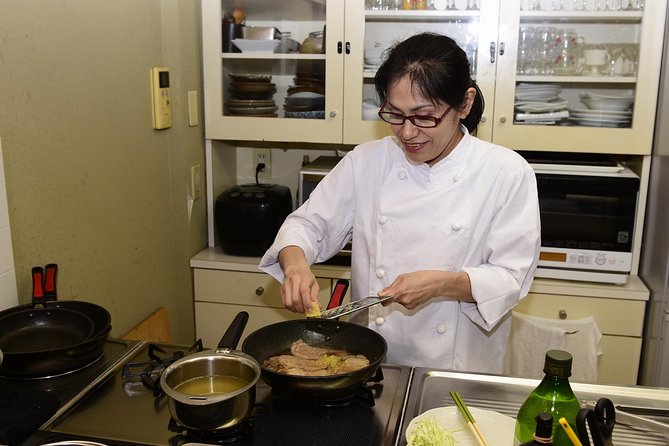
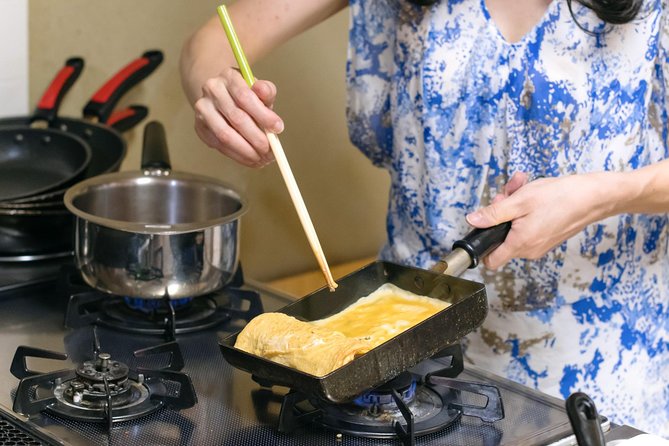
Emi’s class is built around the practical pleasure of making Japanese food yourself. Rather than sitting through a demonstration, you work through the preparation and cooking with her guidance. That makes the class useful even if you have never cooked Japanese food before: you can ask questions as you go, and Emi can show you how each dish comes together.
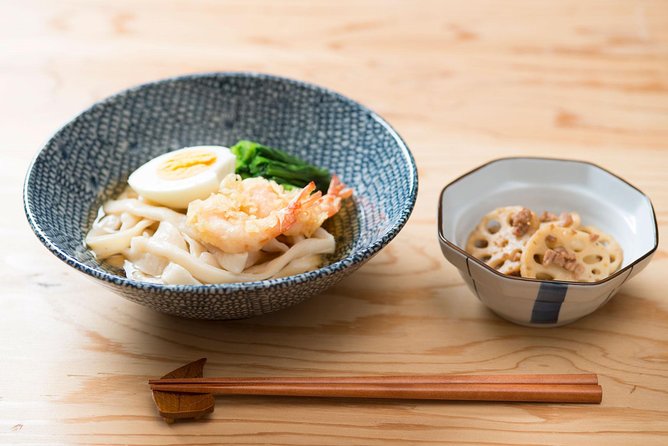
The menu focuses on home-style food, which is a different angle from sampling restaurant specialties. Depending on your choices, you might learn to shape gyoza, prepare ginger pork, fry tempura, or put together dishes such as miso soup and onigiri. Past menus have also included vegetarian yakisoba, shrimp gyoza, tonkatsu, karaage, and salmon with hijiki seaweed.
The appeal is not only learning a recipe. Emi explains techniques and ingredients while you cook, and the meal gives you a chance to talk about Japanese food and culture around the table. You can ask what a particular ingredient does or how a dish fits into a home meal. If you like leaving a trip with a skill you can use again, this is a better souvenir than another key ring.
Choosing a menu that works for everyone
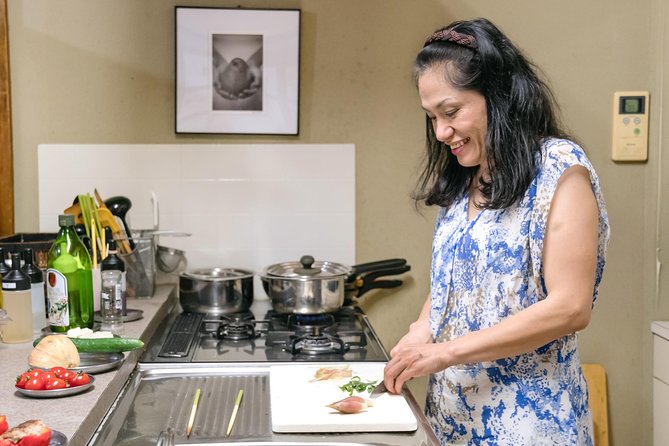
Emi offers a menu from which your group chooses three dishes. The group needs to agree on the same main dish, so this is not a class where each person orders a separate meal. Contact Emi after booking with your preferences, allergies, dietary restrictions, and cooking requests. She is willing to adjust the menu, including for vegetarians, but a vegetarian request may change what the whole group prepares.
Send your choices at least four days before the class. If Emi has not heard from you by then, she will choose the menu. That is a useful safeguard, but it is easy to avoid leaving the decision to chance. If you have a firm preference, or someone in your party has a dietary need, message her early and make the group’s shared menu clear.
Pay attention to the ingredients, not just the dish names. The description specifically notes that okonomiyaki contains fish-granule soup stock. If you avoid fish, ask about that before selecting it. More generally, describe allergies clearly rather than assuming a dish is safe based on its name.
More cooking classes in Tokyo:
- Sushi Making Tokyo Roll and Authentic Japanese Sushi Class
★ 5.0 · 3,971 reviews - Tokyo: Roll and Authentic Sushi Making Class in Asakusa
★ 4.9 · 1,957 reviews - Tokyo Shinjuku Chopsticks Making Class
★ 5.0 · 1,763 reviews
From barley tea to a meal you made yourself
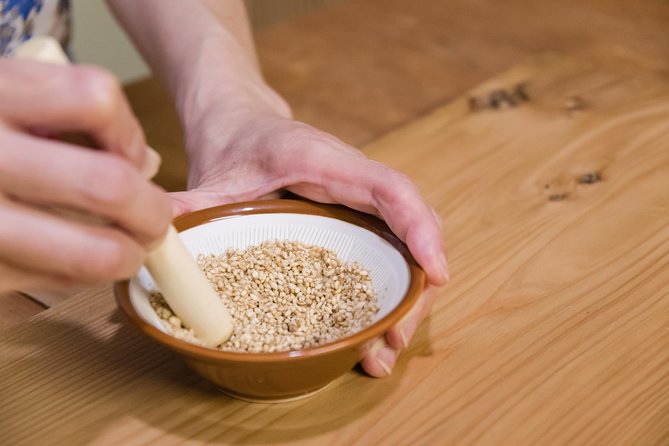
The experience begins with mugi-cha, or barley tea, before you start cooking. Emi then guides the group through the selected dishes over about 1.5 to 2 hours. Expect a working lesson, with time to prepare ingredients and follow her instructions, not a quick demonstration followed by dinner.
The exact dishes shape the pace. Gyoza, for instance, involves the hands-on task of filling and folding wrappers. One participant found the folding tricky, and Emi was patient while they learned. Tempura and fried dishes call for attention to technique; the class has covered tempura, karaage, and tonkatsu. Your menu is the best guide to what you will be doing, so ask Emi in advance if you want to know how involved a particular selection is.
After cooking, you sit down to eat the meal together. Tea is included, and sake is served with the meal. The food is part of the class, not an optional extra, so do not eat a large meal beforehand. The experience takes about three hours in total, leaving time for both the instruction and the shared table.
Emi also shares recipes, giving you a way to repeat the dishes at home. That detail matters: ingredients and equipment may differ where you live, but having a written recipe helps you remember proportions and steps after the trip. The aim is not to turn you into a restaurant chef in an afternoon. It is to give you a few approachable dishes and a clearer sense of how Japanese home cooking works.
A private class with room for conversation
Because this is a private activity, only your group participates. That makes it a good fit if you want to ask plenty of questions, learn at your own pace, or cook with family or friends without adjusting to strangers. Emi’s friendly, patient teaching style is frequently praised, and her conversations range beyond recipes to Japanese customs, food, and places to visit in Tokyo.
The setting varies with the day and group size. On weekends, parties of two or three meet at Emi’s home. Groups of four or more, and weekday bookings, use her cooking studio. The studio has about ten steps leading to it, so consider that if anyone in your party has mobility concerns. Confirm the exact meeting instructions with Emi, since studio sessions meet at the studio and the listed start point is Nerima City Hall.
The small setting is part of the experience, but it has practical limits. In one account of a home class, the cooking area was compact enough that one person cooked while another watched and took pictures. If everyone in your group expects equal space at the counter, ask Emi what to expect for your party size. Larger groups are hosted at the studio, but they should book two to three months ahead because space is limited.
Making the Nerima location work for your day
The class takes place in Nerima, away from the areas many first-time visitors use as their Tokyo base. Public transportation is nearby, but hotel pickup and drop-off are not included. Build in time to reach the meeting point and read Emi’s directions carefully. Some participants have met Emi at a local station, but the meeting arrangements depend on the session, so do not assume station pickup unless you have agreed on it.
Nerima can fit neatly into a day of sightseeing if you plan around the class. The Harry Potter Museum in Tokyo is about a 20-minute walk from Emi’s apartment. If you are visiting TeamLab Borderless in Azabudai Hills, the Oedo line runs from Azabu-Juban to Nerima without a transfer. These details may help you connect the class with other plans, but leave yourself enough time to get to the confirmed meeting point.
After the meal, Emi can take you to one nearby stop, such as a Japanese sweet shop, a tea and pottery shop, or a supermarket, before dropping you at Nerima Station. Choose one and arrange it in advance. This is a welcome extra if you want to browse local food or pick up snacks, but it is not a substitute for a full shopping tour.
More hands-on workshops in Tokyo:
- Tokyo: Sushi Making Class in a Happi Coat near a Famous Spot
★ 4.9 · 1,377 reviews - Chopstick Making Workshop in Ginza
★ 4.8 · 1,366 reviews - Tokyo Sushi Making Class in Tsukiji with Professional Chef
★ 5.0 · 1,177 reviews - Ramen & Gyoza Cooking Class in Tokyo with Local Supermarket Visit
★ 5.0 · 823 reviews
What $99 buys you
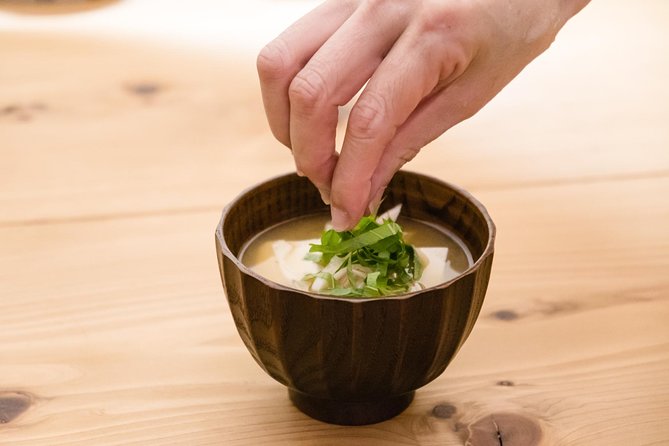
At $99 per person, this is not the cheapest meal you will find in Tokyo. But the price covers a private cooking lesson, the food you prepare, tea, sake, and recipes. You are paying for several hours with a local host as well as dinner, so the value is strongest if you want instruction and cultural conversation, not simply a meal out.
A restaurant can show you what Japanese food tastes like. Emi’s class helps you understand how to make a few dishes and gives you a chance to ask why ingredients or methods are used. Since the class is private, the price may also make more sense when shared among a couple or small group, though each person pays the stated per-person rate.
Check what you want from the evening before booking. If your priority is a broad tasting menu or a tour through several neighborhoods, this is not that. If you would rather spend a few hours cooking, talking, and sitting down to a meal you helped make, the combination is a solid use of your time.
Who will get the most from Emi’s class
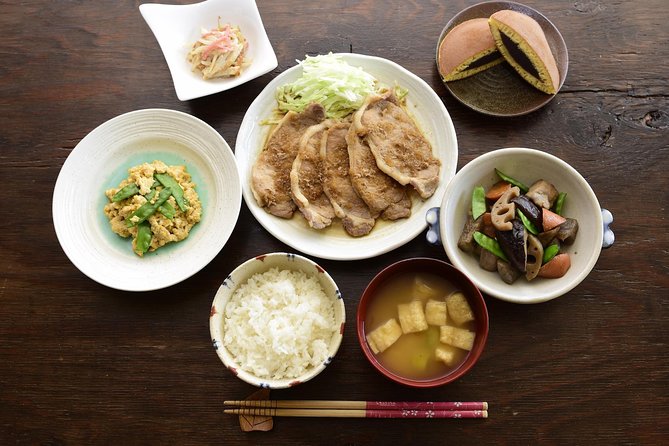
This class suits couples, friends, and families with older children who enjoy cooking or want a more personal way to learn about Japanese food. It is also a good choice for anyone who likes asking questions and wants recipes to bring home. You do not need to be an experienced cook; the teaching is patient, and the work is guided.
Children aged 10 and older are charged the same as adults. The activity is not suitable for children aged nine and under, so families should factor that rule into their plans. For a group with different food needs, contact Emi before the class and confirm that everyone is comfortable with the shared menu.
The experience earns a five-star rating from 131 reviews, with 100 percent recommending it. That is a strong record, though the best reason to book is the format: private instruction, food you prepare yourself, and time to talk with a Tokyo local. The most frequent praise centers on Emi’s warmth and patience, the delicious food, and the practical recipes guests can cook again at home.
If you book, send your dish choices and dietary needs promptly, confirm where to meet, and arrive hungry. Those simple steps help the class run smoothly.
FAQ
How long does the cooking class last?
The experience lasts about three hours. The hands-on cooking portion takes around 1.5 to 2 hours, followed by time to eat the dishes you prepared.
How many dishes will we make?
You choose three dishes from Emi’s menu. Some descriptions refer to making three or four home-style dishes, so confirm your final menu with Emi.
Is the class private?
Yes. The activity is private, and only your group participates. Everyone in the group prepares the same main dish.
Can Emi accommodate dietary restrictions?
Yes. Tell Emi about allergies, dietary restrictions, and preferences when booking, then message her after your booking is confirmed to discuss the menu. She can accommodate vegetarian requests, though the group’s menu may change.
Where does the class meet?
The listed start point is Nerima City Hall, but studio sessions meet directly at the cooking studio. On weekends, groups of two or three meet at Emi’s home. Confirm the exact meeting place and directions with Emi.
What is included in the price?
The price includes the private cooking class, the meal you prepare, green tea and barley tea, and sake. Hotel pickup and drop-off are not included.
Freshly reviewed in Tokyo
- Tokyo: Toshimaya Sake Brewery Tour with Sake Tasting★ 5.0 · 6 reviews
- :Tokyo,Shibuya /Meiji Shrine tour in KIMONO/English-friendly★ 5.0 · 4 reviews
- Tokyo: Tour Privado por Tokio en español★ 4.3 · 4 reviews
- Tokyo:Tea ceremony experience at Komaba Warakuan★ 4.8 · 9 reviews
- :Tokyo,Shibuya/ Pro Photography in Kimono / English-Friendly★ 5.0 · 26 reviews
- Tokyo:Samurai Training : Swords, Bushido & Mental Discipline★ 5.0 · 6 reviews
- Tokyo:Mt Fuji & Hakone Day Tour with English Speaking Driver★ 5.0 · 26 reviews
- Tokyo:Nikko UNESCO World Heritage Sites Private 1-Day Tour★ 3.8 · 6 reviews
Tokyo Cooking Classes, compared.
Sushi Making Tokyo Roll and Authentic Japanese Sushi Class
Read our review →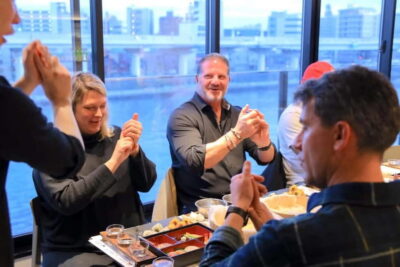
Roll and Authentic Sushi Making Class in Asakusa
Read our review →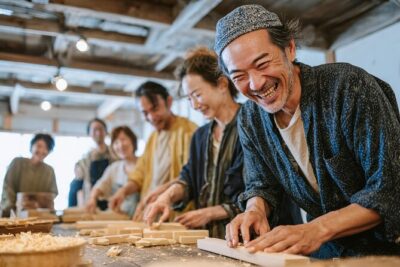
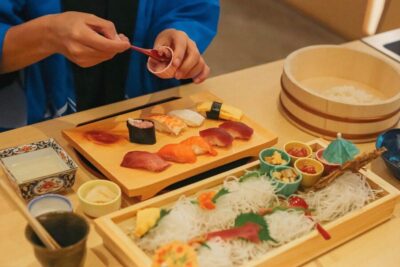
Sushi Making Class in a Happi Coat near a Famous Spot
Read our review →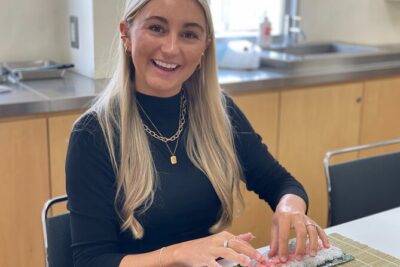
Tokyo Sushi Making Class in Tsukiji with Professional Chef
Read our review →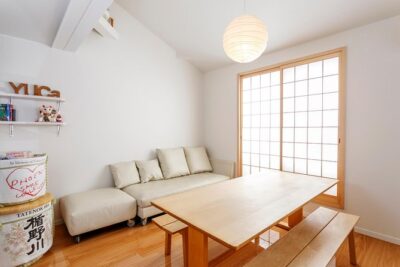
Ramen & Gyoza Cooking Class in Tokyo with Local Supermarket Visit
Read our review →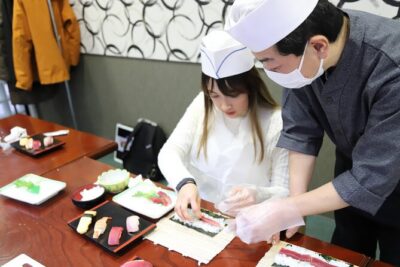
Tsukiji Fish Market Guided Tour and Sushi Making with Pro Chef
Read our review →
Matcha Making Class in Tokyo with Authentic Japanese Sweets Set
Read our review →Browse the lists this tour appears in