
Reviewed · TOKYO COOKING CLASSES
AKEMI’s SUSHiKiTCHEN: A fun sushi cooking lesson in Tokyo
Sushi is more than a neat piece of fish on rice. In Akemi Castellano’s home kitchen, you start with the vinegar rice, watch a demonstration of fish preparation, then try four distinct styles yourself. The lesson ends at the table with the sushi you have made.
I like two things in particular: the small group, limited to six, gives you room to ask questions and get hands-on guidance; and the lesson connects technique with Japanese food culture and sushi’s history. Akemi’s husband, Dan, may also be part of the welcome, making this feel more like cooking with a local family than attending a large class.
One consideration: the menu is set, so you cannot choose which sushi you make. The hosts also cannot accommodate food or animal allergies, and children under 10 are not suited to the class.
At a glance
- Four styles in one lesson: Make nigiri, maki, gunkan, and inari.
- Rice comes first: Learn to prepare vinegar rice before shaping the sushi.
- A home-kitchen setting: The class takes place in Akemi’s home, with a maximum of six participants.
- The meal is part of the class: Sit down to eat the lunch or dinner you have prepared, with sake and dessert.
- Vegetarian option available: Tell the hosts your preference when booking.
- Three hours, $103 per person: English and Japanese instruction, with station pickup available if arranged.
Start with rice, not the fish
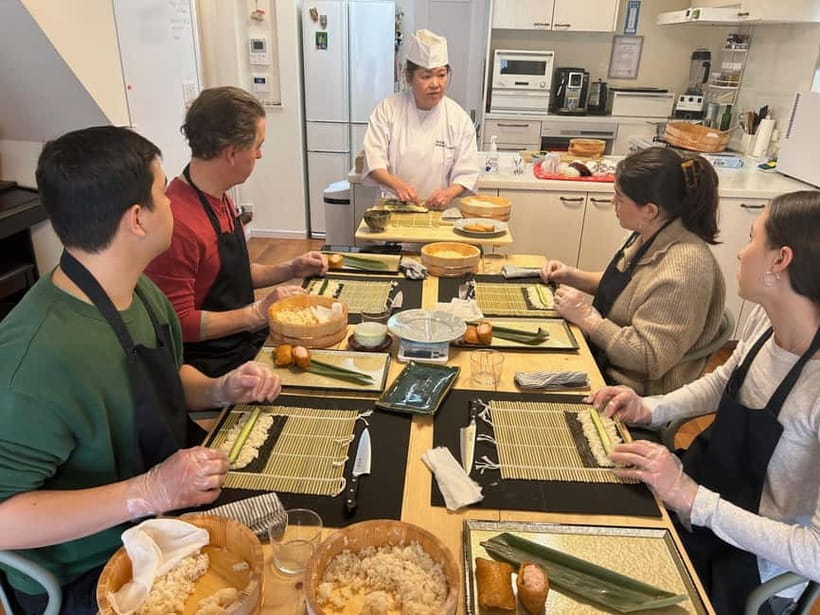
The lesson begins with the foundation of much sushi: vinegar rice. Akemi guides you through its preparation before you move on to shaping and filling the different kinds. This order matters. The rice is not simply a base for toppings; it is a key part of the finished bite, and learning how it is prepared gives you a better sense of why sushi-making takes care and practice.
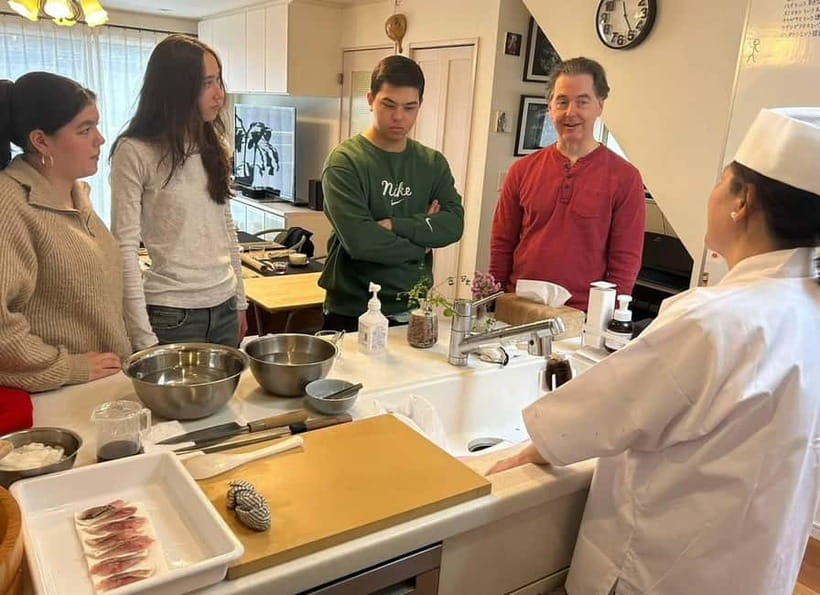
The hosts use selected ingredients, including rice, vinegar, and seafood neta, the Japanese term for sushi toppings. You also get a demonstration of how fish are prepared for sushi. That demonstration helps put the work behind a finished piece in view, even if your own task is to learn the assembly and shaping techniques rather than prepare every ingredient from scratch.
The class is designed to teach you several different forms, not just one recipe. You move between hand-pressed, rolled, and other styles, seeing how a few basic ingredients can be put together in distinct ways. If you have only made sushi from a kit at home, this is a useful chance to compare that process with a chef’s approach.
More cooking classes in Tokyo:
- Sushi Making Tokyo Roll and Authentic Japanese Sushi Class
★ 5.0 · 3,971 reviews - Tokyo: Roll and Authentic Sushi Making Class in Asakusa
★ 4.9 · 1,957 reviews - Tokyo Shinjuku Chopsticks Making Class
★ 5.0 · 1,763 reviews
Four kinds of sushi, four different techniques
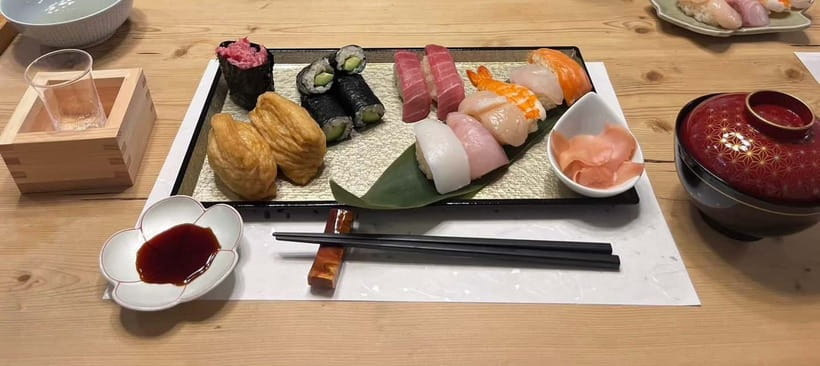
You make nigiri-zushi, the hand-pressed style most people picture when they think of a piece of sushi topped with seafood. Akemi teaches you how to shape the rice by hand and pair it with its topping. The aim is not to race through a perfect restaurant-style piece on your first try. It is to understand the process and feel how rice, topping, and hand pressure work together.
Next comes maki-zushi, rolled sushi. Here the challenge shifts from shaping one piece at a time to assembling and rolling sushi as a whole. The format is familiar, but making it yourself gives you a better appreciation for keeping the ingredients in place and producing a tidy roll.
You also make gunkan, often called battleship sushi for its shape. It offers another way to hold a topping with rice, and its form is noticeably different from nigiri or maki. The lesson’s variety is a real strength: four styles give you more to learn than a single demonstration followed by a quick practice round.
Finally, there is inari, sushi rice tucked into fried tofu pockets. It is a different taste and texture from the seafood-centered styles, and a welcome reminder that sushi is not limited to raw fish. One participant described the tofu sushi as a particular discovery, so if you are curious about less familiar forms, this may be the one you remember.
The menu is set, so you should not book expecting to select each type yourself. That structure lets Akemi plan a complete lesson around four popular forms. If one style matters especially to you, you can ask about it before booking, but the class is not presented as a choose-your-own menu.
A home kitchen changes the feel
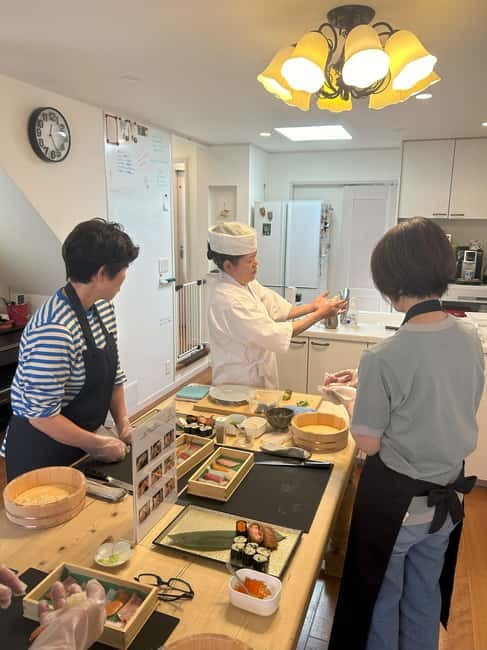
This is an activity in a private home, not a restaurant dining room or a large culinary school. That setting is part of the appeal: you have a small group, direct instruction, and a chance to see sushi-making as a practical skill in a domestic space. With no more than six participants, the lesson has room for individual attention without the feel of a packed demonstration.
Akemi is a trained sushi chef, and the teaching is available in English or Japanese. Dan has also helped welcome and host participants. The pair’s warm, organized approach has been a key part of the experience, especially for families who have attended together. A family of four, for example, had the class to themselves, though a small group does not guarantee a private booking.
The home setting is also a good fit if you want a cultural activity that is social rather than formal. Akemi talks about sushi’s background and Japanese food culture while teaching the techniques. One session included discussion of Edo-style sushi, so you can expect some historical context alongside the practical work. The focus remains on making and eating sushi, not on a long lecture.
A welcome drink has been part of at least one visit, and one participant described it as Sakura-flavored. Treat that as a pleasant possibility rather than a guaranteed feature. The stated meal includes sake and dessert, while other drinks and extras can vary.
Your handmade lunch or dinner
At the end of the lesson, you eat the sushi you have made. The timing depends on the session: choose a morning lesson with lunch or an afternoon lesson with dinner. That shared meal gives the class a satisfying finish. You have not only watched a chef work; you have taken part in preparing the food that reaches the table.
Sake and dessert are included in the experience. If you do not drink alcohol, ask about the available alternatives when arranging your visit. A family session has included drinks for children, matcha tea, and ice cream, but these details should not be assumed for every class. The dependable core is the sushi meal, sake, and dessert.
A vegetarian option is available, and you should indicate that preference when placing your order. The menu remains set, so this is not the same as selecting individual dishes. If you have dietary needs beyond the stated vegetarian option, contact the hosts before booking and be clear about what you can and cannot eat.
There is an important limit: the hosts cannot accommodate food or animal allergies. The information also asks you to disclose allergies beforehand, but you should not count on the class being able to provide an allergy-safe meal. If an allergy could make participation unsafe, this is not the right activity.
More hands-on workshops in Tokyo:
- Tokyo: Sushi Making Class in a Happi Coat near a Famous Spot
★ 4.9 · 1,377 reviews - Chopstick Making Workshop in Ginza
★ 4.8 · 1,366 reviews - Tokyo Sushi Making Class in Tsukiji with Professional Chef
★ 5.0 · 1,177 reviews - Ramen & Gyoza Cooking Class in Tokyo with Local Supermarket Visit
★ 5.0 · 823 reviews
Getting to the house and planning your session
The class is in Tokyo, on Honshu, with access described as convenient from Shinjuku and Shibuya, two major station hubs. You can find the house using Google Maps or a similar navigation app. If you would rather not navigate on your own, ask the hosts to meet you at the nearest train station. Arrange that in advance.
One visitor made the trip by Metro and walked about 10 minutes through a neighborhood to reach the home. That gives you a sense of the final approach, but the exact walk depends on your route and station. Leave time to navigate rather than arriving at the last minute, especially if Tokyo’s rail system is new to you.
The class lasts three hours. Check the available start times when choosing between the morning and afternoon session, and keep enough time afterward for the meal. The small group cap is six, which is useful for anyone who prefers a quieter, more personal class. Instruction is in English or Japanese.
The experience costs $103 per person. That is more than a quick meal, but the price covers three hours of guided instruction, a fish-preparation demonstration, rice preparation, four sushi styles, and the lunch or dinner you make, with sake and dessert. You are paying for a cooking lesson and a meal, not simply for a plate of sushi. If your main goal is to eat sushi at the lowest cost, a restaurant is the better choice. If you want to understand how it is made and try the techniques yourself, the price is easier to justify.
You can reserve now and pay later, and cancellation is free up to 24 hours in advance. Those terms help if your Tokyo plans are still shifting, but check the available times before fitting the class into a tight sightseeing day.
Who will get the most from this class?
I would recommend this for sushi fans who want to move beyond eating and learn how several styles are made. It also suits couples, friends, and families with children aged 10 or older who enjoy cooking together. The combination of instruction, cultural background, and a home-cooked meal makes it a good choice for a day when you want to slow down and spend time with a host rather than move from one attraction to the next.
It is especially appealing if you value direct attention. A group of six or fewer means you are not trying to see over a crowd or follow a demonstration from the back of a room. English instruction is available, and participants have found communication straightforward. If you prefer a large class with lots of choice, however, the fixed menu and small home setting may not be your ideal format.
This is not a sushi tasting where you arrive, sample a wide range, and leave. You will make four specific kinds, then eat what you have prepared. The set menu and allergy restriction are worth taking seriously. If you are comfortable with both, the class offers a useful mix of technique, food culture, and a relaxed meal.
Should you book AKEMI’s SUSHiKiTCHEN?
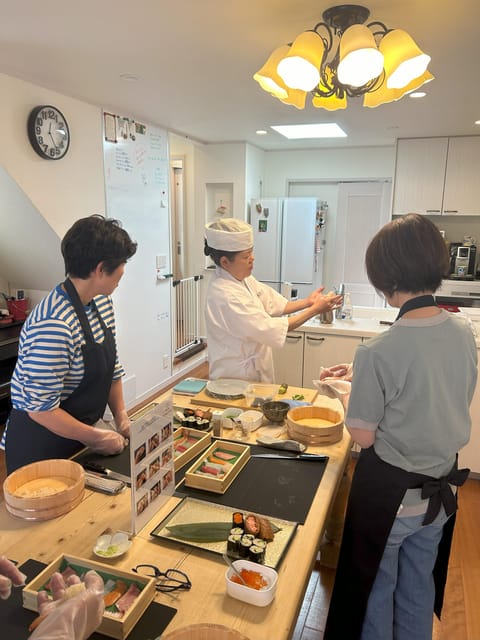
Book it if you want to learn by doing, appreciate sushi, and like the idea of making a meal in a Tokyo home with a trained chef. The strongest reasons are the small group, the range of styles, and the chance to ask questions while you work. The lesson’s attention to vinegar rice and sushi history also makes it more than a quick assembly class.
Skip it if you need a fully customizable menu, have a food or animal allergy, or are traveling with a child under 10. For everyone else, it is a practical, hands-on way to spend three hours in Tokyo, with a meal at the end that you can say you made yourself.
FAQ
How long is the sushi lesson?
The class lasts three hours.
How much does it cost?
The listed price is $103 per person.
Which kinds of sushi will I make?
You will make nigiri-zushi, maki-zushi, gunkan, and inari.
Is a meal included?
Yes. You eat the sushi you make as lunch or dinner, depending on the session. Sake and dessert are included.
Is there a vegetarian option?
Yes. Indicate your preference when you place your order.
Can the class accommodate food or animal allergies?
No. The hosts cannot accommodate food or animal allergies. Let them know about allergies beforehand, and do not assume they can provide an allergy-safe meal.
Can children attend?
Children under 10 are not suited to the activity.
What languages are used, and how many people are in the class?
Instruction is available in English and Japanese. The group is limited to six participants.
Freshly reviewed in Tokyo
- Tokyo: Toshimaya Sake Brewery Tour with Sake Tasting★ 5.0 · 6 reviews
- :Tokyo,Shibuya /Meiji Shrine tour in KIMONO/English-friendly★ 5.0 · 4 reviews
- Tokyo: Tour Privado por Tokio en español★ 4.3 · 4 reviews
- Tokyo:Tea ceremony experience at Komaba Warakuan★ 4.8 · 9 reviews
- :Tokyo,Shibuya/ Pro Photography in Kimono / English-Friendly★ 5.0 · 26 reviews
- Tokyo:Samurai Training : Swords, Bushido & Mental Discipline★ 5.0 · 6 reviews
- Tokyo:Mt Fuji & Hakone Day Tour with English Speaking Driver★ 5.0 · 26 reviews
- Tokyo:Nikko UNESCO World Heritage Sites Private 1-Day Tour★ 3.8 · 6 reviews
Tokyo Cooking Classes, compared.
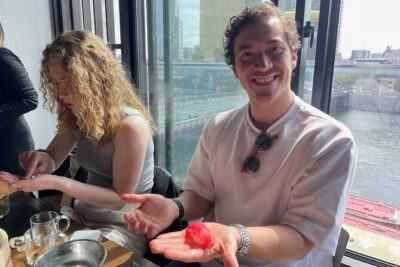
Sushi Making Tokyo Roll and Authentic Japanese Sushi Class
Read our review →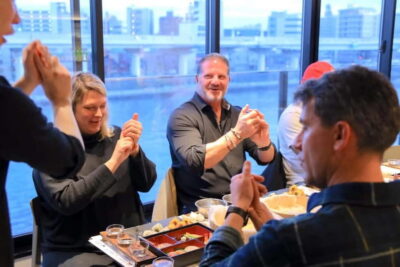
Roll and Authentic Sushi Making Class in Asakusa
Read our review →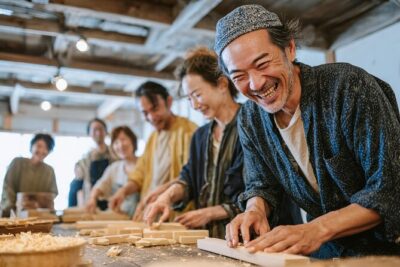
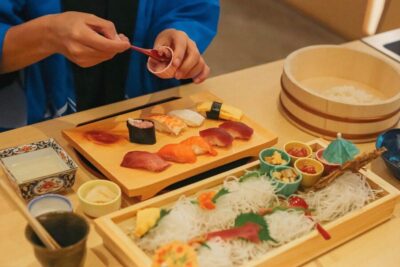
Sushi Making Class in a Happi Coat near a Famous Spot
Read our review →
Tokyo Sushi Making Class in Tsukiji with Professional Chef
Read our review →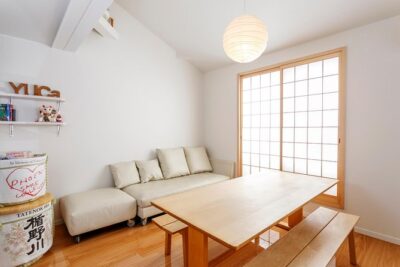
Ramen & Gyoza Cooking Class in Tokyo with Local Supermarket Visit
Read our review →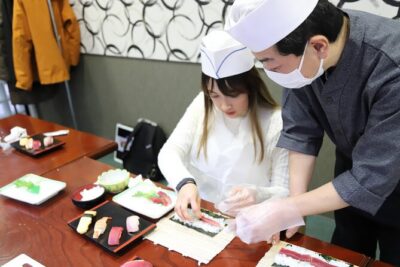
Tsukiji Fish Market Guided Tour and Sushi Making with Pro Chef
Read our review →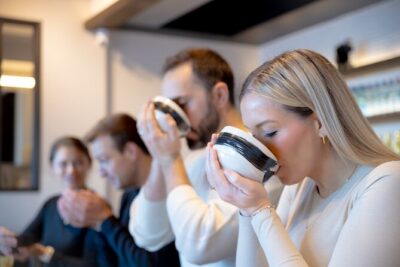
Matcha Making Class in Tokyo with Authentic Japanese Sweets Set
Read our review →Browse the lists this tour appears in