
Reviewed · TOKYO COOKING CLASSES
Tokyo Cute Bento Cooking Class – Make a Kawaii Character Lunchbox
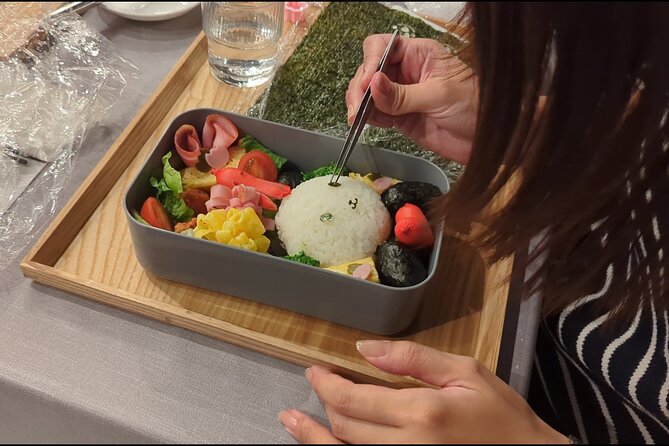
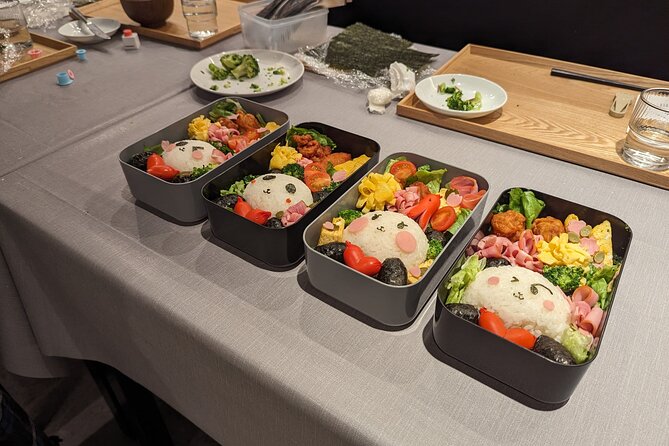
A panda made from lunch ingredients is a charming way to meet Japan’s bento culture. In this two-hour class, you learn simple food-art techniques, build a character lunchbox with guidance from instructors such as Kenji, then photograph and eat your work. I like the hands-on format and the chance to leave with a skill you can try at home.
I also like that the class is designed for beginners, with tools, ingredients, and clear instructions provided. One practical consideration: the workshop is below street level, and some people have found the entrance tricky to locate, so allow a little time to find it.
- Make a character bento: Create a cute design such as a panda using prepared ingredients and guided techniques.
- Learn as you work: A short introduction puts bento-making in context before the hands-on session.
- Plan for two hours: The schedule includes instruction, making time, photos, and a meal.
- Ask about dietary needs early: Vegetarian and vegan options are available, and some allergies can be accommodated.
- Expect a small group: The class is capped at 12, leaving room for individual help.
- Bring your camera: A dedicated photography period and prepared backdrops make it easy to capture your finished lunchbox.
What You Make in the Akasaka Kitchen
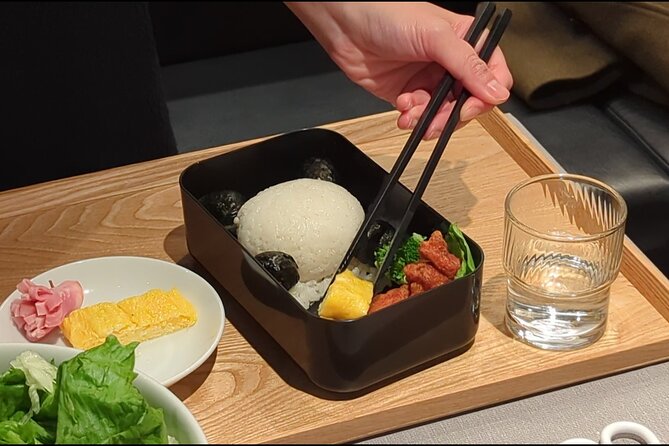
Bento is more than food packed into a box. It is a practical Japanese meal format that can also be arranged with care and visual flair. This class focuses on the playful end of that tradition: turning lunch ingredients into a character or other cute design, then packing the result into a bento.
You are not signing up for a full professional cooking course. The emphasis is on shaping and arranging food, with instructors showing you how to build recognizable details from the ingredients in front of you. That makes the experience approachable even if your cooking skills begin and end with boiling water.
The finished bento is meant to be eaten, not just admired. You can enjoy it during the class, and some participants have also taken their bento box home. If the little character looks too cute to disturb, that is a brief problem. Lunch wins.
How the Two-Hour Schedule Unfolds
The class begins with about 15 minutes of introduction to Japanese bento culture. This is a useful start because it gives the food art a cultural frame. You are not simply decorating a lunchbox for a photo; you are learning about a familiar part of Japanese daily food culture and how presentation can make a meal feel special.
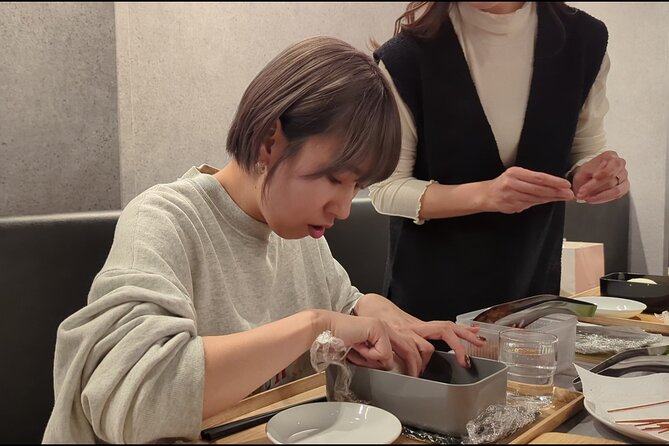
Next comes roughly an hour of hands-on bento-making. The instructors provide the ingredients and tools, then guide you through the process. This is the heart of the workshop, and the generous time allotment matters. Character food takes patience: small cuts and careful placement can make the difference between a panda and a mysterious rice creature.
The class is built for people who have never made a character bento. Step-by-step guidance and visual examples help you follow along, while instructors are there to assist when you need it. You can be creative without having to invent the whole process from scratch.
After the making session, there is about 15 minutes for photography. The team has set up backdrops, and participants have described being photographed as their creations take shape as well as posing with the finished lunchbox. This is a thoughtful extra, especially if you are sharing the activity with family or a friend.
The final 30 minutes are for eating. That ending gives the workshop a satisfying rhythm: learn, make, document, enjoy. The food is not merely a prop, and the meal gives you a chance to appreciate the work that goes into arranging a bento.
More cooking classes in Tokyo:
- Sushi Making Tokyo Roll and Authentic Japanese Sushi Class
★ 5.0 · 3,971 reviews - Tokyo: Roll and Authentic Sushi Making Class in Asakusa
★ 4.9 · 1,957 reviews - Tokyo Shinjuku Chopsticks Making Class
★ 5.0 · 1,763 reviews
Kenji’s Teaching Style and the Beginner-Friendly Setup
Kenji is the instructor most often named by people who have taken the class, alongside team members such as Mami, Yuzu, and Saori. The teaching approach described is warm and patient, with clear instructions and help available throughout. The host team also uses prepared ingredient sets and visual examples, so you can concentrate on the making rather than puzzling over what to do next.
That matters if you are worried about being artistic. The goal is not to produce a perfect replica of a sample. It is to learn a few techniques, make your own version, and enjoy the process. Participants have made pandas, dogs, bears, frogs, hearts, flowers, and other small designs. The exact project may vary, so think of those as examples rather than a guaranteed menu.
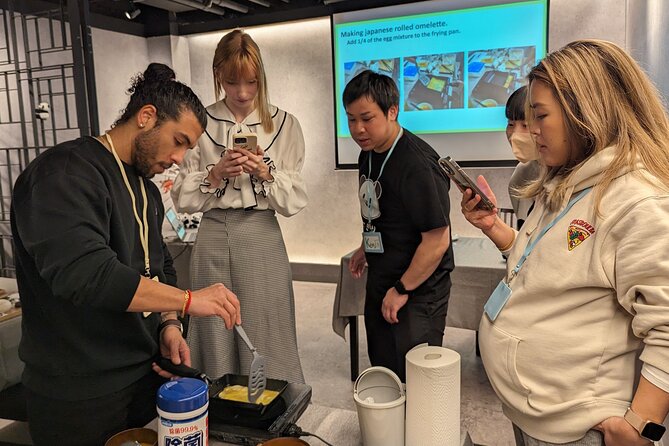
Some classes have included extra food skills, such as making Japanese rolled omelet. That is a welcome bonus when it happens, but the core plan is character bento-making, not a fixed multi-dish cooking lesson. If a specific technique is important to you, ask the operator before booking.
The intimate group limit of 12 helps this format work. It is small enough for instructors to offer guidance, yet large enough to create a friendly class atmosphere. Solo participants have also found the class comfortable, so you do not need to arrive with a companion to take part.
A Relaxed Activity for Families, Couples, and Solo Cooks
This class has broad appeal because it mixes food with a creative task. Children who like making things may especially enjoy shaping characters, while parents get an activity that is more engaging than simply sitting down to eat. Teens and adults can enjoy it too; the techniques are simple, but the fun is not reserved for children.
For families, the shared project gives everyone something to do together. You can compare designs, help with small details, and take photos before lunch disappears. The class has been used by parents with young children, as well as by families with teenage and adult children. The experience is described as family-friendly, but the supplied information does not give a minimum age, so check directly if you are planning to bring a very young child.
Couples and friends can make different characters and turn the photography time into a small keepsake session. Solo participants are welcome as well. If you are traveling alone, the small-group format and close instruction make this a more sociable choice than a self-guided food activity.
It also works well as a lower-key break from sightseeing. Two hours indoors can be a welcome change after a day of walking, and it is a sensible rainy-day option. Just remember that you will spend most of the time seated or working at a table, rather than exploring the neighborhood.
Dietary Requests and What Is Included

All ingredients and tools are supplied, so there is no need to bring cooking equipment or shop for supplies. The workshop can be conducted entirely in English, which makes the step-by-step instruction accessible even if you do not speak Japanese.
Vegetarian and vegan options are available, and the team says it can accommodate allergies including requests to avoid nuts or milk. You need to share dietary restrictions when booking. This is especially important for allergies: provide clear details in advance so the team can tell you what it can safely accommodate.
Participants have described the instructors as making an effort to include people with dietary needs. Still, an accommodation is not the same as a guarantee that every ingredient or preparation surface is free from all traces of an allergen. If you have a serious allergy, contact the operator before booking and confirm what is possible.
The class includes time to eat your finished bento. That makes the $66.07 price easier to assess: you are paying for a guided activity, supplied ingredients and tools, cultural context, photography time, and a meal, not just a recipe sheet. It is more expensive than buying lunch, of course, but it offers a hands-on experience and a technique you can reuse.
More hands-on workshops in Tokyo:
- Tokyo: Sushi Making Class in a Happi Coat near a Famous Spot
★ 4.9 · 1,377 reviews - Chopstick Making Workshop in Ginza
★ 4.8 · 1,366 reviews - Tokyo Sushi Making Class in Tsukiji with Professional Chef
★ 5.0 · 1,177 reviews - Ramen & Gyoza Cooking Class in Tokyo with Local Supermarket Visit
★ 5.0 · 823 reviews
Finding the Meeting Point in Akasaka
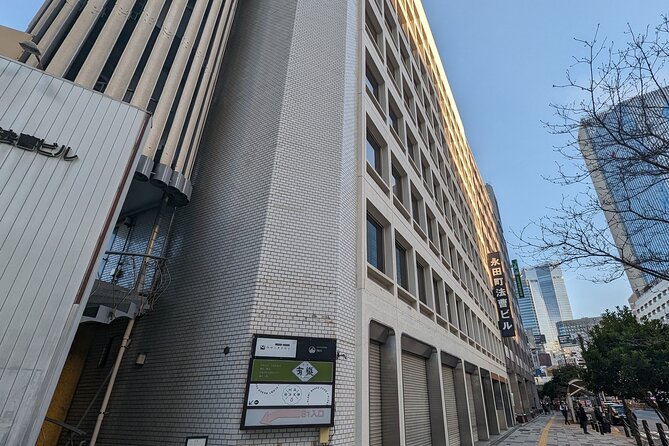
The meeting point is Tokyo Cute BentoJapan at 2-chōme 2-21, basement level, Akasaka, Minato City, Tokyo 107-0052. The activity ends back at the same location. It is near public transportation, but the address alone may not make the entrance obvious.
The workshop is below street level, reportedly beneath a ramen shop. One family had trouble finding it, and the host acknowledged that the address could be clearer. My practical advice is to check the location details carefully before you set out and leave a little extra time for arrival. If you cannot identify the entrance, contact the operator rather than circling the block in a growing state of hunger.
The location detail is minor once you are inside, but it is worth planning for. The class itself is about two hours, and a late arrival could cut into the relaxed pace that makes the activity enjoyable.
Is $66.07 a Good Value?
At $66.07 per person, this is not a budget lunch. The value is in the combination: a two-hour guided activity, ingredients and tools, an introduction to bento culture, a finished meal, and time for photos. You also get a practical skill that can be repeated at home, which is more lasting than a souvenir you might forget in your suitcase.
I would consider the price worthwhile if you enjoy food, crafts, or cultural activities where you participate rather than watch. It is particularly good value for a family or pair who want a shared memory and a relaxed break in the day. If you only want a quick meal or a demonstration without doing the work yourself, this is probably not the right use of your budget.
The class has a published rating of 5 out of 5 from 126 reviews and a 100 percent recommendation rate. That is a strong record, but the practical fit still matters more than a score. You need to be comfortable spending two hours on a detailed, hands-on activity, and you should make sure the dietary arrangements suit you.
Should You Book This Bento Class?
Book it if you like Japanese food, enjoy creative activities, or want a family-friendly experience that gives you something to make as well as eat. The strongest reasons to go are the patient, clear instruction, the chance to create a character lunchbox yourself, and the photo setup that turns the finished bento into a lasting memento.
Think twice if you are short on time, expect a broad cooking lesson, or need a highly specific dietary arrangement that has not been confirmed. And give yourself a few extra minutes to find the basement-level entrance. For a hands-on Tokyo activity with a modest group, a meal at the end, and a skill you can take home, this is a cheerful and practical choice.
FAQ
How long does the class last?
The class lasts about two hours. The schedule allows roughly 15 minutes for an introduction, 60 minutes for making the bento, 15 minutes for photos, and 30 minutes to enjoy the meal.
How much does it cost?
The listed price is $66.07 per person.
Is the class taught in English?
Yes. The workshop can be conducted entirely in English.
Are ingredients and tools provided?
Yes. The class provides all ingredients and tools, along with instructions.
Can the class accommodate vegetarian or vegan diets?
Vegetarian and vegan options are available. Tell the operator about your dietary needs when booking.
Can allergies be accommodated?
The operator says allergies can be accommodated, including requests to avoid nuts or milk. Share your restrictions when booking and contact the team in advance about serious allergies.
How many people can join?
The maximum group size is 12 participants.
Where does the class start and finish?
It starts at Tokyo Cute BentoJapan in Akasaka, Minato City, at 2-chōme 2-21, basement level. It ends back at the meeting point.
Can I cancel for a refund?
Yes. You can cancel for a full refund if you cancel at least 24 hours before the experience start time. Cancellations made less than 24 hours before the start time are not refunded.
Freshly reviewed in Tokyo
- Tokyo: Toshimaya Sake Brewery Tour with Sake Tasting★ 5.0 · 6 reviews
- :Tokyo,Shibuya /Meiji Shrine tour in KIMONO/English-friendly★ 5.0 · 4 reviews
- Tokyo: Tour Privado por Tokio en español★ 4.3 · 4 reviews
- Tokyo:Tea ceremony experience at Komaba Warakuan★ 4.8 · 9 reviews
- :Tokyo,Shibuya/ Pro Photography in Kimono / English-Friendly★ 5.0 · 26 reviews
- Tokyo:Samurai Training : Swords, Bushido & Mental Discipline★ 5.0 · 6 reviews
- Tokyo:Mt Fuji & Hakone Day Tour with English Speaking Driver★ 5.0 · 26 reviews
- Tokyo:Nikko UNESCO World Heritage Sites Private 1-Day Tour★ 3.8 · 6 reviews
Tokyo Cooking Classes, compared.
Sushi Making Tokyo Roll and Authentic Japanese Sushi Class
Read our review →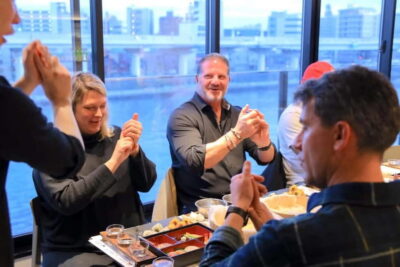
Roll and Authentic Sushi Making Class in Asakusa
Read our review →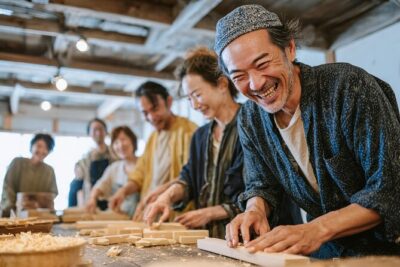
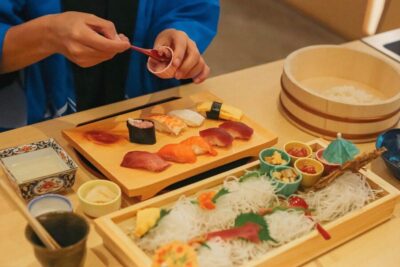
Sushi Making Class in a Happi Coat near a Famous Spot
Read our review →
Tokyo Sushi Making Class in Tsukiji with Professional Chef
Read our review →
Ramen & Gyoza Cooking Class in Tokyo with Local Supermarket Visit
Read our review →
Tsukiji Fish Market Guided Tour and Sushi Making with Pro Chef
Read our review →
Matcha Making Class in Tokyo with Authentic Japanese Sweets Set
Read our review →Browse the lists this tour appears in