
Reviewed · TOKYO SUMO EXPERIENCES
Tokyo: Sumo Experience and Chanko Nabe Lunch
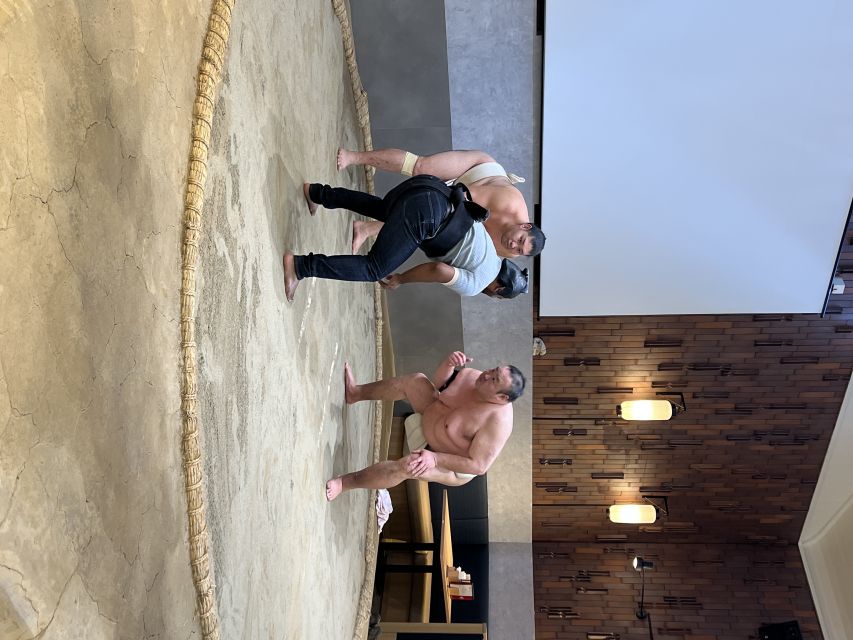
Sumo makes more sense when you see its rituals up close, hear what the wrestlers are doing, and watch how strength and technique work together. In this two-hour Tokyo experience, former professional wrestlers explain the sport in English, demonstrate it, and invite you to try a playful bout.
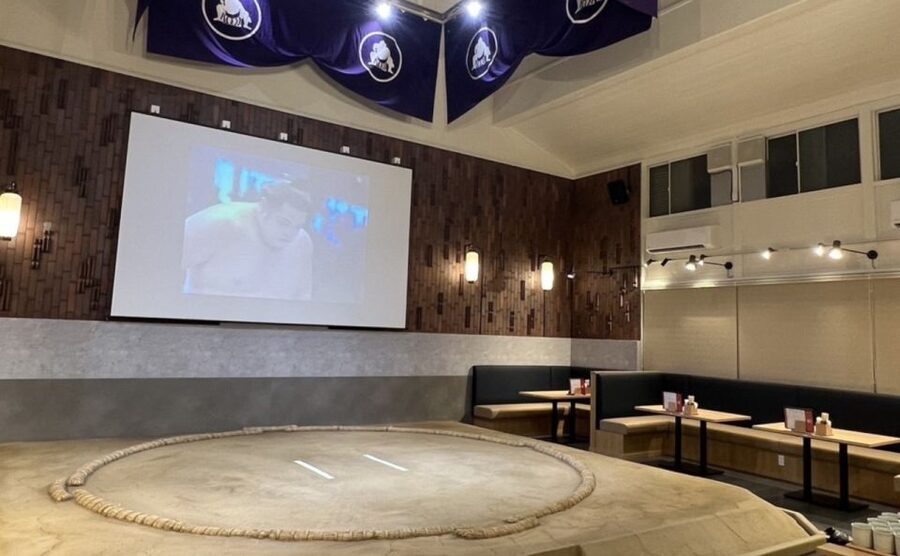
I like two things in particular: the explanations give the ceremonial side of sumo a context, and the chanko nabe lunch turns the lesson into a shared meal. The wrestlers prepare the hot pot themselves, so you get a taste of food closely tied to sumo life.
The main consideration is that this is a hosted demonstration, not a tournament or a visit to a training stable. You should also confirm the meeting-time details before you go: the activity is listed as starting at 1:00 PM, but its door-opening time is written as 12:40 AM.
- Learn the rituals and rules: Former professional wrestlers explain sumo in English, with demonstrations to bring the details to life.
- Try a playful bout: You may get a chance to enter the ring and face a wrestler, though not everyone is selected to take part.
- Eat wrestler-made chanko nabe: Lunch is included and gives you a chance to try the hearty hot pot associated with sumo.
- Go where sumo has roots: The activity runs in Asakusa on Mondays and Ryogoku on Thursdays.
- Expect a compact session: The experience lasts two hours, with a listed group limit of six participants.
- Plan around the fixed start: The activity starts at 1:00 PM, and you need to reach the meeting point before then.
Getting beyond sumo’s surface rituals
From the outside, sumo can look like a simple contest of size: two wrestlers square off, then one is pushed out of the ring or forced down. The ceremony and rules make it far more interesting, but they are not always easy to read if you have never watched a bout closely.
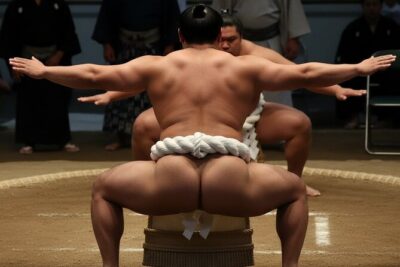
That is where this experience earns its place in a Tokyo itinerary. Former professional wrestlers walk you through the sport in English, helping you understand the ritual gestures and the action you are about to see. You are not just looking at a demonstration and guessing what matters. The explanations give you a framework for noticing how wrestlers prepare, compete, and use their bodies.
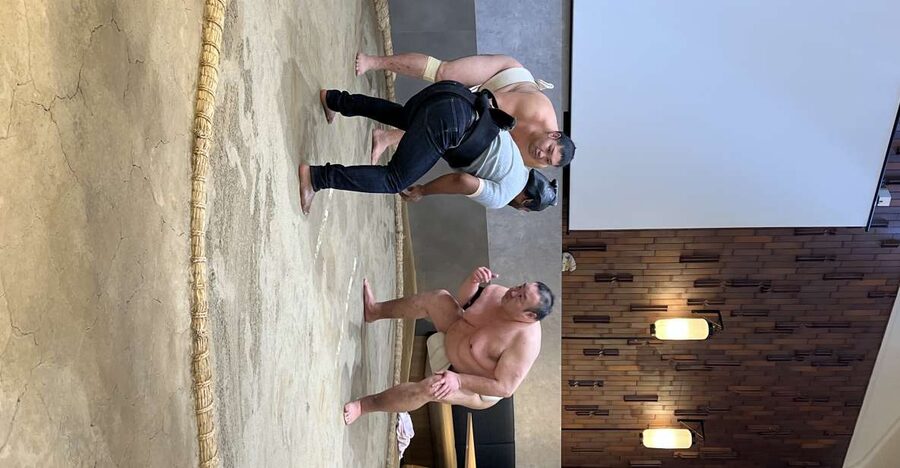
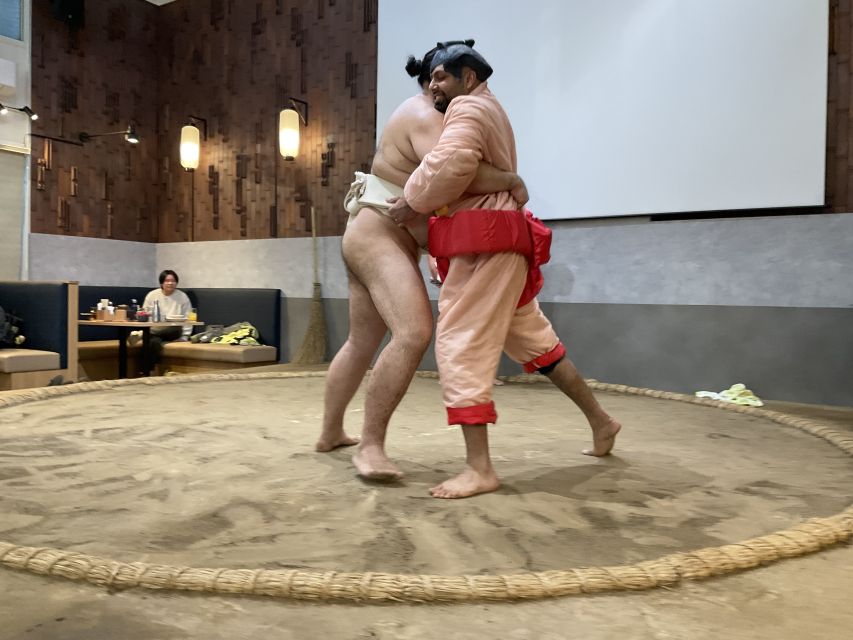
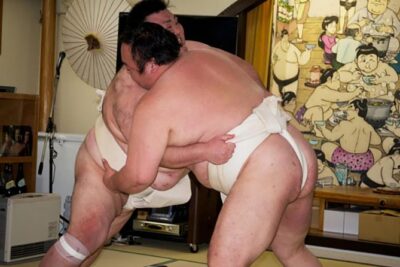
The session also makes room for humor and participation. You can see the athletes demonstrate their skills, then, if selected or invited to take part, step into a playful duel. It is an entertaining way to learn how much technique and power sit behind a sumo bout. Even if you stay on the sidelines, you can watch the action at close range.
This is a sumo introduction for curious newcomers, not a substitute for attending a professional tournament. If your main goal is to see ranked wrestlers compete in an official match, this activity is a different kind of experience. Its appeal is personal contact: you can ask questions, watch demonstrations, and meet former wrestlers in a setting built for explanation.
Arriving in Asakusa or Ryogoku
The location changes by day. On Mondays, the experience takes place in Asakusa; on Thursdays, it takes place in Ryogoku. Your voucher includes a map to the exact meeting point, and the activity ends where it begins. There is no pick-up or drop-off, so you will need to make your own way there and plan your onward trip.
Allow time to find the venue and arrive before the 1:00 PM start. The information gives a door-opening time of 12:40 AM, which conflicts with the afternoon start. Do not assume that is correct. Check the time with the operator before setting out, especially if you are arranging lunch or other plans around the activity.
The small-group format is listed as limited to six participants, a useful size for an interactive lesson. Still, the room may not feel like a private class. Some people have found there were more tables or people in the space than they expected. If close-up interaction is your priority, keep in mind that the stated limit refers to the activity’s group size, while the room itself may have a broader audience or seating arrangement.
The two neighborhoods offer different practical bases for the activity, but the experience description does not promise a neighborhood tour. Choose the date and location that best fit your plans, and treat the sumo session as the main event rather than expecting a guided walk before or after it.
More sumo experiences in Tokyo:
- Tokyo: Sumo Show Experience with Chicken Hot Pot and a Photo
★ 4.8 · 6,678 reviews - Tokyo: Sumo Show and Dining Experience
★ 4.8 · 2,742 reviews - the SUMO show
★ 5.0 · 1,960 reviews
Watching former wrestlers explain the sport
Once the session begins, the wrestlers introduce sumo through explanations and demonstrations. You will hear about its history, rituals, training, and competition in English. The exact sequence of each demonstration is not specified, but the purpose is clear: help you understand what is happening and why.
I value this context because sumo’s formal gestures can seem opaque when you first encounter them. A demonstration lets you see the movements up close, while the explanation gives you a reason to pay attention to them. The wrestlers’ first-hand experience also brings a human dimension to the sport. You are learning from people who competed professionally, not only from a guide reciting rules.
The tone is not overly solemn. The demonstrations are designed to be both instructive and entertaining, with the wrestlers using humor and showmanship to keep the group involved. That balance matters if you are bringing children or someone who is interested in Japanese culture but not yet a sumo fan. You can learn without needing to arrive with a background in the sport.
You should still come ready to listen and watch. The lesson is the foundation for the interactive portion, and the more you understand about the sport’s basic rules and rituals, the more meaningful the demonstrations become. This is a good pick if you want an introduction that explains rather than simply stages a show.
Stepping into the ring, if you are chosen
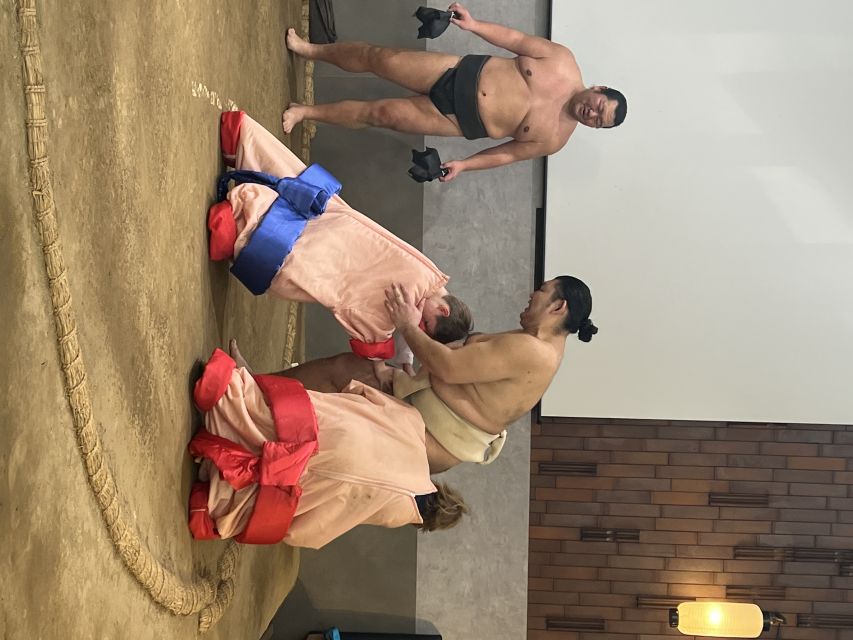
The hands-on part is the experience’s most unusual feature. Some participants may be invited to put on a sumo wrestler costume and help with the demonstration. The opportunity is voluntary, and not everyone can be selected. The broader activity also invites participants to face wrestlers in a playful bout, so there is a chance to get a closer feel for the sport than you would from watching alone.
Do not read this as a serious contest. The bout is playful, and the wrestlers are there to demonstrate and entertain, not to test you in a real match. The experience gives you a safe, lighthearted way to see the difference between watching a sumo athlete and trying to move against one. Even a large, strong adult can find the wrestler’s power surprising.
If you would rather not take part, you can enjoy the demonstration from your seat. There is no guarantee that you will be picked, and the information does not promise that every participant gets a turn. If being in the ring is essential to your decision, ask the operator what participation can be expected for your session rather than booking on the assumption that everyone wrestles.
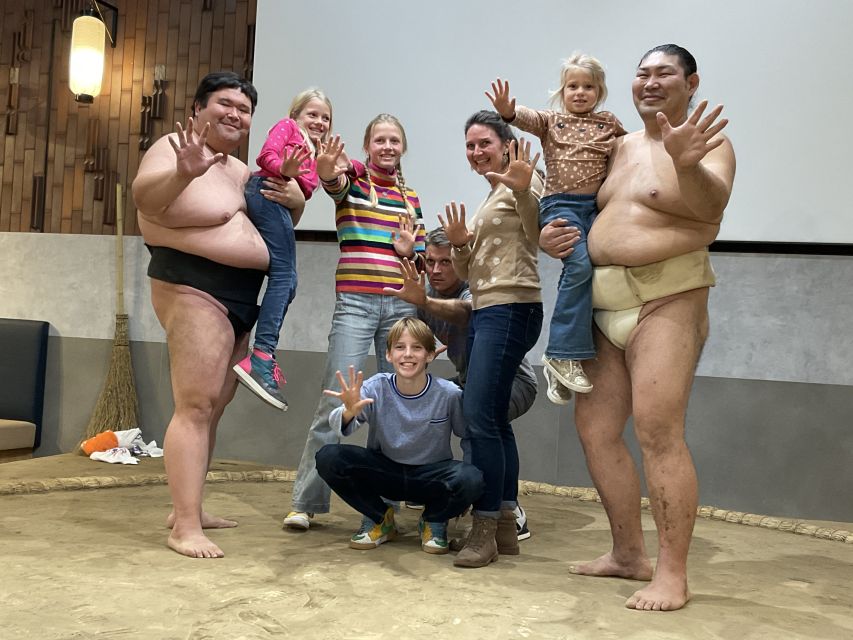
There is time for photographs, too, which helps make the meeting feel personal rather than purely theatrical. The wrestlers are described as friendly and engaging, and the session gives you a chance to interact with them at close range. Keep your expectations flexible: the experience is at its best when you are happy to watch, learn, and join in if the opportunity comes your way.
Sitting down to chanko nabe
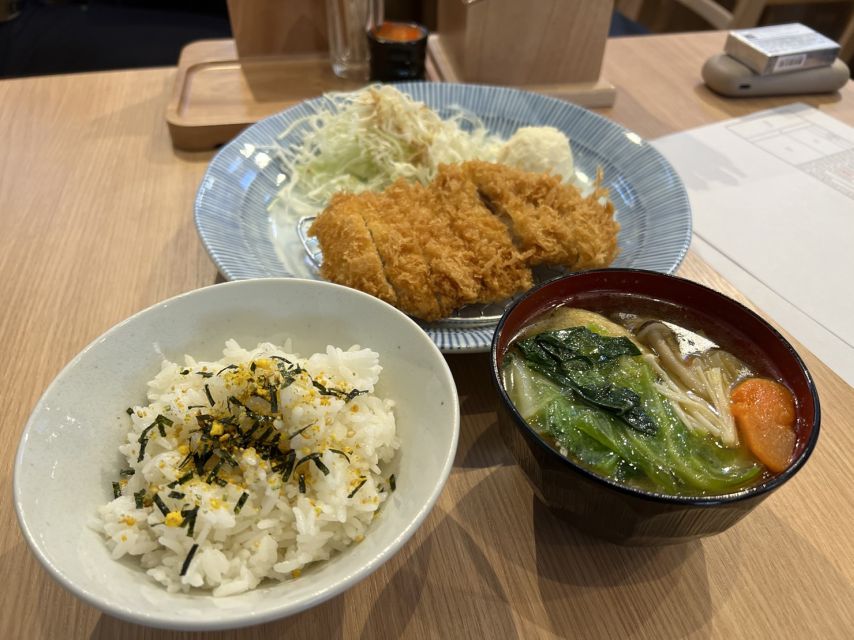
After the demonstration, lunch brings the group around the table for chanko nabe, a Japanese-style hot pot prepared by the wrestlers. The dish is strongly associated with sumo and is known as hearty food for building stamina. Here, it is more than a meal included for convenience: it links the sport lesson to the food culture around wrestlers’ lives.
The hot pot is a welcome change of pace after the energetic demonstrations. You can settle in, eat, and continue enjoying the company of the wrestlers. The food is a major part of the appeal, and the meal is included in the $95 price. The exact menu is not specified, so do not count on a particular ingredient or course arrangement.
If you need vegetarian or Halal food, note it in your reservation or contact the operator by email at least two days before the activity. This is worth handling early, rather than hoping the menu can be changed on the day. If you have other dietary needs, the information does not specify what can be accommodated, so ask the provider before booking.
The lunch also adds value to a short activity. Without it, you would have a demonstration and a chance to interact with wrestlers. With it, the session becomes a two-hour cultural experience that includes a substantial meal and time to talk and take photos.
More tours with lunch in Tokyo:
- Tokyo: Mt.Fuji & Lake Kawaguchiko 1-Day Bus Tour w/Optional Lunch
★ 4.5 · 839 reviews - Tokyo: Tsukiji Fish Market Tour with 6 Stops & Seafood Lunch
★ 4.5 · 165 reviews - Tokyo: 1 Day Bus Tour with Meiji-Jingu,Odaiba,lunch&Skytree
★ 4.6 · 156 reviews - Mt. Fuji, Oishi Park & Arakurayama Pagoda Bus Tour with Lunch
★ 5.0 · 128 reviews
What $95 buys you
At $95 per person, this is not the cheapest way to spend two hours in Tokyo. The price includes entrance, participation, and lunch, and the experience combines instruction, live demonstrations, a possible turn in the ring, and a meal cooked by the wrestlers. You are paying for access and interaction as much as for the food.
The value makes the most sense if you are interested in sumo but do not know where to begin. The English explanations help make the sport understandable, and meeting former professionals gives the session a personal quality that a short video or a display cannot offer. If you are traveling with children or a mixed-age group, the humor, demonstrations, food, and optional participation can give everyone something to enjoy.
It may be less appealing if you are mainly seeking a formal, high-level sumo match. The activity is a workshop and demonstration, and the bout is playful. It is also a set two-hour program rather than a flexible visit you can stretch out at your own pace.
The price is easier to justify if you want a hosted cultural activity that combines learning and lunch in one booking. The meal, English instruction, and close contact with former wrestlers all count toward the value. If you are already planning to eat lunch nearby and only want to watch sumo, you may prefer to spend your budget elsewhere.
Who will enjoy this Tokyo sumo session
I would recommend this experience to first-time visitors who want to understand more than the basic aim of a sumo bout. It is also a good fit for families: the demonstrations are entertaining, the participation is playful, and children can watch even if they are not selected to enter the ring. The athletes’ friendly approach helps make the sport approachable.
You do not need to be athletic or especially knowledgeable about sumo. You can take part if invited, or simply watch and enjoy the explanations. The activity is listed as wheelchair accessible, though it is sensible to contact the provider if you need details about the room or seating arrangements.
The experience is less suited to anyone who expects a real tournament, guaranteed wrestling participation, or a private group setting. It lasts two hours, has a fixed afternoon start, and ends back at the meeting point. The listed cancellation terms allow a full refund if you cancel at least 10 days in advance, which is worth noting when making plans.
Should you book it?
Book this if you want a lively introduction to sumo with clear English explanations, a chance to meet former professional wrestlers, and a hearty chanko nabe lunch. It is particularly worthwhile for families and curious first-timers who enjoy learning by watching and, if selected, joining in.
Skip it if you want to see an official tournament or if you would be disappointed not to wrestle yourself. Before booking, choose the Monday Asakusa or Thursday Ryogoku session that fits your schedule, and confirm the unusual door-opening time. If those details work for you, this is a memorable way to put sumo’s rituals, strength, and humor into context.
FAQ
How long is the sumo experience?
The activity lasts two hours and ends back at the meeting point.
What time does it start?
The activity starts at 1:00 PM. The door-opening time is listed as 12:40 AM, which conflicts with the afternoon start, so confirm the correct arrival time with the provider before you go.
Where does the activity take place?
It takes place in Asakusa on Mondays and in Ryogoku on Thursdays. Your voucher includes a map to the exact meeting point.
Is the lesson in English?
Yes. The instruction is in English, and former professional wrestlers explain sumo and demonstrate the sport.
Can I wrestle a sumo wrestler?
You may have the chance to take part in a playful bout. Some participants may also be invited to wear a sumo wrestler costume and help with a demonstration, but not everyone is selected.
Is lunch included?
Yes. Chanko nabe, a Japanese-style hot pot prepared by the wrestlers, is included in the activity price.
Can vegetarian or Halal meals be arranged?
Yes. Note your requirement in your reservation or contact the provider by email at least two days before the activity.
Is the activity wheelchair accessible, and what is the group size?
The activity is listed as wheelchair accessible, with a small group limited to six participants.
Freshly reviewed in Tokyo
- Tokyo: Toshimaya Sake Brewery Tour with Sake Tasting★ 5.0 · 6 reviews
- :Tokyo,Shibuya /Meiji Shrine tour in KIMONO/English-friendly★ 5.0 · 4 reviews
- Tokyo: Tour Privado por Tokio en español★ 4.3 · 4 reviews
- Tokyo:Tea ceremony experience at Komaba Warakuan★ 4.8 · 9 reviews
- :Tokyo,Shibuya/ Pro Photography in Kimono / English-Friendly★ 5.0 · 26 reviews
- Tokyo:Samurai Training : Swords, Bushido & Mental Discipline★ 5.0 · 6 reviews
- Tokyo:Mt Fuji & Hakone Day Tour with English Speaking Driver★ 5.0 · 26 reviews
- Tokyo:Nikko UNESCO World Heritage Sites Private 1-Day Tour★ 3.8 · 6 reviews
Tokyo Sumo Experiences, compared.
Tokyo Shinjuku Sumo Show & Experience with Photo
Read our review →
Authentic Sumo Experience in Tokyo: Enter the Sanctuary
Read our review →
Tokyo Sumo Experience: Chanko & Mochi with a Former Pro
Read our review →Browse the lists this tour appears in