
Reviewed · TOKYO RAMEN TOURS
Tokyo: Sushi and Ramen Cooking Class with Sake Pairing Set
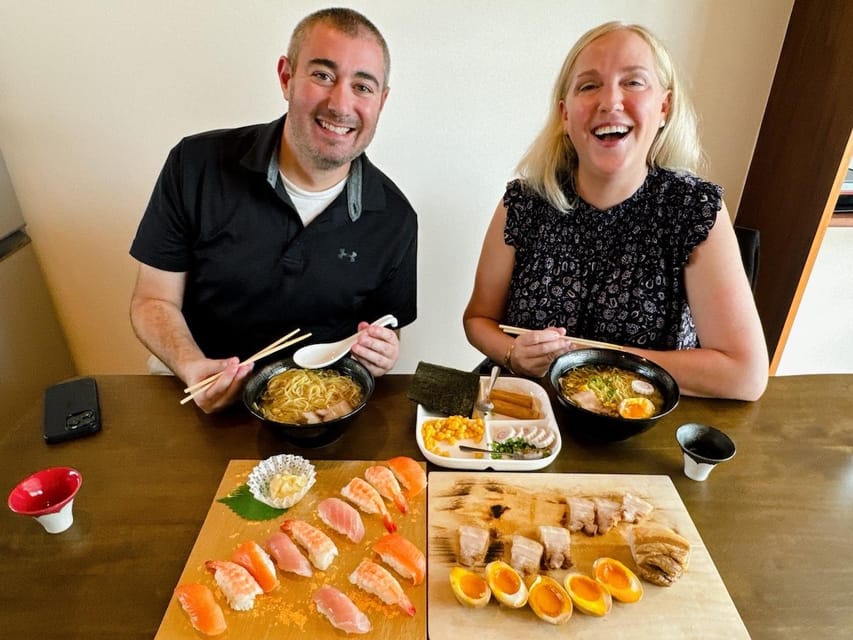
Tokyo’s best cooking souvenirs are the ones you can use again at home. In this three-hour class, you make nigiri sushi and ramen, including broth and chashu pork, then sit down to eat what you have prepared. The setting is small and friendly, with English-speaking instructors and a sake tasting built into the session.
I like the combination of two dishes with very different techniques, and the practical recipe booklet gives you a way to keep cooking after your trip. I also like that the instructors add cultural context, from the origins of sushi and ramen to ingredient tips for cooking these foods outside Japan.
One consideration: this is not a vegetarian or vegan activity, and some preparation may be done ahead to fit the class into three hours. The group is capped at eight, but the exact size can vary.
- Make both nigiri and ramen: Practice hand-forming sushi and preparing ramen, broth, and chashu.
- Taste three selected sakes: A certified sake sommelier chooses the tasting set.
- Get personal guidance: The group is limited to eight, with some sessions feeling especially intimate.
- Learn beyond the recipe: Instructors share food traditions and practical ingredient substitutions.
- Take home usable tools: You receive a recipe booklet and a pair of souvenir chopsticks.
- Meet near Tsukishima Station: The class is a five-minute walk from Exit 4.
A three-hour lesson with dinner at the end
This class is part cooking lesson, part cultural introduction, and part very satisfying meal. Over three hours, you work on nigiri sushi and ramen, with instruction in ramen broth and chashu, the tender pork belly topping. The goal is not just to watch a cook at work. You get hands-on time, then eat the food you have made.
That combination matters. A restaurant meal can introduce you to the flavors, but a class shows you some of the decisions and motions behind them. You learn how ingredients come together, try the techniques yourself, and leave with recipes to help repeat the experience at home.
The pace is designed to leave room for both cooking and eating. Some elements may be prepared ahead of time to make the schedule work, so do not expect to build every component from the first raw ingredient. That is a sensible trade-off in a three-hour class. The value is in getting to practice key steps and ask questions, not spending the afternoon waiting for a broth to simmer.
Nigiri sushi, one piece at a time
The sushi portion introduces the origins of sushi before moving into nigiri preparation. You use the provided ingredients and tools to shape sushi by hand. If you have never made nigiri, the instructor’s guidance helps make a technique that can look deceptively simple feel approachable.
This is a useful way to understand the craft behind a familiar dish. Making sushi is not only about putting fish on rice. You get to work with the ingredients and form the pieces yourself, while the instructor explains the process and answers questions. The class welcomes beginners, so you do not need prior cooking experience.
The ingredients are part of the experience, too. Fresh items sourced from Toyosu Market have been used in the class, giving you a chance to cook with produce connected to Tokyo’s food scene. Exact ingredients can vary, but all necessary ingredients are provided.
If you enjoy sushi but have never tried shaping it, this is likely to be one of the most rewarding parts. You can see where your own technique needs practice, and the finished pieces become part of the meal rather than a demonstration you simply watch.
More cooking classes in Tokyo:
- Sushi Making Tokyo Roll and Authentic Japanese Sushi Class
★ 5.0 · 3,971 reviews - Tokyo: Roll and Authentic Sushi Making Class in Asakusa
★ 4.9 · 1,957 reviews - Tokyo Shinjuku Chopsticks Making Class
★ 5.0 · 1,763 reviews
Ramen broth and chashu in the same kitchen
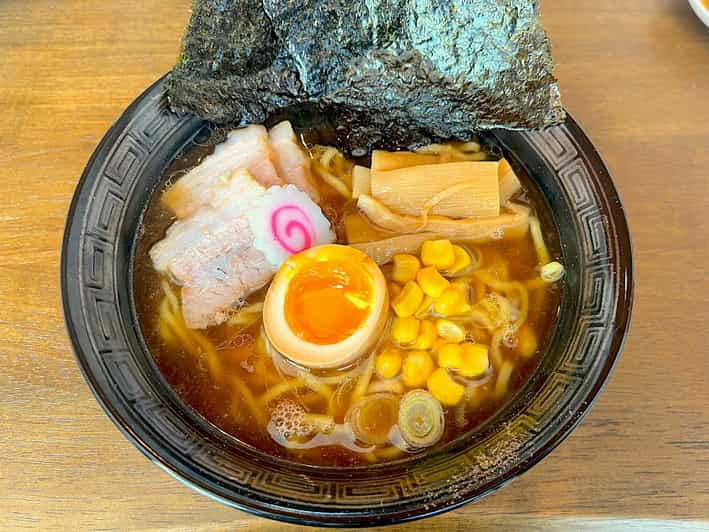
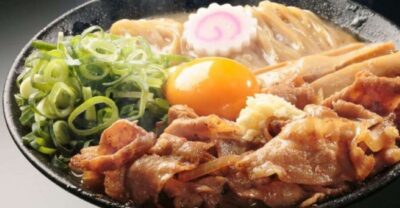
Ramen is the other half of the class, and it brings a different set of skills. You learn about making flavorful soup and preparing chashu, the pork belly that adds richness to a bowl. For many people, ramen is a restaurant staple; here, the lesson gives you a closer look at how its components work together.
The class presents the cooking in a manageable way. The three-hour format means some preparation may be completed in advance, but you still have hands-on practice and time to understand the ingredients and method. That balance is useful for travelers who want to learn without turning a Tokyo afternoon into a full-day kitchen shift.
You also receive practical advice about substitutions for cooking abroad. That detail is easy to overlook, but it can make the difference between a recipe that stays in a booklet and one you actually attempt back home. Japanese ingredients may not be easy to find everywhere, so tips on what can be replaced help set realistic expectations.
Ramen and sushi together make a satisfying pairing for a class. You get to compare two cornerstone dishes with distinct preparation styles, then enjoy a full meal rather than leaving hungry after a few samples. Some participants have found the portions generous, so arrive ready to eat.
Sake adds a thoughtful pause
The sake tasting gives the class another layer beyond cooking. You sample three Japanese sakes selected by a certified sake sommelier, and the tasting offers a chance to notice how different sake can be from one pour to the next.
It is not simply a drink added to the meal. The sommelier’s role brings some context to what you are tasting, and one instructor has a connection to a sake-brewing family. That can make the conversation feel personal as well as informative.
Some sessions have also had beer available, but the reliable feature to plan around is the sake tasting. Do not book this expecting a particular range of additional drinks. If you do not drink alcohol, check with the operator directly about options before booking, since nonalcoholic alternatives are not specified.
Small group, warm instruction
The class is limited to eight participants, which keeps it more personal than a large demonstration. With a compact group, there is room for questions and more direct help while you cook. Some sessions may be smaller still, but the group size is not guaranteed to be just a handful.
The teaching team is often praised for being warm, patient, and engaging. Instructors named in past sessions include Sato, Haruko, Risa, Alex, Misa, and Luna. The lineup can change, but English-language instruction is part of the experience, so you can follow along without relying on translation.
The atmosphere seems especially well suited to families, couples, and solo travelers who like a shared activity. Cooking together gives the group something to do and talk about, without requiring anyone to be a skilled cook. One family-friendly advantage is that beginners are encouraged rather than expected to know their way around a sushi mat.
The class is not suitable for vegans or vegetarians. The focus is on sushi and ramen as prepared here, including pork, so this is not a flexible plant-based cooking lesson.
More ramen tours in Tokyo:
- Eat and Drink Like a Local: Tokyo Ueno Food Tour-Taverns&Ramen
★ 5.0 · 957 reviews - Ramen & Gyoza Cooking Class in Tokyo with Local Supermarket Visit
★ 5.0 · 823 reviews - Tokyo: Ramen Tasting Tour with 6 Mini Bowls of Ramen
★ 4.9 · 432 reviews - Tokyo: Easy Ramen Cooking Experience in Kabukicho, Shinjuku
★ 4.6 · 321 reviews
Recipes and chopsticks for the trip home
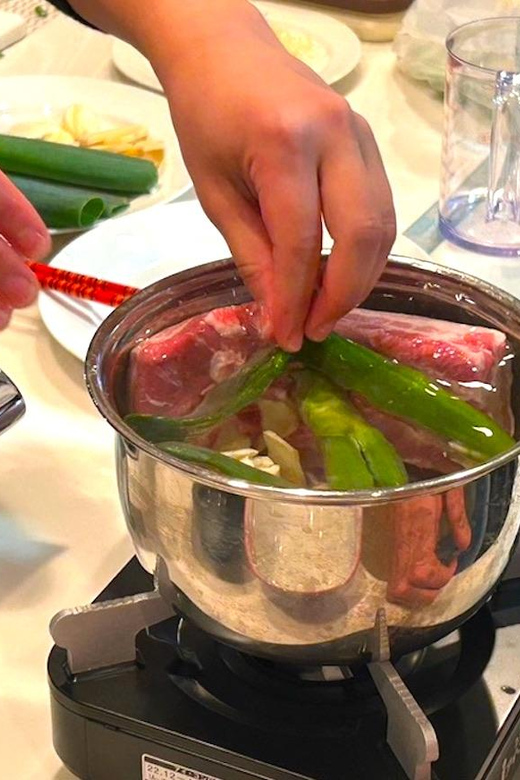
You leave with more than a full stomach. The professionally designed recipe booklet includes instructions for recreating ramen, gyoza, and sushi at home. Gyoza is included in the booklet, but it is not listed as one of the dishes made during this class, so think of it as an extra recipe rather than a cooking activity.
The booklet is useful because it preserves the method after the holiday details begin to blur. You also get ingredient guidance and substitutions, which helps you adapt the recipes to what you can find in your own area. A pair of high-quality chopsticks serves as a small keepsake.
These take-home items add value, but the real test is whether you feel capable of trying the dishes again. The lesson is pitched to give you that confidence, while still leaving room to improve with practice. Nigiri shaping and ramen broth both take repetition, and the class gives you a starting point rather than a claim that one afternoon makes you an expert.
The Tsukishima meeting point and timing
The class meets on the second floor of HAUS Tsukishima, at 2-13-5 Tsukuda, Chuo-ku. It is about a five-minute walk from Exit 4 of Tsukishima Station, on the Y21 line. Arrive five minutes before the start, and wear comfortable clothes you do not mind getting a little dirty.
The location can fit neatly into a day around central Tokyo. By taxi, it is listed as about six minutes from Tsukiji Fish Market, nine minutes from Ginza, ten minutes from Tokyo Station, and eleven minutes from teamLab Planets. Shinjuku is about thirty minutes by taxi. These are useful reference points, though actual travel time can vary with traffic.
There is no hotel pickup or drop-off, so you make your own way to the venue. The three-hour duration makes the class a substantial activity without taking up an entire day. Check available start times when planning around meals and other bookings.
Is $129 a fair price?

At $129 per person, this is not a budget meal, but it covers a hands-on three-hour class, ingredients, English-speaking instruction, a meal, a sake tasting, a recipe booklet, and souvenir chopsticks. You are paying for a guided activity as well as the food, with the small-group format giving the instructors room to help each participant.
The strongest value is for someone who wants to learn and eat in one sitting. A restaurant dinner alone will cost less, but it will not give you cooking practice, cultural explanations, or recipes to take home. If you are mainly looking for the cheapest way to try sushi and ramen, choose a restaurant instead. If you want an activity that makes the meal part of the lesson, the price is easier to justify.
The cancellation terms also offer flexibility: you can cancel up to 24 hours in advance for a full refund, and the booking option allows you to reserve without paying immediately. Those terms can help if your Tokyo plans are still moving around.
Who should book this class?
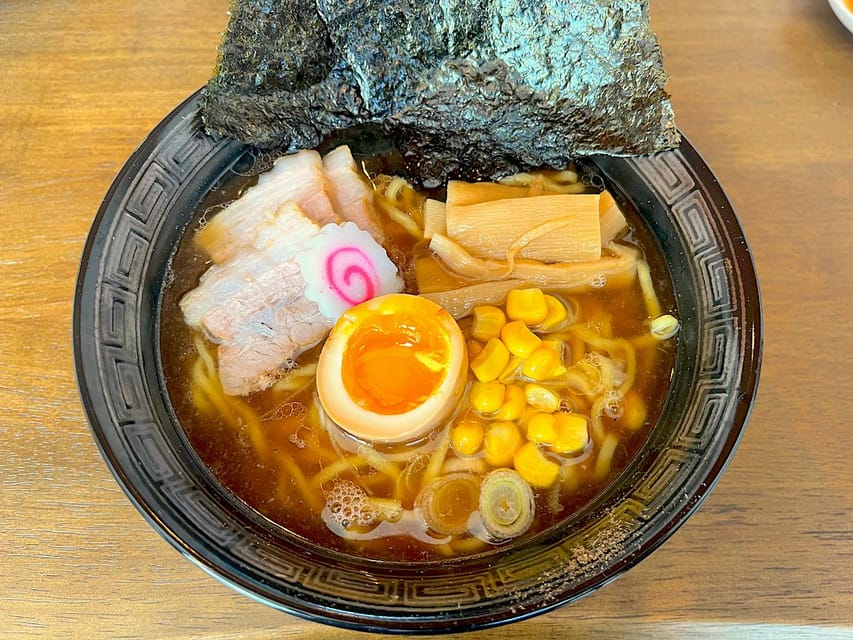
I would put this on the shortlist for first-time visitors who want a practical introduction to Japanese food, couples looking for a shared activity, and families with an interest in cooking. It is also a good choice for solo travelers who enjoy meeting people through a small-group experience.
The class is best for people who like to take part, not just watch. You will get the most from it if you are curious about how sushi and ramen are made and are happy to try unfamiliar kitchen tasks. The welcoming approach makes it suitable for beginners, while the cultural details and sake tasting give food fans extra reasons to come.
I would skip it if you are vegan or vegetarian, do not want a meal centered on these dishes, or would rather spend three hours sightseeing. And if you expect every part of ramen to be made from scratch during the session, keep in mind that some preparation may happen in advance.
FAQ
How long is the sushi and ramen class?
The class lasts three hours. Check the available start times when you book.
What dishes will I make?
You will make nigiri sushi and ramen, including ramen soup and chashu pork. The recipe booklet also includes instructions for gyoza, but gyoza is not listed as a dish made during the class.
Is the class taught in English?
Yes. The instructor teaches in English, and the class includes explanations of cooking techniques and Japanese food culture.
How many people can join?
The class is limited to eight participants. The actual group may be smaller.
Is sake included?
Yes. The class includes a tasting of three Japanese sakes selected by a certified sake sommelier.
Where does the class meet?
It meets on the second floor of HAUS Tsukishima, 2-13-5 Tsukuda, Chuo-ku, Tokyo. The venue is a five-minute walk from Exit 4 of Tsukishima Station.
More drinks tours in Tokyo
- Tokyo Bar Hopping Tour in Shinjuku (All-You-Can-Drink + Dinner)
★ 5.0 · 3,587 reviews - Best of Shinjuku: Izakaya Food Tour (4 Stops, 14+ Tastings)
★ 5.0 · 1,863 reviews - Tokyo: Shinjuku Local Bar and Izakaya Guided Walking Tour
★ 4.9 · 1,794 reviews - Shibuya Meltdown Nightlife Tour: All-You-Can-Drink Bar Hopping
★ 5.0 · 1,058 reviews
More sake tastings in Tokyo
- Ramen and Sushi Cooking Class with Sake Pairing Set in Tokyo
★ 5.0 · 291 reviews - Sake Tasting Masterclass in Shinjuku (8+ Varieties with a Pro)
★ 5.0 · 271 reviews - Sake Omakase in Tokyo: Guided Tasting by Certified Sommeliers
★ 5.0 · 239 reviews - Tasting All Types of Sake with Sommelier
★ 5.0 · 151 reviews
Freshly reviewed in Tokyo
- Tokyo: Toshimaya Sake Brewery Tour with Sake Tasting★ 5.0 · 6 reviews
- :Tokyo,Shibuya /Meiji Shrine tour in KIMONO/English-friendly★ 5.0 · 4 reviews
- Tokyo: Tour Privado por Tokio en español★ 4.3 · 4 reviews
- Tokyo:Tea ceremony experience at Komaba Warakuan★ 4.8 · 9 reviews
- :Tokyo,Shibuya/ Pro Photography in Kimono / English-Friendly★ 5.0 · 26 reviews
- Tokyo:Samurai Training : Swords, Bushido & Mental Discipline★ 5.0 · 6 reviews
- Tokyo:Mt Fuji & Hakone Day Tour with English Speaking Driver★ 5.0 · 26 reviews
- Tokyo:Nikko UNESCO World Heritage Sites Private 1-Day Tour★ 3.8 · 6 reviews
Tokyo Ramen Tours, compared.

Eat and Drink Like a Local: Tokyo Ueno Food Tour-Taverns&Ramen
Read our review →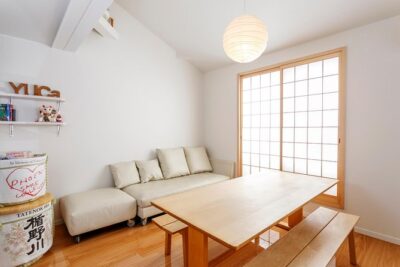
Ramen & Gyoza Cooking Class in Tokyo with Local Supermarket Visit
Read our review →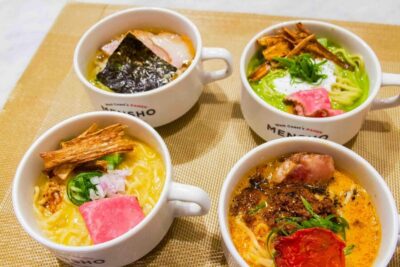
Easy Ramen Cooking Experience in Kabukicho, Shinjuku
Read our review →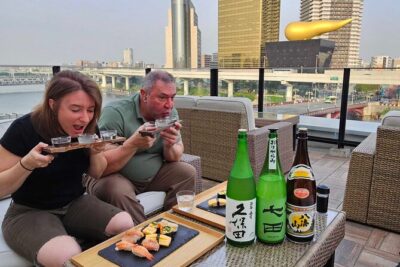
Ramen and Sushi Cooking Class with Sake Pairing Set in Tokyo
Read our review →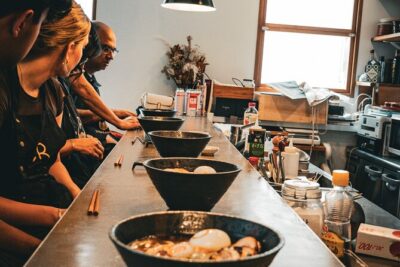
Professional Ramen & Gyoza with Ramen Chef in a restaurant!
Read our review →
Ramen Dojo Tokyo | Make All 3 (Tonkotsu/Shoyu/Miso)
Read our review →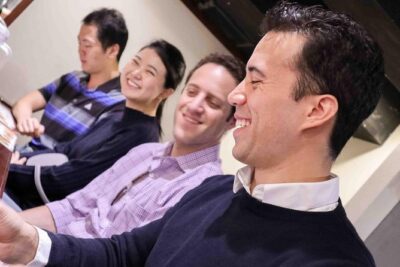
Browse the lists this tour appears in