
Reviewed · TOKYO CITY TOURS
Tokyo: Morning Sightseeing Bus Tour
Tokyo’s morning coach tour links three very different places: the quiet woodland approach to Meiji Shrine, the Imperial Palace grounds, and Asakusa’s old shopping streets. You can cover a lot of ground in 210 minutes without figuring out Tokyo’s transport system on your own.
I like two things in particular: the mix of guided sightseeing and time to explore Asakusa, and the matcha stop, which brings a taste of Japanese tea culture into the itinerary. The English-speaking guide also gives you context as the bus passes districts you might otherwise only see from a train window.
The trade-off is that this is a fast sampler, not a slow visit to each landmark. Traffic can squeeze the time at stops, and the tour ends in Asakusa rather than returning you to your starting point.
- Meiji Shrine gives the morning a calm start, with a forested setting that feels far removed from central Tokyo.
- The palace visit is either the East Garden or the Niju-bashi Bridge, depending on the tour’s arrangements.
- Asakusa is the main independent stop, with Nakamise shopping street, the Kaminarimon Gate and a matcha treat.
- The bus passes several districts, including Harajuku, Akihabara, Ueno and Kappabashi, but a pass-by is not the same as a stop.
- English is spoken live, and multilingual audio guides are available in English, French, Italian, Spanish, German, Portuguese and Ukrainian.
- Plan your own return from Asakusa and bring comfortable shoes for the walking portions.
A morning route from Meiji Shrine to Asakusa
This tour works best as a first look at Tokyo. In three and a half hours, it combines a shrine visit, a palace-area stop and a walk through one of the city’s best-known older districts. You’ll see more of the city than you could on foot in the same time, though you should not expect an in-depth visit at every landmark.
The route starts at a Love sculpture, but the exact meeting point depends on the option you book. The tour details give both a Love statue in Shinjuku and Robert Indiana’s LOVE sculpture in Ginza as starting options. Check your booking carefully before setting out, especially if you are staying in a different part of the city.
Once aboard, you travel in an air-conditioned coach with Wi-Fi. The vehicle is described as having an antibacterial coating and regular ventilation, practical touches for a shared ride. There is no hotel pickup or drop-off, and the coach’s convenience does not remove the need to reach the meeting point on time.
Meiji Shrine: a quiet first stop
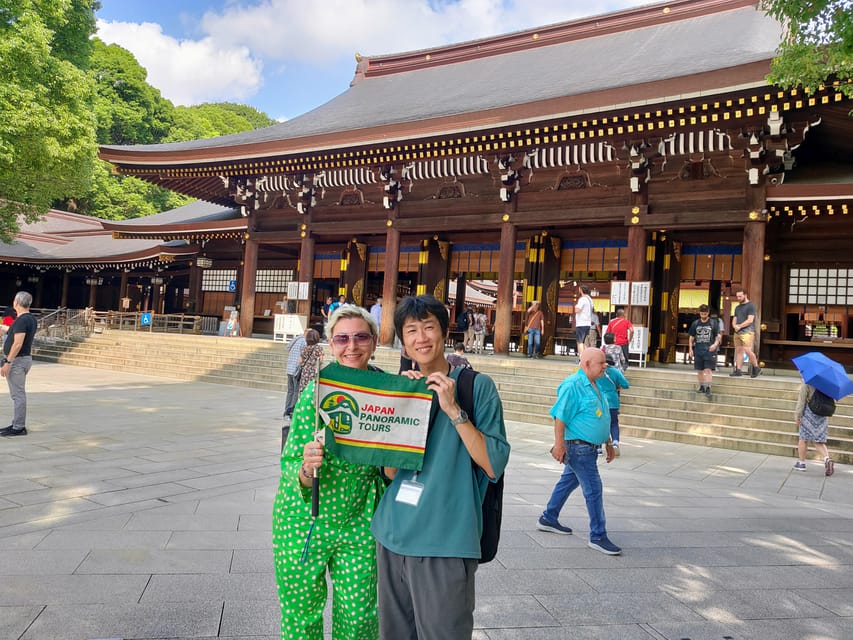
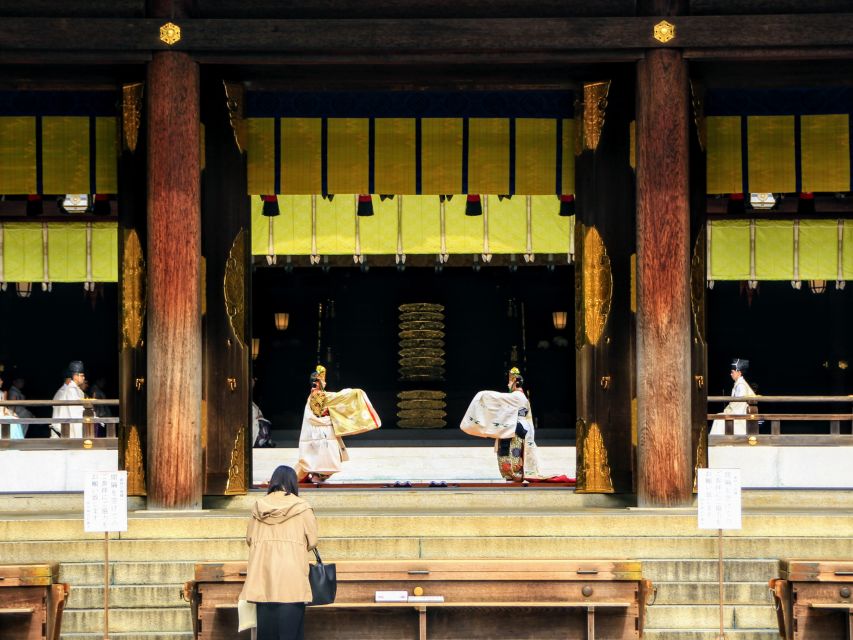
The first major visit is Meiji Jingu, a Shinto shrine built in 1921 in honor of Emperor Meiji. Its wooded grounds offer a striking contrast to the city around it. You are not far from Tokyo’s busy streets, yet the trees and shrine setting make this a natural place to pause and take in a more contemplative side of the city.
The guide introduces the traditional way of visiting a Shinto shrine. That guidance is useful if this is your first shrine visit: it gives you a little context for what you are seeing and how to approach the space respectfully, rather than treating it as just another photo stop. Listen closely, since this is one of the tour’s clearest opportunities to learn about a Japanese religious tradition.
Meiji Shrine is a visit, not just a view from the bus, but the tour’s overall schedule is tight. You’ll want comfortable shoes and a willingness to keep moving when the group is ready to leave. If you hope to linger in the grounds, take a quiet break, or explore every corner, consider returning on your own another day.
More city highlights tours in Tokyo:
- From Tokyo: Mount Fuji Full-Day Sightseeing Trip
★ 4.5 · 4,970 reviews - Tokyo: Hop-On Hop-Off Sightseeing Bus Ticket
★ 3.9 · 4,207 reviews - Tokyo: Private City Highlights Tour with Local Guide
★ 4.8 · 1,433 reviews
Harajuku, Omotesando and the city from the coach
After the shrine, the bus passes Takeshita Avenue, a well-known Harajuku street associated with Japanese pop culture, and Omotesando, a shopping district. These are drive-by sights on this route, not scheduled shopping stops. Think of them as a quick introduction to Tokyo’s changing neighborhoods, rather than time to browse.
The coach also passes the National Diet Building, Japan’s parliament, whose symmetrical design dates to 1936. From a moving vehicle, you get a sense of the building’s scale and setting, but you will not have the same chance to inspect its details as you would on foot. This is the pattern of the tour: broad coverage, with a few stops chosen for time outside the bus.
A guide’s commentary can make these stretches more useful than they might be on a self-guided ride. Past guides named Aoi, Angela and Taka were praised for clear explanations, humor and an approachable manner. Those names are not a promise of who will lead your departure, but the live English commentary is part of the experience.
The Imperial Palace stop: gardens or a famous bridge
The Imperial Palace area gives you a glimpse of the current Imperial family’s residence and the site of Edo Castle. The tour stops for a visit to either the East Garden, with its traditional Japanese garden setting, or the Niju-bashi Bridge in the Outer Garden. Which one you see can depend on the day’s arrangements, so do not assume both are included.
This stop adds historical context to a morning otherwise split between religious and commercial sights. The former castle site connects modern Tokyo with its earlier role as Edo, while the grounds offer a calmer counterpoint to the city’s wide roads and office districts. It is a photo stop in the stated itinerary, so plan on a focused visit rather than a long walk around the palace grounds.
Traffic can affect the pace. One past account described heavy traffic and rushed sightseeing, a fair warning for a city tour that crosses several districts. The operator may change the order of visits for traffic, weather or other operational reasons, and if a site is closed, an alternative may be used.
Through Akihabara, Ueno and Kappabashi
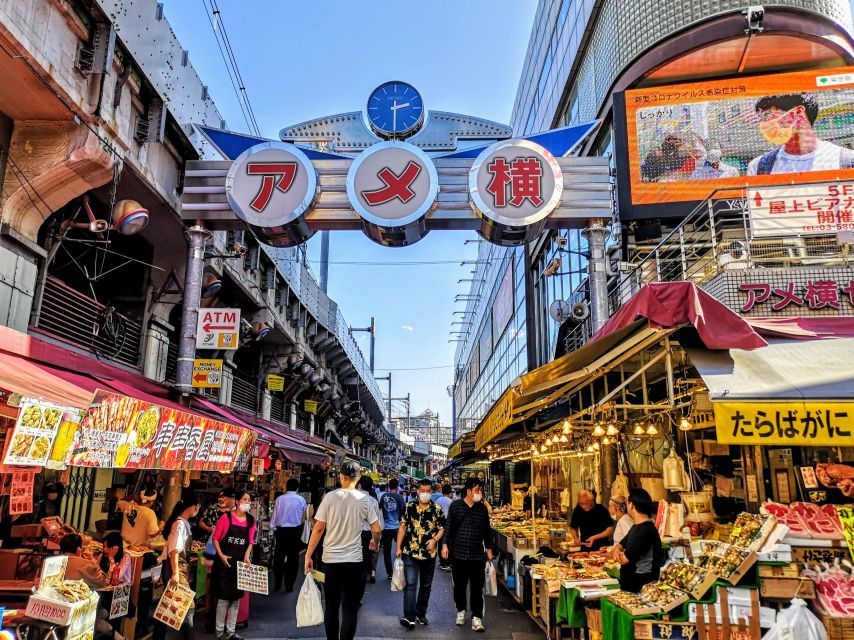
The drive toward Asakusa passes through areas with very different identities. Akihabara is associated with anime and otaku culture; Ueno is known for its park; and Kappabashi is a shopping street for kitchen goods, including Japanese dishes, knives and realistic food replicas. From the coach, you get a quick orientation to these areas, but there is no scheduled stop at each one.
This part of the route is especially useful if you are new to Tokyo and want a mental map of the city. You can note which neighborhoods you might want to revisit, then return later by train or on foot. If you already know Tokyo, the drive-bys may be less compelling than the guided visits and time in Asakusa.
The tour’s promise to cover 12 places and activities is best understood as a broad overview, not 12 full sightseeing visits. The places you actually explore on foot are fewer, and that distinction matters when deciding whether the pace suits you. If your priority is to spend an hour in Akihabara or shop in Kappabashi, this bus tour will not provide that time.
More early-start experiences in Tokyo:
- Tokyo: Sumo Morning Practice Viewing Tour
★ 4.8 · 570 reviews - Tokyo: Sumo Morning Training Visit
★ 4.4 · 370 reviews - Tokyo: Sumo Morning Practice Tour at Sumida City
★ 4.8 · 308 reviews - Tokyo Sumo Morning Practice Tour at Stable
★ 5.0 · 298 reviews
Asakusa: Nakamise, Kaminarimon and matcha
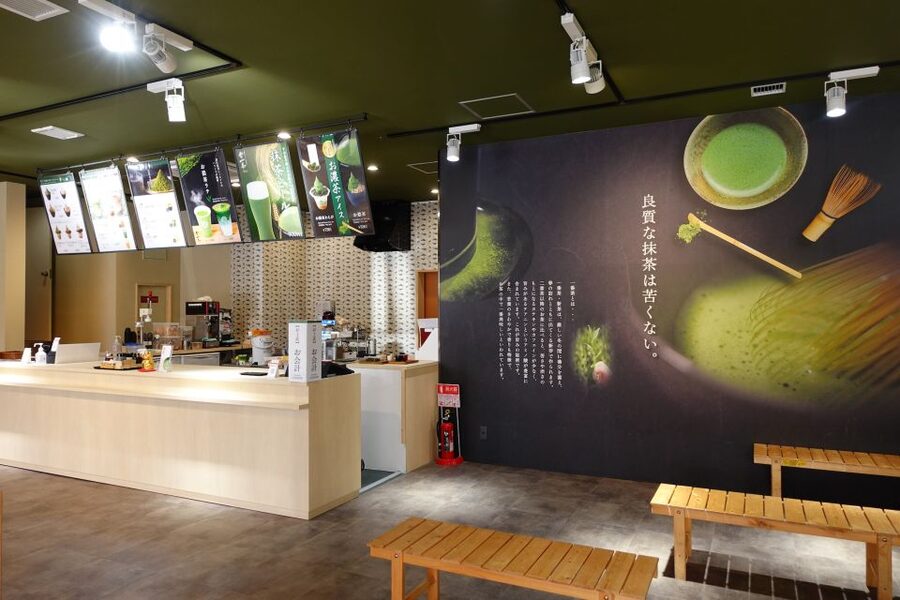
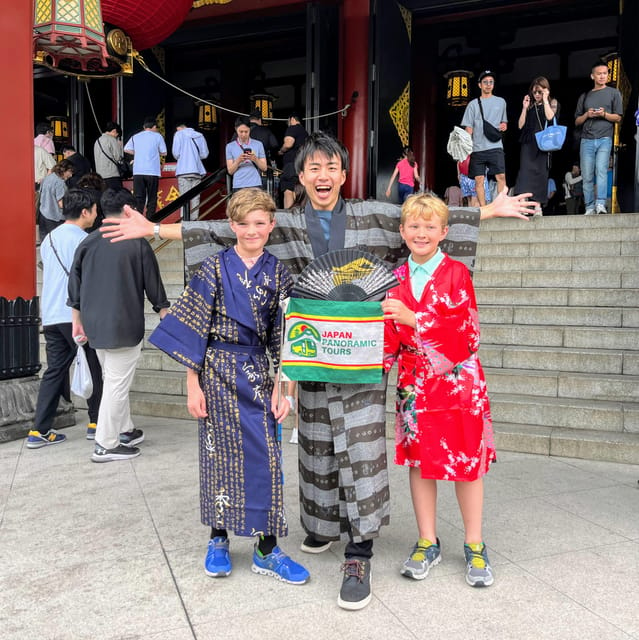
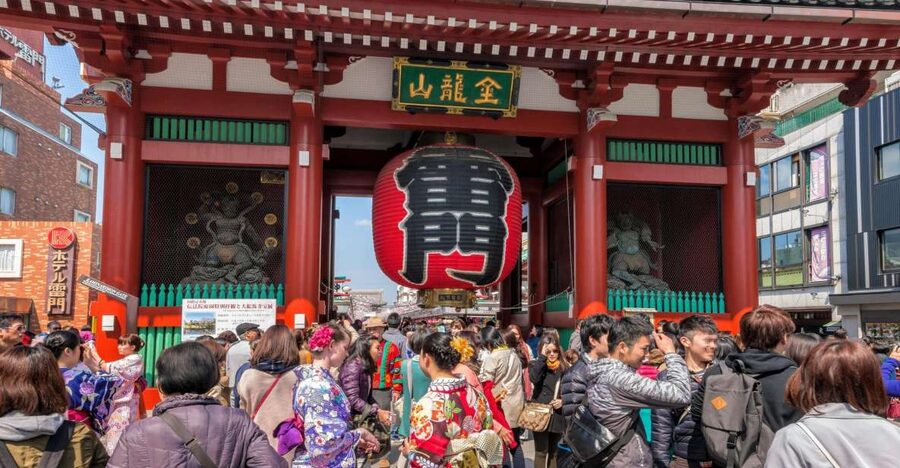
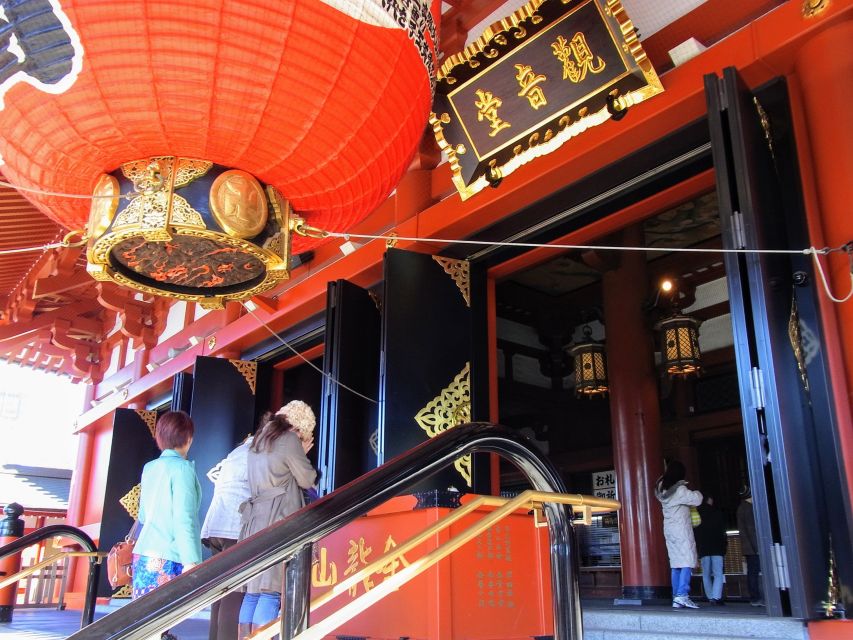
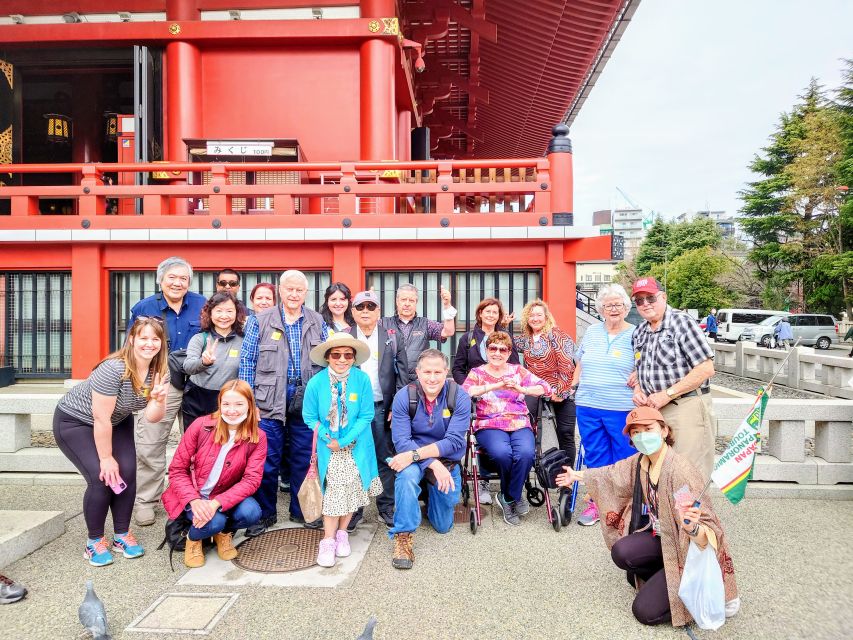
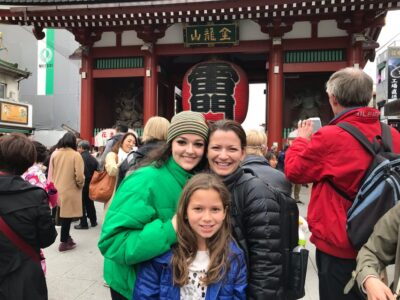
Asakusa is the final stop and the most independent part of the morning. You can explore Nakamise Avenue, the traditional shopping street leading toward Senso-ji, and take a photo at Kaminarimon Gate, known for its large red lantern. The tour finishes in this area, giving you the choice to continue exploring at your own pace.
The matcha experience is a distinctive touch. The tea is described as Uji matcha made from Ichibancha, the first flush of the season, and presented as a premium, not-bitter style. If tea is not your thing, the included choice is matcha gelato. Matcha beer is also mentioned as an option at the stop, but the stated inclusion is a matcha drink or gelato, so check directly if you are interested in the beer.
Allow time for Asakusa after the formal tour if you want to browse, eat or visit more of Senso-ji. Lunch is not included, and the bus does not provide an extra drop-off after the tour. That makes the ending flexible, but you will need to arrange your own onward journey.
One booking note: the matcha shop is closed on May 14, when the experience is replaced with matcha souvenirs. If your visit falls on that date, expect a different version of the tea stop.
What the $90 price buys you
At $90 per person, the main value is the combination of transport, an English-speaking guide, a multilingual audio guide and a matcha drink or gelato. The coach saves you the effort of stitching together several neighborhoods by public transport, while the guide provides context at the shrine and other stops. For a first morning in Tokyo, that can be a worthwhile trade for the limited time at each place.
The price is less compelling if you prefer to explore slowly or want to visit several of the drive-by districts on foot. You are paying for a guided overview, not entrance to a series of attractions or a full-day excursion. Lunch, hotel transfers and a return ride after Asakusa are not included.
The audio guide is listed in English, French, Italian, Spanish, German, Portuguese and Ukrainian, while the live guide speaks English. Audio headsets are provided for the listed languages. If you are relying on a language other than English, confirm the audio option when booking.
Who will get the most from this tour
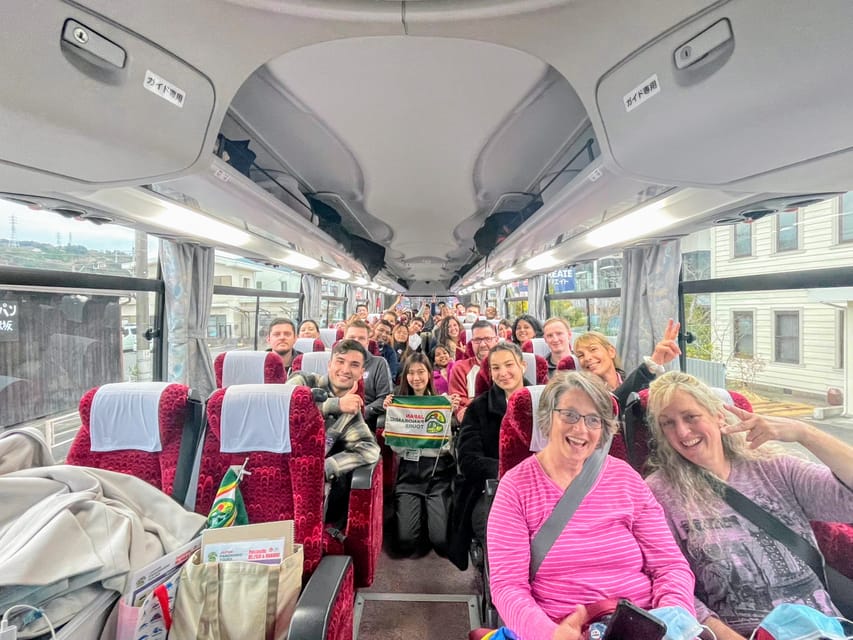
I would choose this tour if you have limited time in Tokyo, want a simple introduction to several major areas, or would rather ride between districts than plan the transport yourself. It is also useful if shrine customs and the background to Tokyo’s landmarks are part of what you want from the day. One past participant with only 24 hours in the city found a half-day overview especially useful, which is exactly the kind of time pressure this format can solve.
It can also suit families or anyone who appreciates having a comfortable seat between walking stops. But you still need to walk at the shrine and in Asakusa, so comfortable shoes are a must. If you have mobility equipment or a stroller, note that you are responsible for loading and unloading it from the coach trunk.
I would skip it if you want long, unhurried visits, a guaranteed stop at every named neighborhood, or a tour that returns you to your hotel. The route is designed to show you Tokyo broadly, not settle you into one part of it. Traffic and operational changes can also affect the order and pace.
The reported overall rating is 4.4 from 109 reviews. Praise most often centers on guides who explain clearly and keep the morning engaging; individual guides named in past accounts include Aoi, Angela, Taka and Jack. A few practical cautions also show up in the experience itself: traffic can make stops feel brief, and one past visitor wished for more commentary while riding. Set your expectations accordingly, and you are more likely to appreciate the tour for what it does well.
Should you book the Tokyo morning tour?
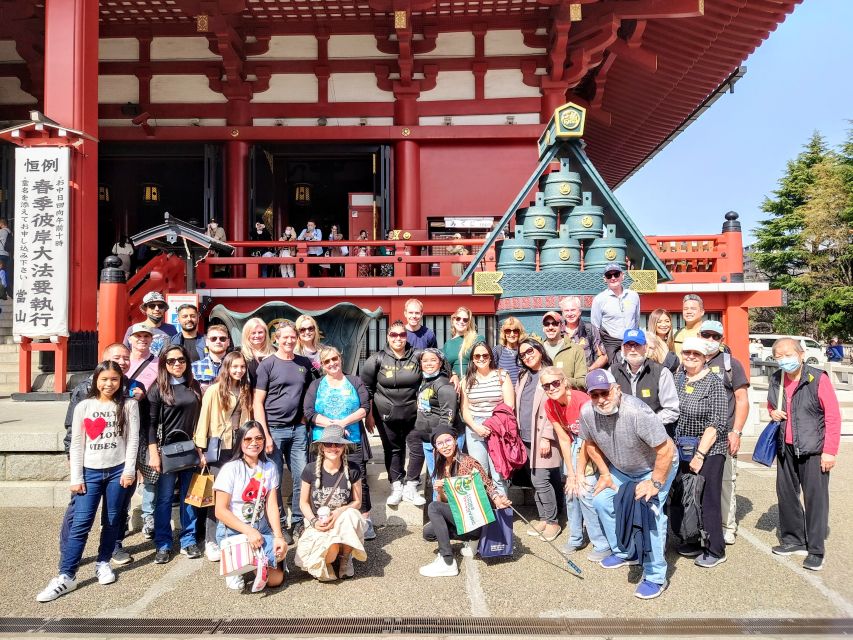
Book it if you want a guided, efficient first look at Meiji Shrine, the Imperial Palace area and Asakusa, with a small matcha experience built in. The strongest reasons to go are the English-speaking guide, the transport between far-flung areas and a useful finish in Asakusa, where you can keep exploring on your own.
Choose a slower, neighborhood-focused plan if you value time inside each district more than seeing several of them in one morning. Before you book, confirm your starting point, remember that the route may change, and leave room in your day to make your own way back from Asakusa.
FAQ
How long is the tour?
The tour lasts 210 minutes, or three and a half hours.
Where does the tour start?
The meeting point depends on the option booked. The stated starting options include a Love sculpture in Ginza and the Love statue in Shinjuku, so check your booking for the correct location.
Where does the tour finish?
It finishes in Asakusa, at Senso-ji. No additional drop-off service is provided after the tour.
Is the tour guided in English?
Yes. A live tour guide speaks English, and audio guides are also available in several languages.
Which languages are available for the audio guide?
Audio guides are listed in English, French, Italian, Spanish, German, Portuguese and Ukrainian.
Is matcha included?
Yes. The tour includes a matcha drink or matcha gelato at the Asakusa stop. The matcha shop is closed on May 14, when matcha souvenirs are provided instead.
Are lunch and hotel transfers included?
No. Lunch and hotel pickup and drop-off are not included.
Does the tour stop at every district it passes?
No. The coach passes areas such as Harajuku, Akihabara, Ueno and Kappabashi, but the listed visits are Meiji Shrine, the Imperial Palace area and Asakusa.
What should I bring?
Bring comfortable shoes for the walking portions. If you bring luggage, a wheelchair or a stroller, you are responsible for loading and unloading it from the coach trunk.
Freshly reviewed in Tokyo
- Tokyo: Toshimaya Sake Brewery Tour with Sake Tasting★ 5.0 · 6 reviews
- :Tokyo,Shibuya /Meiji Shrine tour in KIMONO/English-friendly★ 5.0 · 4 reviews
- Tokyo: Tour Privado por Tokio en español★ 4.3 · 4 reviews
- Tokyo:Tea ceremony experience at Komaba Warakuan★ 4.8 · 9 reviews
- :Tokyo,Shibuya/ Pro Photography in Kimono / English-Friendly★ 5.0 · 26 reviews
- Tokyo:Samurai Training : Swords, Bushido & Mental Discipline★ 5.0 · 6 reviews
- Tokyo:Mt Fuji & Hakone Day Tour with English Speaking Driver★ 5.0 · 26 reviews
- Tokyo:Nikko UNESCO World Heritage Sites Private 1-Day Tour★ 3.8 · 6 reviews
Tokyo City Tours, compared.

Private City Highlights Tour with Local Guide
Read our review →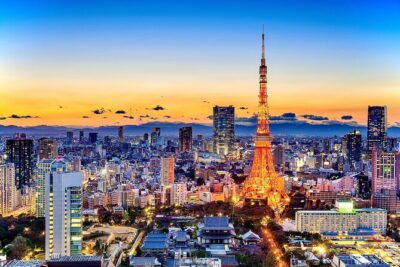
Tokyo Private Sightseeing Tour by Car- English speaking chauffeur
Read our review →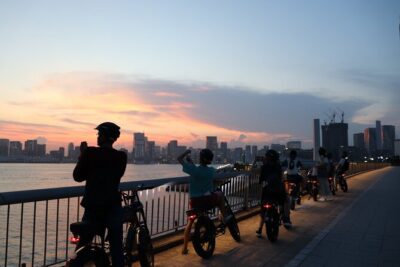
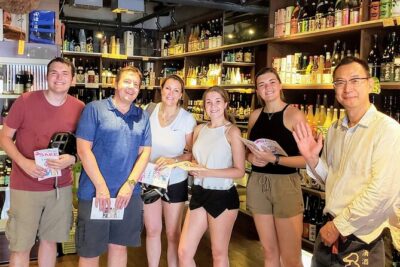
3h Tokyo E-Bike Tour: Hidden Gems, and Local Life with guide
Read our review →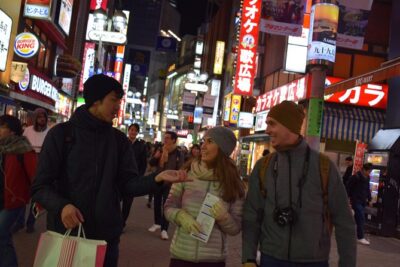
Discover Mt. Fuji 5th Station & Kawaguchiko Sightseeing Day Tour
Read our review →Browse the lists this tour appears in