
Reviewed · IMPERIAL PALACE TOURS
Tokyo: Imperial Palace, the history of Japan (ENGLISH GUIDE)
The eastern gardens of the Imperial Palace occupy the former grounds of Edo Castle, once the seat of power that shaped Japan. On this walk, you’ll pass through the Otemon gate, see castle remains and a miniature model, and hear why the main castle is gone. The guide connects these sights to Japan’s journey into the present.
I like two things here: the tour pairs visible traces of the old castle with a broader account of Japanese history, and the garden details give you more to notice than stone walls alone, from special koi to trees from different prefectures. Nicolas, a Franco-Japanese guide, has also been praised for welcoming questions about mythology, language, and Japan today.
The main caution is the language. The title says English guide, but the tour details list French, including the guide language. Confirm which language is available before paying, especially if you need an English tour.
Key points to know before you go
- Otemon gate leads into the former castle grounds: Your walk begins at the large main gate to the eastern gardens.
- The castle itself is gone: The guide explains why, while a miniature structure helps you picture what once stood here.
- Look for the special koi: The grounds are home to a distinctive breed said to be found only here.
- Expect history and conversation: Nicolas has answered questions about Japanese mythology, language, and the imperial family.
- Meet near Tokyo Station: The start is at Starbucks by the fountain in Wadakuramon Fountain Park, a five-to-ten-minute walk from Tokyo Station or Otemachi Station.
- Check the tour language: The title and the details disagree, with English in one place and French in another.
Entering the grounds through Otemon
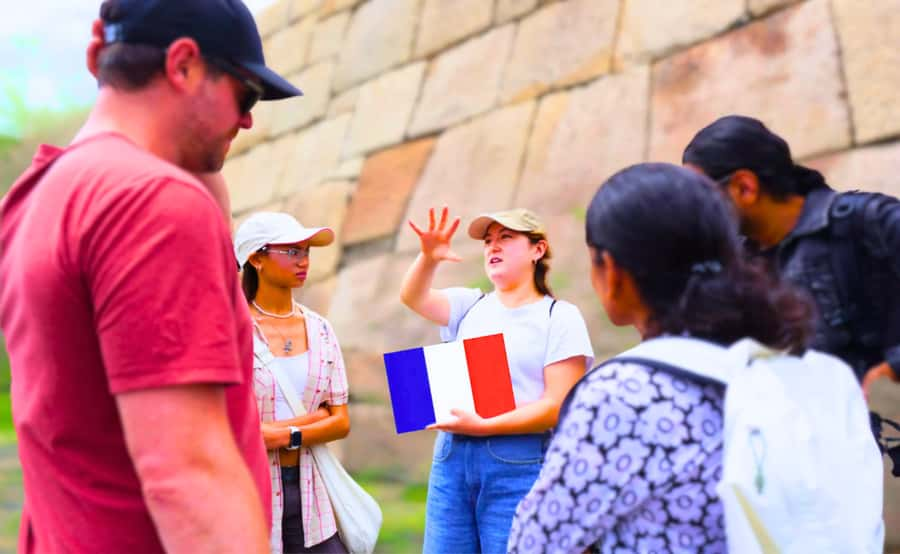
You meet the guide near the Starbucks in Wadakuramon Fountain Park, beside the fountain. Tokyo Station and Otemachi Station are both within a five-to-ten-minute walk, so either is a practical starting point. Look for the guide holding a Sunrise Adventure sign.
From there, you walk together to Otemon, the large main gate into the palace grounds. That transition matters: the busy city gives way to a place where the remains of a former seat of power sit among gardens and open space. The gate is not just a convenient entrance. It sets up the central theme of the tour, how Japan’s political center changed over time.
The walk ends back at the meeting point, making it easy to continue your day from the same area. No tour duration is provided, so ask the operator if you need to plan around a timed reservation or another activity.
More Imperial Palace walks in Tokyo:
- Tokyo: Imperial Palace and Shogun Historical Walking Tour
★ 5.0 · 2,251 reviews - Tokyo: Imperial Palace Japanese History Walking Tour
★ 4.9 · 987 reviews - Tokyo: Imperial Palace and Shogun Walking Tour
★ 4.9 · 935 reviews
Finding Edo Castle in what remains
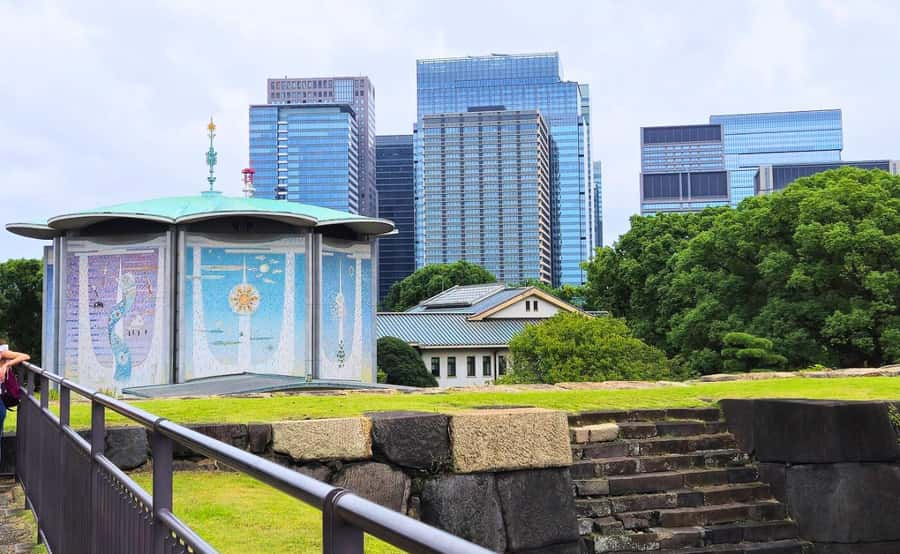
The main castle no longer stands, and that absence is part of the story rather than a gap in the visit. Your guide explains why it disappeared, then helps you read the surviving grounds as evidence of the former Edo Palace. You’ll also see a miniature structure of the old palace, which can make the original scale and layout easier to imagine.
The tour visits the former base of Edo Castle, which dates back more than 350 years. That gives you a tangible point of reference for the history being discussed. Instead of hearing only a broad timeline, you can connect the story to the place where power was once concentrated.
You’ll also explore the former soldiers’ barracks. These grounds were not simply a royal garden; they were part of a working political and military center. The barracks help add that practical dimension, showing how the site served the people and institutions that supported the castle.
The value of a guide is clearest here. Ruins do not always explain themselves, and it can be hard to know what you are looking at without context. A good account links the remaining structures to the wider story of Japan, helping you understand how the country changed rather than treating the visit as a succession of old stones.
Garden paths, koi, and trees from across Japan
The gardens offer a quieter counterpoint to the castle history. You’ll stroll through an oriental garden, where the appeal is partly in the setting and partly in learning what to notice. The tour highlights trees from different prefectures of Japan, giving the grounds a small-scale view of the country’s regional variety.
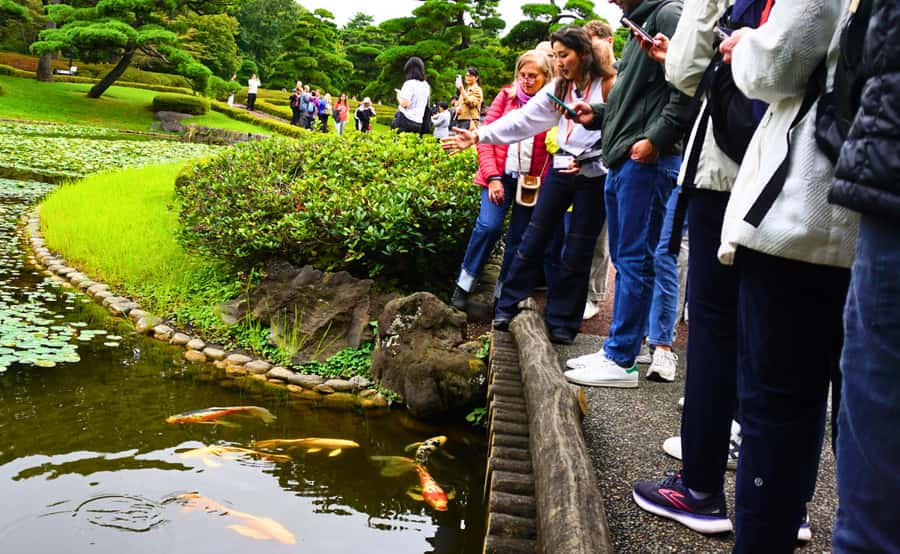
The koi are another specific stop. The tour features a unique breed said to be found only here. If you enjoy details that make a place feel particular rather than interchangeable, this is a worthwhile part of the walk. It also gives the guide a natural opening to discuss the garden’s living features, not just its political past.
You can expect time for photographs at selected spots. The gardens and old castle grounds provide a different backdrop from Tokyo’s modern streets, though the tour does not promise a particular photo location or amount of free time. Bring a camera if you like, but keep your attention on the explanations too. The point is not simply to collect a picture of the moat or a tree, but to understand the setting around it.
The garden’s calm atmosphere is part of the experience. It gives you room to take in the history at a walking pace. Still, this is a guided historical walk, not a long, unstructured garden visit. If your priority is wandering alone or spending extended time photographing every corner, you may want to allow extra time before or after the tour.
The guide’s role: history, mythology, and conversation

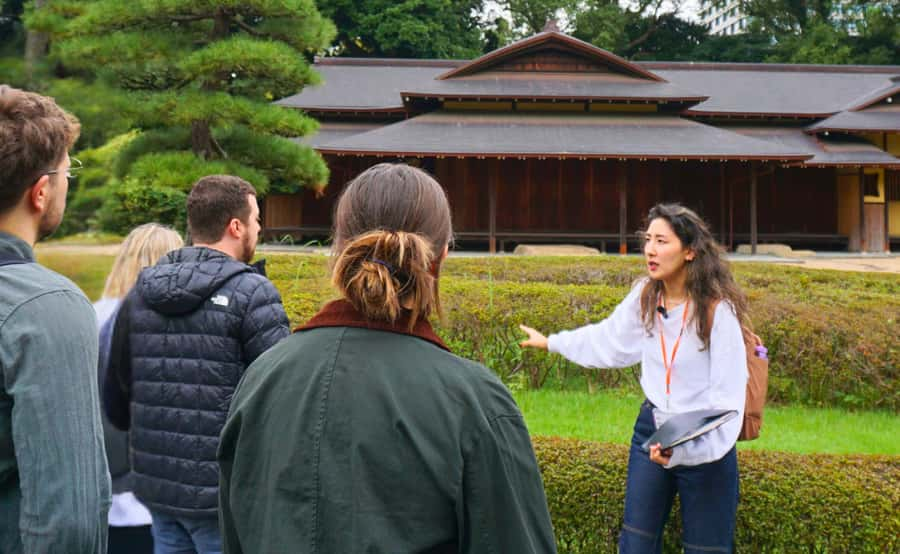
The guide is central to what you get for the price. The strongest praise for this experience centers on detailed explanations of the site’s history and the guide’s ability to answer questions. Nicolas, described as Franco-Japanese, has discussed the imperial family and the history of the grounds, as well as Japanese mythology, the language, and Japan more broadly.
That range can make the tour useful beyond the palace itself. You can ask how a particular place fits into the larger story, or follow a question into a subject such as mythology or language. The experience is described as friendly and conversational, rather than a one-way lecture. One account of the tour involved a group of five, which made discussion easier. Group size is not guaranteed, however, so don’t assume every departure will be that small.
There is also an indication of how warm the group dynamic can become: one group continued to eat together after the visit. That sounds like a happy extra, not a planned part of the tour, so treat it as a sign of the guide’s approachable manner rather than something included in your booking.
One issue needs sorting out before you reserve. The experience title identifies an English guide, but the language field and included-service information say French. Nicolas’s Franco-Japanese background does not settle which language a particular tour will use. Contact Sunrise Adventure and confirm the language for your date. This is essential if you are booking specifically to follow a detailed history explanation in English.
More history tours in Tokyo:
- Yanaka Walking Tour: Historic and Traditional District of Tokyo
★ 5.0 · 530 reviews - Tokyo: Shinjuku Historical Walking Tour & Secret Backstreets
★ 5.0 · 530 reviews - Mt. Fuji Heritage Tour: Traditional Villages, Lakes & Shrine
★ 4.5 · 509 reviews - From Tokyo: Nikko World Heritage Site Private Full-Day Trip
★ 4.9 · 243 reviews
What $40 buys you
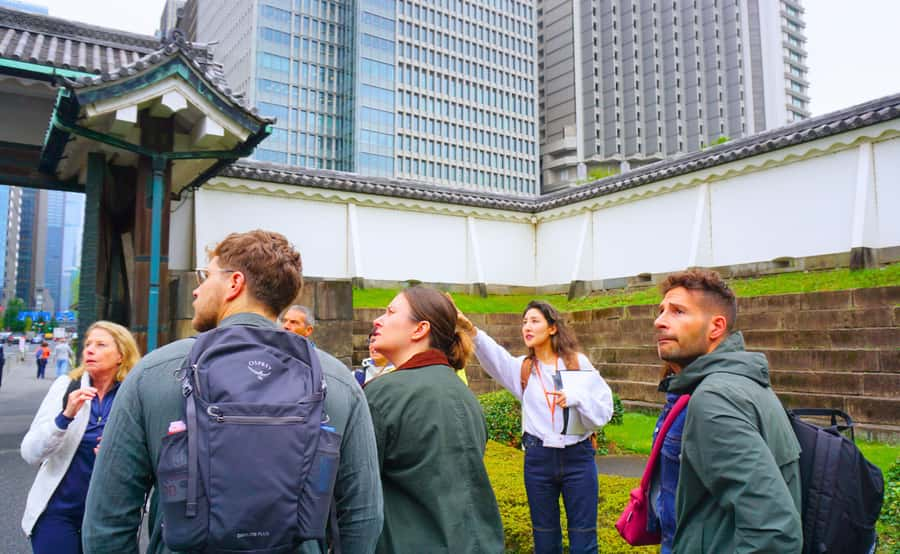
At $40 per person, you are paying for a guided historical walk, not admission to the inner palace. The tour focuses on the eastern gardens and former castle grounds, including the main gate, barracks, garden features, koi, and traces of Edo Castle. The guide’s explanations are the main value: they give meaning to sights that might otherwise be easy to pass without understanding.
For someone who wants a quick orientation to the history of the site and its place in Japan, that can be a fair use of your time and money. The combination of a clear route and opportunities to ask questions is more useful than simply strolling through the gardens without context, particularly if this is your first visit.
The value depends on what you expect. You are not paying for access to the inner palace, and this is not an in-depth visit to every part of the Imperial Palace complex. The main castle is gone, too, though the guide’s explanation and the miniature structure help fill in the picture. If you want to enter palace interiors or see a standing castle, this tour does not provide that.
The language question also affects value. A guided walk depends on understanding the guide, so confirm the language before booking rather than assuming the title is decisive. The tour offers reserve-and-pay-later booking and full refunds for cancellations made up to 24 hours in advance, which provides some flexibility if plans change.
Practical details for a smoother visit
Wear clothing suited to the weather. The tour takes place in good or bad weather, so bring what you need for an outdoor walk, such as rain protection when the forecast calls for it. No specific duration or distance is provided, so check with the operator if you need those details to plan your day.
Arrive on time. If you are more than 10 minutes late, the group may begin without you. That makes the meeting point worth finding in advance: go to Wadakuramon Fountain Park and look for the Starbucks near the fountain, where the guide will have a Sunrise Adventure sign.
Smoking, drones, alcohol and drugs, littering, and skateboards are not allowed. These rules are straightforward, but the no-drone rule is especially useful to know if you had planned to take aerial photographs.
Who should book this walk
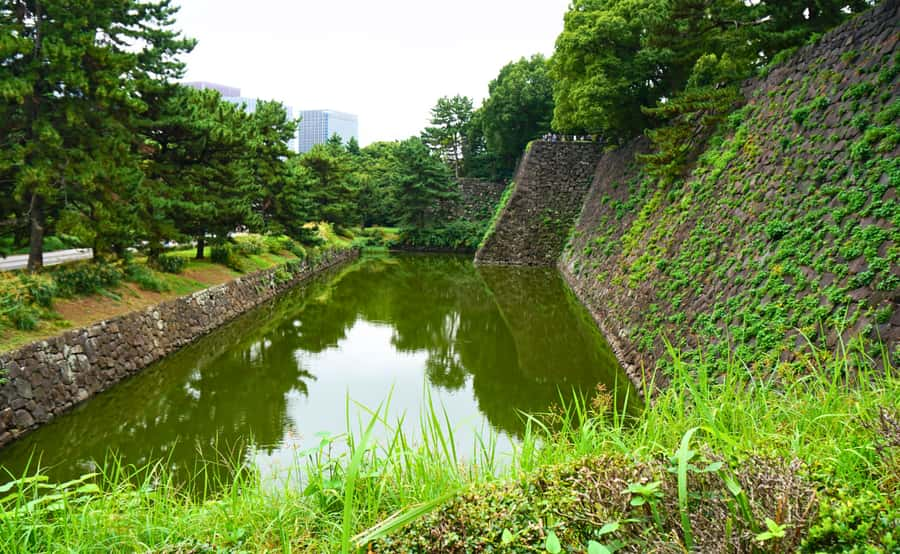
I’d consider this tour if you want a guided introduction to the former Edo Castle grounds and prefer a human explanation to a self-guided stroll. It suits history-minded visitors, curious first-timers, and people who enjoy asking questions along the way. The mix of castle remains, garden details, and discussion of Japan’s wider past gives the walk more substance than a simple photo stop.
It may be less suitable if you need access to the inner palace, want a long independent garden visit, or are looking for a tour in English without confirming the language first. The gardens are the setting, but the guide’s historical account is the main draw, so the language matters.
Should you book?
Book if you want a focused walk through the eastern gardens that connects the old castle grounds to Japan’s history, and if Sunrise Adventure confirms a language you can follow. The special koi, former barracks, castle remains, and lively question-and-answer style give the visit several distinct points of interest for $40.
Hold off until you clarify the language if you are relying on an English guide. And if your priority is entering the inner palace, this is the wrong tour: that access is not included.
FAQ
Is the tour in English or French?
The title says English, but the language details say French. Confirm the language for your chosen date with Sunrise Adventure before booking.
Where does the tour start?
Meet at Starbucks in Wadakuramon Fountain Park, near the fountain. The guide will be holding a Sunrise Adventure sign.
How far is the meeting point from Tokyo Station?
Wadakuramon Fountain Park is a five-to-ten-minute walk from Tokyo Station or Otemachi Station.
Where does the tour end?
The tour ends back at the meeting point.
Does the tour enter the inner palace?
No. Access to the inner palace is not included.
What historical places does the walk cover?
The walk includes the Otemon gate, the former soldiers’ barracks, the eastern gardens, and the former base of Edo Castle, which dates back more than 350 years.
Will I see the old castle?
The main castle no longer exists. You’ll see remains of the former grounds and a miniature structure of the old palace, while the guide explains why the castle is gone.
What is the price?
The tour costs $40 per person.
What happens if I arrive late?
If you do not arrive within 10 minutes of the meeting time, the tour may start without you.
Freshly reviewed in Tokyo
- Tokyo: Toshimaya Sake Brewery Tour with Sake Tasting★ 5.0 · 6 reviews
- :Tokyo,Shibuya /Meiji Shrine tour in KIMONO/English-friendly★ 5.0 · 4 reviews
- Tokyo: Tour Privado por Tokio en español★ 4.3 · 4 reviews
- Tokyo:Tea ceremony experience at Komaba Warakuan★ 4.8 · 9 reviews
- :Tokyo,Shibuya/ Pro Photography in Kimono / English-Friendly★ 5.0 · 26 reviews
- Tokyo:Samurai Training : Swords, Bushido & Mental Discipline★ 5.0 · 6 reviews
- Tokyo:Mt Fuji & Hakone Day Tour with English Speaking Driver★ 5.0 · 26 reviews
- Tokyo:Nikko UNESCO World Heritage Sites Private 1-Day Tour★ 3.8 · 6 reviews
Imperial Palace Tours, compared.

Imperial Palace and Shogun Historical Walking Tour
Read our review →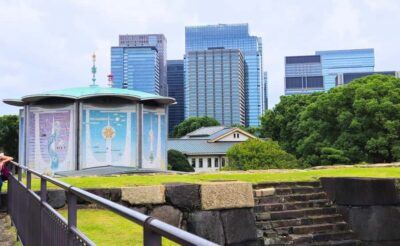
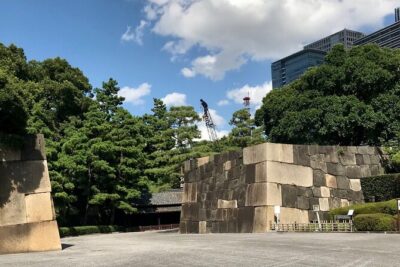
Imperial Palace East Garden and Edo Castle Walking Tour in Tokyo
Read our review →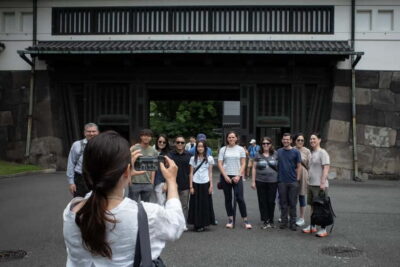
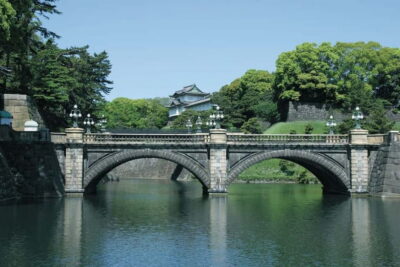
Imperial Palace, Sensō-ji Temple, & Tokyo Tower Tour
Read our review →
Tokyo Castle, Imperial Palace, Shogun & Garden Walking Tour
Read our review →
Tokyo Private Tour! Edo Castle & Imperial Palace East Gardens
Read our review →
Full Tokyo: Meiji Shrine, Imperial Palace, Asakusa & Skytree
Read our review →Browse the lists this tour appears in