
Reviewed · IMPERIAL PALACE TOURS
Tokyo Castle, Imperial Palace, Shogun & Garden Walking Tour
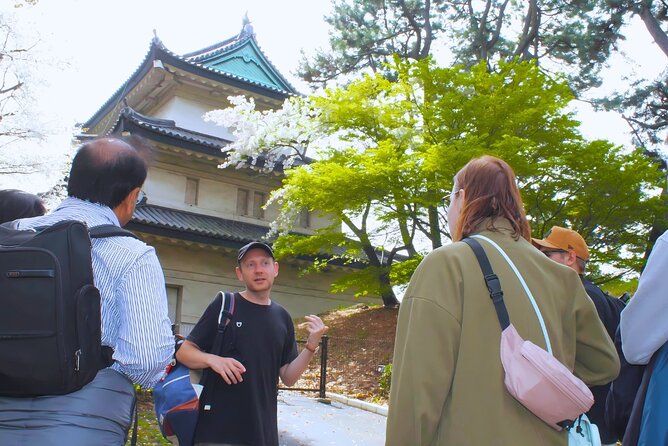
Tokyo’s Imperial Palace grounds are a place where the scale of old Edo becomes clear, even though the palace buildings themselves are not open to the public. This two-hour walk takes you through the East Gardens and the remains of Edo Castle, where a guide helps connect stone walls, gates, and garden paths to the people who once ruled Japan.
I like two things in particular: the guide supplies the historical context that the quiet grounds don’t explain on their own, and the small-group format leaves room for questions and photos. Guides such as Natsumi, Mika, and Lakki have been praised for their clear explanations and engaging style.
The main consideration is expectation. You’ll see gardens, ruins, and castle foundations, not the Emperor’s residence or a rebuilt castle. If you come hoping for lavish palace rooms, this is the wrong tour; if you want a grounded introduction to Edo-era Japan, it makes much more sense.
- Ōtemon Gate is the entrance point for a walk through the old castle grounds.
- Edo Castle remains tell a story of power and defense, though little of the original palace architecture survives.
- Ninomaru Garden offers a quieter, more scenic stretch, with koi ponds among its appealing details.
- A guide makes the site easier to read, linking the shoguns, emperors, and modern Tokyo.
- The inner palace is off limits, and group-size information varies between a stated limit of 10 and 15.
At Ōtemon Gate, the old castle begins to make sense
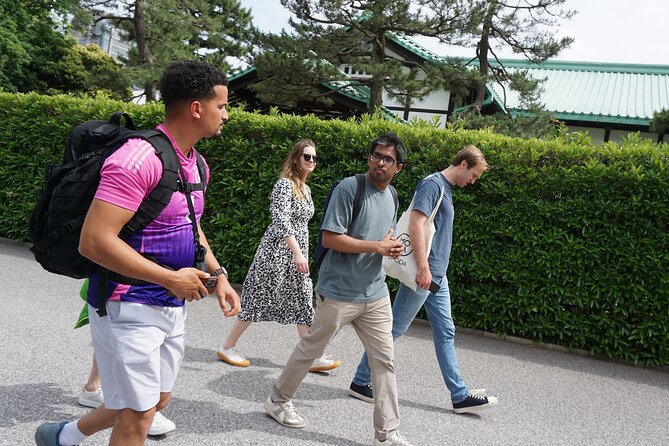
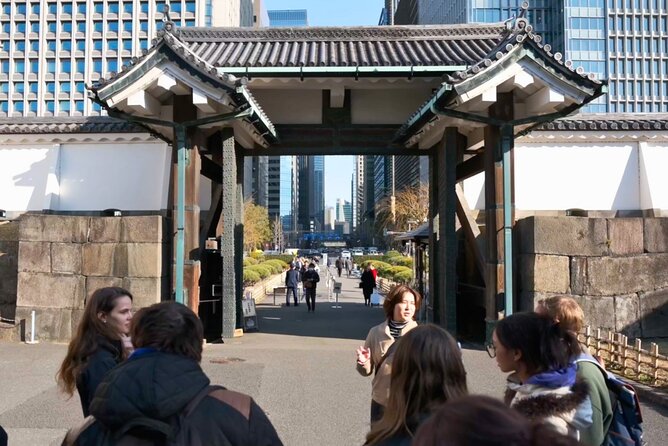
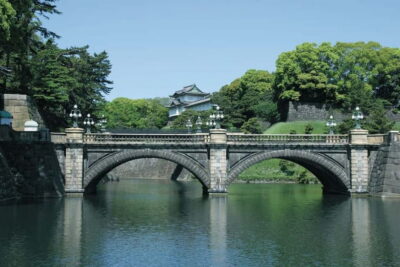
The tour starts at the Starbucks Coffee in Wadakura Fountain Park, near the Imperial Palace grounds. From there, you walk with your guide toward Ōtemon Gate, the grand entrance to the former Edo Castle complex. The route is part of the experience: you’re not simply heading to a garden, but entering the footprint of a center of political power.
The gate and its surrounding remains give you a first look at how the site was built to control access. You’ll also visit guardhouse ruins, a useful reminder that this was a working stronghold as well as a seat of government. One guide has even shared practical details about castle defenses, the kind of subject that can make a wall or entrance feel less like scenery and more like a purposeful piece of engineering.
The tour’s appeal is not a parade of intact buildings. The original palace structures were destroyed and not rebuilt, leaving foundations, stonework, and ruins in place of the grand interiors some visitors expect. A guide can help you imagine the former layout and explain what you’re seeing, but you should arrive ready to use your imagination.
That distinction matters. The name Tokyo Castle can suggest a restored Japanese castle with towers and rooms to explore. This walk focuses instead on the historic site of Edo Castle, the gardens, and the remnants that remain. The Emperor’s palace itself is not open to the public, so this tour does not include entry to the inner palace.
How a guide brings the Edo period into view
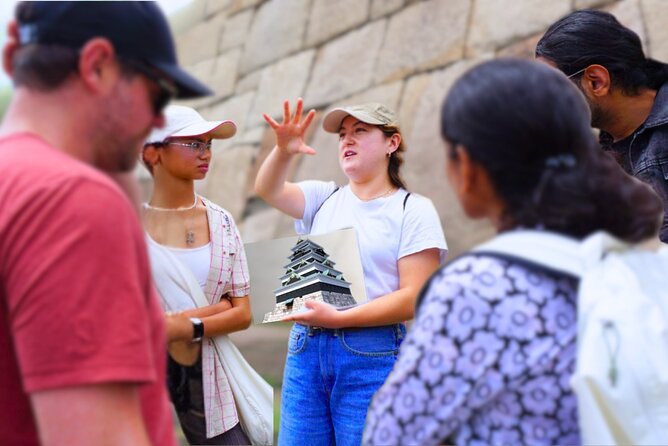
The best part of a guided walk here is the story that joins the physical details. The grounds are extensive, and without context, it can be hard to tell which gate, foundation, or stretch of wall deserves your attention. Your guide explains how the shoguns and emperors shaped Japan’s leadership, and how the old castle site relates to modern Tokyo.
That makes the tour especially useful if you’re new to Japanese history. Rather than asking you to arrive with a stack of background reading, the guide builds the basic framework as you walk. The strongest guides also leave space for questions, use maps or images to clarify the site, and keep the pace open enough for photos.
Natsumi, Mika, and Lakki are among the guides named in accounts of the experience. Their styles may differ, but the qualities that matter most here are clear English, an easy manner, and the ability to make a largely open-air site feel coherent. Some guides also share practical local suggestions, including restaurant or shrine tips, so it can be worth asking questions beyond the castle’s past.
The tour is described as a small-group experience. The group limit is inconsistent in the supplied details: one section says up to 15 people, while another says a maximum of 10. Either way, it is intended to be smaller than a large coach outing, which helps when you want to hear explanations and ask something without having to shout across a crowd. Check the current group size when booking if that detail matters to you.
More Imperial Palace walks in Tokyo:
- Tokyo: Imperial Palace and Shogun Historical Walking Tour
★ 5.0 · 2,251 reviews - Tokyo: Imperial Palace Japanese History Walking Tour
★ 4.9 · 987 reviews - Tokyo: Imperial Palace and Shogun Walking Tour
★ 4.9 · 935 reviews
Ninomaru Garden is the scenic pause
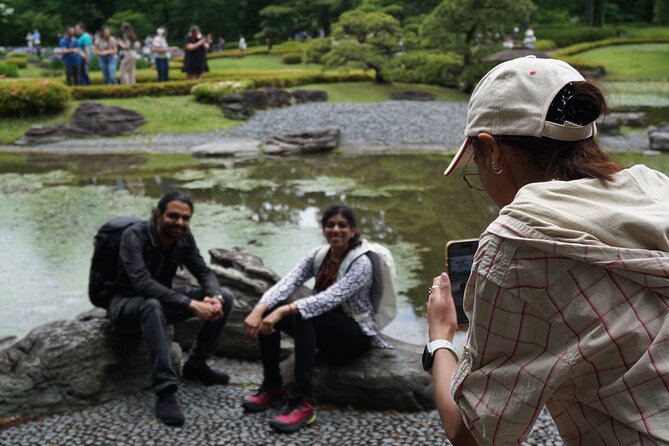
After the gates and castle remains, the walk includes Ninomaru Garden, one of the more restful parts of the route. The gardens are a welcome change of pace from Tokyo’s busy streets, with greenery, ponds, and koi among the details that may catch your eye. In cherry blossom season, the setting can be especially attractive; in other seasons, it still offers a calm place to pause.
I would think of the garden as both a beautiful stop and a chance to absorb the earlier history. The setting is pleasant on its own, but the guide’s explanations give its design and place within the former castle grounds more meaning. You’ll have time for photos, and guides are known to point out good viewpoints and help take pictures for the group.
The grounds can feel different depending on the weather and season. Visitors have enjoyed them in rain, winter, and blossom season, but this is an outdoor walking tour, so dress for the conditions. The site is large enough that heat or cold can make the walk less comfortable if you’re unprepared. There is no dress code, and tattoos are welcome.
What two hours and $31.84 buy you
At $31.84 per person, the value comes mainly from the guide, not from an admission ticket or access to exclusive rooms. The East Gardens tour is listed with free admission, and the inner palace is not included. You’re paying for two hours of guided interpretation, a planned route through the grounds, and the chance to ask questions as the history unfolds.
That can be good value if you want to understand the site rather than simply stroll through it. The grounds are open and peaceful, but the limited number of surviving structures can leave you wondering what you’re looking at. A strong guide closes that gap by explaining the castle’s former role and pointing out details you could easily pass by.
The value is less certain if you prefer to explore at your own pace or already know the history of Edo Castle. A few hours in the gardens without a guide may suit you better if scenery is your main aim. The tour’s price may also feel high if you expect access to palace interiors or a rebuilt castle. Neither is part of the experience.
Two hours is a manageable commitment, and the walk is a useful choice for a first introduction to the palace grounds. It can also work well on a return visit, when you may have more time to seek out context beyond Tokyo’s headline sights. If you’re travelling with children, the guides’ use of stories and historical references has helped keep school-age children engaged, though the experience is still a history-focused walk.
Meeting point, group size, and a few practical details

Meet at Starbucks Coffee in Kokyo Gaien Wadakura Fountain Park, at 3-1 Kōkyogaien, Chiyoda City. The activity ends back at the same meeting point, which makes it straightforward to plan the rest of your day without arranging a separate return trip. The meeting area is near public transportation.
The tour uses a mobile ticket, and confirmation is provided when you book. Most people can participate, but you should be comfortable with a two-hour walk outdoors. The weather matters: if poor weather causes the tour to be canceled, you’ll be offered another date or a full refund.
You can cancel for a full refund up to 24 hours before the start time. Cancellations made less than 24 hours before the tour are not refunded, and changes within that period are not accepted. These cut-off times use local time in Tokyo.
A small practical tip: arrive with enough time to find the Starbucks in the park rather than assuming the meeting point is inside the palace grounds. The tour begins there and then walks to the gate with the guide. Since the group-size details differ, confirm the number with the operator if a strict cap is important to you.
More walking tours in Tokyo:
- Tokyo Tsukiji Fish Market Food and Culture Walking Tour
★ 5.0 · 3,184 reviews - Tokyo: Shinjuku Local Bar and Izakaya Guided Walking Tour
★ 4.9 · 1,794 reviews - Tokyo: Tsukiji Fish Market Food and Walking tour
★ 5.0 · 1,724 reviews - Tokyo: Asakusa Walking Tour with Sensoji Temple Visit
★ 4.8 · 1,583 reviews
Who should book this walk
I’d choose this tour if you want the Imperial Palace grounds to be more than a pleasant green space. It suits curious first-time visitors, history-minded families, and anyone who likes a guide who can turn ruins and foundations into a readable story. It is also a good fit if you want an easy way to see the East Gardens without planning your own route.
I’d skip it if your priority is entering the Emperor’s residence, seeing furnished palace rooms, or photographing a complete castle. Those expectations do not match what’s accessible here. The visible remains are modest compared with the scale of the site’s history, so your enjoyment will depend on whether interpretation matters as much to you as architecture.
Book it if you value context, a calm garden walk, and time for questions. If you mainly want to see a dramatic castle building, spend your money elsewhere and visit the gardens on your own only if they appeal to you as a green break in central Tokyo.
FAQ
Does the tour go inside the Imperial Palace?
No. The inner palace is not open to the public and is not included. The tour visits the East Gardens and the historic grounds of Edo Castle.
Where does the tour start and finish?
It starts at Starbucks Coffee in Wadakura Fountain Park, at 3-1 Kōkyogaien, Chiyoda City, Tokyo. It ends back at the same meeting point.
How long is the walking tour?
The tour lasts approximately two hours.
What places are included on the walk?
The tour includes Ōtemon Gate, guardhouse ruins, Edo Castle remains, and Ninomaru Garden in the East Gardens of the Imperial Palace.
How large is the group?
The tour information gives two different limits: up to 15 people in one section and a maximum of 10 in another. Check the current group limit when booking.
What is the cancellation policy?
You can cancel at least 24 hours before the tour for a full refund. Cancellations or changes made less than 24 hours before the start time are not accepted, and poor-weather cancellations offer a different date or a full refund.
Freshly reviewed in Tokyo
- Tokyo: Toshimaya Sake Brewery Tour with Sake Tasting★ 5.0 · 6 reviews
- :Tokyo,Shibuya /Meiji Shrine tour in KIMONO/English-friendly★ 5.0 · 4 reviews
- Tokyo: Tour Privado por Tokio en español★ 4.3 · 4 reviews
- Tokyo:Tea ceremony experience at Komaba Warakuan★ 4.8 · 9 reviews
- :Tokyo,Shibuya/ Pro Photography in Kimono / English-Friendly★ 5.0 · 26 reviews
- Tokyo:Samurai Training : Swords, Bushido & Mental Discipline★ 5.0 · 6 reviews
- Tokyo:Mt Fuji & Hakone Day Tour with English Speaking Driver★ 5.0 · 26 reviews
- Tokyo:Nikko UNESCO World Heritage Sites Private 1-Day Tour★ 3.8 · 6 reviews
Imperial Palace Tours, compared.

Imperial Palace and Shogun Historical Walking Tour
Read our review →
Imperial Palace East Garden and Edo Castle Walking Tour in Tokyo
Read our review →
Imperial Palace, Sensō-ji Temple, & Tokyo Tower Tour
Read our review →
Tokyo Private Tour! Edo Castle & Imperial Palace East Gardens
Read our review →
Full Tokyo: Meiji Shrine, Imperial Palace, Asakusa & Skytree
Read our review →
Imperial Palace, the history of Japan (ENGLISH GUIDE)
Read our review →Browse the lists this tour appears in