
Reviewed · TOKYO CALLIGRAPHY WORKSHOPS
Tokyo: Calligraphy Workshop & Original T-Shirt Creation
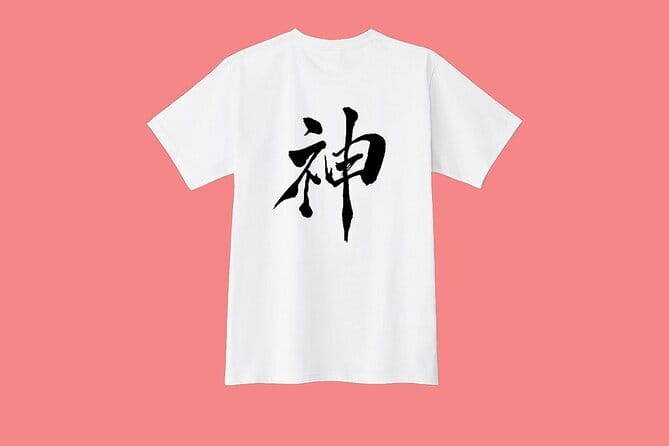
Japanese calligraphy begins with a simple, hands-on ritual: you grind a solid inkstick into ink, then learn to guide a brush across the page. In this two-hour Shinjuku workshop, a professional calligrapher helps you turn your name into kanji and make an artwork to take home. You can also put your design on a T-shirt.
I like two things in particular: the authentic tools and ink-making make this more than a quick souvenir stop, and the English-speaking host helps you understand the language and the meaning behind the characters. The small-group format, limited to 10 people, should also leave room for individual guidance.
One consideration: calligraphy takes practice, so your first brushwork may look more expressive than polished. The T-shirt is optional and not included in the $30 price, and one participant found it expensive. If you skip it, you still leave with your own artwork.
At a glance
- Make ink by hand: Grind a solid inkstick before you begin writing.
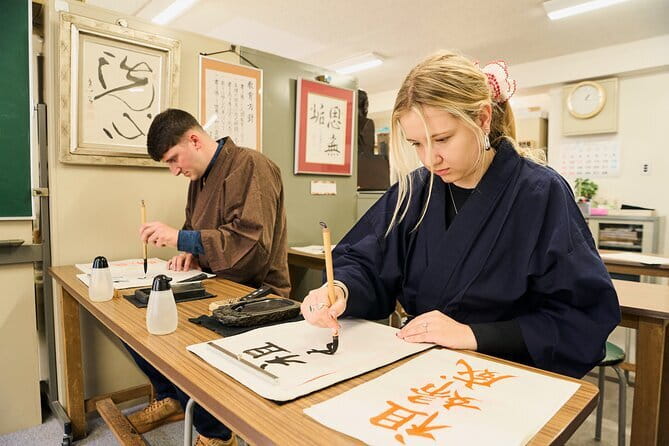
- Turn your name into kanji: Explore character choices and their meanings with help from the calligrapher and English-speaking host.
- Learn before making your final piece: Practice basic brush techniques and stroke order first.
- Add your design to a T-shirt: This is optional, and the shirt costs extra.
- Expect a small class: Groups are limited to 10, with an English-speaking guide.
- Meet near Okubo Station: Find the guide outside the FamilyMart Okubo Station South Exit Store.
A quiet calligraphy break in Shinjuku
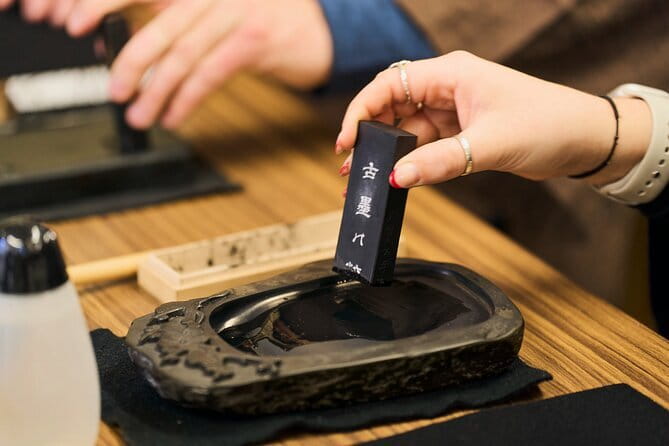
Shinjuku is often associated with bright signs, busy streets, and late nights. This workshop offers a slower, more focused way to spend two hours nearby. You settle in to learn a traditional art, make ink by hand, and practise controlling a brush. The shift in pace is part of the appeal.
The class is built for beginners. You do not need to know Japanese or have an artistic background. The professional calligrapher demonstrates the basics, while an English-speaking host helps translate and explain. The point is not to produce perfect writing in one afternoon. It is to try a demanding art with enough guidance to understand what your hands are doing.
That distinction matters. Japanese calligraphy can look effortless when an expert handles the brush, but it is difficult to copy. The workshop gives you time to practise, ask for feedback, and enjoy the process without needing to arrive with a finished-art mindset.
More calligraphy workshops in Tokyo:
- Tokyo: Calligraphy on Kanji Fan & Scroll with Drink
★ 5.0 · 210 reviews - Let’s experience calligraphy in YANAKA, Taito-ku, TOKYO !!
★ 5.0 · 127 reviews - Experience all of Japanese culture and Japanese food experience classes “origami, udon, Japanese food, green tea, calligraphy” in 4 hours
★ 5.0 · 105 reviews
Finding the meeting point near Okubo Station
The meeting point is the FamilyMart Okubo Station South Exit Store, at 1-23-21 Hyakunincho, Shinjuku-ku. Look for a guide holding a sign marked Local Guide Stars. The class takes place in Shinjuku, and the meeting point is a useful landmark for finding your host before the workshop begins.
Leave a little time to locate the store and guide, especially if you are unfamiliar with the area. The activity information does not give a detailed route from other parts of Tokyo, so check the map pin and plan your train journey before you set out. Confirm the start time when you book, since available times can vary.
Once the group is together, you head to the workshop for the two-hour class. The group limit of 10 is a practical advantage: it gives the instructor a better chance to offer individual help than a large demonstration would.
Changing into workwear and preparing the ink
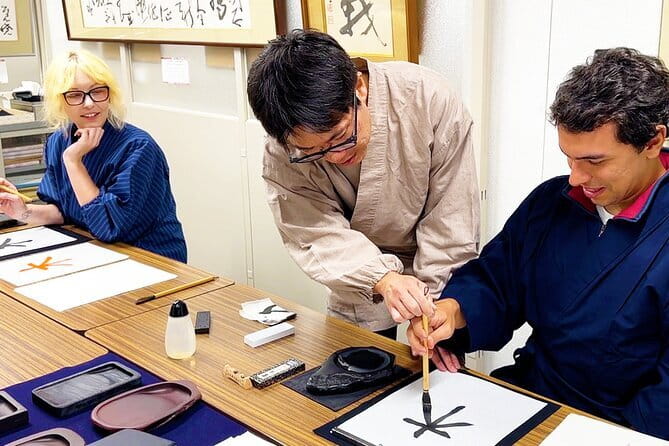
The workshop starts with a change into traditional Japanese workwear. Then you grind a solid inkstick to make ink, using an authentic method rather than reaching straight for a ready-made bottle. This is a small task, but it changes the pace of the class. You begin by preparing materials and paying attention, not by rushing to the finished design.
Several people who took the class found the ink-making process calming. That makes it a good fit if you want a quiet activity between Tokyo’s more energetic sights. You do not need to treat the moment as a formal meditation, though. It is simply a focused, tactile part of learning how calligraphy is done.
Your tools are supplied for use during class. You do not need to bring calligraphy equipment, and the materials help you experience the practice in a more traditional way. You also get an introduction to Japanese writing and the evolution of its characters, so the workshop is about more than making decorative marks.
Practising brushwork before choosing your characters
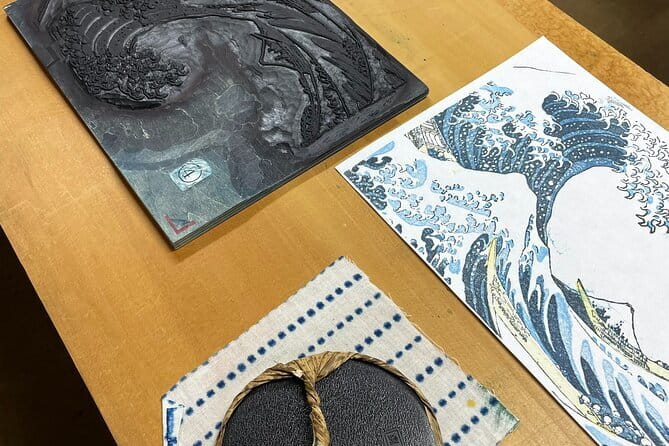
Before making your final piece, you practise basic brush techniques. The instructor explains how to hold and move the brush, and how stroke order shapes the finished character. People new to calligraphy often need time to get used to the way pressure and movement affect a line. The class provides a chance to try, receive feedback, and try again.
The teacher’s guidance is one of the most valuable parts of the experience. Past classes have included calligrapher Sosen, with English translation from Mayuko or Nono. Other sessions have featured hosts such as Hiromi, Aki, Naoto, and Frankie. Staff can vary, but the format pairs calligraphy instruction with English-language support.
Expect the lesson to balance explanation with practice. You learn about the art and writing system, then put that information to use. The teacher may show you how to improve a stroke or arrange characters beside one another. That sort of correction is more useful than simply watching a demonstration, especially when you are holding the brush for the first time.
More hands-on workshops in Tokyo:
- Sushi Making Tokyo Roll and Authentic Japanese Sushi Class
★ 5.0 · 3,971 reviews - Tokyo: Roll and Authentic Sushi Making Class in Asakusa
★ 4.9 · 1,957 reviews - Tokyo Shinjuku Chopsticks Making Class
★ 5.0 · 1,763 reviews - Tokyo: Sushi Making Class in a Happi Coat near a Famous Spot
★ 4.9 · 1,377 reviews
Turning your name into kanji
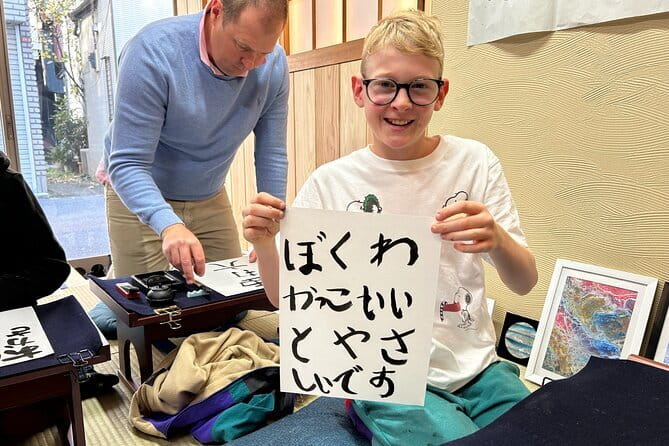
The next step is to transform your name into kanji. This is not simply a matter of translating a name letter by letter. Japanese names and kanji have meanings and ways of being read, and the session helps you explore possible character choices. The teacher can also help with other words that have personal meaning to you.
That part can make the class feel more individual. You are not just copying a standard example; you are choosing characters and learning what they suggest. If you have a word in mind, think about it before you arrive. You can ask what is possible and discuss options with the instructor and host.
There is no need to expect a single exact conversion for every name. The workshop is an introduction to how names can be represented, not a promise that there is one universally correct set of characters. Treat the choice as part of the learning and creative process. The English-speaking guide helps explain the possibilities, while the calligrapher shows you how to write them.
Making artwork, with a T-shirt as an extra
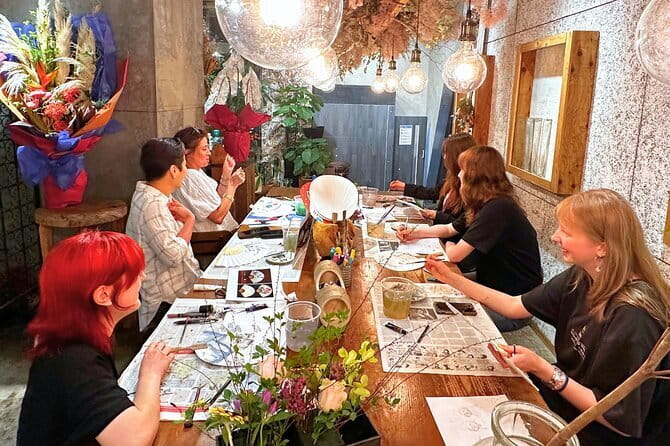
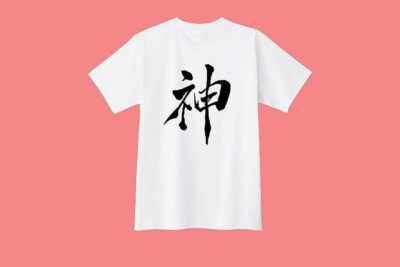
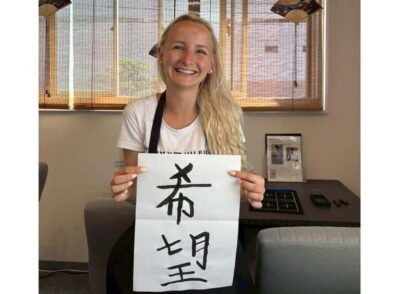
Once you have practised, you create an original calligraphy piece to take home. The T-shirt option lets you write your kanji directly onto a shirt and make a wearable souvenir. It is a memorable idea, but it is not included in the $30 workshop price. Bring that extra cost into your decision before you book.
You can still take home your own artwork without choosing the shirt. In some sessions, the teacher has also made a neat version of each participant’s name on paper to keep. That is a useful alternative if you would rather leave with a finished piece than wear your own first attempt.
Keep your expectations realistic if you choose the T-shirt. Calligraphy is hard to master in a short class, and your design may be charmingly imperfect. That is not a flaw in the activity; it is the nature of trying a skilled art for the first time. If you want a crisp, professionally finished design, the shirt may not be the right souvenir. If you value the memory of making it yourself, the rough edges can be part of the fun.
What $30 buys you
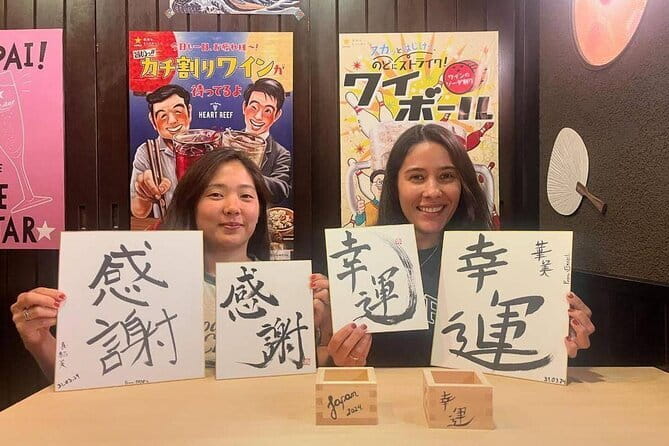
At $30 per person, the workshop includes two hours of instruction, an English guide, calligraphy supplies to use during class, and your own artwork to take home. You also get the chance to learn from a professional calligrapher, make ink, practise brushwork, and create a personal kanji design.
That is a fair package for an activity that combines instruction with a take-home result. The value is not just in the final sheet of paper. You are also paying for the time to understand the tools and techniques, plus language help that makes the lesson accessible if you do not speak Japanese.
The main extra expense is the optional T-shirt. One participant described it as quite expensive, though still worth the experience. Since no shirt price is specified here, ask about the cost before committing to that option. You can make a clear decision once you know whether the added price suits your budget.
Who will enjoy this class most

This workshop suits you if you enjoy making things, want a closer look at Japanese language and culture, or need a calm activity during a busy Tokyo visit. It also works for art lovers and curious beginners. You do not need to arrive with calligraphy experience, and the class is designed to be enjoyable for children.
Families may find the guided format helpful. A parent who brought a toddler found the instructor patient, and families have also taken the class with older children. Still, a two-hour art session requires some time and attention. If you are booking for a young child, consider whether they are likely to enjoy sitting, practising, and working carefully with ink.
Couples and solo visitors can both get something from the small-group setting. A solo participant may receive plenty of direct attention if the class is quiet, while a pair can compare character choices and finished work. Group size is capped at 10, but the actual number of people in a session can vary.
It is less suited to you if you want a fast, polished souvenir or a broad sightseeing tour. This is a hands-on lesson in one place, not a walking tour of Shinjuku. The reward comes from slowing down and learning a skill, not ticking off several landmarks.
Practical details before you book
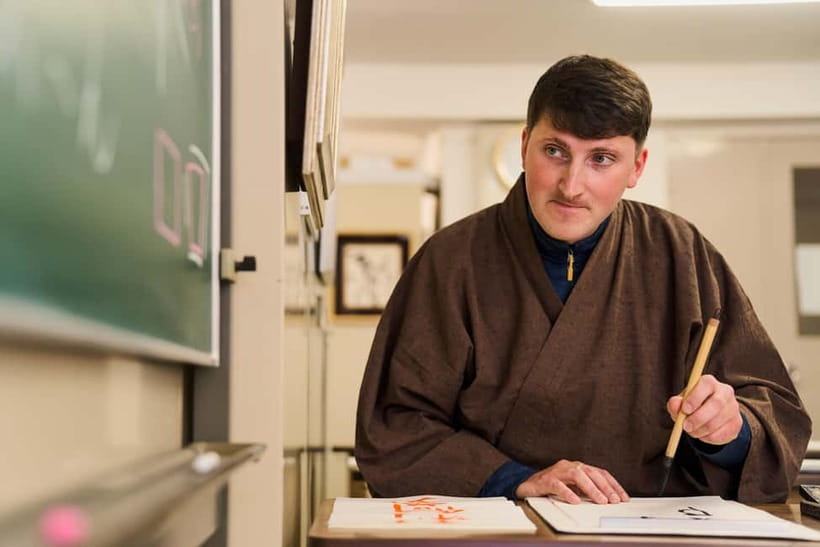
Allow two hours for the class, and check the available start times before choosing a date. The workshop is in Shinjuku, with the meeting point at the FamilyMart by Okubo Station’s South Exit. Your guide will have a Local Guide Stars sign.
The group is limited to 10 participants, and the live guide speaks English. Calligraphy supplies are provided for use during class, and you take home your artwork. The T-shirt is not included. The activity offers free cancellation up to 24 hours before the start, and you can reserve now and pay later.
Should you book the calligraphy workshop?
Book it if you want a personal, creative activity and are happy to learn through practice rather than produce flawless calligraphy straight away. The ink-making, character lesson, and one-to-one feedback give the two hours substance, while the English-speaking host makes the class accessible.
I would especially recommend it to anyone curious about Japanese writing, people looking for a quieter counterpoint to sightseeing, and families whose children enjoy art activities. Decide in advance if you want the T-shirt, and check its extra cost. If you are content with a paper artwork, the $30 class already gives you a memorable souvenir and a clearer understanding of what goes into Japanese calligraphy.
FAQ
How long is the workshop?
The workshop lasts two hours.
Where is the meeting point?
Meet at the FamilyMart Okubo Station South Exit Store, at 1-23-21 Hyakunincho, Shinjuku-ku, Tokyo. Look for a guide holding a Local Guide Stars sign.
Is the workshop in English?
Yes. The live guide speaks English, and the experience is offered in English.
Do I need calligraphy experience?
No experience is specified as a requirement. The class includes basic brush practice before you make your own piece.
Is the T-shirt included in the price?
No. The original T-shirt is not included in the $30 price and is optional.
What is included in the $30 price?
The price includes the two-hour experience, an English guide, calligraphy supplies to use during class, and your own artwork to take home.
Can I cancel for a refund?
You can cancel up to 24 hours in advance for a full refund.
Freshly reviewed in Tokyo
- Tokyo: Toshimaya Sake Brewery Tour with Sake Tasting★ 5.0 · 6 reviews
- :Tokyo,Shibuya /Meiji Shrine tour in KIMONO/English-friendly★ 5.0 · 4 reviews
- Tokyo: Tour Privado por Tokio en español★ 4.3 · 4 reviews
- Tokyo:Tea ceremony experience at Komaba Warakuan★ 4.8 · 9 reviews
- :Tokyo,Shibuya/ Pro Photography in Kimono / English-Friendly★ 5.0 · 26 reviews
- Tokyo:Samurai Training : Swords, Bushido & Mental Discipline★ 5.0 · 6 reviews
- Tokyo:Mt Fuji & Hakone Day Tour with English Speaking Driver★ 5.0 · 26 reviews
- Tokyo:Nikko UNESCO World Heritage Sites Private 1-Day Tour★ 3.8 · 6 reviews
Tokyo Calligraphy Workshops, compared.
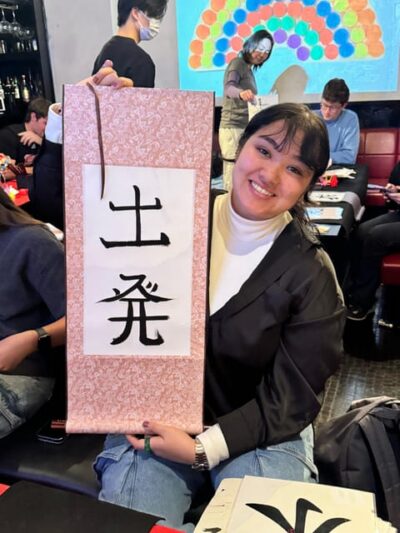
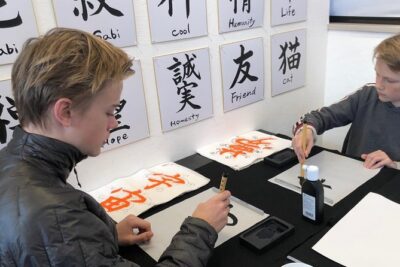
Let’s experience calligraphy in YANAKA, Taito-ku, TOKYO !!
Read our review →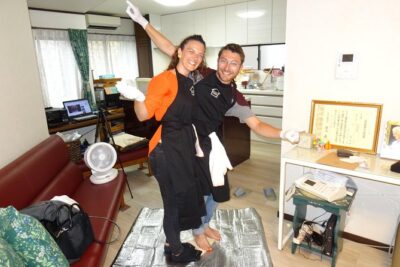
Calligraphy Workshop & Original T-Shirt Creation
Read our review →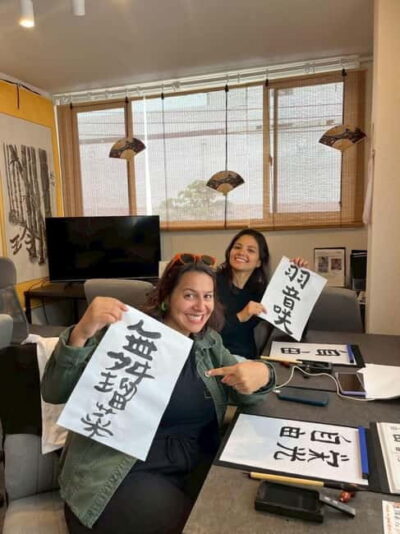
Calligraphy &Make your original folding fan in Asakusa
Read our review →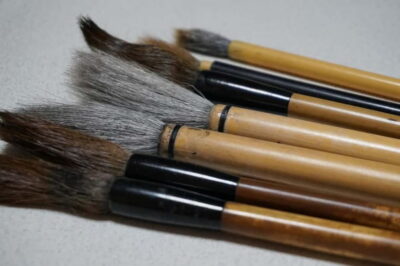
Calligraphy Workshop Craft Your Own Art in Asakusa
Read our review →
Calligraphy & print your calligraphy on a T-shirt.
Read our review →Browse the lists this tour appears in