
Reviewed · TOKYO COOKING CLASSES
Private Home Cooking in Yanaka – Local Flavors in a Warm Setting
Yanaka is a good place to learn the everyday side of Japanese food. In this two-hour private cooking class, you work alongside an instructor in a small, homey kitchen rather than simply ordering a meal and watching it arrive.
I like two things in particular: you get hands-on instruction and personal attention, and the menu can be discussed ahead of time, including requests for vegetarian, vegan, or allergy-related adjustments. The English-speaking instructors also explain the purpose behind ingredients and methods, not just the next step in a recipe.
One practical consideration: the meeting point can be tricky to spot, and this is a home-style studio rather than necessarily someone’s private residence. Give yourself time to find the Yanesen Tourist Information & Culture Center, and ask at the nearby coffee shop if you need help.
- Cook dishes you can make again: Classes have covered everyday Japanese favorites such as oyakodon, nikujaga, miso soup, tempura, sushi, gyoza, and bento.
- Talk through the menu beforehand: Tell the provider what you would like to cook, and share allergies or dietary requests at least two days ahead.
- Expect a small, personal class: It is a private activity for your group. If you book solo, you may have one-to-one instruction.
- Learn the why, not only the how: Instructors explain ingredients and techniques, from making dashi to checking frying oil temperature.
- Make time for Yanaka Ginza: The cooking space is about 100 meters from the shopping street, making a neighborhood walk an easy add-on.
- Plan for two hours and $122.23 per person: Group discounts are available, though the discount amount is not specified.
A home-style cooking class in Yanaka
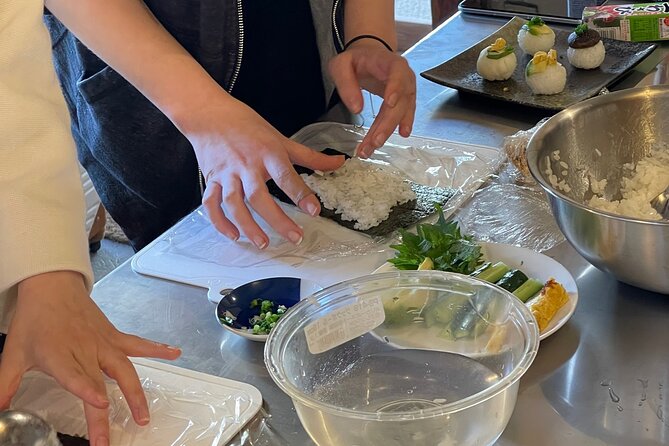
This experience is built around participation. You prepare ingredients, cook with guidance, and sit down to eat the dishes you have made. That is a better way to understand Japanese home cooking than simply taking a restaurant meal at face value: you see how familiar ingredients work together and get a chance to ask questions as you go.
The class takes place in a small local kitchen associated with the Yanesen Tourist Information & Culture Center. The setting is described as homey, but one participant makes an important distinction: it is not necessarily an instructor’s actual home. If a private residence is central to your idea of the experience, keep that in mind when booking.
The class is private for your own group, which gives the instruction room to follow your pace. You can ask for a cooking step to be explained again, or spend more time on a technique that interests you. A solo booking may mean one-on-one instruction.
The instructors are English-speaking, and Yuki is a name that comes up often in connection with the classes. The provider also describes instructor Ms. Yajima as a Yanesen-area local with cooking-instructor experience. Names vary among the instructors mentioned, so it is sensible to confirm who will lead your session if that matters to you.
Choose a menu that suits your appetite
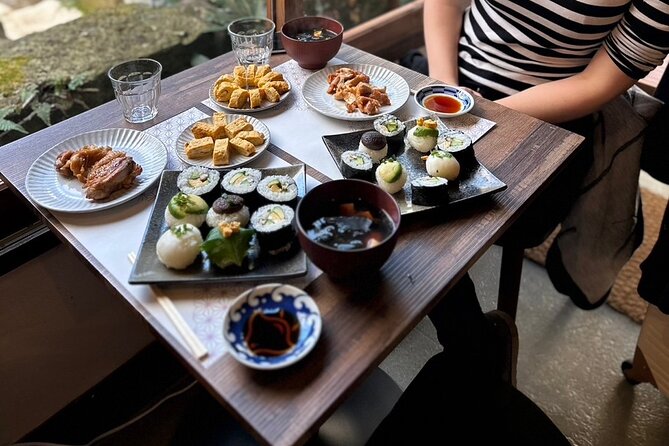
The class is not tied to one fixed menu. You are asked to share your requests when you reserve, and the provider describes two workshop formats: Plan A lets you choose one main dish, while Plan B lets you choose two appetizers. The range of dishes prepared in classes includes miso soup, oyakodon, nikujaga, tonkatsu, tempura, okonomiyaki, sushi, gyoza, udon, soba, and miso-glazed eggplant.
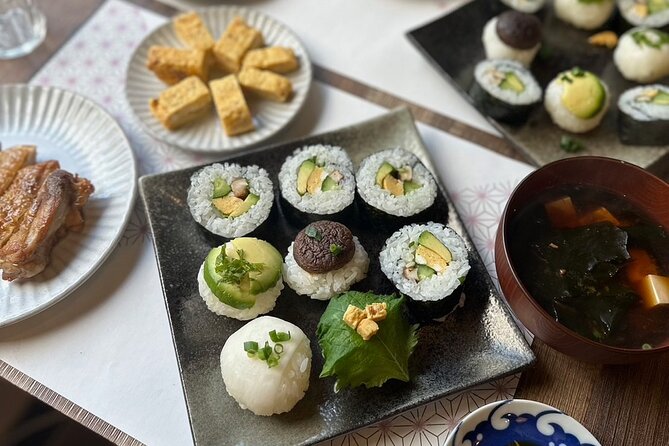
Bento-making is another option. It can involve preparing several items, rolling an egg omelet in a square pan, making onigiri rice balls, and arranging the food in a box. That gives you a little more than a collection of recipes: you learn how separate dishes come together into a Japanese-style packed meal.
The menu should be agreed on ahead of time rather than left to chance. The provider asks you to send requests through the contact form up to two days before class. This is also the time to discuss allergies, vegetarian or vegan needs, or another food preference. Be specific, and wait for confirmation before assuming a particular dish can be accommodated.
You may not be able to fit every dish you want into a two-hour session. A focused menu is likely to leave you with more time to take part in each step and ask questions. If you have a particular priority, such as learning to make sushi rolls or getting comfortable with tempura, mention it before the class.
More cooking classes in Tokyo:
- Sushi Making Tokyo Roll and Authentic Japanese Sushi Class
★ 5.0 · 3,971 reviews - Tokyo: Roll and Authentic Sushi Making Class in Asakusa
★ 4.9 · 1,957 reviews - Tokyo Shinjuku Chopsticks Making Class
★ 5.0 · 1,763 reviews
From chopping board to shared meal
Expect to do the work yourself. The lesson can involve chopping, slicing, mixing, grinding, and cooking, with the instructor offering feedback along the way. The value is in trying the techniques, not watching a demonstration from across the room.
A class built around miso soup, for example, can include making dashi from scratch with ingredients such as bonito flakes and konbu kelp, then adding wakame and miso. That gives you a practical introduction to the broth that underpins many everyday dishes. You can ask about regional differences, too: one instructor used the stronger, darker miso associated with Nagoya as a way to explain how miso varies.
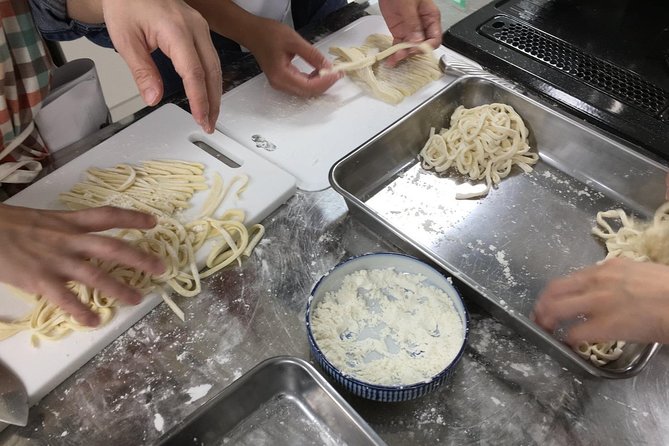
Other dishes bring their own useful lessons. Tempura offers a chance to learn how to judge oil temperature, while rolled sushi gives you practice handling rice and shaping a roll. Udon-making can include kneading dough with your feet inside zip-top bags, a playful technique that also makes the process memorable.
The pace and exact sequence depend on your chosen menu, so do not expect every class to include all of these examples. In the end, you eat what you have prepared. The amount can be generous, and the meal itself is part of the class, not an unrelated restaurant stop.
Local food talk adds context
A good cooking lesson explains why a method matters. That is especially useful with Japanese home dishes, where a simple-looking bowl of soup or vegetable side can depend on careful seasoning and preparation. Instructors talk about ingredients, cooking tools, and alternative ways to use fresh ingredients, while you work.
The conversation can go beyond food. The class is intended to introduce Yanaka life and local habits, and the instructor team can talk about the neighborhood as you cook. Since the class is small, it is easier to ask questions about daily routines or share something about your own food culture in return.
That exchange can be especially helpful if this is your first visit to Japan. A cooking class gives you a relaxed setting to get used to talking with a local host, while the recipes offer a practical frame for learning about the culture. It is not a formal lecture, and the experience will be shaped by your menu and conversation.
The recipes are meant to be approachable at home. Several dishes use ingredients that participants have found in their local markets outside Japan, and some classes provide a recipe plan to take away. Ask whether written recipes are included in your specific session if that is important to you.
Finding the kitchen and exploring Yanaka
The listed meeting point is the Yanesen Tourist Information & Culture Center at 3-chōme-13-7 Yanaka, Taito City. The activity ends back at the meeting point. The cooking space is about 100 meters from Yanaka Ginza, so it is easy to pair the class with a walk through the area before or after your meal.
Finding the entrance can take a little attention. The location is described as being on a side street off Yomise Street, and one helpful landmark mentioned is a small coffee shop called ko hi ko jo. If you are unsure, ask at the shop or contact the provider. The center is near public transportation, but the address and nearby landmark are more useful than assuming the cooking space will be obvious from the main street.
Yanaka makes a fine change of pace from Tokyo’s larger shopping and entertainment districts. The class is in a residential part of the city, and Yanaka Ginza offers a nearby stretch of local shops and places to eat. Leave enough time to wander rather than racing straight from the kitchen to your next appointment.
More tours and experiences in Tokyo:
- Mt Fuji and Hakone 1-Day Bus Tour Return by Bullet Train
★ 5.0 · 26,383 reviews - 1-Day Tokyo Bus Tour
★ 5.0 · 14,250 reviews - Tokyo: teamLab Planets TOKYO Digital Art Museum Entry Ticket
★ 4.6 · 9,779 reviews - Mt Fuji & Hakone Cruise, Drum Show Bullet Train 1 Day from Tokyo
★ 4.0 · 7,413 reviews
Is $122.23 good value?
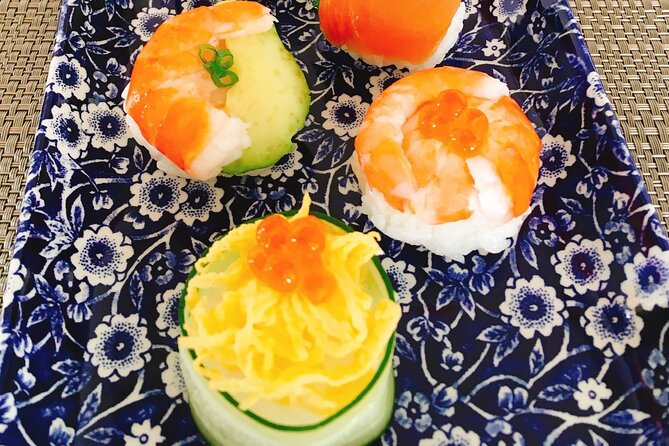
At $122.23 per person, this is not a cheap lunch. You are paying for a two-hour private lesson, food and ingredients for the cooking session, an English-speaking instructor, and the chance to make a meal rather than just eat one. For a pair or a family that values personal instruction and a shared activity, that can be a better use of money than booking another standard restaurant meal.
The strongest value is the combination of cooking practice and cultural conversation. You can choose dishes that interest you, get live feedback, and take home methods you can try again. If you want only a quick taste of Japanese food, a restaurant will cost less and require less planning.
Group discounts are offered, but the exact savings are not provided. The advertised per-person price is therefore best treated as a guide, with the final cost depending on your booking details. The class has a 99% recommendation rate and a five-star rating from 173 reviews, a strong record, though one reported last-minute cancellation due to an instructor’s illness shows that disruptions are possible.
Who will enjoy this class most?
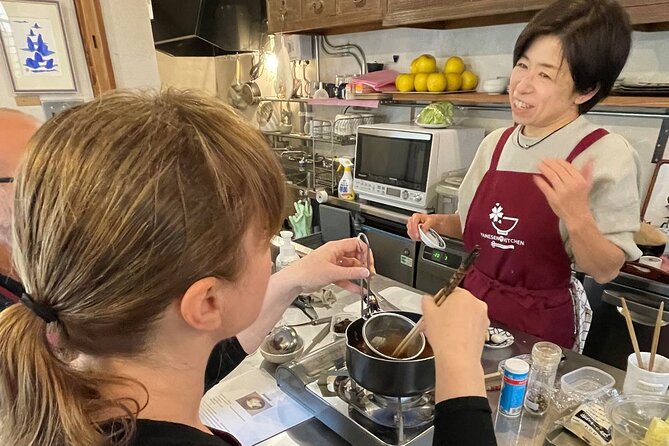
I would choose this class if you like cooking, want a more personal activity than a group sightseeing tour, or have been wondering how to make Japanese dishes at home. It suits beginners as well as confident cooks: the instructions are designed to be easy to follow, while the explanations of ingredients and technique can still offer something to people who already cook often.
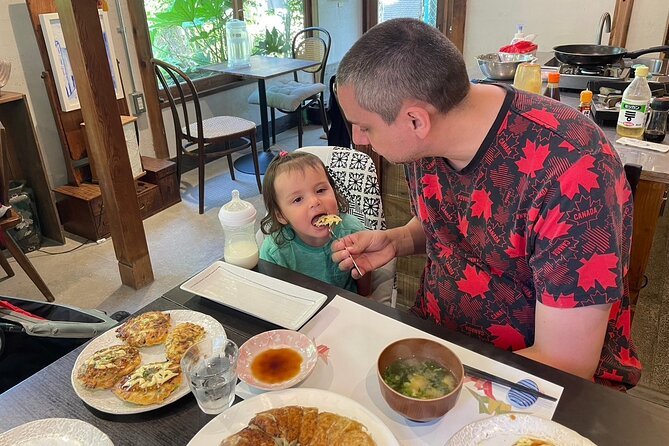
Families can also find plenty to do, especially when the menu is arranged with children in mind. The activity is private, so your group does not have to keep pace with strangers. If you are traveling alone, that same format may give you focused instruction and an easy way to talk with a local host.
It is less suitable if you need a guaranteed specific instructor, a particular menu that has not been confirmed, or a strictly private-home setting. Share your priorities before booking, and make sure the provider confirms the menu and any dietary arrangements.
Should you book it?
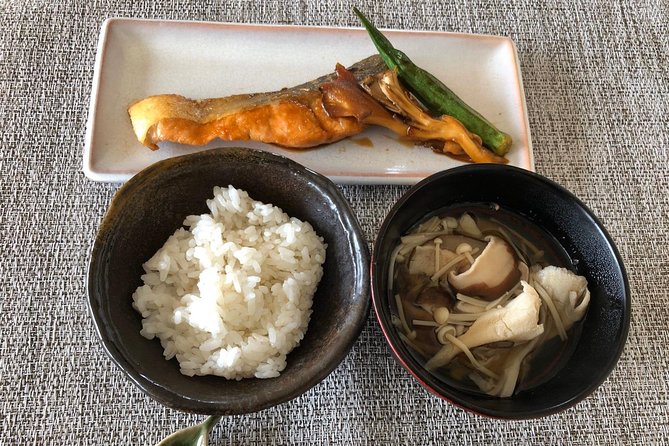
Book this class if you want to leave Tokyo with more than a food photo: you will have practiced a few techniques, eaten the meal you helped prepare, and had time to talk about daily life in Yanaka. The personal format and adaptable menu are the main reasons to choose it.
Skip it if you would rather spend two hours sightseeing, or if the $122.23 price feels high for a single meal. For cooks and curious eaters, though, it offers a useful mix of hands-on learning, local conversation, and a convenient starting point for exploring Yanaka Ginza.
FAQ
How long is the cooking class?
The experience lasts approximately two hours.
Where does the class meet?
The listed meeting point is the Yanesen Tourist Information & Culture Center at 3-chōme-13-7 Yanaka, Taito City, Tokyo. The activity ends back at the meeting point.
Can I request a particular menu?
Yes. You can share menu requests through the contact form, with requests discussed up to two days before the class. The described formats allow you to choose one main dish or two appetizers.
Can the class accommodate allergies or vegetarian and vegan diets?
The provider says allergies, vegetarian and vegan requests, and other food requests can be arranged. Tell them about your needs when you reserve and give details.
Is this a private class?
Yes. Only your group participates. A solo booking may be a one-to-one class.
What is the cancellation policy?
You can cancel at least 24 hours before the start time for a full refund. Cancellations or changes made less than 24 hours before the start time are not accepted for a refund or change. If the class is canceled because of poor weather or because the minimum number of participants is not met, you are offered another date or experience, or a full refund.
Freshly reviewed in Tokyo
- Tokyo: Toshimaya Sake Brewery Tour with Sake Tasting★ 5.0 · 6 reviews
- :Tokyo,Shibuya /Meiji Shrine tour in KIMONO/English-friendly★ 5.0 · 4 reviews
- Tokyo: Tour Privado por Tokio en español★ 4.3 · 4 reviews
- Tokyo:Tea ceremony experience at Komaba Warakuan★ 4.8 · 9 reviews
- :Tokyo,Shibuya/ Pro Photography in Kimono / English-Friendly★ 5.0 · 26 reviews
- Tokyo:Samurai Training : Swords, Bushido & Mental Discipline★ 5.0 · 6 reviews
- Tokyo:Mt Fuji & Hakone Day Tour with English Speaking Driver★ 5.0 · 26 reviews
- Tokyo:Nikko UNESCO World Heritage Sites Private 1-Day Tour★ 3.8 · 6 reviews
Tokyo Cooking Classes, compared.
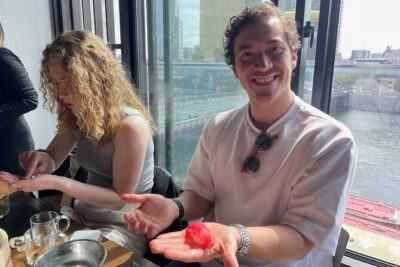
Sushi Making Tokyo Roll and Authentic Japanese Sushi Class
Read our review →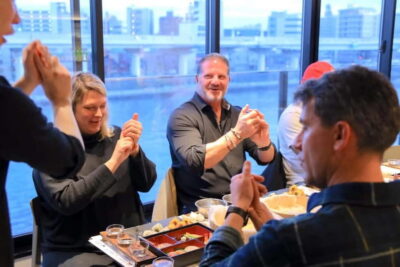
Roll and Authentic Sushi Making Class in Asakusa
Read our review →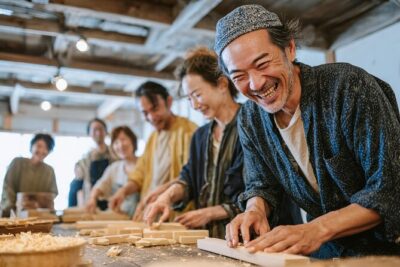
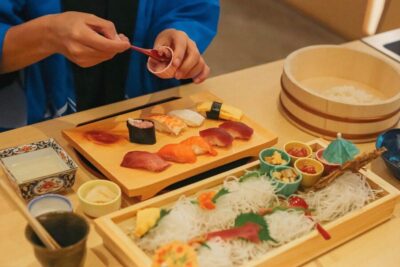
Sushi Making Class in a Happi Coat near a Famous Spot
Read our review →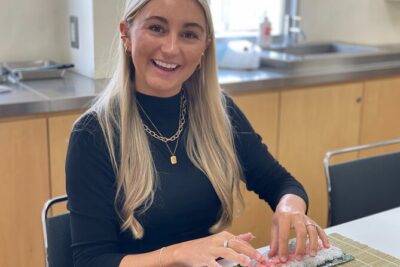
Tokyo Sushi Making Class in Tsukiji with Professional Chef
Read our review →
Ramen & Gyoza Cooking Class in Tokyo with Local Supermarket Visit
Read our review →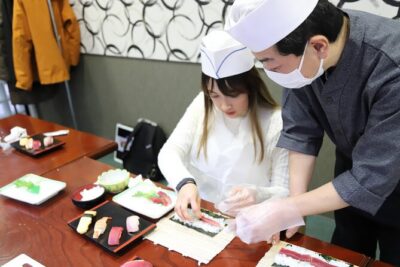
Tsukiji Fish Market Guided Tour and Sushi Making with Pro Chef
Read our review →
Matcha Making Class in Tokyo with Authentic Japanese Sweets Set
Read our review →Browse the lists this tour appears in