
Reviewed · TOKYO KIMONO EXPERIENCES
Tokyo: Calligraphy Experience with yukata or Samue
Japanese calligraphy gives you more than a souvenir: it asks you to slow down, steady your hand and think about each mark. In this 90-minute Tokyo class, a professional calligrapher teaches the basics, then helps you make a piece of your own. You can also try a yukata or Samue, and finish with Japanese tea.
I like two things in particular: you get real practice with the brush, not just a demonstration, and the class explains the history and meaning behind the characters. Your finished work comes home with you, and instructors such as Hana, Koushi and Tomo have been praised for patient, step-by-step teaching.
One consideration: calligraphy takes concentration, and the listed age guidance says the activity is not suitable for children under 4 or people over 70. The meeting point details are landmark-based, so check the exact location before setting out.
What makes this calligraphy class worth considering
- A small class, capped at 10: You have room to practise and ask questions rather than simply watch from the back.
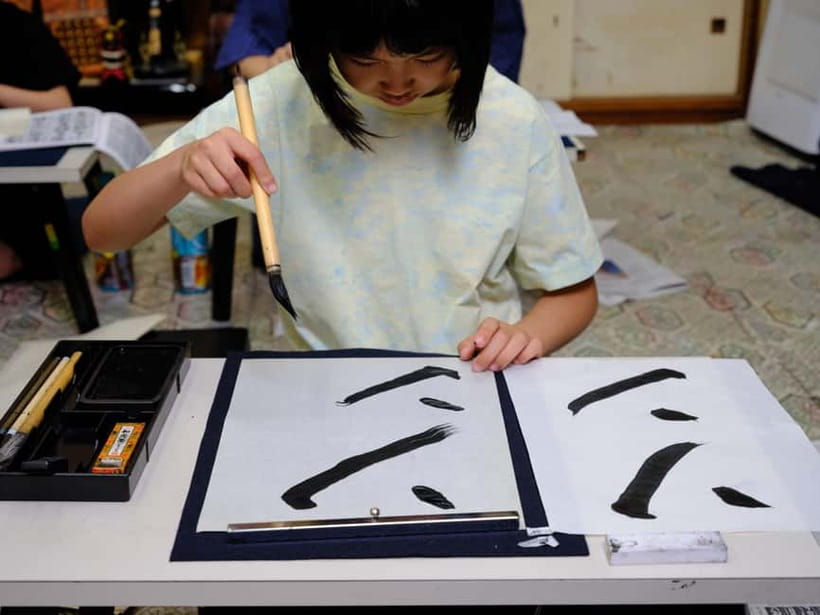
- A brush in your own hand: Learn basic strokes and how to use the brush before attempting a character.
- Culture behind the kanji: The instructor explains the history, spirituality and meaning associated with the characters.
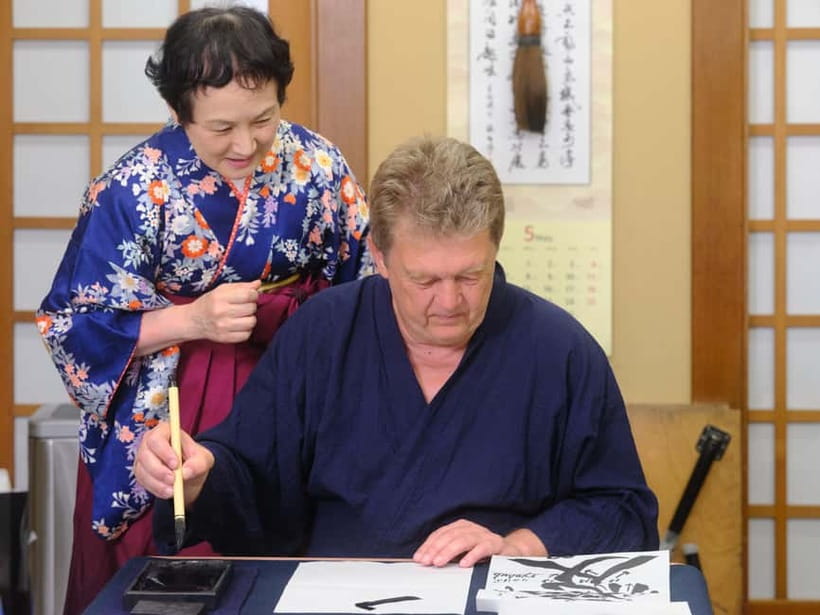
- A wearable introduction to tradition: You may try a yukata or Samue as part of the experience.
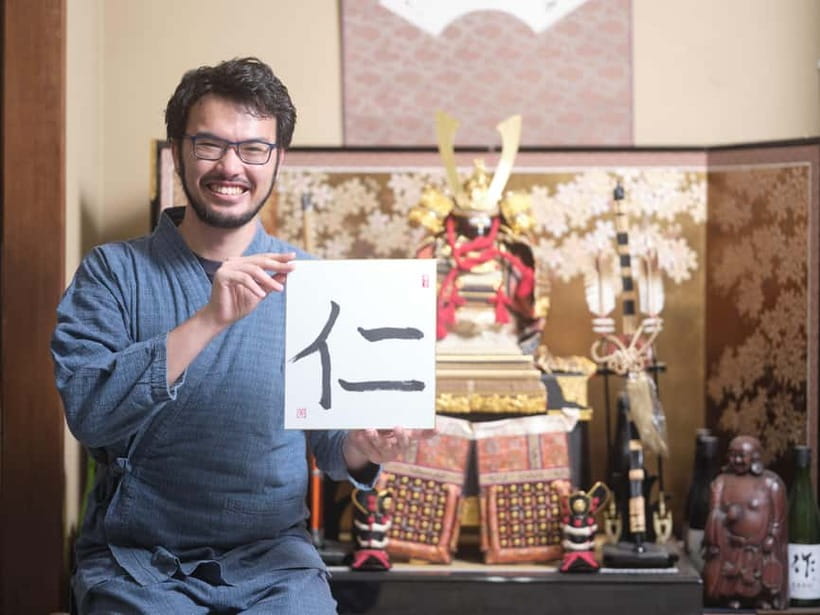
- A personal keepsake: Take home the calligraphy you create, and instructors may also write your name for you.
- Tea is part of the pause: Japanese tea gives the 90-minute session a quieter, unhurried finish.
From first brushstroke to finished artwork
This is a guided introduction, not a test of artistic talent. You begin by meeting the instructor and getting settled, with Japanese tea served during the experience. Some classes have also included snacks, but tea is the item specifically included.
If you choose to wear a yukata or Samue, the change of clothes adds a tactile, visual element before you begin working. People have described trying kimono-style clothing and Samue, but the exact garment offered may vary. Treat it as a pleasant extra, not the main event: the real focus is learning to write.
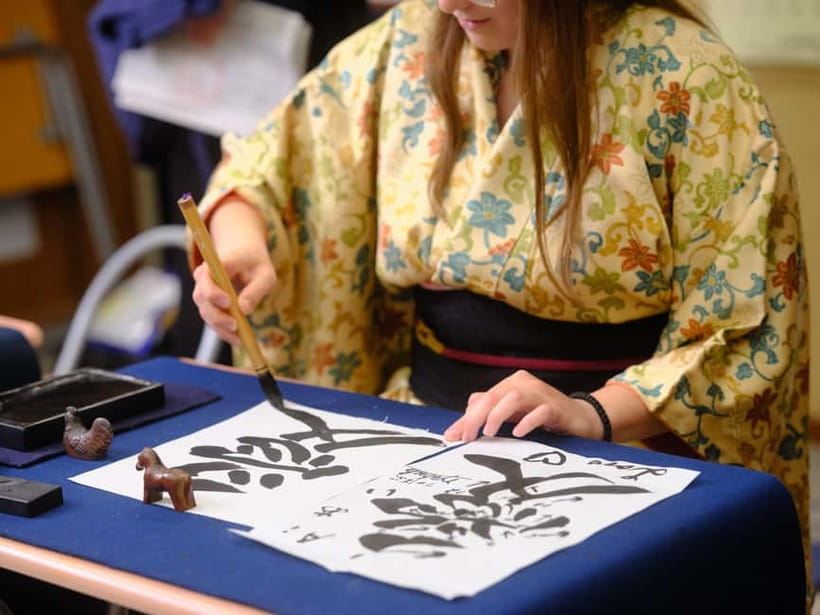
The teaching starts with calligraphy basics. You’ll be shown how to handle the brush and practise simple lines before moving on to a character. This progression matters. A kanji can look like a compact drawing, but each stroke has a direction and a shape, and the class gives you time to get used to the tool before making a finished piece.
The instructor also explains the history and spiritual associations of the characters. That context can make the practice feel less like copying a design and more like learning how a written form carries meaning. You don’t need previous experience, and the step-by-step approach is useful if this is your first time holding a calligraphy brush.
Once you have practised, you work on your own character or kanji. The class is hands-on, so you’ll make the marks yourself rather than leave with only a demonstration to remember. You take your finished work home, and instructors have also written participants’ names as an additional personal touch. Ask your instructor what is possible during your session.
The final stretch includes time to enjoy Japanese tea and take stock of what you’ve made. Ninety minutes is long enough for a taste of the craft and some practice, but not a full course. If you want to master calligraphy, this is a first lesson, not the last word. If you want a meaningful cultural activity and something personal to carry home, the format makes good sense.
More kimono experiences in Tokyo:
- Let’s make kimono !(Kimono is a gift for you
★ 5.0 · 252 reviews - Tokyo: Matcha and Kimono Experience
★ 4.7 · 219 reviews - Tokyo: Asakusa Kimono Dressing and Matcha Experience
★ 4.9 · 173 reviews
Why the small group matters
With no more than 10 participants, the class has the potential to feel personal. Calligraphy is a skill best learned by trying, making a mistake, and adjusting your hand. A smaller group gives the instructor more opportunity to guide you than a large demonstration would.
The individual teaching style is a recurring strength of the experience. Hana has been described as warm and clear in her instruction; Koushi as experienced, with support from his daughter and an interpreter; and Tomo as patient and attentive. These names give you a sense of the teaching team, but don’t assume that a particular instructor will lead your date.
English and French instruction are offered. If language matters to you, select the option that suits you when booking and confirm it for your session. French-speaking participants have found the explanations effective, and the availability of French is a useful feature for families or groups who would rather not learn through English.
The class can suit families, couples and solo visitors who are curious about Japanese arts. Still, pay attention to the stated age limits: it is not suitable for children under 4 or people over 70. A family with children who meet the age guidance may find the practice engaging, especially if everyone is comfortable sitting, concentrating and trying something unfamiliar.
What you take home, and what the price covers
At $64 per person, the fee covers more than access to a room and a short demonstration. It includes instruction from a professional calligrapher, the calligraphy tools, an English-speaking guide, Japanese tea and your finished artwork. The class also offers a chance to wear traditional clothing, though the included list does not spell out clothing as a separate item.
The best value is the combination of instruction and making something yourself. You get an introduction to the technique, learn some context for the characters, and leave with a piece you created. That personal result is different from buying a ready-made souvenir, and the instructor’s help can make the finished work feel more considered than a quick tourist craft.
The fee is less compelling if you want an advanced lesson or a long session devoted to technique. Ninety minutes is a compact introduction, and the class is designed to give you a first experience, not sustained training. Think of the price as paying for a guided cultural activity with materials and a keepsake, rather than a deep course in calligraphy.
A few participants have also received their names written by an instructor, and one family sought help buying a calligraphy set afterward. Those extras are not listed as guaranteed inclusions, so don’t build your expectations around them. If you’d like to ask about a name or a set, bring it up with the instructor.
Finding the meeting point and preparing for class
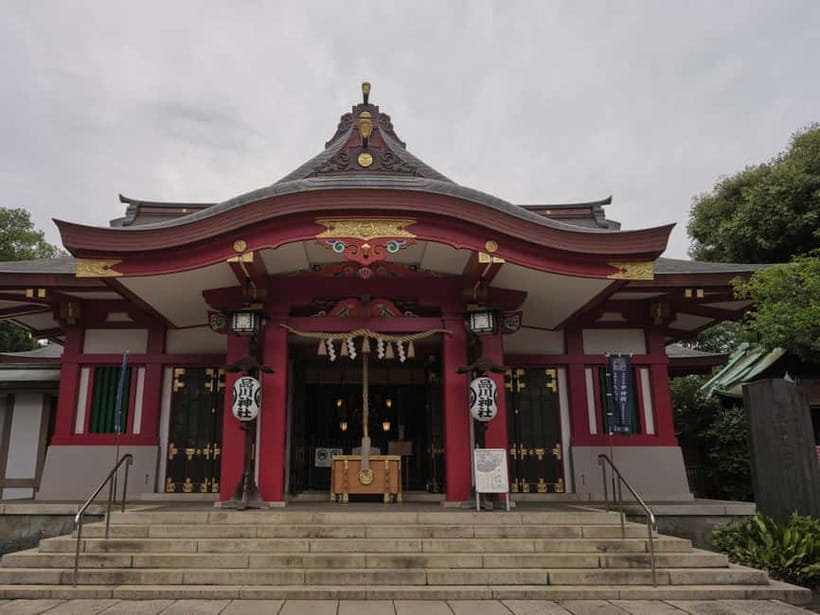
The supplied meeting-point description uses local landmarks: the location is next to a nursery, beside Kaideiji temple. That may be enough once you’re nearby, but it is not a full street address. Check the booking details for a map pin or precise directions before travelling, especially if you are unfamiliar with the area.
Individual transport is not included. Plan your own route to the meeting point, and allow time to find it. The class information does not specify a hotel pickup or transport between locations, so don’t expect either.
Wear clothes that can get dirty. Calligraphy tools and ink are part of the activity, and the instruction is hands-on. You may be offered traditional clothing, but a spill-resistant outfit underneath is the sensible choice. It is a small precaution that can help you focus on the brush rather than your sleeves.
The experience runs for 90 minutes, with starting times depending on availability. The class is limited to 10 participants. You can reserve now and pay later, and cancellation is free up to 24 hours in advance. Those terms are helpful if your Tokyo schedule is still shifting, but confirm the details shown for your date when you book.
More calligraphy workshops in Tokyo:
- Tokyo: Calligraphy on Kanji Fan & Scroll with Drink
★ 5.0 · 210 reviews - Let’s experience calligraphy in YANAKA, Taito-ku, TOKYO !!
★ 5.0 · 127 reviews - Tokyo: Calligraphy Workshop & Original T-Shirt Creation
★ 4.9 · 105 reviews - Experience all of Japanese culture and Japanese food experience classes “origami, udon, Japanese food, green tea, calligraphy” in 4 hours
★ 5.0 · 105 reviews
Who will get the most from this experience
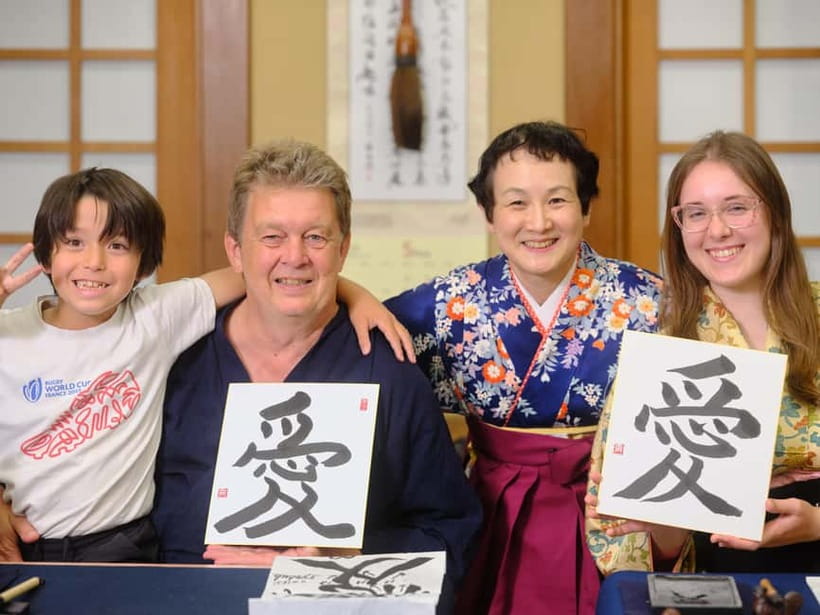
Book this if you like learning by doing, want a cultural activity with a local instructor, or are looking for a souvenir you can make rather than simply purchase. It is especially appealing if you’re curious about kanji but don’t know where to begin. The class connects the visible strokes to the stories and meanings behind the characters.
It can also work well for a birthday or a small family outing, provided everyone meets the age guidance and is happy to concentrate for a while. Traditional clothing adds a fun photo opportunity, but the better reason to come is the chance to practise and learn. The strongest sessions combine both: a relaxed welcome, clear instruction, and enough time to produce a piece you’re proud to take home.
You may prefer another activity if your schedule is packed and you only want a quick photo stop, or if you expect a polished finished artwork without practising. The process is part of the point. You’ll need to focus, follow the teacher’s guidance and accept that your first strokes may look more like practice than a masterpiece.
Should you book the Tokyo calligraphy class?
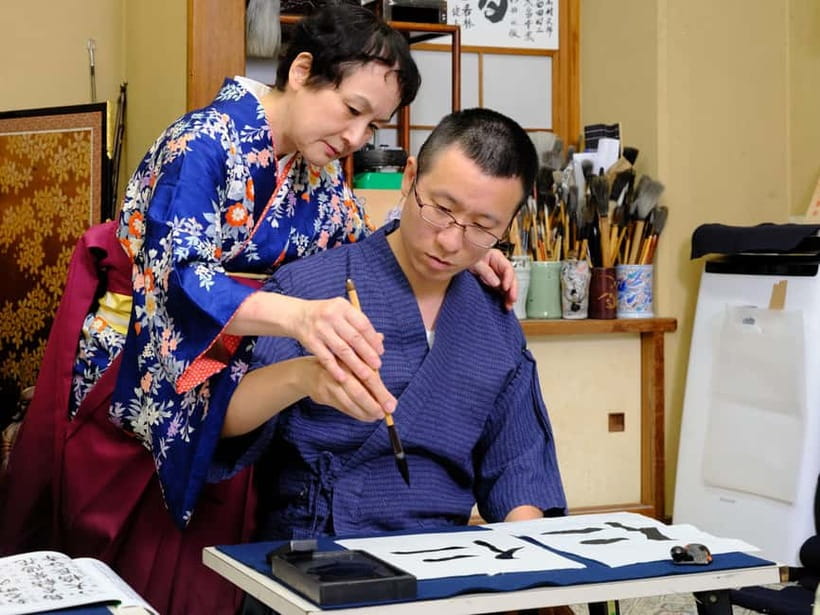
I’d book this for a slower, hands-on break from sightseeing, especially if you value meeting an instructor and learning the meaning behind an art form. The small group, materials, tea and take-home work make the $64 fee easier to justify than a brief demonstration alone. The strongest reasons to go are the patient teaching, the chance to try the brush yourself and the personal artwork at the end.
Before booking, check that your preferred language is available for your date, confirm the exact meeting point, and wear clothes you don’t mind getting dirty. Go expecting an introduction rather than mastery, and you’ll have a better chance of enjoying the class for what it is: a thoughtful first lesson in Japanese calligraphy.
FAQ
How long is the calligraphy experience?
The class lasts 90 minutes. Starting times vary, so check availability for your date.
What languages are available?
Instruction is available in English and French.
How many people can join the class?
It is a small-group activity, limited to 10 participants.
What is included in the price?
The $64 per-person price includes instruction by professional calligraphers, calligraphy tools, your finished work to take home, Japanese tea, an instructor fee and an English-speaking guide.
Can I take my calligraphy work home?
Yes. Your finished calligraphy work is included to take home as a souvenir.
What should I wear?
Wear clothes that can get dirty. Calligraphy is hands-on, and ink could mark clothing.
Is the activity suitable for young children?
It is not suitable for children under 4 years old.
Is transport to the meeting point included?
No. Individual transport is not included.
Freshly reviewed in Tokyo
- Tokyo: Toshimaya Sake Brewery Tour with Sake Tasting★ 5.0 · 6 reviews
- :Tokyo,Shibuya /Meiji Shrine tour in KIMONO/English-friendly★ 5.0 · 4 reviews
- Tokyo: Tour Privado por Tokio en español★ 4.3 · 4 reviews
- Tokyo:Tea ceremony experience at Komaba Warakuan★ 4.8 · 9 reviews
- :Tokyo,Shibuya/ Pro Photography in Kimono / English-Friendly★ 5.0 · 26 reviews
- Tokyo:Samurai Training : Swords, Bushido & Mental Discipline★ 5.0 · 6 reviews
- Tokyo:Mt Fuji & Hakone Day Tour with English Speaking Driver★ 5.0 · 26 reviews
- Tokyo:Nikko UNESCO World Heritage Sites Private 1-Day Tour★ 3.8 · 6 reviews
Tokyo Kimono Experiences, compared.
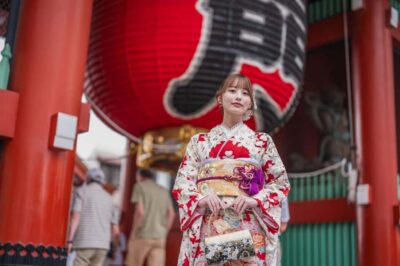
Tokyo Asakusa: Traditional Kimono Rental Experience at Wargo
Read our review →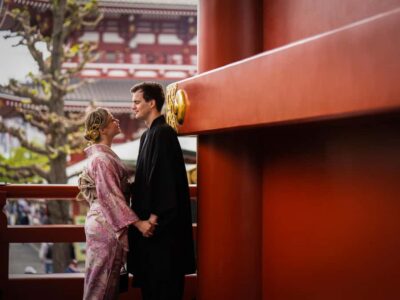
Tokyo Asakusa: Miu Kimono Rental and Optional Photoshoot
Read our review →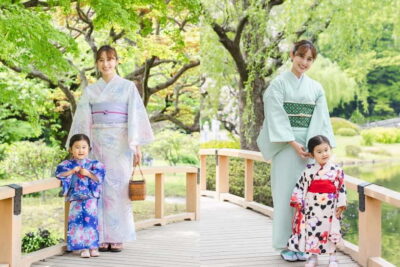
Kimono Rental inside Shinjuku Gyoen National Garden
Read our review →Browse the lists this tour appears in