
Reviewed · TOKYO ANIME AND MANGA TOURS
Tokyo: Manga Drawing Workshop Guided by Pro Manga Artist
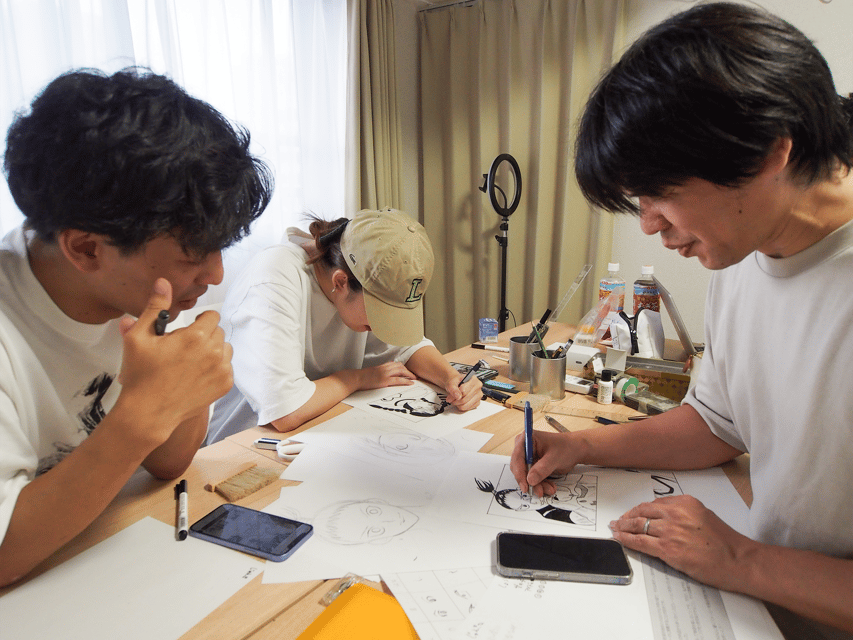
A manga page is built from more than a quick sketch: it takes planning, confident ink lines, solid blacks, screen tones, and a few well-placed speech bubbles. In this small Shibuya workshop, you try those traditional steps with a professional artist, then leave with your own manga artwork. I like the hands-on use of real manga materials, especially screen tones, and the interpreter makes it easier to ask questions about both technique and the artist’s work.
One thing to know before booking: the amount of independent drawing can depend on your idea and the instructor’s approach. Some participants work from an artist’s outline or a chosen reference, so if making a fully original image is your main goal, say so at the start. The narrow black building can also be tricky to spot, so allow time to find the sixth-floor studio.
At a glance
- Try the traditional manga process: Move from an idea and rough sketch to ink, solid blacks, screen tones, and speech bubbles.
- Get guidance from a working artist: The instructor helps turn your idea or reference into a finished panel.
- Ask questions through an interpreter: English and Japanese are offered, with interpreters helping keep instruction and conversation clear.
- Come without drawing experience: Beginners and experienced artists can both take part, with guidance along the way.
- Take home a one-off souvenir: Your finished manga artwork is yours to keep.
- Plan for a small group: The class is limited to eight people and lasts 150 minutes.
From rough idea to manga panel
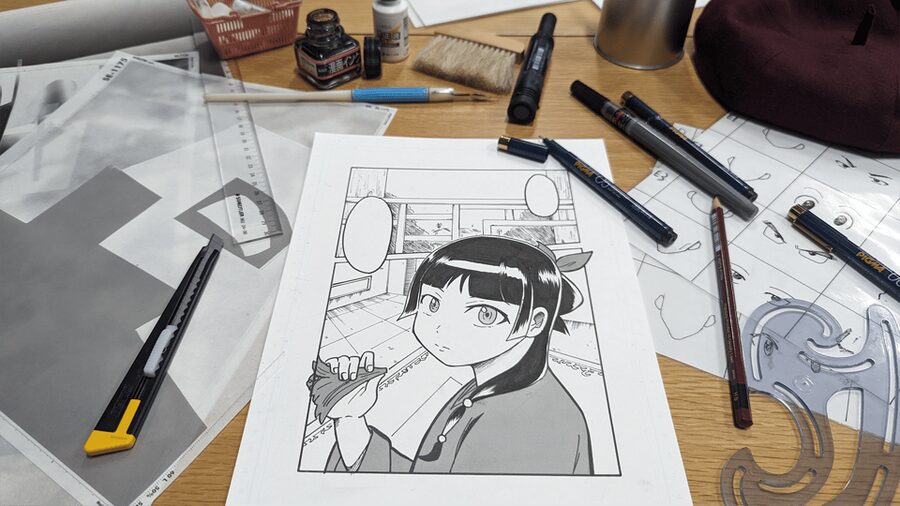
This is a sit-down art class, not a tour of manga landmarks. You spend two and a half hours learning how a manga panel takes shape, using the same broad sequence a professional artist follows: first decide what to draw, then sketch, refine, ink, add dark areas and screen tones, and finish with speech bubbles.
You can work from a provided image or bring an idea of your own. Some participants choose characters they love, while others use personal subjects or original characters. The artist can help you shape a workable composition, an important bit of support when your imagination is racing ahead of your drawing hand.
The process has a satisfying change of pace. Early on, you are thinking about the image and its outline. Later, the nib, brush, and tones make the page feel more like a finished comic panel than a drawing exercise. Screen tones are especially worth trying: these sheets add grey patterns and shading without relying on color.
The workshop uses traditional, manual techniques that have been part of manga production for generations. That gives the activity a different feel from sketching on a tablet or watching an animation demonstration. You handle the tools and see how small choices in line, shadow, and tone affect the final image.
More anime and manga tours in Tokyo:
- Akihabara Anime & Game Adventure Walking Tour (Group or Private)
★ 5.0 · 404 reviews - Akihabara Tailor-made Private Tour for Anime Fans
★ 5.0 · 142 reviews - Tokyo Akihabara, Anime, Manga, Video Games & Maid Cafe Tour
★ 4.8 · 81 reviews
A professional artist, with room for beginners
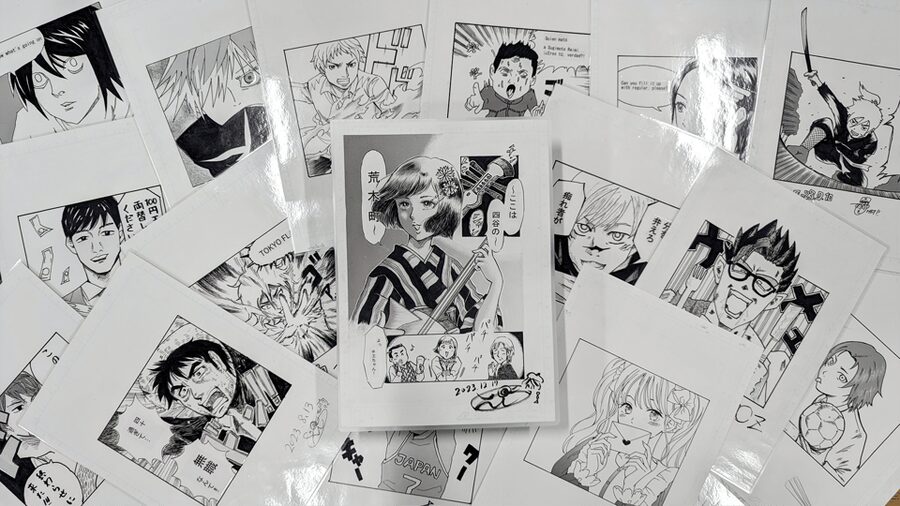
You do not need to arrive with polished drawing skills. The class is designed for people without previous experience, and the artist guides you through the steps rather than expecting you to know how to use the materials. Several participants have come in unsure of their ability and still completed work they were happy to take home.
At the same time, this is not only for beginners. An experienced artist can ask about traditional tools, line work, or screen tones, and can use the session to try a different method from digital drawing. The small group format helps the instructor respond to different levels, though the amount of individual attention will naturally depend on who else is in the room.
The teaching team has included manga artists such as Shige Matsumori, Rokkaku, Kousei, and Hiroshi, alongside interpreters including Madoka, Machi, and Ai. The particular artist and interpreter can vary, so do not book expecting one named instructor. What matters most is the format: an artist demonstrates and guides, while an interpreter supports communication in English or Japanese.
You can also ask about manga as a craft and a career. The discussion can go beyond how to draw a face or shade a panel, giving you a chance to hear about the creative work behind the stories you read. That conversation is part of what makes a small, guided class more personal than a quick souvenir activity.
How much of the artwork is yours?
Set your expectations carefully. The workshop is described as a chance to draw using a professional manga process, and many participants choose their subject and work through the panel with guidance. But the instructor may also make a rough sketch or outline to help you get started, depending on your idea and the way the session unfolds.
That approach can be a gift if you are a beginner: a professional’s initial structure gives you something solid to work from, and you can focus on learning the materials and finishing steps. It may be less satisfying if you are an experienced artist hoping for a completely open-ended studio session with detailed critique of an original composition.
If authorship matters to you, explain your goal before you begin. Ask whether you can create your own composition and how much the instructor will draw or demonstrate. The class can accommodate different ideas, but a quick conversation at the outset helps ensure you and the artist have the same picture of what you want to make.
There is no need to choose a complicated character to get value from the session. A familiar reference or a simple idea gives you more time to concentrate on how manga lines, blacks, and tones work. Intricate designs may take more help to translate into a panel, particularly within a 150-minute class.
What the 150 minutes feel like
The session begins with an idea: choose a subject, use a sample, or bring a reference of your own. Then the artist helps establish the rough drawing. Depending on your experience and chosen image, you may make adjustments yourself or follow the instructor’s outline.
Next comes drafting and inking. You work over the pencil drawing with ink, learning how a clean, dark line changes the image. You then remove pencil marks and add solid black areas, before applying screen tones for grey shading and texture. Speech bubbles help complete the panel’s comic-book look.
This is a sequence of small steps rather than a race to produce a masterpiece. One participant found that the class was slow to get going, but felt the final result made the wait worthwhile. If you are eager to start drawing immediately, settle in and give the process time. The teaching is about how the pieces fit together, not just about making a fast sketch.
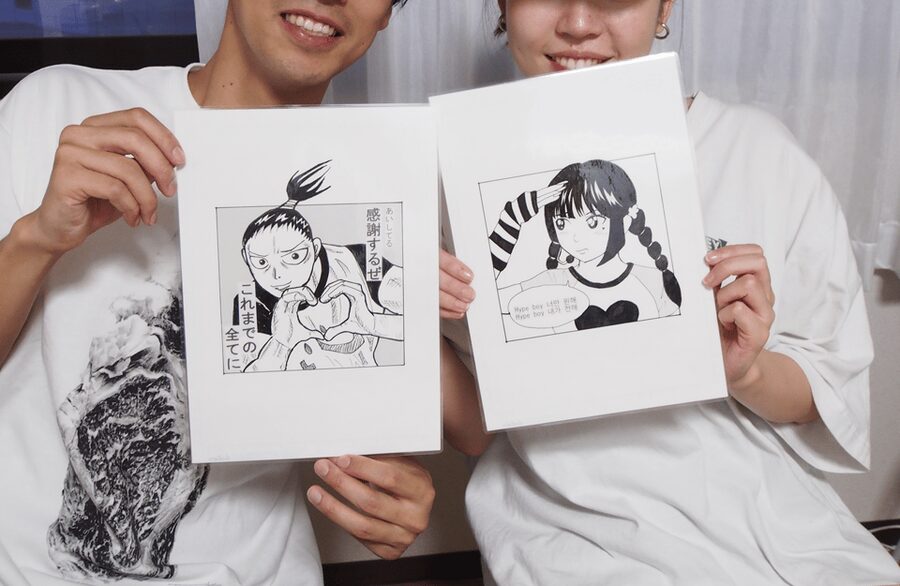
The finished work is a practical souvenir: a drawing you made in Tokyo, with a technique you can remember and potentially continue using. Some sessions have included lamination, but that detail is not guaranteed, so treat it as a possible finishing touch rather than a promised inclusion.
More hands-on workshops in Tokyo:
- Sushi Making Tokyo Roll and Authentic Japanese Sushi Class
★ 5.0 · 3,971 reviews - Tokyo: Roll and Authentic Sushi Making Class in Asakusa
★ 4.9 · 1,957 reviews - Tokyo Shinjuku Chopsticks Making Class
★ 5.0 · 1,763 reviews - Tokyo: Sushi Making Class in a Happi Coat near a Famous Spot
★ 4.9 · 1,377 reviews
Is $129 a fair price?
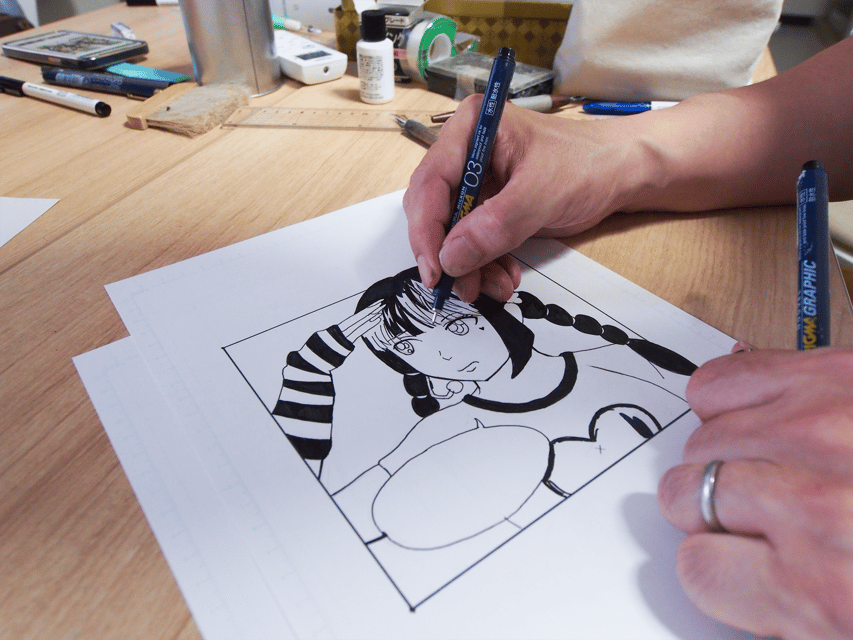
At $129 per person, this is more costly than a casual craft activity, but you are paying for a 150-minute lesson with a professional artist, an interpreter, and the drawing materials. The small group limit of eight matters here: it gives the instructor a better chance to guide individual work and answer questions than a large demonstration would.
The best value is for someone who cares about manga or wants to learn how the traditional tools work. You get a finished piece, but the more lasting benefit may be understanding the steps that turn an idea into a panel. If you only want a quick drawing made for you, or expect a full formal art course, the price may feel high for the amount of independent instruction you receive.
For a manga fan, the mix of making, learning, and conversation gives the class more substance than a standard keepsake purchase. For a family or a pair with different drawing skills, it can also be a shared activity where one person experiments and the other learns from the basics.
Finding the sixth-floor studio in Shibuya
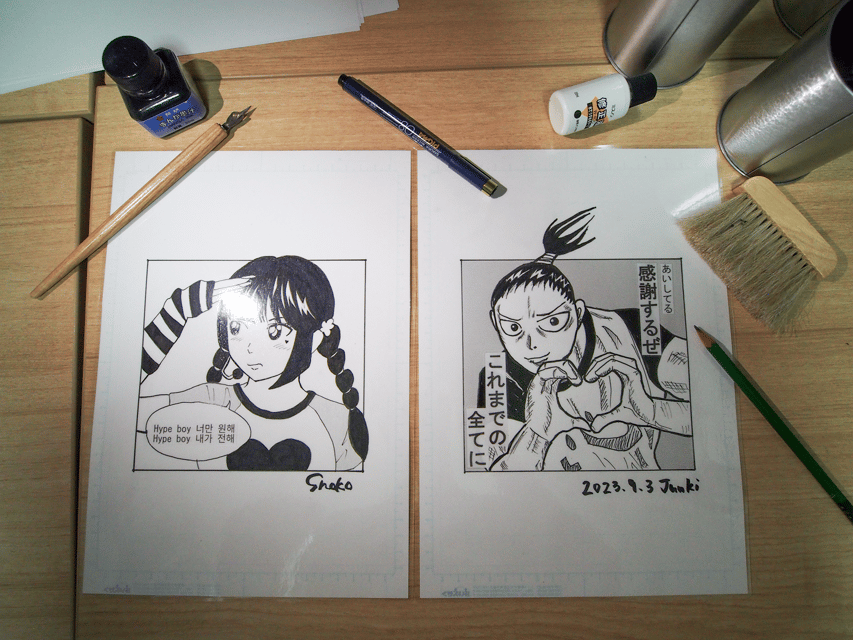
The meeting point is 6F, Shibuya 3-chome TR Building, 3-8-11 Shibuya, Shibuya-ku, Tokyo. The building is black and relatively narrow, details worth keeping in mind because the entrance may not be obvious at a glance. One family had trouble locating the place amid a political rally near Shibuya Crossing, and the hosts helped them find the studio.
Give yourself time to locate the building and reach the sixth floor. The activity does not include pickup, and food and drinks are not included, so plan those separately if needed. The space is listed as wheelchair accessible, and the small group is capped at eight participants.
Booking terms offer free cancellation up to 24 hours in advance, and a reserve-now, pay-later option is available. Starting times depend on availability, so check the date and time options that suit your Tokyo plans.
Who will get the most from this class?
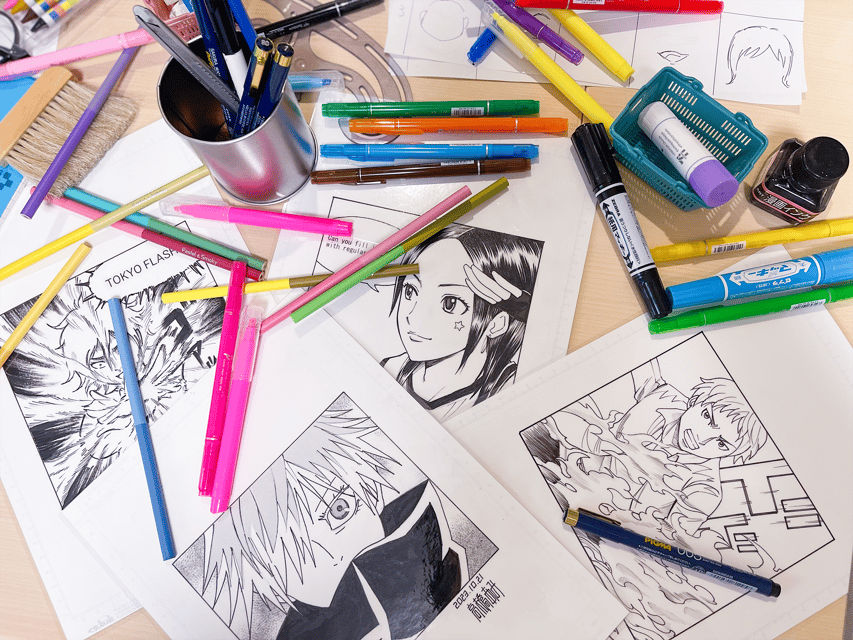
Manga and anime fans are the obvious match, especially if you want to do more than shop for character goods. You get to handle the tools and learn the craft behind a familiar visual style, then carry home a personal piece rather than a mass-produced souvenir.
It also suits beginners who want a welcoming first go. Parents have brought children, including young participants, and the instructor has helped people with very different skill levels. If you are nervous about drawing, tell the artist. The aim is to guide you through a process, not test your talent.
Experienced artists may find it rewarding if they are curious about traditional manga materials or want to return to manual drawing. But if you want extensive freedom to develop a complex original work, check the instructor’s approach before the session. This is a guided workshop with a defined process, not an open studio.
You do not have to be a devoted fan to enjoy the class. The appeal is also in watching an expert explain a craft, trying unfamiliar tools, and seeing how a rough image gains weight and character through ink and tone. Still, if manga does not interest you and you have little desire to draw, there are better uses for a half-day in Tokyo.
Should you book the manga workshop?
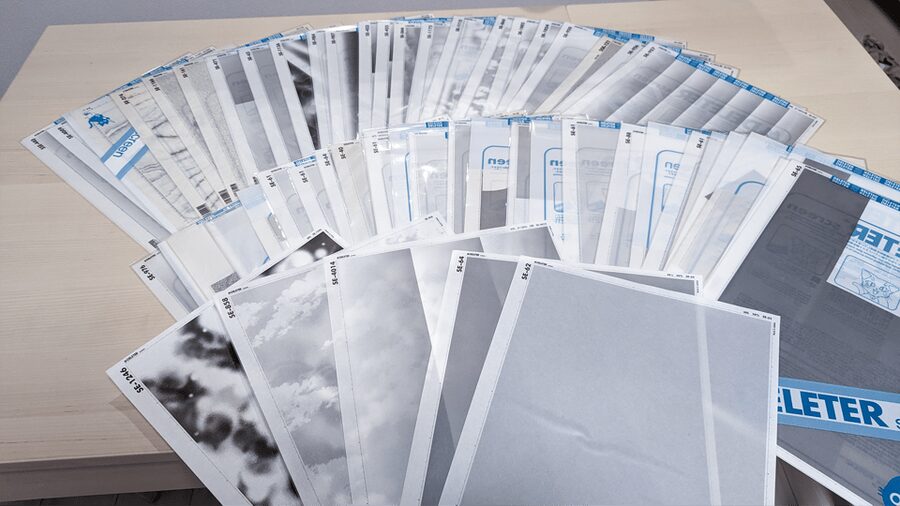
Book it if you want a hands-on manga activity with expert guidance, a small-group setting, and a tangible piece to take home. It is particularly well suited to fans, curious beginners, families, and artists interested in traditional materials.
Think twice if you expect the instructor to teach a long, fully independent drawing course or if you need complete control over every part of an original composition. Ask about the balance between demonstration and your own drawing before you start. With realistic expectations, this is a memorable way to spend 150 minutes in Shibuya and learn something you can see in the finished page.
FAQ
How long does the workshop last?
The workshop lasts 150 minutes.
How much does it cost?
The listed price is $129 per person.
Do I need drawing experience?
No. The workshop welcomes beginners, and the professional artist guides you through the process.
What drawing techniques will I try?
The process includes ideation, rough sketching, drafting, inking, filling solid blacks, applying screen tones, and adding speech bubbles.
Are materials provided?
Yes. Manga drawing materials are included, so you do not need to bring your own.
What languages are available?
The activity is offered in English and Japanese, with an interpreter included.
Where is the meeting point?
Meet at 6F, Shibuya 3-chome TR Building, 3-8-11 Shibuya, Shibuya-ku, Tokyo. The building is black and relatively narrow.
How large is the group?
The workshop is limited to eight participants.
Is pickup, food, or drink included?
No. Pickup, food, and drinks are not included.
Freshly reviewed in Tokyo
- Tokyo: Toshimaya Sake Brewery Tour with Sake Tasting★ 5.0 · 6 reviews
- :Tokyo,Shibuya /Meiji Shrine tour in KIMONO/English-friendly★ 5.0 · 4 reviews
- Tokyo: Tour Privado por Tokio en español★ 4.3 · 4 reviews
- Tokyo:Tea ceremony experience at Komaba Warakuan★ 4.8 · 9 reviews
- :Tokyo,Shibuya/ Pro Photography in Kimono / English-Friendly★ 5.0 · 26 reviews
- Tokyo:Samurai Training : Swords, Bushido & Mental Discipline★ 5.0 · 6 reviews
- Tokyo:Nikko UNESCO World Heritage Sites Private 1-Day Tour★ 3.8 · 6 reviews
- Tokyo:Mt Fuji & Hakone Day Tour with English Speaking Driver★ 5.0 · 26 reviews
Tokyo Anime and Manga Tours, compared.

Akihabara Anime & Game Adventure Walking Tour (Group or Private)
Read our review →
Akihabara Tailor-made Private Tour for Anime Fans
Read our review →
Tokyo Akihabara, Anime, Manga, Video Games & Maid Cafe Tour
Read our review →
Anime & Gaming Adventure Tour (Group or Private)
Read our review →
Manga Lesson with a Professional Japanese Manga Artist in Nakano
Read our review →
Real-Life Anime Pilgrimage Tour: “Shibuya Incident”
Read our review →
Tokyo/Ikebukuro Manga lesson by acitive pro-Manga artists
Read our review →
Private Akihabara Anime Game Maid Cafe Tour w/ free pickup
Read our review →Browse the lists this tour appears in