

Reviewed · IMPERIAL PALACE TOURS
Tokyo: Imperial Palace and Shogun Walking Tour
The striking thing about this walk is how much of Japan’s old seat of power survives in open view: broad moats, immense stone walls, a guardhouse, and the base of a castle tower. You’re not touring palace rooms. You’re walking the former grounds of Edo Castle, where the remains and layout help explain how the Tokugawa shogunate held power.
I like two things especially: the shift from fortified stonework to quiet garden paths, and a guide who can connect the old political center to modern Tokyo. The main consideration is that this is a two-hour outdoor walking tour, and the focus is the East Gardens rather than the palace’s interior.
At a glance
- Edo Castle’s defenses: Look closely at the walls, gates, and moats that once guarded the shogun’s seat.
- A history lesson with a sense of place: Your guide links samurai and shoguns to the shift from feudal rule to modern Japan.
- Ninomaru Garden: Take time for its seasonal planting, tranquil ponds, and koi.
- A compact route: The two-hour walk includes Ote-mon Gate, Hyakunin Bansho Guardhouse, Fujimi-yagura, the East Gardens, and Ninomaru Garden.
- Good first-day context: Guides have shared nearby food and sightseeing suggestions, making this a useful introduction to Tokyo.
- Flexible booking: The tour is listed at $16 per person, with free cancellation up to 24 hours ahead and a reserve-now, pay-later option.
Start at Wadakura Fountain Park
Meet your guide in front of Starbucks Kokyo Gaien, beside Wadakura Fountain Park. The meeting point is at 35.6830391, 139.7614181. It’s worth checking the exact location before setting out: the palace grounds are extensive, and arriving at the right side of the area saves a rushed start.
The tour lasts two hours and is led in English. Its route takes you through the Imperial Palace East Gardens, the former grounds of Edo Castle. The itinerary assigns time to the principal stops, with walking between them included in the overall tour.
This is an appealing way to begin a Tokyo visit. The guide can give you a framework for understanding Japanese political history before you encounter its temples, museums, and modern city districts. The tour can also be a pleasant change of pace from Tokyo’s busy streets: the gardens offer room to slow down while remaining in the center of the city.
More Imperial Palace walks in Tokyo:
- Tokyo: Imperial Palace and Shogun Historical Walking Tour
★ 5.0 · 2,251 reviews - Tokyo: Imperial Palace Japanese History Walking Tour
★ 4.9 · 987 reviews - Imperial Palace East Garden and Edo Castle Walking Tour in Tokyo
★ 5.0 · 510 reviews
Ote-mon Gate sets the scale

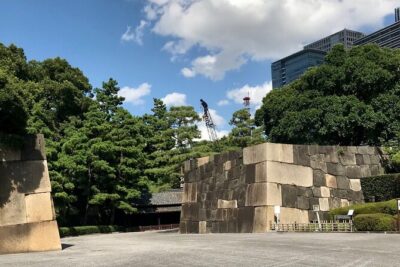
The first major stop is Ote-mon Gate, with about ten minutes for a guided introduction. As an entrance to the old castle grounds, it sets up one of the tour’s central themes: the site was designed not just to look impressive, but to control access and protect the seat of power.
The gate is a useful place to begin looking at the scale of Edo Castle. Its massive stone defenses can be difficult to interpret on your own. With a guide, you can start to see the walls and entrances as parts of a working stronghold, rather than as isolated old structures.
That context matters. Without it, the East Gardens might read mainly as a pleasant green space. With it, the remaining walls and foundations become clues to the political center that once stood here.
See the palace grounds, not palace rooms
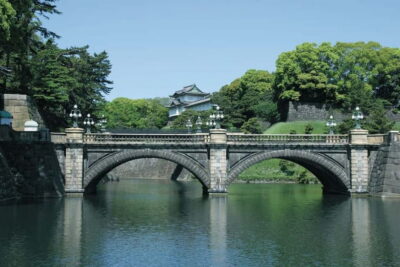
The route includes a 15-minute visit to the Tokyo Imperial Palace. Keep the tour’s scope in mind: it is a guided walk through the East Gardens and former castle grounds, not a tour of the Imperial Palace’s interior.
That distinction helps set expectations. The main interest here is the site’s change over time, from Edo Castle and the Tokugawa shogunate to the modern imperial setting. Your guide can explain the significance of the grounds and how Japan’s transition from feudal rule shaped the country that followed.
This is where a good guide makes a real difference. The historical story can span several eras, and the visible remains do not always explain themselves. A clear, conversational account helps you connect the place you’re standing in with the larger changes in Japanese government and society.
Hyakunin Bansho Guardhouse brings the defenses to life

The itinerary allows ten minutes at Hyakunin Bansho Guardhouse. It is one of the tour’s more specific stops, and a welcome change from simply walking past walls and gates. Here, the focus turns to the people and systems involved in protecting the castle.
A brief stop is enough to hear the guide’s explanation and take in the structure, though it won’t be a long visit. If you’re drawn to military history, this is a good moment to ask questions. The tour’s strongest approach is to use details like this to make the wider story concrete: not just who held power, but how the center of power was guarded.
More walking tours in Tokyo:
- Tokyo Tsukiji Fish Market Food and Culture Walking Tour
★ 5.0 · 3,184 reviews - Tokyo: Shinjuku Local Bar and Izakaya Guided Walking Tour
★ 4.9 · 1,794 reviews - Tokyo: Tsukiji Fish Market Food and Walking tour
★ 5.0 · 1,724 reviews - Tokyo: Asakusa Walking Tour with Sensoji Temple Visit
★ 4.8 · 1,583 reviews
Fujimi-yagura offers another castle landmark
Next comes Fujimi-yagura, with about 15 minutes for sightseeing and explanation. The tour identifies it as a key landmark on the route, alongside the castle tower base and stone walls. Together, these remains help you picture the former castle as a defended complex rather than a single building.
The guide’s commentary is particularly useful at sites where the original structures are no longer all present. You can focus on what remains and hear how it fits into the history of the grounds. The point isn’t to reconstruct every detail from memory; it’s to leave with a better sense of how the site worked and why it mattered.
Walk the East Gardens and read the stonework

The Imperial Palace East Gardens get about 30 minutes of guided time. This is the heart of the walk: a chance to move between historic foundations, broad stonework, and landscaped paths while your guide explains the layers of history underfoot.
The tour’s theme of decoding the walls is more than a catchy description. Large stones, moats, and gates are physical evidence of a place built for defense and authority. Your guide can help you see how those features fit together and why the castle’s setting carried such importance.
The gardens are peaceful, but they aren’t just a backdrop. That contrast is part of what makes the stop worthwhile. You can enjoy the calm while keeping in mind that this was once the center of the Tokugawa shogunate. The present-day quiet gives the history room to sink in.
Slow down in Ninomaru Garden
Ninomaru Garden also receives about 30 minutes, making it one of the longest stops. It is the tour’s gentler counterpoint to the imposing gates and walls. Expect seasonal planting, tranquil ponds, and koi swimming in the water.
This is a good place to pause and take in the setting rather than hurry from one historical marker to the next. The garden’s changing appearance across the seasons is part of its appeal. The koi and still ponds offer a simple pleasure, but they also reinforce the contrast that runs through the whole walk: a site built around political power now offers a calm retreat.
If your main interest is scenery, this is likely to be the section you remember most. If you’re chiefly here for history, the guide’s explanation can help you see the garden as part of the broader palace grounds, not a separate attraction tacked onto the route.
What the guides add

The tour’s value rests heavily on its guides. Names associated with the experience include Tony, Blake, Jim, Thomas, Miguel, Embla, Dylan, Mayumi, Lasse, Manny, Sneha, and Michi. Your guide will depend on the departure, so don’t book on the assumption that you’ll meet a particular person.
The style that comes through is approachable rather than lecture-like. Expect straightforward explanations, time for questions, and stories that connect Japanese history with everyday life in Tokyo. Some guides have also offered suggestions for nearby places to eat or other things to do, which can be handy if this is early in your stay.
That human element helps make the tour more than a route through attractive grounds. A guide can give you context you might miss when exploring on your own, especially around the meaning of the walls, the guardhouse, and the castle remains. The experience is also suited to mixed groups: the two-hour format and conversational approach can work for first-time visitors and history fans alike.
Is $16 good value?
At $16 per person, this is a modestly priced guided introduction to one of Tokyo’s most significant historic sites. The gardens provide the setting, but the real value is the explanation: you get a route through several important features and a guide to connect them into a story.
The walk is especially good value if you’re new to Japan and want a clear starting point for understanding the shogunate and the shift to modern Japan. It may feel less essential if you prefer to explore gardens silently or already know the history well. In that case, the appeal will depend on how much you value an expert’s interpretation and the chance to ask questions.
The booking terms are also flexible: you can reserve now and pay later, and cancel up to 24 hours in advance for a full refund. The activity is listed as wheelchair accessible. Check the available starting times when choosing a date.
Who should book this walk?

I’d recommend it to first-time visitors who want history in manageable portions, rather than a long museum visit. The stops are varied, the route includes both castle defenses and a carefully planted garden, and the guide gives the place a clear narrative.
It also suits anyone who wants a calm outdoor break without leaving central Tokyo. Families with teenagers may find the guide-led stories more engaging than a self-guided stroll, and a small group of colleagues can use it as an easy shared activity. The tour is less suited to someone seeking palace interiors, a long, unhurried garden visit, or a deep specialist seminar.
Book it if you want the East Gardens to make sense, not just look lovely. At $16, two hours with an English-speaking guide is a sensible buy, especially near the start of a Tokyo stay. If you’re content to wander without historical context, you can skip the guide and spend your time in the gardens at your own pace.
FAQ
How long is the tour?
The tour lasts two hours.
What is the price?
The listed price is $16 per person.
What language is the tour in?
The tour is led in English.
Where is the meeting point?
Meet in front of Starbucks Kokyo Gaien, near Wadakura Fountain Park. The coordinates are 35.6830391, 139.7614181.
Does the tour go inside the Imperial Palace?
The activity is a guided walking tour of the Imperial Palace East Gardens and the former Edo Castle grounds. Palace interior access is not included in the details provided.
Which places are included on the route?
Stops include Ote-mon Gate, Tokyo Imperial Palace, Hyakunin Bansho Guardhouse, Fujimi-yagura, the Imperial Palace East Gardens, and Ninomaru Garden.
Is the tour wheelchair accessible?
Yes. The activity is listed as wheelchair accessible.
Can I cancel for a refund?
Yes. You can cancel up to 24 hours in advance for a full refund.
Do I have to pay when I reserve?
No. The reserve-now, pay-later option lets you book without paying at the time of reservation.
Freshly reviewed in Tokyo
- Tokyo: Toshimaya Sake Brewery Tour with Sake Tasting★ 5.0 · 6 reviews
- :Tokyo,Shibuya /Meiji Shrine tour in KIMONO/English-friendly★ 5.0 · 4 reviews
- Tokyo: Tour Privado por Tokio en español★ 4.3 · 4 reviews
- Tokyo:Tea ceremony experience at Komaba Warakuan★ 4.8 · 9 reviews
- :Tokyo,Shibuya/ Pro Photography in Kimono / English-Friendly★ 5.0 · 26 reviews
- Tokyo:Samurai Training : Swords, Bushido & Mental Discipline★ 5.0 · 6 reviews
- Tokyo:Mt Fuji & Hakone Day Tour with English Speaking Driver★ 5.0 · 26 reviews
- Tokyo:Nikko UNESCO World Heritage Sites Private 1-Day Tour★ 3.8 · 6 reviews
Imperial Palace Tours, compared.

Imperial Palace and Shogun Historical Walking Tour
Read our review →
Imperial Palace East Garden and Edo Castle Walking Tour in Tokyo
Read our review →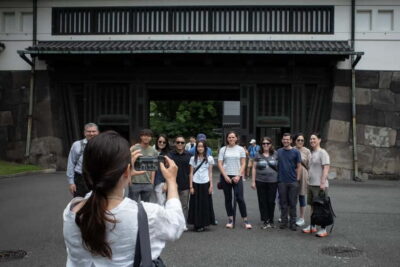
Imperial Palace, Sensō-ji Temple, & Tokyo Tower Tour
Read our review →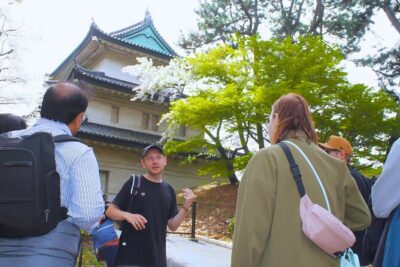
Tokyo Castle, Imperial Palace, Shogun & Garden Walking Tour
Read our review →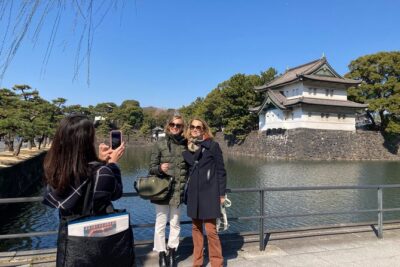
Tokyo Private Tour! Edo Castle & Imperial Palace East Gardens
Read our review →
Full Tokyo: Meiji Shrine, Imperial Palace, Asakusa & Skytree
Read our review →Browse the lists this tour appears in