
Reviewed · TOKYO SAMURAI EXPERIENCES
Tokyo: Samurai Sword Academy in the Hometown of Last Samurai
The unusual part of this two-hour class is that you learn Tennen Rishin-ryu in an actual dojo in Hino, the hometown of the Shinsengumi. You are taught by Masao Inoue, a descendant of Shinsengumi executive Genzaburo Inoue, and his fellow instructors, not a performer in a staged samurai show.
I like two things in particular: the small group, capped at four, allows for close instruction; and the lesson builds from basic movement with a wooden sword toward handling a Japanese sword. The setting adds historical weight, too, with the dojo on the second floor of the Inoue Genzaburo Museum.
The main consideration is the trip to Hino, outside central Tokyo, and the physical demands of practicing sword movements. At $116 per person, this is a specialized activity rather than a quick photo stop, and it is not suitable for children under 18 or people with several listed health and mobility concerns.
Key things to know before you book
- You train in Tennen Rishin-ryu: This Edo-period sword style is still practiced at the Hino Dojo.
- The instruction has a family link to the Shinsengumi: Masao Inoue, dojo chairman, is a descendant of Shinsengumi executive Genzaburo Inoue.
- The class is small: A maximum of four participants makes room for individual guidance.
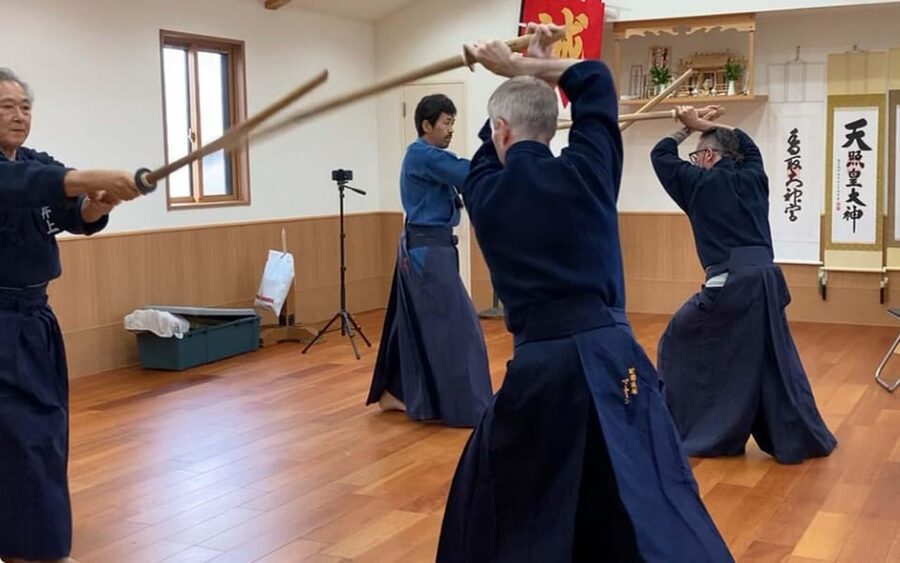
- You progress from basics to sword handling: Expect posture, footwork, forms with a wooden sword, and practice with a Japanese sword.
- Uniforms and equipment are provided: Dogi, hakama, a Shinsengumi-style dandara baori, wooden sword, and Japanese sword are included.
- The venue is easy to find once you reach Hino: The dojo is on the second floor of the Inoue Genzaburo Museum, a five-minute walk from Hino Station.
A real dojo, not a samurai stage show
Tennen Rishin-ryu began in the Edo period and continues to be practiced at the Hino Dojo. That matters to you as a visitor because the class is rooted in an ongoing martial tradition, not simply designed to demonstrate a few photogenic sword moves.
Hino is closely tied to the Shinsengumi, a group of swordsmen formed by practitioners of Tennen Rishin-ryu at the end of the Edo period. The group is often described as the Last Samurai. Here, the connection is more than a theme on a souvenir: you are learning in the city associated with the group, at a dojo where the style is still practiced.
The class is led by Masao Inoue, chairman of the Tennen Rishin-ryu Hino Dojo and a descendant of Shinsengumi executive Genzaburo Inoue. The other instructors are not named, but the teaching team is described as kind, attentive, patient, and serious about safe, staged instruction. That combination should suit beginners who want clear direction without feeling they need prior sword experience.
You should expect a lesson, not a history lecture with a sword prop. The historical setting helps explain why the style matters, while the central activity is learning how to move and handle a sword with care.
More samurai experiences in Tokyo:
- Tokyo: Samurai Restaurant Show Ticket with 2 Drinks
★ 4.5 · 1,307 reviews - Tokyo: Samurai Ninja Museum Guided tour and Experience
★ 4.6 · 1,010 reviews - Tokyo: Samurai Sword & Archery Class from Samurai Descendant
★ 5.0 · 603 reviews
Getting to the dojo in Hino
The meeting point is on the second floor of the Inoue Genzaburo Museum, about a five-minute walk from Hino Station on the JR Chuo Line. The short walk from the station is useful, but you still need to make the journey to Hino from wherever you are staying in Tokyo. Allow time for that trip, especially if you have a tight schedule before or after the class.
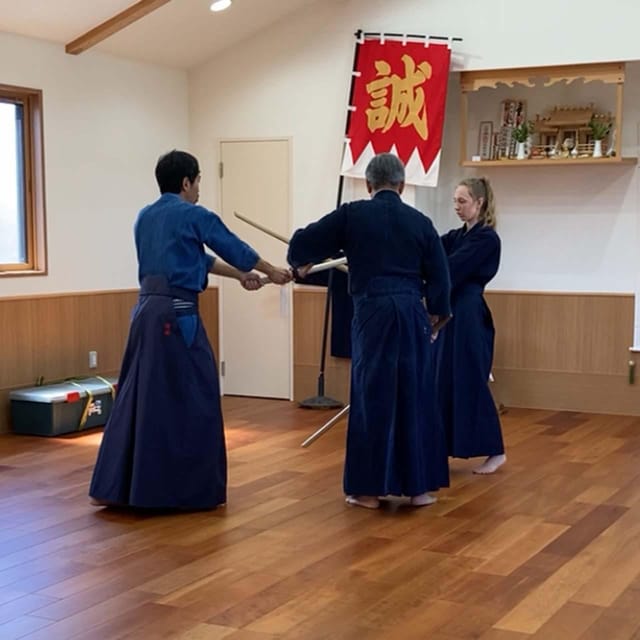
The museum connection gives the experience a clear sense of place. You are not being taken to an anonymous activity room; the dojo is part of the setting that connects the class with Hino and the Shinsengumi. The venue is described as spacious and well kept, which makes a difference when a lesson involves footwork and controlled sword movements.
The class lasts two hours. That is enough time for a structured introduction and hands-on practice, but it is not a full training course. You will get a taste of the style and its basic movements, not mastery of a martial art. The group limit of four is a major plus: with so few participants, instructors can pay close attention to each person’s stance and movement.
Instruction is offered in English and Japanese. If you are joining in English, you can still expect a practical lesson built around demonstration and guided practice. The available information does not specify the exact language arrangement for each session, so check the starting time and language details when choosing a booking.
Dressing for practice and learning the basics
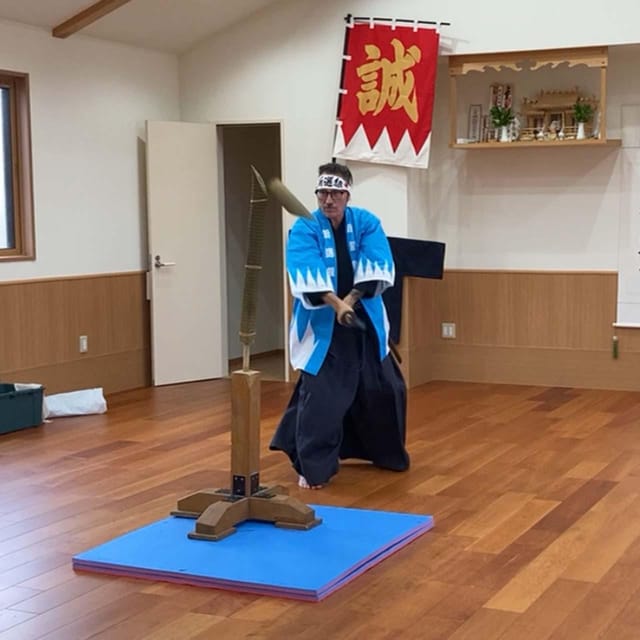
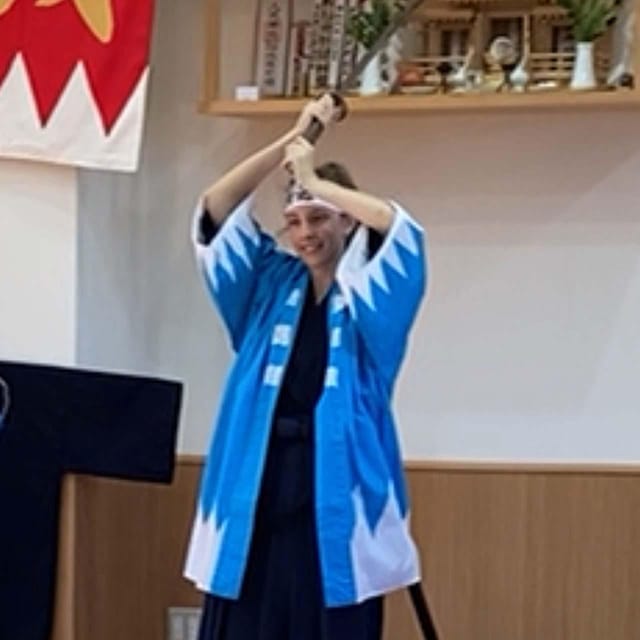
Dogi and hakama, the practice uniform, are included, along with a Shinsengumi-style dandara baori. You do not need to bring a uniform or a sword. That saves you from packing specialist gear and helps you focus on the class rather than what to wear.
The lesson begins with the groundwork that makes sword practice safer and more controlled. Instructors teach posture and footwork before moving on to sword techniques. One useful point shared in the class is why correct foot placement matters for avoiding injury. That kind of explanation gives you more than a sequence to imitate: it helps you understand how to move with control.
You will first work with a wooden sword. This lets you learn the feel of basic movements and practice forms before progressing to the Japanese sword. The staged approach is especially valuable if this is your first martial arts class. You do not need to arrive knowing how to hold a sword, but you should be ready to listen closely and repeat movements patiently.
Expect the lesson to be physical in a modest but real way. You will stand, move your feet, and practice repeated sword actions. It is not described as a high-intensity workout, but it does require balance, coordination, and enough fitness to take part in basic movement practice. If you have a health concern, check the restrictions before booking rather than assuming the class can be adapted.
From wooden sword forms to the Japanese sword
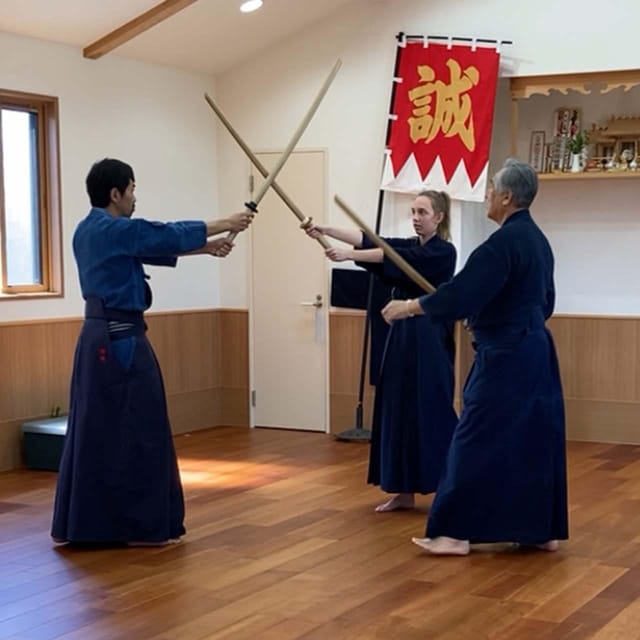
After the basics, the lesson moves toward forms, or kata, and practice that may include a duel-style exercise. The progression gives you time to become familiar with the movement before handling the Japanese sword. It also gives instructors a chance to correct your stance and technique along the way.
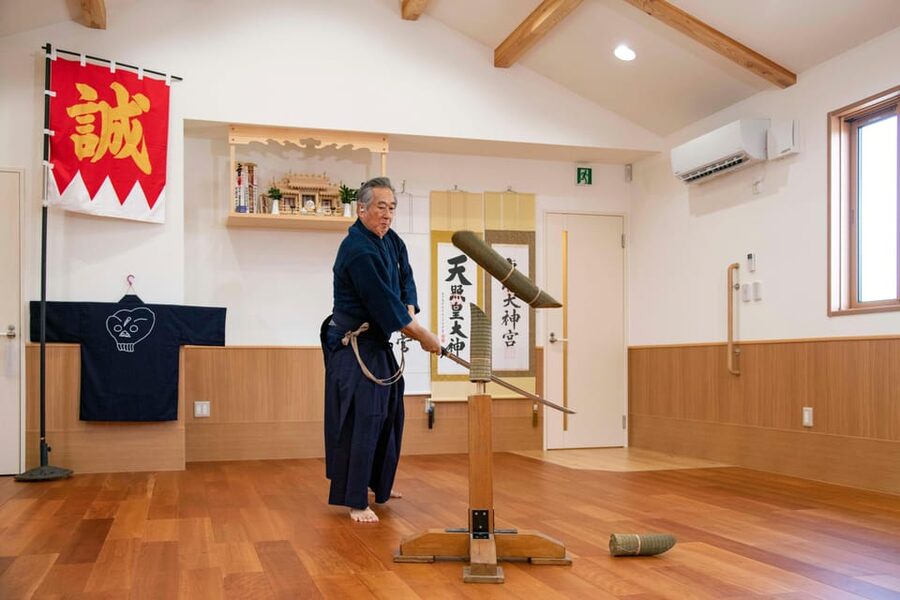
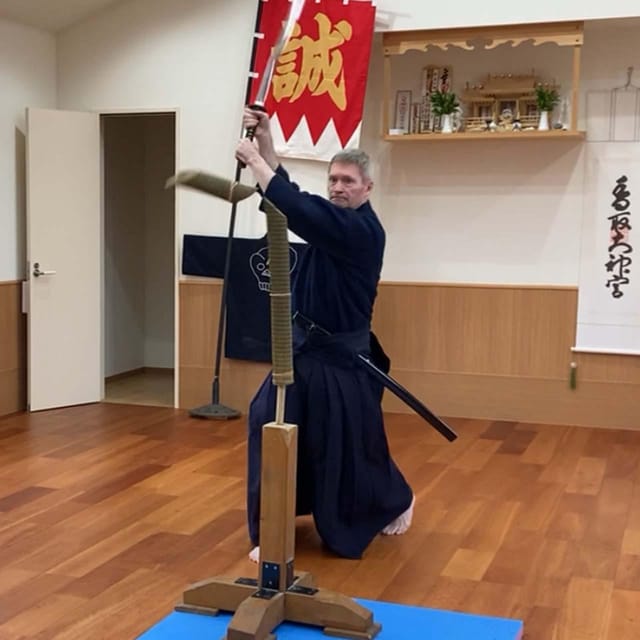
The final part may include cutting tatami with a real Japanese sword. That is the moment many people will be curious about, but the value is not just the dramatic cut. You have first practiced posture, foot placement, and controlled movement, so you can approach the sword as a tool that demands attention rather than as a prop.
Descriptions of the class also mention a possible cut at bamboo, but the exact target is not specified consistently. Treat the cutting portion as an element of the experience, not a guarantee of a particular target or result. Ask the instructors on the day what the session includes and follow their directions closely.
Handling a Japanese sword is likely to be the most memorable part for many participants. The activity describes the sword as the samurai’s soul, a poetic idea that helps explain the cultural meaning attached to it. In practical terms, the lesson gives you a chance to feel its weight and learn how to handle it under instruction. This is a rare opportunity, but it comes with responsibility: listen, move carefully, and do not rush through the steps.
More tours and experiences in Tokyo:
- Mt Fuji and Hakone 1-Day Bus Tour Return by Bullet Train
★ 5.0 · 26,383 reviews - 1-Day Tokyo Bus Tour
★ 5.0 · 14,250 reviews - Tokyo: teamLab Planets TOKYO Digital Art Museum Entry Ticket
★ 4.6 · 9,779 reviews - Mt Fuji & Hakone Cruise, Drum Show Bullet Train 1 Day from Tokyo
★ 4.0 · 7,413 reviews
What makes the Shinsengumi connection meaningful
The historical element is strongest when it connects directly to the practice. Tennen Rishin-ryu was carried forward from the Edo period, and Hino swordsmen who practiced it formed the Shinsengumi near the end of that era. Learning the style in Hino gives you a way to connect the martial art with the place and people associated with it.
Masao Inoue’s family connection to Genzaburo Inoue adds a personal link to that history. It does not mean you are being taught by someone who lived through the Shinsengumi’s time, of course. Rather, it gives the class a clear line of connection between the dojo, its present-day practice, and a family associated with the group.
The historical explanation is paired with movement, which helps the setting feel less like a backdrop. You are not only hearing about samurai culture; you are learning a few of the physical principles behind a sword tradition. Some classes also include a Shinsengumi map showing historical sites in Hino, a helpful extra if you want to explore the area afterward. Confirm what is included in your session, as the map is not listed among the standard included equipment.
Is $116 good value for two hours?
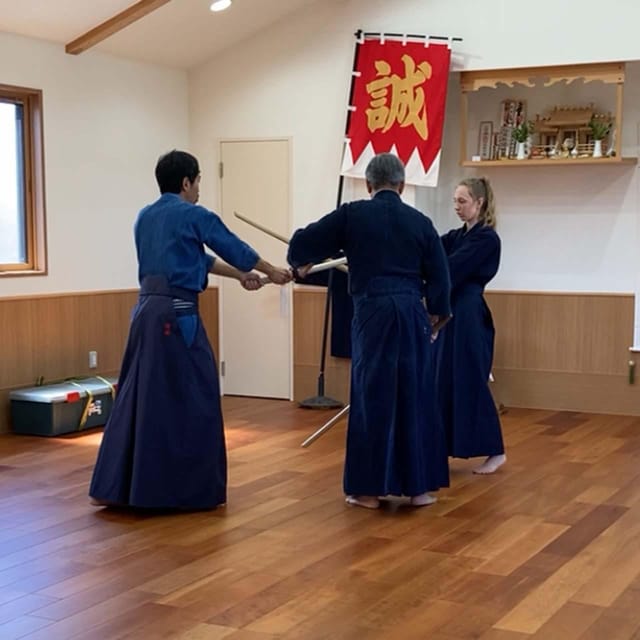
At $116 per person, this costs more than a basic cultural demonstration. You are paying for a small-group lesson in a working dojo, instruction from a team led by a named master, use of the practice uniform and swords, and the chance to handle a Japanese sword. The class also offers a direct connection to Hino’s Shinsengumi history.
The four-person cap is important when weighing the price. A crowded class might give you a few minutes with a sword and little personal guidance. Here, a small group makes it more plausible for instructors to help you with posture and technique as you go. The strongest value is for someone who wants to learn, not simply pose in costume.
It is less compelling if you want a low-cost activity, a long samurai-themed tour, or a deep study of Japanese history. Two hours provides an introduction, and the experience is focused on swordsmanship. You will need to arrange your own journey to Hino, too, though the dojo is only a five-minute walk from the station.
Who will enjoy this class, and who should skip it
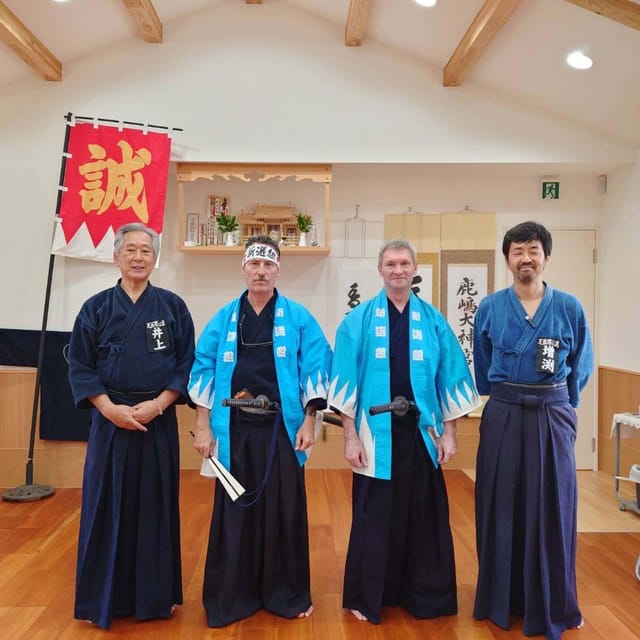
This is a good fit if you are curious about Japanese martial arts, enjoy hands-on cultural activities, or want something more specific than a costume photo. It also suits visitors with an interest in the Shinsengumi, especially those willing to travel outside central Tokyo to learn in the group’s hometown.
Beginners should feel welcome. The lesson is staged, starts with basic movement, and the instructors are described as patient and encouraging. You do not need to own equipment, and you do not have to arrive knowing kata. You do need to be comfortable following physical instructions and working carefully with a sword.
The activity is not suitable for pregnant women, people with back or heart problems, people with mobility impairments, wheelchair users, people with vertigo, people with a cold, people with altitude sickness, anyone with recent surgery, people with low fitness levels, or people over 75. Children under 18 cannot take part. That is a long list, so read it carefully and contact the provider if you are uncertain about your own situation.
Should you book the Hino sword class?
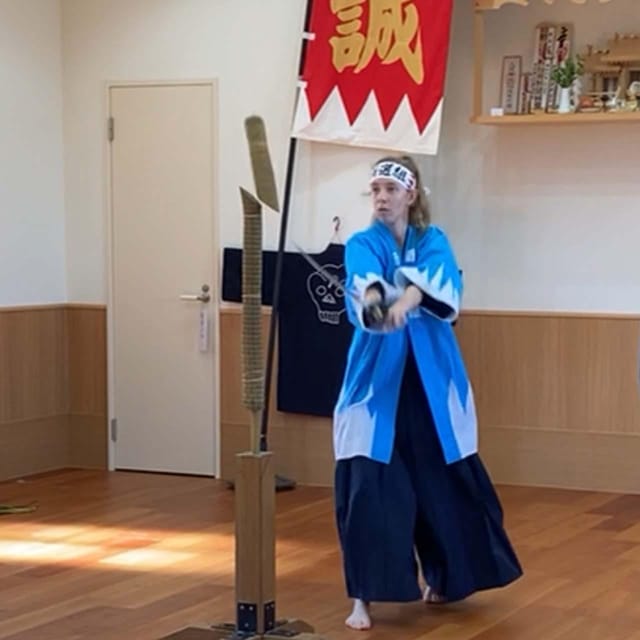
Book it if you want a small, hands-on introduction to Tennen Rishin-ryu in the city tied to the Shinsengumi. The strongest reasons are the authentic dojo setting, the direct instruction from Masao Inoue and his team, and the step-by-step move from wooden sword practice to handling a Japanese sword.
Skip it if you mainly want a quick activity near central Tokyo, cannot take part in physical movement, or expect a full history tour. For the right person, the journey to Hino is part of the point: you get a focused lesson in a place where the history and the practice meet.
FAQ
How long is the swordsmanship class?
The experience lasts two hours.
Where does the class meet?
It meets on the second floor of the Inoue Genzaburo Museum, a five-minute walk from Hino Station on the JR Chuo Line.
Who leads the experience?
Masao Inoue, chairman of the Tennen Rishin-ryu Hino Dojo and a descendant of Shinsengumi executive Genzaburo Inoue, leads the program with instructors.
What language is the instruction in?
Instruction is available in English and Japanese.
How many people can join?
The group is limited to four participants.
Do I need to bring a uniform or sword?
No. The experience includes dogi and hakama, a dandara baori, a wooden sword, and a Japanese sword.
Will I get to handle a Japanese sword?
Yes. Handling a Japanese sword is part of the experience. The class information also describes progression from basic practice with a wooden sword.
Is the class suitable for children?
No. Children under 18 are not suitable for this activity.
Can I cancel for a refund?
You can cancel up to 24 hours in advance for a full refund. The activity also offers a reserve-now, pay-later option.
Freshly reviewed in Tokyo
- Tokyo: Toshimaya Sake Brewery Tour with Sake Tasting★ 5.0 · 6 reviews
- :Tokyo,Shibuya /Meiji Shrine tour in KIMONO/English-friendly★ 5.0 · 4 reviews
- Tokyo: Tour Privado por Tokio en español★ 4.3 · 4 reviews
- Tokyo:Tea ceremony experience at Komaba Warakuan★ 4.8 · 9 reviews
- :Tokyo,Shibuya/ Pro Photography in Kimono / English-Friendly★ 5.0 · 26 reviews
- Tokyo:Samurai Training : Swords, Bushido & Mental Discipline★ 5.0 · 6 reviews
- Tokyo:Mt Fuji & Hakone Day Tour with English Speaking Driver★ 5.0 · 26 reviews
- Tokyo:Nikko UNESCO World Heritage Sites Private 1-Day Tour★ 3.8 · 6 reviews
Tokyo Samurai Experiences, compared.
Samurai Ninja Museum Guided tour and Experience
Read our review →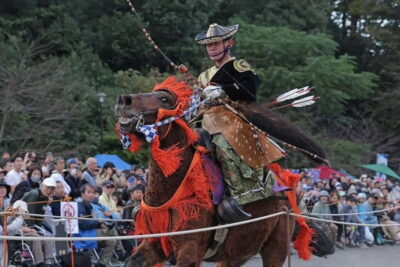
Samurai Sword & Archery Class from Samurai Descendant
Read our review →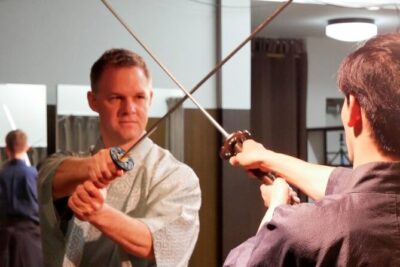
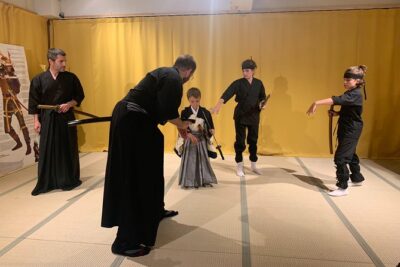
Ninja Experience (Family Friendly) at Samurai Ninja Museum TOKYO
Read our review →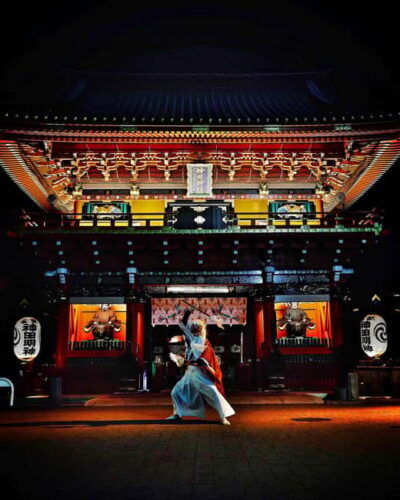
Samurai Entertainment Night Show in Kanda Shrine
Read our review →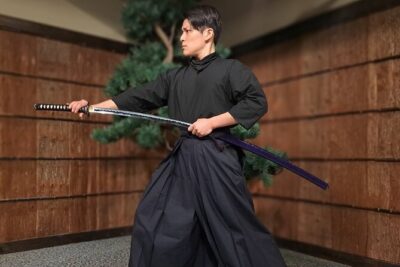
Tokyo Sword Experience – includes Museum Ticket/Ninja Experience
Read our review →
Samurai Ninja Museum Asakusa: Samurai Sword Lesson & Tour
Read our review →Browse the lists this tour appears in