
Reviewed · TOKYO SAMURAI EXPERIENCES
Best Samurai Experience in Tokyo
Step into a dojo styled after the Edo period, put on a kimono and hakama, and learn to handle a Japanese sword before staging a short, choreographed fight. This is not a quiet museum visit: you get dressed, practice, and finish with a dramatic performance to music.
I like two things in particular. First, the costume is part of the activity, not just a photo prop: you learn sword movements while dressed for the role. Second, instructors guide you through the basics, then help you put them together in a short scene you can film. The displays of armor, swords, and spears give the room a strong sense of place.
The main consideration is time. An hour goes quickly, and this is a lively introduction rather than an in-depth martial arts class or a long history lesson. The venue can also be a little hard to spot among the side roads, so allow time to find the flag that marks the way in.
At a glance: what your hour includes
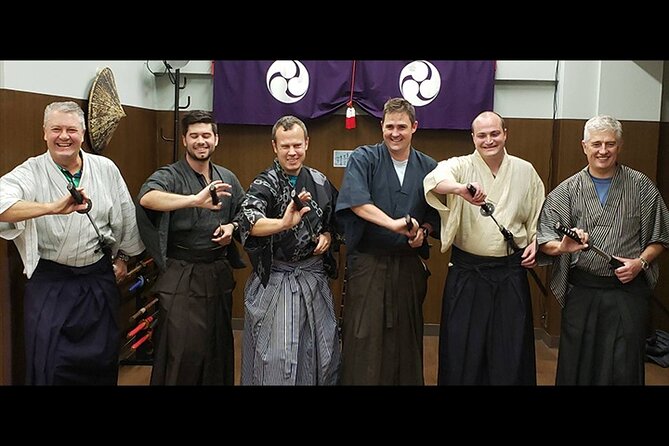
- Choose your samurai outfit: Pick a kimono and hakama, then change into the costume for the session.
- Learn basic sword handling: Practice drawing, holding, swinging, and retracting a Japanese sword under an instructor’s guidance.
- Stage a short fight: Put the movements together in a simple choreographed battle, with music and a playful showdown.
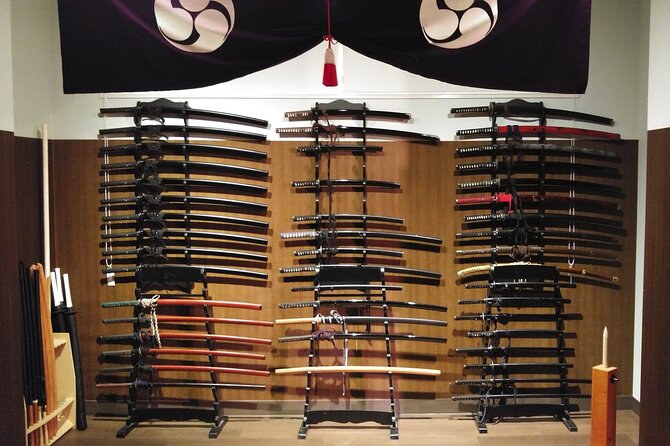
- Explore the dojo setting: Armor, swords, and spears are displayed in a room styled to recall an Edo-period training space.
- Take home photos and video: You can use your phone inside, and staff are often willing to help capture the action.
- Join a small group: The maximum group size is 10. Solo bookings are accepted, and same-day reservations may be possible.
Getting into costume at the Edo-style dojo
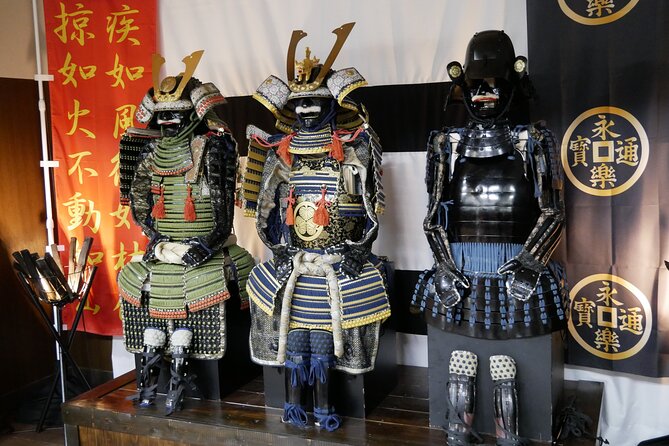
The session begins at Samurai Theater Tokyo, at 40 Yokoteramachi in Shinjuku City. The room is designed to look like a dojo from roughly 400 years ago, with armor and weapons on display. It is a deliberately theatrical setting, but one with enough detail to make the activity feel more connected to samurai culture than a costume rental and photo stop.
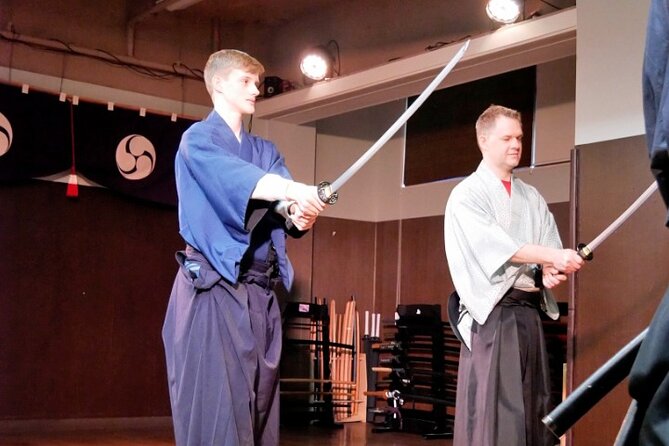
You choose a kimono and hakama before changing into the outfit. The clothes are a highlight for many people, and some are surprised by how comfortable they feel once dressed. That matters because you will be moving, not simply standing still for a portrait.
The displays provide an atmospheric backdrop and a chance to look at swords, spears, and armor up close. The information does not specify a separate museum tour or a formal talk through each object, so think of the collection as part of the setting rather than a detailed exhibit visit.
A practical tip: the venue sits along side roads, and it may not be obvious that you have reached the right place at first. Look for the flag that points down to the entrance. The meeting point and ending point are the same, so you return to where the session began.
More samurai experiences in Tokyo:
- Tokyo: Samurai Restaurant Show Ticket with 2 Drinks
★ 4.5 · 1,307 reviews - Tokyo: Samurai Ninja Museum Guided tour and Experience
★ 4.6 · 1,010 reviews - Tokyo: Samurai Sword & Archery Class from Samurai Descendant
★ 5.0 · 603 reviews
Learning to draw, hold, and swing a sword
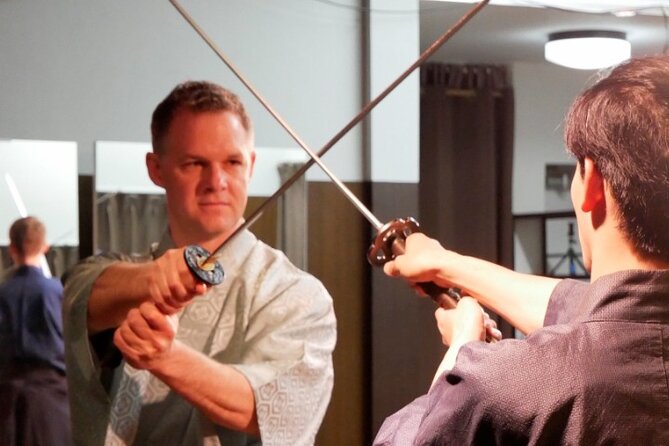
Once dressed, you get an introduction to basic sword use. The instructor teaches how to draw the sword, hold it, swing it, and put it away again. You are not expected to arrive with experience. The session is designed for beginners, and the guidance is intended to make the handling safe as well as entertaining.
The hands-on lesson is what gives this activity more substance than a quick dress-up stop. You learn a small set of movements, then repeat them until they start to feel more natural. One participant described learning about five basic moves before practicing the final sequence, which gives you a useful sense of the lesson’s scale: enough technique to take part, not a full course in swordsmanship.
The instructors are described as authentic teachers who have appeared in major Japanese dramas and films. No instructor names are provided, but the format puts their performance skills to practical use. They demonstrate, guide, and keep the mood light, which helps if you feel self-conscious about swinging a sword in front of a group.
You may also hear some information about the swords and the techniques. The focus, though, is on doing rather than sitting through a long lecture. If you want a broad account of samurai history, you will need another stop in Tokyo. If you want to try a few movements with direct instruction, this hour is better suited to you.
The choreographed fight is the payoff
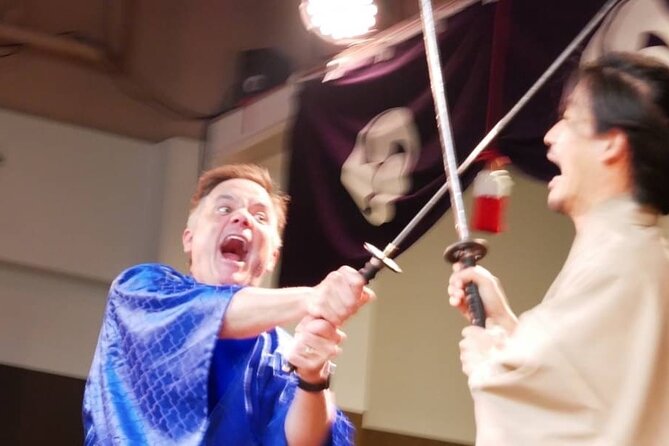
After practicing the basics, you put them together in a simple chambara-style sword fight. Chambara is a Japanese term associated with samurai sword-fighting films, and the scene here is designed as a playful performance, not a real bout. You take on the bad guys to music, using the movements you have just learned.
That final sequence turns the lesson into something you can remember and share. You can record video on your phone, and staff may take pictures or film for you. Several people appreciate having help with photos, particularly solo participants who cannot easily capture their own performance.
Set your expectations accordingly: this is a short, staged scene rather than open-ended combat or advanced choreography. The fun comes from dressing the part, following the instructor’s cues, and seeing your new moves come together. If you enjoy a bit of theatrical silliness, the ending is likely to be the part you talk about later.
A good choice for families, beginners, and solo visitors
Families are a natural fit. Children have enjoyed choosing the costume, learning basic moves, and taking photos, and the instructors are described as patient and friendly with kids. One family included a six-year-old, while other families with teenagers also found the session engaging. The activity is open to most participants, though no specific minimum age is provided.
Adults do not need to be martial arts fans. The session is built around simple instruction and a performance, so it suits people looking for a playful cultural activity as much as people who already love samurai films. You can learn a few movements without needing to master them.
Solo visitors can book too. With a group cap of 10, the session is relatively small, and staff can help take pictures or video. That makes it easier to enjoy the activity without needing a companion to act as photographer.
The mood is energetic and welcoming, but it is still a group activity with a costume change and physical movement. If you prefer a quiet, object-focused museum visit, this may not be your ideal hour. If your group likes trying things together, the mix of instruction and performance gives everyone a role.
More tours and experiences in Tokyo:
- Mt Fuji and Hakone 1-Day Bus Tour Return by Bullet Train
★ 5.0 · 26,383 reviews - 1-Day Tokyo Bus Tour
★ 5.0 · 14,250 reviews - Tokyo: teamLab Planets TOKYO Digital Art Museum Entry Ticket
★ 4.6 · 9,779 reviews - Mt Fuji & Hakone Cruise, Drum Show Bullet Train 1 Day from Tokyo
★ 4.0 · 7,413 reviews
Is $65 good value for one hour?
At $65 per person, this is not the cheapest way to spend an hour in Tokyo. The price includes all fees and taxes, a professional guide or instructor, and the samurai costume. Private transportation is not included, and the activity starts and ends at the dojo.
The value depends on what you want. You are paying for more than access to a room: the session combines a costume change, direct instruction, a staged fight, and the chance to leave with your own photos or video. For a family, that can make the hour feel like a shared event rather than a quick attraction. For someone mainly interested in a long historical explanation, the cost may be harder to justify.
The small maximum group size is another plus. A cap of 10 gives the instructor room to demonstrate and help participants, rather than treating the session like a large audience show. The price is easiest to defend if you plan to take part fully, learn the movements, and enjoy the final scene.
Planning your visit in Shinjuku
The session lasts about one hour, and the meeting point is Samurai Theater Tokyo, 40 Yokoteramachi, Shinjuku City, Tokyo 162-0831. The activity ends back at the same address. It is near public transportation, but private transportation is not included, so plan your route separately.
The venue’s side-road location is worth remembering. A flag leads down toward the entrance, but the approach can cause a moment of doubt if you expect a prominent street-front storefront. Give yourself a little extra time to find it rather than arriving at the last minute.
A mobile ticket is offered, and booking confirmation is received at the time of booking. Same-day reservations may be possible, and solo bookings are accepted. Availability can change, so do not treat a same-day spot as guaranteed.
The cancellation terms are straightforward: cancel at least 24 hours before the start time for a full refund. Changes or cancellations made within 24 hours are not accepted for a refund, and the cut-off follows local Tokyo time.
What the experience does well, and what it does not
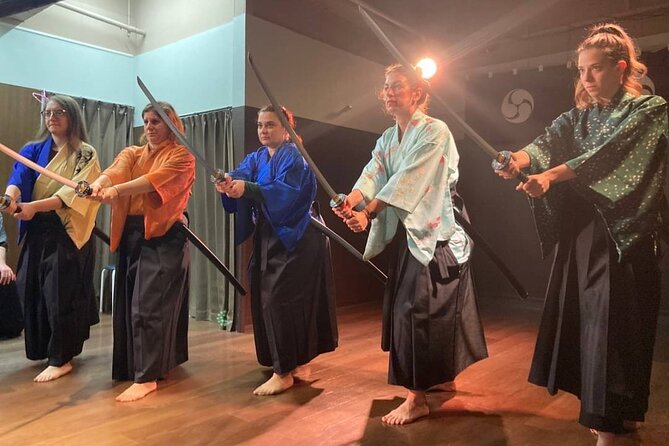
The strongest part is the blend of costume, instruction, and performance. You are not just handed a sword and left to pose. The instructor teaches a sequence, you practice it, and then you use it in a short scene. That structure makes the activity feel complete despite its short length.
The staff also seem to play a central role in how well the hour works. They are described as friendly, patient, and accommodating, including with children and solo participants. Their willingness to help with photos and video is a useful touch, since the final scene is exactly the moment many people want to capture.
There are limits. The hour is brief, the sword lesson covers basics, and the dojo’s historical appearance should not be confused with a full museum visit. The description does not promise a deep study of samurai life, a private session, or transportation. Book it for a hands-on introduction and a memorable performance, not as a substitute for a history tour.
Should you book the samurai session?
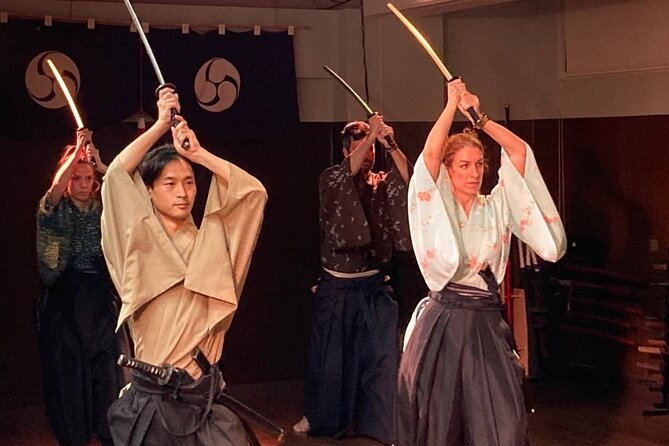
Book this if you want a lively, beginner-friendly activity where you can dress in a kimono and hakama, learn basic sword movements, and stage a short fight. It is especially well suited to families, film fans, and solo visitors who want a distinctive Tokyo memory and do not mind performing a little.
Skip it if your priority is a long historical lecture, an extensive museum collection, or advanced sword training. At $65, the value is strongest when you join in fully and make use of the costume, instruction, and photo opportunity. For that kind of hands-on hour, Samurai Theater Tokyo offers a lively change of pace from sightseeing on foot.
FAQ
How long does the samurai activity last?
The session lasts about one hour.
How much does it cost?
The listed price is $65 per person. All fees and taxes are included.
What is included in the price?
The price includes a professional guide or instructor and samurai costumes, as well as all fees and taxes.
Is transportation included?
No. Private transportation is not included. The activity begins and ends at Samurai Theater Tokyo.
Can I take photos and videos?
Yes. Photography and video recording are allowed inside, and you can use your smartphone.
How many people can join the session?
The maximum group size is 10 participants.
Can I book if I am traveling alone?
Yes. One person can join the activity.
Can children participate?
The activity is described as suitable for most participants, and families with children have taken part. No minimum age is specified.
What is the cancellation policy?
You can cancel at least 24 hours before the start time for a full refund. Cancellations or changes made less than 24 hours before the start time are not accepted for a refund.
Freshly reviewed in Tokyo
- Tokyo: Toshimaya Sake Brewery Tour with Sake Tasting★ 5.0 · 6 reviews
- :Tokyo,Shibuya /Meiji Shrine tour in KIMONO/English-friendly★ 5.0 · 4 reviews
- Tokyo: Tour Privado por Tokio en español★ 4.3 · 4 reviews
- Tokyo:Tea ceremony experience at Komaba Warakuan★ 4.8 · 9 reviews
- :Tokyo,Shibuya/ Pro Photography in Kimono / English-Friendly★ 5.0 · 26 reviews
- Tokyo:Samurai Training : Swords, Bushido & Mental Discipline★ 5.0 · 6 reviews
- Tokyo:Mt Fuji & Hakone Day Tour with English Speaking Driver★ 5.0 · 26 reviews
- Tokyo:Nikko UNESCO World Heritage Sites Private 1-Day Tour★ 3.8 · 6 reviews
Tokyo Samurai Experiences, compared.
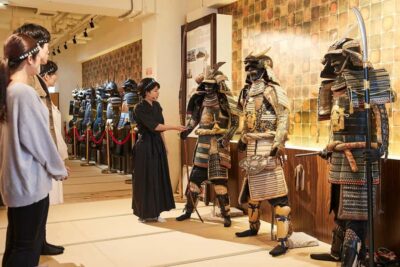
Samurai Ninja Museum Guided tour and Experience
Read our review →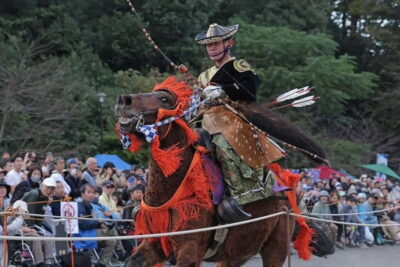
Samurai Sword & Archery Class from Samurai Descendant
Read our review →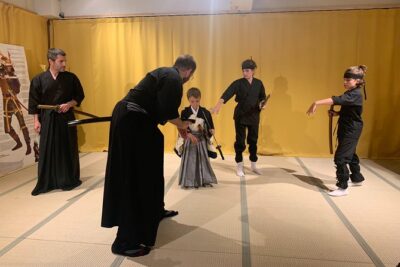
Ninja Experience (Family Friendly) at Samurai Ninja Museum TOKYO
Read our review →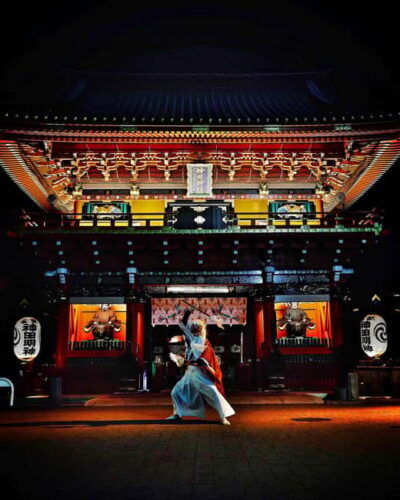
Samurai Entertainment Night Show in Kanda Shrine
Read our review →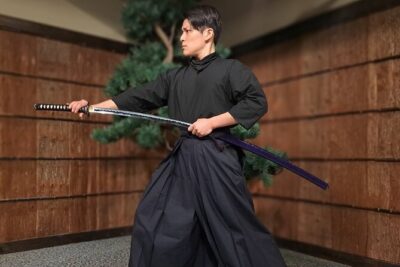
Tokyo Sword Experience – includes Museum Ticket/Ninja Experience
Read our review →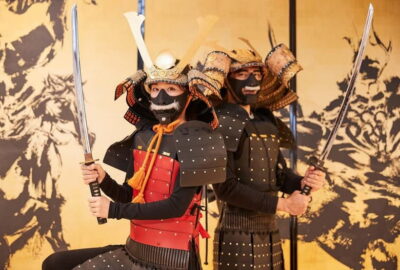
Samurai Ninja Museum Asakusa: Samurai Sword Lesson & Tour
Read our review →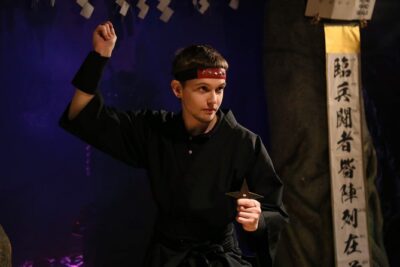
Ninja Samurai 2-hour hands-on lesson by Japanese master in Tokyo
Read our review →Browse the lists this tour appears in