
Reviewed · TOKYO SAMURAI EXPERIENCES
Samurai sword cutting experience
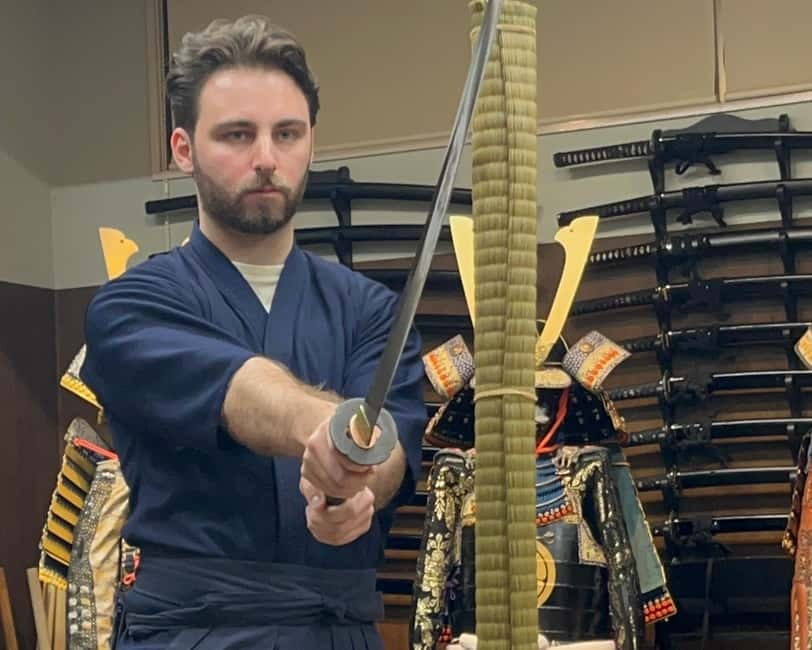
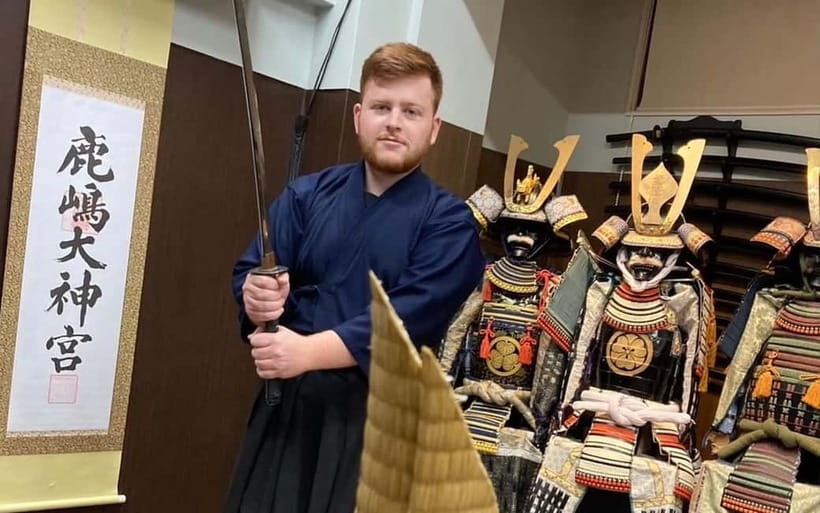
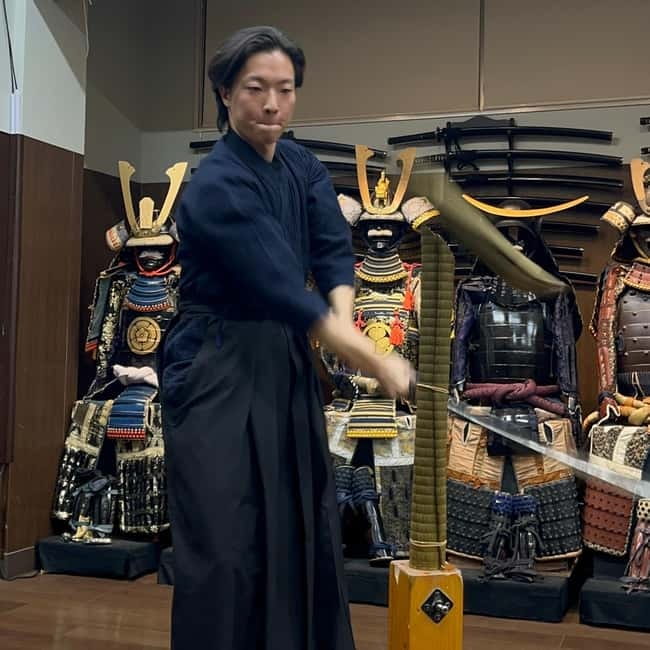
A real Japanese sword, more than 100 years old, is part of this hands-on iaido session. After changing into traditional practice clothing, you learn the etiquette, hear how the sword is handled, and watch an instructor demonstrate a cut before trying it yourself on rolled tatami.
I like that the experience treats sword work as more than a dramatic swing: greetings and meditation set a focused tone, while instruction from a Battoushi Do teacher gives the practice structure. I also like that you get to handle a real antique sword and make guided cuts, rather than only watch a performance.
The main consideration is that this is a controlled, instructor-led activity, not a free-form sword lesson. The experience is not suitable for children under 14, pregnant women, wheelchair users, or people with visual impairments.
What to know before you book
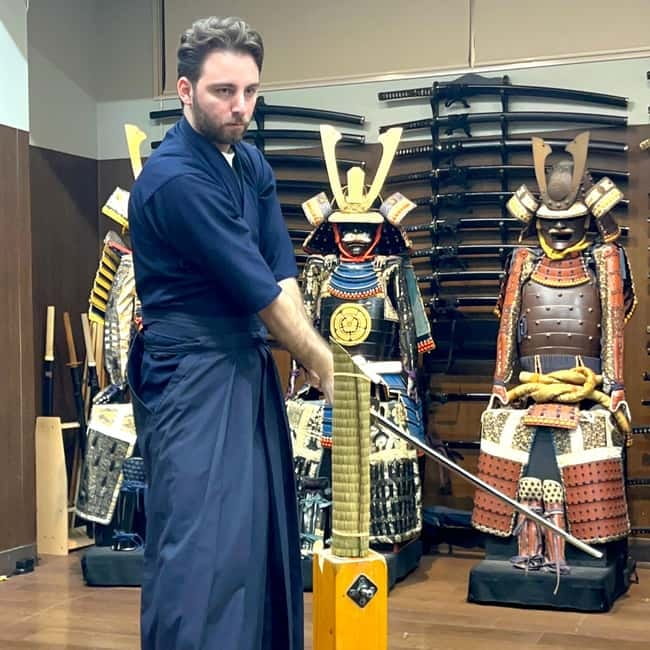
- You wear traditional iaido clothing before beginning the greeting and meditation portion.
- A Battoushi Do instructor leads the session, explains the Japanese sword, and demonstrates the cutting technique.
- You practice before cutting tatami, with instruction guiding your timing and movement.
- The real swords are more than 100 years old, alongside practice and imitation swords used during the session.
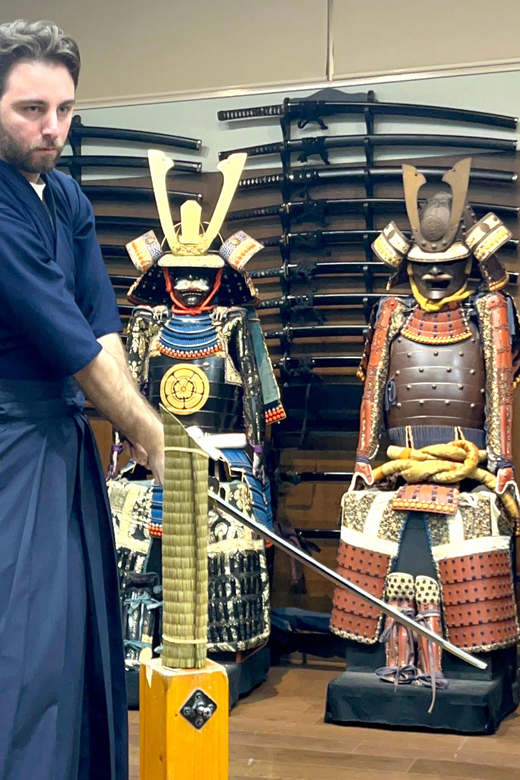
- Armor is on display, giving you a visual connection to the samurai period.
- You can take photos and video, and there is time for a commemorative photo and questions.
From costume to concentration
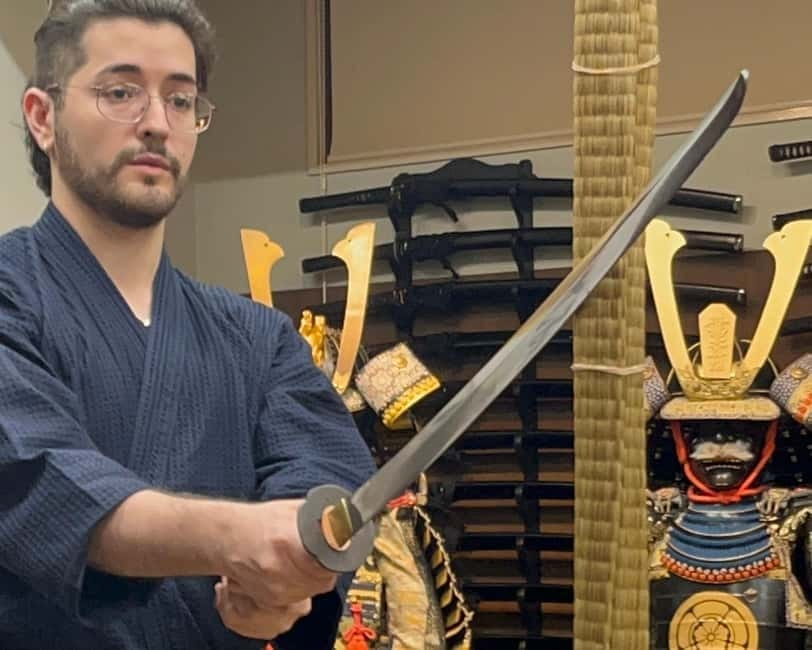
The session begins by changing into traditional iaido clothing. That simple step helps mark a shift from sightseeing to practice. You are not just picking up a sword for a quick photo; the clothing, greetings, and mental focus are part of the activity’s structure.
Next come greetings and meditation, described as a moment of mental unity. This may appeal to you if you are curious about the discipline behind sword practice, not only the spectacle of a blade cutting a mat. The ritual also gives the instructor a chance to establish the respectful tone that real sword handling calls for.
Iaido is presented here as an essential sword practice for samurai. The session does not promise a full course in the art, and it is best understood as an introduction. Still, making time for etiquette and focus before the cutting portion gives the experience more substance than a simple demonstration.
More samurai experiences in Tokyo:
- Tokyo: Samurai Restaurant Show Ticket with 2 Drinks
★ 4.5 · 1,307 reviews - Tokyo: Samurai Ninja Museum Guided tour and Experience
★ 4.6 · 1,010 reviews - Tokyo: Samurai Sword & Archery Class from Samurai Descendant
★ 5.0 · 603 reviews
Learning the sword before you swing
The instructor explains the Japanese sword and leads you through practice swings. You also handle practice and imitation swords as part of the session, so the first movements are not immediately with the antique blade. That progression matters: you get a chance to understand the basic action before moving to the cutting exercise.
Then the teacher demonstrates how to cut a rolled tatami mat. Watch closely. The demonstration is your clearest guide to the movement, timing, and follow-through expected of you. The instructor then directs you as you attempt the cut, so this is not a test of whether you already know sword technique.
The experience includes two guided cuts on tatami, with an opportunity to make cuts at the timing you choose. Expect close direction rather than a long stretch of unsupervised practice. The goal is to feel the action under instruction and see how the blade meets the rolled mat, not to leave as a trained swordsman.
The antique sword and the tatami cut

The most striking detail is that the real Japanese swords are more than a century old. That gives the handling portion a clear sense of age and care. The session also includes practice and imitation swords, and the instructor explains the differences in the context of the activity.
The tatami is rolled for cutting. You follow the teacher’s instructions, set your timing, and make your attempt. It is a rare chance to experience the weight and responsibility of a real sword in a structured setting, though the details of the sword’s history and the exact amount of time spent handling it are not specified.
This is where expectations are worth keeping realistic. The cutting exercise may feel exciting, but it is not a movie scene or a contest. Your experience depends on following the instructor’s directions and accepting that a first attempt may take concentration. The session is designed to let you try, not to guarantee a perfect cut.
Armor, demonstration, and photographs
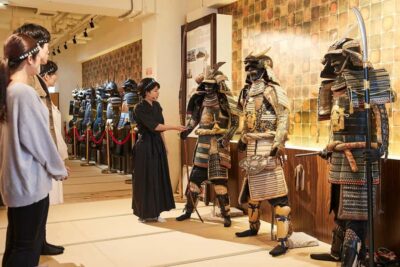
Armor on display adds a useful visual layer to the session. It can help you picture the period and the people associated with the practice, even though the activity’s central focus is sword handling rather than a museum tour. Take a moment to look at it before or after the cutting portion, and ask the teacher questions if you want more context.
The instructor also performs a demonstration, including a performance later in the session. Watching more than one demonstration can help you compare the measured movements with your own guided attempt. It also gives the experience a performance element without replacing the practical part.
Photography and video recording are included, and you may take pictures or video of yourself cutting tatami if you wish. A commemorative photo is also part of the closing. If recording matters to you, keep your attention on the instructor first and make the most of the permitted camera time when it fits the activity.
More tours and experiences in Tokyo:
- Mt Fuji and Hakone 1-Day Bus Tour Return by Bullet Train
★ 5.0 · 26,383 reviews - 1-Day Tokyo Bus Tour
★ 5.0 · 14,250 reviews - Tokyo: teamLab Planets TOKYO Digital Art Museum Entry Ticket
★ 4.6 · 9,779 reviews - Mt Fuji & Hakone Cruise, Drum Show Bullet Train 1 Day from Tokyo
★ 4.0 · 7,413 reviews
Is $93 good value?
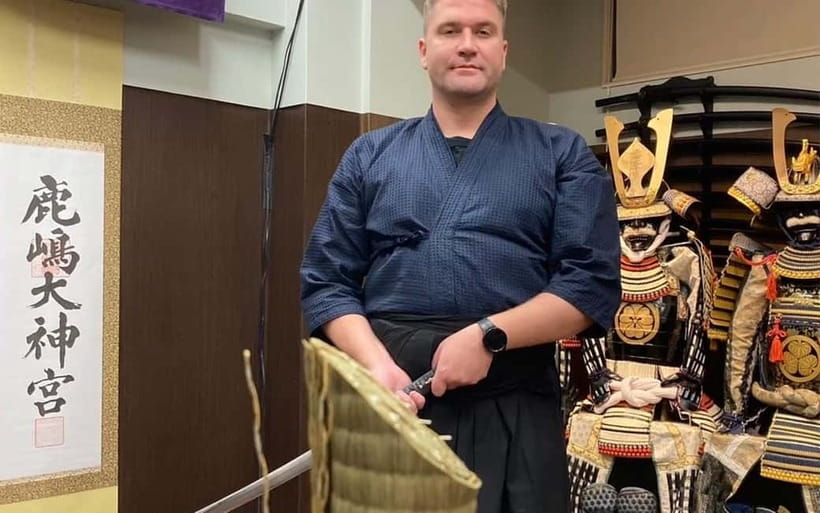
At $93 per person, this is a specialized experience rather than a low-cost cultural stop. The price includes an instructor, sword explanation, practice, practice clothing, practice and imitation swords, the instructor’s demonstration, rolled tatami, a real sword, and photography and video recording. You are paying for direct participation and close instruction, not simply entry to see equipment on display.
The value will depend on what you want from a samurai-themed activity. If your priority is to handle a real antique sword and attempt a tatami cut under a teacher’s guidance, the combination is distinctive. If you mainly want historical background, a quiet meditation session, or extensive technical training, the available details do not suggest that this short experience is built to provide those things.
The small number of published ratings is uniformly positive, with comments emphasizing clear explanation and the experience’s uniqueness. One brief recommendation calls it a treat. That is encouraging, but a handful of ratings is not enough to predict every person’s experience. I would treat the clearest practical signal as the activity itself: it combines instruction, ritual, a demonstration, and your own turn with the sword.
Getting there and checking suitability
The meeting point is Samurai Theater Tokyo. The directions specify searching for that name in Google Maps, and the activity ends back at the meeting point. The experience is listed for Honshu, Japan, and the meeting point places it in Tokyo, so check the map carefully when planning your route.
Instruction is available in English and Japanese. No duration or group size is specified, so avoid building a tight schedule around an assumed end time. If you have questions about the session’s timing or any aspect of participation, you can ask the teacher during the activity, but check with the provider before booking if you need an answer in advance.
The activity is not suitable for children under 14 or pregnant women. It is also not suitable for wheelchair users or people with visual impairments. If any of those limits apply, this is not the right booking to make.
You can reserve now and pay later, which helps if you are still arranging your plans. Cancellation up to 24 hours in advance is eligible for a full refund. The experience is provided by 株式会社テイク.
Who will enjoy this experience most?
I would point this out to adults who want a participatory cultural activity and are comfortable following precise instructions. It suits people curious about iaido, Japanese swords, and the discipline surrounding their use, especially if they would rather try a skill than only watch a show.
It may also work well for visitors who enjoy a memorable photo, but the camera should be a bonus, not the main reason to book. The clothing, formal greetings, meditation, instructor demonstration, and tatami cutting make the session more rounded than a single photo opportunity.
This is a less suitable choice if you want a long martial arts course, a broad history lecture, or a relaxed activity with no physical participation. You will be asked to swing a sword and make a cut under supervision. If that sounds more nerve-racking than interesting, choose a different way to explore samurai culture.
Should you book it?
Book this experience if the chance to handle a real, century-old Japanese sword and make a guided cut is the part of samurai culture you most want to try. The ritual and instruction give the activity shape, while armor and demonstrations add context without pretending that one session can teach the full art of iaido.
At $93, it makes the most sense as a focused, hands-on experience rather than a general history tour. Check the suitability rules, confirm the Tokyo meeting point, and leave room in your schedule since no duration is provided. If you are ready to listen carefully, follow the teacher’s lead, and take your turn with the tatami, this is an unusual way to spend part of a day in Japan.
FAQ
Where does the experience start?
The meeting point is Samurai Theater Tokyo. Search for that name in Google Maps to locate it. The activity ends back at the meeting point.
What languages are available?
The experience is available in English and Japanese.
Do I get to use a real Japanese sword?
Yes. The session includes real Japanese swords more than 100 years old, as well as practice and imitation swords. The instructor explains the sword and guides the cutting activity.
Can I take photos or videos?
Yes. Photography and video recording are included, and you may take pictures or video of yourself cutting the tatami if you wish.
Who is the experience not suitable for?
It is not suitable for children under 14, pregnant women, wheelchair users, or people with visual impairments.
Can I cancel for a refund?
You can cancel up to 24 hours in advance for a full refund. You can also reserve your place and pay later.
Freshly reviewed in Tokyo
- Tokyo: Toshimaya Sake Brewery Tour with Sake Tasting★ 5.0 · 6 reviews
- :Tokyo,Shibuya /Meiji Shrine tour in KIMONO/English-friendly★ 5.0 · 4 reviews
- Tokyo: Tour Privado por Tokio en español★ 4.3 · 4 reviews
- Tokyo:Tea ceremony experience at Komaba Warakuan★ 4.8 · 9 reviews
- :Tokyo,Shibuya/ Pro Photography in Kimono / English-Friendly★ 5.0 · 26 reviews
- Tokyo:Samurai Training : Swords, Bushido & Mental Discipline★ 5.0 · 6 reviews
- Tokyo:Mt Fuji & Hakone Day Tour with English Speaking Driver★ 5.0 · 26 reviews
- Tokyo:Nikko UNESCO World Heritage Sites Private 1-Day Tour★ 3.8 · 6 reviews
Tokyo Samurai Experiences, compared.

Samurai Ninja Museum Guided tour and Experience
Read our review →
Samurai Sword & Archery Class from Samurai Descendant
Read our review →
Ninja Experience (Family Friendly) at Samurai Ninja Museum TOKYO
Read our review →
Samurai Entertainment Night Show in Kanda Shrine
Read our review →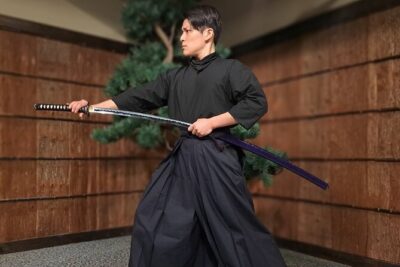
Tokyo Sword Experience – includes Museum Ticket/Ninja Experience
Read our review →
Samurai Ninja Museum Asakusa: Samurai Sword Lesson & Tour
Read our review →Browse the lists this tour appears in