
Reviewed · TOKYO TOURS
Kyoto: Nijo Castle World Heritage Guided Tour with Admission
Nijo Castle is a palace built to make political power visible. Its rooms, corridors, and famously chirping floors tell a story not just of Japanese architecture, but of a shogun asserting control in the Emperor’s own city, then surrendering that power centuries later.
I like two things in particular: the small group of up to 10 makes room for questions, and the guide connects the castle’s details to the rivalry between shogun and Emperor. The nightingale floors are a memorable example of security made audible, while the palace’s layout shows how status shaped a visitor’s path.
The main consideration is time. The tour lasts 90 minutes, with about an hour listed for the castle visit, so it gives you a focused introduction rather than time to linger over every room and garden. You’ll also need to remove your shoes inside the palace.
Nijo Castle at a glance
- A palace with a political purpose: Learn why the Tokugawa shoguns built a lavish residence in Kyoto, close to the Emperor’s home.
- Ninomaru Palace in focus: See how room size, floor height, decoration, gates, and corridors signaled social rank and authority.
- The nightingale floors: Hear the floors chirp underfoot, a feature designed to warn of intruders.
- A turning point in 1867: Stand in the room where Tokugawa Yoshinobu returned authority to the Emperor, ending more than 260 years of shogunate rule.
- A compact English-language tour: The 90-minute walk includes castle admission and is limited to 10 participants.
- Practical to reach: Meet outside Exit 1 of Nijōjō-mae Station, where your guide will hold a Local Guide Stars sign.
Why this castle tells a bigger story
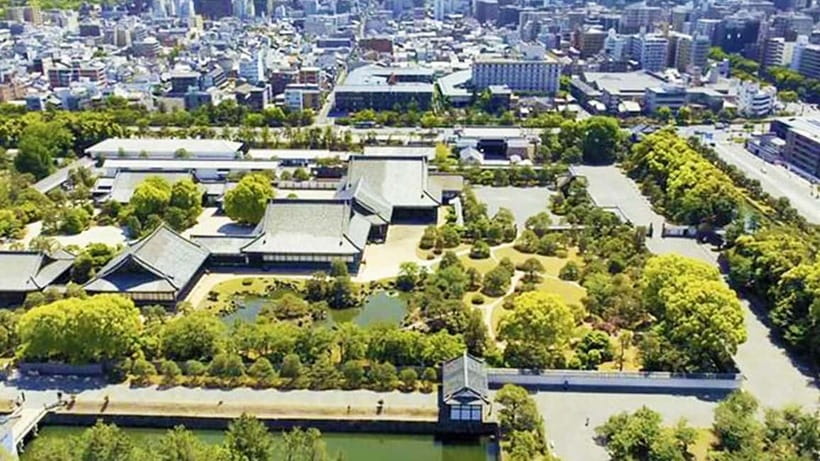
Nijo Castle is more than a grand old residence. The place helps explain how the Tokugawa shoguns governed Japan while based in Edo, now Tokyo, and why they built such a showy palace in Kyoto, the Emperor’s city. The castle’s location and design sent a message: the shogun held power, and he could make that fact plain without starting a fight.
That political purpose gives the visit a useful thread to follow. Instead of seeing a series of historic rooms and trying to guess what they meant, you can look at their scale, decoration, and arrangement as signs of rank and control. The guide’s explanations also place the palace within the long rivalry between the shogun and the Emperor.
The story has an unusually clear ending. In 1867, Tokugawa Yoshinobu returned authority to the Emperor in a room inside Nijo Castle. That act ended more than 260 years of shogunate rule and ushered in the Meiji Restoration. You’ll hear about this turning point while standing in the very room where the transfer took place, a detail that gives the castle’s final chapter a strong sense of place.
More history tours in Tokyo:
- Tokyo: Imperial Palace and Shogun Historical Walking Tour
★ 5.0 · 2,251 reviews - Tokyo: Imperial Palace Japanese History Walking Tour
★ 4.9 · 987 reviews - Yanaka Walking Tour: Historic and Traditional District of Tokyo
★ 5.0 · 530 reviews
Meeting your guide outside Nijōjō-mae Station
The meeting point is outside Exit 1 of Nijōjō-mae Station. Look for a guide holding a sign that says Local Guide Stars. This is a straightforward start: the station is named for the castle, and the group begins and ends at the same location.
The tour is in English and runs for 90 minutes. It is limited to 10 people, so the group stays small enough for questions and conversation. That can make a difference at a site where the details matter: a guide can point out how a corridor, gate, or room fits into the castle’s larger plan rather than leaving you to take in the building without context.
Several guides are named in the experience details and visitor comments, including Nao, Naoya, Uta, and Benjamin. Their styles may differ, but the qualities people value most are clear: strong storytelling, answers to questions, and useful context about Japanese culture as well as the castle. Nao and Naoya are especially noted for explaining the site and tailoring the pace to the group.
Inside Ninomaru Palace
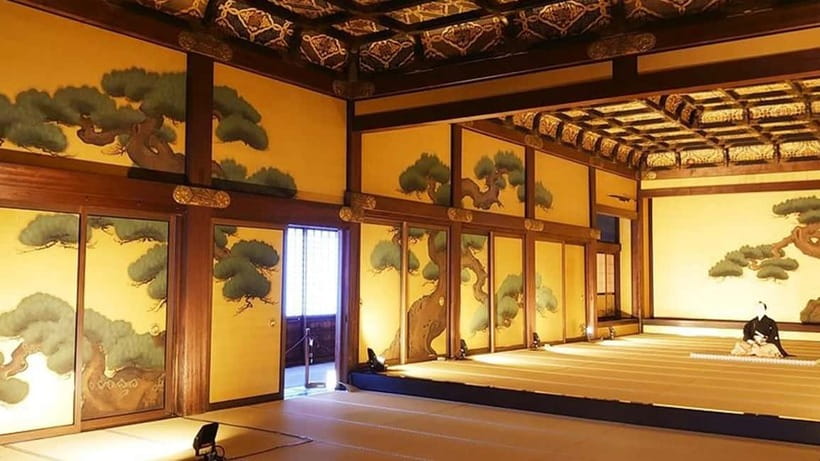
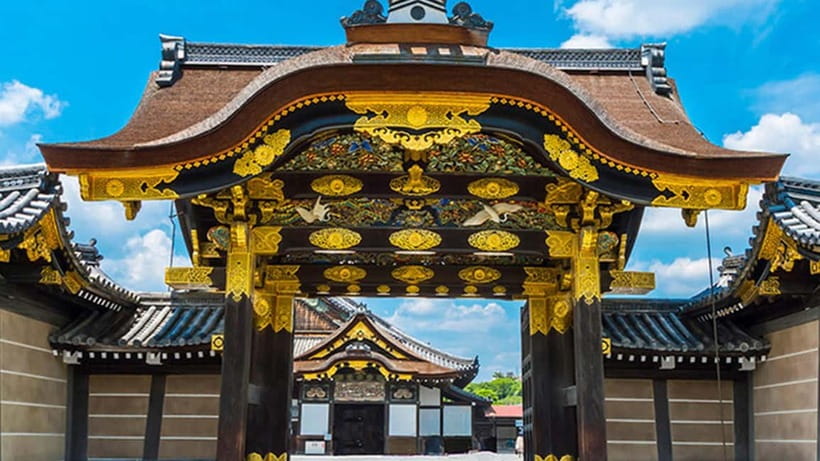
The palace is the heart of the visit. Its rooms were arranged to reflect social hierarchy, with room size, floor height, and decoration helping mark a person’s rank. Those distinctions are easy to miss if you walk through quickly. With a guide, you have a better chance of noticing how the building itself communicated who mattered and where each person belonged.
The castle’s corridors and gates were also designed to shape how visitors felt as they moved through the complex. The layered route could overwhelm and impress, making authority felt before anyone needed to state it aloud. That is a useful lens for the tour: the architecture was not simply attractive, it was part of how the shogun displayed control.
You’ll need to take off your shoes before entering the palace. It’s a practical detail worth knowing in advance, especially if you prefer footwear that is easy to remove and put back on. The grounds are described as mostly flat, but the palace visit has this small ritual built into it.
Listen for the nightingale floors
The nightingale floors are one of the castle’s best-known features, and hearing them is more memorable than merely reading about them. They chirp beneath your feet, helping expose intruders. On a guided walk, you can connect that sound to the larger purpose of the building: a place designed not only to impress, but also to protect and monitor the shogun.
The detail works because it is both practical and theatrical. A sound from the floor turns an ordinary walk into a warning system, while also reminding you that even a palace built for display had security in mind. If you have heard of the floors before, the chance to experience their sound in person is a good reason to make time for Nijo Castle.
This is also a moment when the group format helps. With no more than 10 participants, there should be room to pause, listen, and ask how the feature fits into the castle’s design. The exact pace depends on the group and guide, but the tour is built around explaining what you are seeing rather than simply moving from room to room.
More guided tours in Tokyo:
- Tokyo 6hr Private Tour with Government-Licensed Guide
★ 5.0 · 3,902 reviews - Tokyo: Shinjuku Local Bar and Izakaya Guided Walking Tour
★ 4.9 · 1,794 reviews - Tokyo: Private City Highlights Tour with Local Guide
★ 4.8 · 1,433 reviews - Tokyo: Tsukiji Fish Market Guided Walking Tour
★ 4.9 · 1,397 reviews
The 1867 handover that changed Japan
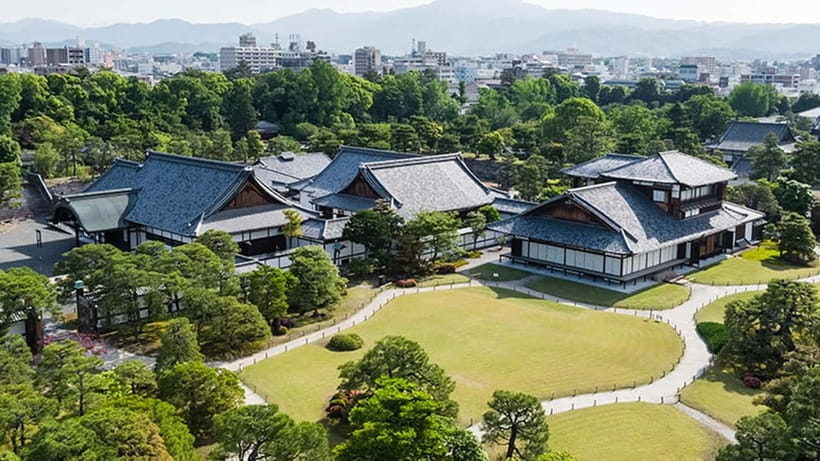
The tour’s strongest historical moment comes in the room where Tokugawa Yoshinobu returned authority to the Emperor in 1867. The handover ended over 260 years of shogunate rule and opened the way for the Meiji Restoration. Here, the building’s story shifts from the shogun’s display of power to the end of that system.
It is a powerful contrast. The castle was constructed to assert the shogun’s authority in Kyoto, yet it became the setting for a decision that brought that authority to a close. You don’t need to be an expert in Japanese history to follow the change: the guide’s job is to connect the place, the people, and the political outcome.
This historical focus is a good fit if you want more than a scenic walk. The castle’s gardens and architecture offer visual appeal, but the tour’s central value lies in understanding why the site mattered and what happened there. If your main interest is independent time in the gardens, keep in mind that a guided walk has a set duration.
Gardens, koi, and time outdoors
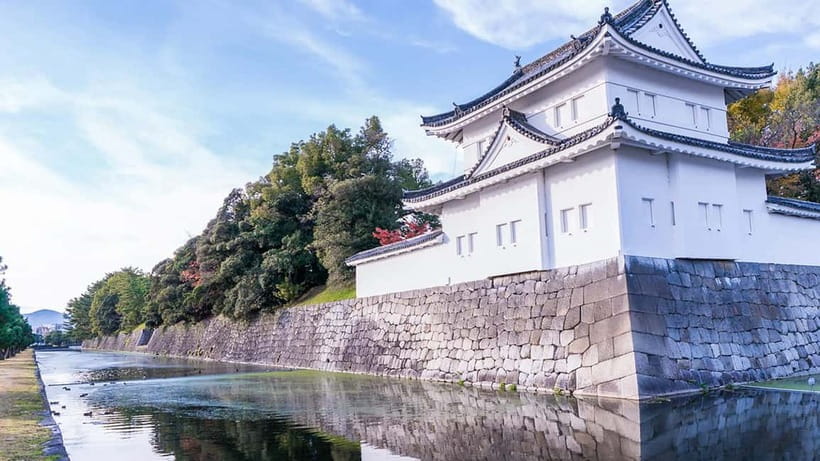
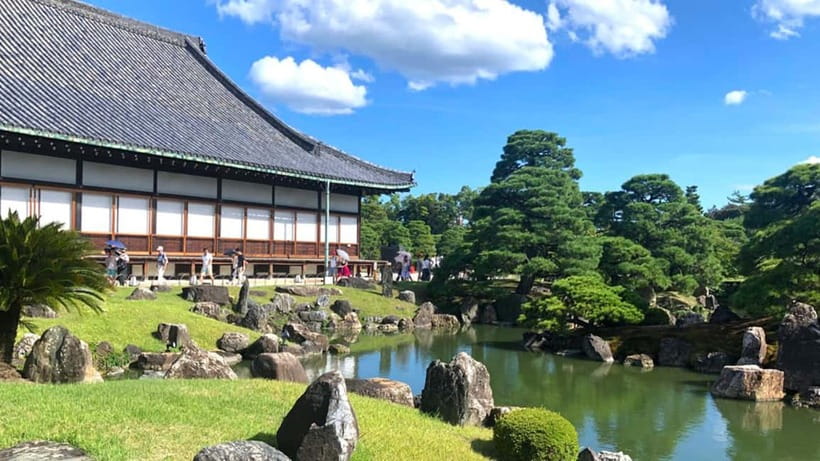
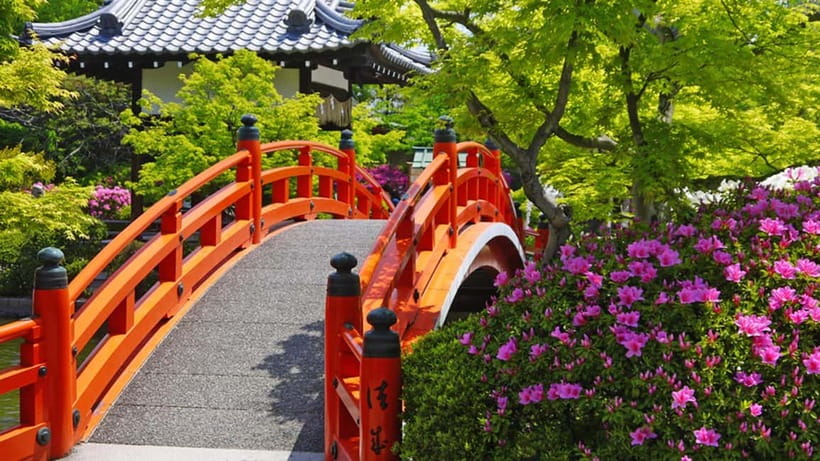
The castle grounds add a welcome change of pace after the palace interiors. The photogenic gardens and colorful koi swimming through the castle’s moats offer a quieter, more visual side of the visit. They are also a reminder that the castle is not only a political monument, but a place to look around and enjoy.
The 90-minute tour includes a guided visit to the castle, with about an hour allotted to the site in the itinerary. That is enough for an introduction to the main story and key features, but it may feel short if you like to linger for photographs or explore each part at your own pace. Consider the tour a structured first visit, not an all-day pass with a guide beside you.
A small group can make stops feel more personal, but the schedule still has limits. If you want to spend extra time with the koi, gardens, or palace details, check whether you can remain at the castle after the guided portion. That is not specified as part of the tour, so don’t assume extra time is included.
Is $40 a fair price?
At $40 per person, the price includes admission and a 90-minute English-language guided tour. You are paying for more than entry: the guide supplies the historical frame that makes the palace’s hierarchy, security features, and political role easier to understand. For a visitor who wants context and the chance to ask questions, that can be a fair trade for a short, focused visit.
The group limit matters to the value. With up to 10 people, the tour is more intimate than a large group walk, and there is a better chance to ask about details as they come up. Some departures may be smaller; people have even had the guide to themselves. That is possible, but you should not book on the assumption that the tour will be private.
The value is less compelling if you prefer to explore entirely on your own or want a long, unhurried visit. Admission is included, but the tour itself is only 90 minutes, and the guided visit is listed as about one hour. Think of the fee as the cost of a well-framed introduction, not a full day of castle access with a personal guide.
Who will get the most from this walk?
This tour suits first-time visitors who want the castle’s story laid out clearly, especially if the shogun and Emperor’s relationship is new to them. It also works well for anyone drawn to the Tokugawa period, the nightingale floors, or the events that led to the Meiji Restoration. The guide can add detail that is hard to pick up from the rooms alone.
It can also suit a mixed-age family. One family group with children aged 8 and 13 and adults over 65 found that Naoya adjusted to their pace and answered questions. That does not guarantee the same pace for every group, but it suggests the format can work across generations when everyone is comfortable with a guided walk.
The mostly flat terrain is helpful for getting around, and the activity is listed as wheelchair accessible. Still, palace visitors must remove their shoes, so consider whether that requirement works for your needs. If mobility is a concern, it is sensible to confirm details before booking rather than rely on the general accessibility description alone.
Practical details before you book
The tour starts and finishes at Nijōjō-mae Station, outside Exit 1. Your guide will hold a Local Guide Stars sign. The duration is 90 minutes, and available start times depend on the date you choose.
Admission is included, and the guide speaks English. The group is capped at 10 participants. The terrain is mostly flat, but you must remove your shoes inside the palace. Those are the main practical points to plan around.
The booking terms allow you to cancel up to 24 hours in advance for a full refund. You can also reserve now and pay later, which keeps your plans flexible. Check the available start times when choosing a date, since the tour’s schedule is not fixed in the details here.
Should you book the Nijo Castle tour?
Book it if you want a compact, guided introduction to the castle’s architecture and its place in Japan’s political history. The nightingale floors, carefully ranked palace rooms, and 1867 handover give the visit a clear story, while the small group and English-speaking guide make it easier to ask questions.
Skip it if you would rather spend your time exploring at your own pace or want a long visit with no set route. At $40, the tour makes the most sense for someone who values interpretation as much as admission. If that sounds like you, this is a practical way to make Nijo Castle’s details add up.
FAQ
How long is the Nijo Castle tour?
The tour lasts 90 minutes. The castle visit is listed as about one hour.
What is included in the price?
Admission to Nijo Castle and a 1.5-hour guided tour are included. The listed price is $40 per person.
What language is the tour in?
The live tour guide speaks English.
Where do I meet the guide?
Meet outside Exit 1 of Nijōjō-mae Station. The guide will hold a sign that says Local Guide Stars.
How many people can join the tour?
The small group is limited to 10 participants.
Will I hear the nightingale floors?
The tour includes a walk through Ninomaru Palace, where you can hear the floors chirp beneath your feet. They were designed to expose intruders.
Do I need to remove my shoes?
Yes. All visitors must remove their shoes when entering the palace.
Is the route wheelchair accessible?
The activity is listed as wheelchair accessible, and the terrain is mostly flat. Visitors must remove their shoes inside the palace.
Can I cancel for a refund?
Yes. You can cancel up to 24 hours in advance for a full refund.
Can I reserve without paying right away?
Yes. The reserve-now, pay-later option lets you book without paying at the time of reservation.
Freshly reviewed in Tokyo
- Tokyo: Toshimaya Sake Brewery Tour with Sake Tasting★ 5.0 · 6 reviews
- :Tokyo,Shibuya /Meiji Shrine tour in KIMONO/English-friendly★ 5.0 · 4 reviews
- Tokyo: Tour Privado por Tokio en español★ 4.3 · 4 reviews
- Tokyo:Tea ceremony experience at Komaba Warakuan★ 4.8 · 9 reviews
- :Tokyo,Shibuya/ Pro Photography in Kimono / English-Friendly★ 5.0 · 26 reviews
- Tokyo:Samurai Training : Swords, Bushido & Mental Discipline★ 5.0 · 6 reviews
- Tokyo:Mt Fuji & Hakone Day Tour with English Speaking Driver★ 5.0 · 26 reviews
- Tokyo:Nikko UNESCO World Heritage Sites Private 1-Day Tour★ 3.8 · 6 reviews
Tokyo Tours, compared.

Mt Fuji and Hakone 1-Day Bus Tour Return by Bullet Train
Read our review →

teamLab Planets TOKYO Digital Art Museum Entry Ticket
Read our review →
Mt Fuji & Hakone Cruise, Drum Show Bullet Train 1 Day from Tokyo
Read our review →
Shinjuku Food Tour (13 Dishes at 4 Local Eateries)
Read our review →
Tokyo Mt Fuji 5th St & Hakone Cruise Bus Tour w/Bullet Train
Read our review →
Flagship 2-Hours Official Street Go-Kart Tour – Tokyo Bay Shop
Read our review →
Browse the lists this tour appears in