
Reviewed · ASAKUSA TOURS
Asakusa: 3.5-hour Big-picture History Walk
Asakusa’s temples and shopping streets are more than a pleasant Tokyo stroll: together they offer a brisk introduction to Japan’s changing beliefs, its long period of isolation, and its return to the wider world. This 3.5-hour walk links those big themes to places you can see and feel, from Sensō-ji to old entertainment lanes.
I like two things about the plan. First, it connects Buddhist and Shinto sites, showing how Japan’s two major religions can share worshipers and a place in daily life. Second, it leaves the main temple district for quieter streets and old-style pubs, where Asakusa’s working-class and entertainment history comes into view.
The main consideration is pace: you’ll be walking for much of the 210 minutes, in all weather, and the tour is not suited to people with mobility impairments. The temple area can also be crowded, so comfortable shoes, water, and a little patience will help.
What makes this Asakusa walk worthwhile
- Japan’s isolation and reopening become easier to grasp through landmarks and stories tied to the country’s contact with the West.
- Sensō-ji and Asakusa Shrine show how Buddhism and Shinto have coexisted, often with the same people taking part in both traditions.
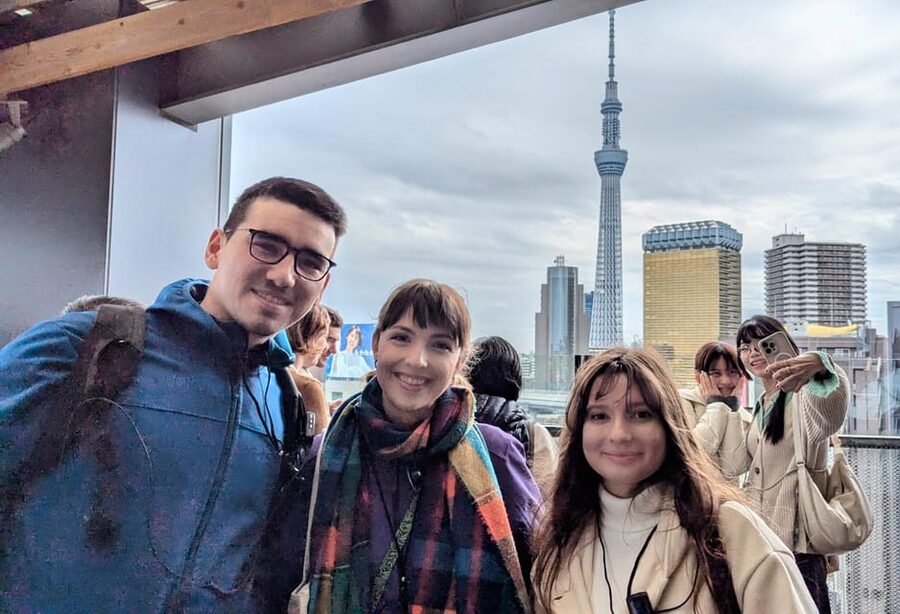
- The rooftop view from the Asakusa Culture Tourist Information Center gives you a useful look over the area and toward Tokyo Skytree.
- Old entertainment streets and Hoppy Street take you beyond temple grounds to Asakusa’s more secular, working-class side.
- A small group of up to eight makes it easier to hear the guide, ask questions, and move through busy streets together.
- Traditional Japanese snacks and sweets are included, adding a modest taste of local food to the walk.
Reading Japan’s story in Asakusa
This tour is built around a useful idea: a neighborhood can explain more than its own past. In Asakusa, you’ll move between sacred sites, commercial streets, and old entertainment corners while your guide links each stop to changes in Japan’s beliefs and its relationship with the world.
The tour takes 210 minutes and is led in English by a certified guide. Its group limit of eight is a practical advantage in a busy district. You have a better chance of hearing explanations clearly, and the guide can make room for questions or adapt the pace to the group’s interests.
The historical focus is broad, from Edo-era Japan to the country’s 19th-century opening to the West. That range makes the walk a good fit if you want more than temple photographs, but it also means you should expect a fast-moving overview rather than an in-depth study of every period.
More Asakusa tours in Tokyo:
- Tokyo: Japanese Dance Cabaret Theater Asakusa-Kaguwa Ticket
★ 4.8 · 2,270 reviews - Tokyo: Meiji Shrine, Asakusa, Skytree Bus Tour and Cruise
★ 4.7 · 1,986 reviews - Tokyo: Roll and Authentic Sushi Making Class in Asakusa
★ 4.9 · 1,957 reviews
Starting beside the Asakusa subway station
Meet outside Exit 4 of Asakusa Station on the Ginza Line, in front of the Burger King nearby. The stated meeting point is 2-chōme-20-6 Kaminarimon, so check the route details before setting out and make sure you come up to street level at Exit 4.
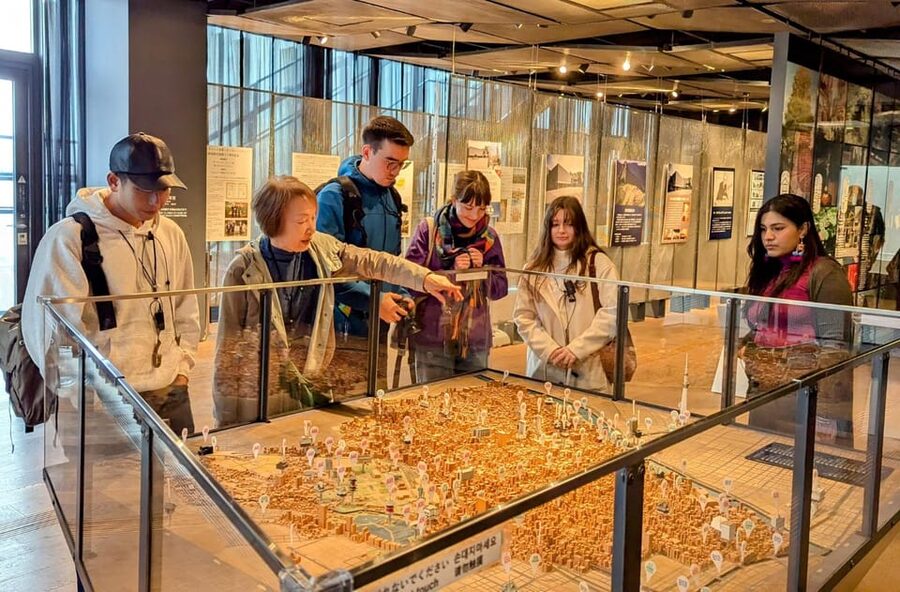
The tour begins near Tokyo Cruise Asakusa Pier, where the guide introduces the neighborhood and its connections to the larger city. This early stop gives you a chance to orient yourself before the walk heads into the temple district.
You’ll then spend time at the Asakusa Culture Tourist Information Center. The building itself has drawn interest for its contemporary design, and the tour includes time for a guided visit. A rooftop viewpoint here offers a useful perspective over the district; you may also spot Tokyo Skytree. One fun detail that has come up on the walk is that the tower’s height, 634 meters, can be read aloud as roku-san-yon, echoing the numbers six, three, and four.
From Kaminarimon to Sensō-ji
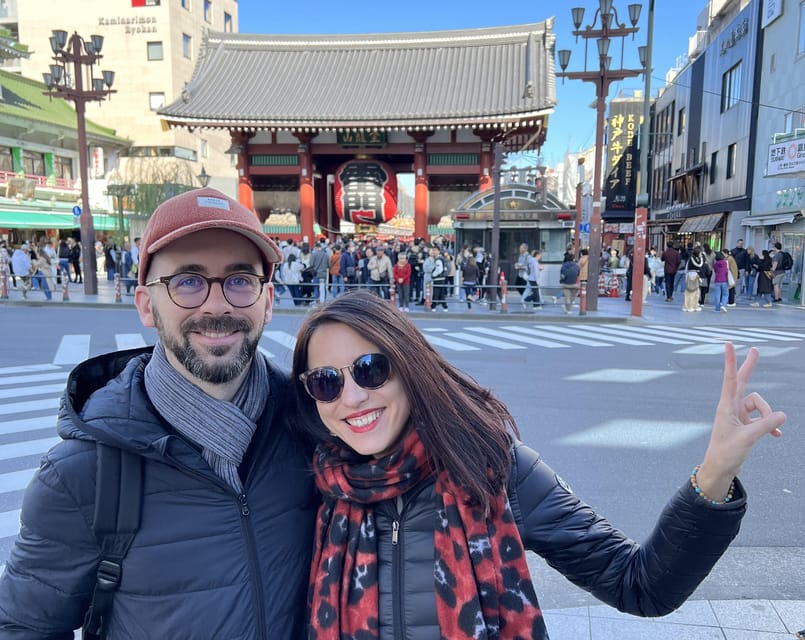
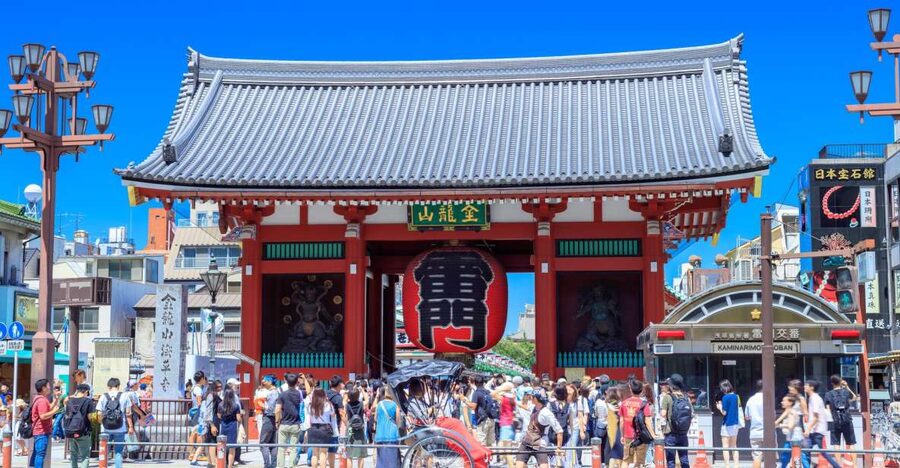
Kaminarimon, or Thunder Gate, is one of Asakusa’s best-known landmarks and a natural doorway into the temple quarter. Your guide uses it to set the scene before you continue along Nakamise Shopping Street, where shops and food stalls line the approach to Sensō-ji.
Nakamise is lively and often crowded. The guided portion helps you look beyond the shopping and understand how the street fits into the temple visit. You’ll have time to notice the goods and atmosphere, but this is not the quietest stretch of the walk. If you prefer to browse at your own pace, remember that the group will continue on a set schedule.
Hōzōmon Gate leads you closer to the main temple. The itinerary allows time here before a longer stop at Sensō-ji, the tour’s central landmark. With 45 minutes assigned to the temple, there is room for the guide to explain its place in Japanese religious life rather than simply point out the buildings.
The tour’s broader theme comes into focus here: Buddhism and Shinto have often coexisted in Japan, with people drawing on both traditions. Rather than treating them as competing choices, the guide explains how their roles can complement each other and how that relationship appears in everyday life. If this is your first visit to Japan, that context can make later shrine and temple visits easier to understand.
Seeing two religions side by side
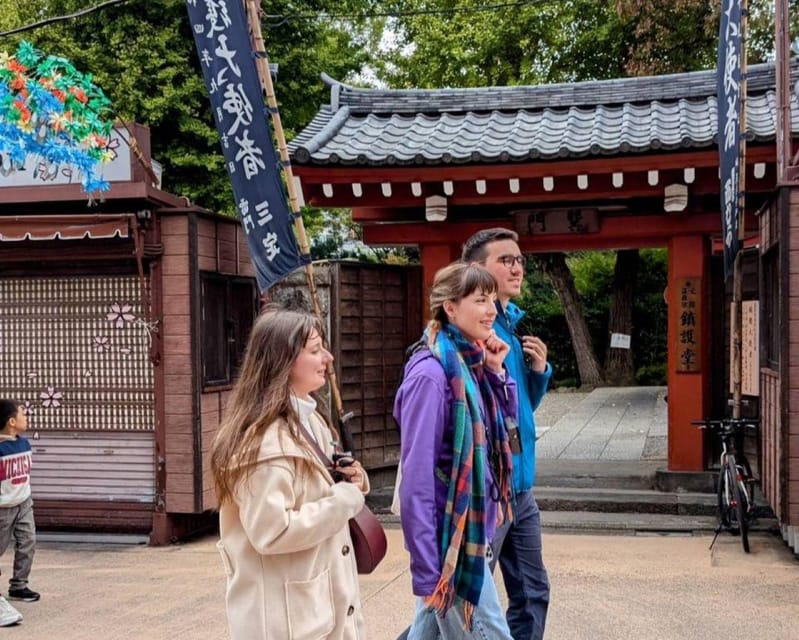
After Sensō-ji, the walk continues to Asakusa Shrine. Its proximity to the Buddhist temple makes the contrast between shrine and temple especially tangible. The tour uses the paired sites to explain how Japan’s major religions can share worshipers and how their customs fit together.
You’ll also visit Yōgō-dō Pavilion. The schedule sets aside time for a guided stop, adding another point of interest within the temple area. The value of these short visits is less about ticking off buildings and more about hearing how your guide connects places to belief and history.
The tour also looks at cultural similarities and differences between Japan and the West. One example is the contrasting role of dragons in the two traditions. Another is the way people a thousand years ago could share familiar concerns and ways of thinking with people today. These comparisons help keep the history human rather than a list of dates.
More walking tours in Tokyo:
- Tokyo Tsukiji Fish Market Food and Culture Walking Tour
★ 5.0 · 3,184 reviews - Tokyo: Imperial Palace and Shogun Historical Walking Tour
★ 5.0 · 2,251 reviews - Tokyo: Shinjuku Local Bar and Izakaya Guided Walking Tour
★ 4.9 · 1,794 reviews - Tokyo: Tsukiji Fish Market Food and Walking tour
★ 5.0 · 1,724 reviews
Beyond the sacred grounds: old Asakusa
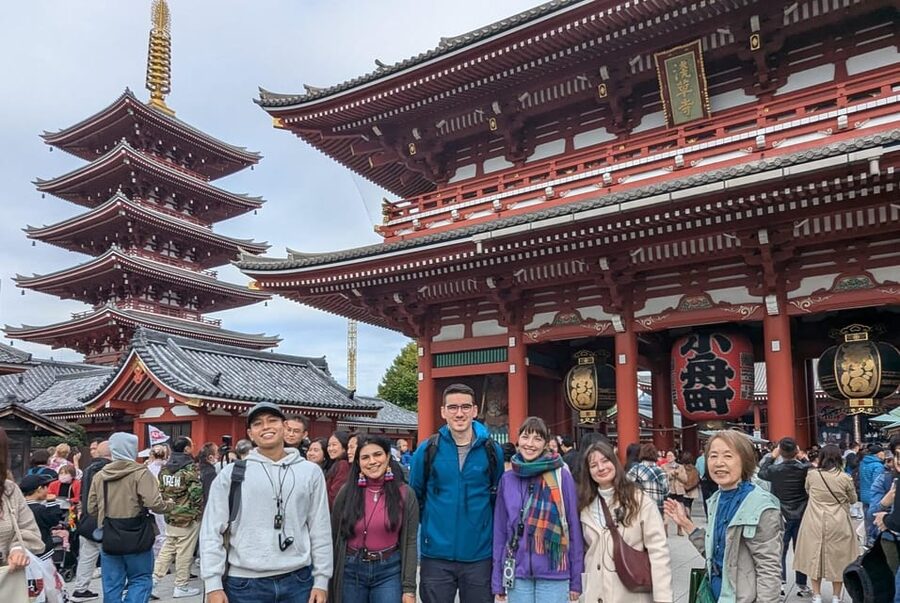
Asakusa’s story does not end at the temple gates. The walk turns toward Nishi-sandō Shopping Street, a smaller street described as having a quieter, nostalgic feel. It offers a change of pace from Nakamise and a glimpse of an older commercial atmosphere.
Next comes Asakusa Mokubakan, in a part of town associated with early 20th-century entertainment. The area once drew people to cinemas, vaudeville theaters, and performance halls. Your guide places these streets in the context of Asakusa’s role as an entertainment center before Shinjuku and Shibuya became better known for nightlife and shows.
This stretch gives the tour a welcome balance. Japan’s past is not presented only through emperors, temples, and national turning points; you also hear about leisure, performance, and ordinary city life. If you’re interested in how people spent their evenings and how neighborhoods change, these stops may be as rewarding as the famous temple.
The walk finishes at Hoppy Street, known for old-style Japanese pubs and a postwar working-class spirit. It is a more down-to-earth setting than the sacred temple precinct, and it helps illustrate the tour’s idea that people move between the solemn and the everyday. The guide can also point you toward the area’s character without making shopping or drinking the point of the tour.
Japan’s opening to the world, explained on foot
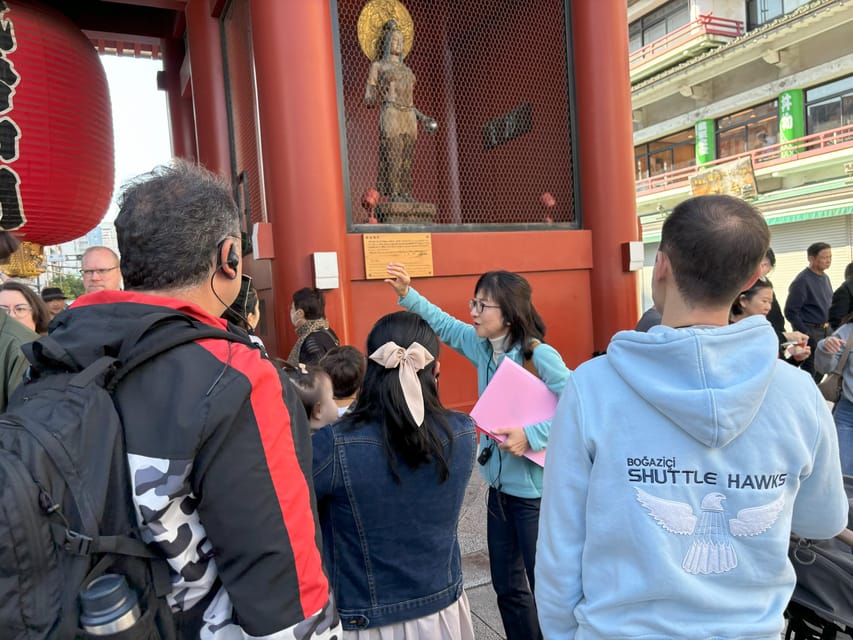
One of the tour’s central topics is Japan’s long period of isolation and its later reopening. Your guide discusses why the country closed itself, why the Netherlands remained its only trading partner during that period, and what changed when Japan reopened in the 19th century.
You’ll also see a sign associated with the transition from isolation to opening. That physical marker gives the topic a place in the neighborhood rather than leaving it as an abstract history lesson. The tour then connects Japan’s renewed contact with the West to the global influence of Japanese art, including its impact on French Impressionist painters.
This is the kind of broad connection that can make a short walk especially useful. You are not only learning what happened in Japan; you are considering how Japan’s history reached beyond its borders. The guide’s explanations and the small-group format leave room to ask follow-up questions, though the amount of detail will naturally depend on the pace and interests of your group.
What the guide and group size add
The experience depends heavily on the guide’s ability to tell stories clearly and adjust to the group. Guides who have led this walk include Ai, Taka, Yasu, Yoko, Jun Chan, Satchi, and Akiko. Your specific guide will depend on your date, so those names are examples rather than a promise.
The strongest practical benefit is having someone who can help you navigate a busy neighborhood while supplying context you might miss on your own. Guides have helped groups find photo spots, pointed out toilets before anyone needed one, and adjusted how much time they spent in shopping areas to match the group’s interests. If history, architecture, or gardens matter more to you than buying souvenirs, it is worth saying so early.
Headsets are included for groups of three or more, helping you hear the guide in crowded places. A selection of freshly made Japanese traditional snacks and sweets is also included. The tour does not specify exactly which treats you’ll receive, so think of this as a welcome tasting rather than a full food tour.
Is $88 a fair price?
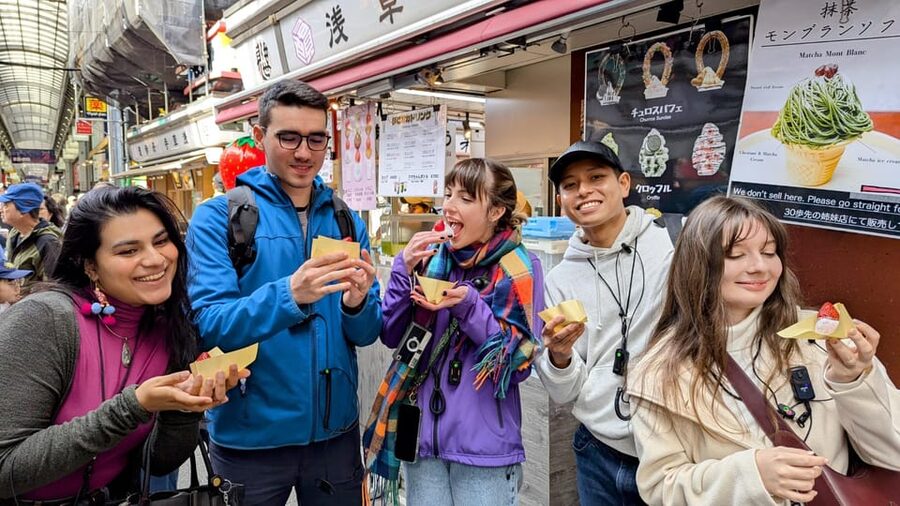
At $88 per person, this is more than a basic orientation walk, but it combines a certified English-speaking guide, three and a half hours of interpretation, a small group, headsets when needed, and traditional snacks. The value is strongest if you want historical context and a guide who can connect the sites to larger questions about religion and Japan’s ties with the West.
If you mainly want to see Sensō-ji and browse Nakamise, you can explore those areas without booking a guided tour. You’re paying here for the explanations and the wider route, including the quieter lanes and old entertainment district. The experience is less compelling if you prefer to wander slowly, shop at length, or focus on just one landmark.
The tour does not include hotel pickup or drop-off. You’ll need to reach the Asakusa meeting point yourself, and the walk involves a moderate amount of walking. It runs in all weather, so dress for the forecast and bring water; vending machines are available.
Who should book this walk?
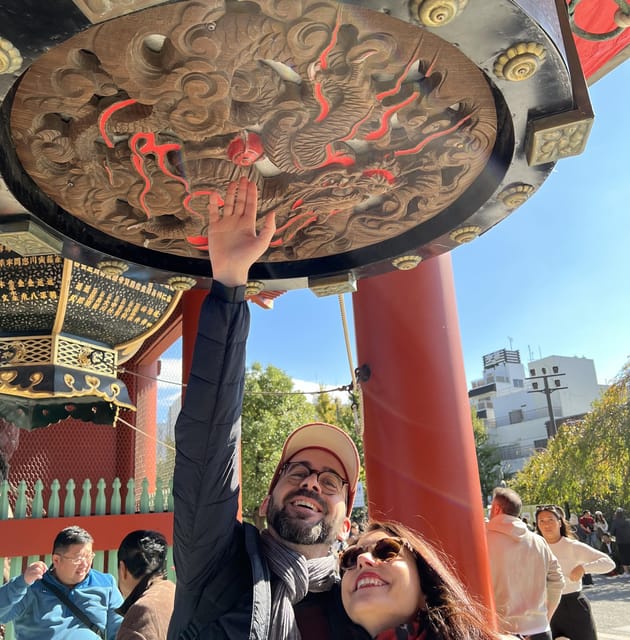
I’d consider this tour if you’re new to Tokyo and want a structured introduction to Asakusa, or if you’ve already seen the main temple and want to understand the neighborhood beyond its most famous sights. It should also suit history-minded adults who enjoy connecting local landmarks to national events and global cultural exchange.
Families are welcome, and children younger than six may join without charge. The tour is recommended for adults because of its historical focus, so younger children may find the explanations less engaging. If you have mobility concerns, contact the supplier before booking to discuss possible accommodations; the activity is listed as unsuitable for people with mobility impairments.
Book it if you want a guide-led walk that balances temple history with everyday city life. Skip it if you need a slow, step-free outing or would rather spend the whole visit browsing at your own pace.
FAQ
How long is the Asakusa walk?
The tour lasts 210 minutes, or three and a half hours.
How much does the tour cost?
The listed price is $88 per person.
Where does the tour meet?
Meet outside Exit 4 of Asakusa Station on the Ginza Line, in front of the Burger King next to the exit.
What language is the tour in?
The live guide speaks English. An English audio guide is also included.
How large is the group?
The group is limited to eight participants.
Are snacks included?
Yes. A selection of freshly made Japanese traditional snacks and sweets is included.
Are headsets provided?
Headsets are included for groups of three or more.
Can children join?
Families are welcome, and children younger than six may join without charge. The tour is recommended for adults because it focuses on history.
Is the walk suitable for people with mobility impairments?
It is listed as not suitable for people with mobility impairments. If you have mobility issues, contact the supplier to ask whether they can accommodate you.
More history tours in Tokyo
- Tokyo: Imperial Palace Japanese History Walking Tour
★ 4.9 · 987 reviews - Yanaka Walking Tour: Historic and Traditional District of Tokyo
★ 5.0 · 530 reviews - Tokyo: Shinjuku Historical Walking Tour & Secret Backstreets
★ 5.0 · 530 reviews - Mt. Fuji Heritage Tour: Traditional Villages, Lakes & Shrine
★ 4.5 · 509 reviews
Freshly reviewed in Tokyo
- Tokyo: Toshimaya Sake Brewery Tour with Sake Tasting★ 5.0 · 6 reviews
- :Tokyo,Shibuya /Meiji Shrine tour in KIMONO/English-friendly★ 5.0 · 4 reviews
- Tokyo: Tour Privado por Tokio en español★ 4.3 · 4 reviews
- Tokyo:Tea ceremony experience at Komaba Warakuan★ 4.8 · 9 reviews
- :Tokyo,Shibuya/ Pro Photography in Kimono / English-Friendly★ 5.0 · 26 reviews
- Tokyo:Samurai Training : Swords, Bushido & Mental Discipline★ 5.0 · 6 reviews
- Tokyo:Mt Fuji & Hakone Day Tour with English Speaking Driver★ 5.0 · 26 reviews
- Tokyo:Nikko UNESCO World Heritage Sites Private 1-Day Tour★ 3.8 · 6 reviews
Asakusa Tours, compared.
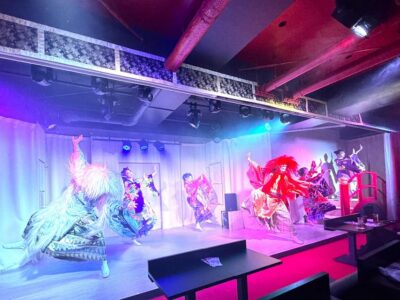
Japanese Dance Cabaret Theater Asakusa-Kaguwa Ticket
Read our review →
Meiji Shrine, Asakusa, Skytree Bus Tour and Cruise
Read our review →
Roll and Authentic Sushi Making Class in Asakusa
Read our review →
Asakusa Walking Tour with Sensoji Temple Visit
Read our review →
Tokyo Panoramic 1 Day: Meiji Shrine, Asakusa, Odaiba and SKYTREE®
Read our review →
Tokyo Go Kart: Asakusa, Skytree, and Akihabara **IDP MUST**
Read our review →
Asakusa, Skytree & Akhihabara Go-Kart City Experience
Read our review →Browse the lists this tour appears in