Reviewed · TOKYO TOURS
Tokyo: Chopstick Making Workshop with Artisan
Making a pair of chopsticks by hand turns an everyday object into a small lesson in Japanese craft. I like the hands-on work with traditional tools, and I like that you leave with something you can use, not just a photo or a trinket. At $16, it is an appealing change of pace from Tokyo’s larger attractions.
The one-hour session is beginner-friendly, with English-speaking staff and a group capped at 10. You can choose among more than 10 types of wood, though only three are included at no extra charge. A full group may feel rushed in the compact workshop, so take your time when shaping and ask for help early.
At a glance
- Make a practical keepsake: Shape and smooth a pair of wooden chopsticks, then take them home the same day.
- Get help as you work: English- and Japanese-speaking staff guide you through the process and can help correct mistakes.
- Choose your wood: Three types are included in the price; other, higher-grade woods cost extra.
- Keep the group small: Sessions are limited to 10 people, though a full room can feel busy.
- Add a personal finish: Engraving is available for an extra fee. One participant paid ¥1,000 for it.
- Set aside about an hour: A skilled maker may finish sooner, but there is more to enjoy if you take your time.
A small craft with a place at every meal
Chopsticks are a familiar part of Japanese daily life, but making a pair helps you notice the decisions tucked into an ordinary object: the wood, the shape, the smoothness, and the feel in your hand. This workshop connects that practical craft to its cultural role, with an artisan explaining the significance of chopsticks in Japan as you work.
The setting is Hashiyuki Chopsticks Shop & Workshop at 1-7-1 Misuji in Taito-ku. It is in one of Tokyo’s older craft neighborhoods, a fitting place to spend an hour focused on a made-by-hand object. The workshop is not a grand museum demonstration. You sit down, work the wood, and see how a useful item takes shape.
I find that kind of activity especially worthwhile on a long Tokyo trip. It gives you a quiet hour between city outings, and the result has a story attached to it. These chopsticks are both a souvenir and a tool you can use at home.
More hands-on workshops in Tokyo:
- Sushi Making Tokyo Roll and Authentic Japanese Sushi Class
★ 5.0 · 3,971 reviews - Tokyo: Roll and Authentic Sushi Making Class in Asakusa
★ 4.9 · 1,957 reviews - Tokyo Shinjuku Chopsticks Making Class
★ 5.0 · 1,763 reviews
Choosing wood before you start shaping
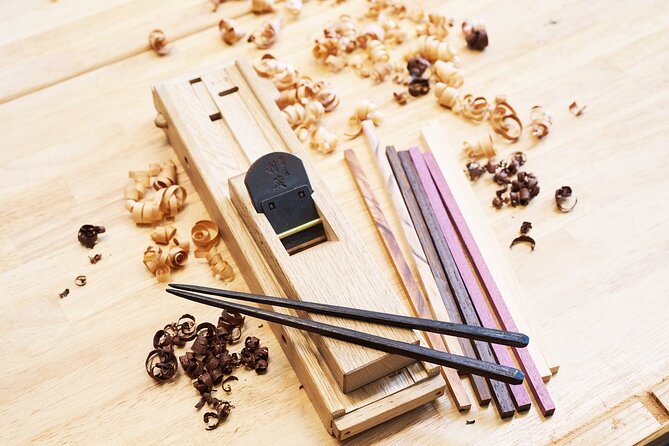
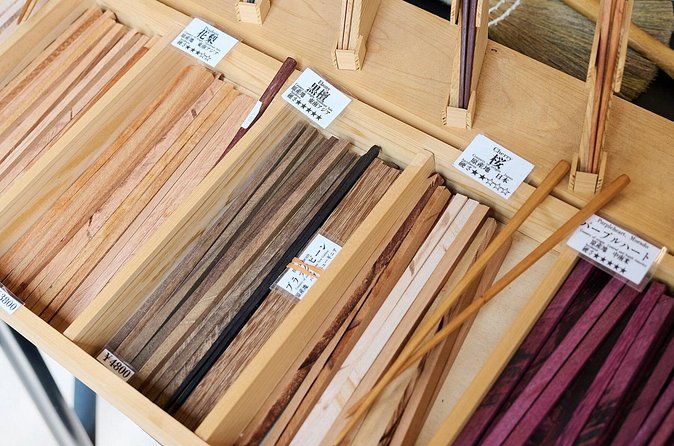
The workshop includes a choice of three types of wood at the standard price. More than 10 types are available overall, with higher-grade options costing extra. If the wood choice matters to you, ask the staff what is included before picking a premium option.
There is value in having a say in the material. Different woods have their own look and character, and staff explain the differences as you decide. You do not need to arrive with woodworking knowledge. The activity is designed for beginners, and the instructor can help you understand the choices.
The listed price is $16 per person, which covers the workshop, tools, materials, and a pair of personalized chopsticks. For a short activity that includes instruction and a take-home object, that is a fair price. The main extra to consider is the cost of a higher-grade wood, if you want one.
Shaping the chopsticks with hand tools
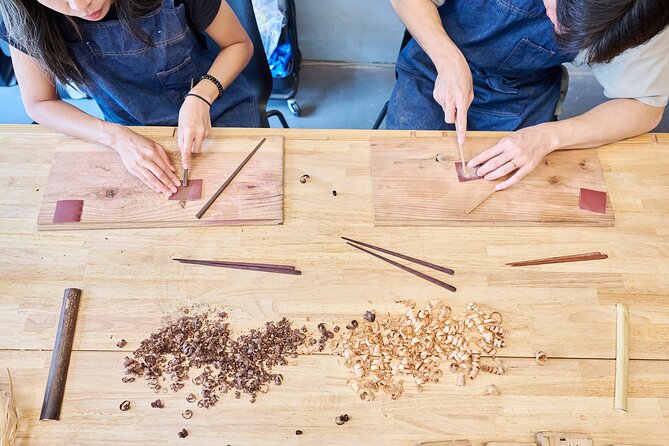
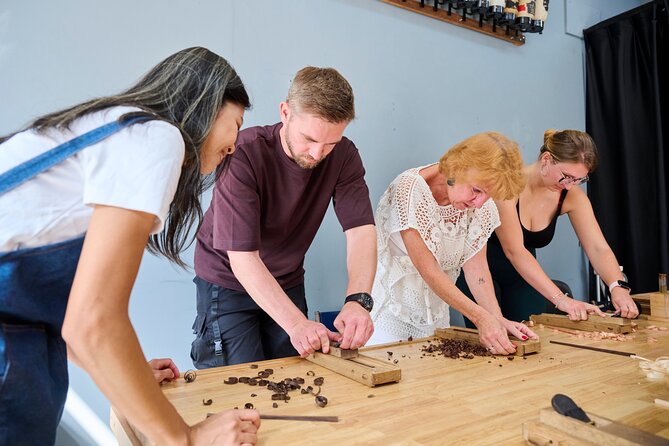
Once you have chosen your wood, the hands-on work begins. The artisan shows you how to shape and shave the wood with traditional tools, then guides you as you work. You will also smooth the surface, a step that calls for patience more than strength.
The task is simple to follow, but it is not entirely automatic. You are making two matching objects, and small adjustments can affect how they look and feel. That makes the activity engaging without turning it into a test. If you take off too much or need a correction, ask the instructor. Staff help keep the work on track, so beginners do not have to panic over a small mistake.
The workshop’s English-speaking staff are an important part of the experience. Instructors named by participants include Angie, Yuki, Chihiro, and others. The names will vary by session, but the format is intended to work for English speakers as well as Japanese speakers.
Some visitors finish in about 30 minutes, especially if they work quickly. Most people should plan on the full hour, which leaves room to listen, ask questions, and take care with the finish. There is no need to race. The point is to enjoy making something yourself, not to win a speed contest.
A calm hour, with one space-related caveat
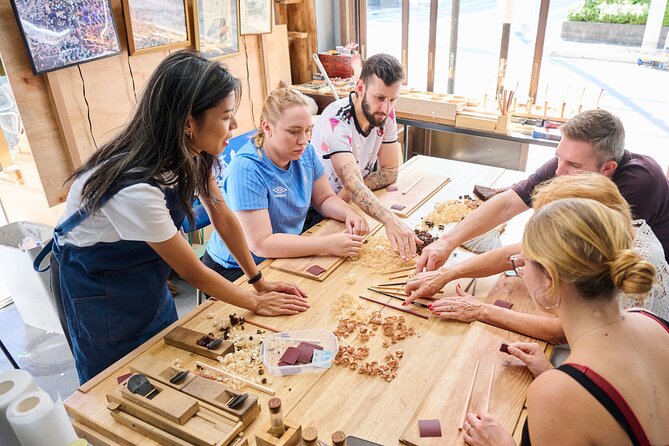
The small-group limit is 10, which gives the workshop a more personal feel than a large class. Staff can demonstrate the techniques and offer help as you go. Families, friends, couples, and solo makers can all take part, and the activity has been enjoyed by a family group that included children as young as eight.
The compact room is also the main practical drawback. When a session is full, the space can feel crowded, especially if people start at different times and staff are helping several participants at once. One full-group session felt rushed to a participant, while other sessions have had just a couple of people. If you want a slower, more relaxed pace, a quieter time may suit you better, though exact group sizes depend on availability.
This is a calm activity rather than a high-energy attraction. That contrast can be welcome after a day of city sights and train journeys. You can focus on your hands, ask about the craft, and leave with a simple object made at your own pace.
More tours and experiences in Tokyo:
- Mt Fuji and Hakone 1-Day Bus Tour Return by Bullet Train
★ 5.0 · 26,383 reviews - 1-Day Tokyo Bus Tour
★ 5.0 · 14,250 reviews - Tokyo: teamLab Planets TOKYO Digital Art Museum Entry Ticket
★ 4.6 · 9,779 reviews - Mt Fuji & Hakone Cruise, Drum Show Bullet Train 1 Day from Tokyo
★ 4.0 · 7,413 reviews
Finishing, engraving, and taking your work home
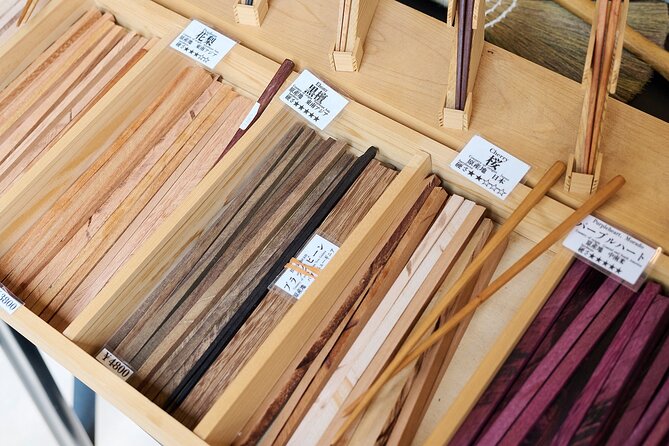
After shaping and sanding, you finish your chopsticks and prepare to take them away. The pair is wrapped, so it is ready to carry home or give as a gift. The same-day finish is useful if your Tokyo schedule is tight: you do not need to return later to collect your work.
Engraving is an optional extra if you want to add a name or another personal detail. One participant paid an additional ¥1,000 and felt it was worth the cost. The workshop information does not list a fixed engraving price, so confirm the current fee on site before deciding.
The finished pair may not look factory-perfect, and that is part of its appeal. You have shaped and smoothed it yourself, with guidance. As a gift, it carries more meaning than a standard shop purchase. As a personal keepsake, it is something you can bring to the table and remember making.
The cultural lesson behind an everyday tool
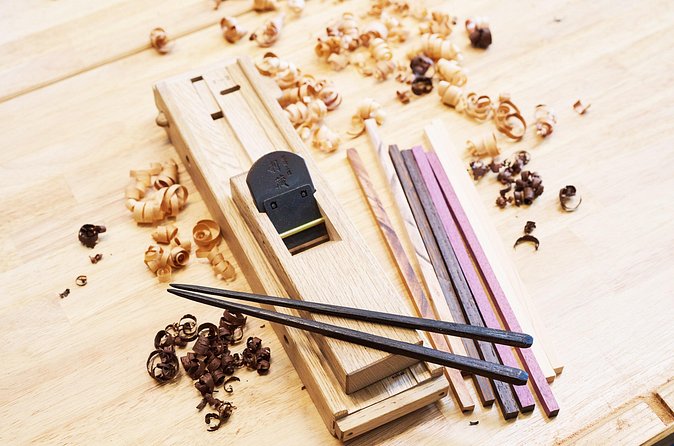
The workshop also makes room for conversation about chopsticks and their place in Japanese culture. That context helps explain why the craft is worth an hour: chopsticks are not just souvenirs, but objects used regularly and handled with care.
You are not signing up for a long lecture. The cultural element is woven into a practical activity, so you can learn while your hands are busy. If you are curious about the wood choices or the techniques, ask questions as they come up. The artisan is there to guide the work and explain the process.
The neighborhood adds another layer. Taito is known here as a traditional craft area, and the workshop offers a close-up look at the care involved in making a modest household object. You do not need to be an expert in Japanese design to appreciate the difference between picking up a finished item and shaping one yourself.
Who will get the most from this workshop
I would recommend this for anyone who wants a compact, participatory activity and a useful souvenir. It suits beginners, solo visitors, couples, and families who enjoy making things together. The activity is also a good fit if you want a quieter break from sightseeing without giving up the chance to learn something local.
It is less suited to someone who wants a polished, formal demonstration with lots of room to spread out. The workshop is small, and a full group may mean waiting briefly for help. If you are very particular about the finish, remember that the result is handmade, even with guidance.
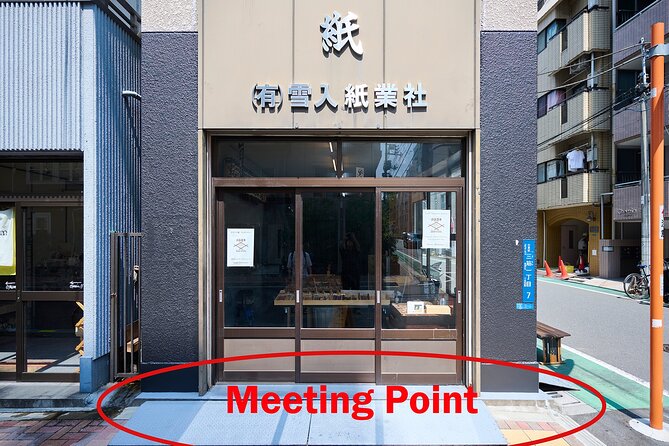
The activity is wheelchair accessible, lasts one hour, and is taught in English and Japanese. Check the available start times when arranging your day. The meeting point is Hashiyuki Chopsticks Shop & Workshop, 1-7-1 Misuji, Taito-ku, Tokyo, at coordinates 35.7032168, 139.7853879.
Should you book the chopstick workshop?
Book it if the idea of making a practical object appeals to you more than buying another souvenir. The price is reasonable for an hour of instruction, materials, and a personalized pair to take home, and the cultural context gives the craft a little more meaning.
If you are deciding between the standard wood and a premium option, start by asking what each costs and what differences you can expect. Consider engraving only if you want a name or gift-ready detail, and leave enough time to work without rushing. For a small, personal Tokyo activity with a lasting result, this is a sound choice.
FAQ
How long does the chopstick workshop take?
The workshop is listed as one hour. Some people who work quickly may finish in about 30 minutes, but plan on the full hour if you want time to shape and smooth your chopsticks at an easy pace.
How much does the workshop cost?
The listed price is $16 per person. It includes the workshop, tools, materials, and a choice of three types of wood.
Can I choose from more than three types of wood?
Yes. More than 10 types are available, but higher-grade choices beyond the three included options cost extra.
Is the workshop suitable for beginners?
Yes. The activity is designed for beginners, and the instructor guides you through shaping and smoothing the wood. Staff can also help correct mistakes as you work.
Is the workshop taught in English?
Yes. Instruction is available in English and Japanese, and English-speaking staff are included.
Can I take my chopsticks home the same day?
Yes. You take your finished, personalized chopsticks home at the end of the session. They are wrapped for you.
Is engraving included in the price?
Engraving is an optional extra, not part of the stated base price. One participant paid an additional ¥1,000, but confirm the current fee at the workshop.
Where does the workshop meet?
It meets at Hashiyuki Chopsticks Shop & Workshop, 1-7-1 Misuji, Taito-ku, Tokyo. The coordinates are 35.7032168, 139.7853879.
Freshly reviewed in Tokyo
- Tokyo: Toshimaya Sake Brewery Tour with Sake Tasting★ 5.0 · 6 reviews
- :Tokyo,Shibuya /Meiji Shrine tour in KIMONO/English-friendly★ 5.0 · 4 reviews
- Tokyo: Tour Privado por Tokio en español★ 4.3 · 4 reviews
- Tokyo:Tea ceremony experience at Komaba Warakuan★ 4.8 · 9 reviews
- :Tokyo,Shibuya/ Pro Photography in Kimono / English-Friendly★ 5.0 · 26 reviews
- Tokyo:Samurai Training : Swords, Bushido & Mental Discipline★ 5.0 · 6 reviews
- Tokyo:Mt Fuji & Hakone Day Tour with English Speaking Driver★ 5.0 · 26 reviews
- Tokyo:Nikko UNESCO World Heritage Sites Private 1-Day Tour★ 3.8 · 6 reviews
Tokyo Tours, compared.

Mt Fuji and Hakone 1-Day Bus Tour Return by Bullet Train
Read our review →

teamLab Planets TOKYO Digital Art Museum Entry Ticket
Read our review →
Mt Fuji & Hakone Cruise, Drum Show Bullet Train 1 Day from Tokyo
Read our review →
Shinjuku Food Tour (13 Dishes at 4 Local Eateries)
Read our review →
Tokyo Mt Fuji 5th St & Hakone Cruise Bus Tour w/Bullet Train
Read our review →
Flagship 2-Hours Official Street Go-Kart Tour – Tokyo Bay Shop
Read our review →