
Reviewed · TOKYO SAMURAI EXPERIENCES
Samurai Experience – Learn Bushido through Kendo, in Tokyo
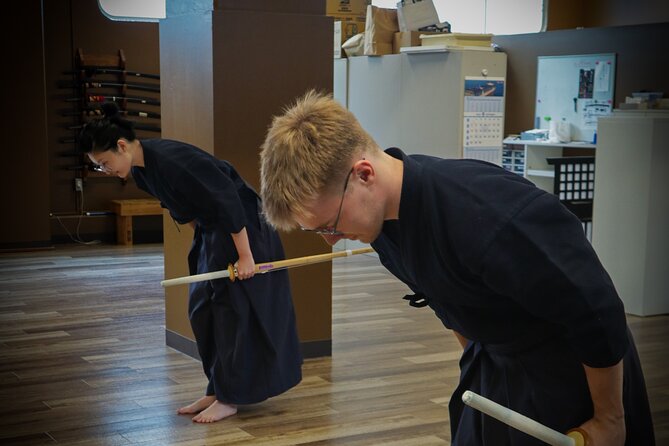
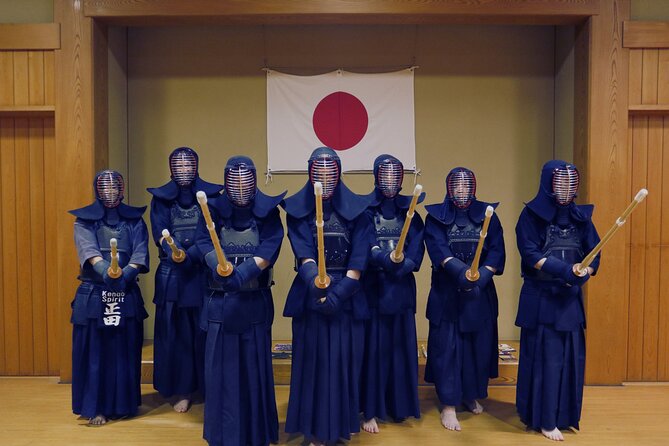
Kendo is not a staged samurai show. In this two-hour session, you step into a working Tokyo dojo, take up a bamboo sword, and learn how posture, timing, focus, and commitment shape each movement. The instructor, Daichi, has trained for 19 years and teaches from ongoing practice, not a costume script.
I like two things especially: you get hands-on instruction in a real dojo, and the lesson covers both technique and the mental discipline behind it. You also leave with skills you can keep working on, plus photos and video sent by email after the session.
The main consideration is the price: at $132.14 per person, this is a focused activity rather than a budget attraction, and two hours will only introduce kendo’s basics. If you want a passive cultural show, this is not it. You’ll be asked to move, concentrate, and try the techniques yourself.
- Train with an active kendo practitioner: Daichi has 19 years of training and speaks fluent English.
- Learn by doing: Work on fundamental movements and strikes with a rented bamboo sword.
- Beginner-friendly group size: More than 90 percent of participants are beginners, and the group is capped at eight.
- Use a working dojo: You practice in a space where Japanese kendo practitioners train.
- Leave with a record of the session: A photographer takes photos and video, which are sent by email afterward.
- Pack lightly: Kendo attire, underclothes, bottled water, a souvenir, and a guide are included.
A working dojo, not a samurai stage set
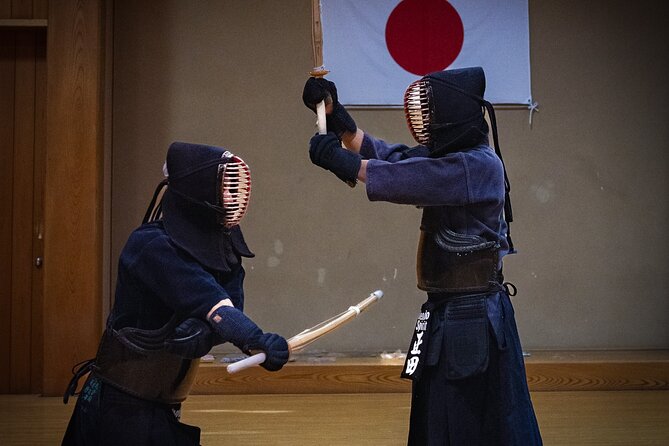
The setting is one of the best reasons to choose this activity. You train in a genuine dojo used by Japanese practitioners, rather than watching a polished performance built for an audience. That does not make the session an advanced lesson in samurai history. It does give you a direct look at a martial art as it is practiced today.
The distinction matters. Kendo is a modern martial practice with a strong connection to the ideals associated with Bushido, but the session puts those ideas into movement. You work on focus, posture, and timing, and feel how concentration affects a strike. That is more revealing than a quick explanation of samurai symbols or a photo in costume.
The space is described as a place where practitioners hone their sword skills. Expect to be a visitor in an active training environment, with instructors guiding you through the basics. You are not being asked to perform like a seasoned kendoka. The point is to try the discipline with care and attention.
Daichi teaches from current practice
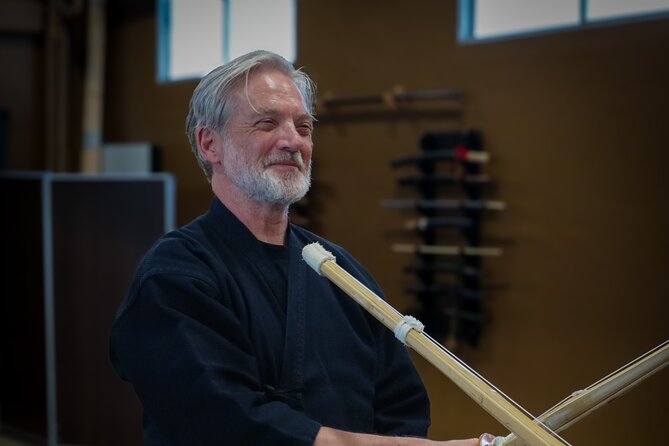
Your main instructor is Daichi, an active kendo practitioner with 19 years of training. He speaks fluent English and has overseas work experience, so you can ask questions without having to rely on gestures or a translation app. That is useful when learning a movement: a small correction in posture or timing can make more sense when the instructor can explain what you should be paying attention to.
The teaching is hands-on and paced for newcomers. More than 90 percent of participants are beginners, and the group has a maximum of eight people. That small cap gives the instruction room to feel personal, though the exact attention you receive will depend on the group that day.
An assistant may also be present. The most useful part of having experienced practitioners nearby is seeing the techniques demonstrated by people who continue to train, rather than only hearing a description. The session’s appeal rests on their practical knowledge and enthusiasm, as well as their ability to help you try the movements.
More samurai experiences in Tokyo:
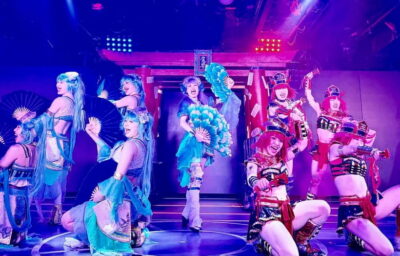
- Tokyo: Samurai Restaurant Show Ticket with 2 Drinks
★ 4.5 · 1,307 reviews - Tokyo: Samurai Ninja Museum Guided tour and Experience
★ 4.6 · 1,010 reviews - Tokyo: Samurai Sword & Archery Class from Samurai Descendant
★ 5.0 · 603 reviews
From getting dressed to making your first strike
The experience lasts about two hours, with a 10:00 am start at the meeting point in Nihonbashikobunacho, Chuo City. The address is listed as Sec Nihonbashi Building, Tokyo 103-0024, and the activity ends back there. The location is near public transportation, which helps keep the trip across Tokyo simple.
You do not need to bring kendo clothing or equipment. The provider supplies kendo attire, a bamboo sword called a shinai, and a T-shirt and pants to wear under the uniform. Bottled water, a souvenir, and a guide are included. Snacks are not, so eat beforehand if you tend to get hungry after physical activity.
The lesson moves from introduction to practice. You learn the basics, then work on movements and strikes with the shinai. One useful point from people who have tried it is that the instruction gets you from the first steps to making a strong strike within the two-hour session. That is a satisfying goal, but it is an introduction, not mastery.
Some participants arrive with experience in karate, taekwondo, or fencing. Those backgrounds may give you a familiar point of reference for movement or footwork, but they are not required. The instructors teach slowly and carefully for beginners, so you do not need prior martial arts training or a high level of fitness.
Bushido becomes more than a word
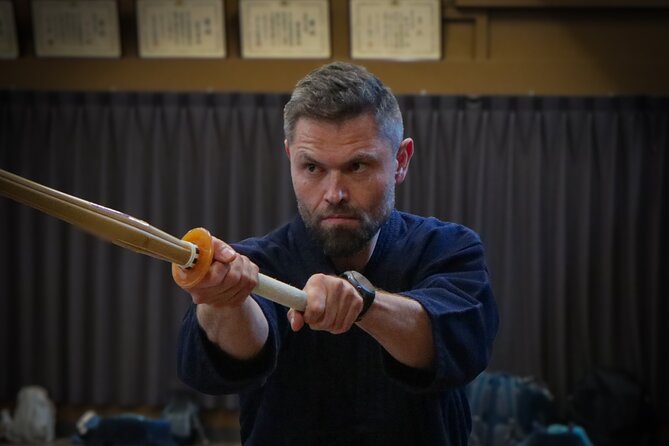
The cultural side of the lesson is part of what makes this more than an exercise class. You learn about kendo’s history and culture alongside the physical techniques, and the instructor frames the practice through spirit, sword, and body. Those ideas become easier to understand when you have to focus on your own movement rather than just hear a talk about them.
The session emphasizes attention and judgment under pressure. You are not simply swinging a sword-shaped object for a novelty photo. You need to keep your posture, pay attention to timing, and put intention behind a strike. Even a beginner can feel that kendo asks for mental focus as well as physical effort.
A concluding battle or practice match is mentioned as part of the experience, and it can be an exciting payoff after learning the basics. Treat it as a chance to apply what you have just practiced, not as a contest you are expected to win. The lesson is about trying the form and spirit of kendo, not proving yourself against a master.
A good fit for curious beginners and families
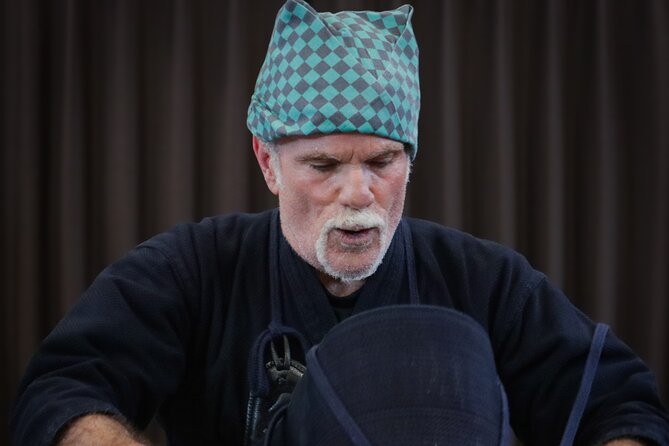
This activity suits you if you want a cultural experience that involves your body as well as your attention. It is a good change of pace from temples, museums, and city walks, especially if you are interested in martial arts or want to understand a living Japanese practice from inside a dojo.
You can come with no martial arts experience. The provider says most participants are beginners, and the instructors take care to teach the basics. A parent and a 12-year-old have taken part together, which shows that a young participant has joined successfully, but the information does not specify a formal minimum age. If you are booking for a child, ask the provider to confirm suitability.
It can also work for a pair or small group with different experience levels. One person may be keen on martial arts, while another is simply curious about Japanese culture. The small maximum group size and English-speaking lead instructor help make the session accessible, though you should be ready to take part rather than sit back and watch.
If you have mobility limitations or a concern about physical activity, contact the provider before booking. The activity involves practicing movements and strikes, but no detailed accessibility information is provided. It is sensible to clarify any personal needs instead of assuming the session can be adapted.
More tours and experiences in Tokyo:
- Mt Fuji and Hakone 1-Day Bus Tour Return by Bullet Train
★ 5.0 · 26,383 reviews - 1-Day Tokyo Bus Tour
★ 5.0 · 14,250 reviews - Tokyo: teamLab Planets TOKYO Digital Art Museum Entry Ticket
★ 4.6 · 9,779 reviews - Mt Fuji & Hakone Cruise, Drum Show Bullet Train 1 Day from Tokyo
★ 4.0 · 7,413 reviews
What the $132.14 price buys you
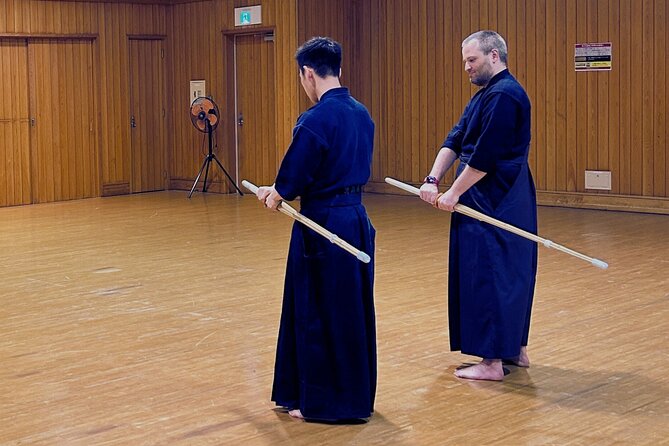
At $132.14 per person, this is a premium-priced two-hour activity. The value comes from the combination of a working dojo, instruction from an active practitioner, rented equipment and clothing, a small group cap, and a lesson that includes both technique and cultural context. Photos and video sent afterward add a personal record of the session.
The price makes more sense if you want direct instruction and a memorable activity you cannot get from simply watching a demonstration. You are paying for the chance to practice, receive guidance, and try the movements yourself. If your main aim is a broad overview of Japanese history, or a low-cost way to fill an hour, a museum or free cultural site may suit you better.
You should also keep expectations in proportion. Two hours can give you a feel for kendo and help you learn basic movements, but it cannot replace regular training. One participant became interested in taking lessons at home after the session, which is a good measure of its potential: it may spark a lasting interest, but that depends on you.
Practical details before you book
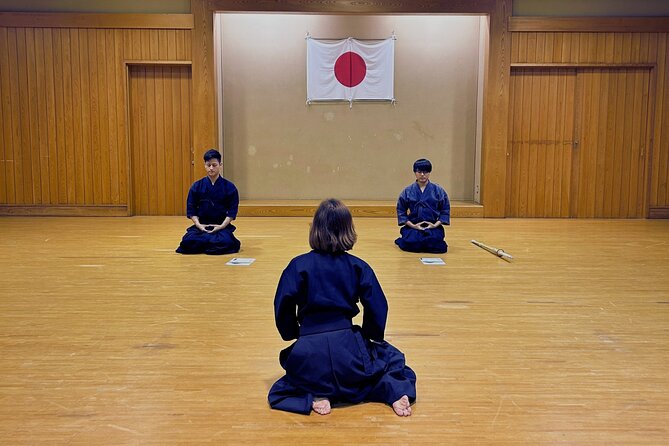
The meeting point is in Nihonbashikobunacho, in Tokyo’s Chuo City, and the session starts at 10:00 am. It ends at the same point and is near public transportation. Allow enough time to arrive without rushing, since this is a hands-on activity and you will want to be ready at the start.
The group is limited to eight people. You receive the kendo uniform and shinai, as well as a T-shirt and pants to wear underneath, so there is no special equipment to pack. Bottled water and a souvenir are included; snacks are not. A photographer takes photos and video, then sends the files to you by email after the session.
Most people can participate, and no prior kendo experience is needed. Confirmation is received at booking. Free cancellation is available up to 24 hours before the start time for a full refund; cancellations or changes made later are not accepted. The cutoff follows local time in Tokyo.
Should you book this Tokyo kendo session?
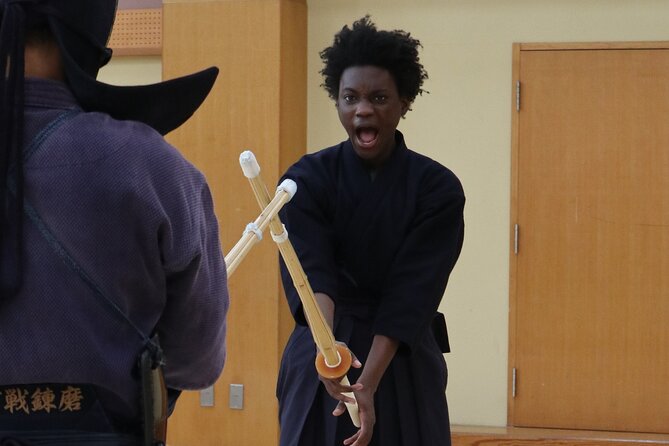
Book it if you want to learn by doing, have an interest in martial arts, or want a cultural activity with more substance than a quick demonstration. The strongest reasons to go are the working dojo, Daichi’s active experience, English instruction, and the chance to feel the discipline of kendo in your own movements.
Skip it if you prefer a quiet cultural visit, need a very low-cost activity, or expect to become proficient in a single morning. At two hours, the lesson gives you a taste, not a full course. For an active, personal introduction to modern kendo and the values behind it, though, it is a thoughtful use of a Tokyo morning.
FAQ
How long is the kendo experience?
The session lasts approximately two hours.
What time does it start?
The listed start time is 10:00 am.
Where does the session meet?
It meets at Sec Nihonbashi Building in Nihonbashikobunacho, Chuo City, Tokyo 103-0024. The activity ends back at the meeting point.
Do I need kendo or martial arts experience?
No. More than 90 percent of participants are beginners, and the instructor teaches the basics carefully.
Is the instruction available in English?
Yes. Instructor Daichi speaks fluent English, and you can ask questions during the session.
What equipment and clothing are provided?
Kendo attire, a bamboo sword called a shinai, and a T-shirt and pants to wear under the uniform are provided. Bottled water, a guide, and a souvenir are also included.
Are photos and videos included?
Yes. A photographer takes photos and video during the session, and the files are sent to you by email afterward.
What is the cancellation policy?
You can cancel up to 24 hours before the start time for a full refund. Cancellations or changes made less than 24 hours before the experience are not accepted.
Freshly reviewed in Tokyo
- Tokyo: Toshimaya Sake Brewery Tour with Sake Tasting★ 5.0 · 6 reviews
- :Tokyo,Shibuya /Meiji Shrine tour in KIMONO/English-friendly★ 5.0 · 4 reviews
- Tokyo: Tour Privado por Tokio en español★ 4.3 · 4 reviews
- Tokyo:Tea ceremony experience at Komaba Warakuan★ 4.8 · 9 reviews
- :Tokyo,Shibuya/ Pro Photography in Kimono / English-Friendly★ 5.0 · 26 reviews
- Tokyo:Samurai Training : Swords, Bushido & Mental Discipline★ 5.0 · 6 reviews
- Tokyo:Mt Fuji & Hakone Day Tour with English Speaking Driver★ 5.0 · 26 reviews
- Tokyo:Nikko UNESCO World Heritage Sites Private 1-Day Tour★ 3.8 · 6 reviews
Tokyo Samurai Experiences, compared.
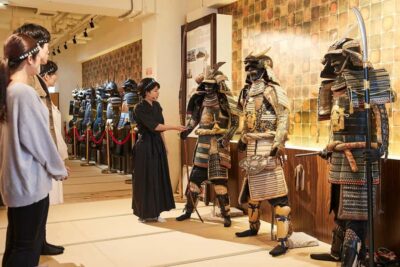
Samurai Ninja Museum Guided tour and Experience
Read our review →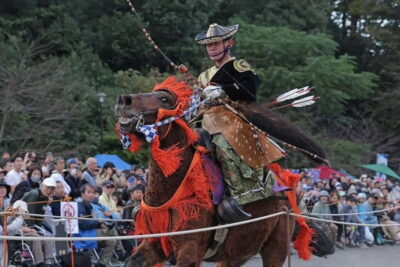
Samurai Sword & Archery Class from Samurai Descendant
Read our review →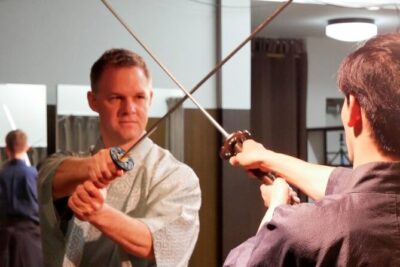
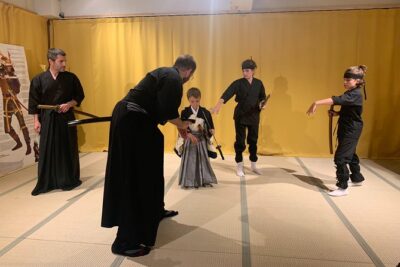
Ninja Experience (Family Friendly) at Samurai Ninja Museum TOKYO
Read our review →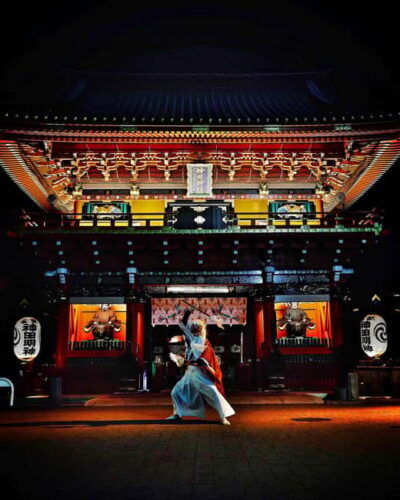
Samurai Entertainment Night Show in Kanda Shrine
Read our review →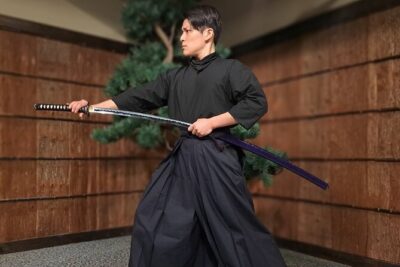
Tokyo Sword Experience – includes Museum Ticket/Ninja Experience
Read our review →
Samurai Ninja Museum Asakusa: Samurai Sword Lesson & Tour
Read our review →Browse the lists this tour appears in