Reviewed · TOKYO TOURS
Tokyo Chopstick Making Workshop with Artisan
Making chopsticks by hand turns an everyday object into a small lesson in Japanese craft. At this Tokyo workshop, you shape and smooth the wood with traditional tools, then take home a pair you made yourself.
I like two things here: you get hands-on time with an artisan, not just a demonstration, and the finished chopsticks are a useful, personal souvenir. The small group limit of 10 should also leave room to ask for help as you work.
The main consideration is the effort and time. Planing wood takes some muscle, and although the session is described as about an hour, it can run closer to two hours. Better wood and engraving can also cost extra.
What to know before you book
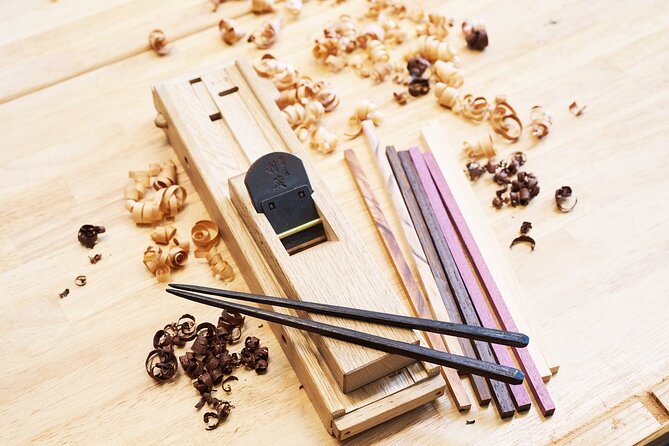
- You shape the chopsticks yourself: The process includes working the wood with traditional tools, smoothing the surface, and finishing your pair.
- Wood choice affects the price: You can select from different woods, with some higher-grade choices available for an added cost.
- Engraving is an optional extra: Ask about personalizing your chopsticks further, and check the added charge before choosing it.
- The workshop is capped at 10 people: A small group can make it easier to get hands-on guidance, though the format may feel more like a work session than a lively group class.
- Allow more than an hour if your schedule is tight: The stated duration is about an hour, but the work can take longer.
- You leave with your own pair: The finished chopsticks are wrapped for you to take home, use, or give as a gift.
A craft workshop in Taito City
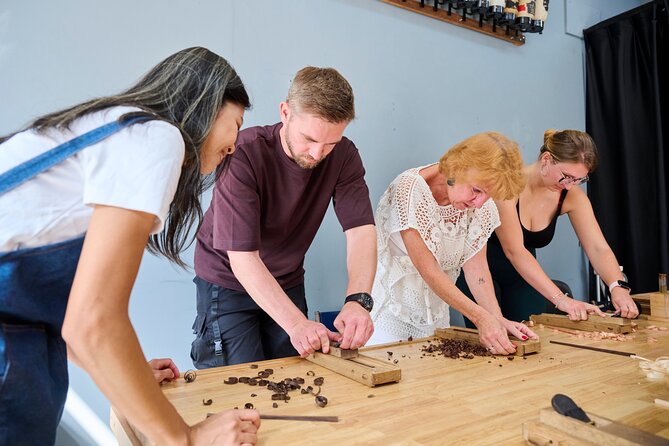
The workshop meets at 1-chōme-7-1 Misuji in Taito City, a Tokyo neighborhood associated with traditional craft. That setting fits the activity: instead of buying a ready-made souvenir, you spend time making a familiar object with your own hands.
The stated meeting point is also the end point, so you return to where you began. It is near public transportation, which helps keep the trip across Tokyo manageable. Check your route before setting out, and leave a little breathing room to find the address rather than arriving at the last minute.
The workshop is short enough to fit between larger sightseeing plans, but I would not treat it as a guaranteed one-hour appointment. The activity is advertised as approximately an hour, while a participant reported needing closer to two hours and said the instructor did not rush the work. If your day includes timed tickets or a restaurant booking, build in extra time.
The group is limited to 10 participants. That is a useful size for a craft class, since shaping wood is easier to learn when someone can show you what to do. Still, do not expect a large, social production with a formal performance. The focus is on your workbench and the pair of chopsticks taking shape.
More hands-on workshops in Tokyo:
- Sushi Making Tokyo Roll and Authentic Japanese Sushi Class
★ 5.0 · 3,971 reviews - Tokyo: Roll and Authentic Sushi Making Class in Asakusa
★ 4.9 · 1,957 reviews - Tokyo Shinjuku Chopsticks Making Class
★ 5.0 · 1,763 reviews
From wood selection to finished chopsticks
The first practical choice is the wood. You can choose from several types, and some of the more expensive options cost extra. The base price is $26.53 per person, so ask which woods are included before settling on one. If you have a firm budget, this is the easiest moment to keep the total predictable.
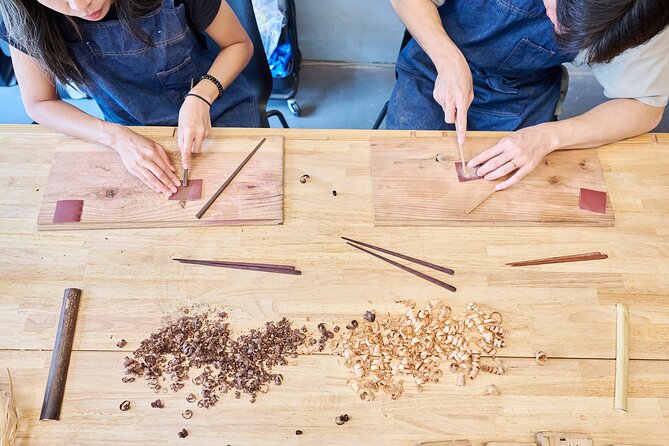
Then the making begins. With a local artisan guiding you, you shape the wood using traditional tools and techniques. The work calls for patience and a bit of physical effort. One participant described it as an arm workout, so if you have never planed wood before, take your time and ask for help rather than trying to force a fast result.
The next steps are smoothing and finishing. These are not just decorative details: they help turn a rough piece of wood into something you can handle and use. The workshop is designed for beginners, and staff guide you through the process. You do not need to arrive with woodworking experience, but you should be ready to pay attention and work at a steady pace.
An artisan named Angie has been praised for making the steps feel easy to follow, and Kaana has guided families through the activity. Rasmus and Sakura have also helped participants through the process. These names are useful to know, though you should not assume that any particular instructor will be leading your session.
At the end, you take your chopsticks home the same day, wrapped and ready to use or give away. Engraving may be available for an added fee. If you want it, ask about the cost and how it fits into the finishing process before you begin.
A small lesson in everyday Japanese culture
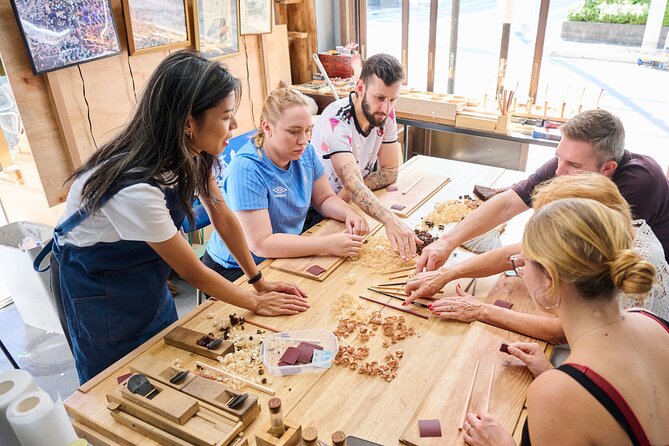
Chopsticks are ordinary objects, which is part of the appeal. The workshop gives you a chance to consider the care behind something used at the table every day. You also learn about the cultural significance of chopsticks in Japan, adding context to the craft rather than treating the finished pair as a trinket.
The cultural explanation may be brief. If you are hoping for a detailed history of chopstick-making, this may not be the main event. One participant wished for more historical background, so it is sensible to think of this first as a practical making session with cultural context along the way, not a lecture.
That balance will suit many visitors. You learn by doing, and the object you make gives the experience a lasting connection to the trip. The process is also a refreshing change from looking at things behind glass or moving from one busy sight to another.
How much effort and time to plan for
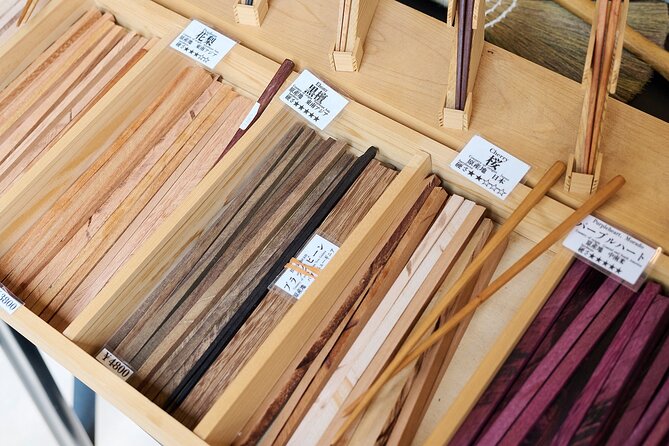
The activity is listed at about one hour, a convenient length for a family outing or a quieter day in Tokyo. But the woodwork is not entirely passive. Planing and shaping take physical effort, and the time can stretch depending on how quickly you work and the finish you want.
If you are traveling with children, the workshop has been a hit with children aged 10 and 12, as well as their parents. The activity is described as suitable for beginners, and the small group size can make it easier to get individual help. Still, children should be comfortable following instructions and spending time on a hands-on task.
For adults, it works well as a low-key activity with a clear result. You do not need to be crafty to take part, but patience helps. If you are choosing a harder wood or aiming for a careful finish, do not turn the session into a race. The point is to make the pair, not to set a speed record with a hand tool.
The session can also be a good rainy-day alternative to a longer excursion. It gives you a structured activity without taking up an entire day, provided you leave enough time for the possibility that it runs long.
More tours and experiences in Tokyo:
- Mt Fuji and Hakone 1-Day Bus Tour Return by Bullet Train
★ 5.0 · 26,383 reviews - 1-Day Tokyo Bus Tour
★ 5.0 · 14,250 reviews - Tokyo: teamLab Planets TOKYO Digital Art Museum Entry Ticket
★ 4.6 · 9,779 reviews - Mt Fuji & Hakone Cruise, Drum Show Bullet Train 1 Day from Tokyo
★ 4.0 · 7,413 reviews
Is $26.53 good value?
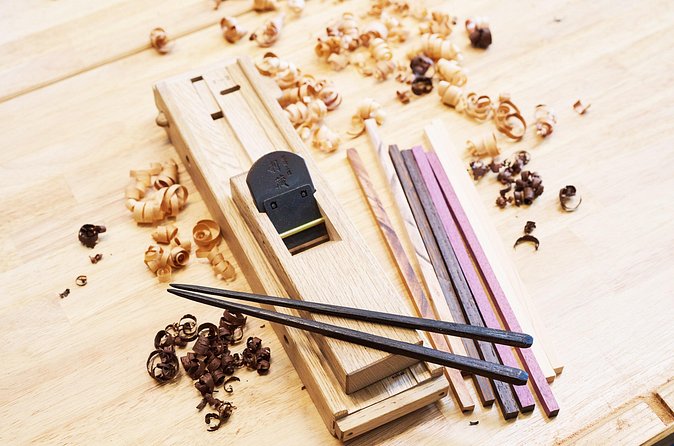
At $26.53 per person, the price buys more than a take-home object. You get a guided, hands-on activity, time with an artisan, and a souvenir you have shaped yourself. For someone who likes making things, that combination can be better value than purchasing a finished keepsake with no story behind it.
The cost can rise if you choose a pricier wood or add engraving. Those options may be worth it if you want a more personal gift, but they are not part of the base price. Ask about them before deciding, especially if you are booking for a family or group and want to keep spending in check.
There is one price wrinkle to consider. Walk-ins may be accepted, and one participant found that walk-in prices were lower than the advance booking price. Availability and prices can change, so do not count on getting a cheaper spot at the door. If you prefer having a confirmed place, booking ahead may be worth the difference. If you are nearby and flexible, checking directly with the workshop could help you compare.
The experience has a 99 percent recommendation rate and a 5 out of 5 overall rating from 466 ratings. Those numbers point to strong satisfaction, particularly with the helpful staff and the finished chopsticks. The practical caveats remain: extra charges for some options, possible walk-in pricing differences, and a session that may take longer than advertised.
Who will get the most from it
This is a good choice if you want a compact cultural activity with something tangible at the end. It suits curious first-time visitors, craft-minded travelers, families with school-age children, and anyone who prefers doing an activity to simply buying a souvenir.
It is especially appealing if you enjoy artisan classes. The finished chopsticks are useful, easy to pack, and personal in a way a mass-produced item is not. If you engrave them, they can become a thoughtful gift, though you should confirm the added fee.
It may be less appealing if you are short on time, do not enjoy repetitive handwork, or want a long historical talk. The experience centers on making. Its cultural element is present, but the main memory is likely to be the work itself and the finished pair in your bag.
Practical details for your visit
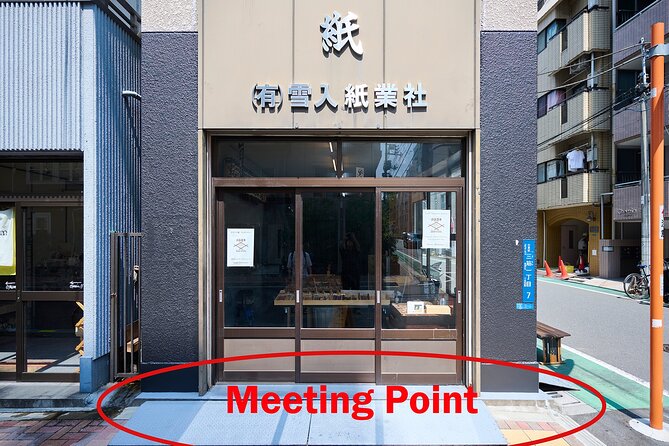
The activity starts and ends at 1-chōme-7-1 Misuji, Taito City, Tokyo 111-0055. It is near public transportation, and the maximum group size is 10. Confirmation is provided at booking, and a mobile ticket is accepted.
Most participants can take part, and the workshop is intended for beginners. The useful preparation is simple: arrive ready to focus, allow more time than the stated hour, and decide in advance whether you are interested in upgraded wood or engraving.
You can cancel for a full refund up to 24 hours before the experience starts. Cancellations or changes made less than 24 hours before the start time are not accepted for a refund or change. The cut-off follows local time in Tokyo.
Should you book the chopstick workshop?
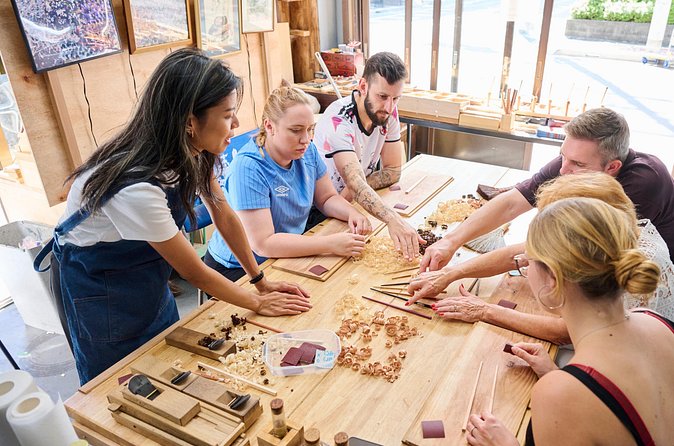
Book it if you want a small-scale activity that combines making, cultural context, and a souvenir you will actually use. The artisan guidance, capped group size, and same-day finished chopsticks make the workshop a good fit for beginners and families alike.
Skip it if your Tokyo schedule is packed or you would rather spend an hour listening than working. Before you commit, compare the confirmed booking price with any walk-in option, ask about wood and engraving upgrades, and leave enough room in your day for a session that may run long.
FAQ
How long does the workshop take?
It is listed as approximately one hour. Allow extra time, as the work may take closer to two hours.
Where does the workshop start?
It starts at 1-chōme-7-1 Misuji, Taito City, Tokyo 111-0055, Japan. The activity ends back at the same meeting point.
How many people can join?
The maximum group size is 10 participants.
Do I need woodworking experience?
No experience is required. The workshop is designed for beginners, with an artisan guiding you through the process.
Are wood upgrades and engraving included in the price?
Some wood choices and engraving cost extra. Ask about the added charges before making your selections.
What is the cancellation policy?
You can cancel at least 24 hours before the start time for a full refund. Cancellations or changes made less than 24 hours before the start time are not accepted.
Freshly reviewed in Tokyo
- Tokyo: Toshimaya Sake Brewery Tour with Sake Tasting★ 5.0 · 6 reviews
- :Tokyo,Shibuya /Meiji Shrine tour in KIMONO/English-friendly★ 5.0 · 4 reviews
- Tokyo: Tour Privado por Tokio en español★ 4.3 · 4 reviews
- Tokyo:Tea ceremony experience at Komaba Warakuan★ 4.8 · 9 reviews
- :Tokyo,Shibuya/ Pro Photography in Kimono / English-Friendly★ 5.0 · 26 reviews
- Tokyo:Samurai Training : Swords, Bushido & Mental Discipline★ 5.0 · 6 reviews
- Tokyo:Mt Fuji & Hakone Day Tour with English Speaking Driver★ 5.0 · 26 reviews
- Tokyo:Nikko UNESCO World Heritage Sites Private 1-Day Tour★ 3.8 · 6 reviews
Tokyo Tours, compared.

Mt Fuji and Hakone 1-Day Bus Tour Return by Bullet Train
Read our review →

teamLab Planets TOKYO Digital Art Museum Entry Ticket
Read our review →
Mt Fuji & Hakone Cruise, Drum Show Bullet Train 1 Day from Tokyo
Read our review →
Shinjuku Food Tour (13 Dishes at 4 Local Eateries)
Read our review →
Tokyo Mt Fuji 5th St & Hakone Cruise Bus Tour w/Bullet Train
Read our review →
Flagship 2-Hours Official Street Go-Kart Tour – Tokyo Bay Shop
Read our review →