
Reviewed · SHINJUKU TOURS
The Dark Side of Tokyo – Night Walking Tour Shinjuku Kabukicho
Shinjuku’s neon-lit streets are only part of the story. This two-hour walk takes you through Kabukicho and nearby nightlife districts, where a guide can explain the businesses, customs, and social rules that are easy to miss when you’re simply following the signs.
I like two things in particular: the small group, capped at 12, makes it easier to ask questions, and the route gives you a useful mix of famous sights and less obvious local context. You’ll see Omoide Yokocho, the Godzilla Head, a Shinto shrine, and the LGBTQ+ district, while learning about the area’s adult entertainment scene.
One point to plan around: the tour finishes in Shinjuku 3 Chome, not back at the starting point near Shinjuku Station’s East Exit. It’s a walking tour, not a loop, and dinner and drinks are extra.
- Omoide Yokocho: Walk through one of Tokyo’s best-known drinking alleys.
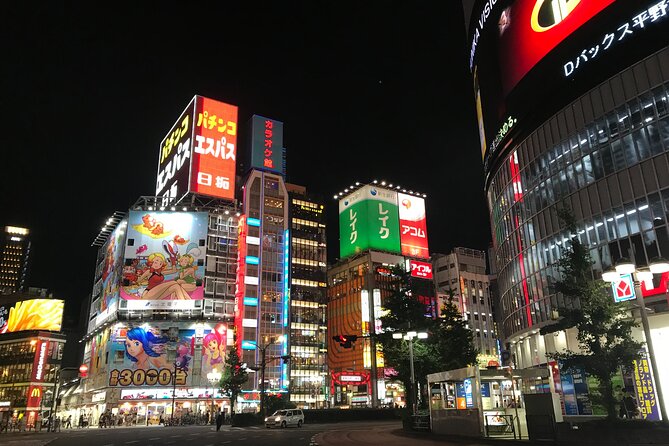
- Kabukicho after dark: Get context for Shinjuku’s major nightlife district, including its adult entertainment businesses.
- Godzilla Head: Stop to see the famous landmark and its show.
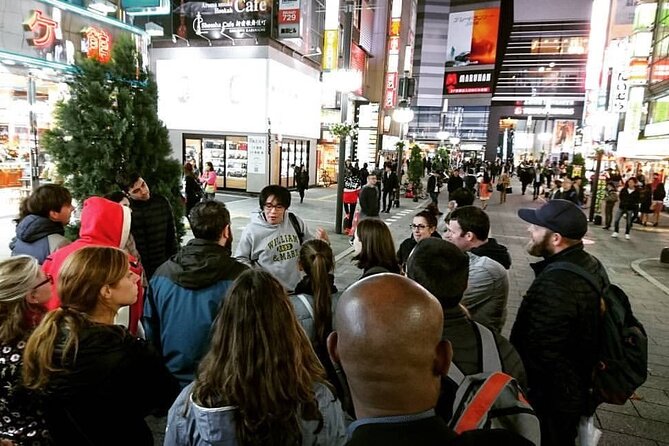
- A small-group walk: No more than 12 people, with room to ask questions.
- Shinjuku’s varied districts: The route also includes a narrow bar area, a Shinto shrine, and Japan’s largest LGBTQ+ town.
A guided walk through Shinjuku’s after-dark world
The title may suggest something more ominous than the experience itself. This is not a tour designed to frighten you or push you into nightlife venues. It is a guided walk through parts of Shinjuku that can feel confusing at first, with explanations of what you’re seeing and how the district works.
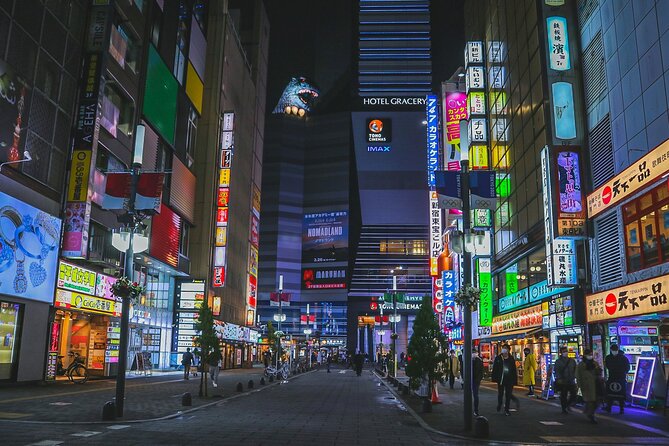
That context matters here. Kabukicho is bright, crowded, and full of competing signs, offers, and people trying to catch your attention. A guide helps you understand the streets without having to make every decision on the fly. The walk also covers adult entertainment and the rules businesses navigate, subjects that can be hard to investigate on your own, especially when much of the local signage is not in English.
The tour lasts about two hours, though at least one participant described a longer, faster-paced outing. Treat the listed duration as approximate, and allow some flexibility if you have a tight schedule afterward. You’ll be on foot throughout, moving between several nearby parts of Shinjuku rather than staying in one attraction.
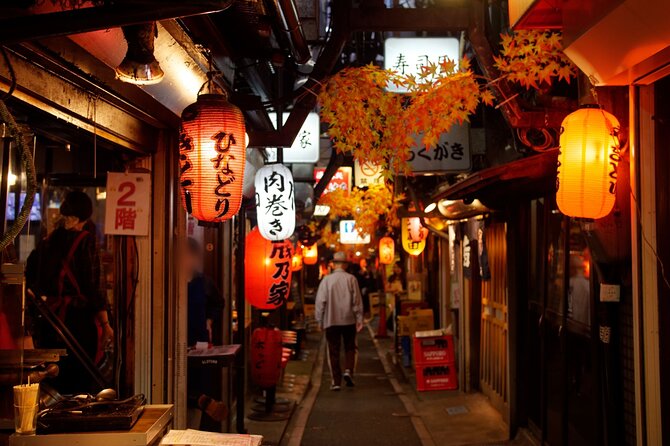
Omoide Yokocho, a close-up of old Tokyo drinking culture
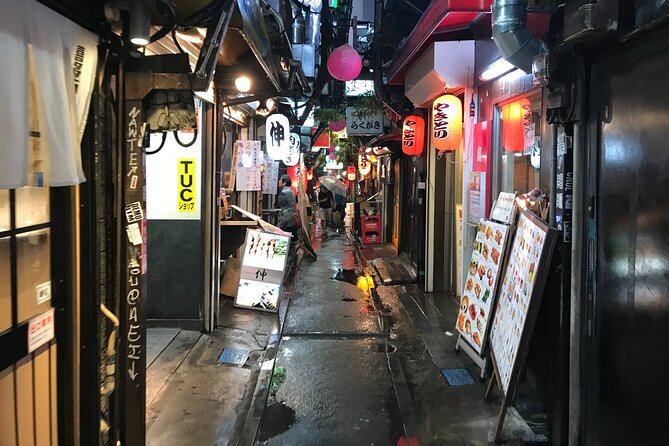
Omoide Yokocho is one of the route’s signature stops: a famous drinking alley known for its small bars and food spots. It offers a sharp contrast with the giant signs and broad streets nearby. Here, the scale changes. The lanes are narrow, the venues are close together, and the activity happens at street level.
A guide can help put the alley in context and point out how it fits into Shinjuku’s nightlife. You’ll also have a chance to note places you may want to return to later. Since dinner is not included, don’t count on this walk as a meal. Food and drinks cost extra, and the tour is structured as sightseeing and interpretation rather than a tasting route.
If you’re interested in eating here afterward, keep your plans flexible. The tour takes you through the area, but it does not promise a meal stop or a reserved seat. Think of it as a useful introduction to the alley, not a restaurant booking.
More Shinjuku tours in Tokyo:
- Tokyo: Shinjuku Food Tour (13 Dishes at 4 Local Eateries)
★ 5.0 · 6,603 reviews - Tokyo Bar Hopping Tour in Shinjuku (All-You-Can-Drink + Dinner)
★ 5.0 · 3,587 reviews - Tokyo: Shinjuku Food Tour (15 Dishes and 4 Eateries)
★ 4.9 · 2,033 reviews
Kabukicho and the adult nightlife scene
Kabukicho is the heart of the tour’s subject. It is Tokyo’s best-known nightlife area, and the guide helps you read more than the neon. The discussion includes local culture and subculture, the adult entertainment business, and how workers and businesses operate within legal boundaries.
That last topic is one reason this walk can offer more than a solo wander. You can look at the district from the outside, but signs alone rarely explain how the area functions or why certain businesses are presented as they are. The guide’s explanations give you a way to approach the neighborhood with curiosity rather than guesswork.
The tour’s name uses the phrase dark side, but the experience is not simply a parade of lurid stories. The useful part is hearing about the human and practical realities behind the district, as well as its history and traditions. Guides such as Gray, Polina, Danny, Loc, Kumi, and Daniel have led the walk. The guide changes, so you should not assume you’ll have a particular person, but the emphasis on explanation and questions is central to the experience.
Kabukicho is also busy, and a group can be harder to keep together when streets are crowded or rainy. Stay close to the guide, especially at crossings and in tight passages. If you lose sight of the group, don’t assume the person ahead is the guide; one rainy-night participant found that other people began following them because they were easy to see in a bright coat.
The Godzilla Head and a stop for spectacle
The route includes the famous Godzilla Head, a landmark that gives the walk a lighter, more theatrical pause between discussions of nightlife and local culture. You’ll see the head and its show, a reminder that Shinjuku’s after-dark character is not all bars and adult businesses. There is also a strong streak of pop culture and entertainment in the district.
This stop is easy to appreciate even if you’re not interested in the adult nightlife side of the tour. It gives you a familiar photo point and a chance to take in the visual scale of the neighborhood. The head is a landmark, not a long visit, so don’t expect a separate attraction experience or an extended show.
Narrow bar lanes, a shrine, and a change of pace
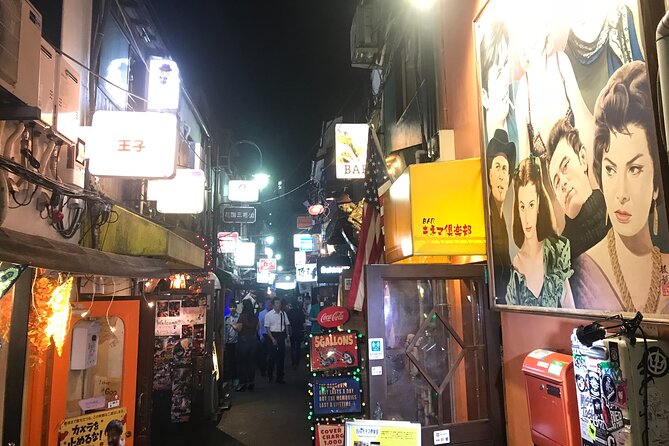
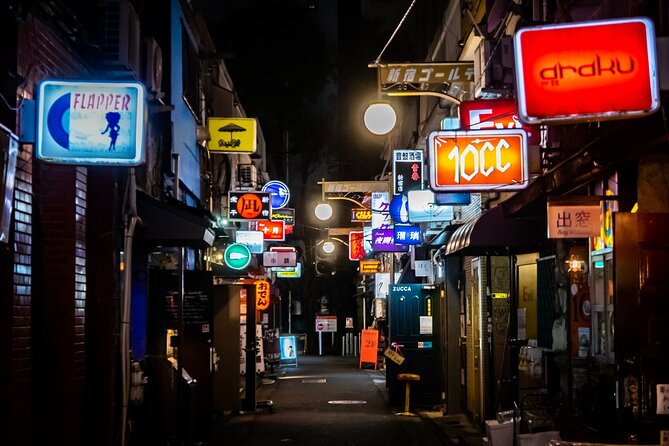
The route also passes through a narrow bar district. Its small scale and close-packed venues offer another view of Shinjuku’s night scene, distinct from Kabukicho’s larger signs and main streets. Your guide can explain the area as you walk, but the tour fee does not cover a drink or a stop inside a bar.
A Shinto shrine adds a quieter point to the route. Its presence gives you a moment to consider how a place of worship sits within a busy entertainment district. The tour includes the stop, though the supplied details do not promise a ceremony, extended visit, or specific historical interpretation. If you’re hoping to learn about religious practice, ask your guide what time allows.
These changes in setting are part of what makes the walk useful. You move from drinking alley to major nightlife district, then to smaller lanes and a shrine, rather than seeing only one version of Shinjuku. The route helps you compare the area’s different uses and moods within a short evening.
More walking tours in Tokyo:
- Tokyo Tsukiji Fish Market Food and Culture Walking Tour
★ 5.0 · 3,184 reviews - Tokyo: Imperial Palace and Shogun Historical Walking Tour
★ 5.0 · 2,251 reviews - Tokyo: Shinjuku Local Bar and Izakaya Guided Walking Tour
★ 4.9 · 1,794 reviews - Tokyo: Tsukiji Fish Market Food and Walking tour
★ 5.0 · 1,724 reviews
Shinjuku’s LGBTQ+ district
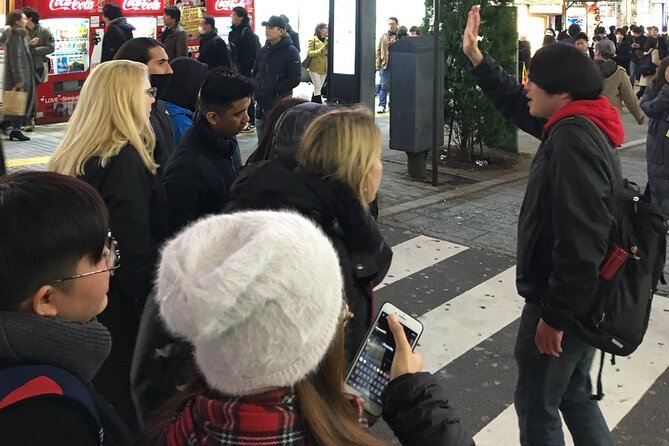
The walk includes the district often called Gay Town, described as Japan’s largest LGBTQ+ town. This is an important part of the itinerary, not a passing reference to Kabukicho. The guide provides a chance to learn about another part of Shinjuku’s nightlife and social life, within a neighborhood that has its own character.
Approach this stop with the same respect you would bring to any community space. The tour is a walk and cultural introduction, not a promise of entry to bars or clubs. If you want to return independently later, the route can help you get your bearings, but follow venue rules and remember that food and drinks are separate costs.
What the $25 price includes
At $25 per person, the tour is a relatively affordable way to get orientation and local explanation in a district where it is easy to feel overwhelmed. The fee covers the guide, not dinner, drinks, or other purchases. You’re paying for the route and the context, rather than a packaged night out.
That distinction makes the tour especially worthwhile if you want to understand what you’re seeing before exploring on your own. A guide can answer questions and explain parts of the area that may not be clear from English-language information. If you already know Shinjuku well and mainly want a meal or bar crawl, the fee may be less useful to you.
The small group is a practical advantage. With a maximum of 12 people, you have a better chance to hear the guide and ask questions than you would on a large coach tour. Some groups may be smaller, but that is not guaranteed. You’ll receive personalized attention within the limits of a walking group in busy streets.
Meeting point, route finish, and practical planning
The tour starts at the police box by Shinjuku Station’s East Exit, at 3-chōme-38-1 Shinjuku. A police box is a small staffed neighborhood police post, not a telephone booth. That distinction matters: one participant had trouble finding the meeting point because they were looking for a phone box. Check the location on a map before setting off, and allow a little time to find the correct spot.
The tour finishes around Shinjuku 3 Chome, so you’ll need to make your own way from there. This is not a loop back to the starting point. The end point is still in Shinjuku, which can be convenient if you plan to continue your evening nearby, but it is worth knowing before you book if you need to return to the station entrance or meet someone elsewhere.
The experience uses a mobile ticket, and confirmation is provided at booking. It is near public transportation, service animals are allowed, and most people can participate. The tour requires good weather; if poor weather causes a cancellation, you’ll be offered another date or a full refund. You can cancel for a full refund up to 24 hours before the start time.
Who should take this tour?
I’d consider this walk if you’re visiting Tokyo for the first time, want to explore after dark, or are curious about the parts of Shinjuku that don’t fit a standard sightseeing route. It can be a good first-evening activity because it gives you a sense of direction and helps you decide which areas you might want to revisit.
It’s also a strong fit if you like asking questions and want social context, not just a string of photo stops. The most consistently praised elements are the guides’ clear explanations, friendly manner, humor, and ability to discuss subjects many people would not learn about by walking through the area alone. The specific guide varies, but names associated with the tour include Polina, Gray, Danny, Loc, Kumi, and Daniel.
You may want to skip it if you prefer a quiet evening, dislike crowded streets, or expect dinner and drinks to be part of the price. The tour is about looking and learning; it does not include a meal, and the neighborhood can be noisy and busy. Also consider the route’s one-way finish if you need to be back at the East Exit afterward.
Should you book the Shinjuku night walk?
At $25, this is a good-value introduction to Shinjuku’s nightlife districts if you want an informed walk rather than an unplanned wander. The combination of Omoide Yokocho, Kabukicho, the Godzilla Head, a shrine, narrow bar lanes, and the LGBTQ+ district gives you a broader view of the area than a quick pass through the main streets.
Book it if you want local context, practical orientation, and a chance to ask questions in a group of no more than 12. Pass if you’re mainly looking for a bar crawl or a dinner tour. For a first visit to Tokyo, I’d put it near the start of your evening plans, then decide for yourself where to go next.
FAQ
How long does the tour last?
It lasts about two hours. The duration is approximate, so allow some flexibility if you have plans immediately afterward.
How much does the tour cost?
The listed price is $25 per person. Food and drinks cost extra, and dinner is not included.
What is included in the price?
The tour guide fee is included. Dinner is not included, and food and drinks are extra.
How many people can join?
The group has a maximum of 12 travelers.
Where does the tour start and end?
It starts at the police box by Shinjuku Station’s East Exit and finishes around Shinjuku 3 Chome. It does not return to the starting point.
Can I cancel if my plans change?
You can cancel for a full refund at least 24 hours before the tour’s start time. If poor weather causes the tour to be canceled, you’ll be offered a different date or a full refund.
More night tours in Tokyo
- Tokyo Night Foodie Tour in Shinjuku – Seasonal Sushi, Wagyu Beef
★ 5.0 · 1,161 reviews - Tokyo: Daikoku JDM Car Meet & Night Car Culture Tour
★ 4.8 · 626 reviews - Tokyo After 5: Authentic Japanese Food & Drink Night Tour
★ 4.5 · 560 reviews - Tokyo: Samurai Entertainment Night Show in Kanda Shrine
★ 4.6 · 417 reviews
Freshly reviewed in Tokyo
- Tokyo: Toshimaya Sake Brewery Tour with Sake Tasting★ 5.0 · 6 reviews
- :Tokyo,Shibuya /Meiji Shrine tour in KIMONO/English-friendly★ 5.0 · 4 reviews
- Tokyo: Tour Privado por Tokio en español★ 4.3 · 4 reviews
- Tokyo:Tea ceremony experience at Komaba Warakuan★ 4.8 · 9 reviews
- :Tokyo,Shibuya/ Pro Photography in Kimono / English-Friendly★ 5.0 · 26 reviews
- Tokyo:Samurai Training : Swords, Bushido & Mental Discipline★ 5.0 · 6 reviews
- Tokyo:Mt Fuji & Hakone Day Tour with English Speaking Driver★ 5.0 · 26 reviews
- Tokyo:Nikko UNESCO World Heritage Sites Private 1-Day Tour★ 3.8 · 6 reviews
Shinjuku Tours, compared.
Shinjuku Food Tour (13 Dishes at 4 Local Eateries)
Read our review →
Tokyo Bar Hopping Tour in Shinjuku (All-You-Can-Drink + Dinner)
Read our review →
Best of Shinjuku: Izakaya Food Tour (4 Stops, 14+ Tastings)
Read our review →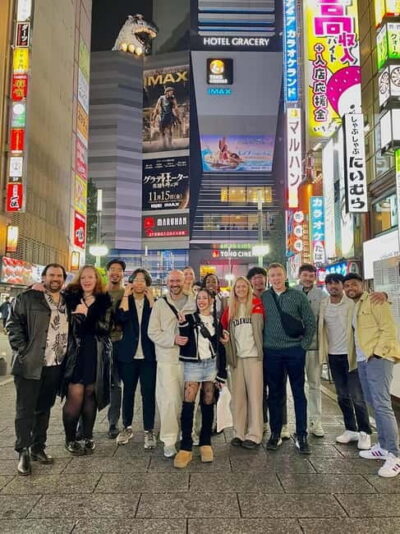
Shinjuku Local Bar and Izakaya Guided Walking Tour
Read our review →
Tokyo Shinjuku Sumo Show & Experience with Photo
Read our review →
Tokyo Night Foodie Tour in Shinjuku – Seasonal Sushi, Wagyu Beef
Read our review →
Browse the lists this tour appears in