Reviewed · TOKYO TOURS
Tokyo: Traditional foot-kneaded Udon noodles class
Foot-kneading udon is the kind of cooking lesson that makes you laugh before lunch. At Izumi’s home in Musashino, you mix your own dough, then use your feet to knead it before rolling and cutting it into noodles. It is a hands-on way to meet a local food tradition, not just watch someone else cook.
I like two things in particular: you make your own portion from start to finish, and the class includes both dashi, a key Japanese stock, and a casual matcha-and-wagashi tea break. Izumi also shares stories about udon and her community, giving the meal a sense of place.
One consideration: the standard dipping soup is made with pork, so it will not suit everyone. Vegetarian and vegan lessons are available as options, but tell Izumi about allergies or dietary needs in advance.
What makes this class worth considering
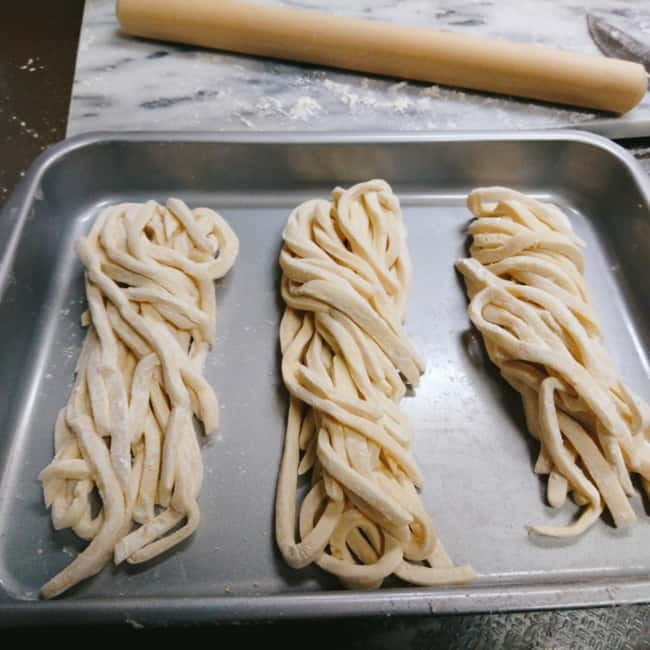
- Foot-kneaded dough: Step on your udon dough before rolling it out. It is a playful, unusual part of the process, and every participant makes their own noodles.
- A home kitchen in Musashino: Cook in an ordinary Japanese house in a part of west Tokyo where wheat farming was once common.
- Local udon tradition: Musashino udon has been made in the area for about four centuries.
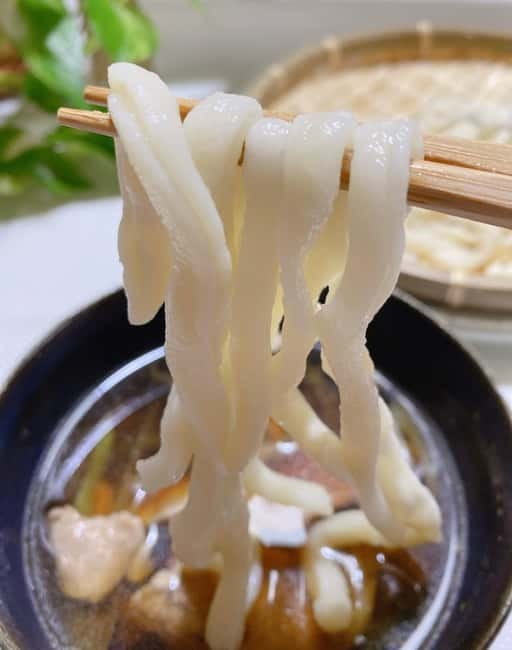
- A full meal, not just a lesson: Prepare dashi and a hot pork soup to dip into, then eat the noodles you made.
- Matcha and wagashi to finish: The class ends with a relaxed tea experience and traditional Japanese sweets.
- A very small group: The class is limited to four people, with English and Japanese instruction.
The appeal of making udon with your feet
Musashino udon is tied to the area where this class takes place. Wheat farming was once widespread here, and local udon has a history stretching back about four centuries. That context gives the lesson more purpose than a novelty cooking activity: you are learning a food that belongs to this part of Tokyo.
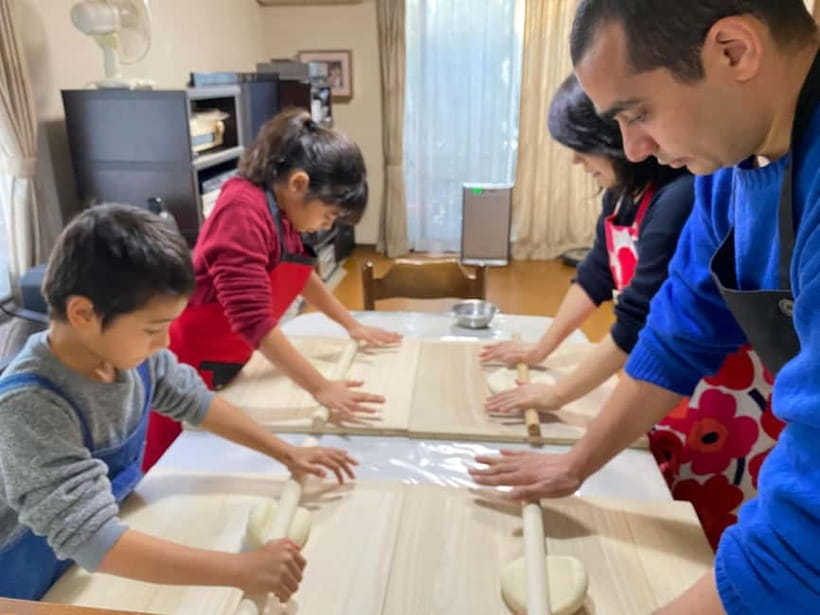
The foot-kneading is the memorable bit. Once you have mixed the ingredients into dough, you step on it to work it into shape. It is an unusual method, but it turns a kitchen task into a shared activity, and it is easy to see why it brings out laughter.
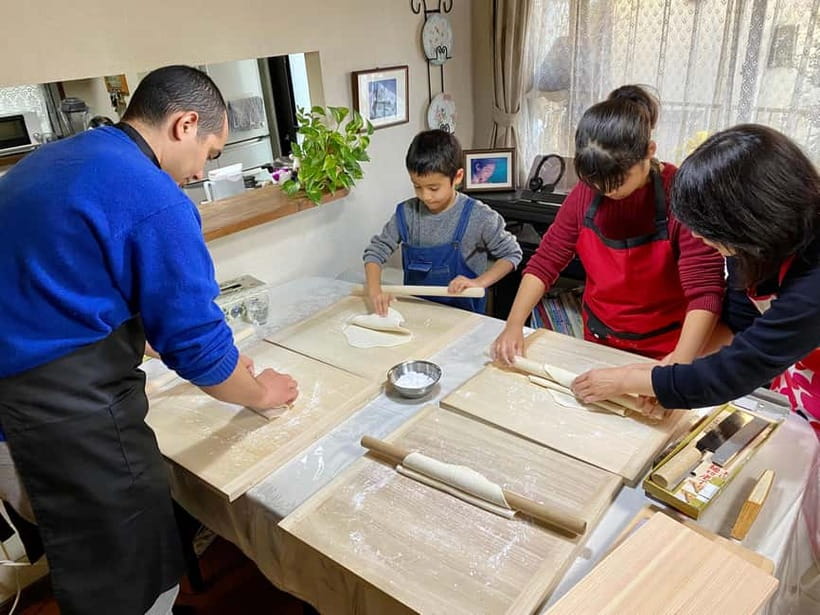
You will use traditional udon-making tools, including a large wooden kneading board, a long rolling pin and a large bowl. Each person makes their own noodles, so you are not simply observing Izumi demonstrate the steps. You get to handle the dough, feel how it changes as you work it, and take part in turning it into a meal.
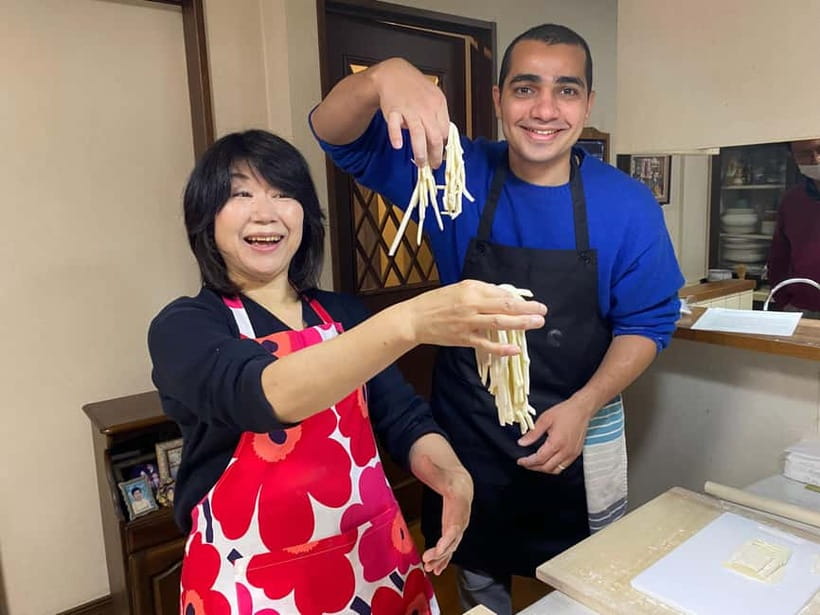
Izumi is the instructor, and the class is taught in English or Japanese. Her approach is described as patient and clear, with stories about udon, her family and the local community woven into the lesson. A past class also had music ranging from Queen to Fujii Kaze, so expect a home kitchen with an easy, lively feel rather than a formal culinary school.
More hands-on workshops in Tokyo:
- Sushi Making Tokyo Roll and Authentic Japanese Sushi Class
★ 5.0 · 3,971 reviews - Tokyo: Roll and Authentic Sushi Making Class in Asakusa
★ 4.9 · 1,957 reviews - Tokyo Shinjuku Chopsticks Making Class
★ 5.0 · 1,763 reviews
From flour and dough to a bowl of noodles
The cooking begins with the udon dough. You mix it, then knead it by stepping on it. This stage is fun, but it is also practical: you take part in the work that gives the noodles their texture rather than skipping straight to the finished dish.
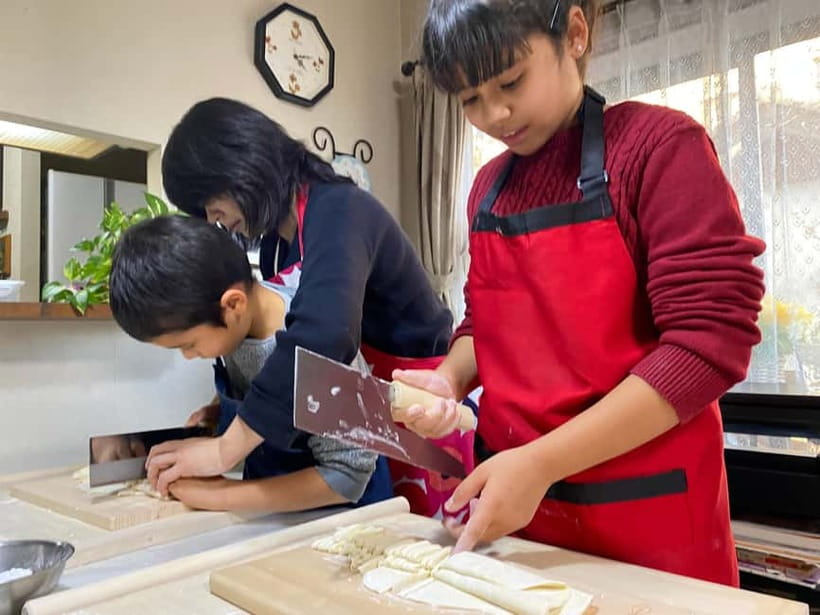
After the dough is ready, you roll it into a sheet with a long rolling pin. Then you cut it into noodles using a special udon knife. This is where careful hands matter. The process gives you a sense of how much goes into a bowl of fresh noodles, and how different the result is from opening a packet at home.
The lesson is built around each participant making their own udon, which makes the experience more rewarding than a demonstration. It also means you will have a direct hand in the meal you eat at the end. If you enjoy learning a skill by doing it, this is the heart of the class.
Why the dashi lesson matters
After making the dough, you learn to prepare dashi, a stock used widely in Japanese cooking. Dashi is one of the basic building blocks behind many Japanese dishes, so it is useful knowledge to take away from a class focused on noodles.
You then use the dashi to prepare a hot pork soup for dipping. The meal pairs cold, freshly made noodles with a warm, savory soup. That contrast is central to the experience: the noodles are the result of your work, while the soup gives you a chance to taste how dashi supports a broader dish.
The standard soup contains pork, so check the dietary options before booking if you do not eat meat. A vegetarian udon lesson is offered, and vegetarian and vegan lessons are described as optional. The details of the alternative stock and soup are not specified, so tell Izumi what you can and cannot eat in advance rather than assuming every ingredient can be swapped.
That same advance notice matters for allergies. The class asks you to share allergies or ingredients you cannot eat before the session. This is especially important in a cooking class, where ingredients are part of the lesson as well as the meal.
A home setting, not a restaurant kitchen
The class takes place in Izumi’s own home in Musashino, a green suburb in west Tokyo. That setting is a key part of its appeal. You are cooking in an ordinary Japanese house, not in a visitor center or a staged restaurant space, and the small group size keeps the experience personal.
There are no more than four participants. That limit should give you room to take part in the hands-on work and ask questions as you go. It also means this is not the right choice if you want the energy of a large group activity. The format is better suited to a couple, a small family or a few friends who are comfortable cooking together.
The meeting point is Higashimurayama station. Izumi gives you a ride from the station to the venue, while your public transportation to the station is not included. Build that journey into your plans: the class is in west Tokyo, not central Tokyo, so check your route and allow enough time to reach the station.
The class runs for 150 minutes, or two and a half hours. That gives time for noodle-making, the dashi and soup, the meal, and the tea experience without taking up an entire day. Starting times vary, so check availability when choosing a date.
More tours and experiences in Tokyo:
- Mt Fuji and Hakone 1-Day Bus Tour Return by Bullet Train
★ 5.0 · 26,383 reviews - 1-Day Tokyo Bus Tour
★ 5.0 · 14,250 reviews - Tokyo: teamLab Planets TOKYO Digital Art Museum Entry Ticket
★ 4.6 · 9,779 reviews - Mt Fuji & Hakone Cruise, Drum Show Bullet Train 1 Day from Tokyo
★ 4.0 · 7,413 reviews
Matcha, wagashi and a quieter finish
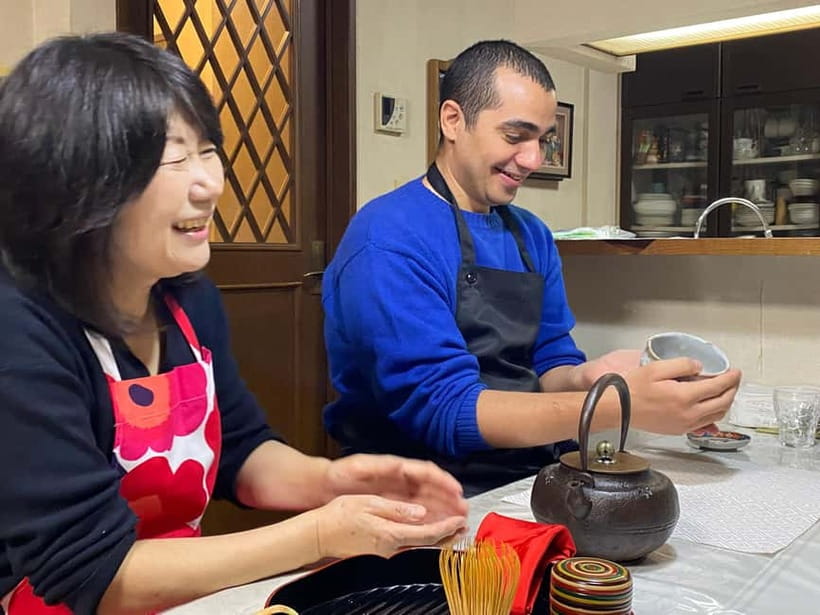
After the udon meal, the class shifts to a casual Japanese tea ceremony. You will have matcha with wagashi, traditional Japanese sweets. This is not presented as a formal, highly structured ceremony; it is a relaxed way to pause after the cooking and enjoy a familiar part of Japanese food culture.
I like this finish because it makes the class feel like more than a recipe workshop. You first work with your hands, then sit down to eat, and finally slow the pace with tea and sweets. It gives the session a natural rhythm, with a clear reward at the end of the cooking.
Matcha and wagashi are included, along with the ingredients, kitchenware, apron and recipes. The recipes are a useful extra if you want to try making udon again at home. The exact recipes and how much detail they contain are not specified, so think of them as a practical reminder of the class rather than a promise of a full cookbook.
Does the $70 price make sense?
At $70 per person, this is not a cheap meal, but it is more than a meal. You are paying for a 2.5-hour small-group class, the ingredients and tools, an apron, recipes, the matcha experience and the ride from Higashimurayama station to the home venue.
The price makes the most sense if you value participation and local context. You get to make noodles with your own hands, learn a basic stock, prepare a soup and eat the results. You also spend time in a home kitchen with an instructor who can share stories about Musashino and its food traditions.
If you only want to taste udon, a restaurant meal will cost less and take less time. This class is for people who want to understand how the dish comes together and enjoy the process along with lunch. It is also a good fit if you are looking for an activity that feels distinct from Tokyo’s usual sightseeing stops.
The class has a five-star rating based on five ratings, and the strongest praise centers on Izumi’s warm, accommodating teaching, the fun of foot-kneading, and the quality of the noodles. One participant described the process as surprisingly therapeutic. That is a useful clue: the class is not only about getting a recipe right, but also about sharing a cheerful, hands-on afternoon.
Who will enjoy this class most
This experience suits curious cooks, noodle fans and people who like to meet a place through its everyday food. You do not need to be an experienced cook: the lesson is described as clear and welcoming, and it was a first cooking class for at least one participant. The small group also makes it easier to follow along than a large demonstration.
It is a strong choice for couples or friends who want to do something together rather than simply sit through a tasting. The foot-kneading gives the class a playful moment, while rolling and cutting the dough offer a more focused task. Families may enjoy the activity too, though no age guidance is provided, so check with the host if you are booking for children.
Vegetarians and vegans should ask about the suitable lesson before booking. The standard meal includes pork soup, and the exact ingredients for alternative versions are not listed. If you have a food allergy or avoid particular ingredients, share that information ahead of time.
This is less suited to anyone with a tight schedule, someone who does not want to travel to west Tokyo, or a diner who simply wants a quick meal. The class takes two and a half hours, and you need to make your own way to Higashimurayama station. The ride to the house is provided from there.
Should you book the Musashino udon class?
Book it if you want a small, personal cooking lesson with a clear local connection. The foot-kneading is fun, but the best value comes from the full sequence: making the dough, learning dashi, cooking the soup, eating your noodles and ending with matcha and wagashi.
Skip it if you are mainly looking for a low-cost lunch or cannot spare the time to travel out to Musashino. For anyone keen to cook, curious about Japanese home food, or eager for a break from the standard city itinerary, Izumi’s class offers a warm and memorable way to spend an afternoon.
FAQ
How long does the udon class last?
The class lasts 150 minutes, or two and a half hours.
Where does the class take place?
It takes place in Musashino, in west Tokyo, at the instructor’s home.
Where is the meeting point?
The meeting point is Higashimurayama station. The host gives you a ride from the station to the venue.
Is transportation to the station included?
No. Public transportation to the station is not included.
How much does the class cost?
The listed price is $70 per person.
How many people can join?
The class is limited to four participants.
What languages does the instructor speak?
Instruction is available in English and Japanese.
What is included in the price?
Ingredients, kitchenware, recipes, an apron, the matcha tea experience and a ride from the meeting point are included.
Can vegetarians or vegans take the class?
Vegetarian and vegan lessons are available as options. The standard dipping soup is made with pork, so tell the host about your dietary needs in advance.
What should I do if I have an allergy?
Let the host know in advance about any allergies or ingredients you cannot eat.
Freshly reviewed in Tokyo
- Tokyo: Toshimaya Sake Brewery Tour with Sake Tasting★ 5.0 · 6 reviews
- :Tokyo,Shibuya /Meiji Shrine tour in KIMONO/English-friendly★ 5.0 · 4 reviews
- Tokyo: Tour Privado por Tokio en español★ 4.3 · 4 reviews
- Tokyo:Tea ceremony experience at Komaba Warakuan★ 4.8 · 9 reviews
- :Tokyo,Shibuya/ Pro Photography in Kimono / English-Friendly★ 5.0 · 26 reviews
- Tokyo:Samurai Training : Swords, Bushido & Mental Discipline★ 5.0 · 6 reviews
- Tokyo:Nikko UNESCO World Heritage Sites Private 1-Day Tour★ 3.8 · 6 reviews
- Tokyo:Mt Fuji & Hakone Day Tour with English Speaking Driver★ 5.0 · 26 reviews
Tokyo Tours, compared.

Mt Fuji and Hakone 1-Day Bus Tour Return by Bullet Train
Read our review →

teamLab Planets TOKYO Digital Art Museum Entry Ticket
Read our review →
Mt Fuji & Hakone Cruise, Drum Show Bullet Train 1 Day from Tokyo
Read our review →
Shinjuku Food Tour (13 Dishes at 4 Local Eateries)
Read our review →
Tokyo Mt Fuji 5th St & Hakone Cruise Bus Tour w/Bullet Train
Read our review →
Flagship 2-Hours Official Street Go-Kart Tour – Tokyo Bay Shop
Read our review →