
Reviewed · TOKYO SAMURAI EXPERIENCES
Tokyo Samurai Experience: Kyudo (Archery) and Swordsmanship
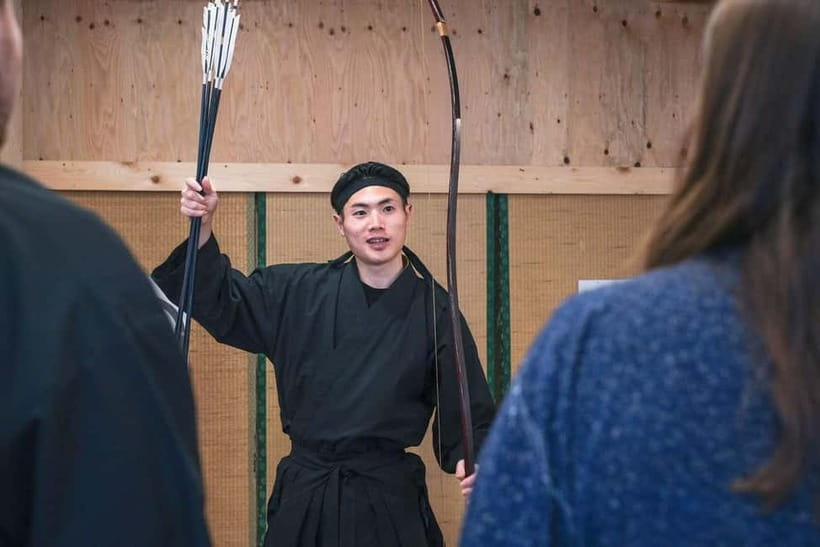
The heart of this Asakusa activity is not a museum display but a chance to put on hakama and try two very different skills: kyudo, Japanese archery, and the form of a single-edged katana. A short samurai-history introduction and a playful rank game set the scene before you take your turn with the bow and sword.
I like two things in particular: the hands-on mix of archery and sword practice, and the friendly, patient teaching style associated with instructors such as Mori and Joe. The staff also help you take photos, so you leave with a record of the outfit and poses, not just a new story to tell.
One thing to weigh is the pace. At one hour and $96 per person, this is a lively introduction, not a long course in martial arts or a deep study of samurai history. If you want plenty of time to repeat techniques or ask detailed questions, the short format may feel brisk.
Key points before you book
- Wear hakama for the session: Traditional clothes are included, with different heights and sizes available.
- Try two distinct disciplines: The activity pairs Japanese bow practice with katana stance and handling.
- Expect a light, playful lesson: A mini-game assigns samurai rank before the training begins.
- Get photo help from the staff: Bring a phone or camera if you want pictures of the outfit and poses.
- No martial arts background is needed: The instructor adjusts explanations to your English level.
- Allow time to find the room: The meeting point is on the fifth floor of the Heiwa Building in Asakusa.
Start by dressing as a samurai
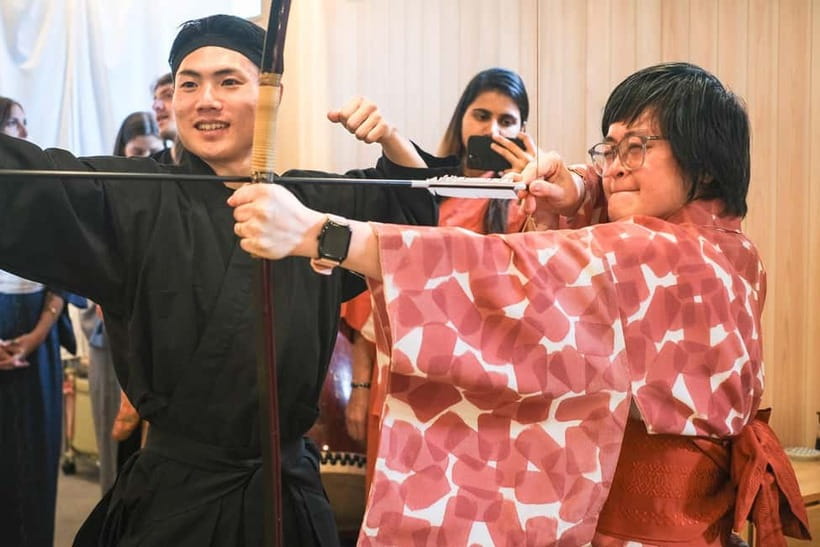
The experience begins with changing into a traditional hakama set. A range of sizes and heights is available, making this more practical for mixed-age groups than a one-size costume setup might be. Comfortable clothes and shoes are sensible choices for getting there and taking part.
The outfit does more than make a good photo. It helps shift the session from ordinary sightseeing into a small role-playing exercise, while also giving you a visual sense of how a samurai might have dressed. This is still a short activity designed for visitors, so think of the clothing as part of the introduction rather than a historical costume lecture.
After changing, you get a brief explanation of samurai history and traditions. The word brief matters here. The background gives context for the activities to come, but the main attraction is trying the skills yourself, not sitting through a long talk.
More samurai experiences in Tokyo:
- Tokyo: Samurai Restaurant Show Ticket with 2 Drinks
★ 4.5 · 1,307 reviews - Tokyo: Samurai Ninja Museum Guided tour and Experience
★ 4.6 · 1,010 reviews - Tokyo: Samurai Sword & Archery Class from Samurai Descendant
★ 5.0 · 603 reviews
Take the samurai-rank mini-game in stride
A fun game determines your samurai rank before training starts. The activity frames it as a contest for status, with the top position described as general, or shogun. It is an easy way to get the group involved without requiring anyone to know the rules of a martial art in advance.
There is no need to take the result too seriously. The point is to set a playful tone and give the session a simple narrative: you begin with a rank, then move into the actual practice. If you are visiting with children or friends, this can help break the ice before everyone takes turns with the equipment.
The game also signals what kind of experience this is. You are here to try, laugh, learn a few basics, and take pictures, not to be tested on your fitness or prior knowledge. The activity is described as family-friendly, and no previous experience is required.
Try kyudo with a traditional Japanese bow
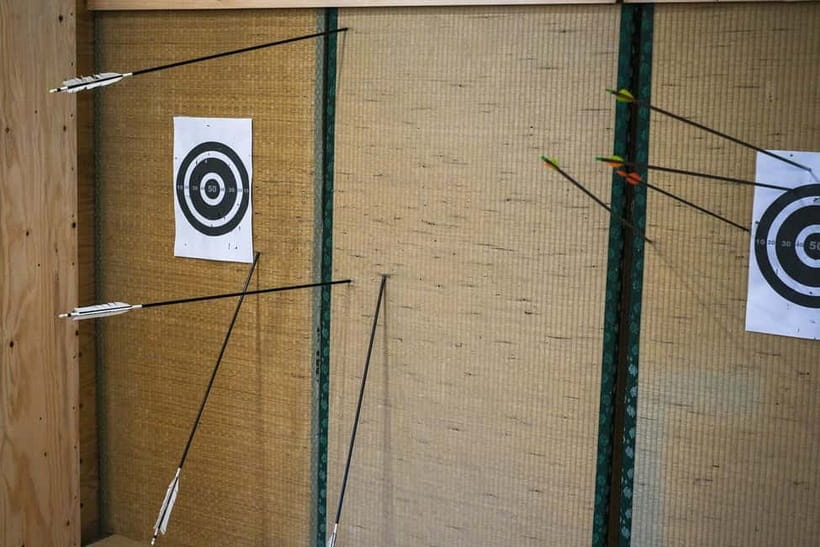
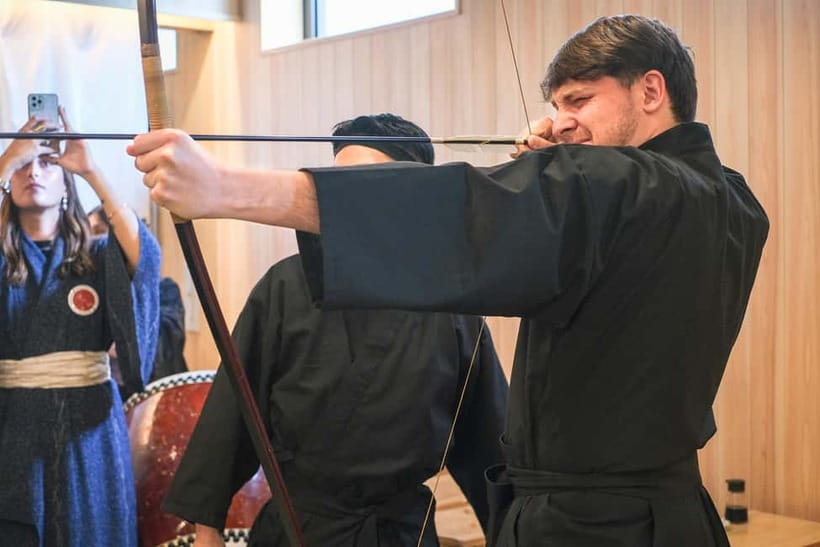
The archery portion introduces kyudo, a Japanese martial art with a long history. You use a traditional Japanese bow and compete with your companions for the shogun position. The exact mechanics and format of the contest are not specified, so expect an introductory activity rather than a full lesson in formal kyudo.
The distinction from western archery is part of the appeal. The session presents kyudo as a different kind of practice, not simply a familiar target sport with Japanese equipment. That contrast gives you something to notice as you try the bow: the instructor can explain the approach in straightforward English, and you can focus on following the guidance rather than arriving with a technique of your own.
Keep expectations grounded. In one hour, the goal is to experience the bow and learn something about its place in Japanese martial tradition. It is not enough time to master a discipline with its own forms and customs. If you have tried archery elsewhere, the value lies in comparing the experience and its framing, rather than expecting an advanced technical course.
Learn the katana stance and handling
The sword section turns from the bow to the katana, a single-edged Japanese sword. The instructor shows you the pose and the way to hold it, then helps you work toward a strong samurai stance. The focus is on basic form and presentation, not combat or sparring.
That makes this a good fit for someone curious about the sword but wary of a physically demanding class. You are not expected to arrive trained, and the session is built around instruction adapted to your English level. A few careful movements and a well-held pose can make the sword feel less like a prop and more like an object with a clear role in the activity.
The two disciplines also give the hour useful variety. The bow asks you to follow one kind of instruction, while the sword segment shifts attention to posture and grip. You get a taste of both without needing to choose between an archery-only or sword-only experience.
More tours and experiences in Tokyo:
- Mt Fuji and Hakone 1-Day Bus Tour Return by Bullet Train
★ 5.0 · 26,383 reviews - 1-Day Tokyo Bus Tour
★ 5.0 · 14,250 reviews - Tokyo: teamLab Planets TOKYO Digital Art Museum Entry Ticket
★ 4.6 · 9,779 reviews - Mt Fuji & Hakone Cruise, Drum Show Bullet Train 1 Day from Tokyo
★ 4.0 · 7,413 reviews
Make room for photos and Japanese snacks
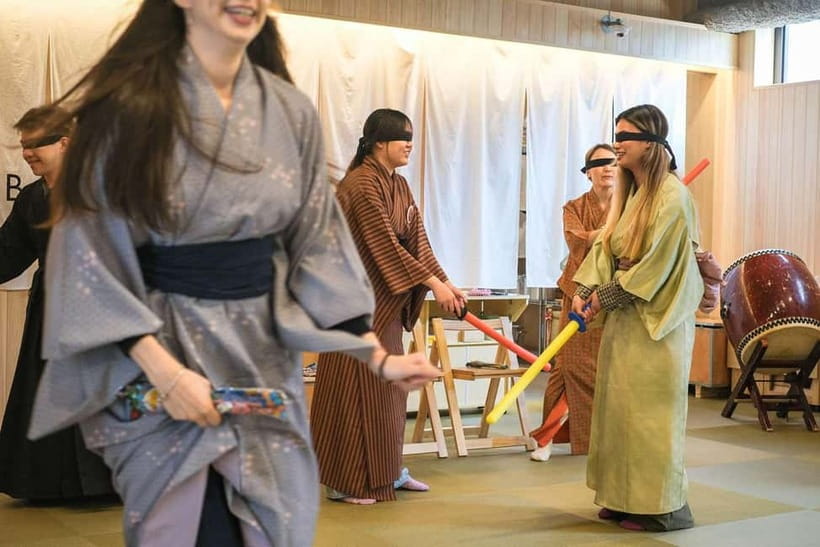
Staff help you take plenty of pictures, a practical touch when you are wearing traditional clothes and learning poses that are part of the experience. Bring a phone or camera if you want your own keepsakes. The activity includes photo assistance, though it does not specify a professional photo package or a particular number of images.
Japanese snacks are included as well. They add a small taste of local hospitality to an otherwise active session, but the details of the snacks are not provided, so do not book expecting a full meal or a specific menu. It is a welcome extra, especially if you are fitting the activity between other plans in Asakusa.
The friendly teaching style is a major part of the value. Coach Mori is described as patient, and Joe as friendly and instructive. Other feedback points to an upbeat team, with staff also able to offer tips about other experiences and shopping. That local help can be useful if you are still planning your time in the area, though the main purpose here is the samurai activity.
Decide if $96 is a fair price for an hour
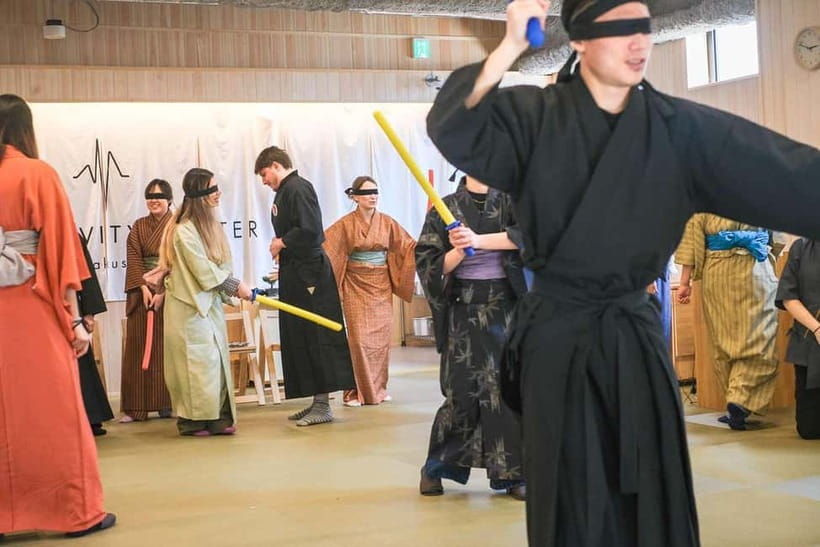
At $96 per person, this is not a budget attraction. The price is easier to justify if you want a guided, hands-on activity that combines clothing, archery, katana instruction, snacks, and photo help in one compact visit. You are paying for a hosted experience and access to the traditional bow and sword, not just an outfit rental.
The trade-off is depth. One hour gives the instructor time to introduce several elements, but not to teach kyudo or swordsmanship in detail. If you are primarily looking for serious martial arts training, you will likely want a longer class. If you want a memorable cultural activity that is easy to fit into a day, the combination offers more variety than a costume-only photo stop.
The format also suits people with different comfort levels. You can arrive with no martial arts background, and the instructor speaks English and adapts explanations to your level. If you are traveling with children or a mixed group, the mini-game and photo opportunities give less athletic participants ways to join in too.
Find the fifth-floor meeting point in Asakusa
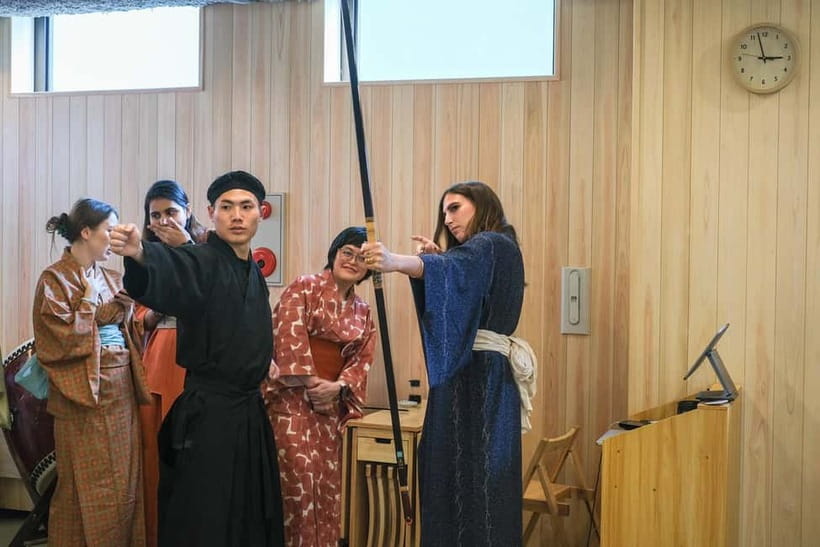
The address is 2 Chome 6-11 Asakusa, Taito-ku, Tokyo, at the Heiwa Building. Take the elevator to the fifth floor. Arrive ten minutes before the start, and contact the activity provider if the building is hard to find.
The venue is listed as wheelchair accessible. The session lasts one hour, and you should check the available start times when choosing a date. Booking offers a reserve-now, pay-later option, and you can cancel up to 24 hours ahead for a full refund.
Alcohol and drugs are not allowed. For clothing, keep things comfortable, and choose shoes you can manage easily. Since the traditional outfit is supplied, you do not need to bring a costume or equipment.
Who should book this Asakusa activity?
I would choose this if you want a short, social way to try Japanese archery and katana form, especially if you enjoy dressing up and taking photos. It also makes sense for families and first-timers who want clear English instruction rather than a specialist-level class. The friendly, patient approach is especially helpful if you are unsure what to do with a bow or sword.
I would look elsewhere if you want an in-depth history lesson, a long technical workshop, or a low-cost activity. At this price, the appeal is the full package: outfit, brief context, game, hands-on practice, snacks, and photo help. If that blend sounds fun, the hour should leave you with a better feel for samurai traditions and a few good pictures. If you need sustained training, treat it as an introduction and plan for a separate class.
FAQ
How long does the experience last?
The activity lasts one hour.
How much does it cost?
The listed price is $96 per person.
Where is the meeting point?
Meet at 2 Chome 6-11 Asakusa, Taito-ku, Tokyo, in the Heiwa Building. Take the elevator to the fifth floor.
How early should I arrive?
Arrive ten minutes before the activity starts.
Do I need martial arts or archery experience?
No. Prior experience is not necessary.
What should I wear or bring?
Bring comfortable shoes and comfortable clothes. Traditional clothes and the bow and katana are provided.
Is the activity suitable for children?
It is described as family-friendly. One instructor also recommends it for children and young adults.
Is English instruction available?
Yes. The instructor teaches in English, and bilingual staff adjust explanations to your level of English.
Can I cancel for a refund?
Yes. You can cancel up to 24 hours in advance for a full refund.
Freshly reviewed in Tokyo
- Tokyo: Toshimaya Sake Brewery Tour with Sake Tasting★ 5.0 · 6 reviews
- :Tokyo,Shibuya /Meiji Shrine tour in KIMONO/English-friendly★ 5.0 · 4 reviews
- Tokyo: Tour Privado por Tokio en español★ 4.3 · 4 reviews
- Tokyo:Tea ceremony experience at Komaba Warakuan★ 4.8 · 9 reviews
- :Tokyo,Shibuya/ Pro Photography in Kimono / English-Friendly★ 5.0 · 26 reviews
- Tokyo:Samurai Training : Swords, Bushido & Mental Discipline★ 5.0 · 6 reviews
- Tokyo:Mt Fuji & Hakone Day Tour with English Speaking Driver★ 5.0 · 26 reviews
- Tokyo:Nikko UNESCO World Heritage Sites Private 1-Day Tour★ 3.8 · 6 reviews
Tokyo Samurai Experiences, compared.
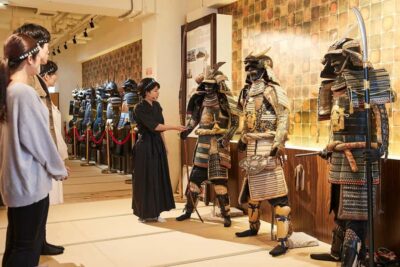
Samurai Ninja Museum Guided tour and Experience
Read our review →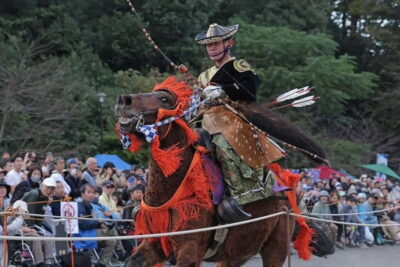
Samurai Sword & Archery Class from Samurai Descendant
Read our review →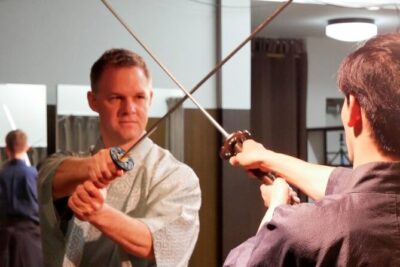
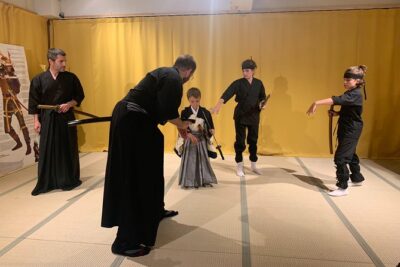
Ninja Experience (Family Friendly) at Samurai Ninja Museum TOKYO
Read our review →
Samurai Entertainment Night Show in Kanda Shrine
Read our review →
Tokyo Sword Experience – includes Museum Ticket/Ninja Experience
Read our review →
Samurai Ninja Museum Asakusa: Samurai Sword Lesson & Tour
Read our review →Browse the lists this tour appears in