
Reviewed · TOKYO WALKING TOURS
Tokyo After 5: Local Eats, Drinks & Culture Walk
Tokyo’s evening food scene makes more sense when you sit down at a hotplate and cook monja-yaki yourself. This small-group walk pairs that hands-on meal in Tsukishima with yakitori in Yurakucho and a look inside a Ginza depachika, giving you a useful introduction to how locals eat after work.
I like the mix of three very different food traditions and the limited group size of eight, which makes it easier to ask questions and follow along. I also like that the tour includes two subway rides, two drinks, and an English-speaking guide, so you can focus on the food instead of sorting out every detail on your own.
One consideration: there is a fair amount of walking, and the subway stops may involve stairs. The tour does not offer vegetarian, vegan, or gluten-free options, so check the food restrictions before booking.
Key things to know before you go
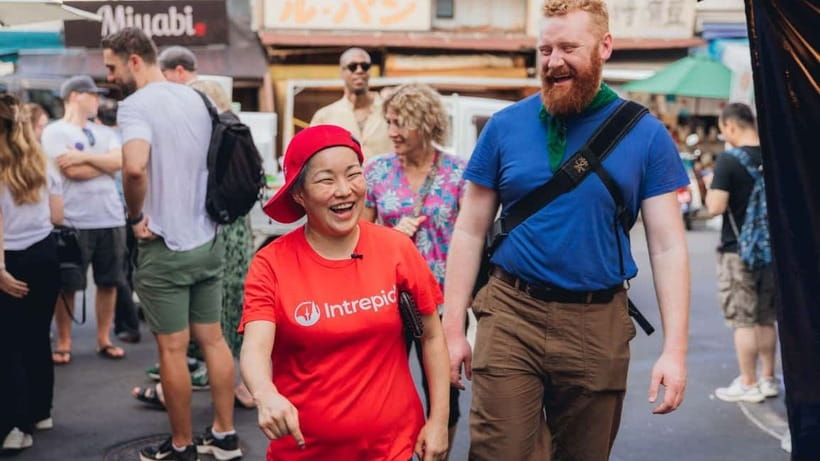
- Monja-yaki is a hands-on stop: You sit around a hotplate, watch the dish being cooked, and try the technique yourself.
- Yurakucho brings the after-work mood: Its lantern-lit backstreets are known for yakitori spots where office workers gather.
- A depachika offers a window into daily food culture: Your guide helps explain the dishes, seasonal sweets, and etiquette in a department-store basement food hall.
- The group is capped at eight: That keeps the outing personal, though it does not mean every stop will be quiet or private.
- The walk lasts 210 minutes: You cover several neighborhoods and use two subway tickets, so expect more than a short stroll.
- Food restrictions are limited: Vegetarian, vegan, and gluten-free options are not available on this tour.
An evening built around the way Tokyo eats
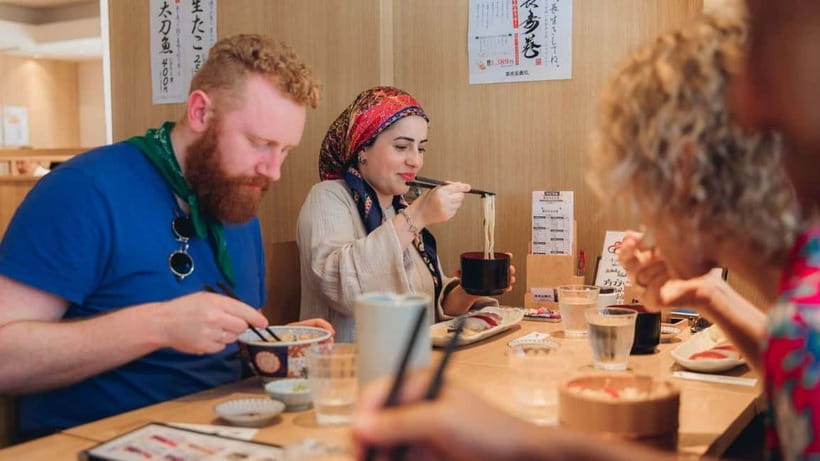
This is less a restaurant crawl and more a guided introduction to the habits behind Tokyo’s everyday food. You move between a department-store food hall, a yakitori alley, and Tsukishima’s monja-yaki district, with a local guide translating both the menu and the customs.
That distinction matters. Tokyo can be easy to navigate by train and still feel hard to read at dinner. A small restaurant may have little English, a dish may arrive with an unfamiliar cooking method, and the best part of a meal can be the shared ritual around it. Here, your guide handles the introductions and helps make the food feel approachable.
The tour costs $89 per person and lasts three and a half hours. That is a substantial evening activity, but the fee covers three food tastings, two drinks, two subway tickets, and a guide. You are paying for both the food and the local context, not simply for a plate at each stop.
More walking tours in Tokyo:
- Tokyo Tsukiji Fish Market Food and Culture Walking Tour
★ 5.0 · 3,184 reviews - Tokyo: Imperial Palace and Shogun Historical Walking Tour
★ 5.0 · 2,251 reviews - Tokyo: Shinjuku Local Bar and Izakaya Guided Walking Tour
★ 4.9 · 1,794 reviews
Starting in Ginza with a depachika
The meeting point is outside Mitsukoshi Ginza, beside the life-size sitting lion statue. It is near the A7 exit of Ginza Station, served by the Ginza, Hibiya, and Marunouchi subway lines. The clear landmark is helpful in a district with plenty of department stores and busy sidewalks.
A depachika is a department store’s basement food hall, where you can find prepared dishes, sweets, and carefully presented seasonal foods. It is a practical stop for seeing what Tokyo locals might bring home, as well as a chance to notice the care that goes into presentation. Your guide explains the foods and the etiquette around them, which is useful if you are new to Japanese food culture.
The tour includes a seasonal wagashi tasting, traditional Japanese sweets shaped by the season, ingredients, and visual style. The specific sweet can vary, so do not count on one particular flavor. Red-bean paste and mochi are examples of ingredients that may appear in wagashi, but the point is also to learn how these small treats connect food with the time of year.
You may find that wagashi is more subtle than the desserts you are used to. One stop on the route has included a sweet made with red-bean paste and mochi, which did not suit every palate. I would treat it as a cultural tasting, not a guaranteed favorite.
Yakitori in Yurakucho’s after-work lanes
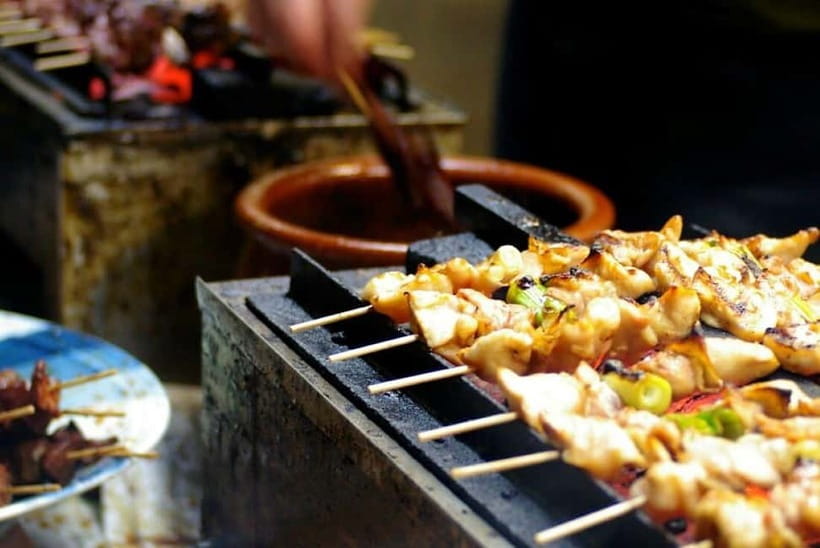
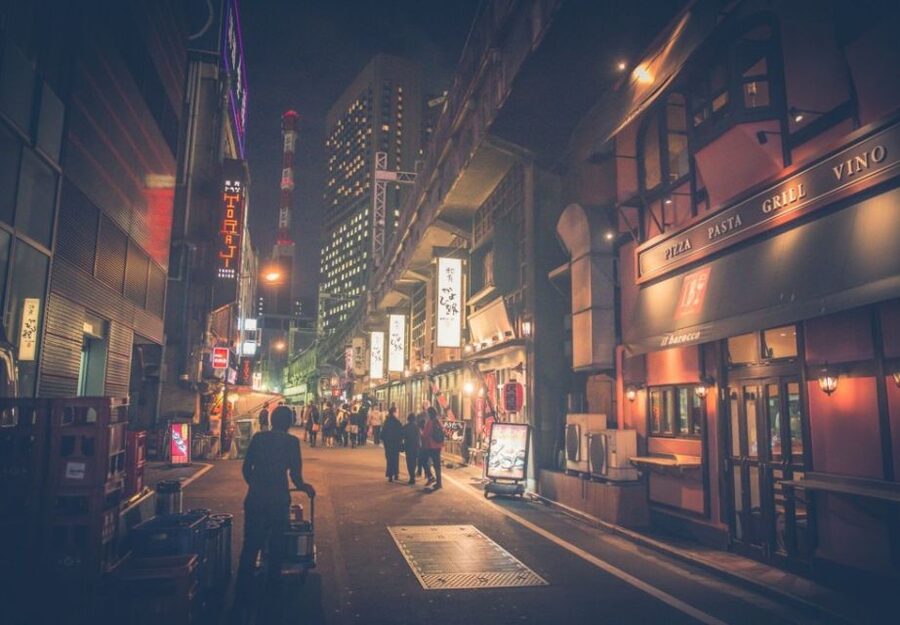
Yurakucho’s lantern-lit backstreets are a good setting for yakitori, grilled skewers often eaten with a drink after work. The tour takes you to a local spot where office workers gather, a setting that gives the meal some everyday Tokyo character rather than making it feel like a formal food demonstration.
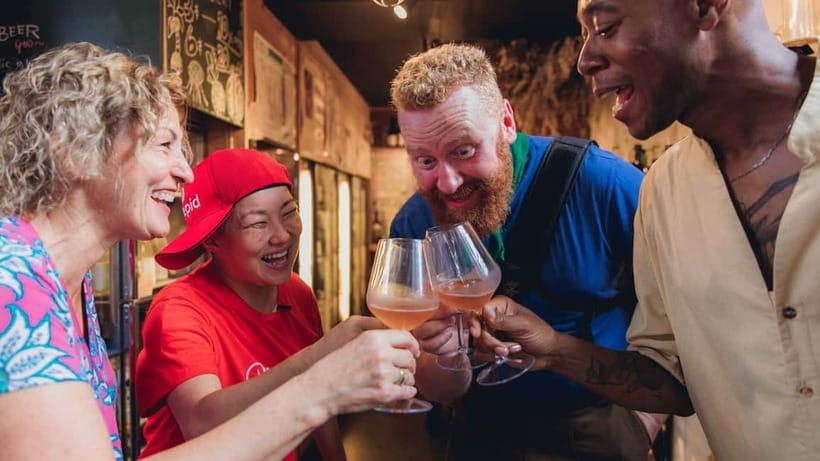
You get to try freshly grilled yakitori and learn how the skewers are prepared. The included drinks are sake, beer, or a soft drink, with two local drinks included over the tour. Alcohol is served only to those aged 20 or older, the legal drinking age in Japan. If you are under 20, the drinks are non-alcoholic.
This stop is one reason the tour works well for an early evening. You are not only tasting food, you are seeing how a familiar after-work routine plays out in a compact neighborhood setting. The guide can help with the menu and explain what you are eating, which takes pressure off if you are unsure what to order or how to approach a small local restaurant.
There is no promise of a private room or a quiet meal. One past account described a noisy child at a small restaurant, a reminder that local eateries are real working places, not staged sets. That is part of the appeal, but it also means the atmosphere can vary.
Cooking monja-yaki in Tsukishima
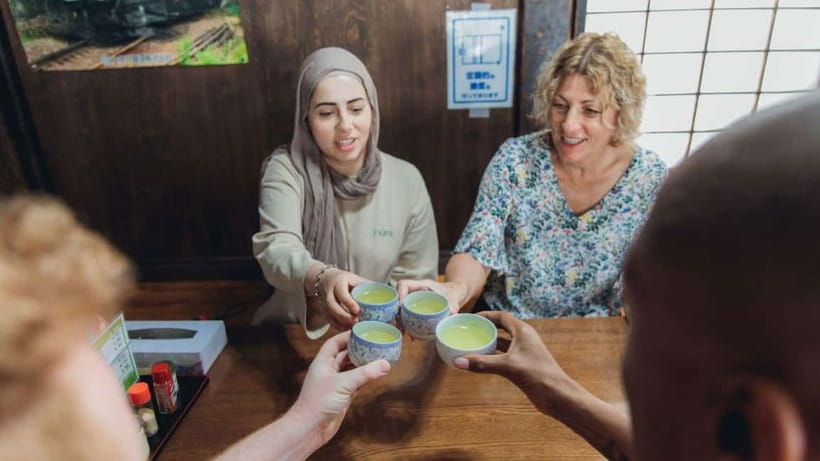
Tsukishima’s Monja Street is the tour’s most hands-on stop. Monja-yaki is a Tokyo specialty cooked on a hotplate at the table. You watch the dish take shape, then try cooking it yourself, with your guide helping you get the technique.
The experience is social and informal. Instead of having a finished dish appear from the kitchen, you share the cooking surface and take part in preparing the meal. That makes this a useful stop for anyone who wants to understand not just what monja-yaki tastes like, but how people enjoy it together.
Monja-yaki can look unfamiliar if you are used to neatly plated food. Give it a fair try and focus on the taste and the cooking ritual. Some versions of the tour have also included okonomiyaki, another savory Japanese dish cooked on a hotplate, but the core included tasting is monja-yaki. Do not assume every menu item will be identical on every departure.
The route description places Tsukishima and Yurakucho within the same outing, with Ginza as both the starting and finishing area. The exact sequence of stops may vary, so use the tour as a connected neighborhood walk rather than expecting a rigid restaurant schedule.
More tours and experiences in Tokyo:
- Mt Fuji and Hakone 1-Day Bus Tour Return by Bullet Train
★ 5.0 · 26,383 reviews - 1-Day Tokyo Bus Tour
★ 5.0 · 14,250 reviews - Tokyo: teamLab Planets TOKYO Digital Art Museum Entry Ticket
★ 4.6 · 9,779 reviews - Mt Fuji & Hakone Cruise, Drum Show Bullet Train 1 Day from Tokyo
★ 4.0 · 7,413 reviews
What the small group changes
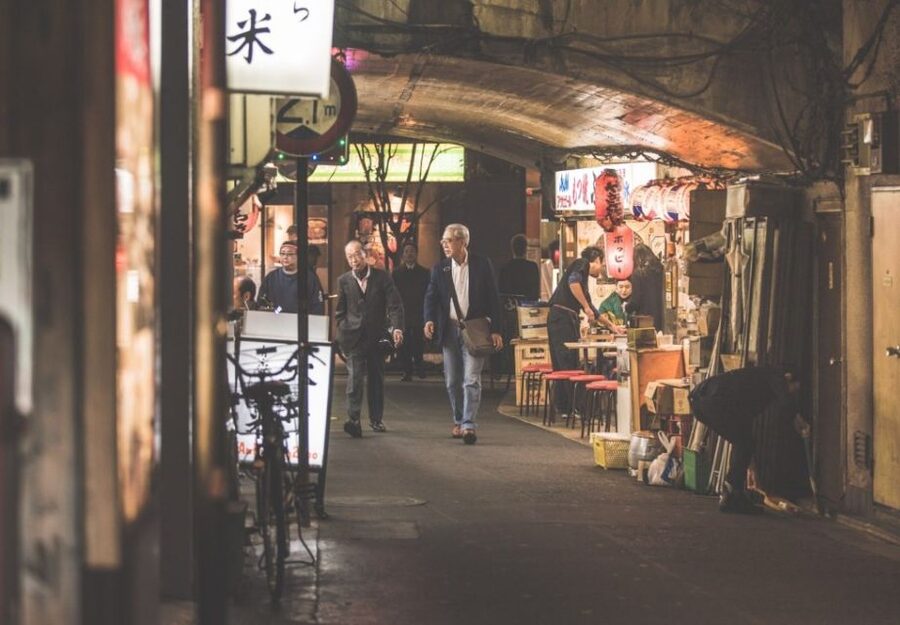
The maximum group size is eight people. That is small enough for a more relaxed conversation with the guide and makes a shared hotplate less unwieldy than it would be with a large tour. It also gives you a better chance to ask about ingredients, local customs, or how to find similar places later.
Guides have included Hidenori, Yuki, Kirir, Meg, and Yoshi, but the guide working on your date may be someone else. The important practical point is that the tour is conducted in English. The guide’s role is especially useful at the food stops, where knowing what is being prepared and how to participate can make an unfamiliar meal much easier.
The walking itself is part of the value. You move through several neighborhoods and get time to notice the streets between meals. One past participant estimated about 9,000 steps, though the actual distance can differ. A participant with limited walking stamina had trouble finishing, in part because of walking and subway stairs. If stairs or a long evening on your feet are difficult for you, ask the operator for current route details before booking.
Is $89 fair value?
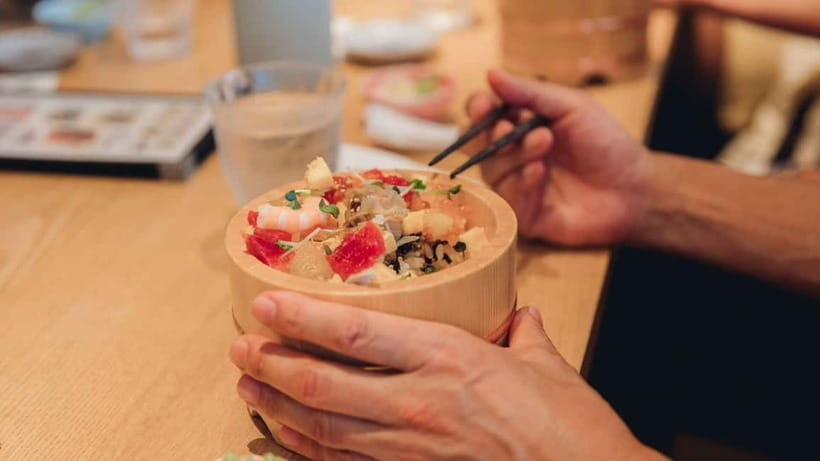
For $89, you receive three tastings, two drinks, two subway tickets, and a 210-minute guided outing. The price makes the most sense if you value introductions and explanations as much as the food. You could order yakitori or sweets on your own for less, but you would need to find the places, understand the menus, and work out the etiquette without a guide.
The food is not meant to replace dinner for every appetite. It is a sequence of tastings rather than an all-you-can-eat meal, and additional food and drinks are available to buy separately. One participant described the amount as just right, while another found the overall experience comfortably paced. Come hungry enough to enjoy several stops, but do not count on unlimited portions.
For a first evening in Tokyo, the tour can be a practical way to get oriented. You see different food settings, learn a few useful basics, and get a sense of neighborhoods that may not be high on a first-time visitor’s independent plan. If you already know Tokyo’s food districts well, the guide and access to local eateries may still appeal, but the introductory explanations could be less valuable to you.
The operator identifies the tour as carbon neutral and is a B Corp certified company. That may matter if you consider a company’s stated approach to responsible travel when choosing an activity. It does not change the tour’s route or food, but it is relevant background.
Who should book this walk
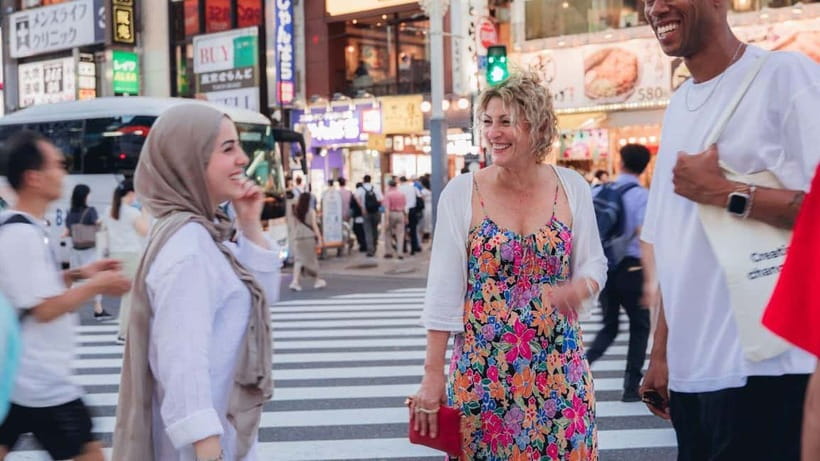
I would recommend this to curious eaters who want a guided first look at Tokyo’s evening food culture, especially if they are comfortable trying unfamiliar dishes and sitting around a shared hotplate. The small group, included transit, and English-language explanations make it easier to get beyond ordering the most familiar item on a menu.
It is less suitable if you need vegetarian, vegan, or gluten-free food, since those options are not available. It may also be a poor fit if you have difficulty walking or managing subway stairs. Children must be at least 12, and anyone under 20 receives non-alcoholic drinks.
Book it if you want a social, food-led evening with local context, not if you are looking for a private dining experience or a long, formal meal. For a first taste of yakitori, wagashi, and monja-yaki in their neighborhood settings, it offers a lot more than a list of dishes.
FAQ
How long is the tour?
The tour lasts 210 minutes, or three and a half hours.
Where does the tour meet?
Meet outside Mitsukoshi Ginza, in front of the life-size sitting lion statue at 4-6-16 Ginza, Chuo-ku. The statue is visible from Ginza Station’s A7 exit.
Where does the tour finish?
The tour finishes in Ginza.
What food is included?
The tour includes three local food tastings: yakitori, monja-yaki, and wagashi.
Are drinks included?
Yes. Two local drinks are included. You can choose sake, beer, or a soft drink, subject to age restrictions.
Are subway rides included?
Yes. The tour includes two subway tickets.
How large is the group?
The group is limited to eight participants.
What language does the guide speak?
The live guide speaks English.
Can children join?
Participants must be at least 12 years old. In Japan, the legal drinking age is 20, and people under 20 are served non-alcoholic drinks.
Can the tour accommodate vegetarian, vegan, or gluten-free diets?
No. The visited establishments cannot cater to vegetarian, vegan, or gluten-free requirements.
Freshly reviewed in Tokyo
- Tokyo: Toshimaya Sake Brewery Tour with Sake Tasting★ 5.0 · 6 reviews
- :Tokyo,Shibuya /Meiji Shrine tour in KIMONO/English-friendly★ 5.0 · 4 reviews
- Tokyo: Tour Privado por Tokio en español★ 4.3 · 4 reviews
- Tokyo:Tea ceremony experience at Komaba Warakuan★ 4.8 · 9 reviews
- :Tokyo,Shibuya/ Pro Photography in Kimono / English-Friendly★ 5.0 · 26 reviews
- Tokyo:Samurai Training : Swords, Bushido & Mental Discipline★ 5.0 · 6 reviews
- Tokyo:Mt Fuji & Hakone Day Tour with English Speaking Driver★ 5.0 · 26 reviews
- Tokyo:Nikko UNESCO World Heritage Sites Private 1-Day Tour★ 3.8 · 6 reviews
Tokyo Walking Tours, compared.
Tokyo Tsukiji Fish Market Food and Culture Walking Tour
Read our review →
Imperial Palace and Shogun Historical Walking Tour
Read our review →
Shinjuku Local Bar and Izakaya Guided Walking Tour
Read our review →
Asakusa Walking Tour with Sensoji Temple Visit
Read our review →
Tokyo Castle & Imperial PalaceーShogun Walking Tour
Read our review →
Dark Side of Tokyo Shinjuku Red Light Walking Tour
Read our review →Browse the lists this tour appears in