
Reviewed · TOKYO WALKING TOURS
Tokyo Castle & Imperial PalaceーShogun Walking Tour
Edo Castle once covered a vast stretch of central Tokyo, and this walk helps you read its surviving moats, gates and stonework as parts of one defensive system. I like two things in particular: the guide connects samurai-era details to the city you see today, and the route ends among garden paths, old walls and koi ponds rather than at a single photo stop.
The main consideration is that this is an outdoor walking tour, not a visit inside the Imperial Palace. Two hours gives you a useful introduction, but you will not see every part of the grounds, and the tour is conducted in English only.
At a glance: what makes this walk worthwhile
- A small group of up to 10 makes it easier to hear the guide and ask questions along the way.
- Edo Castle’s defenses are the main story: moats, gates and stone walls help explain how the castle protected the shogun’s seat of power.
- The route includes both history and gardens, with Ninomaru Garden, the Imperial Palace East Gardens and koi among the quieter stops.
- The guide gives context you might miss alone, from how Tokyo grew around the castle to what the grounds once looked like.
- The tour costs $23 per person and lasts two hours, a reasonable price if you want an informed orientation rather than a self-guided stroll.
- Expect to be outdoors for much of the walk. Dress for the weather, and leave knives and alcohol behind because there is a security check at the Imperial Palace.
Start at Wadakura Fountain Park
Meet in front of the Starbucks Coffee Kōkyo Gaien Wadakura Fountain Park Store at 3-1 Kōkyo Gaien, Chiyoda City. Look for a guide holding a Local Guide Stars sign. Since this is a popular central area, confirm the meeting point on your map before setting out, and give yourself enough time to find the right entrance to the park.
The tour begins on the edge of the Imperial Palace grounds, where modern Tokyo and the old seat of power sit side by side. That contrast is part of the appeal: you are not heading to a remote castle preserved in isolation, but walking through a place that still has a role in Japan’s present-day public life.
The group limit of 10 is useful here. You can hear explanations without needing to crowd around the guide, and there is more room to ask about a gate, a wall or a detail you would otherwise pass by. The tour is in English, so it suits English-speaking visitors who want historical context as they walk.
More walking tours in Tokyo:
- Tokyo Tsukiji Fish Market Food and Culture Walking Tour
★ 5.0 · 3,184 reviews - Tokyo: Imperial Palace and Shogun Historical Walking Tour
★ 5.0 · 2,251 reviews - Tokyo: Shinjuku Local Bar and Izakaya Guided Walking Tour
★ 4.9 · 1,794 reviews
Sakurada Tatsumi Yagura and the castle’s defenses
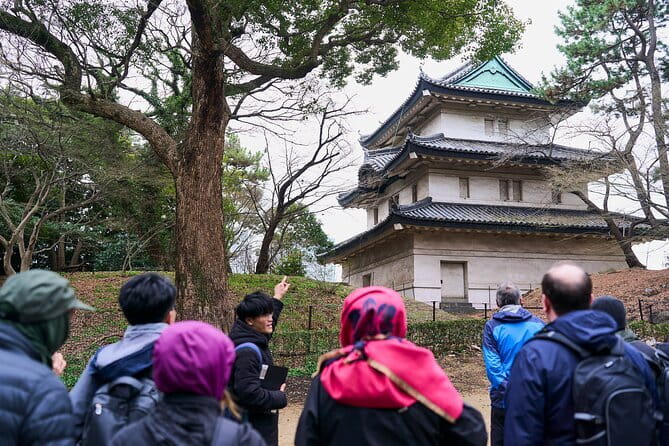
The first named stop is Sakurada Tatsumi Yagura, where you have a short photo and sightseeing break. The itinerary allows about five minutes here, so think of it as an introduction to the surviving structures rather than a long visit. The guide can help you connect the tower and surrounding grounds to the larger castle that once stood here.
Edo Castle was Japan’s largest castle, and the walk focuses on the scale of that former complex and the defenses that made it difficult to penetrate. That is a more useful way to look at a moat or stone wall than treating it as scenery. You begin to see the grounds as a planned system, built to control access and protect the shogun’s residence.
The tour also places the castle in the context of the peaceful samurai era that lasted for about 260 years. You will not get a full survey of Japanese history in two hours, but the guide’s explanations help attach dates and structures to a clear central idea: this was a political center, not simply a grand residence.
Ote-mon Gate: a threshold into Edo Castle
Ote-mon Gate receives about 15 minutes, making it one of the longer stops on the route. Gates matter in a castle tour because they show how entry was managed and how the defenses worked in layers. The guide can point out features that are easy to overlook when you are simply walking through.
This is also where the small-group format pays off. If a detail raises a question, you can ask without holding up a large crowd. Guides on this tour are often praised for answering questions and making the history easy to follow. Names mentioned by past participants include Anju, Fuma, Tomo, Keiko and Yuka, though you should not assume you will have a particular guide.
Expect an emphasis on explanation rather than spectacle. The gate is a historic structure in an active city setting, and the value comes from understanding its purpose and relation to the rest of the castle grounds.
Tokyo Imperial Palace and the limits of the visit
The route then reaches the Tokyo Imperial Palace, with roughly 20 minutes set aside for a guided visit and photos. Edo Castle is now the site of the Imperial Palace, the emperor’s residence, but this tour is about the grounds and their history. It does not promise access to the palace interior, so book it for the outdoor setting and the story, not for a look inside royal rooms.
The guide connects the shogun’s former stronghold with the modern imperial institution. The tour presents Japan’s imperial system as a tradition stretching back about 2,600 years, and asks how it endured through major changes in the country’s leadership and political life. That span can be hard to grasp from a textbook; here, the setting gives the discussion a tangible starting point.
A security check takes place when entering the Imperial Palace grounds. Do not bring knives or alcohol. This is a practical detail worth planning around, especially if you are carrying items from another outing.
More tours and experiences in Tokyo:
- Mt Fuji and Hakone 1-Day Bus Tour Return by Bullet Train
★ 5.0 · 26,383 reviews - 1-Day Tokyo Bus Tour
★ 5.0 · 14,250 reviews - Tokyo: teamLab Planets TOKYO Digital Art Museum Entry Ticket
★ 4.6 · 9,779 reviews - Mt Fuji & Hakone Cruise, Drum Show Bullet Train 1 Day from Tokyo
★ 4.0 · 7,413 reviews
Ninomaru Garden: a quieter change of pace

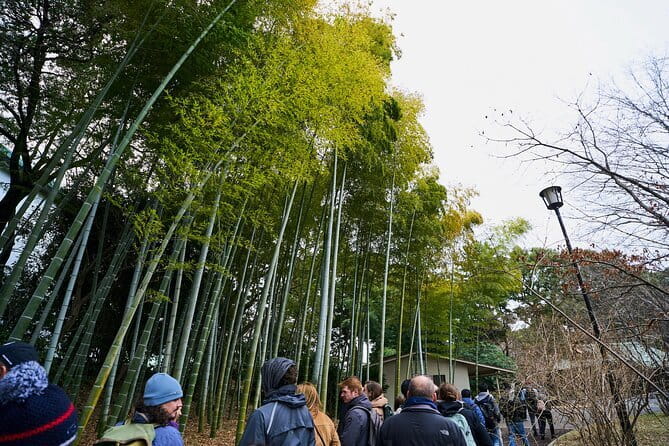
After the palace area, the route includes about 15 minutes at Ninomaru Garden. The shift from gates and military defenses to landscaped paths gives the walk a welcome change of pace. Seasonal planting, old stonework and garden features provide plenty to look at, even if you are not usually the person who stops to study a garden.
The garden is part of what makes the tour more than a lecture on samurai history. You get to see how a former seat of power is also maintained as a green public space, and the guide can explain the meaning of features you might otherwise pass without noticing. The experience includes encounters with special koi fish and trees from different parts of Japan.
The grounds are a good place to slow down and take photographs. Weather will shape how pleasant this part feels, so bring suitable clothing and footwear. Much of the tour is outside, and the walk is not a sheltered museum visit.
Edo Castle ruins and the East Gardens
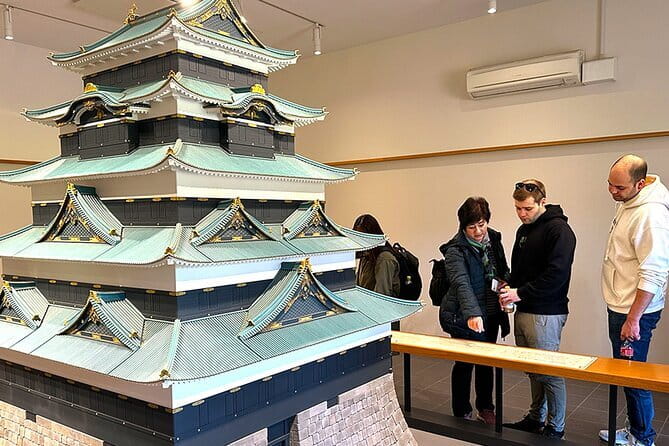
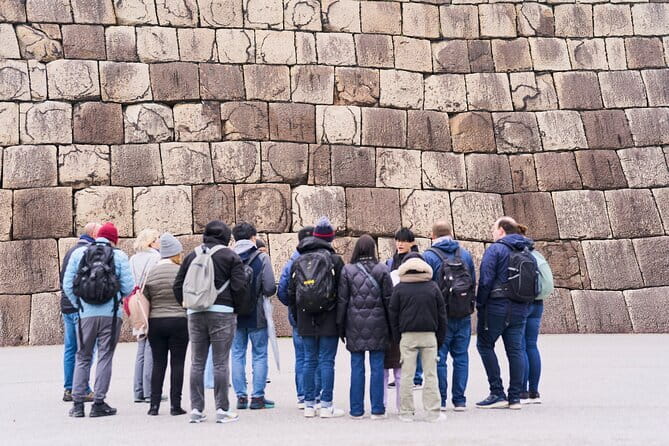
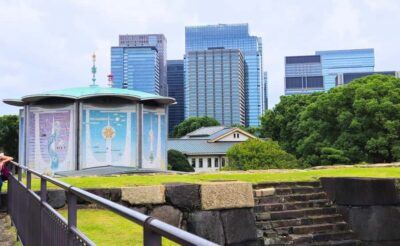
The route gives about 10 minutes to Edo Castle’s ruins, followed by around 20 minutes in the Imperial Palace East Gardens. Here, the surviving walls and foundations make the scale of the lost castle easier to picture. The guide may also show you a miniature structure of the former palace, an included feature that helps make the original layout more legible.
Do not expect a complete reconstruction or a long exploration of every ruin. The short stop is best understood as a visual summary: you see what remains, then use the guide’s explanation to imagine the much larger complex that once occupied the site. This is where the earlier talk of moats, gates and layered defenses begins to come together.
The East Gardens offer a final stretch for views, photos and a more relaxed walk. The listed route includes photo stops and sightseeing throughout, so you should have chances to capture the walls, trees and garden scenery. The guide also helps you make sense of what you are seeing, a useful advantage in a place where history is spread across a large area rather than displayed behind glass.
The tour then returns to the same Starbucks meeting point. The scheduled walk is two hours, though the actual pace can vary. Some guides have been described as extending the visit when conversation runs long, but treat two hours as the planning figure.
What the guide adds to the experience
A good guide is central to this tour’s value. The most consistently praised qualities are clear explanations, a friendly manner, patience with questions and a pace that feels manageable. Anju, Fuma and Tomo are among the guides named often in positive accounts, while other guides such as Keiko, Ai, Mai, Nana and Kosei have also been appreciated for their storytelling and command of the subject.
That does not mean you can request or count on a specific person. It does suggest that the experience is built around live interpretation, not simply a route through a park. Guides explain the history of structures, connect the Edo period to present-day Japan and sometimes share practical recommendations for the rest of a Tokyo visit.
The tour may suit you especially well if you have watched Shōgun or already have an interest in samurai history. It adds context beyond drama: the political role of the shogun, the design of the castle and the transition to the modern imperial institution. You do not need prior knowledge, though. The walk is also a sensible introduction if you are simply curious about how this part of Tokyo developed.
Is $23 a fair price?
At $23 per person, this is a modestly priced guided experience for a two-hour walk in central Tokyo. You are paying for the guide’s explanations, the small group and a structured route through several parts of the grounds. The gardens and palace grounds are the setting, but the chief benefit is having someone explain how the separate features fit together.
If you are content to walk through the area independently, you may prefer to explore at your own pace. The grounds are the main attraction, and this tour does not include a palace interior visit. But if you want to understand why the gates, moats and ruins matter, the guide can turn a pleasant stroll into a more coherent history lesson.
The price is particularly reasonable for visitors who like to ask questions or want a first orientation before returning to the gardens on their own. The group is limited to 10, which is small enough to make the guide’s attention more available without the cost of a private tour.
Practical notes before you go
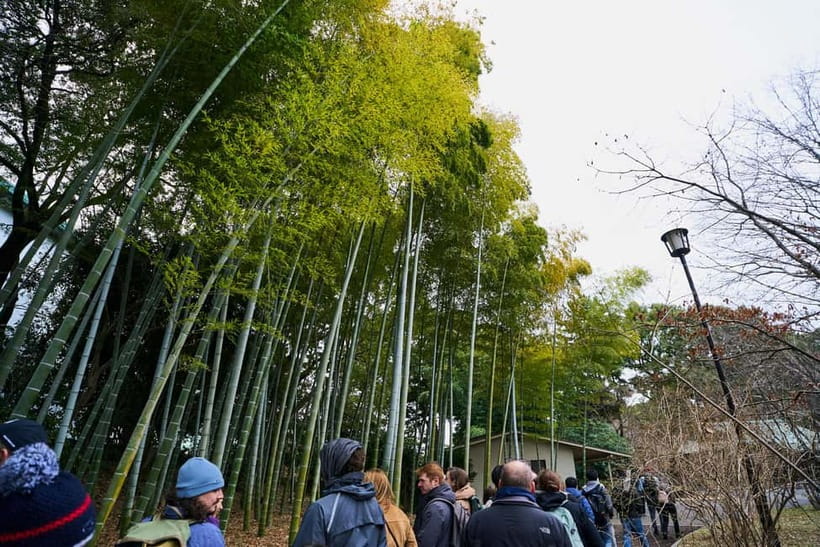
Wear clothing suited to the day’s weather. The route is largely outdoors, and the garden portions are more enjoyable when you are comfortable walking and standing. Bring a camera if you like taking photos; photography is encouraged.
Wheelchairs are available and can be used within the Imperial Palace grounds, but the route includes slopes and some areas where you will need to walk or go down on foot. If access needs are important for your plans, take those limitations into account before booking.
The activity is offered in English only, with no Japanese-language support. Starting times vary, so check availability for the date you have in mind. You can cancel up to 24 hours in advance for a full refund, and the reserve-now, pay-later option can help keep plans flexible.
Should you book this Tokyo castle walk?
Book it if you want a compact, well-guided introduction to Edo Castle, samurai-era power and the Imperial Palace grounds. The strongest reasons are the small group, the guide’s historical explanations and the mix of defensive structures with quiet garden scenery. It is especially useful if you are likely to walk past a wall or gate without knowing what it was built to do.
Skip it if you want to enter the palace itself, need a fully indoor activity or prefer to explore without a set route. For $23, though, it offers a practical way to understand a major historic site in the middle of Tokyo. If you are curious about the city’s samurai past and want a guide to make the grounds legible, this is a good use of two hours.
FAQ
How long is the Tokyo Castle and Imperial Palace tour?
The tour lasts two hours. Its route includes several stops for guided explanations, photos and walking.
How much does the tour cost?
The listed price is $23 per person.
What language is the tour conducted in?
The live tour is in English only. Japanese-language support is not available.
Where is the meeting point?
Meet in front of Starbucks Coffee Kōkyo Gaien Wadakura Fountain Park Store at 3-1 Kōkyo Gaien, Chiyoda City, Tokyo. The guide holds a Local Guide Stars sign.
How large is the group?
The group is limited to 10 participants.
Does the tour go inside the Imperial Palace?
The tour visits the palace grounds and the East Gardens. It does not specify access to the palace interior.
Are there items I should not bring?
There is a security check when entering the Imperial Palace grounds. Do not bring knives or alcohol.
Is the tour wheelchair accessible?
Wheelchairs are available and can be used within the Imperial Palace grounds. Some slopes and sections require walking or going down on foot.
Can I cancel the tour?
You can cancel up to 24 hours in advance for a full refund. Booking also offers a reserve-now, pay-later option.
Freshly reviewed in Tokyo
- Tokyo: Toshimaya Sake Brewery Tour with Sake Tasting★ 5.0 · 6 reviews
- :Tokyo,Shibuya /Meiji Shrine tour in KIMONO/English-friendly★ 5.0 · 4 reviews
- Tokyo: Tour Privado por Tokio en español★ 4.3 · 4 reviews
- Tokyo:Tea ceremony experience at Komaba Warakuan★ 4.8 · 9 reviews
- :Tokyo,Shibuya/ Pro Photography in Kimono / English-Friendly★ 5.0 · 26 reviews
- Tokyo:Samurai Training : Swords, Bushido & Mental Discipline★ 5.0 · 6 reviews
- Tokyo:Mt Fuji & Hakone Day Tour with English Speaking Driver★ 5.0 · 26 reviews
- Tokyo:Nikko UNESCO World Heritage Sites Private 1-Day Tour★ 3.8 · 6 reviews
Tokyo Walking Tours, compared.

Tokyo Tsukiji Fish Market Food and Culture Walking Tour
Read our review →
Imperial Palace and Shogun Historical Walking Tour
Read our review →
Shinjuku Local Bar and Izakaya Guided Walking Tour
Read our review →
Asakusa Walking Tour with Sensoji Temple Visit
Read our review →

Dark Side of Tokyo Shinjuku Red Light Walking Tour
Read our review →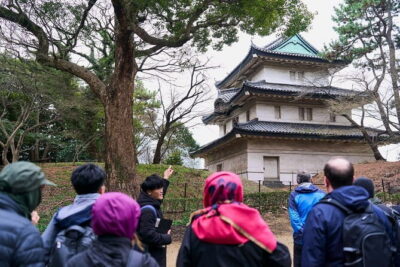
Tokyo Castle & Imperial PalaceーShogun Walking Tour
Read our review →Browse the lists this tour appears in