Reviewed · TOKYO TOURS
Tokyo: Knife Making Workshop (Sharpening, Engraving)
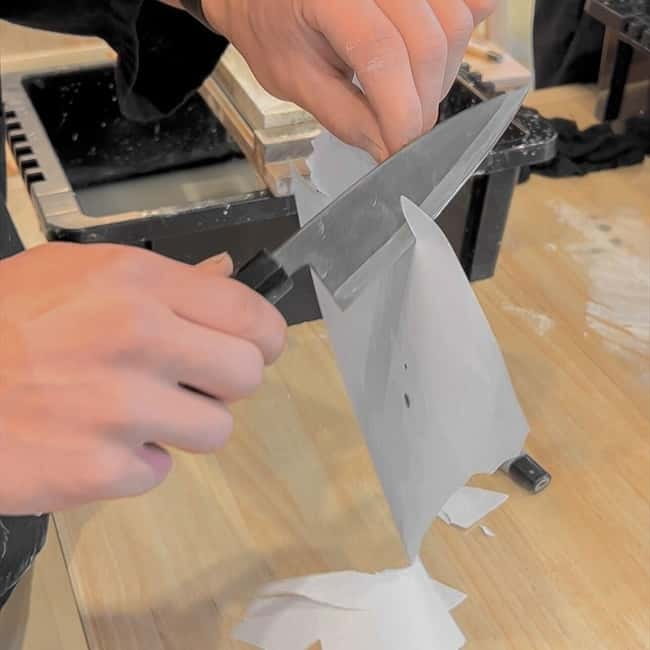
A knife is a fine Tokyo souvenir, but learning to sharpen one gives it a story beyond the shopping bag. In this 90-minute Asakusa workshop, you choose a blade, work on its edge, attach the handle, and personalize it with Japanese lettering or a design.
I like two things in particular: the hands-on sharpening lesson, which gives you a practical skill to take home, and the easy conversation with English-speaking instructors, who explain the craft while correcting your technique. The opening talk on Japanese knives and swords adds useful context before you pick a blade.
One consideration: $161 per person is a substantial price for a short activity, and larger or specialty knives cost extra. Sharpening takes concentration and effort, too, so allow a little breathing room around the scheduled 90 minutes.
What to know before you book
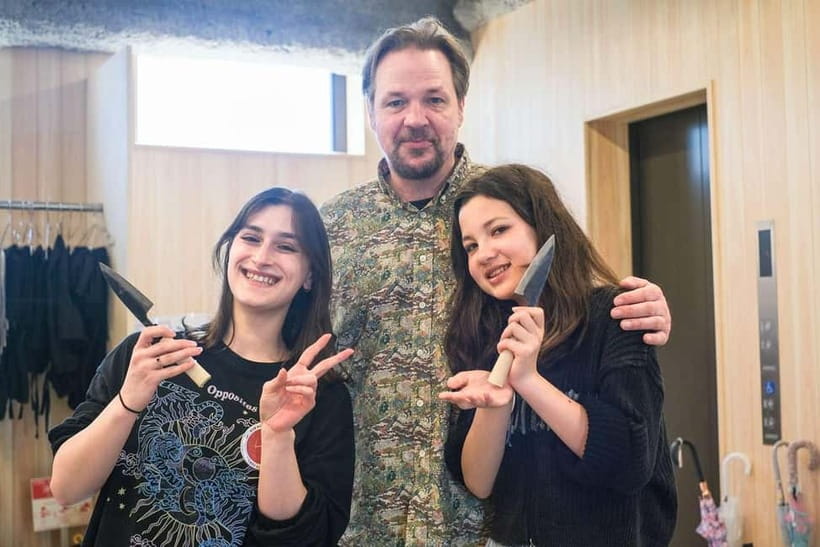
- You sharpen and finish a real knife: The included standard-size, multitasking knife is yours to take home.
- You can choose among up to five blade types: Usuba, deba, and petit yanagiba may cost extra.
- The work is hands-on: You sharpen the blade, attach its handle with a traditional hammer, and add an inscription or image.
- You get cultural context along the way: The instructor introduces Japanese knives and swords before the practical work begins.
- English support is part of the class: Bilingual staff explain each step and help adjust your sharpening movements.
- The keepsakes go beyond the knife: Tea or soft drinks, Japanese snacks, aesthetic packaging, and a customized key holder are included.
From Asakusa streets to the fifth floor
The workshop takes place at BUB Activity Center, at 2 Chome 6-11, Heiwa Building, in Taito-ku’s Asakusa district. Take the elevator to the fifth floor. The venue is in central Tokyo and is described as easy to reach by public transport, though transportation to and from the activity is not included.
On arrival, you’ll be given a light haori-style jacket to protect your clothes from accidental stains. You also receive a badge with your name written in Japanese characters. These small touches set the tone: this is a participatory workshop, not a demonstration where you stand back and watch someone else do the work.
The room is arranged for the activity, and the staff help you settle in with tea, juice, or another available soft drink. The mood is friendly and informal, with several English-speaking team members on hand. Names mentioned by participants include Mori, Agata, Lisa, and Joe, though the instructors working at any particular session may vary.
More hands-on workshops in Tokyo:
- Sushi Making Tokyo Roll and Authentic Japanese Sushi Class
★ 5.0 · 3,971 reviews - Tokyo: Roll and Authentic Sushi Making Class in Asakusa
★ 4.9 · 1,957 reviews - Tokyo Shinjuku Chopsticks Making Class
★ 5.0 · 1,763 reviews
A short lesson before choosing your blade
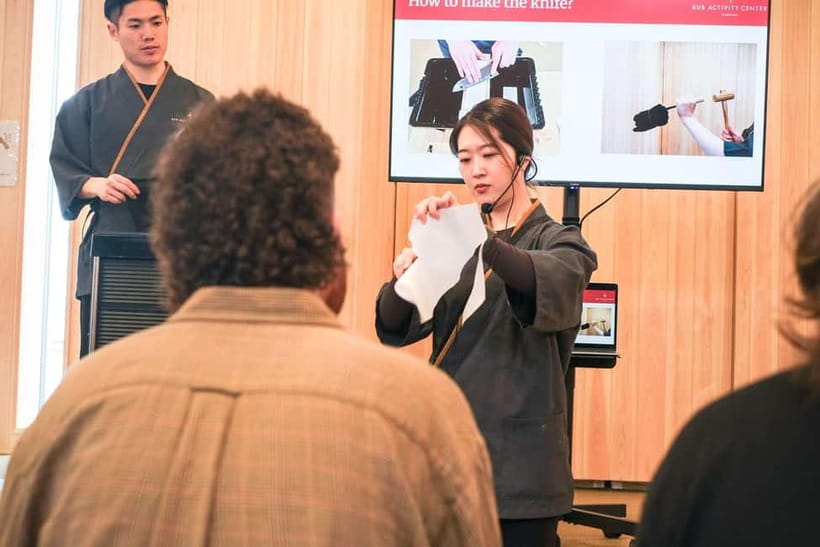
The session starts with an introduction to the cultural background of Japanese knives and swords. You’ll hear how the craft developed and get an explanation of different kitchen knives. The opening discussion can help you choose a blade based on what you want to make, rather than picking solely by appearance.
There is also context on Japanese katana and Western swords. That makes the class appealing even if you are more interested in history than cooking. The talk is not the whole event, though. Its purpose is to give you a better sense of what you are handling before you move on to the bench.
You can ask questions in English, and staff aim to adapt explanations to your level. If you are curious about Japanese lettering, you can also ask for help with the basics before engraving your handle. The class keeps the cultural material approachable, so you do not need to arrive with a background in blades or Japanese history.
Choosing a knife that suits your plans
You can choose from up to five knife types, with a standard-size multitasking knife included in the price. Some other options, including usuba, deba, and petit yanagiba, carry an additional charge. The exact amount is not specified, so ask the provider about current upgrade prices before you commit to a different blade.
That choice matters. A general-purpose knife is the straightforward option if you want a practical souvenir for everyday kitchen use. A more specialized blade may appeal if you cook often or have a particular use in mind, but it is worth checking what the upgrade involves rather than assuming every knife is covered by the base price.
The introductory explanation is useful here: the names and shapes can be unfamiliar, and the staff can help you understand the options. Still, the included knife is a sensible starting point if you mainly want to learn the process and leave with something personalized.
Sharpening: the most useful part of the workshop
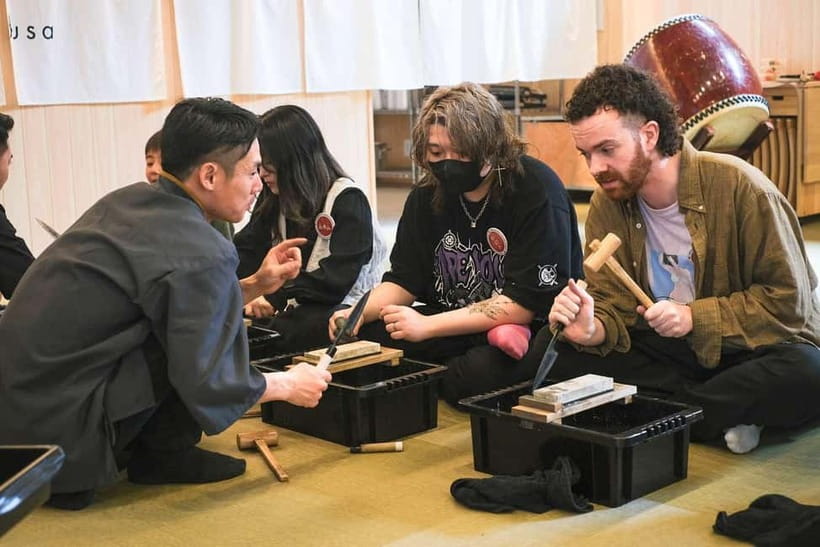
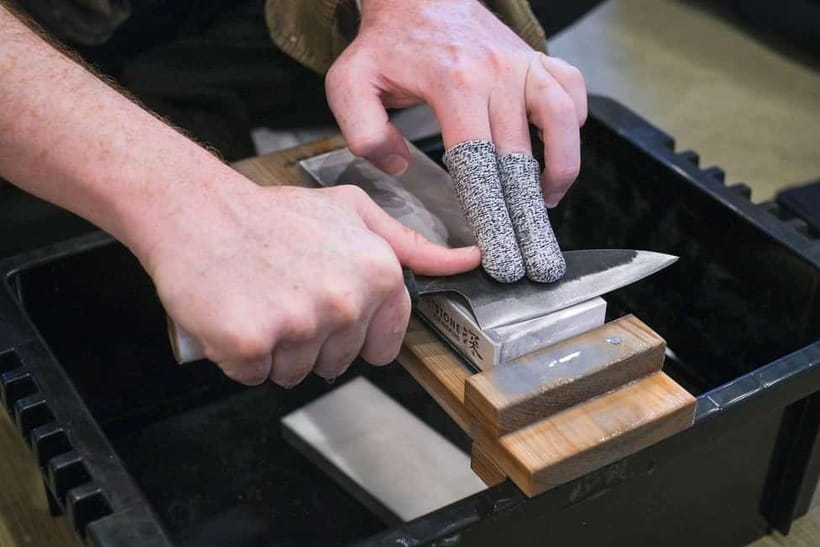
Once you have chosen your knife, you work on sharpening its blade. This is tactile, focused work, not a quick pass that makes the knife ready in a minute. The instructors show you the movements, watch your technique, and offer corrections. You do not need prior experience, and the staff are used to helping beginners find their rhythm.
The process takes concentration. That steady, repetitive work is part of the appeal, but it can also feel like effort rather than a polished performance. You may not produce a perfect edge on your first try. The point is to learn the basic method, notice how your movements affect the blade, and leave with more confidence about knife care.
That practical element gives the class lasting value. Plenty of Tokyo souvenirs look good on a shelf; this one comes with a skill you can use in your own kitchen. If you already own Japanese knives, the sharpening lesson may be the most valuable part of the 90 minutes. If you are mainly after a keepsake, the knife itself gives the work a clear payoff.
More tours and experiences in Tokyo:
- Mt Fuji and Hakone 1-Day Bus Tour Return by Bullet Train
★ 5.0 · 26,383 reviews - 1-Day Tokyo Bus Tour
★ 5.0 · 14,250 reviews - Tokyo: teamLab Planets TOKYO Digital Art Museum Entry Ticket
★ 4.6 · 9,779 reviews - Mt Fuji & Hakone Cruise, Drum Show Bullet Train 1 Day from Tokyo
★ 4.0 · 7,413 reviews
Engraving and fitting the handle
After sharpening, you personalize the handle. You can engrave your name in Japanese characters, try an image, or choose another design that fits the available process. Staff can help with the Japanese basics, which is useful if you want a name rendered in a form you do not know how to write yourself.
Engraving takes care and a steady hand. It is part of the fun, but do not expect every mark to look like factory work. One point to keep in mind is that handle quality and engraving options may not satisfy everyone looking for a finely finished, professional piece. If perfection is your priority, treat this as a personal craft activity rather than a bespoke knife commission.
You then attach the handle using a traditional hammer, bringing the separate steps together into a finished object. The sound of the hammer is a memorable counterpoint to the quieter concentration of sharpening. Staff stay close to guide you, so you are not left to guess how to complete the knife.
What the $161 price includes
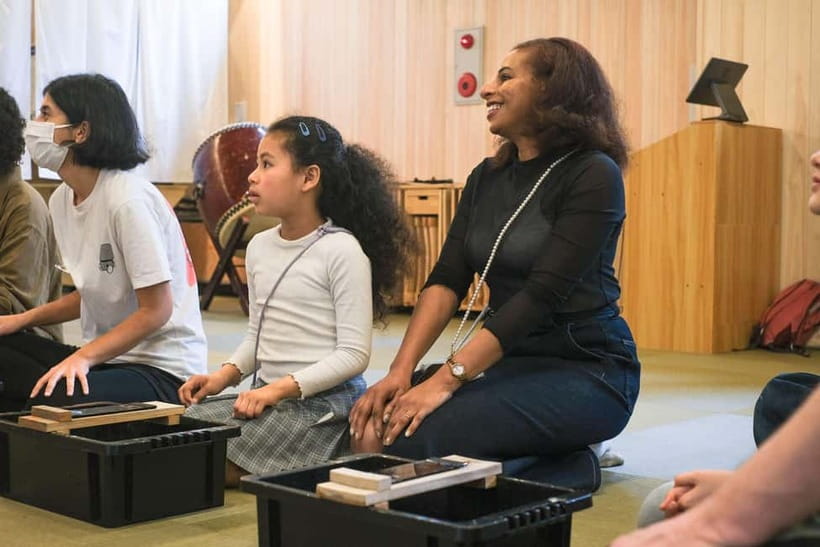
At $161 per person, the fee covers a standard-size multitasking knife to take home, the guided crafting session, Japanese snacks and drinks, bilingual staff assistance, aesthetic packaging, and a customized key holder. You are paying for more than a knife: the instruction, cultural introduction, and chance to do the finishing work are all part of the package.
The value depends on what you want from the activity. If you are looking only for the least expensive way to buy a Japanese kitchen knife, shopping may make more sense. If you want to learn a useful sharpening technique, ask questions, and make a souvenir yourself, the workshop offers a more personal purchase. Budget extra if you choose one of the larger or specialty knives.
The snacks and drinks are a pleasant inclusion, but they are not a meal. Food is not included, so plan to eat separately if you will be hungry afterward. And if a friend or family member wants to watch without taking part, an observation fee is payable on site. That can be a helpful option when only one of you wants to make a knife, but confirm the cost before arriving.
Timing, packing, and practical details
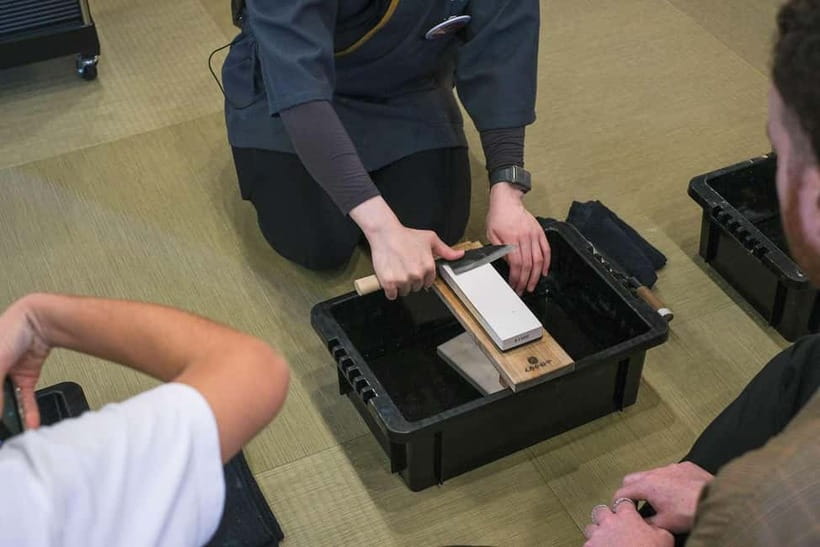
The activity lasts about 90 minutes. Sharpening and engraving can take longer than expected, and staff have accommodated participants who needed extra time. That is kind, but it is not wise to book another activity immediately afterward. Give yourself a buffer, especially if you want to ask questions or take care over the finishing steps.
Your knife comes in a box. The provider advises placing that box in checked luggage or asking staff about shipping. Keep this in mind if you are flying with only carry-on baggage, and ask about shipping options before the end of the session rather than leaving it until you are at the airport.
The workshop is wheelchair accessible, and instruction is in English. Alcohol and drugs are not allowed. If you have trouble finding the fifth-floor venue, the provider asks you to contact them for help.
Who will enjoy this workshop most?
This is a strong fit for curious cooks, people interested in Japanese craft, and anyone who prefers making a souvenir to simply buying one. It also works for a mixed-interest pair: one person can take part while the other pays an observation fee to watch. The friendly, attentive teaching style is a plus if you feel unsure about handling tools or have never sharpened a knife.
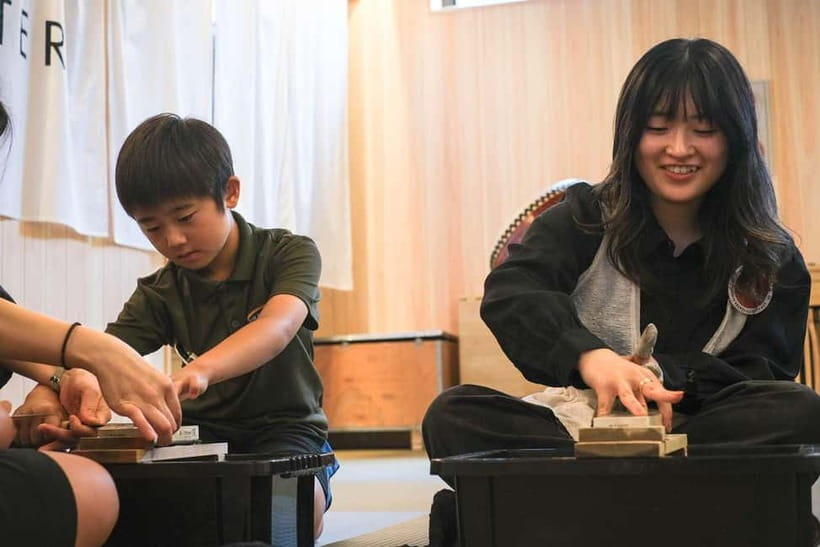
Families may find it engaging, too. A 10-year-old has taken part with a parent, but the information provided does not set a minimum age, so check with the activity provider if you are booking for a child. The workshop is not just a photo opportunity. You will spend time concentrating and working with your hands.
I would choose it for the combination of practical instruction and personal meaning, not because it promises a perfect artisan-made blade. You do the sharpening and handle work yourself, with help. That makes the final knife distinctive, even if your engraving is a little less than flawless.
Should you book the Asakusa knife workshop?
Book it if you want a hands-on Tokyo activity that teaches a useful skill and gives you a personalized object to take home. The English-speaking staff, short cultural introduction, and guided sharpening make it approachable for beginners, while the choice of knife types gives keen cooks room to pick something more specialized.
Think twice if you want a finished knife without doing the work, need to keep tightly to a 90-minute schedule, or are focused mainly on price. Check upgrade costs, ask about shipping if you cannot check a knife, and leave room in your day. For the right visitor, this is a memorable way to turn a practical kitchen tool into a souvenir with a little effort behind it.
FAQ
How long does the workshop last?
The activity takes approximately 90 minutes. It can take longer, so leave some flexibility in your schedule.
What is included in the price?
The price includes a standard-size multitasking knife to take home, the crafting session, Japanese snacks and drinks, bilingual staff assistance, aesthetic packaging, and a customized key holder.
Do I need experience sharpening knives?
No. The workshop is suitable for beginners, and staff guide your movements and offer corrections.
Can I choose a different type of knife?
Yes. You can choose from up to five types. Some, including usuba, deba, and petit yanagiba, require an additional fee.
Can someone come along just to watch?
Yes, but an observation fee is payable on site for friends or relatives who do not take part.
What should I know about taking the knife home?
The knife comes in a box. Put the box in your checked luggage or ask the staff about shipping.
Freshly reviewed in Tokyo
- Tokyo: Toshimaya Sake Brewery Tour with Sake Tasting★ 5.0 · 6 reviews
- :Tokyo,Shibuya /Meiji Shrine tour in KIMONO/English-friendly★ 5.0 · 4 reviews
- Tokyo: Tour Privado por Tokio en español★ 4.3 · 4 reviews
- Tokyo:Tea ceremony experience at Komaba Warakuan★ 4.8 · 9 reviews
- :Tokyo,Shibuya/ Pro Photography in Kimono / English-Friendly★ 5.0 · 26 reviews
- Tokyo:Samurai Training : Swords, Bushido & Mental Discipline★ 5.0 · 6 reviews
- Tokyo:Nikko UNESCO World Heritage Sites Private 1-Day Tour★ 3.8 · 6 reviews
- Tokyo:Mt Fuji & Hakone Day Tour with English Speaking Driver★ 5.0 · 26 reviews
Tokyo Tours, compared.

Mt Fuji and Hakone 1-Day Bus Tour Return by Bullet Train
Read our review →

teamLab Planets TOKYO Digital Art Museum Entry Ticket
Read our review →
Mt Fuji & Hakone Cruise, Drum Show Bullet Train 1 Day from Tokyo
Read our review →
Shinjuku Food Tour (13 Dishes at 4 Local Eateries)
Read our review →
Tokyo Mt Fuji 5th St & Hakone Cruise Bus Tour w/Bullet Train
Read our review →
Flagship 2-Hours Official Street Go-Kart Tour – Tokyo Bay Shop
Read our review →