Reviewed · TOKYO TOURS
Tokyo: Kintsugi Workshop to Learn the Art of Golden Joinery
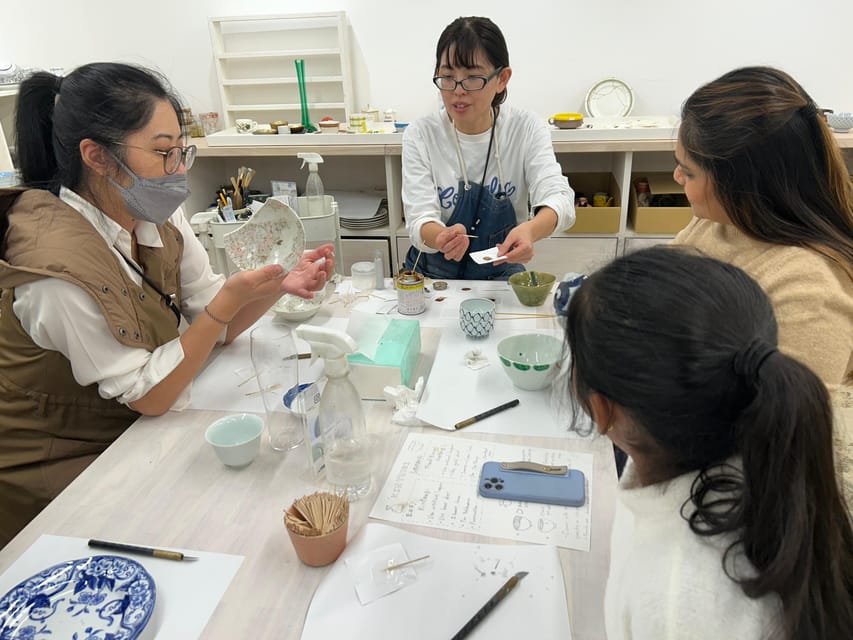
Kintsugi gives broken pottery a second life, tracing its cracks in gold instead of trying to hide them. In this two-hour Tokyo workshop, you learn the craft’s basic ideas and work on a piece of your own, with an English-speaking instructor guiding the process.
I like two things here: you get hands-on time rather than just a demonstration, and the lesson links the repair to wabi-sabi, the Japanese appreciation of imperfection and impermanence. The small group, capped at six, should leave room to ask questions and work at a thoughtful pace.
One point needs checking before you pay: the pottery project may be smaller than you expect, and a plate is not included in the stated price. Budget an extra ¥1,000 to ¥2,000 if you arrange one, and confirm what piece you will repair.
- A two-hour workshop: Enough time to learn the steps without making this an all-day commitment.
- A small group: No more than six participants, with instruction in English.
- A personal repair: Use lacquer and gold powder to make a broken piece into a keepsake.
- A lesson in wabi-sabi: Connect the practical work to ideas about imperfection and renewal.
- An extra pottery cost may apply: The plate is not included, and can be arranged for ¥1,000 to ¥2,000.
- Meet at Gakugei Daigaku station: Your guide will send a picture of themselves before the meeting.
Turning a break into part of the design
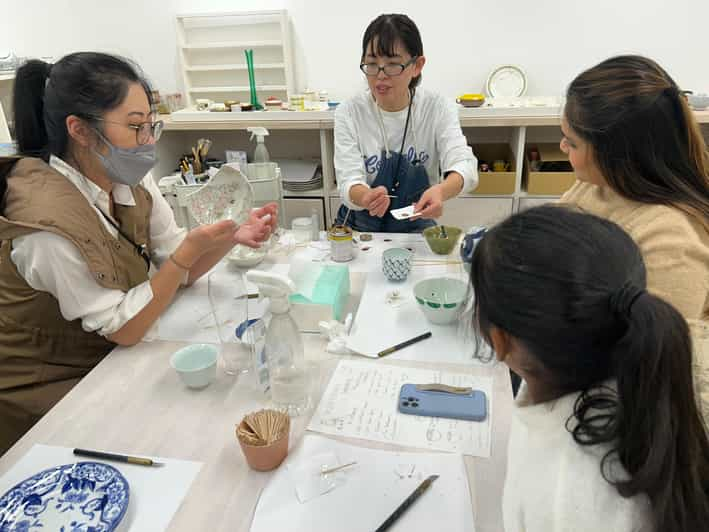
Kintsugi, written 金継ぎ, means golden joinery. The craft is associated with a Japanese tradition of repairing and preserving ceramics rather than treating damage as a reason to throw them away. A crack is not concealed. It becomes a visible seam, traced with gold, silver, or platinum powder.
This workshop focuses on the golden version. You work with lacquer and gold powder, and the repaired piece becomes a record of both its earlier break and your own careful labor. That idea is more than a pretty finish. It gives the repair a meaning you can carry home: an object can be valued for its history, not just its flawless appearance.
The activity also introduces wabi-sabi, a Japanese aesthetic that appreciates imperfection and impermanence. It is easy to reduce that concept to a slogan about flaws being beautiful. The workshop gives you a more grounded way to think about it: you handle a damaged object, make decisions about its repair, and see the mark remain visible in the finished piece.
Kintsugi dates back to the 15th century. You are not signing up to become a master craftsperson in two hours, but the historical context helps explain why the repair is treated as part of the object’s story. That combination of practical work and cultural explanation is the heart of the experience.
A calm, hands-on two hours
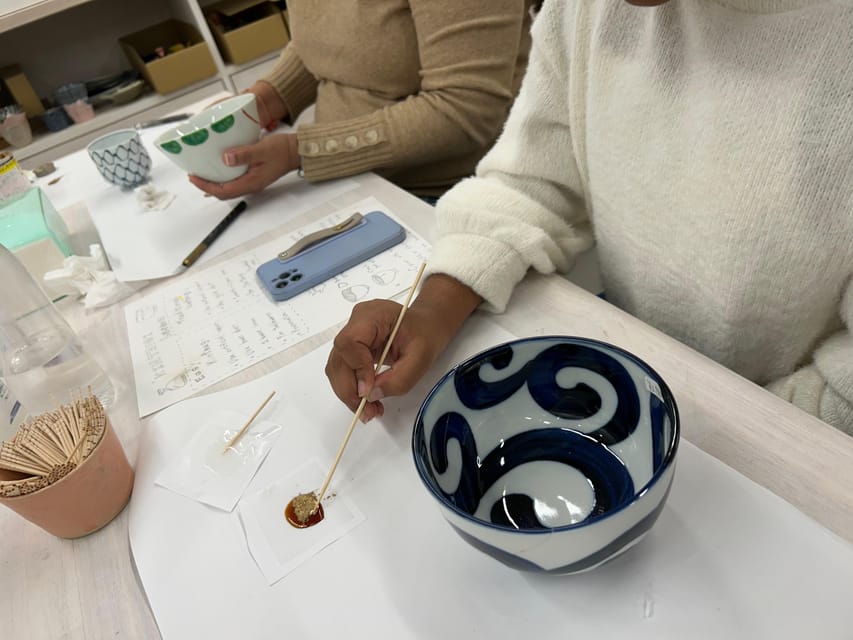
The workshop lasts two hours, and the time matters. Kintsugi asks for care rather than speed. You have a chance to listen, try the steps, and work without turning the session into a quick souvenir-making stop. One participant particularly valued having enough time to relax, work through each stage, and talk with the instructor and the small group.
Expect a short introduction to the craft and its philosophy, followed by hands-on repair work. The materials listed include lacquer and gold powder, and broken pottery is part of the workshop description. One participant recalled spending about half an hour filing pottery, so prepare for some patient, repetitive work rather than a series of dramatic, instant transformations.
The exact project deserves your attention before booking. One person was disappointed to find the repair involved only a small section, while another finished with a bowl marked by a gold seam. Those accounts suggest that the finished object and the extent of the break may vary. If you are picturing a whole bowl repaired from several pieces, ask the provider what the session includes before you reserve.
That is not a minor distinction. The appeal of Kintsugi is partly in the finished object, and your expectations about its size and complexity will shape how you judge the price. A small repair can still be meaningful, but it is different from rebuilding an entire bowl.
More hands-on workshops in Tokyo:
- Sushi Making Tokyo Roll and Authentic Japanese Sushi Class
★ 5.0 · 3,971 reviews - Tokyo: Roll and Authentic Sushi Making Class in Asakusa
★ 4.9 · 1,957 reviews - Tokyo Shinjuku Chopsticks Making Class
★ 5.0 · 1,763 reviews
Learning from Anne, Chiara, and the craft itself
The instructors named in participant accounts include Anne and Chiara. People appreciated clear explanations and a supportive teaching style. One participant described Anne as well prepared and said she explained how older forms of adhesive were made. Another described Chiara guiding each step, while allowing the participant to do the work and offering a steady hand when needed. A translator with knowledge of the craft helped in that session.
Names and teaching arrangements may vary by date, so don’t assume you will have a particular instructor or translator. What matters is the workshop’s stated language: English. The small group limit of six also makes this a more personal format than a large class, although it does not guarantee one-on-one instruction.
A good craft lesson lets you do the work yourself. Here, that means the instructor explains the method, then you handle the repair, with help available when you need it. You should leave with a better sense of the process, not just a polished object made by someone else.
The lesson’s historical details add value, too. Hearing how older adhesive was made connects the modern materials to a longer tradition of repair. The supplied materials include artificial lacquer and gold powder, so this is a practical introduction, not a promise that you will use every traditional material or method.
What you take home, and what it may cost
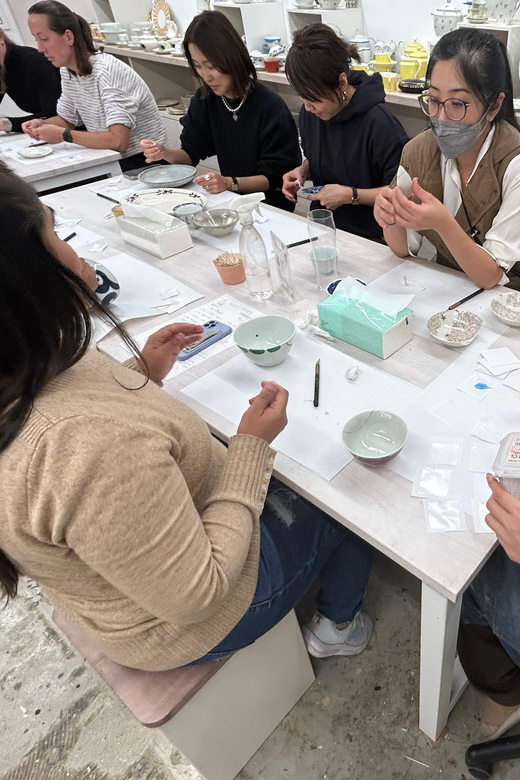
The workshop costs $63 per person. That price covers a two-hour class, an English-speaking instructor, the main tools, lacquer, gold powder, and the opportunity to take home the piece you repair. It also buys something less tangible: a structured introduction to a Japanese craft and the ideas behind it.
The plate is specifically listed as not included. You can arrange one for ¥1,000 to ¥2,000, so factor that into your budget if you want to work on a plate. The details do not fully explain how the included broken pottery relates to that optional plate, which is another reason to ask what object you will be repairing and whether the extra charge applies to your chosen project.
At about two hours, this is a focused activity rather than a full-day cultural program. The value is strongest if you want to make something with your hands and learn why the technique matters. If you only want a finished Kintsugi object, or expect an extensive repair on a large bowl, the value may be less convincing.
The class also gives you a souvenir with a personal connection. You do not just buy an object decorated with gold; you take home one you repaired. That may make a modest piece more memorable than a shop purchase, though the final result will depend on the project and the work you do in class.
Finding the meeting point and planning your visit
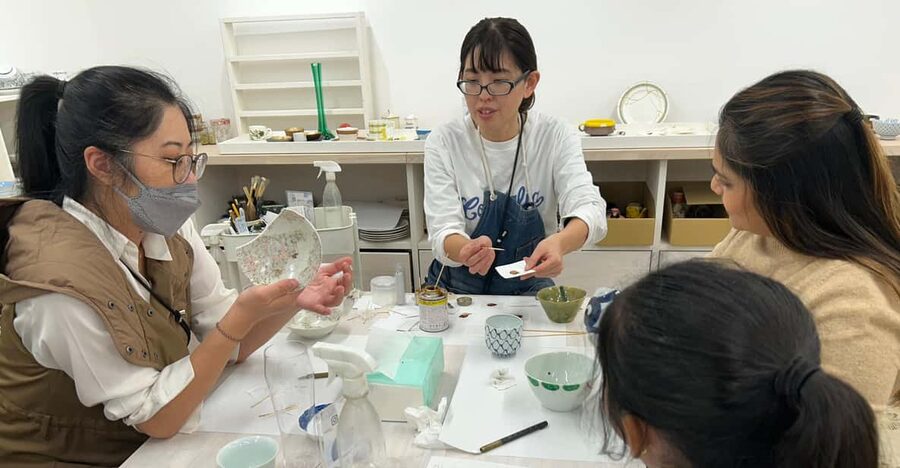
Meet your guide at Gakugei Daigaku station. Before the meeting time, the guide will send you a picture of themselves. That simple detail should make it easier to spot the right person, but check your messages before leaving for the station and make sure you know the meeting time confirmed for your date.
The activity takes place in Tokyo, on Honshu, and lasts two hours. Starting times depend on availability. The group is limited to six, so book ahead if your schedule is fixed. If your preferred date has no open slots, the provider invites you to contact them by WhatsApp; a schedule adjustment may be possible, but it is not guaranteed.
The booking terms offer free cancellation up to 24 hours in advance, plus a reserve-now, pay-later option. That flexibility can help if your Tokyo plans are still taking shape. Check the current terms and available times when you book.
There is conflicting accessibility information. The activity is described as wheelchair accessible in one place, but wheelchair users are also listed as unsuitable. Do not rely on either statement alone. Contact the provider before booking if access is important to you. Babies under one year are also listed as unsuitable.
More tours and experiences in Tokyo:
- Mt Fuji and Hakone 1-Day Bus Tour Return by Bullet Train
★ 5.0 · 26,383 reviews - 1-Day Tokyo Bus Tour
★ 5.0 · 14,250 reviews - Tokyo: teamLab Planets TOKYO Digital Art Museum Entry Ticket
★ 4.6 · 9,779 reviews - Mt Fuji & Hakone Cruise, Drum Show Bullet Train 1 Day from Tokyo
★ 4.0 · 7,413 reviews
Who will enjoy the workshop most
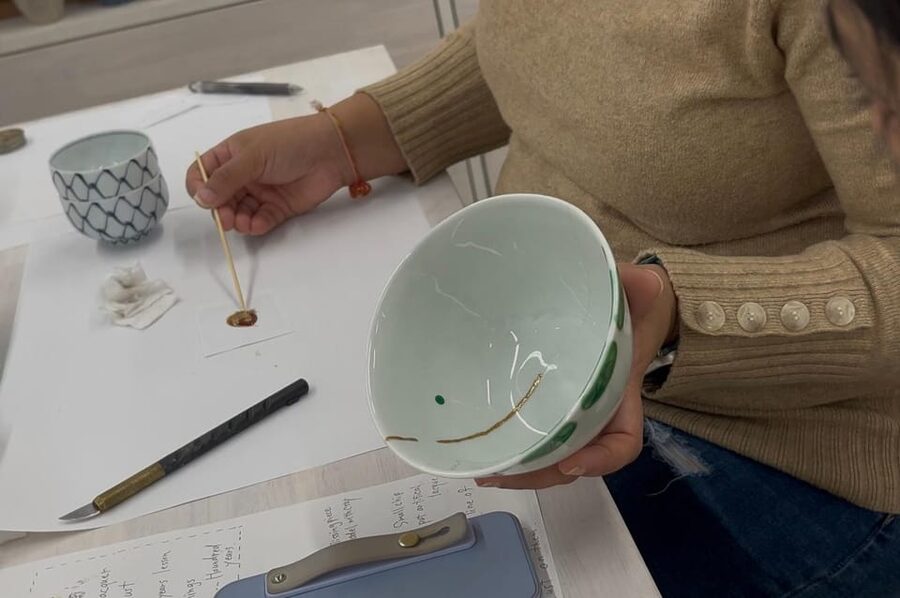
This is a good fit if you like slow, practical activities and want a cultural experience that goes beyond taking photographs. You do not need to arrive with pottery skills. The instructor explains the steps, and the point is to learn by doing, not to produce a perfect piece on your first try.
Solo participants, couples, and friends can all fit the small-group format. It can also suit families with older children. One participant suggested it for children over 12, noting that filing pottery for about half an hour could be hard for younger kids. That is useful guidance, not a stated age rule, so ask the provider if you are planning to bring a child.
Think carefully if you have a very specific idea of the finished project. The workshop’s central promise is a personal repair, but the size and scope of the repair may differ. Confirm whether you will work on a plate, bowl, or smaller section, and whether any pottery cost is extra. That one question can prevent the biggest mismatch between expectation and experience.
Should you book this Kintsugi workshop?
Book it if you want a small, hands-on introduction to Kintsugi, value the philosophy as much as the craft, and like the idea of taking home a repaired piece you worked on yourself. The instructor-led format, English instruction, six-person limit, and two-hour length make it a manageable way to try a distinctive Japanese art.
Pause before booking if the price only makes sense to you with a substantial bowl repair. The project may be smaller than you expect, and a plate can cost an additional ¥1,000 to ¥2,000. Ask what pottery is included, what you will repair, and how much of the piece you can expect to work on. If the answer matches your expectations, this can be a thoughtful Tokyo activity and a keepsake with a story built into its golden seams.
FAQ
How long does the Kintsugi workshop last?
The workshop lasts two hours.
What is included in the price?
The main tools, lacquer, gold powder, and a brief introduction to Kintsugi’s art and philosophy are included. You can take home the piece you repair.
Is the plate included?
No. A plate is not included and can be arranged for ¥1,000 to ¥2,000. Confirm with the provider what pottery is supplied for your session.
What language is the workshop taught in?
The instructor teaches in English.
Where is the meeting point?
Meet the guide at Gakugei Daigaku station. The guide will send you a picture of themselves before the meeting time.
How many people can join?
The group is limited to six participants.
Can wheelchair users join?
The accessibility details conflict: the activity is described as wheelchair accessible, but wheelchair users are also listed as unsuitable. Contact the provider to confirm access before booking.
Freshly reviewed in Tokyo
- Tokyo: Toshimaya Sake Brewery Tour with Sake Tasting★ 5.0 · 6 reviews
- :Tokyo,Shibuya /Meiji Shrine tour in KIMONO/English-friendly★ 5.0 · 4 reviews
- Tokyo: Tour Privado por Tokio en español★ 4.3 · 4 reviews
- Tokyo:Tea ceremony experience at Komaba Warakuan★ 4.8 · 9 reviews
- :Tokyo,Shibuya/ Pro Photography in Kimono / English-Friendly★ 5.0 · 26 reviews
- Tokyo:Samurai Training : Swords, Bushido & Mental Discipline★ 5.0 · 6 reviews
- Tokyo:Mt Fuji & Hakone Day Tour with English Speaking Driver★ 5.0 · 26 reviews
- Tokyo:Nikko UNESCO World Heritage Sites Private 1-Day Tour★ 3.8 · 6 reviews
Tokyo Tours, compared.

Mt Fuji and Hakone 1-Day Bus Tour Return by Bullet Train
Read our review →

teamLab Planets TOKYO Digital Art Museum Entry Ticket
Read our review →
Mt Fuji & Hakone Cruise, Drum Show Bullet Train 1 Day from Tokyo
Read our review →
Shinjuku Food Tour (13 Dishes at 4 Local Eateries)
Read our review →
Tokyo Mt Fuji 5th St & Hakone Cruise Bus Tour w/Bullet Train
Read our review →
Flagship 2-Hours Official Street Go-Kart Tour – Tokyo Bay Shop
Read our review →