
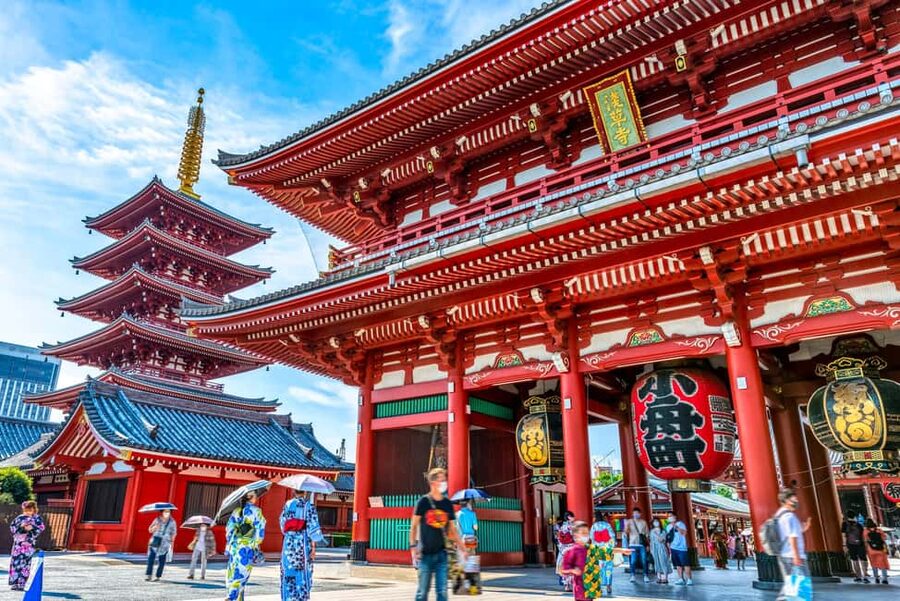
Reviewed · ASAKUSA TOURS
Tokyo: Asakusa & Tokyo’s Oldest Temple Senso-ji Walking Tour
Asakusa’s appeal is easy to see at first glance: a huge red gate, a long lane of traditional shops, and Senso-ji at the heart of it all. I like this tour for two things in particular: it gives you the history behind the sights, and its small group size can make it easier to ask questions and keep pace with your guide.
The main consideration is that the experience depends on how well your guide turns a compact route into a story. Guides Lax and Shoma have been praised for their warmth and clear explanations, while one participant felt the route needed stronger storytelling. Also, the listed stop times do not neatly match the stated two-hour duration, so check the actual start time and pace when booking.
What to know before you go
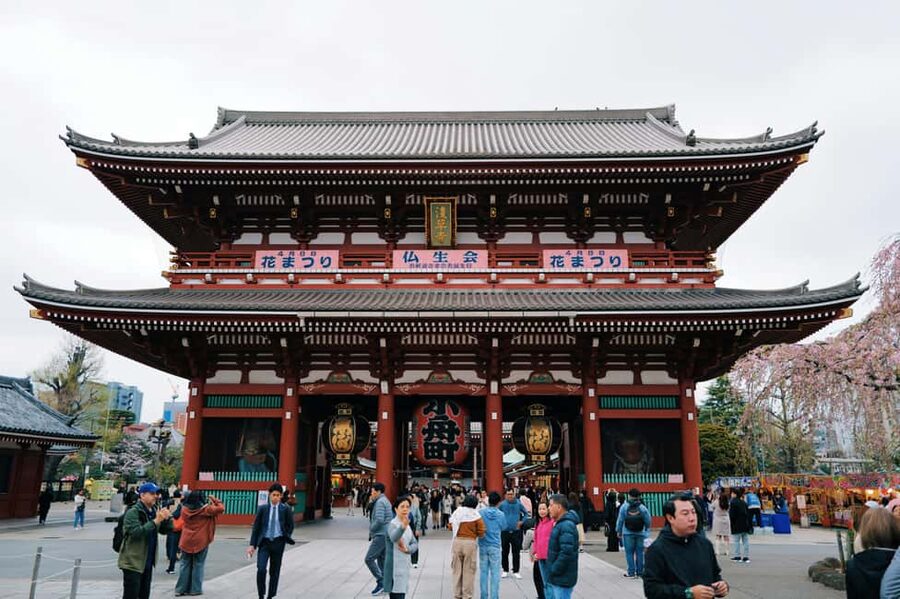
- Meet at Kaminarimon Police Station: The walk begins and ends by the police station near Asakusa’s famous Kaminarimon Gate.
- Walk through Nakamise Street: Allow time for traditional shops, snacks, and photos along the approach to Senso-ji.
- Hear how Asakusa changed: Stories may cover the Edo period, geisha quarters, shrines, samurai, and the neighborhood’s post-war revival.
- Keep the group small: No more than 10 participants can join, and the live tour is in English.
- Expect a guide-led experience: Lax and Shoma are among the guides praised for friendly, engaging explanations, though the quality of storytelling can vary.
- Pay a modest price for local context: At $11 per person, this is an inexpensive way to add background and direction to a visit you could also make on your own.
Starting beside Kaminarimon Gate
The meeting point is Kaminarimon Police Station, written in Japanese as 雷門交番. It is a practical place to begin: you are already beside one of Asakusa’s best-known landmarks, and the walk returns to the same spot at the end. Hotel pickup and drop-off are not included, so plan to reach the meeting point independently.
Kaminarimon, or Thunder Gate, is the kind of sight that can pull you straight into photo-taking mode. A guide can help you look beyond the large lantern and explain why this gate matters to the temple approach and to Asakusa’s identity. That added context is useful in a district where the first impression can be all color, crowds, and cameras.
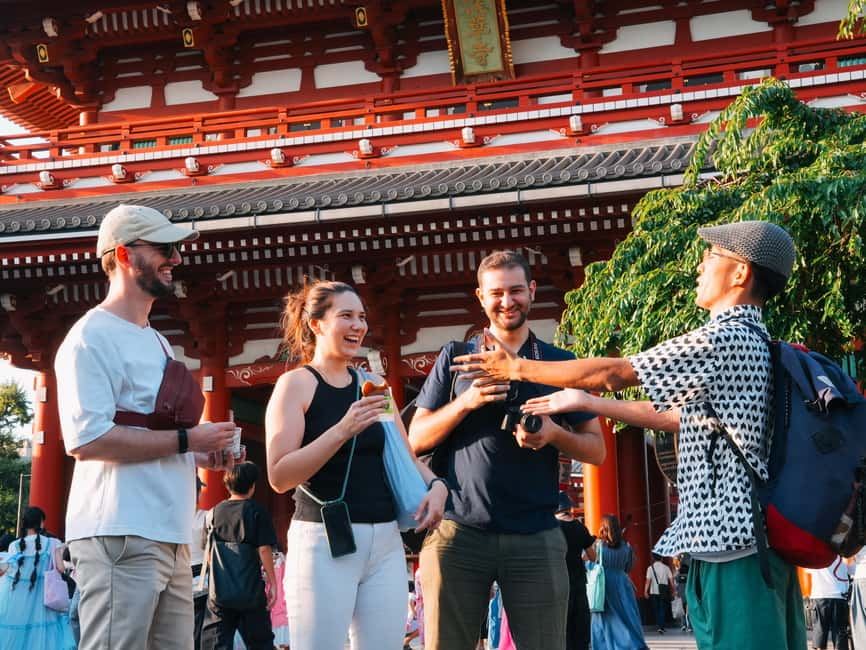
The tour is limited to 10 people. That does not guarantee a private conversation, but it is a more manageable size than a large coach group. You can usually hear the guide more easily, and there is a better chance to ask about a detail that catches your eye. On a quiet day, the group may be smaller still.
More Asakusa tours in Tokyo:
- Tokyo: Japanese Dance Cabaret Theater Asakusa-Kaguwa Ticket
★ 4.8 · 2,270 reviews - Tokyo: Meiji Shrine, Asakusa, Skytree Bus Tour and Cruise
★ 4.7 · 1,986 reviews - Tokyo: Roll and Authentic Sushi Making Class in Asakusa
★ 4.9 · 1,957 reviews
Nakamise Street, shops, snacks, and a steady flow of people
Nakamise Shopping Street is a central part of the walk, with about an hour allocated to visiting, shopping, and sightseeing in the listed schedule. The lane leads toward Senso-ji and is lined with traditional shops, lanterns, and food stalls. The scents of freshly made sweets and street snacks are part of the experience, even if you decide to keep moving rather than stop to buy something.
This is where a guide’s local knowledge can add the most value. Instead of treating the shops as a photo backdrop, you can hear how the street connects to the temple and the district’s past. You may also get a clearer sense of how old traditions and everyday shopping share the same narrow route.
Do not expect a quiet stroll. Nakamise is one of Asakusa’s most famous shopping lanes, and its popularity is part of the scene. If you want time to browse at your own speed or sample food, ask how the guide handles stops before the walk begins. The schedule gives the street a substantial share of the tour, but the pace may depend on the group and the day.
There is a practical trade-off here. A guided walk helps you understand what you are seeing, but you may have less freedom to linger at each shop than you would on a self-guided visit. If shopping is a priority, consider returning after the tour. That way, you can enjoy the explanation first and browse without watching the clock.
Senso-ji, Tokyo’s oldest celebrated temple
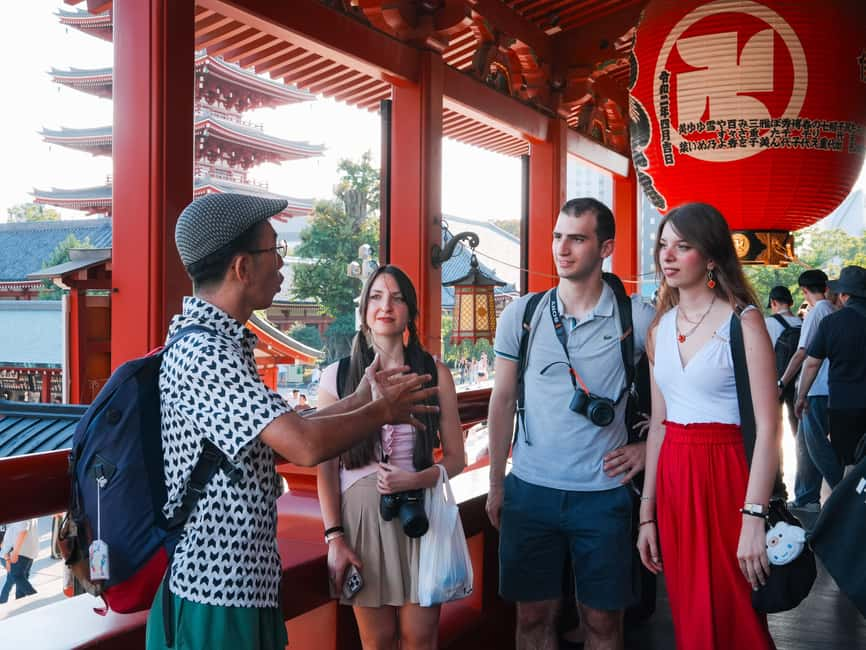
Senso-ji is the main event. The temple is described as dating to the 7th century, and its long history makes it a natural place to talk about Tokyo before it became the modern capital. The tour includes a visit, sightseeing, a photo stop, and some shopping time around the temple area.
A guide can help connect the temple’s history to the district around it. The stories may include legends, religious traditions, and the way Asakusa developed as a cultural center in Edo-era Tokyo. This kind of background is especially helpful if you are new to Japanese temples or want more than a quick look at the buildings.
The temple setting is also a useful place to pause and take in how Asakusa works as a living neighborhood, not simply a historic site. Shops, worship, sightseeing, and local routines all meet here. The tour’s promise is not a long religious lesson, but a guided introduction that helps you notice more than the most obvious photo angles.
The schedule assigns about an hour to Senso-ji, though the activity duration is stated as two hours overall. Since the listed times for Nakamise and the temple alone each show an hour, the timing is not fully consistent. Treat the stop lengths as guidance rather than a precise timetable, and check the available start time and expected pace before you book.
Asakusa’s past beyond the main route
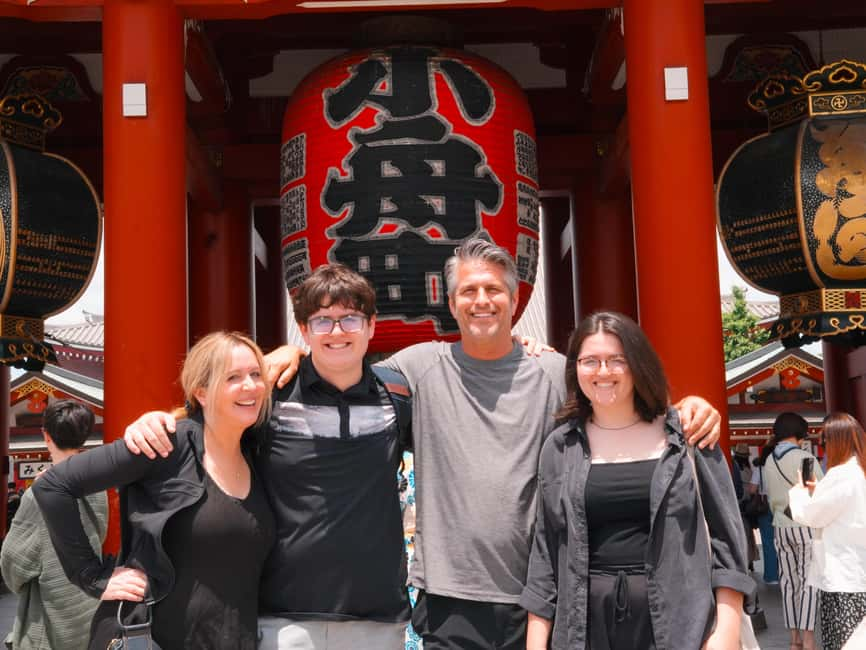
The broader Asakusa visit is meant to bring the neighborhood’s history into view. The stories can range from geisha quarters and tucked-away shrines to samurai-era power and the district’s recovery after the war. These details make the walk more than a route between two famous sights: they give you a framework for understanding why Asakusa remains such a strong symbol of old Tokyo.
The value lies in the connections. A street, gate, or shrine can look like one more stop when you do not know what it represents. A good guide links these pieces into a story about how the area changed across centuries. You do not need to arrive with a history book in hand, but you should be ready to listen and ask questions.
This is also where guide style matters most. Lax has been praised for making the tour fun and sharing his love of the city. Shoma has been singled out for clear English, kindness, and explanations of Japanese culture and differences between Japanese and Anglo ways of thinking. Those are useful strengths for a walking tour, where the guide is both narrator and interpreter.
The experience is not guaranteed to feel equally lively with every guide. One participant felt the route needed more group engagement and a stronger story tying the sights together. That is a fair point: Asakusa is concentrated around one main location, so the guide’s ability to connect the stops matters more than covering a large distance. If you enjoy asking questions, take an active role rather than waiting for a lecture.
More walking tours in Tokyo:
- Tokyo Tsukiji Fish Market Food and Culture Walking Tour
★ 5.0 · 3,184 reviews - Tokyo: Imperial Palace and Shogun Historical Walking Tour
★ 5.0 · 2,251 reviews - Tokyo: Shinjuku Local Bar and Izakaya Guided Walking Tour
★ 4.9 · 1,794 reviews - Tokyo: Tsukiji Fish Market Food and Walking tour
★ 5.0 · 1,724 reviews
What $11 buys you, and what it does not
At $11 per person, this is a low-cost introduction to one of Tokyo’s best-known historic districts. You are paying mainly for a guided walk and interpretation, not transport or hotel pickup. The price is particularly appealing if you want an orientation before revisiting the temple and shopping streets at your own pace.
The value depends on what you want from Asakusa. If you are content to see the gate, browse Nakamise, and visit Senso-ji independently, you can follow the same public route without a guide. The tour makes more sense if you want someone to explain the legends, local history, and cultural details as you go.
The price is not a promise of a polished, theatrical performance. One participant described a less-than-exceptional tour as still good value for money, while other comments highlight guides who made the visit personal and fun. That range is worth keeping in mind: the cost is modest, but your experience will depend in part on the guide and the group dynamic.
The activity information says admission to Asakusa, Senso-ji, and Nakamise Street is included. It does not identify separate ticket costs or add-on expenses. Since the route centers on the district’s streets and temple, consider the fee as the cost of the guided experience rather than a package with hotel transport or meals.
Who will get the most from this walk
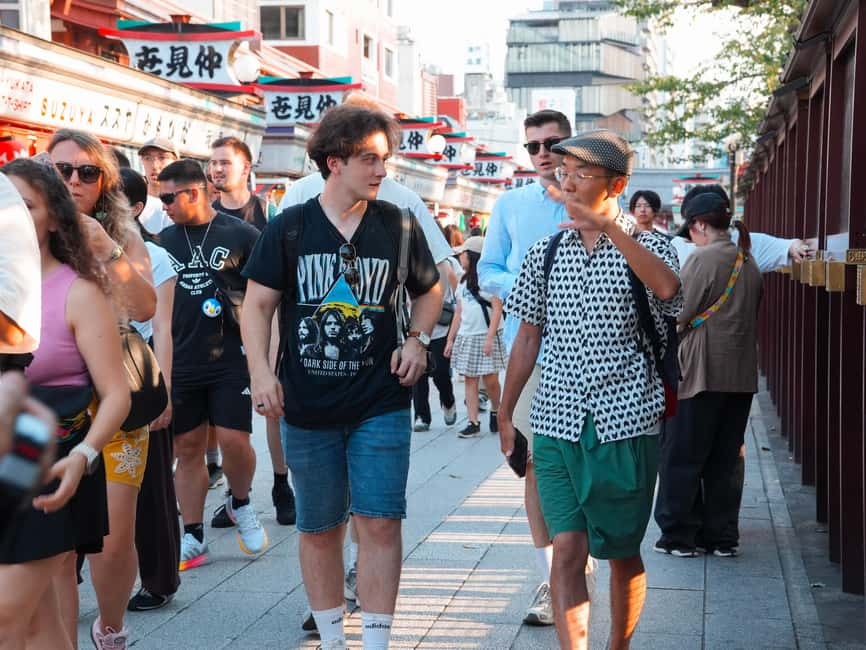
This tour suits first-time visitors who want a clear introduction to Asakusa without planning every turn themselves. It also works well for history and culture fans who like hearing the stories behind a familiar landmark. The two-hour format is short enough to fit into a busy Tokyo day, while the small group cap keeps the walk from feeling like a large organized outing.
You may also like it if you are traveling with someone who wants context but does not want a full-day museum visit. The route is focused, the language is English, and the guide can explain religious and cultural themes in accessible terms. For a quick first look at the district, that balance can be useful.
On the other hand, independent explorers may prefer to go alone if they want to stop whenever they like, shop at length, or set their own pace. The tour is also less compelling if you expect a long, detailed history lecture at every stop. Its strengths are the compact route and the guide’s ability to bring the area to life, not a wide-ranging tour across Tokyo.
Booking is flexible: you can reserve now and pay later, and cancellation up to 24 hours in advance is eligible for a full refund. Starting times depend on availability. Check the timing carefully, especially because the listed stop durations and overall tour length do not quite align.
Should you book the Asakusa walk?
Book it if you want an affordable, English-language introduction to Senso-ji and its surrounding streets, and you value stories as much as photographs. The strongest potential is a friendly guide who can connect the temple, shopping lane, and district history into one clear account. Lax and Shoma have been praised for exactly the kind of warmth and explanation that can make a short walk memorable.
Skip it if you would rather explore at your own pace or spend a long time shopping and eating along Nakamise. You can see the main sights without a guide, and the tour’s overall quality depends on how engaging the storytelling is on your date. At $11, the risk is limited, but it is still worth booking for the context, not simply for access to places you can visit independently.
FAQ
How long is the tour?
The stated duration is two hours. The stop timings shown for Nakamise Street and Senso-ji do not neatly match that total, so check the expected pace when booking.
Where does the tour meet?
Meet at Kaminarimon Police Station, also written as 雷門交番. The tour returns to the same meeting point.
What language is the tour in?
The live tour guide speaks English.
How large is the group?
The tour is limited to 10 participants.
What places does the tour visit?
The route includes Nakamise Shopping Street, Senso-ji Temple, and the Asakusa district.
Is hotel pickup included?
No. Hotel pickup and drop-off are not included.
Is admission included?
Admission to Asakusa, Senso-ji Temple, and Nakamise Shopping Street is listed as included.
How much does the tour cost?
The price provided is $11 per person.
Can I cancel or pay later?
You can reserve now and pay later. You can cancel up to 24 hours in advance for a full refund.
Freshly reviewed in Tokyo
- Tokyo: Toshimaya Sake Brewery Tour with Sake Tasting★ 5.0 · 6 reviews
- :Tokyo,Shibuya /Meiji Shrine tour in KIMONO/English-friendly★ 5.0 · 4 reviews
- Tokyo: Tour Privado por Tokio en español★ 4.3 · 4 reviews
- Tokyo:Tea ceremony experience at Komaba Warakuan★ 4.8 · 9 reviews
- :Tokyo,Shibuya/ Pro Photography in Kimono / English-Friendly★ 5.0 · 26 reviews
- Tokyo:Samurai Training : Swords, Bushido & Mental Discipline★ 5.0 · 6 reviews
- Tokyo:Mt Fuji & Hakone Day Tour with English Speaking Driver★ 5.0 · 26 reviews
- Tokyo:Nikko UNESCO World Heritage Sites Private 1-Day Tour★ 3.8 · 6 reviews
Asakusa Tours, compared.
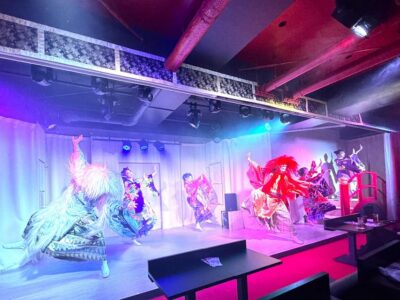
Japanese Dance Cabaret Theater Asakusa-Kaguwa Ticket
Read our review →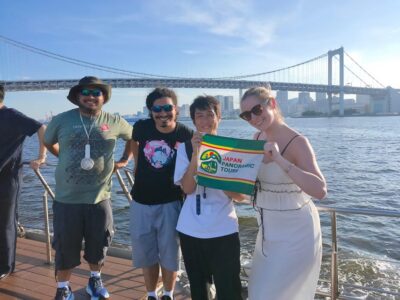
Meiji Shrine, Asakusa, Skytree Bus Tour and Cruise
Read our review →
Roll and Authentic Sushi Making Class in Asakusa
Read our review →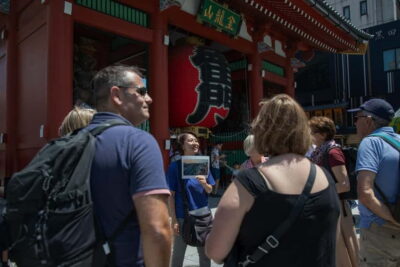
Asakusa Walking Tour with Sensoji Temple Visit
Read our review →
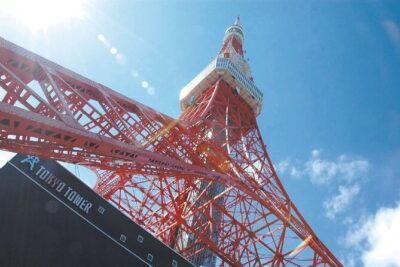
Tokyo Panoramic 1 Day: Meiji Shrine, Asakusa, Odaiba and SKYTREE®
Read our review →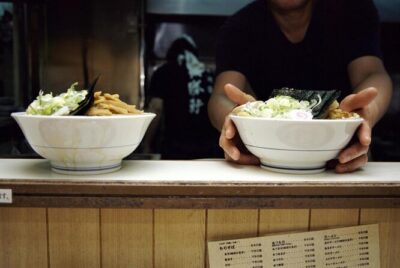
Tokyo Go Kart: Asakusa, Skytree, and Akihabara **IDP MUST**
Read our review →
Asakusa, Skytree & Akhihabara Go-Kart City Experience
Read our review →Browse the lists this tour appears in