
Reviewed · ASAKUSA TOURS
From Asakusa: Old Tokyo, Temples, Gardens and Pop Culture
Tokyo’s story is easy to miss if you see only its temples or only its neon signs. This four-hour walk links Senso-ji and Nakamise-dori with Ueno’s market streets, Akihabara’s pop culture, and the quiet paths of Koishikawa Korakuen, showing how very different parts of East Tokyo sit within one city.
I like two things in particular: the route pairs everyday market life with old landmarks, and it gives you a guide who can explain how the districts changed over time. The group is capped at eight, so you have a better chance to ask questions than on a large coach tour.
The main consideration is the pace. Six named stops plus local train rides make for a full four hours, and the route includes plenty of walking. If you want long museum visits or an unhurried garden stroll, this tour is more of an introduction than a deep visit.
What to know before you go
- Asakusa opens the story: Visit Senso-ji and Nakamise-dori, then hear how the neighborhood has changed since Tokyo’s early subway linked it with Ueno.
- Ueno and Okachimachi keep their market character: Expect a lively commercial area shaped by street vendors, shops, and food stalls.
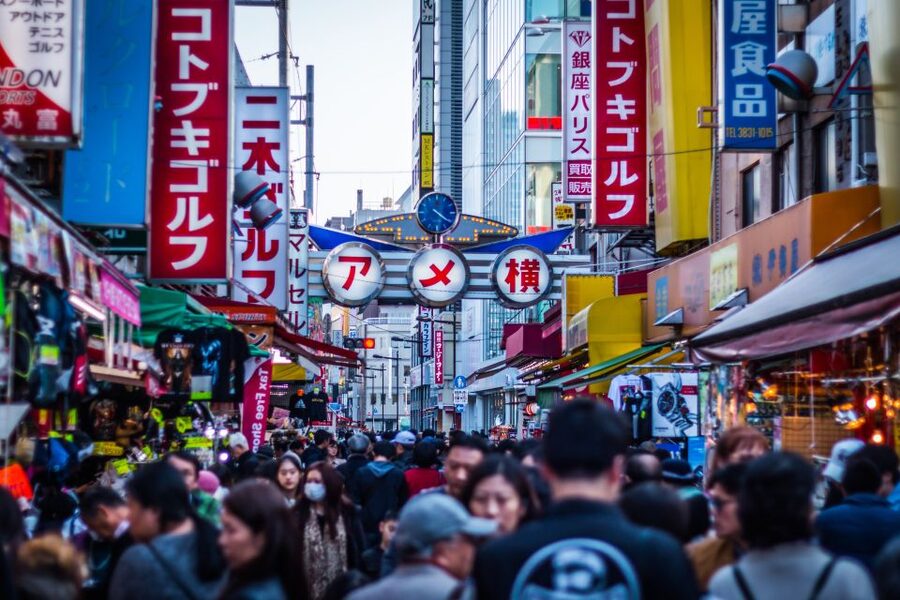
- Akihabara is more than electronics: Its identity stretches from pre-war electric goods to anime, manga, gaming, and cosplay culture.
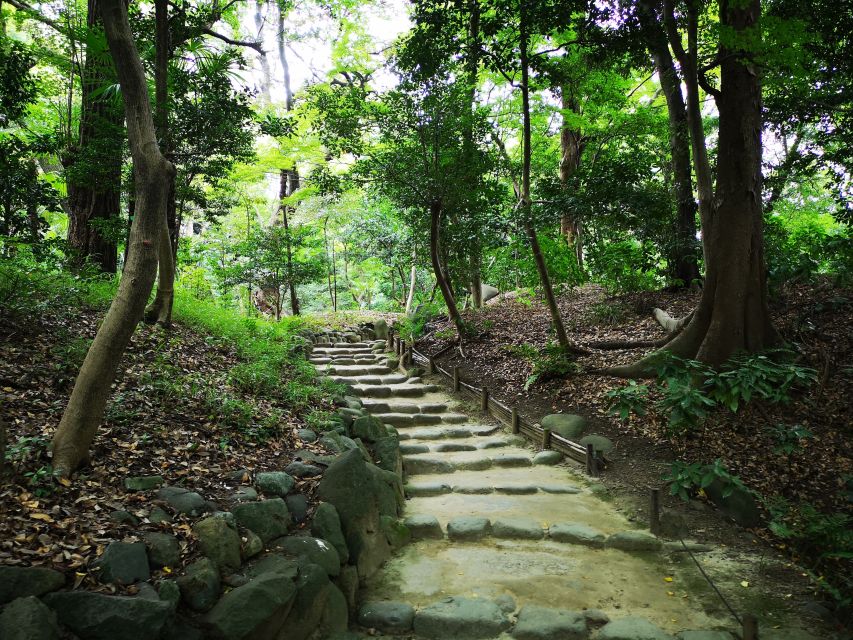
- Koishikawa Korakuen offers a sharp change of mood: A traditional garden brings Edo-era design and seasonal scenery into a city day.
- The four-hour format favors connections: You get context across several neighborhoods, not a long stop at each one.
- The price includes useful basics: Standard tour admissions and local train rides are covered, while food, drinks, and a possible Tokyo National Museum visit are extra.
Asakusa: Start at Senso-ji, then look beyond the temple
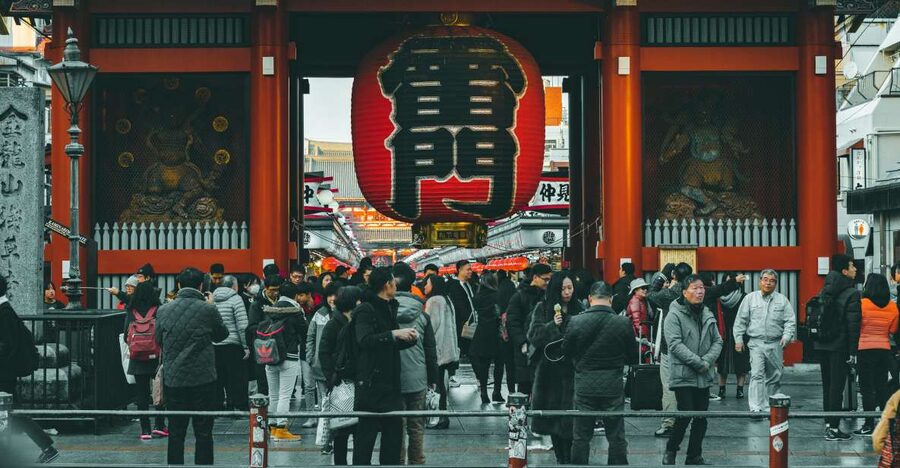
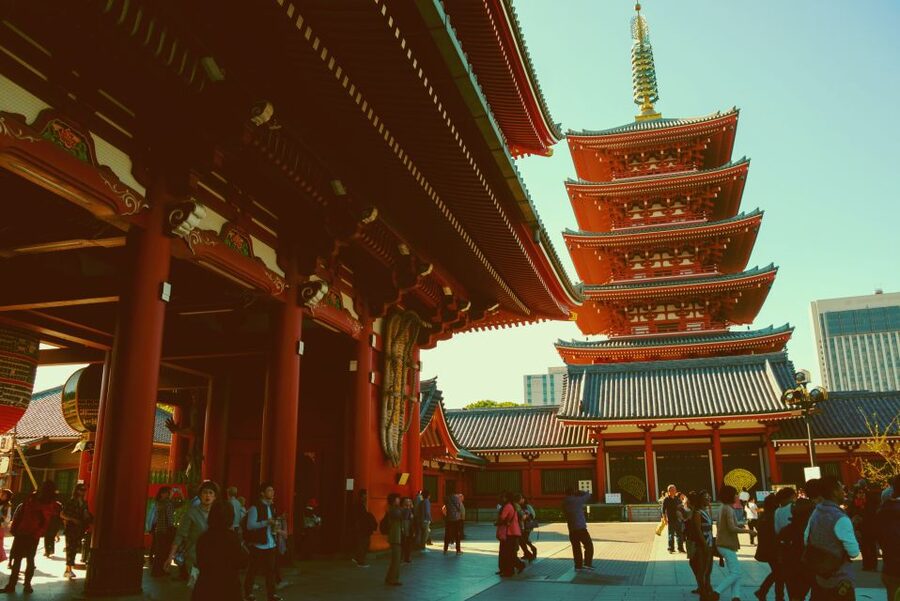
The meeting point is Kamiya Bar in Asakusa, at 1-chōme-1-1 Asakusa. From there, the tour begins with about 45 minutes in Asakusa, including a 15-minute guided visit to Senso-ji. The temple is one of Japan’s early Buddhist temples, and it gives your guide a natural place to begin explaining the city’s long religious and civic story.
Senso-ji is also one of Tokyo’s most recognizable sights, so it can be busy. The benefit of having a guide is not simply getting pointed toward the main hall. You can ask about what you are seeing and hear how the temple fits into the neighborhood, rather than treating it as a quick photo stop.
Nakamise-dori, the shopping street leading to the temple, adds another layer. It is a practical place to see how a major religious site and commerce have grown together. The shops serve people coming to the temple as well as those browsing for souvenirs, snacks, and traditional goods. You should expect a popular public setting, not a quiet temple precinct.
The tour’s Asakusa segment also looks past the best-known sights. The district was more than a temple quarter a century ago, and the guide links its past to the arrival of the subway between Asakusa and Ueno. That connection sets up the route’s larger theme: Tokyo did not simply replace old neighborhoods with new ones. It kept adapting them.
More Asakusa tours in Tokyo:
- Tokyo: Japanese Dance Cabaret Theater Asakusa-Kaguwa Ticket
★ 4.8 · 2,270 reviews - Tokyo: Meiji Shrine, Asakusa, Skytree Bus Tour and Cruise
★ 4.7 · 1,986 reviews - Tokyo: Roll and Authentic Sushi Making Class in Asakusa
★ 4.9 · 1,957 reviews
Ueno and Okachimachi: Tokyo’s everyday market side
The itinerary gives Ueno about 25 minutes, followed by another 25 minutes in Okachimachi. These neighboring areas bring a different texture from Asakusa’s temple approach. They have long been places to buy food and goods, and the tour focuses on street commerce rather than polished department-store shopping.
Ameya-Yokocho, often called Ameyoko, is the market district named in the tour overview. Here, the point is the street scene: shops and vendors close together, a strong everyday rhythm, and a less formal feel than Tokyo’s large retail complexes. It is a useful contrast after Senso-ji, where visitors tend to gather around a historic landmark.
Ueno is also associated with museums and cherry blossoms. The route description notes the area’s cultural institutions and seasonal appeal, though a short guided stop is not the same as a museum visit or a full day beneath the blossoms. If the Tokyo National Museum is a priority, admission is not included, and the itinerary does not promise time for a substantial visit. You can choose to go, but it would likely require arranging extra time outside the four-hour walk.
I like this portion because it shows a version of Tokyo that is not built around spectacle. You see how a market district serves local routines, and how generations of selling and shopping can give a place its own character. The trade-off is that markets are busy by nature. If you prefer quiet lanes and orderly displays, this stop may feel crowded; if you want a sense of ordinary city life, it is one of the most useful parts of the route.
Koishikawa Korakuen: A garden pause in the middle of the city
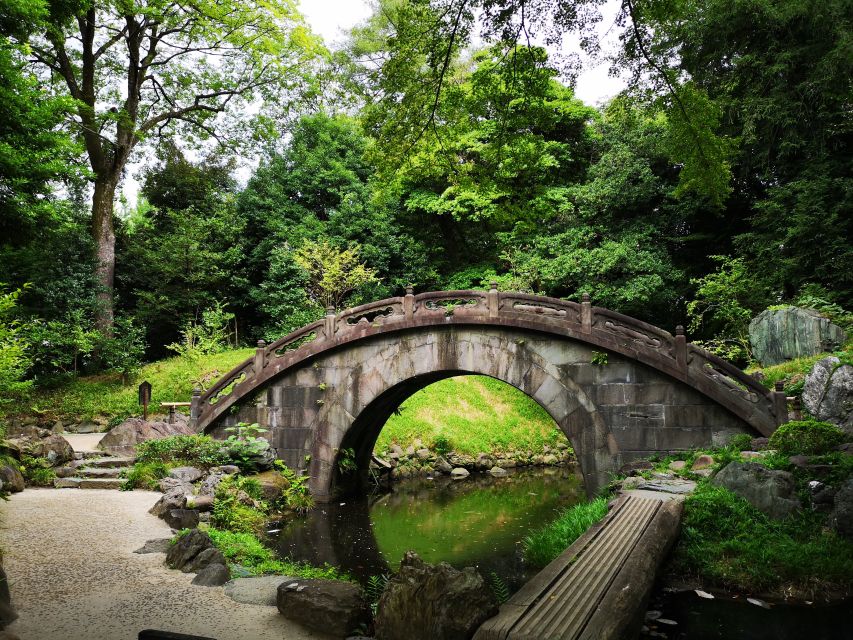
The schedule allots 45 minutes to Koishikawa Korakuen, including sightseeing and scenic views along the way. After the commercial energy of Ueno and Okachimachi, a traditional Japanese garden makes a welcome change of pace. Its paths and seasonal scenery offer a look at a carefully shaped landscape, rather than a park designed simply as open green space.
The garden is described as an Edo-era setting, and its appeal changes with the calendar. Cherry blossoms bring spring color, while autumn leaves add warmer tones later in the year. The guide can help place the garden within Tokyo’s history, but the short visit means you should think of it as an introduction, not time to explore every path at leisure.
This stop matters because it lets the route breathe. In a city where trains, shops, and crowds can fill the day, a garden makes a different kind of urban history visible: one based on planned views, walking paths, and a deliberate sense of calm. You will see a quieter side of Tokyo without leaving the city behind.
There is a practical wrinkle: the itinerary places Koishikawa Korakuen before Akihabara, even though the overall route description introduces Akihabara first. The listed sequence is what matters when you plan your expectations. The tour moves between districts, and local train rides are included among the standard costs. Ask your guide about timing if there is a particular seasonal view you hope to see.
Akihabara: From electric goods to anime and gaming
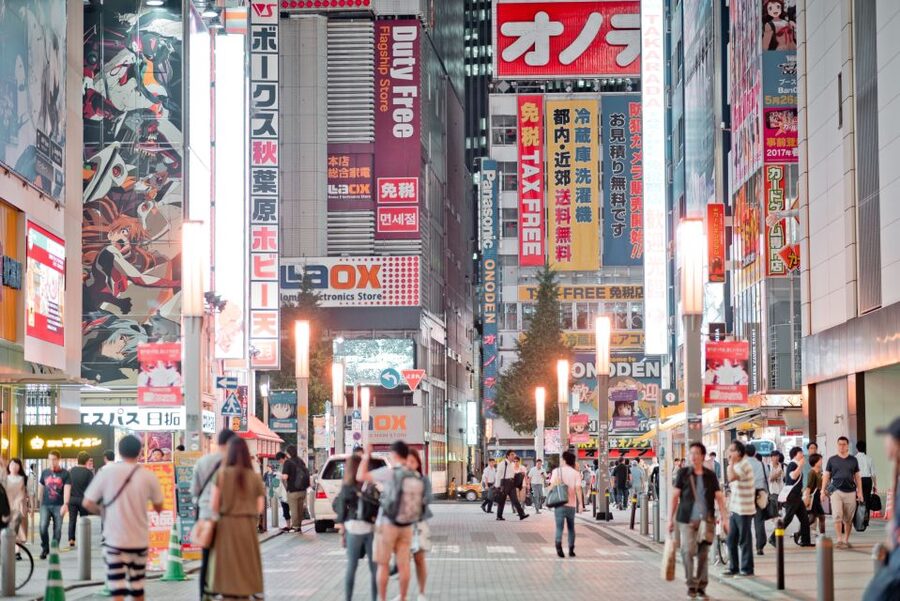
The final listed stop is Akihabara, with about 45 minutes for sightseeing. The district’s nickname, Electric Town, reflects its long association with electronics, dating back to the pre-war era. Today, its public identity also rests on anime, manga, gaming, and other forms of otaku culture.
That shift is worth understanding. Akihabara is not just a row of shops selling the latest gadgets, nor is it only a stage set for pop culture. It shows how a district can take an older commercial identity and remake it around new interests. The guide’s role is to help you read the changes, rather than simply usher you past neon signs.
The tour description also mentions cosplay and the way fiction and daily life overlap in the neighborhood. What you encounter can vary by day and by street, so do not book expecting a guaranteed performance or a particular character sighting. The value is in understanding why Akihabara became a gathering point for these interests and how its public image differs from the market streets you have already seen.
Forty-five minutes is enough to get an orientation and see the district’s character, but not enough for a serious shopping expedition. If you want to visit specific shops, arcades, or cafes, plan to return on your own. This is a guided introduction, not a free afternoon to browse.
More tours and experiences in Tokyo:
- Mt Fuji and Hakone 1-Day Bus Tour Return by Bullet Train
★ 5.0 · 26,383 reviews - 1-Day Tokyo Bus Tour
★ 5.0 · 14,250 reviews - Tokyo: teamLab Planets TOKYO Digital Art Museum Entry Ticket
★ 4.6 · 9,779 reviews - Mt Fuji & Hakone Cruise, Drum Show Bullet Train 1 Day from Tokyo
★ 4.0 · 7,413 reviews
What the four-hour format means in practice
The route names six stops: Asakusa, Senso-ji, Ueno, Okachimachi, Koishikawa Korakuen, and Akihabara. The scheduled sightseeing segments add up to roughly 200 minutes, leaving about 40 minutes within the four-hour window for transitions and local train travel. That makes the tour efficient, but it also means you should arrive ready to keep moving.
Comfortable shoes are the only item specifically recommended, and they are sound advice. The experience is a walking tour, with neighborhood streets and several stops rather than one continuous indoor visit. The tour is listed as wheelchair accessible, a useful detail for planning, though you can contact the provider if you need to confirm how the specific route will work for you.
The group is limited to eight people. That is small enough to make conversation with the guide more practical, while still being a group outing rather than a private tour. English is the stated language. Guides associated with the experience include Taka, Takee, Toru, and Michelle; the guide you meet may be someone else. Past guide-specific details include family-friendly conversation and origami, but you should treat those as individual touches, not promised parts of every departure.
The tour’s strongest feature is interpretation. A temple, market, garden, and pop-culture district can feel like four unrelated stops if you visit them alone. A guide helps you connect the pieces: transportation changed access to Asakusa, market activity gave Ueno and Okachimachi their staying power, and Akihabara adapted to new technologies and interests. That context is the difference between seeing a collection of places and beginning to understand how East Tokyo took shape.
Is $68 good value for this route?
At $68 per person, the tour’s value depends on how much you want a guide to connect the neighborhoods. Standard admissions and local train rides are included, so the price is not just for someone to walk beside you. It covers useful route costs and four hours of explanation across districts that are easy to visit separately but harder to interpret as one story.
Food and drinks are not included, and neither is admission to the Tokyo National Museum if you decide to add it. You should also budget extra time if you want to shop or linger in the garden. The tour does not promise a meal stop, and its compact schedule leaves little room for long detours.
For a first or early visit to Tokyo, I see the price as reasonable if you value context and a small group. It is less compelling if you are comfortable navigating the city independently and mainly want free time at each stop. You can visit Senso-ji, Ameyoko, Akihabara, and the garden on your own, but you will need to manage the transitions and make your own connections between them.
The booking terms offer flexibility: you can reserve without paying immediately and cancel up to 24 hours beforehand for a full refund. Starting times depend on availability. Those details are handy, but the central decision is simpler: do you want a guided overview of East Tokyo, or do you want to choose one or two districts and explore them slowly?
Who should book this East Tokyo walk?
This tour suits you if you want a broad introduction to Tokyo’s old and new sides in one half-day. It works especially well if you enjoy history alongside street life and modern pop culture, and if you like asking questions as you go. The small group makes it a sensible choice for families too, though the route remains a walking outing and the pace is set by its schedule.
It may be less suitable if your priority is a long temple visit, a museum collection, shopping time, or a quiet garden walk. Each stop gets a taste, not a full exploration. If you have only one free afternoon and want to concentrate on a single neighborhood, you may be happier building your own plan.
I would book it for the connecting thread. Senso-ji, market streets, an Edo-style garden, and Akihabara show very different faces of Tokyo. The guide helps you see them as parts of one evolving city, while the four-hour format keeps the experience manageable. Just bring comfortable shoes, keep your expectations realistic about time at each stop, and save extra hours for whichever neighborhood catches your interest.
FAQ
How long is the tour?
The tour lasts four hours. The scheduled visits cover Asakusa, Senso-ji, Ueno, Okachimachi, Koishikawa Korakuen, and Akihabara, with local train rides between areas.
Where is the meeting point?
Meet at Kamiya Bar in Asakusa, at 1-chōme-1-1 Asakusa.
What language is the tour in?
The live guide speaks English.
How many people are in the group?
The group is limited to eight participants.
Are train rides and admissions included?
All standard costs while on the tour are included, including admissions and local train rides. Admission to the Tokyo National Museum is not included if you choose to visit.
Are food and drinks included?
No. Food and drinks are not included in the tour price.
Is the tour wheelchair accessible?
Yes, the activity is listed as wheelchair accessible.
What should I bring?
Bring comfortable shoes, as this is a walking tour across several neighborhoods.
Can I cancel the tour?
You can cancel up to 24 hours in advance for a full refund. You can also reserve now and pay later.
Freshly reviewed in Tokyo
- Tokyo: Toshimaya Sake Brewery Tour with Sake Tasting★ 5.0 · 6 reviews
- :Tokyo,Shibuya /Meiji Shrine tour in KIMONO/English-friendly★ 5.0 · 4 reviews
- Tokyo: Tour Privado por Tokio en español★ 4.3 · 4 reviews
- Tokyo:Tea ceremony experience at Komaba Warakuan★ 4.8 · 9 reviews
- :Tokyo,Shibuya/ Pro Photography in Kimono / English-Friendly★ 5.0 · 26 reviews
- Tokyo:Samurai Training : Swords, Bushido & Mental Discipline★ 5.0 · 6 reviews
- Tokyo:Mt Fuji & Hakone Day Tour with English Speaking Driver★ 5.0 · 26 reviews
- Tokyo:Nikko UNESCO World Heritage Sites Private 1-Day Tour★ 3.8 · 6 reviews
Asakusa Tours, compared.
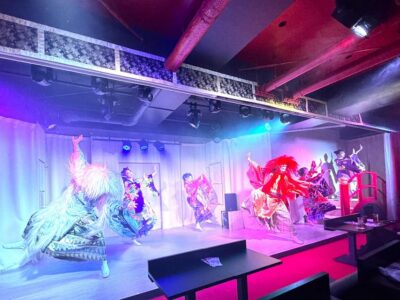
Japanese Dance Cabaret Theater Asakusa-Kaguwa Ticket
Read our review →
Meiji Shrine, Asakusa, Skytree Bus Tour and Cruise
Read our review →
Roll and Authentic Sushi Making Class in Asakusa
Read our review →
Asakusa Walking Tour with Sensoji Temple Visit
Read our review →
Tokyo Panoramic 1 Day: Meiji Shrine, Asakusa, Odaiba and SKYTREE®
Read our review →
Tokyo Go Kart: Asakusa, Skytree, and Akihabara **IDP MUST**
Read our review →
Asakusa, Skytree & Akhihabara Go-Kart City Experience
Read our review →Browse the lists this tour appears in