
Reviewed · TOKYO RAMEN TOURS
Shibuya: Ramen Dojo Tokyo | Make All 3 (Tonkotsu/Shoyu/Miso)
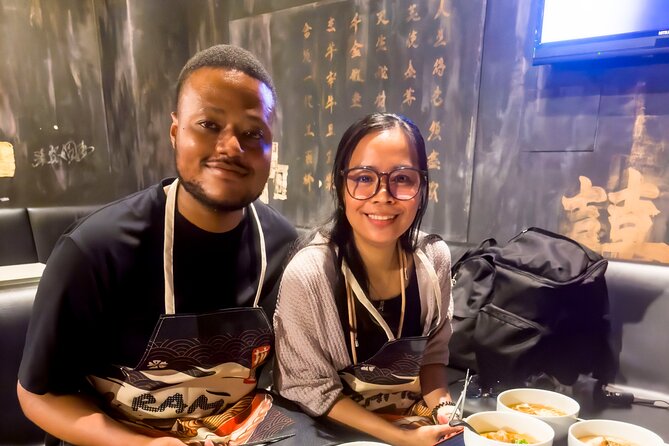
The clever part of this Shibuya cooking class is the side-by-side tasting: you make fresh noodles, then build three small bowls of tonkotsu, shoyu, and miso ramen in one 90-minute session. It’s a quick, hands-on way to compare styles without committing to a full bowl of each.
I like that you get to work the dough and cut your own noodles, and that the English-speaking instructors explain each step in a small group. One thing to know: the broths are prepared ahead of time, so this is a noodle-making and ramen-assembly class, not a lesson in simmering soup stock from scratch.
What makes this ramen class worth considering
- Three styles in one sitting: Compare mini bowls of tonkotsu, shoyu, and miso.
- Fresh noodles by hand and machine: Knead dough, then use a professional noodle cutter.
- Chicken chashu is part of the lesson: Prepare and finish the meat before building your bowls.
- Small, English-guided groups: The class is capped at eight, with instructors such as Kazuki, Kensei, and Kai named in recent class feedback.
- A practical take-home: You receive a digital recipe after the meal.
- A few limits to plan around: The studio has stairs only, and the class uses wheat, egg, soy, chicken, and pork.
Three ramen styles, one useful comparison
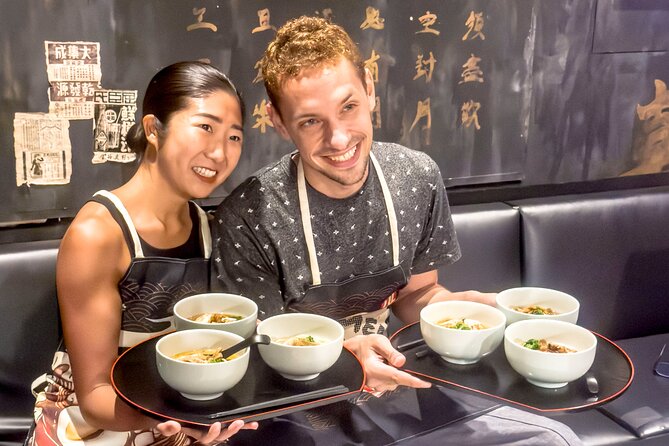
Ramen Dojo Tokyo gives you a chance to taste three familiar styles in one sitting: tonkotsu, shoyu, and miso. Instead of choosing one bowl at a restaurant and wondering about the others, you make and compare three mini bowls at the end of the class.
That tasting is the central pleasure of the session. You can notice how the same fresh noodles work with different soup bases, then adjust the soup strength to suit your taste. The bowls are mini portions, but the finished trio can still make a substantial meal. Plan to arrive hungry, especially if you are booking around lunchtime or dinner.
The class is held in a studio near Shibuya Station, about a 10-minute walk away. The listed address is 1F, 2-16-29 Ohashi, Meguro-ku, Tokyo 153-0044. The activity begins and ends there, so you can continue exploring Shibuya afterward without needing to return to a separate meeting point.
More Shibuya tours in Tokyo:
- Official Street Go-Kart in Shibuya
★ 5.0 · 3,435 reviews - Tokyo: Street Kart Experience in Shibuya
★ 4.9 · 1,484 reviews - Shibuya Meltdown Nightlife Tour: All-You-Can-Drink Bar Hopping
★ 5.0 · 1,058 reviews
Kneading dough and cutting fresh noodles
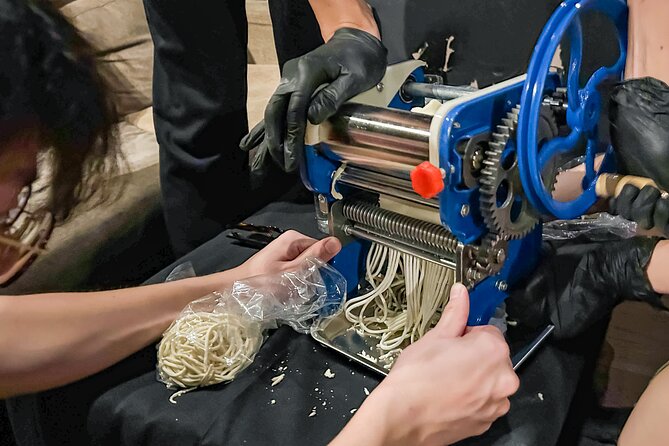
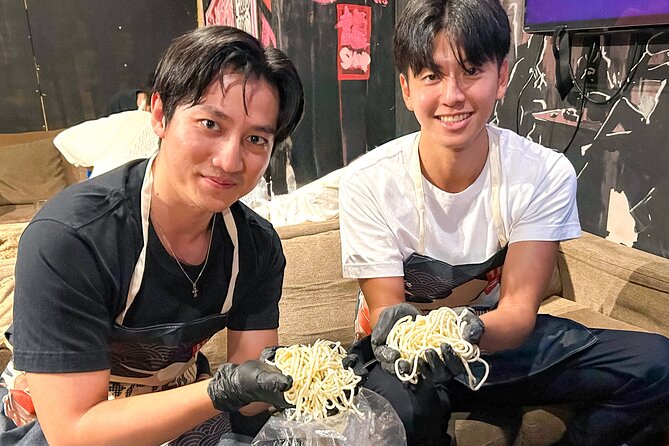
Noodle-making is the most hands-on part of the experience. You knead the dough, then roll and cut it with a professional machine. That gives you a taste of the work behind a bowl of ramen, while keeping the process manageable for a first-timer.
The class schedule allows about 20 minutes for making noodles. Some instructors also encourage hand techniques, so the lesson can offer more than a turn at a machine. The equipment helps produce a consistent cut, while working the dough gives you a clearer sense of how much effort sits behind the finished noodles.
You do not need previous cooking experience. The workshop is designed for beginners, and the instructor demonstrates the steps and helps the group along. People who want a detailed lesson in advanced noodle craft may find the pace introductory, but that is a sensible fit for a 90-minute class that also includes chicken, soup, and three bowls.
A practical bonus is that the method is meant to be possible at home. One class participant noted that the style taught could be repeated without special equipment. The professional cutter is part of the studio experience, but the recipe gives you a way to revisit the process later.
Preparing chicken chashu and building your bowls
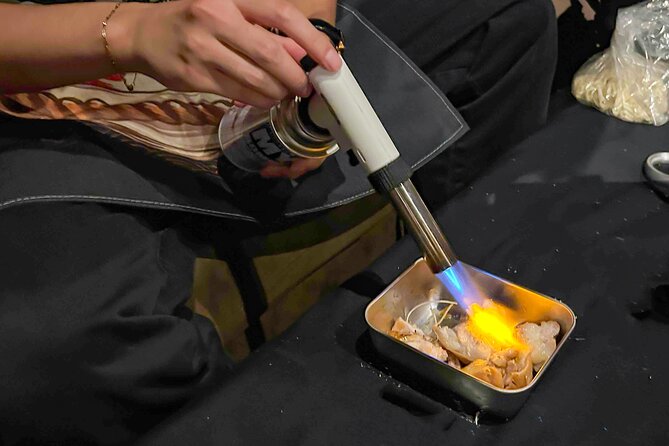
The class includes preparing chicken chashu, with five minutes set aside for the initial prep and about 10 minutes for finishing it. This gives you a chance to handle one of the toppings yourself, rather than simply receiving a completed bowl.
The broth bases, by contrast, are prepared ahead of time. That matters if you are booking because you want to learn how a long-simmered stock is made. You will not spend the class building tonkotsu, shoyu, or miso soup from raw ingredients. Instead, you adjust the soup base to your preferred strength, then focus on noodles, chicken, toppings, and assembly.
Plating takes roughly five minutes. You add the prepared components and toppings to three mini bowls, then sit down for the tasting. The format keeps the lesson moving and lets you compare the finished styles while the differences are still fresh in your mind.
For many people, this balance is the point. You get real cooking tasks without turning a short activity into a long technical course. If your priority is a full broth-making lesson, this class may not meet that expectation. If you want to learn the noodle process, try a topping preparation, and eat what you make, it covers those bases well.
A 90-minute class with time to eat
The schedule is compact but gives the tasting a generous share of the session:
- Check-in and briefing: 10 minutes
- Chicken chashu preparation: 5 minutes
- Noodle-making: 20 minutes
- Chicken chashu finishing: 10 minutes
- Boiling noodles and preparing soup: 10 minutes
- Plating: 5 minutes
- Tasting and photos: 30 minutes
That final half hour is valuable. You are not expected to rush through your meal as soon as the cooking ends. You have time to taste the bowls, take photos, and enjoy the result.
The class also works as a meal activity. At $64 per person, the price includes instruction, ingredients, kitchen equipment, apron use, three mini ramen bowls, and the digital recipe. It is more expensive than simply ordering ramen, of course. What you are paying for is the guided process, hands-on noodle-making, the chance to compare three styles, and a meal at the end.
That package makes the price easier to justify if you already want a cooking activity in Tokyo. If you are mainly hungry and only want a bowl of ramen, a restaurant will be cheaper and more direct.
More ramen tours in Tokyo:
- Eat and Drink Like a Local: Tokyo Ueno Food Tour-Taverns&Ramen
★ 5.0 · 957 reviews - Ramen & Gyoza Cooking Class in Tokyo with Local Supermarket Visit
★ 5.0 · 823 reviews - Tokyo: Ramen Tasting Tour with 6 Mini Bowls of Ramen
★ 4.9 · 432 reviews - Tokyo: Easy Ramen Cooking Experience in Kabukicho, Shinjuku
★ 4.6 · 321 reviews
Friendly instruction in a group of eight or fewer
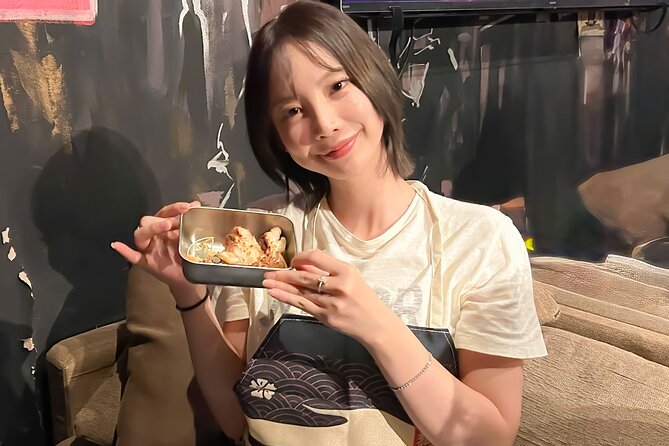
The maximum group size is eight, which gives the instructor room to explain the steps and help each person take part. The class is conducted in English and Japanese. Instructors named in recent class experiences include Kazuki, Kensei, Kai, Arata, Ivy, and Kensei, among others. Your particular instructor depends on the session.
The strongest pattern in the feedback is the teaching style: clear demonstrations, patient explanations, and a relaxed atmosphere. That is useful if you are new to cooking or unsure about following a class in another country. The goal is not to test your kitchen skills. It is to keep you involved and help you make the food.
Some sessions may have fewer people than the eight-person limit. That can mean more time for questions, though you should not count on a private lesson. The small-group setup is a good middle ground: social enough to share the activity, but not a large class where it is hard to get help.
There is also a clear limit to what a short class can cover. The focus is on a few core tasks and an enjoyable meal, rather than an exhaustive study of ramen traditions or broth technique. Go in expecting an accessible introduction, not professional kitchen training.
Who will enjoy it, and what to check first
This experience suits ramen fans who want to do more than eat, couples looking for a shared activity, and families with children aged six and older. It can also be a good choice for a rainy-day plan or a meal with a bit of work behind it. You leave with a recipe, and the instructor can help make the process feel possible to repeat at home.
The workshop uses wheat, egg, soy, chicken, and pork, and the studio cannot guarantee that cross-contamination will be prevented. It is not suitable for severe wheat, egg, or soy allergies, celiac disease, severe airborne flour sensitivity, or anyone who needs strict dietary compliance. Partial accommodation for no chicken or pork, vegetarian, or vegan requests may be possible, but ask in advance. Special substitutes beyond those options are not included.
The studio is accessible by stairs only. If stairs are difficult for you, this is not the right activity. Aprons are provided, but flour can get on your clothes during noodle-making, so wear something you do not mind getting dusty.
Arrive five to 10 minutes before the start, not earlier. The doors open 10 minutes beforehand, and there is no waiting area or early entry. If you are five or more minutes late, you may have to join in progress or be refused entry without a refund. Contact the provider before the start time if you are running late.
Should you book Ramen Dojo Tokyo?
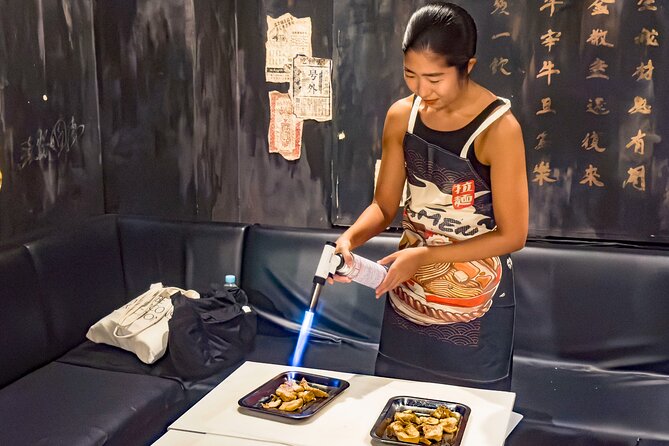
Book it if you want a friendly, practical cooking session with fresh noodles, chicken chashu, and three ramen styles to taste. The strongest value comes from doing the work yourself and comparing the bowls, then leaving with a recipe you can use again.
Skip it if your main goal is to learn how to make ramen broth from scratch, if you need strict dietary guarantees, or if stairs are a problem. For everyone else, it is a compact way to turn a meal in Tokyo into an activity, with enough instruction to make the cooking feel approachable and enough food to finish satisfied.
FAQ
How long does the ramen class last?
The class lasts 90 minutes, including the briefing, cooking, plating, tasting, and photo time.
What kinds of ramen will I make?
You will assemble and taste three mini bowls: tonkotsu, shoyu, and miso.
Do I make the broth from scratch?
No. The soup bases are prepared ahead of time. You can adjust the soup to your preferred strength and use it to assemble your bowls.
Will I make my own noodles?
Yes. You knead the dough and use a professional noodle machine to roll and cut the noodles.
Is the class suitable for beginners?
Yes. It is designed to be beginner-friendly, and an English-speaking instructor guides the steps.
How many people can join?
The group is limited to a maximum of eight participants.
What is included in the price?
The price includes an English-speaking instructor, ingredients, kitchen equipment, an apron loan, three mini ramen bowls, and a digital recipe after class.
Can dietary requests be accommodated?
Partial accommodation may be possible for no chicken or pork, vegetarian, or vegan requests, but you should ask in advance. Strict dietary compliance and special substitutes are not guaranteed.
Is the studio accessible without stairs?
No. The studio has stairs only.
How early should I arrive?
Arrive five to 10 minutes before the start time. The doors open 10 minutes before class, and there is no early entry or waiting area.
Freshly reviewed in Tokyo
- Tokyo: Toshimaya Sake Brewery Tour with Sake Tasting★ 5.0 · 6 reviews
- :Tokyo,Shibuya /Meiji Shrine tour in KIMONO/English-friendly★ 5.0 · 4 reviews
- Tokyo: Tour Privado por Tokio en español★ 4.3 · 4 reviews
- Tokyo:Tea ceremony experience at Komaba Warakuan★ 4.8 · 9 reviews
- :Tokyo,Shibuya/ Pro Photography in Kimono / English-Friendly★ 5.0 · 26 reviews
- Tokyo:Samurai Training : Swords, Bushido & Mental Discipline★ 5.0 · 6 reviews
- Tokyo:Mt Fuji & Hakone Day Tour with English Speaking Driver★ 5.0 · 26 reviews
- Tokyo:Nikko UNESCO World Heritage Sites Private 1-Day Tour★ 3.8 · 6 reviews
Tokyo Ramen Tours, compared.

Eat and Drink Like a Local: Tokyo Ueno Food Tour-Taverns&Ramen
Read our review →
Ramen & Gyoza Cooking Class in Tokyo with Local Supermarket Visit
Read our review →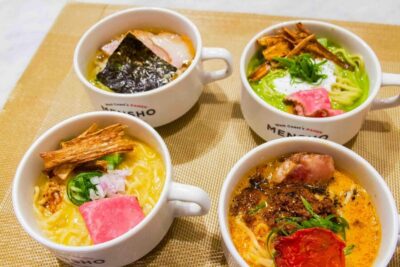
Easy Ramen Cooking Experience in Kabukicho, Shinjuku
Read our review →
Ramen and Sushi Cooking Class with Sake Pairing Set in Tokyo
Read our review →
Professional Ramen & Gyoza with Ramen Chef in a restaurant!
Read our review →
Ramen Dojo Tokyo | Make All 3 (Tonkotsu/Shoyu/Miso)
Read our review →
Browse the lists this tour appears in