
Reviewed · TOKYO TEA CEREMONIES
Authentic Japanese Tea Ceremony Experience in Kamakura
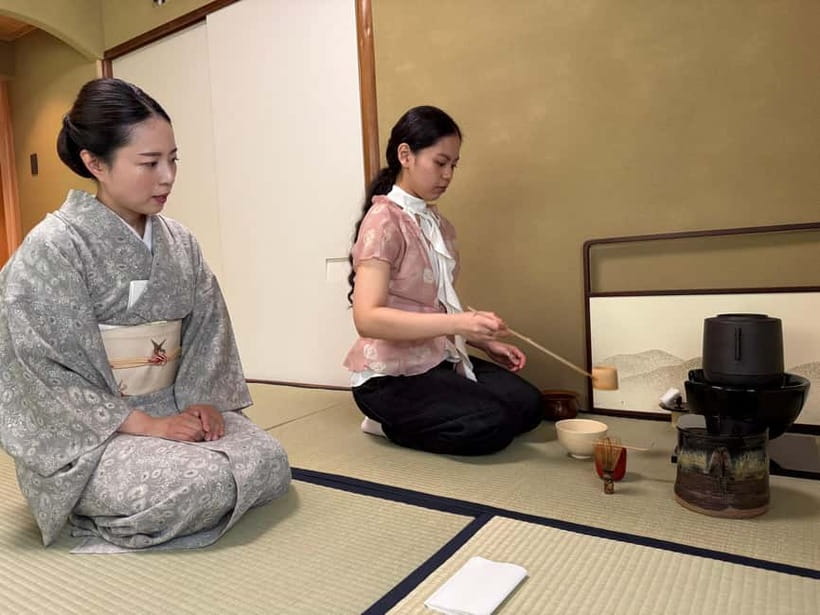
The pleasure here is in seeing how much care goes into a bowl of tea. In a traditional tea room in Kamakura, a certified tea master introduces the ceremony, demonstrates its measured movements, and shows how hospitality is expressed through the ritual.
I like two things in particular: you get to make matcha yourself, not just watch, and the small group size keeps the session personal. You also taste two servings of tea with seasonal wagashi, so the hour includes both an explanation and a hands-on lesson.
One practical drawback: finding the meeting point may take a little care. The tea room is about a five-to-seven-minute walk from JR Kita-Kamakura Station, near restaurant 航, so leave time to locate it. You’ll also need to remove your shoes, and the room is not wheelchair accessible.
- A tea master explains the why: Learn about the ceremony’s history, etiquette, and links to Zen and mindfulness.
- Watch the ritual up close: See the host prepare tea and demonstrate the spirit of omotenashi, or wholehearted hospitality.
- Whisk and serve matcha: You’ll get step-by-step guidance, even if this is your first time handling a tea whisk.
- Taste tea with wagashi: Two servings of matcha come with seasonal Japanese sweets.
- Keep the group small: No more than six participants join the 60-minute session.
- Come prepared for tatami: Bring socks, remove your shoes, and ask ahead if you need a chair rather than sitting on the floor.
A quiet hour in a Kamakura tea room
Kamakura makes a fitting setting for a tea ceremony. This historic town is about an hour from central Tokyo, yet the session itself is not a sightseeing tour. It is a focused hour in a traditional tea room, where the main attraction is the ceremony and the chance to understand its customs from the inside.
The room is built in the sukiya-zukuri style, a traditional architectural style associated with tea houses. You don’t need to know anything about Japanese architecture to appreciate the change in pace: you take off your shoes, step into a room arranged for tea, and leave the rush of the station area outside.
This is a good choice if you want more than a quick taste of matcha. The instructor explains what the ceremony is for, what its movements mean, and how manners help shape the exchange between host and guest. That context turns a cup of green tea into a cultural experience rather than a refreshment stop.
The session is offered in Japanese and English. If you’re new to the subject, the English instruction is useful because etiquette can be hard to pick up by simply watching. The group limit of six should also make it easier to see the demonstration and ask questions without competing with a large crowd.
From welcome to the tea master’s demonstration
The hour begins with an introduction to the tea room and the tradition you’re about to see. The tea master provides background on sadō, the Japanese way of tea, and explains the customs that guide the ceremony. Expect the emphasis to be on understanding the practice, not memorizing a long list of rules.
That distinction matters. Tea ceremony etiquette can seem formal when you first encounter it, but the instructor’s explanation gives the gestures a purpose. You’ll hear about the thought behind the preparation and the attention paid to the guest. The goal is to help you recognize the care in the ritual, not to test you on every movement.
Next comes a live demonstration. Watch how the host prepares the matcha and handles the utensils, following a sequence shaped by tradition. The deliberate pace is part of the lesson: the ceremony asks you to pay attention to the tea, the tools, and the person serving it.
The idea of omotenashi, or attentive hospitality, is central to the experience. Rather than treating tea-making as a task to finish quickly, the host performs each step with care for the person receiving the bowl. You’ll get a visible example of how hospitality can be communicated through action, even without elaborate conversation.
This is also where the small setting earns its keep. With a maximum of six participants, you should be close enough to follow the details of the performance. It’s still a group activity, so you won’t have the entire room to yourself, but the size is well suited to a demonstration that depends on watching closely.
More Kamakura trips in Kamakura:
- Tokyo: Kamakura & Enoshima Day Trip including Temple Tickets
★ 4.5 · 1,375 reviews - Tokyo: Mt. Fuji, Kamakura, Big Buddha, & Lake Ashi Day Trip
★ 4.5 · 867 reviews - From Tokyo: Kamakura & Enoshima 1-Day Bus Tour
★ 4.5 · 189 reviews
Two bowls of matcha and seasonal sweets
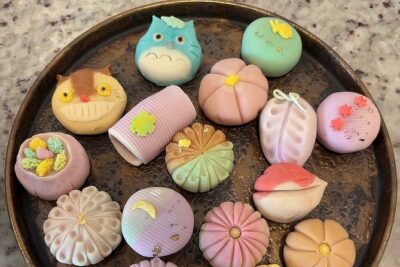
After the demonstration, you’ll enjoy two servings of freshly whisked matcha, paired with seasonal Japanese sweets called wagashi. The sweets give you a taste of the seasonal side of Japanese food culture, while the matcha keeps the focus on the ceremony itself.
The two servings are a welcome part of the format. One bowl lets you take in the taste and the setting; the next can feel more familiar after you’ve heard the explanation and watched the preparation. Don’t expect a full meal. This is a tea experience, and the wagashi are an accompaniment rather than lunch.
Matcha has a distinctive, concentrated flavor that may be more intense than the green tea you usually drink. Take your time with it, and pay attention to how the sweet and tea work together. You don’t need a trained palate to enjoy the pairing, but tasting it in a tea room gives the ritual more meaning than drinking matcha on the run.
The seasonal element is appealing, though the specific sweets are not named in advance. What you receive may depend on the season, so treat the wagashi as part of the day’s experience rather than planning around a particular sweet.
Your turn to whisk and serve
The session is not only a demonstration. You’ll have a chance to make and serve tea yourself, with the instructor guiding you step by step. No previous experience is needed, and you don’t have to arrive knowing the proper technique.
That hands-on part is especially useful if you’re curious about what goes into preparing matcha. Watching the tea master gives you the broad shape of the ritual; trying it yourself helps you notice the practical details. The experience does not claim to make you an expert in an hour, but it gives you a real first encounter with the tools and gestures.
The rental utensils are included, along with the matcha and sweets, so you don’t need to bring equipment. Think of the activity as an introduction rather than a formal course. If you’re hoping to study tea ceremony in depth, one session will only be a beginning. If you want a clear, guided taste of the practice, the mix of explanation, demonstration, and participation fits the bill.
Photos are allowed at designated times. That rule helps protect the calm of the session and keeps phones from interrupting the performance. If taking pictures matters to you, wait for the instructor’s cue instead of assuming you can photograph every stage.
Etiquette, clothing, and getting comfortable
There is no dress code, but modest clothing is recommended. Shoes must come off before entering the tatami room, so bring clean socks. That small detail is easy to overlook, and socks are specifically requested for the activity.
Traditional floor seating may be difficult for some people. Chairs are available if kneeling is uncomfortable, but you should notify the organizer in advance so one can be arranged. The activity is not suitable for wheelchair users, and it is not recommended for pregnant women. It is recommended for ages seven and up.
You don’t need to worry about getting every gesture right. The instructor is there to explain the etiquette and guide your attempt, not to expect prior knowledge. A little attention and a willingness to follow directions are enough to get more from the hour.
More tea ceremonies in Kamakura:
- Matcha Making Class in Tokyo with Authentic Japanese Sweets Set
★ 5.0 · 744 reviews - Tokyo: Traditional Tea Ceremony with a Tea Master
★ 5.0 · 528 reviews - Tokyo: Matcha Making Experience with Mochi Sweets in Asakusa
★ 4.9 · 388 reviews - Tokyo: Matcha and Kimono Experience
★ 4.7 · 219 reviews
Finding 竹翠庵 near Kita-Kamakura Station
The meeting point is the tea room 竹翠庵, near restaurant 航. It is roughly a five-to-seven-minute walk from JR Kita-Kamakura Station. Since the stated walking time varies slightly, give yourself a cushion rather than arriving at the station just before the start.
The location is the main practical wrinkle. The tea room is close to the station, but a nearby landmark is not the same as a clear door-to-door route. Check the exact meeting details before you leave, and keep the Japanese name handy if you need to confirm you’re in the right place.
Kita-Kamakura is about an hour from central Tokyo, making this an achievable cultural stop without committing to a full-day excursion. The session lasts about 60 minutes, but you’ll want to allow extra time for reaching the meeting point and getting settled. The tea ceremony is a compact activity, not a reason to rush your arrival.
Is $36 good value?
At $36 per person, this is a fair price for a small-group introduction that combines instruction, a live tea ceremony, two servings of matcha, seasonal sweets, and a chance to prepare tea yourself. The tea utensils are included, and the group is capped at six, which gives the hour a more personal feel than a large demonstration.
The value depends on what you want from the activity. If you only want to taste matcha, you can find simpler ways to do that. You’re paying for the teaching and the chance to see how the ceremony works, then try it with guidance. That makes the price easier to justify for first-time visitors and anyone interested in Japanese customs.
The session is short, so don’t expect an in-depth study of tea ceremony. Its strength is focus: in one hour, you learn the context, watch the ritual, taste the tea, and take part. For a limited introduction in a traditional room, that is a useful amount of substance.
Who should book this experience?
I’d recommend it to first-time visitors who want a calm cultural activity with clear instruction, especially if you’re curious about the meaning behind Japanese etiquette. The English-language option removes a major barrier, while the hands-on portion gives you something to do beyond sitting and watching.
It also suits couples, families with children aged seven and older, and anyone who enjoys learning through demonstration. The small group size should work well for people who prefer a quieter setting, though you should be comfortable sharing the experience with a few others.
Think twice if you have limited mobility, are pregnant, or would find floor seating uncomfortable and cannot arrange a chair in advance. Also consider what you want from the hour: this is a tea ceremony, not a broad tour of Kamakura, and the focus stays on matcha, manners, and the host’s ritual.
I’d book if you’re interested in the customs behind the cup, not only the flavor. Bring socks, check the meeting point carefully, and arrive ready to slow down for an hour.
FAQ
How long does the tea ceremony last?
The experience lasts about 60 minutes.
Where does the experience meet?
Meet at the tea room 竹翠庵, near restaurant 航. It is about a five-to-seven-minute walk from JR Kita-Kamakura Station.
What languages are available?
Instruction is available in Japanese and English.
Do I need experience making matcha?
No. The tea master guides you step by step, and no previous experience is needed.
What is included in the price?
Matcha, Japanese sweets called wagashi, rental tea ceremony utensils, and a traditional tea ceremony performance are included.
What should I bring or know before arriving?
Bring socks, since shoes must be removed in the tatami room. Modest clothing is recommended, and you should notify the organizer in advance if you need a chair.
Freshly reviewed in Kamakura
- Tokyo Yokohama Night View Tour With Kamakura And Enoshima★ 3.5 · 14 reviews
- Tokyo: Kamakura & Enoshima Day Tour with Pickup & Train Ride★ 4.1 · 61 reviews
- Tokyo: Kamakura Private Tour With Guide★ 5.0 · 5 reviews
- Tokyo: Day Trip to Kamakura in Spanish – Spanish★ 4.9 · 22 reviews
- Kanagawa: Kimono Rental in Kamakura Provided by RikaWafuku★ 4.8 · 8 reviews
- Private 2-Day Tour: Mt Fuji Hakone & Kamakura + Onsen Ryokan★ 5.0 · 3 reviews
- Kamakura: Great Buddha, Hase Temple, & Komachi Street Tour★ 5.0 · 11 reviews
- Mt Fuji Hakone/Enoshima Tour:Optional Ropeway/Lake Ashi Boat★ 4.3 · 49 reviews
Tokyo Tea Ceremonies, compared.
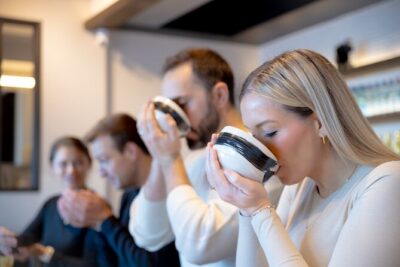
Matcha Making Class in Tokyo with Authentic Japanese Sweets Set
Read our review →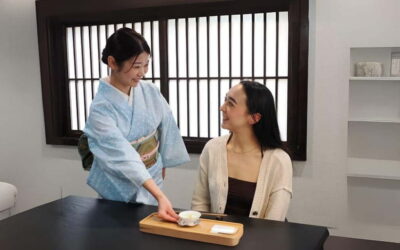
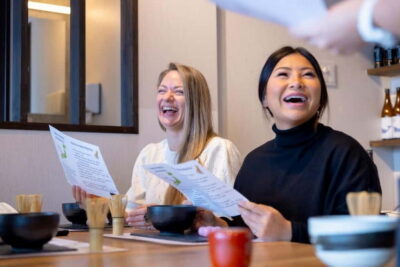
Matcha Making Experience with Mochi Sweets in Asakusa
Read our review →
Tea Ceremony Workshop in Tokyo by the Experienced Instrucor
Read our review →
Make Traditional Nerikiri Sweets & Matcha experience in Shibuya
Read our review →Browse the lists this tour appears in