
Reviewed · KAMAKURA TOURS
Tokyo: Day Trip to Kamakura in Spanish – Spanish
Kamakura offers a welcome change of pace from Tokyo: temple grounds, leafy views, and a giant bronze Buddha, all within an eight-hour day trip. I like that the outing pairs two distinct temples with time on the town’s main shopping street, and that a Spanish-speaking guide can put local stories and legends into context.
I also like the practical, personal side of the tour. Guides such as Nerea have been praised for adapting to children’s pace, while Camila and Nikita have earned warm mentions for their explanations and attentive manner. The main catch is cost: the $86 price does not include transport or temple tickets, so budget extra for both.
At a glance
- Hase-dera’s stories and setting: Explore a temple known for myths and legends, with greenery and views adding to the visit.
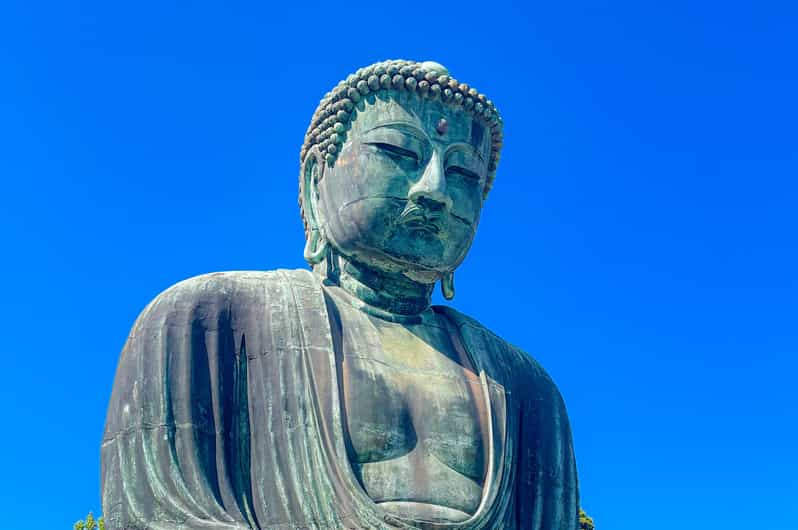
- A 13-meter bronze Buddha: Kotoku-in is home to Japan’s second-largest bronze Buddha, weighing 121 tons.
- A ride on an old tram: The route includes one of Japan’s oldest trams still in operation.
- Time to browse and eat: Kamakura’s main street brings shops, lunch, and a change of pace between temple visits.
- Spanish explanations: The tour is offered in Spanish, though the guide may also use English.
- Extra costs matter: Public transport costs ¥2,300 and temple tickets cost ¥700, neither included in the tour price.
Tokyo Station is the starting point
The day begins in front of Tokyo Station’s facade at Marunouchi Square, near the central exit. That clear meeting point is useful in a large city, but do check that you are on the Marunouchi side of the station and not simply standing near a different entrance.
From there, you take public transport to Kamakura with your guide. The outing lasts eight hours in total and ends back at the original meeting point. That means you do not need to plan a separate return journey from Kamakura, though you should expect to spend much of the day moving around by train and local transport.
The transport is part of the day, not a private vehicle transfer. One account describes trains and a coach, while the planned route includes a train and an old tram. The precise combination of public transport can vary, so be ready for a day that involves getting on and off local services rather than sitting back in a tour bus.
There is a useful upside to this approach: you see Kamakura as a place connected by everyday public transport, not as a set of sights reached only by a private vehicle. Still, the costs add up. The stated transport charge is ¥2,300, and temple admission is another ¥700. These are separate from the $86 tour price, as are lunch, drinks, and any shopping.
More Kamakura trips in Tokyo:
- Tokyo: Mt. Fuji, Kamakura, Big Buddha, & Lake Ashi Day Trip
★ 4.5 · 867 reviews - Tokyo:Sea of Mount Fuji, Hakone Ropeway, Ōwakudani, Enoshima
★ 4.9 · 84 reviews - Kamakura 8 hr Private Walking Tour with Licensed Guide from Tokyo
★ 5.0 · 80 reviews
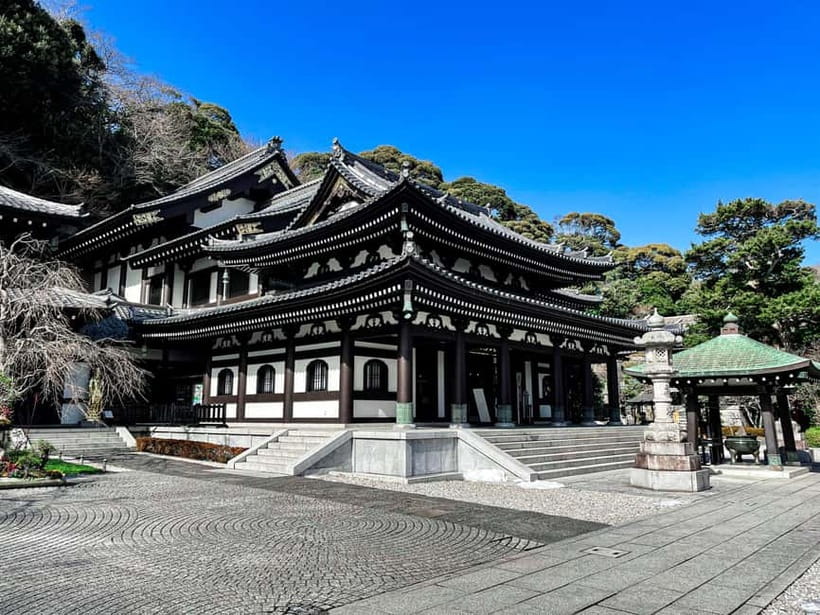
Hase-dera brings legends into the day
The first temple stop is Hase-dera, reached by tram. Riding one of Japan’s oldest trams still in operation gives the journey a local character and breaks up the train ride with a different sort of transit. It is a small but memorable feature of a day otherwise built around practical public transport.
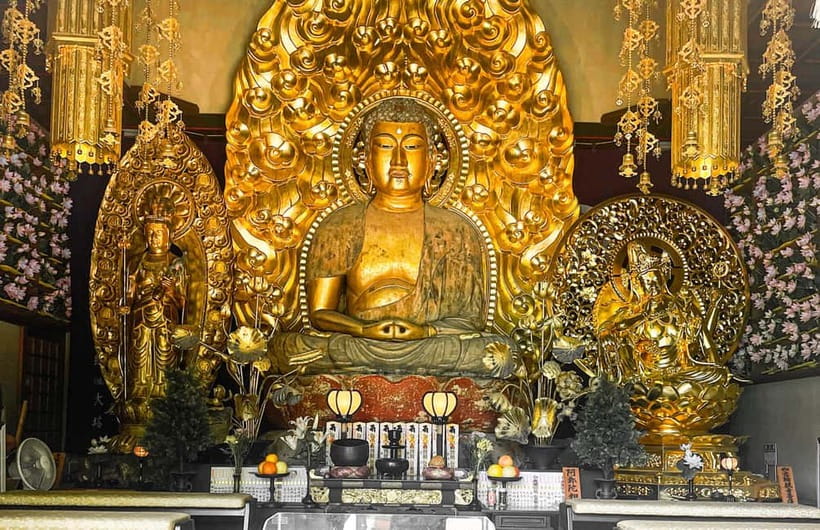
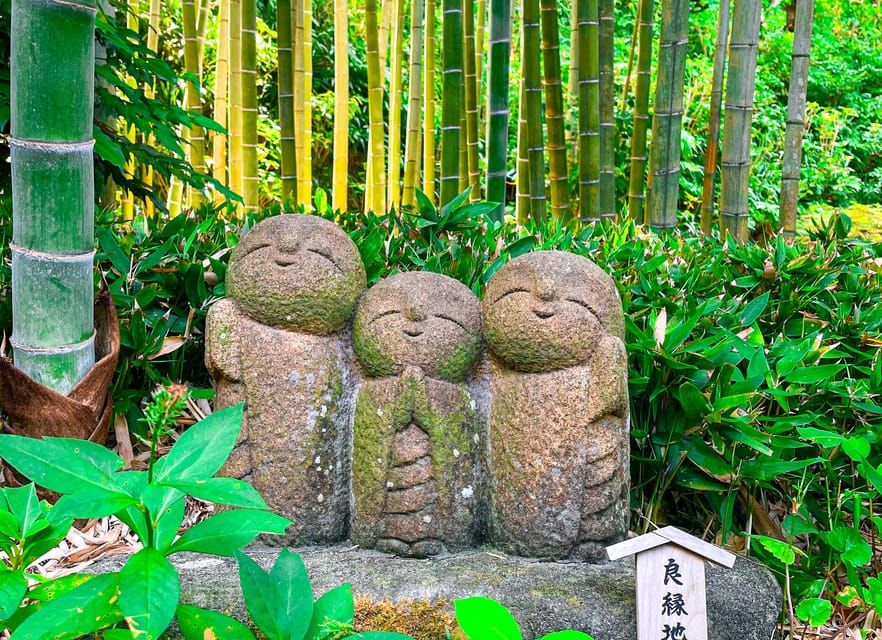
At Hase-dera, the guide introduces the site’s myths and legends as you explore. That storytelling is a real strength of a Spanish-language tour. Temples can be beautiful places to walk through, but without context, it is easy to take in the scenery without understanding why a site matters or what stories are attached to it.
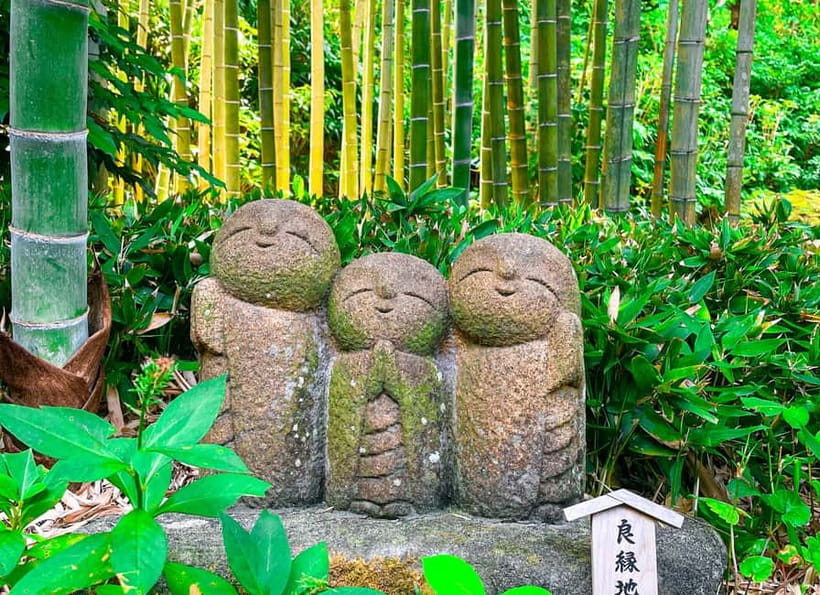
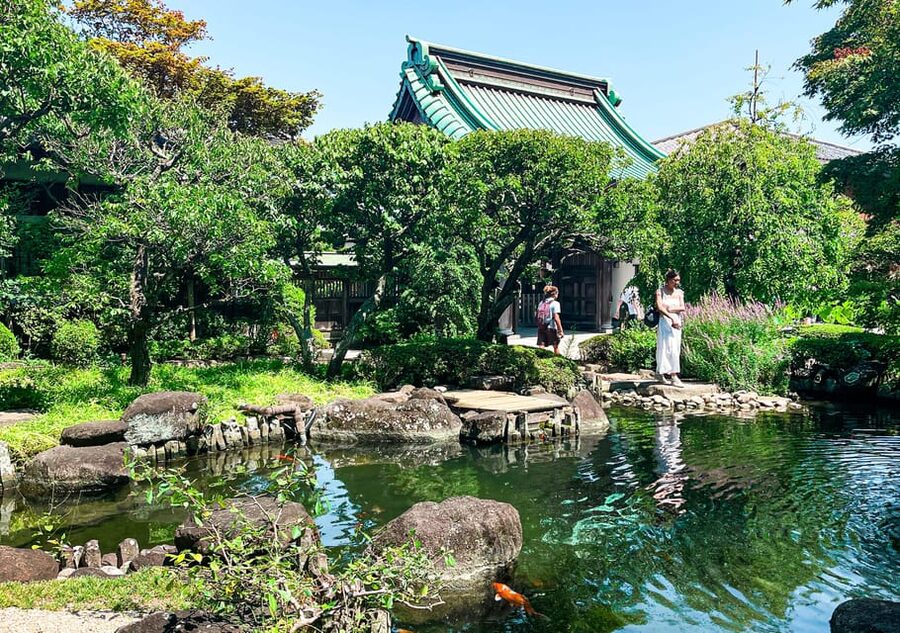
The setting is another draw. The tour description points to greenery and views, and one guest singled out the vegetation and scenery as a highlight. I would give yourself time to look around rather than treating the temple as a quick photo stop. The combination of spiritual atmosphere, natural surroundings, and stories makes Hase-dera a different experience from the monumental Buddha that follows.
The trade-off is that the day’s schedule must fit two temples, transit, and time in town into eight hours. If you like lingering at every garden or reading every sign, you may wish for more time. A guide helps you focus on the details that give the visit meaning, but the group still needs to keep moving.
Kotoku-in and the Great Buddha
From Hase-dera, the group walks to Kotoku-in. The walk links the two temple visits and gives you a chance to experience a little of Kamakura between major sights. Be prepared for time on your feet, since this is a walking and public-transport outing rather than a vehicle-based tour.
Kotoku-in is known for its large bronze Buddha, which stands 13 meters high and weighs 121 tons. It is described as Japan’s second-largest bronze Buddha, a fact that helps explain why the temple is a central stop on the day. The scale is impressive, but the visit also gives the itinerary a clear contrast: Hase-dera offers legends and a green setting, while Kotoku-in centers on a single monumental figure.
A guide can add useful context here, especially if you are curious about the site’s spiritual significance and the stories connected with it. Several guides have been named positively for clear, detailed explanations, including Paula, who was praised for her knowledge of Japanese history, and Ori, whose tour was described as informative and easy to follow.
The visit is not an all-day temple seminar. The schedule also reserves time for the town itself, which is a good decision. Kamakura is more than its major religious sights, and a short walk through its shopping district adds everyday life to the itinerary.
Main-street browsing and lunch
After the temples, the tour moves to Kamakura’s main street, lined with shops and described as having a distinctive atmosphere. This is the most flexible part of the day: you can browse, take a break, and have lunch before heading back to Tokyo.
Food and drinks are not included, so plan to pay for your own meal. The information provided does not specify a restaurant or set lunch arrangement. That leaves room to choose what appeals to you, but it also means you should not assume the guide’s fee covers lunch or that a meal is already arranged.
The shopping stop is useful even if you are not looking to buy anything. It gives you time to see a different side of Kamakura after the temple visits and lets the day breathe a little. If you do want to shop, keep an eye on the return schedule. The group needs to make its way back to Tokyo Station, and this is not an open-ended afternoon.
More day trips from Tokyo in Tokyo:
- Mt Fuji Top 5 Spots Day Tour: Arakurayama Park,Oshino Hakkai
★ 4.7 · 2,066 reviews - Mt. Fuji & Hakone Private Day Tour with English-Speaking Driver
★ 4.5 · 824 reviews - From Tokyo: Mt Fuji, Arakurayama and Kawaguchi Lake Day Trip
★ 4.3 · 794 reviews - Tokyo Private Day Trip – Enjoy Your First-Time Visit to Tokyo!
★ 5.0 · 793 reviews
What the guide adds
The strongest part of a guided day trip is often the person leading it, and this one has received particular praise for friendly, attentive guiding. Guides named in feedback include Emi, Camila, Nikita, Ori, Paula, and Nerea. Their reported strengths include clear history, relevant recommendations, patience, and helping people feel at ease.
Nerea was especially praised for adjusting to the pace of children in the group while telling stories about the temples and sights. That makes this tour a plausible choice for families whose children can manage a full day of walking and public transport. The tour is not described as a children’s activity, but a patient guide can make the cultural stops easier to follow.
There has been some language confusion: one person expected Spanish but found the guide also spoke English. The tour is listed as Spanish-language, so Spanish is the intended language, but you may hear some English as well. If you need the commentary to be exclusively in Spanish, it is sensible to confirm that before booking.
The guides also provide tips and recommendations for continuing your trip. That can be valuable if Kamakura is one stop in a longer visit to Japan. Rather than simply escorting you between sights, a good guide can help you make sense of what you have seen and suggest how to carry that understanding into the rest of your travels.
Is $86 good value?
The $86 per-person price buys an eight-hour guided excursion in Spanish, not an all-inclusive day. You still pay ¥2,300 for transportation and ¥700 for temple tickets, plus your own food and drinks. Those extras are important to factor in when comparing this option with a self-guided visit or another tour.
What you are paying for is the company of a guide, the structure of the day, and explanations at the temples. If Spanish-language context is important to you, or you would rather not work out the route and order of stops yourself, the fee may be worthwhile. The positive comments about guides such as Camila, Nikita, and Nerea point to the personal attention as a meaningful part of the experience.
If you are comfortable navigating public transport, reading about the sights on your own, and managing the schedule independently, you may prefer to visit without a guided excursion. The tour does not remove transport costs, and it does not include meals or entrance tickets. Its value rests more on interpretation and organization than on bundled admission or private transport.
Practical details before you book
Meet in front of Tokyo Station’s facade at Marunouchi Square, by the central exit. The tour returns to the same point. Bring a payment method for local transport, temple entry, and lunch, and leave large bags and luggage behind because they are not allowed.
This is not suitable for wheelchair users or people with hearing impairments. The tour also does not allow unaccompanied minors. Because the day involves walking and public transit, wear comfortable shoes and be prepared to keep pace with the group.
You can reserve now and pay later, and cancellation is allowed up to 24 hours in advance for a full refund. Those flexible terms are helpful if your Tokyo plans are still shifting, but they do not change the need to budget separately for transport, temple tickets, and food.
Who should choose this Kamakura day trip?
I would choose this outing if you want a guided introduction to Kamakura in Spanish, enjoy temple visits with stories attached, and like having a guide handle the sequence of stops. The mix of Hase-dera, the Great Buddha, a historic tram, and time along the shopping street gives the day more variety than a temple-only visit.
It is especially appealing if you value a warm, attentive guide and want practical recommendations as well as history. Families may appreciate the patient approach noted for Nerea, provided everyone can manage the walking and transit.
I would think twice if you want private transport, a fully prepaid day, a slow pace, or wheelchair access. The extra costs are not hidden, but they do make the true price higher than $86. If those limits suit you, this is a solid way to see Kamakura’s main sights without turning the day into a transport-planning exercise.
FAQ
How long is the Kamakura excursion?
The excursion lasts eight hours.
Where does the tour start?
It starts in front of Tokyo Station’s facade at Marunouchi Square, by the central exit.
Where does the tour end?
It ends back at the meeting point in front of Tokyo Station.
Is the tour conducted in Spanish?
Yes. Spanish is the listed language. A guide may also speak English during the tour.
Are transportation costs included?
No. Public transportation costs ¥2,300 and are not included in the tour price.
Are temple tickets included?
No. Temple tickets cost ¥700 and are not included.
Is lunch included?
No. Food and drinks are not included. You have time for lunch along Kamakura’s main street.
Which temples are visited?
The tour visits Hase-dera Temple and Kotoku-in Temple, home to a 13-meter bronze Buddha.
Can I bring luggage or a large bag?
No. Luggage and large bags are not allowed.
Is the tour suitable for wheelchair users?
No. The activity is listed as unsuitable for wheelchair users.
More one-day tours in Tokyo
- Mt Fuji and Hakone 1-Day Bus Tour Return by Bullet Train
★ 5.0 · 26,383 reviews - 1-Day Tokyo Bus Tour
★ 5.0 · 14,250 reviews - Mt Fuji & Hakone Cruise, Drum Show Bullet Train 1 Day from Tokyo
★ 4.0 · 7,413 reviews - Tokyo: DisneySea 1-Day Passport
★ 4.5 · 2,726 reviews
Freshly reviewed in Tokyo
- Tokyo: Toshimaya Sake Brewery Tour with Sake Tasting★ 5.0 · 6 reviews
- :Tokyo,Shibuya /Meiji Shrine tour in KIMONO/English-friendly★ 5.0 · 4 reviews
- Tokyo: Tour Privado por Tokio en español★ 4.3 · 4 reviews
- Tokyo:Tea ceremony experience at Komaba Warakuan★ 4.8 · 9 reviews
- :Tokyo,Shibuya/ Pro Photography in Kimono / English-Friendly★ 5.0 · 26 reviews
- Tokyo:Samurai Training : Swords, Bushido & Mental Discipline★ 5.0 · 6 reviews
- Tokyo:Mt Fuji & Hakone Day Tour with English Speaking Driver★ 5.0 · 26 reviews
- Tokyo:Nikko UNESCO World Heritage Sites Private 1-Day Tour★ 3.8 · 6 reviews
Kamakura Tours, compared.
Kamakura & Enoshima Day Trip including Temple Tickets
Read our review →
Mt. Fuji, Kamakura, Big Buddha, & Lake Ashi Day Trip
Read our review →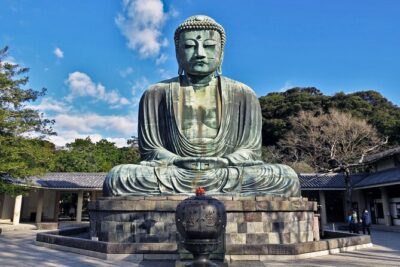
Kamakura Historical Walking Tour with the Great Buddha
Read our review →
Kamakura Private Tour: Temples, Nature, and the Great Buddha
Read our review →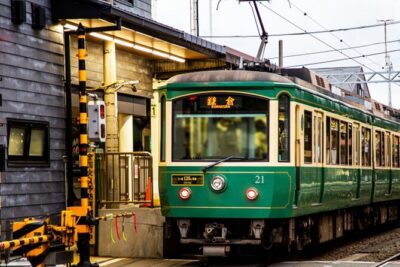
Sea of Mount Fuji, Hakone Ropeway, Ōwakudani, Enoshima
Read our review →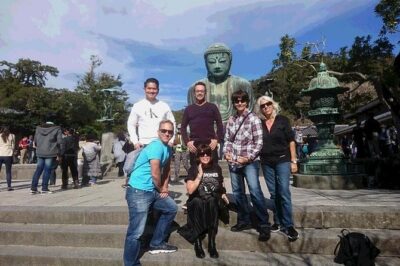
Kamakura 8 hr Private Walking Tour with Licensed Guide from Tokyo
Read our review →Browse the lists this tour appears in