
Reviewed · TOKYO PHOTO SHOOTS
Tokyo Cyberpunk Street Photo Tour
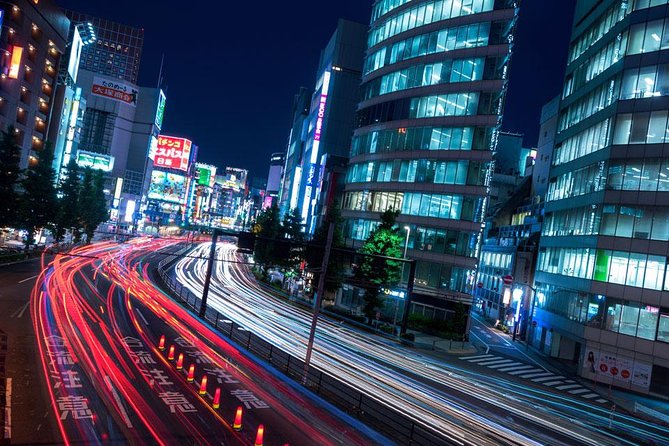
Tokyo after dark can look like a film set, but getting a good picture takes more than pointing at the biggest neon sign. This small-group walk gives you practical help with night photography, from camera settings to framing, as you move through Shinjuku and Shibuya.
I like two things in particular: you can use a phone as well as a camera, and the instruction happens at real street scenes rather than in a classroom. The route also pairs Shinjuku’s back alleys with the scale and crowds of Shibuya Crossing, giving you more than one kind of night shot to work with.
One thing to plan for: the walk involves busy streets and a train ride, and one participant found the pace too fast to keep up. Ask your guide to keep the group together if you need a slower pace, and arrive with the meeting point pinned down. The station area is large and can be confusing to navigate.
- Practice long exposures and other night-photo techniques with a professional photographer.
- Walk through Kabukicho and Omoide Yokocho for signs, traffic, and narrow alley scenes.
- Ride the train to Shibuya, with the fare paid separately.
- Finish at Shibuya Crossing, where crowds and illuminated signs give you plenty to frame.
- Bring a phone or camera; the guide can offer tips for either, and groups are capped at four people.
Shinjuku’s neon is your first photo lesson
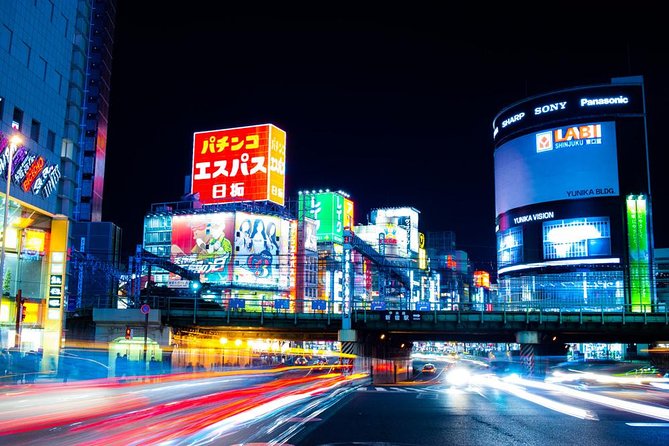
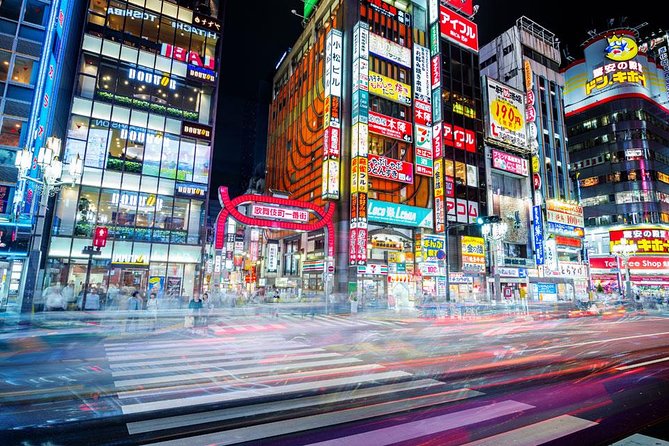
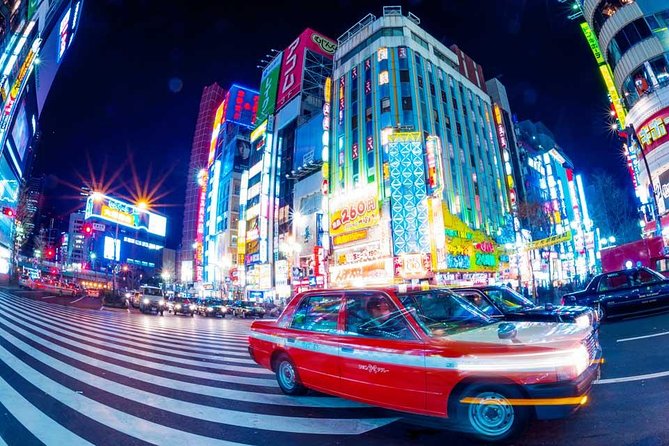
The tour begins at 7 pm near Shinjuku Station, at the Happy Lemon Keio Shinjuku Shop. From there, you head into Kabukicho, one of Tokyo’s best-known nightlife districts. It is a useful place to start because the bright signs, traffic, and side streets give you several subjects to try without needing to travel far.
A professional photographer guides the walk and offers advice on technique as you go. You might work on composition, exposure, and how to handle the contrast between bright signs and darker streets. For a camera user, that can mean learning which settings to adjust and why. For a phone user, it can mean making better use of the controls you already have.
The instruction is practical rather than classroom-style. You take pictures on location, make adjustments, then try again. Several guides, including Charles and Lukasz, have been praised for hands-on help with camera settings and patient explanations. People with iPhones have also found the advice useful, so you do not need a dedicated camera or advanced skills to take part.
Kabukicho is visually busy, which is both its strength and its challenge. A frame can fill quickly with signs, lights, traffic, and people. Your guide can help you decide what to leave out, where to stand, and how to make a picture feel intentional instead of crowded. That kind of feedback is often more useful than simply being shown a photogenic street.
The scheduled stop is about an hour. That gives you time to practice, but it is not a long, free-roaming visit to every corner of Shinjuku. Keep your camera ready and listen for suggestions, especially if you are still getting comfortable with night settings.
Omoide Yokocho trades scale for close-up detail
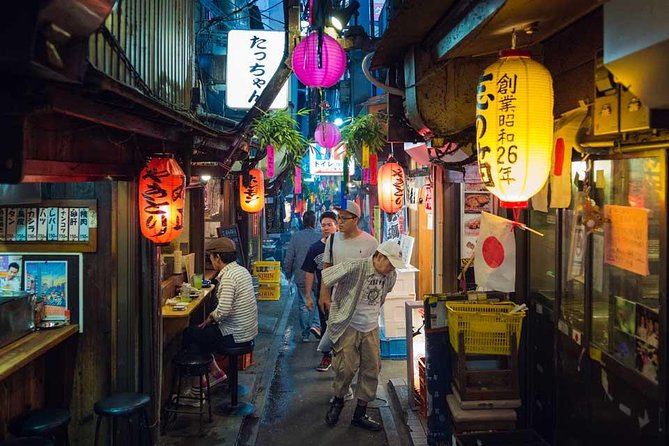
Next comes Omoide Yokocho, also called Memory Lane, with about 30 minutes set aside. Its narrow lanes offer a different kind of subject from Kabukicho’s larger signs and traffic. Here you can look for tighter compositions, layered details, and the contrast between the alley and its glowing surroundings.
This stop is a good reminder that night photography is not only about catching the biggest landmark. A small scene can make a stronger image if you pay attention to lines, light, and what sits at the edge of the frame. The guide’s job is to help you see those choices and try them for yourself.
The time here is limited, so you should not expect a long meal stop or an unhurried wander. The tour is built around taking pictures and learning as you move. If you are eager to explore the lanes at your own pace, consider returning another evening after the tour.
More photo shoots in Tokyo:
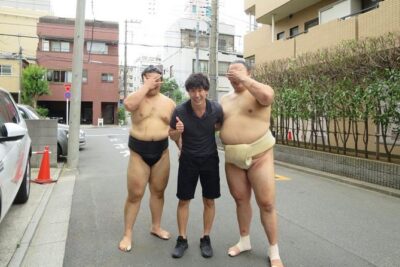
- Tokyo Ryogoku Sumo Morning Practice + Photo Shoot with Wrestlers
★ 4.5 · 277 reviews - Tokyo by Night Photography Tour (Private Option Available)
★ 5.0 · 151 reviews - Tokyo Shinjuku Night Photo Tour with Pro Gota
★ 5.0 · 142 reviews
The train ride shifts the scene to Shibuya
After Shinjuku, the group travels by train to Shibuya. The train fare is not included, so bring a little extra for it. The route information specifies a train transfer, while the listed exclusions refer to bus fare; in practice, the important point is that transport costs are not covered in the tour price.
Shibuya brings a different scale and mood. The neighborhood is known for youth culture, nightlife, and bright entertainment, dining, and drinking venues. You will have more crowds and larger street scenes to work with than in the narrow lanes of Omoide Yokocho.
This change of setting is valuable for learning. A technique that works for a sign or alley may not suit a moving crowd. Your guide can help you think about timing, framing, and exposure as the scene changes around you. You are not just collecting a list of Tokyo sights; you are practicing how to respond to different kinds of light and movement.
The walk ends at 2-chōme-2-1 Dōgenzaka in Shibuya. The stated end point is near the crossing area, so you can continue exploring the district afterward if you wish, though that is separate from the guided tour.
Shibuya Crossing makes the grand finale
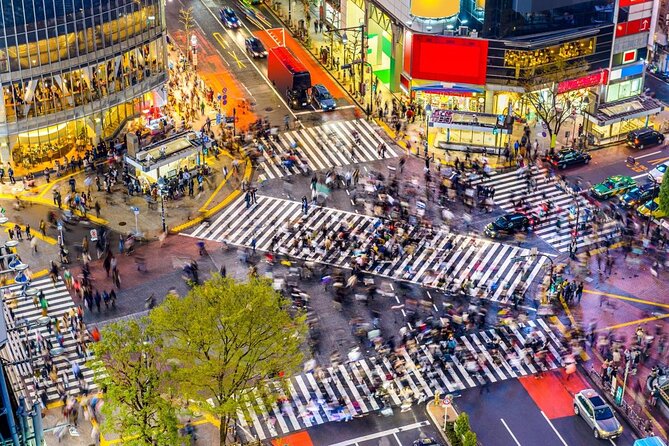
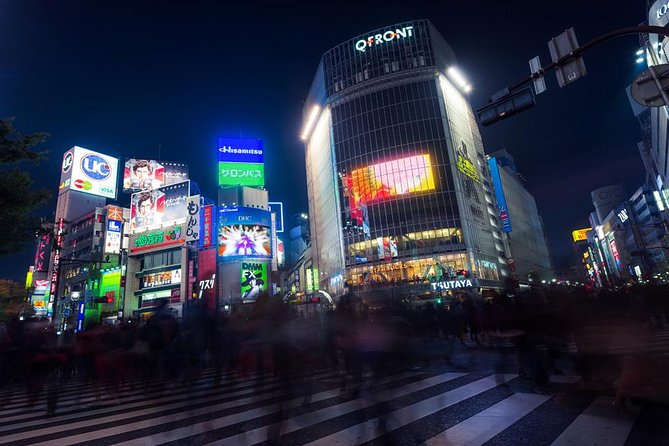
The final stop is Shibuya Crossing, with about 45 minutes planned there. The intersection is famous for the waves of people crossing in several directions, framed by large illuminated signs. It has the neon-soaked, science-fiction atmosphere that brings Blade Runner to mind, though the scene is very much Tokyo’s own.
This is the tour’s most obvious landmark, but it is not automatically the easiest picture. Crowds move quickly, the signs are bright, and the view changes from one moment to the next. Long exposures can turn people into streaks of movement, while a faster shot can freeze a single person or group. The guide can help you choose settings and find a composition that suits the picture you want.
You will have enough time to work the scene, but the crossing is a public place, not a private photo set. Expect other people around you and be ready to adapt. That is part of the appeal: the shot is made in the middle of an active city, not from a quiet viewing platform.
The route description calls the tour about 2.5 hours, while the overall duration is advertised as approximately three hours. The listed stops add up to about two hours and 15 minutes, before walking and the train transfer. Plan for an evening commitment of roughly 2.5 to 3 hours rather than counting on an exact finish time.
Coaching works for beginners and phone cameras
You do not need to be an experienced photographer to get value from the walk. The guide can adjust advice to your equipment and level, from basic composition to more specific camera controls. People have joined with phones, while others brought cameras from brands such as Canon and Fuji.
The strongest part of the format is that the tips are meant to be used immediately. You can try a setting, see what changes, and ask for another adjustment. Guides such as Charles and Lukasz have been noted for taking time with individuals, while Luke has been described as helpful to both beginners and more experienced photographers. Guide assignments can vary, so you should not assume you will have a particular instructor.
You may also leave with skills that are useful beyond this one evening. Learning to watch the edges of a frame, judge how much light a scene has, or adjust exposure for a bright sign can help you make better pictures throughout your trip. Still, this is a photography-focused walk. If you want a broad introduction to Tokyo’s history or culture, this is not the right tour for that purpose.
A camera with some control over shutter speed or overall exposure gives you more room to experiment. A tripod has also been suggested as useful for night shots, but the tour information does not require one. If you prefer to travel light, a phone is welcome, and guides have shared specific tips for getting better results from mobile cameras.
More tours and experiences in Tokyo:
- Mt Fuji and Hakone 1-Day Bus Tour Return by Bullet Train
★ 5.0 · 26,383 reviews - 1-Day Tokyo Bus Tour
★ 5.0 · 14,250 reviews - Tokyo: teamLab Planets TOKYO Digital Art Museum Entry Ticket
★ 4.6 · 9,779 reviews - Mt Fuji & Hakone Cruise, Drum Show Bullet Train 1 Day from Tokyo
★ 4.0 · 7,413 reviews
A small group helps, but keep the pace in mind
The group is capped at four, which is small enough for the instructor to give people individual attention. That matters on a practical workshop: you may need help finding a setting on your camera, while someone else wants advice on composition or timing. A larger group would make that kind of coaching harder.
Small does not mean the walk will feel slow. The route covers two busy districts and includes a train ride, and one participant reported struggling to keep up with a fast-moving guide. Other people have praised guides for staying together and making sure everyone could get the pictures they wanted. Pace may depend on the guide and group, so speak up early if you need more time or want the group to regroup.
The meeting point also deserves a little attention. Shinjuku Station is huge, and finding a specific shop nearby can be tricky if you are new to the area. Save the exact address in your map app before you go, and contact the operator for clearer directions if the location is not obvious. Do not rely on finding the group by wandering around the station at the last minute.
Is $184.99 good value for two?
The listed price is $184.99 per group, for up to two people. That makes the cost easier to assess as a private booking for a pair than as a per-person ticket. The group maximum is four, so other participants may join, but you are not booking a large tour.
You are paying for a professional photography instructor and a guided route through several photo-rich areas, not for transport or a general sightseeing talk. The train fare is extra. If you already know your camera well and only want to see Shinjuku and Shibuya, you can visit the same public areas on your own for less. The value comes from the instruction, feedback, and help finding useful compositions.
For a beginner, or for someone who wants better night photos but is unsure where to start, the fee can make sense. A guide can save time by pointing out shooting positions and helping you make adjustments on the spot. If your main goal is learning how to photograph Tokyo after dark, the cost buys a focused lesson as well as a guided walk.
The tour is recommended by 97 percent of 165 participants and has a 4.9 rating. That is a strong record, though it does not guarantee a perfect fit. The most consistently praised elements are the instructors’ practical photo advice, their friendly teaching style, and the chance to come away with stronger night images.
Who should book this night walk?
Book it if you want to learn by doing, especially if neon, street scenes, and long exposures are already on your wish list. It suits phone photographers as well as camera owners, and you do not need previous photography training. It can also make a useful first-evening activity: you get a guided look at the city’s nighttime feel while learning techniques you can use for the rest of your stay.
It is less suited to anyone seeking a slow-paced cultural tour, a full explanation of Tokyo’s past, or a completely self-directed photo outing. The walk moves through busy areas, and its central purpose is photography. If that sounds right, arrive prepared, bring your camera or phone, and ask for the pace you need. For anyone who wants to bring home better night shots rather than just snapshots, this is a sound way to spend an evening.
FAQ
How long does the Tokyo Cyberpunk Street Photo Tour last?
The tour is described as approximately three hours overall. The detailed description gives a 2.5-hour estimate, and the route includes three stops plus a train ride, so allow roughly 2.5 to 3 hours.
What time and where does the tour start?
It starts at 7 pm at Happy Lemon Keio Shinjuku Shop, 1-chōme-1-4 Nishishinjuku, Shinjuku City, Tokyo.
Where does the tour end?
The tour ends at 2-chōme-2-1 Dōgenzaka, Shibuya, Tokyo.
Can I join with a smartphone instead of a camera?
Yes. You can use a camera or a smartphone, and the instruction includes tips for phone photography.
Is transportation included in the price?
No. The train ride from Shinjuku to Shibuya is at your own expense.
How many people can join, and what does the price cover?
The price is $184.99 per group of up to two people. The maximum tour group size is four travelers.
Freshly reviewed in Tokyo
- Tokyo: Toshimaya Sake Brewery Tour with Sake Tasting★ 5.0 · 6 reviews
- :Tokyo,Shibuya /Meiji Shrine tour in KIMONO/English-friendly★ 5.0 · 4 reviews
- Tokyo: Tour Privado por Tokio en español★ 4.3 · 4 reviews
- Tokyo:Tea ceremony experience at Komaba Warakuan★ 4.8 · 9 reviews
- :Tokyo,Shibuya/ Pro Photography in Kimono / English-Friendly★ 5.0 · 26 reviews
- Tokyo:Samurai Training : Swords, Bushido & Mental Discipline★ 5.0 · 6 reviews
- Tokyo:Mt Fuji & Hakone Day Tour with English Speaking Driver★ 5.0 · 26 reviews
- Tokyo:Nikko UNESCO World Heritage Sites Private 1-Day Tour★ 3.8 · 6 reviews
Tokyo Photo Shoots, compared.
Tokyo Ryogoku Sumo Morning Practice + Photo Shoot with Wrestlers
Read our review →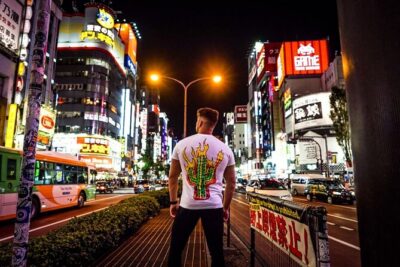
Tokyo by Night Photography Tour (Private Option Available)
Read our review →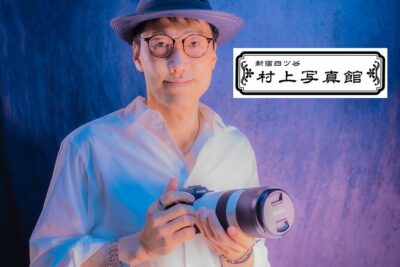
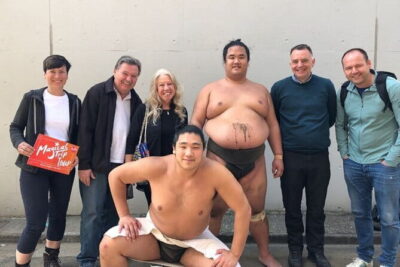
Tokyo Sumo Morning Practice Tour w/ Ring-Side Seat + Photo Shoot
Read our review →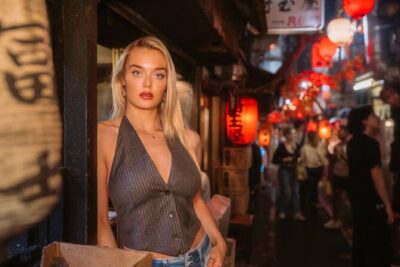
Tour with Pro Tokyo Photographer and take Edgy Unique Portraits
Read our review →
Tokyo Asakusa: Miu Kimono Rental and Optional Photoshoot
Read our review →
Browse the lists this tour appears in