
Reviewed · TSUKIJI FISH MARKET TOURS
Tokyo’s Kitchen: Tsukiji Market Food & Culture Walk
Tsukiji is best understood with a guide who can help you make sense of the stalls, the food, and the customs behind them. This three-hour walk combines tastings with stories about sushi, the market’s Shinto and Buddhist connections, and its shift after the tuna auction moved to Toyosu. I especially like the six-person group limit and the chance to meet vendors through a guide who knows the market.
The other strong point is the mix: this is not only a tasting walk. You also stop at two small shrines and learn basic ways to show respect. The trade-off is that Tsukiji can be crowded, market floors may be wet, and food choices for vegetarians and vegans are limited.
At a glance
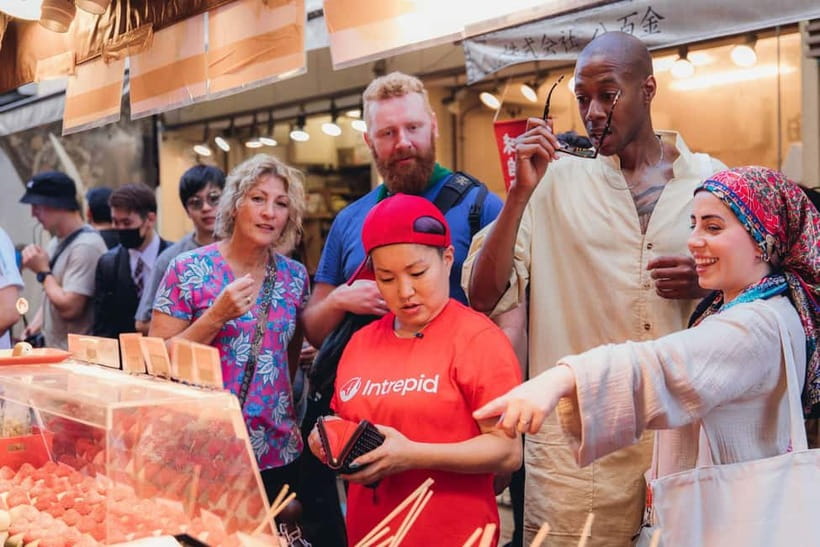
- A small group makes the market easier to read: The tour is limited to six people, so it is easier to stay together and ask questions in narrow, busy lanes.
- Tastings are part of the story: Expect sushi, Japanese snacks, and seasonal wagashi, with examples from past tours including tamagoyaki, sashimi, mochi, matcha, and sake.
- Two shrines add cultural context: Kabuki Inari Shrine is near the meeting point, and the walk also visits Namiyoke Inari Jinja.
- The guide brings the market to life: Guides including Oku, Mihori, Shino, and Mikki have led walks, with visitors praising their warmth, clear explanations, and ties to local vendors.
- Arrive ready to eat: Tastings can add up, and extra food or drinks you buy are not included in the $80 price.
- Wear closed-toe shoes: The market floor can be wet, and rain or wind can make the outdoor walk less comfortable.
Start at Higashi-ginza, beside the Kabukiza Theatre
The meeting point is Higashi-ginza Station, Exit 3, at street level near the top of the escalator. Look for the small torii gate in front of the Kabukiza Theatre, on the Harumi Street side. The tour begins near Kabuki Inari Shrine, so you are close to the first cultural stop before the food walk gets going.
This is a useful location for an early introduction to Tokyo. The guide can explain a few local customs and set the scene before leading you into the market. The group is capped at six people, which matters in a district where stalls draw queues and the lanes can feel tight. You are less likely to lose the guide in the shuffle, and there should be room to ask questions without turning the walk into a lecture for a crowd.
The tour lasts three hours. Starting times vary, so check the available options when booking. It is designed as a morning activity, and that timing makes sense for a market visit. You will have time to explore, taste, and hear the background without giving the whole day to one neighborhood.
More Tsukiji market tours in Tokyo:
- Tokyo Tsukiji Fish Market Food and Culture Walking Tour
★ 5.0 · 3,184 reviews - Tokyo: Tsukiji Fish Market Food and Walking tour
★ 5.0 · 1,724 reviews - Tokyo: Tsukiji Fish Market Guided Walking Tour
★ 4.9 · 1,397 reviews
Kabuki Inari Shrine: a small pause before the stalls
Kabuki Inari Shrine is the first stop on the route. It is a compact, easy-to-miss shrine near the meeting area, but it gives your guide a natural place to introduce the everyday gestures used to show respect. If you have never visited a Japanese shrine, this is a helpful moment to learn what to do before approaching another one later in the walk.
The point is not to master a long list of rules. It is to understand that food and market life have connections to spiritual traditions, including Shinto and Buddhism. The guide ties those ideas to the market rather than treating the shrine as a separate sightseeing detour. That context can change how you see the stalls: food is a trade and a pleasure, but it is also linked to care, custom, and gratitude.
Keep your expectations in proportion. This is a brief guided visit, not an extended religious or architectural tour. Its value lies in the explanation and in the contrast it offers before you enter the market’s fast-moving food lanes.
Tsukiji Outer Market: tasting your way through Tokyo’s kitchen
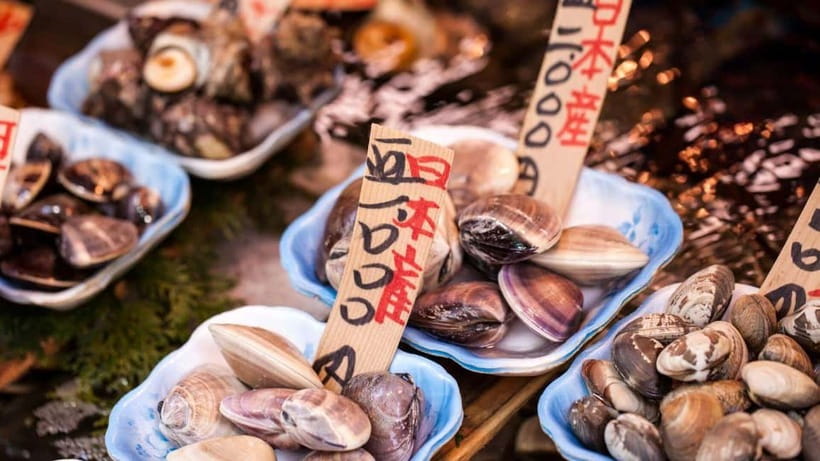
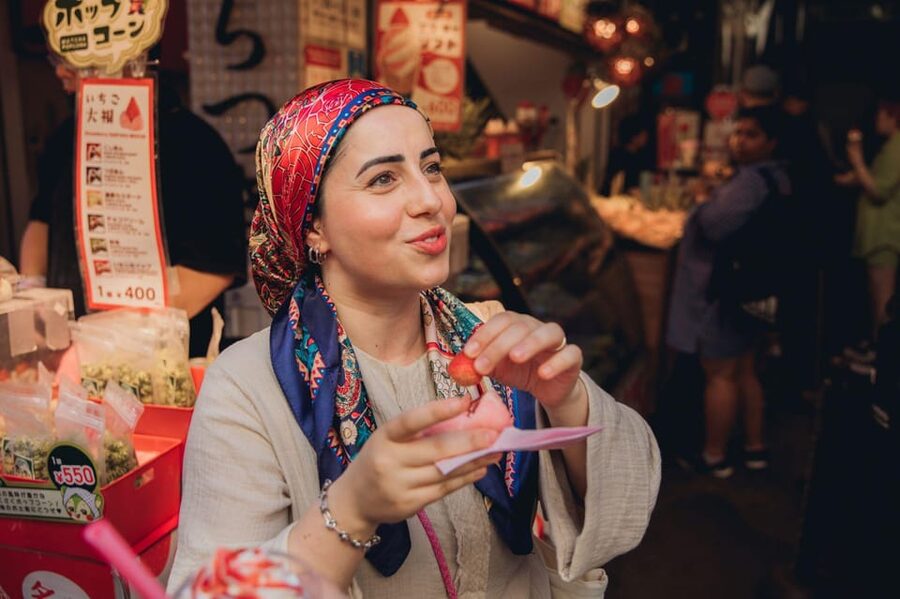
Tsukiji Outer Market is the main event. Its stalls sell seafood, prepared foods, sweets, and other market goods, and the choice can be a lot to take in if you arrive without a plan. Your English-speaking guide helps you understand what you are seeing, introduces you to vendors, and points out foods worth trying.
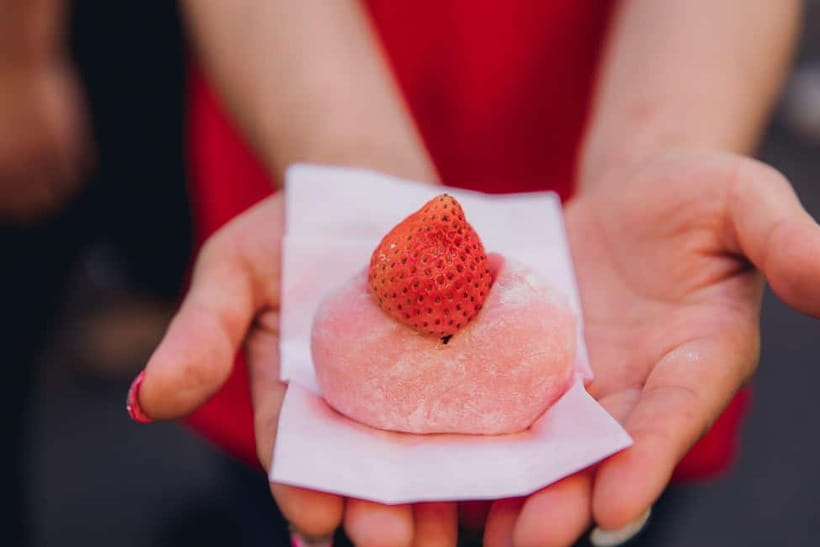
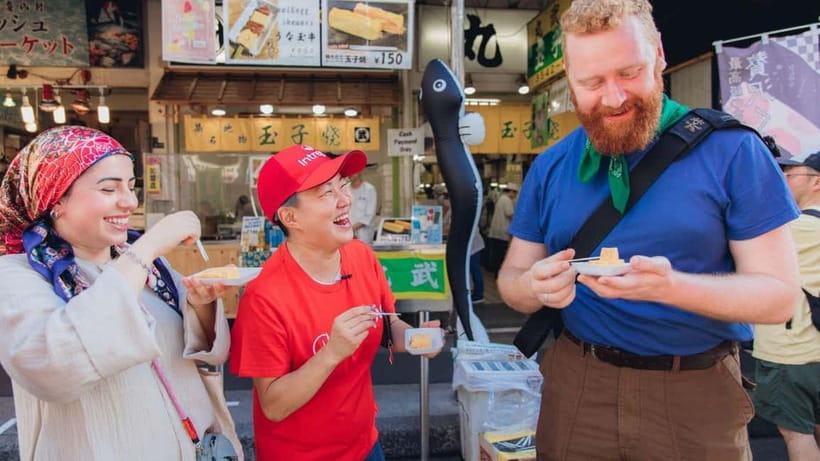
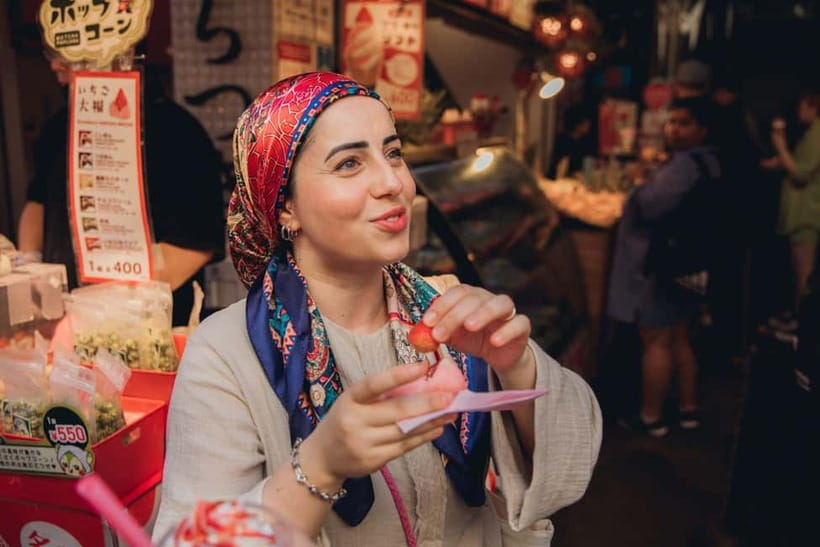
The samples are a central part of the experience, not a token bite at the end. The included tastings cover fresh sushi, Japanese snacks, and seasonal wagashi. The exact selection can vary, but examples from past walks include tamagoyaki, sashimi, mochi, green tea, matcha, soybeans, dashi, strawberries, and Kobe beef. Some groups have also tried sake, while visitors under 20 are offered non-alcoholic alternatives.
The portions are described as small, but the variety can add up. One useful piece of advice is to skip a full breakfast if you want to make room for the samples. Still, do not arrive so hungry that you feel rushed to eat everything. You will get more from the experience if you can pause, listen to the explanation, and decide what you want to taste.
A guide can also show you how food is made or explain what goes into it. For instance, one tour included a look at how tamagoyaki is prepared. Oku has used photos, maps, and models to make historical and food-related details easier to follow. Other guides have introduced stalls with the help of vendor relationships, which can make an unfamiliar market feel more welcoming and less like a maze of counters.
That personal connection is one of the tour’s most valuable features. You are not simply pointed toward a popular snack and left to work out what to order. Your guide can help bridge the language gap, explain what you are tasting, and keep the group together as people stop to look or ask questions. That said, vendors are working, and the market is a real place of business, not a staged food attraction. Follow your guide’s lead and be considerate when taking photos or lingering near a stall.
Food stories, not just a list of bites
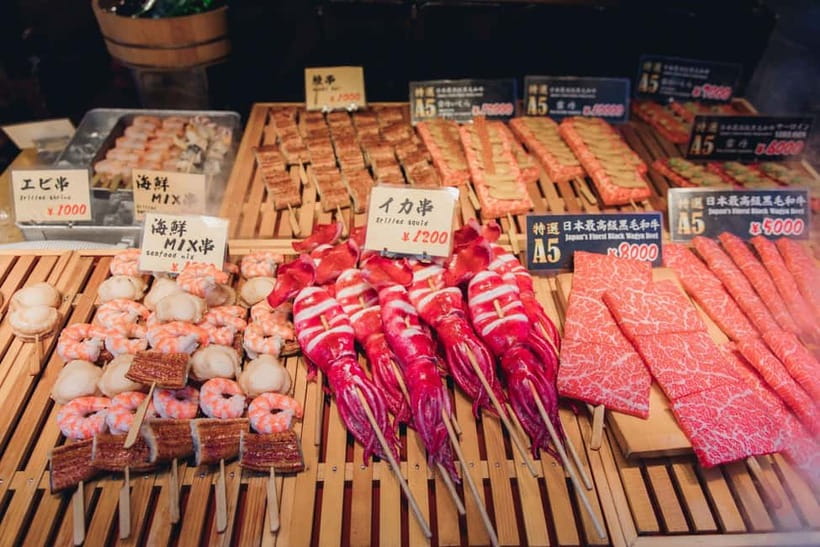
The guide explains sushi history and how the market has changed since the famous tuna auction moved from Tsukiji to Toyosu. That distinction is useful: this tour explores Tsukiji Outer Market, not a visit to the Toyosu auction. You come for the public-facing food district, its shops, and its traditions rather than an auction-floor experience.
You also hear about Buddhist and Shinto influences on food rituals and market culture. These explanations give the tasting stops a wider frame. A piece of sushi is still lunch, of course, but it can also lead into a story about technique, seasonal ingredients, or how food fits into daily life in Japan.
The food selection is not guaranteed to be identical each time. Seasonality affects wagashi, and a market has its own daily rhythms. That is a plus if you like the idea of seeing what is available rather than following a fixed menu. It is less ideal if you are booking for a particular dish or expect a set sequence of samples.
Be aware that additional food and drinks are not included. The tour price covers multiple tastings, but you may see plenty more you want to buy. Treat the $80 fee as payment for a guided cultural walk with samples, not as an all-you-can-eat market pass.
More walking tours in Tokyo:
- Tokyo: Imperial Palace and Shogun Historical Walking Tour
★ 5.0 · 2,251 reviews - Tokyo: Shinjuku Local Bar and Izakaya Guided Walking Tour
★ 4.9 · 1,794 reviews - Tokyo: Asakusa Walking Tour with Sensoji Temple Visit
★ 4.8 · 1,583 reviews - Tokyo Castle & Imperial PalaceーShogun Walking Tour
★ 4.7 · 1,068 reviews
Namiyoke Inari Jinja: a quieter final stop
The route also visits Namiyoke Inari Jinja, a shrine near the market. Here the guide returns to the customs introduced at the start and explains how to make a simple visit respectfully. It gives the walk a calm counterpoint to the food stalls and helps connect the market’s working life with its spiritual setting.
The shrine visit is guided, but it is not described as a long formal ceremony. Think of it as a short, useful lesson in local practice and a chance to ask questions. If you enjoy understanding the meaning behind everyday gestures, this stop adds more than another photo opportunity.
The walk finishes at Tsukiji Fish Market. Because the route includes market lanes, shrines, and food stops, wear comfortable closed-toe shoes. The ground can be wet, and a rainy or windy morning may make the outdoor portions less pleasant. An umbrella or rain layer is a sensible choice if the forecast calls for poor weather.
Is $80 a fair price?
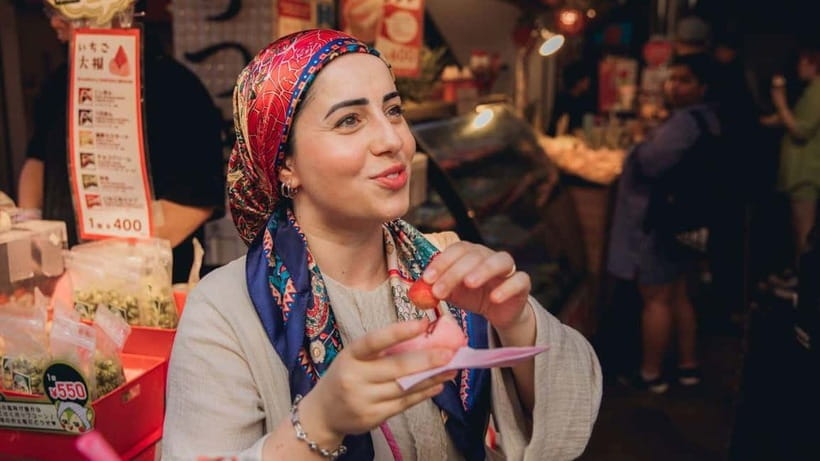
At $80 per person, this is not the cheapest way to eat around Tsukiji. You can browse the market on your own and pay only for the food you choose. The price makes more sense if you value a local English-speaking guide, several tastings, help navigating a crowded district, and cultural explanations that connect the market to the city’s traditions.
The six-person limit is part of the value. In a small group, it is easier to hear the guide, ask about unfamiliar foods, and avoid feeling like you are being marched from stall to stall. Groups can be smaller still. One couple found themselves alone with their guide, and another group had only three people. The exact group size depends on bookings, but the maximum is six.
Food tastes and portions vary, so I would not judge the price by trying to calculate the cost of each bite. Think of it as a half-day introduction to Tsukiji, with food as the way in. If you only want a full meal, a self-guided visit may suit you better. If you want someone to explain what you are eating and why the district matters, the guided format earns its keep.
The tour is carbon neutral and run by a certified B-Corp, with an emphasis on supporting local people. That may matter to you when choosing between food walks, though the clearest practical benefits are the small group and the guide’s role in making the market easier to navigate.
Who will get the most from this walk?
This is a strong choice for a first morning in Tokyo. You get an introduction to Japanese food, a sense of how to move through a local market, and a few cultural basics before exploring other parts of the city. Several guides have been praised for being friendly and clear, and for adjusting explanations to the group’s interests.
It also suits curious eaters who want to try unfamiliar things in small amounts. You do not need to know much about sushi in advance. The guide can explain what you are tasting and answer questions, while the range of snacks gives you more to consider than seafood alone.
Families can bring children aged five and under for free, but you should let the operator know when booking so they can plan for the child. Dietary restrictions can be accommodated where possible. Vegetarian and vegan options are available, but choices may be limited because the tour takes place in a market known for seafood and other food products. Share your needs ahead of time rather than counting on a broad range of alternatives once you arrive.
You may want to choose another activity if you are hoping to see the working wholesale auction. The famous tuna auction moved to Toyosu, and this experience focuses on Tsukiji Outer Market. One other fair caveat: the walk is strongly centered on food and stalls. If you expect extensive behind-the-scenes access to market operations, this tour may not provide it.
Should you book the Tsukiji food and culture walk?
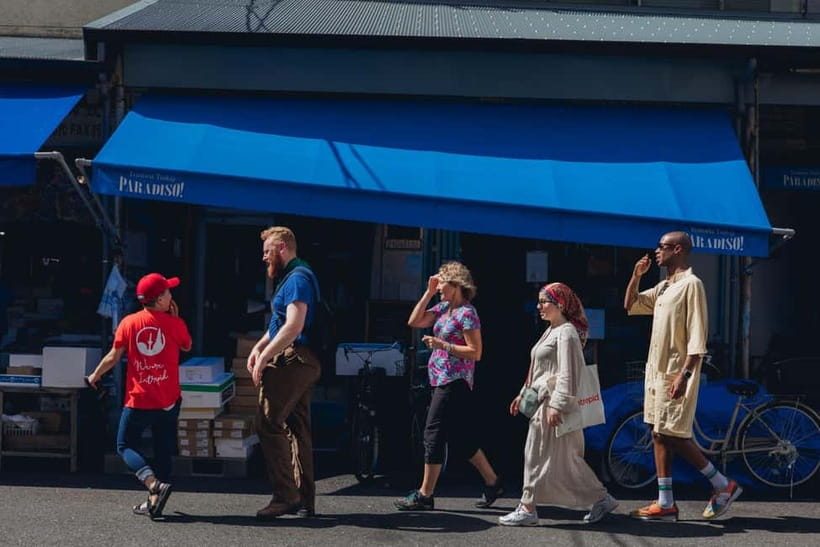
Book it if you want a guided, small-group introduction to Tsukiji that combines food samples with local history and shrine customs. The best reasons to go are the six-person limit, the range of tastes, and the guide’s ability to make a dense market feel approachable. Guides such as Oku, Mihori, Shino, and Mikki have been singled out for being warm, enthusiastic, and good at explaining the place.
Skip it if your main goal is a deep look at wholesale market operations, a fixed tasting menu, or a long list of vegetarian choices. For most first-time visitors who like food and want more than a self-guided stroll, this is a practical way to start the day. Bring comfortable shoes, tell the operator about dietary needs in advance, and leave some room in your appetite.
FAQ
How long is the Tsukiji Market walk?
The tour lasts three hours. Check the available start times when booking.
Where does the tour meet?
Meet at Higashi-ginza Station, Exit 3, at street level near the top of the escalator. The meeting point is by the small torii gate in front of the Kabukiza Theatre, on the Harumi Street side.
Where does the tour finish?
The tour finishes at Tsukiji Fish Market.
What food is included?
The tour includes multiple tastings at Tsukiji Market, including fresh sushi, Japanese snacks, and seasonal wagashi. The exact selection can vary.
Are extra food and drinks included?
No. Additional food and drinks are not included in the tour price.
How many people are in the group?
The group is limited to six participants.
Is the tour available in English?
Yes. The live tour guide speaks English.
Can the tour accommodate vegetarian or vegan diets?
Vegetarian and vegan options are available, but choices may be limited because of the nature of the market. Let the operator know about dietary needs ahead of time.
Can children join the tour?
Children aged five and under join free. If you are bringing a child under six, let the operator know when booking.
What should I wear?
Closed-toe shoes, such as sneakers, are recommended because market floors can be wet.
More food experiences in Tokyo
- Tokyo Night Foodie Tour in Shinjuku – Seasonal Sushi, Wagyu Beef
★ 5.0 · 1,161 reviews - Tokyo: Shibuya Food Tour (13 dishes and 4 Eateries)
★ 5.0 · 770 reviews - Tokyo: Tsukiji Fish Market Food and Culture Walking Tour
★ 4.7 · 757 reviews - Tsukiji Fish Market: Street Food & Culture Walking Tour
★ 5.0 · 669 reviews
More food and drink experiences in Tokyo
- Tokyo: Shinjuku Food Tour (13 Dishes at 4 Local Eateries)
★ 5.0 · 6,603 reviews - Tokyo: Shinjuku Food Tour (15 Dishes and 4 Eateries)
★ 4.9 · 2,033 reviews - Best of Shinjuku: Izakaya Food Tour (4 Stops, 14+ Tastings)
★ 5.0 · 1,863 reviews - Eat and Drink Like a Local: Tokyo Ueno Food Tour-Taverns&Ramen
★ 5.0 · 957 reviews
Freshly reviewed in Tokyo
- Tokyo: Toshimaya Sake Brewery Tour with Sake Tasting★ 5.0 · 6 reviews
- Tokyo: Tour Privado por Tokio en español★ 4.3 · 4 reviews
- :Tokyo,Shibuya /Meiji Shrine tour in KIMONO/English-friendly★ 5.0 · 4 reviews
- Tokyo:Tea ceremony experience at Komaba Warakuan★ 4.8 · 9 reviews
- :Tokyo,Shibuya/ Pro Photography in Kimono / English-Friendly★ 5.0 · 26 reviews
- Tokyo:Samurai Training : Swords, Bushido & Mental Discipline★ 5.0 · 6 reviews
- Tokyo:Mt Fuji & Hakone Day Tour with English Speaking Driver★ 5.0 · 26 reviews
- Tokyo:Nikko UNESCO World Heritage Sites Private 1-Day Tour★ 3.8 · 6 reviews
Tsukiji Fish Market Tours, compared.
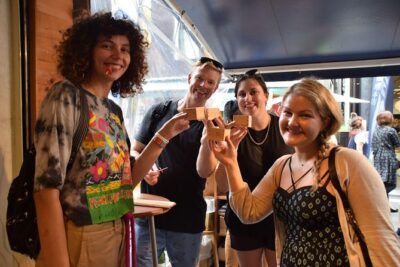
Tokyo Tsukiji Fish Market Food and Culture Walking Tour
Read our review →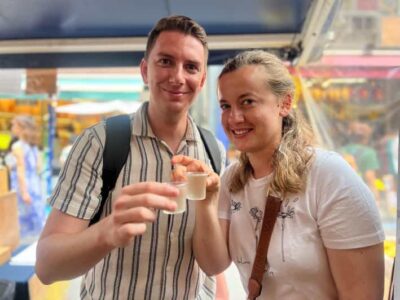

Tokyo Sushi Making Class in Tsukiji with Professional Chef
Read our review →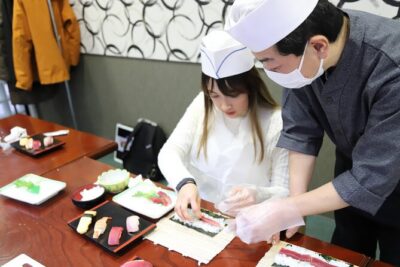
Tsukiji Fish Market Guided Tour and Sushi Making with Pro Chef
Read our review →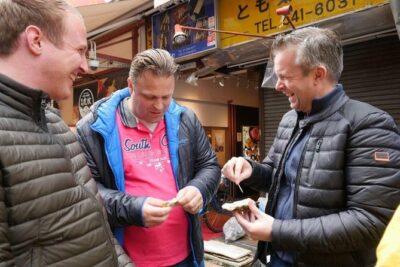
Tsukiji Fish Market Small-Group Food Walking Tour
Read our review →
Tsukiji Fish Market Sushi Making Class with Pro Chef
Read our review →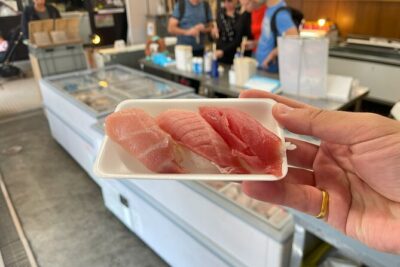
Tokyo Food Tour Taste Fresh Delights at Tsukiji Market
Read our review →
Private Toyosu & Tsukiji Market Adventure with Tuna Auction
Read our review →Browse the lists this tour appears in