Reviewed · TOKYO TOURS
Tokyo: Learn to play traditonal songs on Tsugaru Shamisen
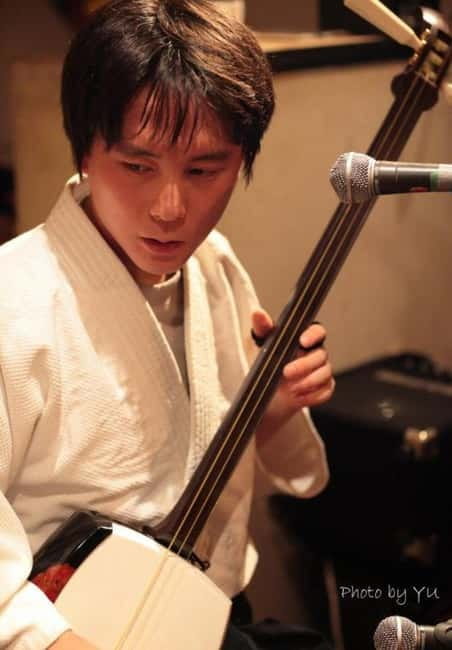
Tsugaru shamisen is not a quiet museum instrument. Its three strings can produce a crisp, forceful sound, and the fast, lively style has roots in music played by traveling performers and common people in northern Japan. In this private lesson near Shinjuku, you get to hear the instrument up close, then try making those sounds yourself.
I especially like two things here: you learn from Kouzan Oyama, an Oyama-style master and two-time Tsugaru Shamisen World Cup champion, and the hour is hands-on, with time to work on a song rather than just watch a demonstration. You can request a tune at the start, or learn a traditional Japanese folk song.
One consideration: an hour is a first taste, not a path to mastery. You will need to stay focused to make the most of it, and English communication may feel easier for some people than others. Still, the instructor teaches in English, and the lesson is private, so you can ask questions at your own pace.
What makes this shamisen lesson worth your hour
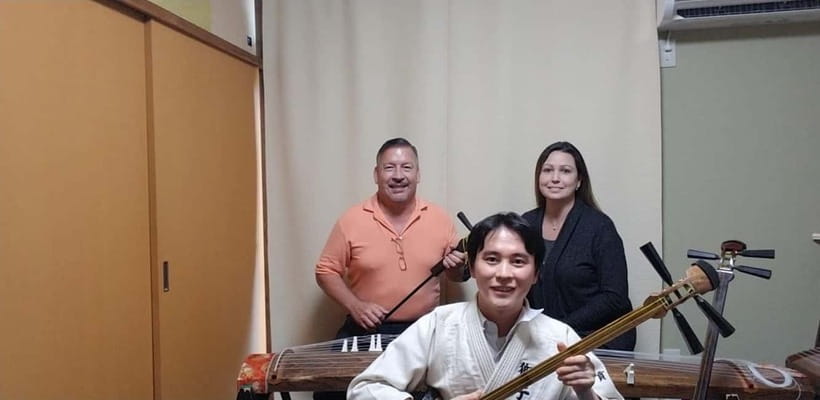
- A champion instructor: Kouzan Oyama is a master of the Oyama school and won the Tsugaru Shamisen World Cup in 2018 and 2019.
- You get an instrument in your hands: Learn how to produce the shamisen’s sharp sound, then practice a song during the class.
- Choose a musical goal: Bring a song request and ask about it at the start. If you do not have one, you will work on a traditional Japanese folk song.
- Hear more than one instrument: The lesson can include demonstrations of different shamisen types, as well as Okinawa sanshin.
- A private, English-language class: The format gives you room to learn at your own pace and ask about the instrument and its background.
- Photos and video are part of the experience: You can record your performance with the instructor, a useful souvenir of your first attempt.
Hearing the force of Tsugaru shamisen
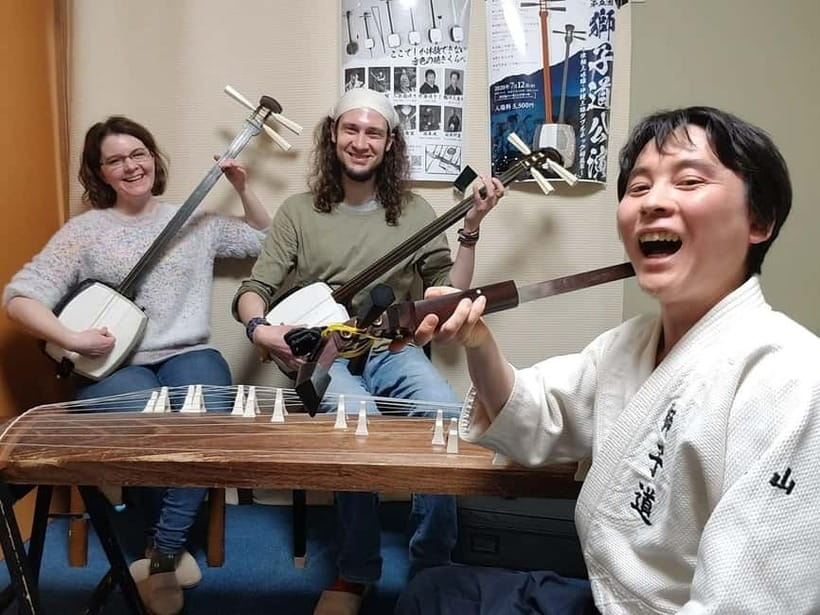
The shamisen is a traditional Japanese instrument with three strings. It is often compared to a banjo, but the resemblance only goes so far: its sound is sharp and clear, and its playing traditions have their own techniques and musical character. In Tsugaru style, the playing is particularly energetic and fast-paced.
That sound is the best reason to choose this lesson over a general introduction to Japanese music. You are not simply learning the name of an instrument or looking at one behind glass. You hear its range and then get the chance to make a sound yourself. The instructor demonstrates techniques and performs examples, giving your ears a reference before your hands try to follow.
The music also carries a sense of place. Tsugaru style developed in northern Japan, associated with traveling musicians and everyday people in the Tsugaru area. You do not need a background in Japanese music to appreciate the connection. It helps explain why the style feels direct and spirited, rather than formal or distant.
Expect the physical experience of playing to be new. The lesson introduces you to how sound is produced on a Japanese instrument, which differs from the way Western instruments make sound. That contrast is part of the point: you are learning a small, practical skill while also seeing how musical traditions can approach sound in different ways.
More tours and experiences in Tokyo:
- Mt Fuji and Hakone 1-Day Bus Tour Return by Bullet Train
★ 5.0 · 26,383 reviews - 1-Day Tokyo Bus Tour
★ 5.0 · 14,250 reviews - Tokyo: teamLab Planets TOKYO Digital Art Museum Entry Ticket
★ 4.6 · 9,779 reviews
A one-hour lesson with Kouzan Oyama
The class is led by Kouzan Oyama, a master of the Oyama style of Tsugaru shamisen and a two-time winner of the Tsugaru Shamisen World Cup. That pedigree matters, but the format is not presented as a concert with a brief audience participation moment. The aim is for you to learn how to play and work toward a song in the hour.
The lesson is private, and the instructor teaches in English. That gives you a chance to ask about the instrument, its history, and the techniques being demonstrated without having to keep pace with a larger class. If you are curious, come with questions. A previous class included discussion of shamisen history and plenty of questions answered in English.
English fluency may not feel identical from one exchange to the next. One participant found communication easy despite the instructor’s broken English, while another described getting detailed answers to many questions. I would go in ready to speak clearly, ask one question at a time, and use the demonstration as a guide when a technique is easier to show than explain.
Getting from introduction to your first song
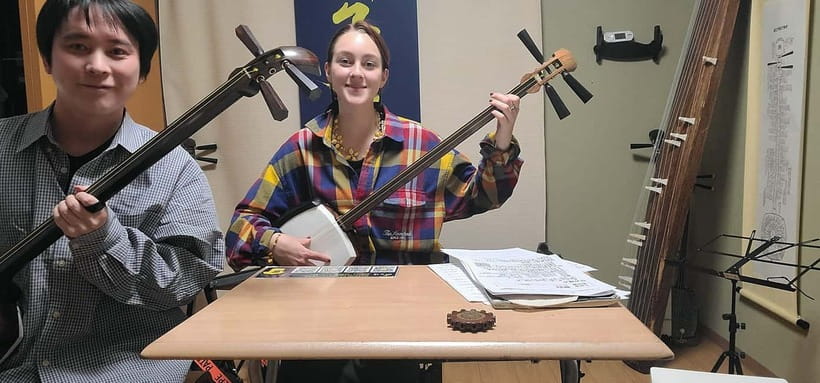
The hour begins with an introduction to the shamisen and its construction. You learn what the instrument is made of and what makes its three-string design distinctive. This gives you useful context before you start playing: the instrument is not just a prop for a photo, but a crafted object with a particular way of producing sound.
From there, the instructor shows you how to make the shamisen speak. You hear examples of different techniques and musical styles, then get hands-on practice. Watching Oyama perform is helpful here. The sound can be forceful and quick, but a live demonstration gives you a clearer sense of how the instrument works than a verbal description alone.
Next comes the song practice. You can request a tune you want to challenge yourself with, but make that request at the beginning of the lesson. If you have no particular song in mind, you will practice a traditional Japanese folk song. One student learned Sakura in a single session, which shows what can be possible with a focused, beginner-friendly tune. It is not a guarantee that every requested song will fit the hour, so keep your choice realistic and ask the instructor early.
Do not expect to leave playing at concert speed. The useful measure is whether you have tried the instrument, learned a technique or two, and made a recognizable start on a song. The instructor has written books used in the class, which can help first-time players follow the material and work through a tune.
There may be more than shamisen in the hour. Oyama also plays koto, and one participant was taught a short tune on it after hearing a performance. Treat this as a possible extra rather than a promised part of every lesson. The core activity is learning Tsugaru shamisen.
More instruments, more context
A particularly worthwhile part of the session is hearing several kinds of Japanese instrument and comparing their sounds. You may hear different types of shamisen, including Okinawa sanshin. That comparison helps you understand that shamisen is not one uniform sound or style. Tsugaru is known for its punchy pace and energy, while the other instruments offer a way to hear contrasts.
The class also introduces the difference between sound-making in Western and Japanese instruments. That may sound like a small topic, but it can change how you listen. Rather than treating the shamisen as a Japanese version of a familiar Western instrument, you begin to notice its own methods and musical logic.
The instructor’s performances are more than a warm-up. Each example can show you what a technique sounds like when played well, and it gives the lesson a live musical element that a beginner can appreciate even before getting a tune right. The balance between explanation, demonstration, and practice is one reason the hour can feel full without becoming a lecture.
For a different side of the same trip:
- Mt Fuji & Hakone Cruise, Drum Show Bullet Train 1 Day from Tokyo
★ 4.0 · 7,413 reviews - Tokyo: Sumo Show Experience with Chicken Hot Pot and a Photo
★ 4.8 · 6,678 reviews - Tokyo: Shinjuku Food Tour (13 Dishes at 4 Local Eateries)
★ 5.0 · 6,603 reviews - Tokyo Mt Fuji 5th St & Hakone Cruise Bus Tour w/Bullet Train
★ 4.4 · 5,024 reviews
Is $59 good value for one hour?
At $59 per person, this is a focused cultural activity rather than a bargain-priced drop-in. The fee covers the lesson, and the format is a private group. Its value comes from having a specialist musician teach you directly, letting you play the instrument, and hearing demonstrations in the same session.
If you are comparing it with a performance ticket, remember that the point is different. You are paying for instruction and participation, not simply an hour of stage music. If you want a hands-on encounter with a traditional instrument and a teacher who can explain the style, the price is easier to justify. If you mainly want to watch a concert, this class may not be the right use of your budget.
The private format matters too. You can ask questions, make a song request, and get help suited to your level instead of following a group lesson’s pace. Couples or friends can share the class, but the experience is still built around learning rather than a large-group activity.
Who will enjoy this class most
I would recommend this lesson to curious beginners, music fans, and anyone who wants to do more in Tokyo than look at cultural objects from a distance. You do not need prior shamisen experience. The class is designed to introduce the instrument and help you begin a song in one session.
It is also a good fit if you enjoy meeting an expert through their craft. The instructor’s background gives the lesson a direct connection to the Tsugaru tradition, while the teaching format keeps the experience accessible to newcomers. You can listen, ask questions, and try the music yourself.
You may be less satisfied if you want a long course or expect to become skilled in an hour. The pace is necessarily brisk, and there is only so much practice time in a single session. A song request that is technically demanding may also be difficult to tackle in that window, so choose something you are excited to attempt rather than something you expect to perfect.
The class is wheelchair accessible, which makes it an option for a wider range of visitors. Starting times depend on availability. You can reserve now and pay later, and cancellation up to 24 hours in advance is eligible for a full refund.
Making the most of your lesson
Think about a song before you arrive, then tell the instructor at the beginning if you want to try it. This is the most practical tip for shaping your hour. If you are undecided, let the traditional folk song be your starting point and focus on the experience of learning the instrument.
Bring questions about the shamisen’s materials, the Tsugaru sound, or how Japanese instruments produce sound. The class has room for explanation as well as practice, and Oyama’s demonstrations help connect the answers to what you hear. You need not arrive with specialist knowledge. A little curiosity is enough.
Take advantage of the chance to capture photos or video of your performance with the instructor. It gives you a record of the lesson and a reminder of how the instrument felt and sounded in your hands. The performance may be a beginner’s version, which is exactly what makes the footage a personal souvenir rather than a polished showpiece.
Should you book this Tsugaru shamisen lesson?
Book it if you want a compact, hands-on introduction to Japanese music led by a specialist, and you are happy to spend an hour learning rather than simply watching. The champion instructor, private format, instrument demonstrations, and chance to play a song make the experience more substantial than a quick cultural demonstration.
Skip it if your main goal is a full performance or if you expect to master the shamisen in one sitting. For most curious beginners, though, $59 buys a memorable first encounter with a sound and tradition that can be hard to understand from a recording alone.
FAQ
How long is the shamisen lesson?
The lesson lasts one hour.
Where does the lesson take place?
It takes place near Shinjuku in Tokyo.
Is the instructor able to teach in English?
Yes. The instructor teaches in English.
Can I choose the song I learn?
You can request a song at the beginning of the lesson. If you do not have a song in mind, you will practice a traditional Japanese folk song.
What instruments might I hear during the lesson?
You can hear different types of shamisen, including Okinawa sanshin. The instructor also plays koto, though a koto demonstration or short tune is not specified as a guaranteed part of every class.
Is the class private and wheelchair accessible?
Yes. It is offered as a private group and is wheelchair accessible.
Freshly reviewed in Tokyo
- Tokyo: Toshimaya Sake Brewery Tour with Sake Tasting★ 5.0 · 6 reviews
- :Tokyo,Shibuya /Meiji Shrine tour in KIMONO/English-friendly★ 5.0 · 4 reviews
- Tokyo: Tour Privado por Tokio en español★ 4.3 · 4 reviews
- Tokyo:Tea ceremony experience at Komaba Warakuan★ 4.8 · 9 reviews
- :Tokyo,Shibuya/ Pro Photography in Kimono / English-Friendly★ 5.0 · 26 reviews
- Tokyo:Samurai Training : Swords, Bushido & Mental Discipline★ 5.0 · 6 reviews
- Tokyo:Mt Fuji & Hakone Day Tour with English Speaking Driver★ 5.0 · 26 reviews
- Tokyo:Nikko UNESCO World Heritage Sites Private 1-Day Tour★ 3.8 · 6 reviews
Tokyo Tours, compared.

Mt Fuji and Hakone 1-Day Bus Tour Return by Bullet Train
Read our review →

teamLab Planets TOKYO Digital Art Museum Entry Ticket
Read our review →
Mt Fuji & Hakone Cruise, Drum Show Bullet Train 1 Day from Tokyo
Read our review →
Shinjuku Food Tour (13 Dishes at 4 Local Eateries)
Read our review →
Tokyo Mt Fuji 5th St & Hakone Cruise Bus Tour w/Bullet Train
Read our review →
Flagship 2-Hours Official Street Go-Kart Tour – Tokyo Bay Shop
Read our review →